Feeds:
Posts
Comments

Archive for November, 2015

IMG_3724

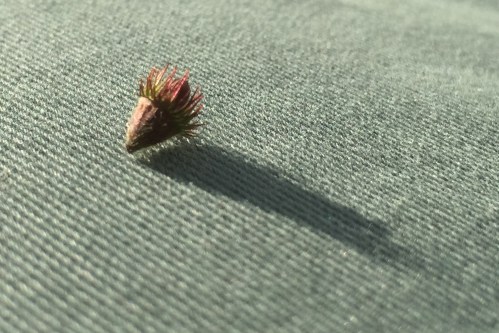
When we came back from a walk through the vineyards yesterday we found little seeds like this one sticking to our clothes.

Look how elaborate a structure it has – wonderfully designed for hitching a lift! Its tenacious little hooks beautifully created to spread the species.

I was just thinking about seeds the other day when I read about the massive explosion of flowers across the Atacama Desert. Did you read about that? Here’s some of the coverage. The Atacama Desert in Chile is one of the driest places on Earth but about every five to seven years the flowers flourish. This March there was the equivalent of fourteen years rainfall in a day and now there is the greatest flourishing of the flowers for decades.

Imagine. Those seeds all surviving in the desert heat without any significant water for years and years, then suddenly, with enough rain, they spring to life.

Remarkable as that thought is, here’s another one – how do we know if a seed is alive or dead? I mean if we collected some of the seeds from the soil during the dry years, could we tell which had the potential to spring to life and which were, well, dead?

I went on an internet hunt, and you know what? Nobody really knows. There’s a phenomenon in the lifecycle of seeds called “dormancy” where the seed seems inactive but its really just sort of sleeping. Funny thing is we have no way of telling whether a seed is dormant or dead. There are techniques, including a chemical staining technique, which cleverly detect some signs of respiration or metabolic activity, but interpreting the results isn’t easy and only allows a statistical probability of life to obtained for whole batches of seeds, not individual ones.

Can you imagine that? Not being able to tell if an organism is dead or alive? Is that true? Are there any botanists reading this who know differently? Can you tell if an individual, particular seed is dead or alive?



Read Full Post »

IMG_3721

I took a walk yesterday up to the viewpoint and used my iPhone to take this panorama shot.

The viewpoint is at the top of the hill just above the village where I’ve lived for exactly a year now.

In my monthly themes I think of November as being a month for reflection. And one of the ways I like to reflect is to take what’s referred to by French philosophers as the “view from on high” or “view from above“.

It’s a way of reflecting which involves pausing, standing back, and taking an overview. It’s not about analysing or considering the details.

So I took a little pause, standing there at the viewpoint, and gazed slowly in all directions, drinking in the fields of gold, and then I took a deep, slow breath or two and asked myself “how does this feel?”

It feels good.

What I feel is contentment.

I’ve been in touch with that pretty frequently recently, and when I first had that word, contentment, pop into my head I wanted to reject it. I mean it feels such a weak word, doesn’t it? A mediocre word. Couldn’t I come up with something a bit stronger than that?

So, I looked it up on my blog and found this from five years ago

Positive affect is defined as the experience of pleasurable emotions such as joy, happiness, excitement, enthusiasm and contentment. These feelings can be transient, but they are usually stable and trait-like, particularly in adulthood. Positive affect is largely independent of negative affect, so that someone who is generally a happy, contented person can also be occasionally anxious, angry or depressed.

Here’s what they found [I’m referring to a study here]

After taking account of age, sex, cardiovascular risk factors and negative emotions, the researchers found that, over the ten-year period, increased positive affect predicted less risk of heart disease by 22% per point on a five-point scale measuring levels of positive affect expression (ranging from “none” to “extreme”).

So, weak or strong, turns out contentment might well turn out to have a health benefit.

But there’s more – I’ve just finished reading Robert Brady’s “The Big Elsewhere”, which I highly recommend, and in there this week I found a passage he’d written “on contentment”. He refers to the Tao Te Ching where Lao Tzu says “There is no disaster greater than not being content” –

What does contentment have to do with disaster? Lao Tzu knew, and cryptically passes along the intimation, that contentment is the beginning of all that is worthy, that contentment is the seed and germ of every happiness, its absence accordingly the tiny breach that ruptures into every disaster, the pinhole in the dam, the lost horseshoe nail. Contentment is all the rest: pride in the way of one’s life and the fruit of it, whether one is a shepherd or chieftain, a fact that hasn’t changed since back in the tribal days when miracles were everywhere and museums were not yet needed to remind us of what is gone.

Contentment is the core of all that truly matters, it is the root of passion, the height of honesty, the beating heart of every joy, the embrace of a family; for there is no self in contentment; it is other-centred. The self-centred, in contrast, is perturbed, discordant, writhes with discontent and seeks release (insert the ‘seven cardinal sins’ here for starters).

What do you think? Is contentment something you recognise? Is it something you feel? Today?

It seems to me it’s not such a weak or mediocre feeling after all!


Read Full Post »

I love the autumn. Not least because, like the Spring, it’s a season when change is most evident. Every morning when I open the shutters and step out into the garden the world around me is markedly different.

I was looking at the variety of shades and colours in the mulberry tree and the vine and I realised I quickly ran out of words. I don’t know if it is true that in some languages there are many different words for snow, but the range and number of colours and shades in one garden! Whew!

It’s astonishing.

I took a bunch of photos and turned them into a little slideshow. I hope you enjoy it. A couple of minutes of delight and “émerveillement du quotidien”.

Read Full Post »

Ellen Langer says the way to live mindfully is to be on the lookout for novelty. See what’s new (new to you). Another way to think of this is to be aware of difference. Not just aware I suppose, but to seek and to delight in, difference.

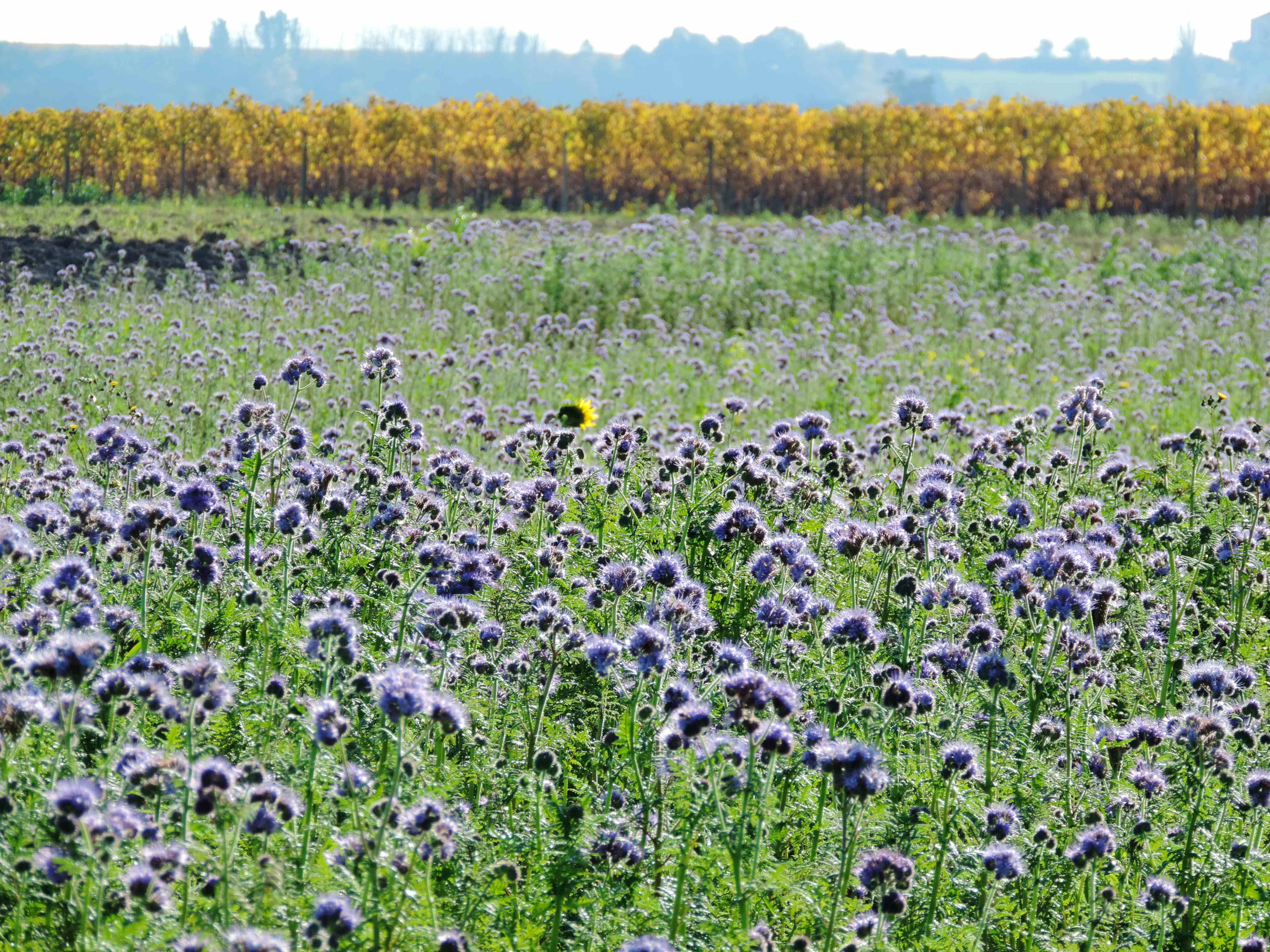
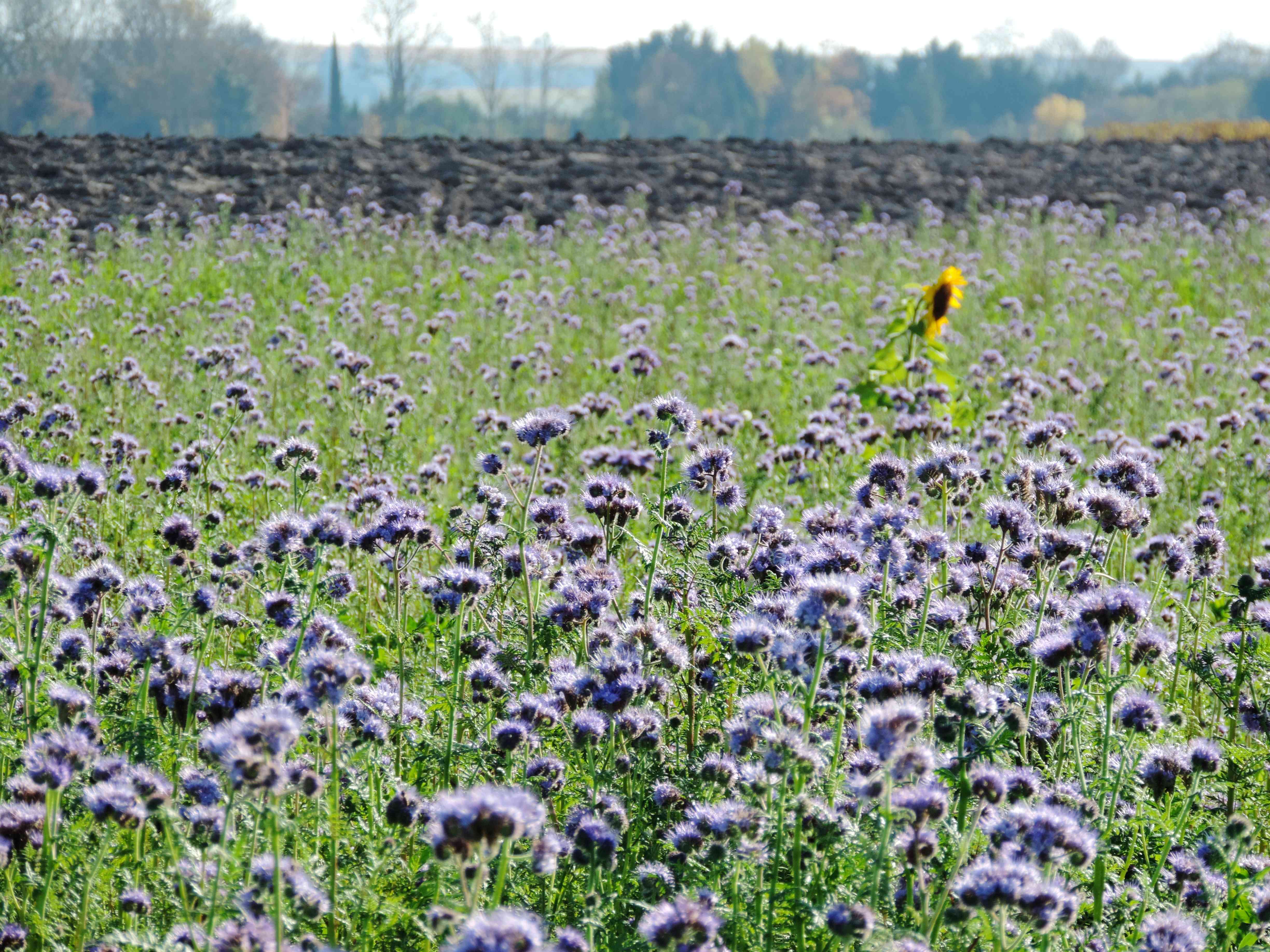
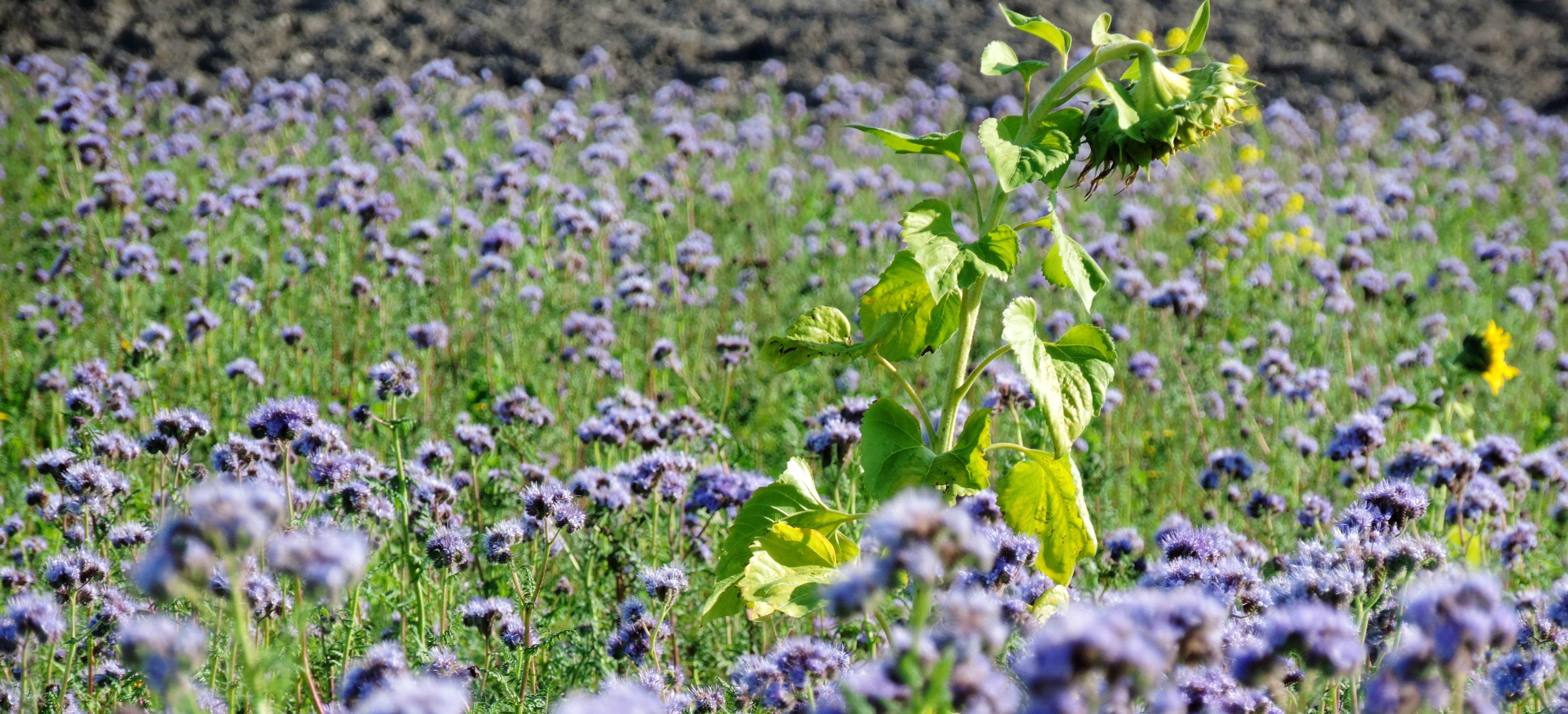
There is only one field of purple near me.

crop of purple

I don’t know what this purple flower is, but it was the field of colour bounded on one side by a vineyard,

purple and vine

and on the other by a ploughed field,

ploughed

which caught my eye, and you’ll notice that there are half a dozen, or less, sunflowers, standing up boldly and proudly, head and shoulders above the crop – that kind of difference appeals to me too.

If you know what these purple flowers are please say in the comments section, but whatever they are called its their difference which literally stopped me in my tracks. It’s their difference which prompted me to pull the car over on the side of the road, clamber over a ditch and take these photographs.


Read Full Post »

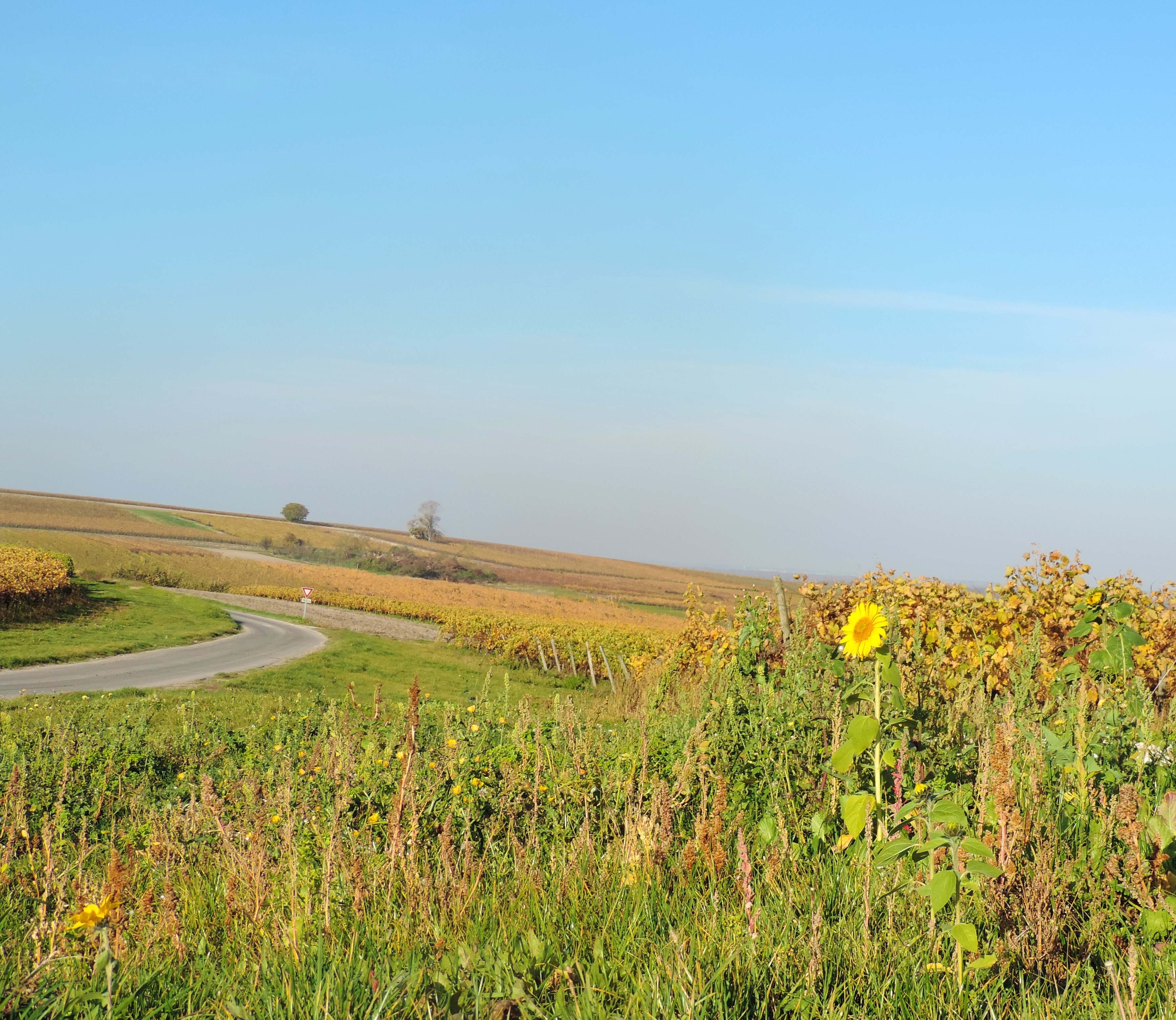
road to gente

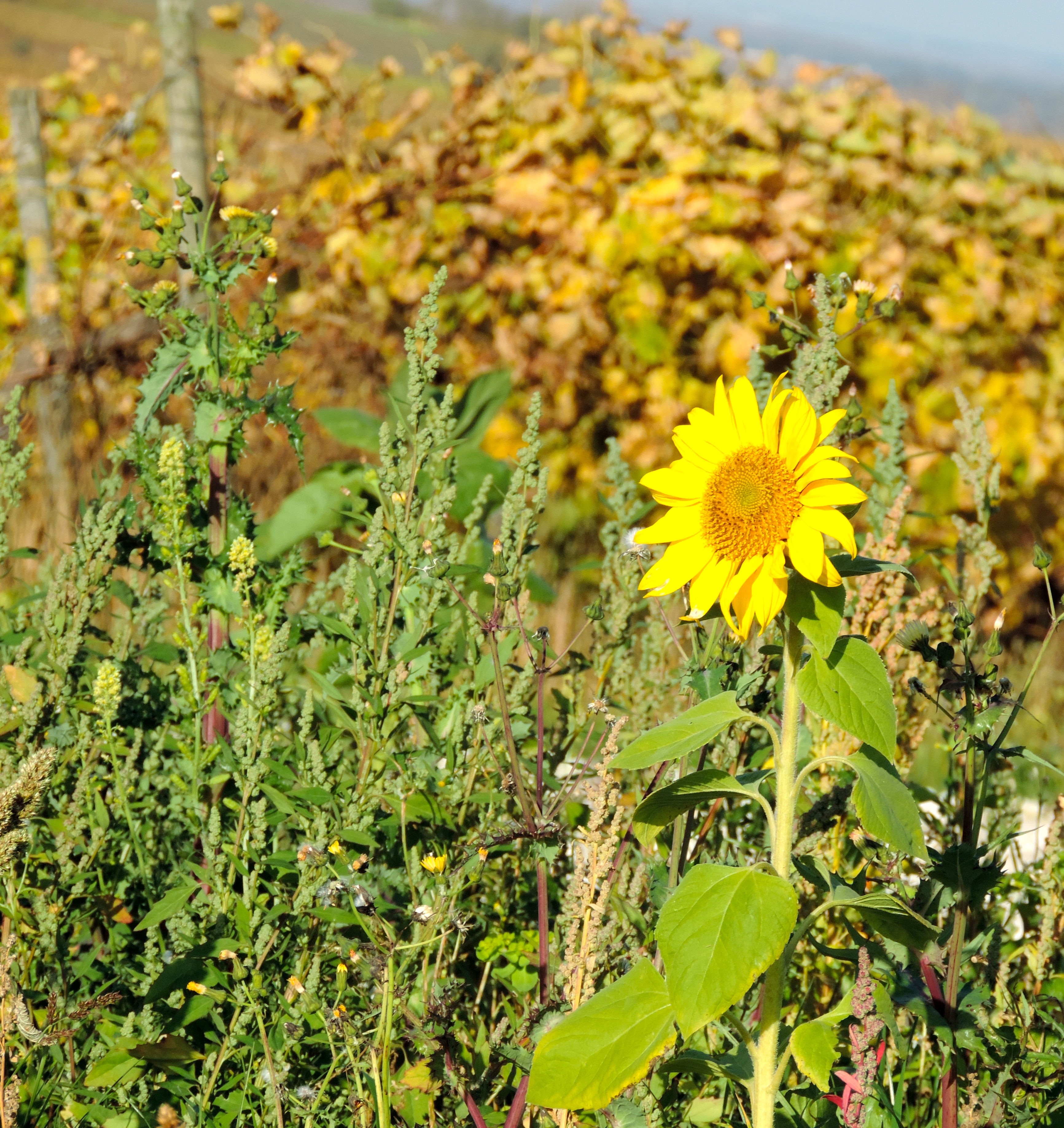
On my way out of the village a couple of days ago I was surprised to see this sunflower flourishing beside the autumnal vines. A sunflower? At this time of year? In the vineyard? And there it is standing tall, face turned to the south, basking in the november sunlight.

DSCN4558

The vines are all turning golden and I’m photographing them quite a lot just now, but it was the uniqueness of this sunflower that made me pull over, get out of the car, and take these photos.

I think that’s why we are all here.

Seems like the universe has taken almost fourteen billion years to go from the time before even only hydrogen atoms existed to the rich diverse complexity of life on planet Earth as we experience it today. In the course of that journey there’s been a constant trajectory towards ever greater uniqueness. No two living organisms are identical, and every living organism changes constantly throughout its life.

I think there is one thing we can all do – fully express our uniqueness.

Nobody else can do it for us.

Read Full Post »

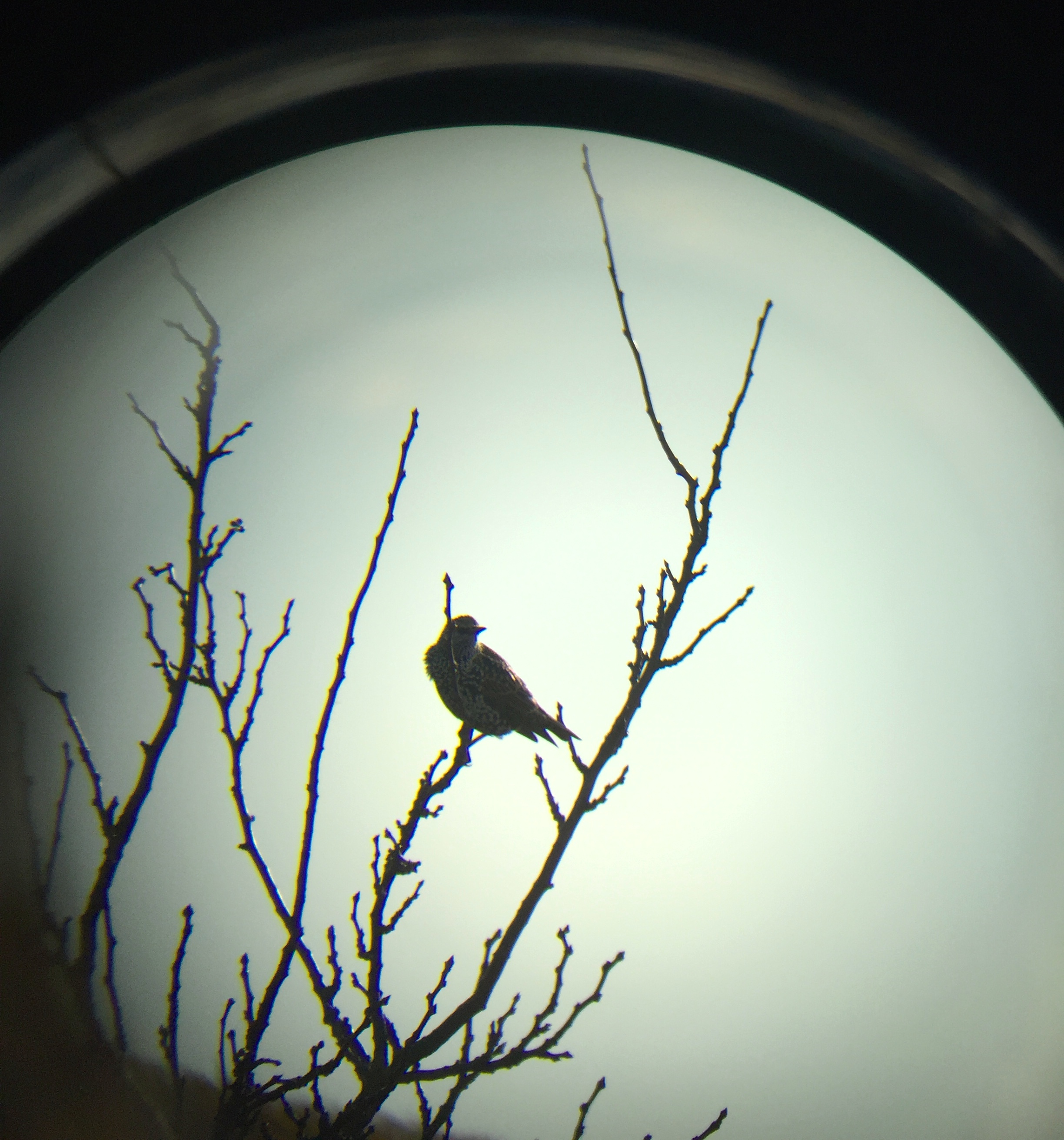
tele bird

I looked out of my study window yesterday and could see a bird sitting on the tree in the corner of the nearest vineyard. I couldn’t make out much more than it was a bird so I pointed my telescope at it, zoomed in, and saw it clearly. Covered in speckles. A thrush I guess.

Just for fun I held my camera up to the eyepiece of the telescope and got this shot.

I quite like it! It’s got almost a vintage feel to it.

It got me thinking of the way we look at things.

We focus in on parts of reality to try to clarify what we are looking at. We do that all the time. We might focus on certain parts of what we see and hear because they catch our attention, spike our curiosity or whatever. If we weren’t able to do that how could we make sense of our world? Our brains are receiving information from the external world (and at the same time from our inner bodily world) through our senses of sight, hearing, taste, smell and touch. How could we make sense of this information tsunami if we didn’t sift, select, and focus? Our left hemisphere is especially good at doing this. It’s no coincidence that the left hemisphere controls the right hand and that’s the hand most of us use to “grasp” things. That’s what this focus-ability does for us. It helps us to grasp things.

But I think it does something else too. It frames and it excludes. It sets whatever it is we are paying attention to not just centre stage, but often fills the entire stage. I’m not sure it’s helpful to think of these skills are either “good” or “bad”. They just have advantages and disadvantages. The major disadvantage is that this framing removes the object of our attention from its context. So unless we take the results of our grasping and let go off them as we pass them back to the right hemisphere for re-contextualising, then we form incomplete and, actually, imprecise understandings of things.

Funny that, really. You’d think we could be more precise by being more focused. Turns out focus is only part of the process. We need the context too.

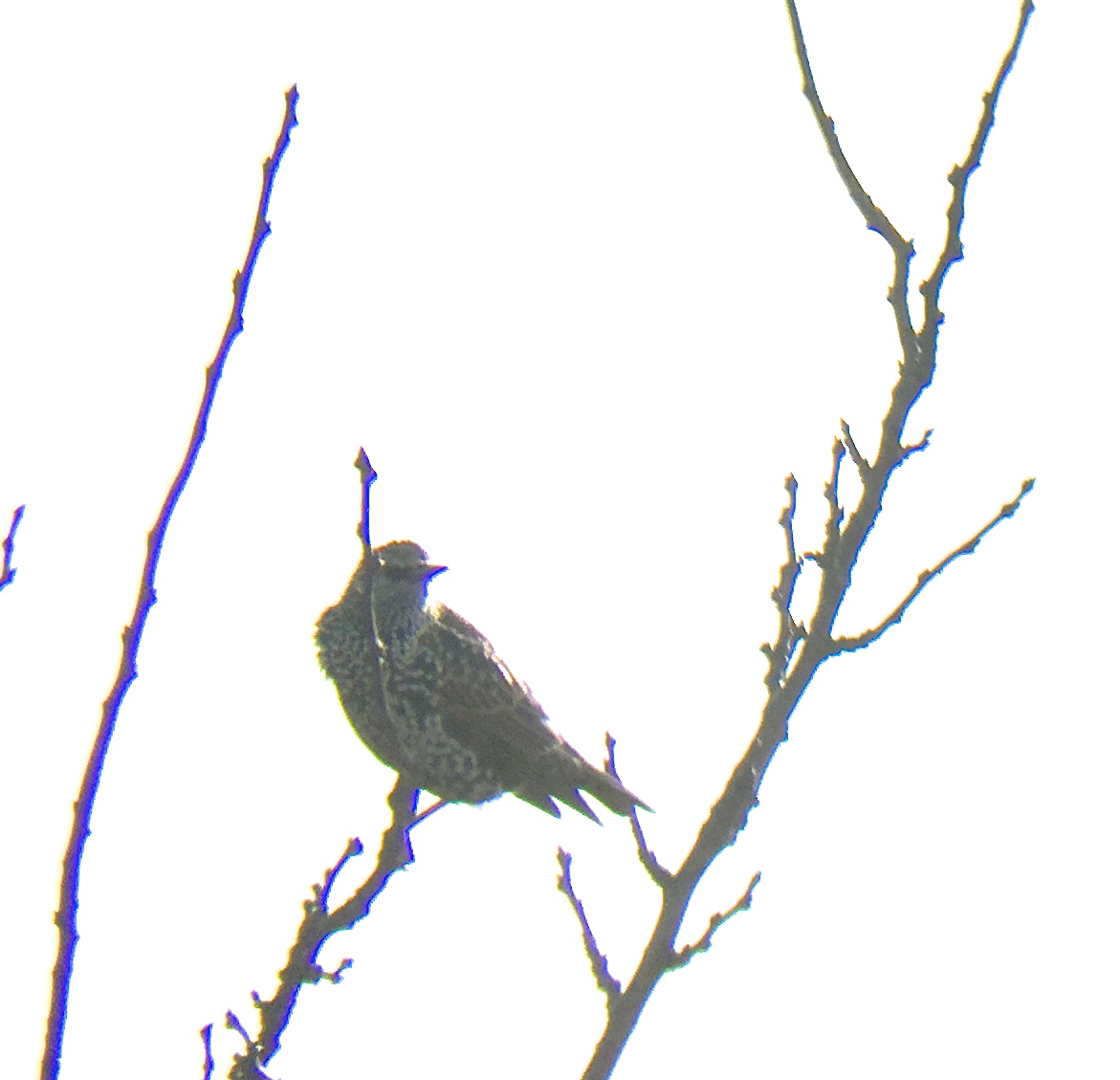
Here’s a crop of that photo above to let you see the thrush a bit more like it was when I put my eye to the telescope.

crop thrush


Read Full Post »

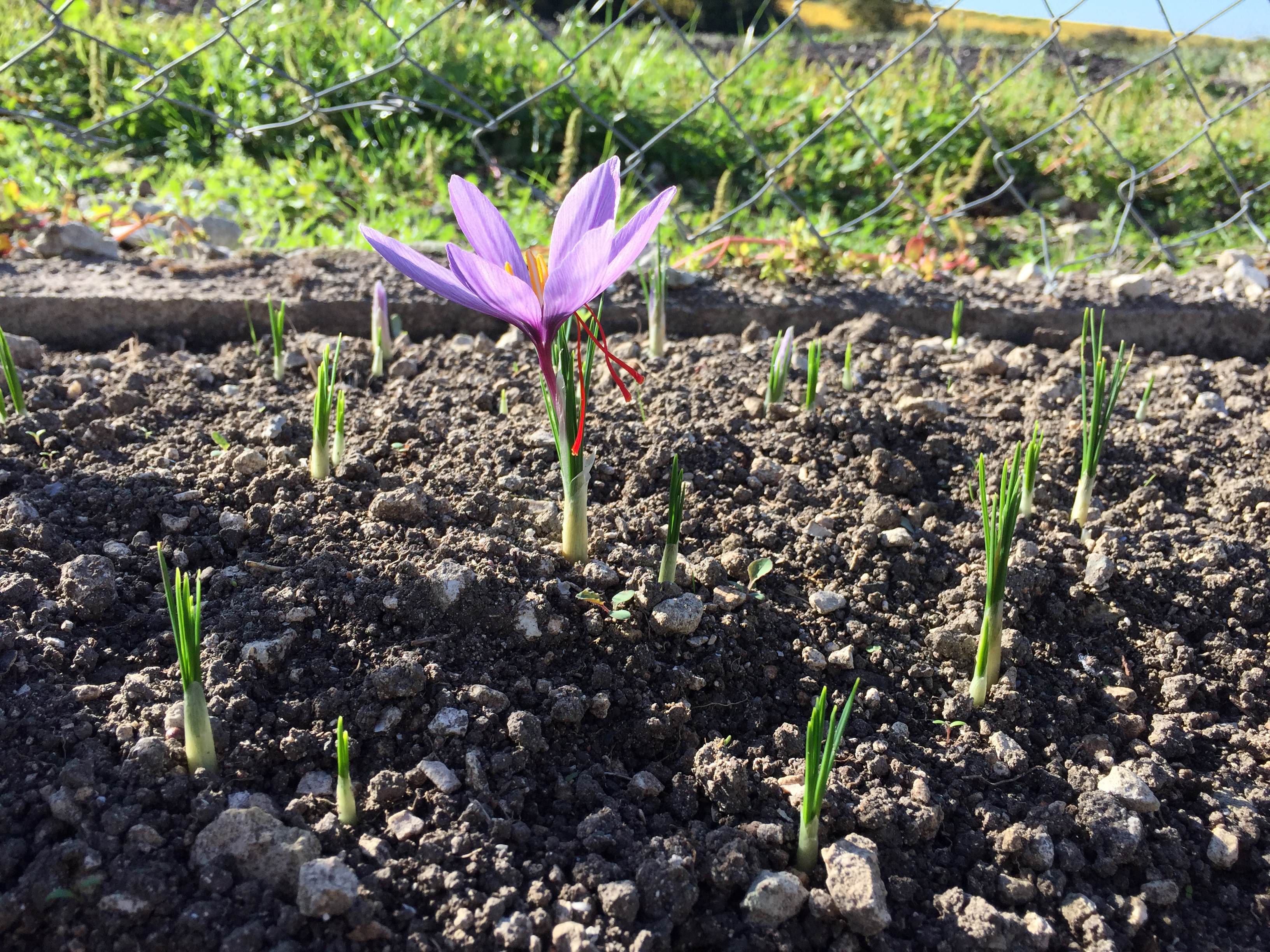
crocus sativa

Three weeks ago Hilary planted some crocus sativa bulbs in the ground hoping they would grow and yield some saffron – next autumn – the books said bulbs planted now would bloom next autumn.

But look! Within only days they’ve not only broken through the ground but some have begun to blossom just like this one.

Isn’t that astonishing?

From a little bulb that you wouldn’t even know was alive, buried in the ground, and within three weeks it grows into this beautiful crocus with its three strands of saffron.

Bursting with life…..

Read Full Post »

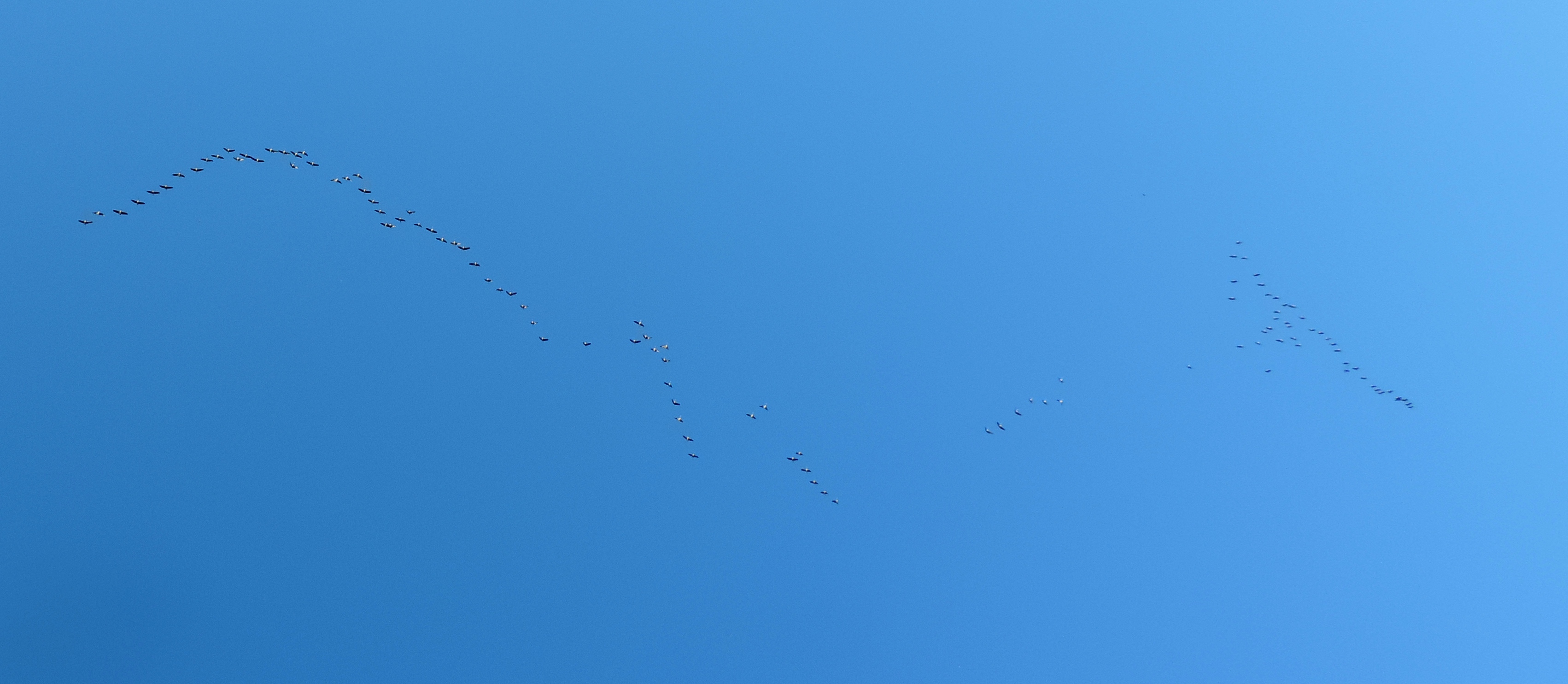
I was sitting having coffee in the garden yesterday (yes, how amazing is that? To be sitting outside in the warm sun on the last day of October! Life is good in the Charente!) when suddenly I heard a real commotion up above. A light aircraft had flown past quite low and had alarmed a flock of wild geese making their way south (to the Riveria, Spain or Africa, or wherever they go for winter sun). The noise was astonishing and quickly drowned out the noise of the plane. I rushed inside to grab my camera as the flock got itself re-organised and just caught them as they got back on track.

geese

As their clamour faded away over the vines how could I hear anything other than this in my head?


Meanwhile the wild geese, high in the clean blue air,

are heading home again.

Whoever your are, no matter how lonely,

the world offers itself to your imagination,

calls to you like the wild geese, harsh and exciting –

over and over announcing your place

in the family of things.

from Wild Geese, by Mary Oliver

Read Full Post »

« Newer Posts