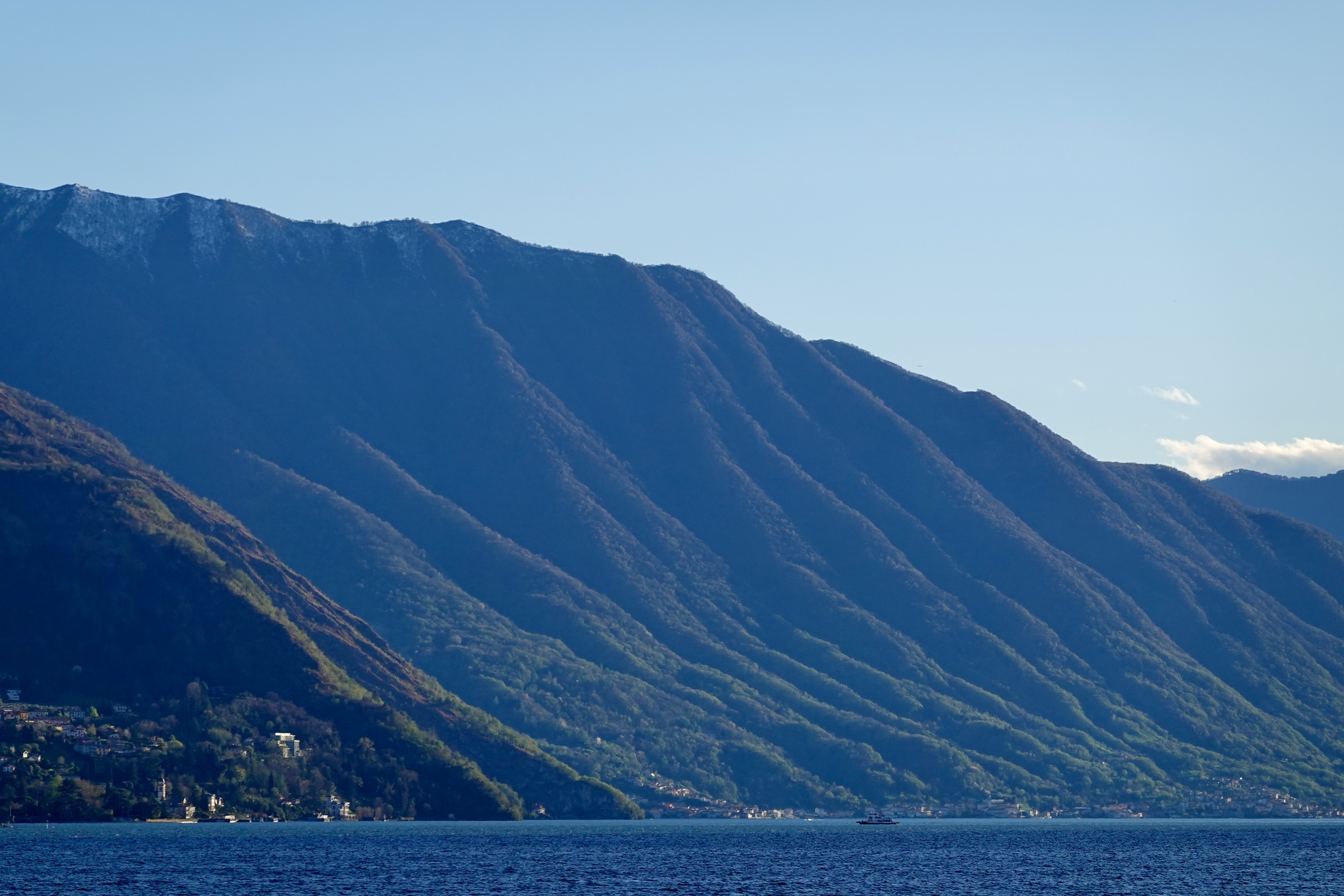
My area of work was health. I worked as a doctor over four decades and I learned a lot about what made for a healthy environment and what was a more toxic or harmful one. I reckon the characteristics of healthy environments are pretty universal. We all need to breathe clean air, drink clear water, eat nutritious food, have nourishing and caring relationships. There’s a lot of evidence about the positive healing effects of natural environments. I say “natural” but what I mean is, as opposed to built environments. Trees and forests stimulate healthy changes in body and mind, but busy six lane motorways, not so much. But even within these universalities we are all different, so, for some, it’s healing to walk by the shore, or to gaze out at the ocean, breathing in the salt air. For others, the most healing environments are in the mountains and lakes, breathing the clear, fresh air of a little altitude, surrounded by birdsong and wildflowers (“and not or” remember…..both these environments can be good for the same person)
I read a section of Rick Rubin’s “The Creative Act” recently (I’m working my way through, reading and meditating on, one section a day just now. It’s such a rich resource)….this morning’s section was “Setting” where he discusses what environments are creative, illustrating how very different ones allow us access to different flows from the universe, each of which can stimulate our intuition. He points out how tranquil natural environments allow us to appreciate the direct information from the universe, whereas, busy peopled places, like cafes, town centres etc, can allow us to tune in to the universe as filtered through human beings. In all situations it’s a question of detached awareness, so that we can notice patterns, but not allow ourselves to be overwhelmed by them. That made me think of the phenomenon we call doomscrolling, where we get caught up in social media feeds. They too can be sources of creative stimulation if we allow ourselves to notice the patterns and themes, and not get caught up in them.
In fact, Rick also suggests cultural environments where we focus on reading, music, visual art, etc to pick up the information from the universe filtered through culture.
The most important point he makes is that we are all different. His conclusion is that we need to “hear the chimes of the cosmic clock ring, reminding [us] it’s time. Your time to participate.”
It is.
It’s your time to participate, to become aware, to trust your intuition and to engage. Which environments do you find most conducive to creativity? What factors make a positive contribution to your creativity?
In New Scientist, 8 November 2025, Graham Lawton wrote an article entitled “Older Faster”. He describes the difference between biological age and chronological age. Biological age is an estimate of your fitness, your wellbeing, based on how well your cells and systems are functioning. It’s closely related to inflammation. The more inflammation in your body, the faster it ages, and the more likely you are to suffer from pretty much any chronic illness. The phenomenon he describes is that, globally, we humans are ageing faster than we used to.
There seems to be a strong correlation between obesity and biological ageing, and as we are seeing an obesity pandemic it’s no surprise that people are ageing faster too. But does the one cause the other? Are people ageing faster because they are more obese? Or are they becoming obese because they are ageing faster?
These two statement shocked me – “Cancers are increasing in younger age populations, people under 40 years of age have more heart attacks, more diabetes” (social epidemiologist, Paulina Correa-Burrows) and “Cancer used to just be considered a disease of ageing. Now people are being diagnosed with colon cancer in their 30s, breast cancer in their 30s. Why is that? Perhaps some of the processes of ageing are acting earlier and causing ageing to accelerate, which then causes early onset cancer” (Jennifer Guida)
A study of 150,000 people whose blood samples were stored in the UK Biobank, revealed that those who were born after 1965 were “17 percent more likely to show signs of accelerated ageing than the older ones, born between 1950 and 1954” They also found this accelerated ageing caused an increased risk of early onset cancers of the lungs, gastrointestinal tract and uterus.
The author argues we seem to have created an “obesogenic environment” in the world, and proposes that because this is correlated with accelerated ageing, we use the term “senesogenic environment” – an environment which is causing us all to age faster.
Obesity rates in 5 to 19 year olds increased 1000 percent between 1975 and 2022, and it continues to rise. Something has changed. It’s still not clear exactly what, but one theory is excess calories, which seems to cause both obesity and accelerated ageing. In fact, calorie restriction activates body repair processes and slows ageing.
However, we do know that it isn’t all down to calories. Stress hormones play a significant role. And, although, Graham Lawton doesn’t cover this aspect, poverty, job insecurity, social insecurity, poor housing, as well as environmental pollution from microplastics to cocktails of “forever chemicals”, and poor air quality, all increase the levels of stress hormones in our bodies.
Rather, he concludes with the typical medical individualist approach and asks what we can do as individuals to slow down this biological ageing – exercise, calorie restriction, good sleep hygeine and the avoidance of alcohol and smoking, are the usual suspects. He mentions the benefits of GLP-1 agonist injections (like Ozempic) but concludes “time to lose weight and get active again”.
That’s kind of a disappointing end to the article, because what interested me more was this concept of a “senesogenic environment”. Shouldn’t that be at the heart of government policies, not just on health, but on economics and the political choices we are making? If we want to tackle obesity the answer won’t lie in the next “miracle drug” (why do miracle drugs always turn out to be not quite so miraculous as time goes on?), but in a shift of focus towards the senesogenic environment, and that’s going to involve Public, collective, political and economic policies to reduce poverty and insecurity, to provide decent housing for all, accessible health care and education for all, and by cleaning up the air, water and soil by clamping down on chemical and plastic pollution.
This senesogenic environment isn’t natural. It’s created by political choice, putting the wishes of corporations and the rich over our common, shared needs. And by “our” I mean, not just we humans, but we living creatures of all kinds on this little spinning planet.
I read, recently, about “LUCA”, from whom, every single one of us is descended. In fact, not just every single one of we humans, but every single living creature.
Isn’t that amazing? Yet, at some level, kind of obvious?
We humans have a tendency to think that we somehow parachuted onto this little planet, just appearing from nowhere, with no history prior to our arrival. This kind of thinking leads us to consider that, on Earth, there is Nature, and there are humans. It’s almost as if Nature is something separate from ourselves, either a place we go and visit on our holidays, or the less important than us part of the world.
But these two beliefs are delusions.
We evolved on this planet, along with every other living creature, past and present. The history of our “arrival” isn’t sudden, but it isn’t disconnected from the rest of existence either.
Advances in molecular genetics have revealed that all living things on Earth are descended from a single organism dubbed the last universal common ancestor, or LUCA, which emerged around 4 billion years ago. We also know that our planet is approximately 4.5 billion years old. During those first half a billion years, simple, then more complicated, organic molecules were spontaneously synthesised and assembled in larger complexes, eventually evolving into the primitive, single-celled LUCA. How did that happen? We really don’t know. But, then, we don’t really know what “life” is either, do we? We can’t even tell if a seed is dead or alive until it starts to change (or doesn’t).
There are many, many “creation myths” around the world. Every culture seems to have its own. Over the last hundred years or so we’ve been introduced to new ways of thinking about who we are, and where we came from. Yet even with evolutionary thinking we have a tendency to think of ourselves as different and separate. We present Homo Sapiens as the most highly developed form of life on the planet, and we don’t really consider how we might evolve in the future. We tend to think that evolution led to the creation of we humans, and then it stopped. It somehow reached its goal. And we give less consideration to what we share with the rest of the planet.
But, in fact, we came from somewhere, as did every other life form on our shared planet. Our ability to understand the molecules which exist inside our cells, and the discovery of how so many of the exact same molecules exist in other creatures, has opened the door to a different understanding.
LUCA is our shared common origin, and as we begin to trace LUCA’s evolution into the abundantly diverse forms of life which we have discovered so far, we come to understand ourselves as embedded, inextricably in a web of Life on this planet we call Earth. This little blue marble where LUCA came into existence, and gave birth to us all.
We are not disconnected. Neither from all the other living creatures, nor from each other. We share this planet. We share the same air, the same water, the same soil. We depend on each other. Despite the delusion of hyper-individualism, none of us can exist without creating mutually beneficial relationships with others, with our other common descendants.
What kind of future could there be for us, for our children and grandchildren, if we all took that shared reality on board and put collaboration ahead of competition? If we began to rate mutual benefit over self-centred greed? If we put more energy and attention into the creation, and maintenance, of the healthy environments in which all of LUCA’s descendants can thrive?
I read an article in New Scientist by Florence Gaub and Liya Yu entitled “Nothing’s certain”. The authors explore two different ways that we handle uncertainty. Their specific take is a “political neuroscience” one. Now, let me just say I have a paradoxical relationship with the “neuro” tag. Firstly, it attracts me. I’m interested in the brain, scored my best exam result ever in the neuroanatomy exam at Medical School. I’m interested in pyschology and in the “mind-body connection” (although that, too, is a phrase which can both attract and repel me). Secondly, “neuro-” has become a bit of a fashion, with everything from “neuroscience”, to “neuromarketing” and this “political neuroscience”. I just don’t think neurology can explain everything about human behaviour. Alongside that, the correlations between neurological observations and behaviour are just that….correlations. We still haven’t explained how the physical brain can have subjective experience, and whether or not subjective experience creates the changes in the brain, or vice versa.
However, what they had to say really interested me. They say “Political neuroscience shows that the brains of people with conservative views favour security and avoid open-ended solutions with no clear closure. They tend to have increased volume in their amygdala, the region responsible for threat signalling” And, “Liberal brains have a higher tolerance for uncertainty and conflict, as they have more grey matter volume in a brain area implicated in the processing of ambiguity called the anterior cingulate cortex.”
They point out that when uncertainty is high, the former “conservative” people are attracted to whoever offers the idea of certainty (think Hitler and his 1000 year Reich), and are fearful of novelty, whether that be technologies, foreign people or cultures.
They conclude that we need to learn that “cooperation across identity and interest groups” can be beneficial, and that we can overcome our big global challenges “only by overcoming our brains’ vulnerabilities together”.
I’m not sure that MRI scans of peoples’ brains reveal their political preferences, and I’m a bit uncomfortable with how this thesis basically implies that “Liberals” need to help “Conservatives” get over their fear and anxiety, but apparently “Liberals” don’t have anything to learn from “Conservatives”.
I say that despite seeing myself as firmly in the “Liberal” camp, not least because I was trained as a General Practitioner, a speciality sometimes described as doctors who specialise in managing uncertainty. Uncertainty was my daily professional experience, one unique, novel, unpredictable patient at a time.
However it does seem that the “Right” are on the rise across the world, and this might well be connected to an increase in the amount of uncertainty which people are facing in modern times…..uncertainty about climate change, about technology, about both national and personal security.
So, if I want to make a positive contribution, perhaps I need to understand and address the anxieties and fears of those people with a larger amygdala….
In other words, how can I help people to deal with uncertainty more comfortably? How can I help them to enjoy novelty, to delight in diversity and difference, and how can I help to create a more secure society for us to live in together?
In addition to that, what do I have to learn from those who may be more sensitive to uncertainty than I am?
Let me start with the last point first. We humans need sufficient certainty. We couldn’t go on without it. When I buy a train ticket, it doesn’t cross my mind that the train I’m about to step on won’t make it to its destination (despite the fact that between Stirling and Glasgow I’ve had several experiences of trains being delayed, cancelled, or even terminating a few stops before my intended one). The point is that I’ve had enough experiences of reliable trains to actually get on a train and expect it to take me to where it says it’s going to go.
When I first went to university in Edinburgh, my mum, who clearly had a well developed amygdala, used to send me newspaper cuttings about crimes in different parts of the city, with the accompanying advice to avoid those areas. When she sent a story about a boy who was stabbed in Princes Street, I had to ask her to stop sending these cuttings, because there was no way I was going to be able to spend at least the next six years of my life in Edinburgh without walking along Princes Street!
When we wake up in the morning, most of us don’t wonder if this will be our last day. But one day, it will be. No, we have to have enough confidence, enough of a sense of certainty, that we will make it through to bedtime. Otherwise, how could we even get up?
My point is, that we need certainty. Or, do we? Is it more that we need confidence? Confidence that, no matter what the day brings, we will get through it, we’ll handle it? I suspect confidence and certainty aren’t the same thing, but the greater the certainty, probably the more confident we feel. And, probably, vice versa, because the more confidence we develop through our practice and experience, the more we will experience certainty in our day to day lives.
I think this is the key lesson those with a larger amygdala have to teach us……although certainty, like perfection, is an impossible goal, it is still important to have it as one of our goals if we are to survive and thrive.
We can do that as a society by attending to the circumstances of life which lead to security…..abolishing poverty, driving down inequality, creating decent houses and work for everyone, creating and protecting clean air, clean water, and nutritious food, as well as providing freely available, good quality education and health care to all.
We can do it individually by attending to the rhythms, rituals and habits of our lives. We pass a lot of each day on autopilot, finding ourselves trundling along the railway tracks of our own well established habits. I wouldn’t be surprised if you told me you wake up about the same time each day (or, certainly, each Monday to Friday), follow the same sequence of toilet, toothbrushing, showering, maybe shaving (well, I do), and having a “regular” breakfast. If you are employed, you’ll probably make your way to your workplace, without any great awareness of your surroundings (unless something unexpected occurs on the way). You’ll have your work routines, with the well established break times, and finish time, before heading back home, retracing your steps. The French have a phrase for this – “Metro, Boulot, Dodo” (metro for the commute, boulot for work, and dodo for sleep) – which captures this sense of a routine, hamster wheel, existence.
It’s not a bad thing to have habits and routines. They can provide a certain security, a certain sense of certainty, an unchallenging, comfortable, structure. But you can see that, pushed too far, they can create a mode of living where life itself seems to pass us by.
That brings me to the first question I posed to myself….how can I help others to deal with uncertainty more comfortably? My lifetime work experience would lead me to suggest doing whatever gets us to focus on the here and now. I saw hundreds of patients with paralyzing anxiety and/or mind numbing fear. What they all had in common was that their inner world, the world of their thoughts and feelings, was trapped in a kind of loop, or whirlpool, with one anxious thought feeding the next one. Whilst they were absorbed, even overwhelmed, with this inner world, they were consequently disconnected from other people and from the rest of the world. So, we’d begin by pulling their attention to what was happening around them, in this moment, in this particular place. We had built a hospital around a beautiful garden and I’d take patients out into it to walk along the winding paths, noticing the different plants, blossoms, flowers, birds and other animals along the way. We’d sit on one of the benches and just notice….notice what we could see, what we could hear, what we could smell, what textures we could touch.
There’s a French phrase I’ve loved since I first encountered it – “L’émerveillement du quotidien” – which translates, roughly, as the wonder of the every day. The truth is that every day is unique. Every moment is lived for the first and last time. And each day is filled with encounters which we’ve never had before….a particular moment with a Robin, a moment when the light catches the dew on the newly woven, intricate spiders web……
Paying attention to what is around us, paying loving attention to what is around us, opens us up to a world filled with wonder, with diversity and novelty, and gives us a lived experience of change, of surprises, of unexpected delights.
Well, that’s a beginning. It’s a way to calm down that amygdala and strengthen the anterior cingulate cortex, perhaps.
What’s your own take on uncertainty? How high is your tolerance to it? And what do you do to balance consistency and novelty?
A recent book review in New Scientist opened my eyes to something completely new to me – microchimerics. I’m pretty sure I’ve never come across the word before. Here’s the introductory paragraph of the review, which, I believe, captures the essence of the book –
“We now know that during pregnancy, fetal cells cross the placenta into the mother, embedding themselves in every organ yet studied. Likewise, maternal cells, and even those that crossed from my mum to me, can make their way into my kids. And things might get even more chimeric – I have older sisters, so their cells, having passed into my mum during their own gestation, might have then found their way into me and, in turn, into my kids. This fascinating idea – that we are a holobiont, composed not only of human cells and microbes but also fragments of others – and its implications sit at the heart of Hidden Guests: Migrating cells and how the new science of microchimerism is redefining human identity by Lise Barnéoud.”
I’ve long been aware of the discoveries of Lynn Margulis, who back in the 1960s published “On the origin of mitosing cells”, from which she developed the theory that the component parts of our cells evolved from separate unicellular life forms collaborating and incorporating – in other word, “symbiosis”. We humans are perhaps the most complex of all multicellular organisms ever discovered, and, it seems, multicellular organisms evolved by separate, unicellular ones co-operating and collaborating.
I was taught in Medical School, that each of us is composed of many more cells which aren’t of “human origin”, than we are of our “own” family ones. Whole communities of micro-organisms live on and inside our bodies. We’ve come to think of these communities are “biomes”, and the gut biome in particular has been shown to be crucially important in everything from our immune defences, to our emotions and, even, cognition. Quite simply, we couldn’t live without them.
Another thing I was taught in Medical School was that all of our cells die off and are replaced, so that many times over the course of the average lifetime, we find ourselves with a complete set of cells which we didn’t have when we were younger. In many ways it’s best to think of ourselves, not as discrete, separate, fixed entities, but rather as flows – flows of cells, of chemicals, of substances, energies and information.
So, at a biological level, we do indeed “contain multitudes”, as Whitman wrote so beautifully in his poem, “Song of Myself”.
These latest findings about microchimeric cells are only the latest discovery into this reality….we aren’t just creatures with many facets, or features, we are creatures containing multitudes.
All of this resonates with Miller Mair’s theory of mind which I’ve long found convincing – “instead of viewing any particular person as an individual unit, I would like you to entertain, for the time being, the ‘mistaken’ view of any person as if he or she were a ‘community of selves.’ I found this metaphor, of a community of selves, rather than a single self, to be incredibly useful in understanding both my patients and myself. It is the psychological equivalent of the biological one of “biomes”.
The “community of selves” idea came back to my mind recently when I read a post on social media where the writer said that when their father died, they lost not just him, but a part of themselves. I hadn’t really thought about that before, but it strikes me as very true. Because each of these “selves” which we experience arises within particular relationships, and we can become aware of how certain selves are only present within those particular relationships. Miller Mair describes how some of the “selves” in our “community” are short lived, whereas others persist and become more integral, or core, to who we are. I’m sure that’s the case with those who we love most, those about whom we care the most. So, there is, indeed, a part of ourselves which will be diminished, or even lost, when a loved one dies.
The telephone box, containing a telephone which wasn’t connected to anything, became a place to grieve, by allowing survivors to spend some time speaking to their dead loved ones. This story came back to my mind the other day when I was watching the final scene of the final episode of DCI Banks, where the detective builds a small cairn up on a hill, as a place to go where he could speak to his dead loved one.
Culturally, we’ve shifted away from graveyards filled with the headstones of those who have passed, to cremations, with the remains scattered in places of meaning, or, sometimes, behind a plaque, but, whatever we do, we need to find the special places to connect, to share some time and space, not just to mourn, but to keep alive the unique parts of our selves which those loved ones created with us.
We do, indeed, contain multitudes. In so many ways. We are woven from such complex threads of DNA, of cells, of families, societies and cultures. We are not separate, and we are not alone.
I was listening to Bob Harris the other day and in his section about The Old Grey Whistle Test he played an interview he’d recorded with Grace Slick back in the mid 70s. He asked her what changes she’d noticed over the years and she talked about how a few years earlier in San Francisco she and her band could set up freely in any park and just play their music, but by the mid 70s that was no longer allowed. You had to get permission from the city, and it was all more controlled. She said the change she’d experienced was a loss of freedoms. That “losing freedoms” resonated with me. I’m 71, and it seems to me that over my lifetime we’ve, collectively, lost a lot of freedom. But why do I think that? I worked as a General Practitioner (a family doctor) in Scotland from 1982 to 1999. Over that period of time the contract which GPs had with the NHS changed frequently and in the latter years there was a significant shift in the contract towards more item of service payment for certain services, treatments and procedures ordained by the authorities, and fewer fixed payments. I didn’t like financial incentives to prescribe particular treatments or interventions clinging to the belief that patients should be confident I always offered them what I thought was best for them as individuals, not what was best for my bank balance. Alongside that came controls on referrals to specialists as the NHS moved to restrict the freedom of a GP to refer to a named specialist, replacing that with referrals to particular hospitals, not particular individuals, then limiting the choice of hospitals to which any individual GP could refer. That loss of referral freedom broke down the personal professional relationships we GPs had built up over years. Those lost freedoms became too stressful and I left General Practice in 1999, going on to work full time for the Glasgow Homeopathic Hospital until I retired in 2014, aged 60. In the early years in Glasgow homeopathy was experiencing a bit of a hay day. We had way more referrals than we could cope with, which came with the downside of a lengthy waiting list. But the sheer number of referrals we received demonstrated the demand from patients and doctors throughout the country. We also ran training courses in Glasgow for doctors, nurses, pharmacists and vets which were followed by dozens of professionals each year. But then a concerted campaign against homeopathy began and new management teams gradually restricted what we could offer, while regional health boards removed the freedoms of practitioners to refer to us, and for patients to continue to be treated by us. In those early years I was frequently asked to participate in radio programmes giving a medical homeopathic perspective on health problems, then one day, under the new management regimes, I received phone calls from five separate managers at higher and higher levels of management telling me they’d heard I was to go on BBC radio the following day and forbidding me from doing so. I found this particularly upsetting because it wasn’t even true that I’d been invited to do so – so I was being banned from accepting an invitation which hadn’t even been offered. I felt that loss of freedom of expression acutely. As the anti homeopathy campaign gained strength I encountered more and more patients whose freedom to choose our approach was lost to them, and as GPs began to lose their freedom to offer homeopathic treatment the numbers joining our courses dwindled. As our services, beds and staff numbers in the hospital were reduced year after year I finally had enough and decided to take early retirement at 60. When I retired I emigrated to France. All was pretty straightforward…then came Brexit with calls for an end to free movement and a rising tide of anti-foreigner, anti-migrant sentiment pouring out of the UK. The Conservative negotiators ramped up their anti-EU rhetoric and frequently claimed they were ready to walk away without any deal. So for months we lived with the uncertainties around our right to remain in France. Eventually an agreement of sorts was reached but a lot of freedom disappeared. I won’t list all the freedoms lost here but there are now more border controls between the UK and Europe, trade and customs controls resulting in significant restrictions which weren’t there before, and an increase in administrative bureaucracy in ordinary life. The relationship between the UK and Europe now feels more restricted, clunkier. There’s more friction than before. It’s less free. As I reflected on these examples of my personal sense of loss of freedom, I wondered if my experience was representative of my generation….so I asked ChatGPT. “I’m a 71 years old heterosexual Scottish man. What freedoms have been lost or gained in my lifetime” The answer was interesting. According to ChatGPT, the only freedoms gained over my seven decades of life weren’t very relevant to my lifestyle – there was more acceptance of LGBTQ people and recognition of single sex marriages for example (I mean, I’m glad these freedoms expanded, and happy for those who have benefitted, but they didn’t expand any of my own freedom) ChatGPT highlighted several areas where there had been significant losses of freedom over my seven decades on the planet. Firstly, it mentioned the loss of freedom of movement. Restricting that freedom was even part of the Labour Party’s pitch in the last UK election. The loss of British peoples’ freedom to live and work anywhere in the EU has caused me headaches and anxiety, but, worse than that, it has, and will continue to have, an even greater impact on my children and grandchildren. What a shame the barriers have been raised for them, and what a shame they have been raised for EU citizens who, in the past, contributed greatly to British life and the UK economy. I wish my children and grandchildren could still have the freedom of movement I experienced before Brexit. The AI also highlighted the severely increased restrictions on the right to protest in the UK. I took part in several protests when I was younger, as an active member of CND, “The Medical Campaign Against Nuclear Weapons”, and Friends of the Earth. My own children and grandchildren can’t do that so easily. I’ve been really appalled to see how “Just Stop Oil” protestors have been treated, and the mass arrests of people for wearing a T shirt that says “Stop Genocide. I support Palestine Action” astonishes me. People talk about “cancel culture”. At universities and online, there have been shameful examples of bullying and harassment. That kind of trolling and bullying is another way to restrict freedoms, but, what strikes me more is how controlled the mainstream media appears to be. It seems that the press barons still set the narratives for everyone to get concerned about and their narratives have been highly divisive, xenophobic and anti-immigrant for a long time now. All such hatred of others, of those who are from other countries or cultures intimidates and excludes. It is a main area of loss of freedom. Alongside that, ChatGPT mentioned increased surveillance. I can’t quite believe just how far past Orwell’s 1984 we have gone. From CCTV, facial recognition, internet monitoring and data retention, not to mention corporate scraping of personal data to target commercial and political messages, we are far beyond what Orwell feared and imagined. But, perhaps the greatest loss of freedom has come through economic and political choices. In the excellent “The Capital Order: How Economists Invented Austerity and Paved the Way to Fascism”. Clara E. Mattei, describes in detail how austerity politics and economics have been, and continue to be, used to control whole populations by subjugating them to capital. “It is a trope of twentieth- and twenty-first-century life that governments faced with financial shortfalls look first to the services they provide their citizens when making cuts. Instances like these are innumerable and span every country in the world. When this happens, they produce highly predictable, uniformly devastating effects on societies. Call it the austerity effect” Here’s where we see the greatest loss of freedoms. As ChatGPT reports – In everyday life: the cost of housing, transport, and energy have risen much faster than wages for many, reducing real autonomy — especially compared to the 1960s–70s when living costs were lower relative to income. Trade union powers have been steadily reduced since the 1980s through legislation limiting collective action. And, the rise of zero-hour contracts and gig work has reduced freedom from economic precarity. I recently walked past the Usher Hall in Edinburgh, outside of which were dozens and dozens of young people wearing academic gowns. They were surrounded by family and friends, who had come with them to celebrate their graduation day. When I enquired, it was, specifically, graduation day for nursing students from Napier University. That got me thinking about another area where we’ve lost a lot of freedom. When I started working as a Junior doctor in 1978, young people could leave school and start to work as nurses. They started work in hospital wards, attending College for lectures and training in eight week blocks, whilst staying in subsidised accommodation, and all the while were paid a monthly salary from day one. Over the next three years some would pass exams and rise to the level of “Staff Nurse”, while others would achieve more limited qualifications and work as “State Enrolled Nurses” (staying at that level for life, or taking further training later to become “Staff Nurses). There was also another grade of nurses, known as “Auxillaries”, whose job focused on personal and physical care, rather than on clinical and medical procedures. That all changed when nursing became a graduate profession, and all aspiring nurses had to complete an undergraduate course at university, taking out student loans, while not earning a monthly salary. The situation in England is worse than that in Scotland. Scottish resident nursing students have their university fees paid for them and receive a £10,000 bursary, whereas, in England they have to take out loans to pay just under £10,000 a year in fees, and any support for living expenses have to be paid for through further loans. Those young graduates have a lifetime of student loan debt around their necks. This same issue is replicated throughout higher education. Students now graduate with debt. That wasn’t the case in the past. And debt is a restriction, reducing freedom to make other choices, not least related to buying or renting a home, and starting a family. It’s no wonder that young adults in their twenties are more likely to be living with their parents now, and that the average age of first birth has climbed higher and higher. Once they are ready to enter the workplace, young people now don’t have the securities that my parents, and my generation had. My father started work as an apprentice for Alexanders Coach builders when he was 15, and continued working for them until he retired at age 65. That pattern of work has all but disappeared in favour of short term contracts, and considerably weakened protections in the workplace. In this twenty-first century wages have stagnated while riches have increased for the rich in the fastest increase in inequality in decades. So, while the 0.1%, and the 0.001%, have seen their freedoms increase on the back of their larger share of the country’s wealth, for the vast majority of the population the last fifty years have brought increases in poverty, insecurity at work, insecurity in housing, and the consequent rise of both mental health problems and multiple co-morbidities, which restrict freedom, and increase suffering. Austerity politics squeezes the poor and working people, while cutting back health services, education and cultural facilities. All of which reduces the average person’s freedom to enjoy a satisfying, fulfilling life. We can choose a different set of priorities. We can work towards greater equality, rather than greater inequality, and we can create better health and security for all by funding and developing our “commons” – good housing, clean water, nutritious food, clean air, secure, satisfying employment, free education and health care for all. Can’t we? Because without changing tack, we’ll simply continue further down this road of steady erosion of freedoms. Will we see a new political movement demanding a return of the freedoms we have lost?
“The more we pay attention, the more we begin to realise that all the work we ever do is a collaboration. It’s a collaboration with the art that’s come before you and the art which will come after. It’s also a collaboration with the world you’re living in. With the experiences you’ve had. With the tools you use. With the audience. And with who you are today.”
Rick Rubin, in his “The Creative Act”.
This really resonates with me. Over the last few decades we humans seem to have privileged competition over collaboration. Many people even call competition, “Darwinism”, because Darwin showed the role of competition in evolution. But Darwin also showed the role of collaboration in evolution. Why don’t we give that aspect, equal, or even greater, attention.
It strikes me that even in my lifetime here on this little planet, over these last just over seventy years, I’ve witnessed a growth of alienation and isolation. The cult of the Self, of the Ego, of the so called “self-made man” (a total delusion, by the way), contributes to this isolationism.
We are isolating ourselves from each other, because we are blind to how connected we are….to each other, to the past, to our ancestors, to our children, and their, as yet unborn children….to the myriad of other forms of Life on Earth.
We even think of “Nature” as something that is separate from us. We are never separate from “Nature”. We emerge within it, within this vast, complex web of relationships and billions of other organisms with whom we are in constant collaboration. The very cells of our bodies come into being from the flows of materials, energies and information which gather and co-exist for a short while to create what I experience as “me”, which create what you experience as “you”.
If we are going to heal ourselves, heal our communities, our societies, our world, we are going to have to become more aware of our connectedness, and to build creative, collaborative, “integrative” relationships (mutually beneficial ones).
Because “nothing begins with us”……and nothing ends with us, either.
My area of work was health. I worked as a doctor over four decades and I learned a lot about what made for a healthy environment and what was a more toxic or harmful one. I reckon the characteristics of healthy environments are pretty universal. We all need to breathe clean air, drink clear water, eat nutritious food, have nourishing and caring relationships. There’s a lot of evidence about the positive healing effects of natural environments. I say “natural” but what I mean is, as opposed to built environments. Trees and forests stimulate healthy changes in body and mind, but busy six lane motorways, not so much. But even within these universalities we are all different, so, for some, it’s healing to walk by the shore, or to gaze out at the ocean, breathing in the salt air. For others, the most healing environments are in the mountains and lakes, breathing the clear, fresh air of a little altitude, surrounded by birdsong and wildflowers (“and not or” remember…..both these environments can be good for the same person)
I read a section of Rick Rubin’s “The Creative Act” this morning (I’m working my way through, reading and meditating on, one section a day just now. It’s such a rich resource)….this morning’s section was “Setting” where he discusses what environments are creative, illustrating how very different ones allow us access to different flows from the universe, each of which can stimulate our intuition. He points out how tranquil natural environments allow us to appreciate the direct information from the universe, whereas, busy peopled places, like cafes, town centres etc, can allow us to tune in to the universe as filtered through human beings. In all situations it’s a question of detached awareness, so that we can notice patterns, but not allow ourselves to be overwhelmed by them. That made me think of the phenomenon we call doomscrolling, where we get caught up in social media feeds. They too can be sources of creative stimulation if we allow ourselves to notice the patterns and themes, and not get caught up in them. In fact, Rick also suggests cultural environments where we focus on reading, music, visual art, etc to pick up the information from the universe filtered through culture.
The most important point he makes is that we are all different. His conclusion is that we need to “hear the chimes of the cosmic clock ring, reminding [us] it’s time. Your time to participate.”
It is.
It’s your time to participate, to become aware, to trust your intuition and to engage.
I find “identity” a tricky concept. In my work as a doctor, I’d often encounter a patient who had identified with their illness so much that it had become the primary identity they presented to the world. They might introduce themselves by saying “I’m John, I’ve got MS”, or, “I’m a cancer survivor”, or “I’m a diabetic”…..in some ways, this is a phenomenon driven by the medical profession which, way too often, focuses on a patient’s illness or pathology, rather than on the individual patient.
I would start a consultation with an open question, like “Tell me about yourself”, or “Tell me your story”. A very common response would involve the patient telling me their diagnosis, perhaps some of the tests they’d had done, and procedures and treatments they’d had, or were still having. Then they’d stop. I’d stay silent, because at that point they hadn’t told me anything about themselves at all. I’ve no doubt this was because they were giving the response they expected doctors wanted. Sometimes I’d need to follow with something like “Tell me, then, what’s been your experience of [x]?” or “When were you last completely well?” followed by “Tell me what was happening in your life at that point?” The personal story, the individual experience, was always more complex and nuanced than the reduced, medicalised one.
Identity is used as a shorthand way of saying “This is me”, but there are several big problems with that.
It seems to me that behind the issue of identity, and, in particular, “identity politics”, lies a desire to be seen, to be acknowledged, accepted and treated fairly. All, perfectly reasonable, and important goals. But I still find it problematic because I’m not a fan of categorisation and labelling. I don’t want to be reduced to either one main label, or even a small set of them.
Too often, identity is reduced to gender, ethnicity, sexuality and/or age. Some wear these labels proudly, and if that suits you, then fine, but it comes with a huge risk – the risk of not being seen, not being acknowledged, accepted or treated fairly as the individual you are.
Adopting an identity can be a way of belonging. It can be like a membership of a club where all the members share the same identity. But such grouping also comes with the creation of “in” groups and “out” ones. Whilst it may give a sense of belonging to the members, it can create a sense of “the other”, both from the group towards those not in the group, and from those not in the group, towards the group.
Identities, in other words, tend to be simultaneously inclusive and exclusive, supporting the creation of relationships with others who recognise the same identity, whilst separating and dividing them from others who don’t.
However, my biggest objection to identity really is the fact that no human being can, nor should, be reduced to single feature, characteristic or category, not least because no human being remains the same throughout a lifetime.
Rick Rubin writes – .”…we are always changing, growing, evolving. We learn and forget things. We move through different moods, thoughts, and unconscious processes. The cells in our body die and regenerate. No one is the same person all day long. Even if the world outside were to remain static [which it can’t] the information we took in would still be ever-changing.”
The fact is, the universe had never created a life identical to yours before you came along, and it will never create another, identical to yours, after you die. Your uniqueness is a complex, ever changing blend of molecules, energies, and information, in constant co-creation with others and with the rest of the world. You can’t be truly understood, truly seen, acknowledged, accepted and treated fairly if your individuality is reduced.
Reduction opens the door to control, and the tech giants, the corporations and governments want control, not by seeing you and treating you fairly, but by categorising you and manipulating you. By limiting and monitoring you.
One of the key functions of our brains is the capacity to grasp opposites and hold them both at the same time.
One way to experience that is to spend time in nature. We can stand at the edge of the ocean and gaze out over it, struck by its beauty, fascinated by the patterns of waves, amazed at the infinite palette of colours. We can walk in a forest, inhale the scents of the trees and plants, listen to the symphony of birdsong, be astonished at the shapes and sizes of the trees. We can sit in a garden watching the clouds form, metamorphose and fly by, warmed by the Sun’s rays, cooled by the breeze. We can walk through a park at lunch time, noticing the signs of the season, the blossoming in Spring, the blazes of golds, reds and yellows in the Autumn.
In all these situations, as we start to feel joy, awe, wonder, delight, we become deeply aware of nature’s immensity, complexity, beauty, power and fragility. We become aware of transience and resilience.
It’s easy, in all these situations, to lose ourselves, for the repetitive thoughts, fears, worries, to be washed away. It’s easy to feel the boundaries between ourselves and the rest of nature fade, become porous, and for us to realise that we are not separate from any of this. As separation dissolves, we find ourselves, we discover our uniqueness and our commonality. We feel whole, and a part of the whole.
Spending time in nature gives us the opportunity to grasp and to hold these two phenomena at one and the same time – to lose ourselves, and to find ourselves.
I welcome constructive criticism and suggestions. I will not, however, tolerate abuse, rudeness or negativity, whether it is directed at me or other people. It has no place here. ANYONE making nasty comments will be banned.


 Heroes Not Zombies