Feeds:
Posts
Comments

Posts Tagged ‘diet’

I recently read Daisy Fancourt’s Art Cure, and I highly recommend it. Daisy Fancourt is Professor of Psychobiology and Epidemiology at University College London, and in this book she tells us about the huge evidence base for the impact on health which can be made by participating in art. 

What do we mean by art? Well, someone was bound to ask that question. Daisy tackles it by defining it broadly, not by trying to give characteristics of features to qualify for art, but, by giving examples, from a wide range of creative disciplines. I think that’s the essence of it, actually….creativity. Engaging with creativity, your own, and that of others.

For example her definition of art encompasses singing, listening to music, dance, drawing, reading, crafting, visiting museums, galleries and going to the theatre (not a definitive list) And she shows how many studies have found astonishingly high levels of benefits of arts engagement on everything from depression, anxiety and pain, to blood pressure, mobility and cognitive function. There is even good evidence that it can produce useful changes in dementia, (both at the level of the pathological lesions in the brain, and, at the level of cognitive function) and that it increases longevity. 

I’m finding all this very exciting. I hope it convinces those who think the arts are a luxury. Some of the comments I’ve read from reviewers and other scientists are particularly encouraging, including those who admit they started the book as sceptics, and ended up convinced.

Mind you, I don’t listen to music, visit galleries, read, or write creatively for the good of my health. I do these things because I enjoy them and they give me more good days. I don’t think what Daisy is trying to do, though, is reduce art to a tool, or a new treatment modality to be applied to patients. She’s helping us to understand that engagement with the arts has very profound effects on everything from mental health, to reductions on the need for drugs and surgery in those with chronic conditions. This might seem a small point, but, I think it’s an important one.

I mean, who wouldn’t want to live a longer, better life quality life? No matter your current state of health. Not by applying a “treatment” but by making changes in everyday life which lead, naturally, to more good days….

Two chapters of the book especially struck me. In one she describes the impact of “Magic Camp” on children with cerebral palsy, where children were given the opportunities to learn how to do magic tricks, by professional magicians, working with a team of therapists. Learning these tricks enabled them to improve their motor skills, boost their confidence, and find access to whole new worlds of possibility. I love the holistic range of “outcomes” these camps achieved. What teaching these children how to do magic tricks can result in enormous breakthroughs which regular physio and psychology couldn’t achieve. She focuses on one particular case, and it’s a remarkable story in its own right, but goes on to describe how that one boy’s experience was not a one off.

In another she describes a music therapy where patients with fibromyalgia and other chronic painful conditions listened to music with their eyes closed for twenty minutes twice a day for two months. Their pain levels were halved. As was their level of depression and anxiety. The music was “U sequence”, using genres the patients preferred, starting with stimulating 90-120 beats per minutes, moving to slow 30-40 beats per minute pieces, and ending with moderate 60-80 beats per minute. I don’t know how to find music I like by beats per minute. Maybe you know ways to do that. Actually, for me, this particular intervention seemed over-focused on the measurables – the numbers of beats per minute and the numbers of minutes spent, but I am seriously impressed with the outcomes. Imagine if your doctor would recommend two twenty minute music listening sessions a day which could halve your pain levels? What impact might that have on your need for pain-relieving medication, for mood elevating medication? What impact might that have on your everyday experience of life?

Early in her book she mentions the “five pillars of health” – diet, exercise, sleep, nature and art – and, for me, this very simple point, turns out to be a crucial one. Most of us only hear about the first three, diet, exercise and sleep, so it’s incredibly refreshing and exciting to explore the fourth and fifth ones – nature and art, both of which are dear to my heart.

I’ve often written about the health benefits of nature, and you can find several such posts here on heroes not zombies, if you search in the search bar for words like “nature”, “NDD”, “forest bathing” and so on. Forest bathing is one of my favourites. Many studies have shown the positive effects on the immune and inflammatory systems of spending time amongst trees. But in fact engagement with the natural environment is available to all of us every day. There’s a wild area of my big, French, rural garden, which really has the feel of a mini-forest. Just stepping into that pattern is enough to feel different. The temperature is different in there, the light and smells are different. I love to slowly wander along the little winding paths I built, and just see, hear, smell, what I can notice.

I recently paid a visit with some of my family to Jupiter Artland which is just outside Edinburgh. It’s truly one of the world’s special places created around a forest walk sprinkled with sculptures and art installations. Do you know it? Here’s a link to their website – https://www.jupiterartland.org/ I highly recommend visiting, although it is just outside of the city, and it’s not that easy to get there by public transport. Still, it’s really worth it. I have a particular liking for art installations in natural environments, and the diversity and range of works in the forest there are really something special. In fact the visit inspired us to create our own installation. My wife, Hilary, is a very talented and prolific knitter. So she created a kind of giant web, or dream catcher and we attached it across a gap between a couple of the trees. Here are a couple of photos.
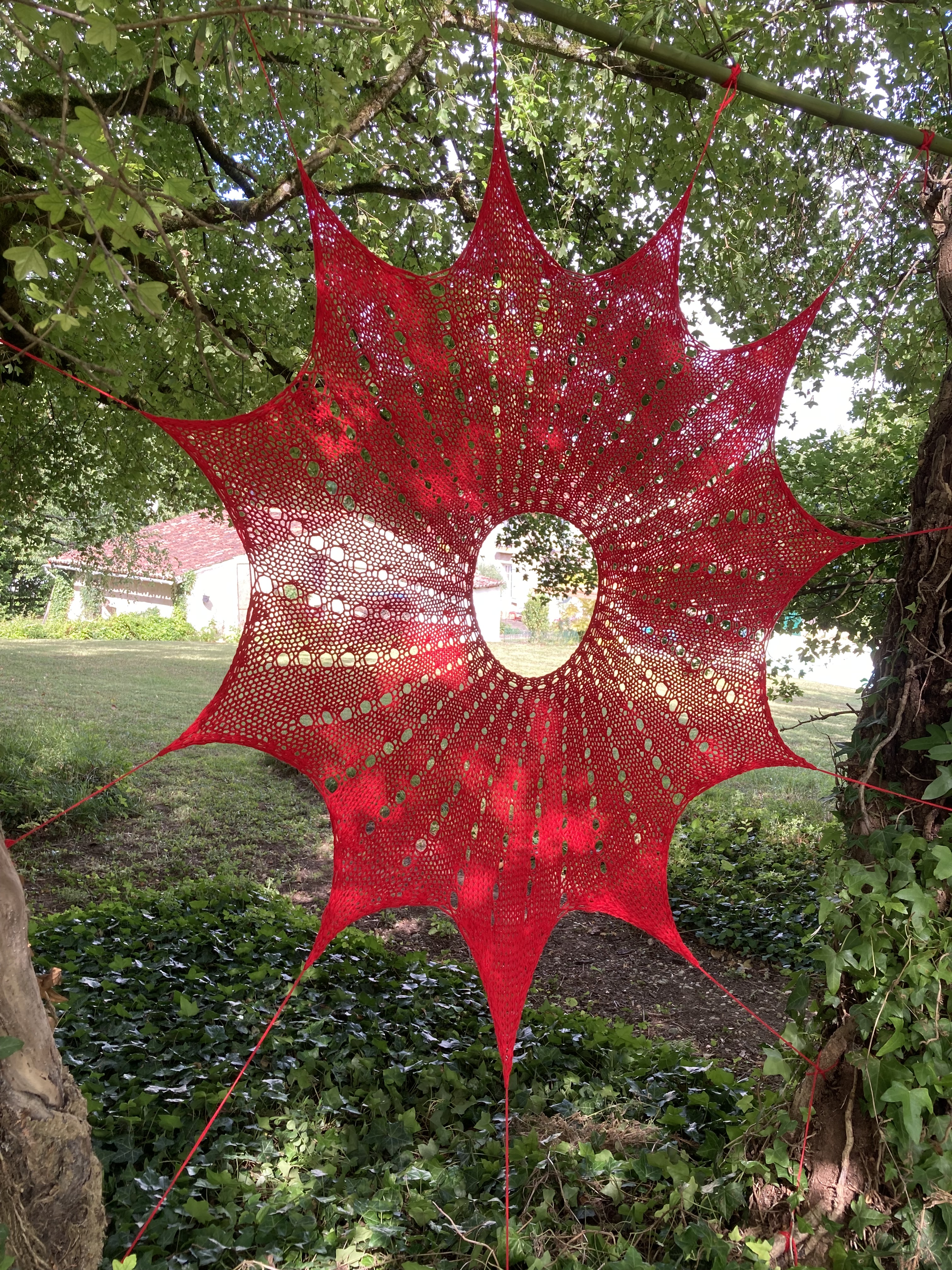
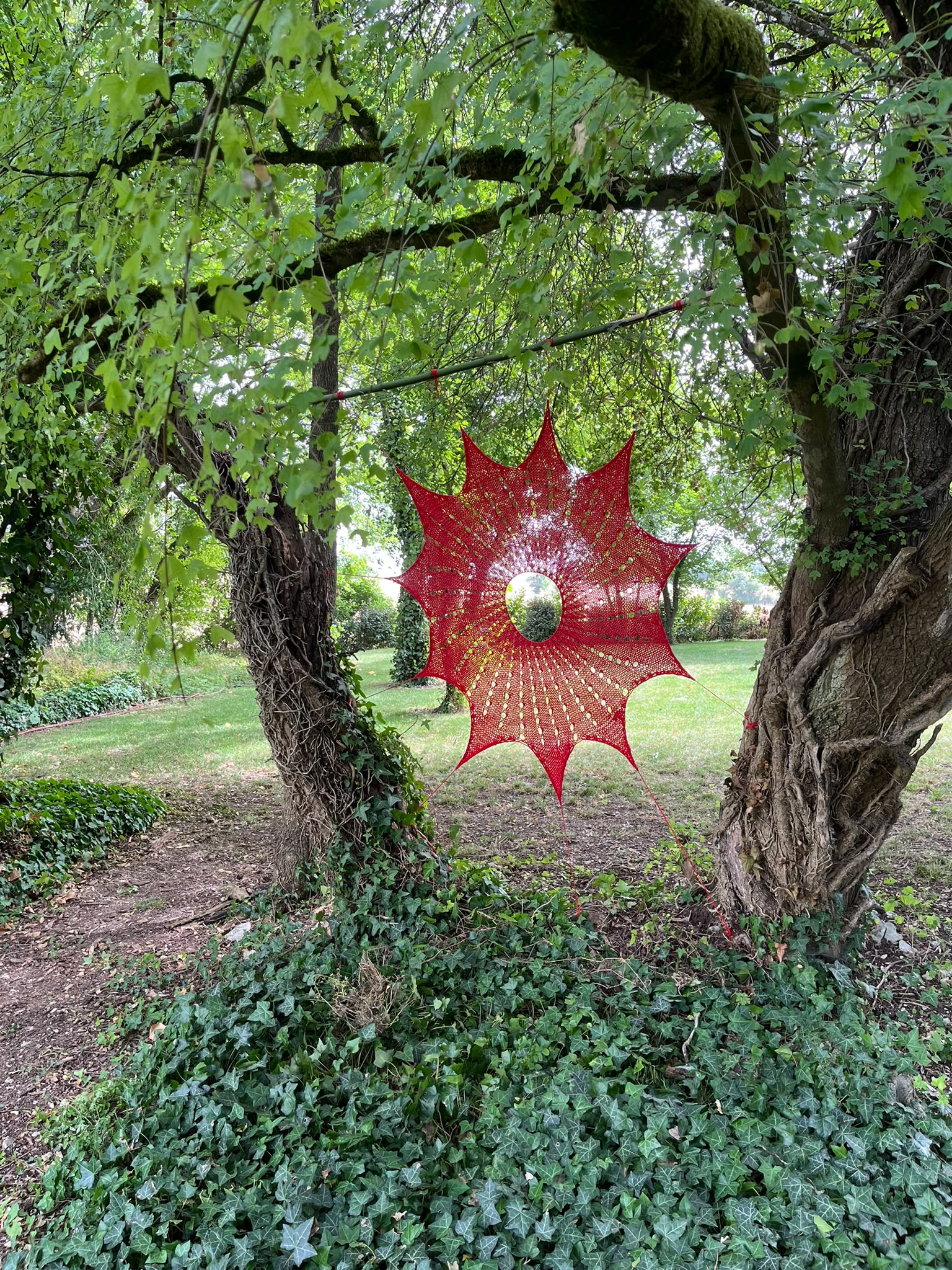
I’m SO delighted with it. Yesterday, in the afternoon, on a breezy day, as clouds flew across the face of the Sun, I watched how patches of light shone bright red on the dark red background, constantly changing shape and position. It was almost like watching a 3D kaleidoscope. Mesmerising!

Anyway, the opportunity to experience two of the five pillars of health at the same time – nature and art. I love that combination. 

OK, so maybe you’re wondering, why haven’t I said anything about the first three pillars – diet, exercise and sleep. Well, mainly because we are flooded with information about all three of these. There are so many variations, and, the truth is, no one size fits all, so you have to find the diet, the exercise regime and the sleep routine that works best for you, but essentially, it seems to me that a healthy diet includes diversity of foods, and is mainly, if not exclusively, one of non-ultrahigh processed foods. On top of that, most healthy diets recommend eating more plants than meat, and, if possible, eating food which hasn’t travelled all that far. I guess I’m lucky, living here in rural South West France, because there is an abundance of weekly markets within an hour from where I live. At any of these markets you can easily find seasonal foods, and locally grown ones. 

As far as exercise goes, the main rule isn’t about a certain number of steps every day, it’s about not spending too much time just sitting. Many of us have pretty sedentary jobs, or lifestyles, and there’s no doubt that the less we move each day, the more likely it is that we will develop severely limited mobility. Again, it’s a matter of finding what works best for you, but most specialists advice both strength training exercises, and some exercise which puts your heart rate up. 

Sleep? It comes down to finding the routine that works best for you, and sticking with it. That includes both determining when you want to go to sleep, and when you want to wake up ( 6 – 8 hours sleep is usually recommended ) and developing a wind down routine pre-bed time. It’s pretty much common sense, but, the underlying principle is to gradually reduce your exposure to stimulants, whether they be food and drink, or activities. 

Anyway, you really won’t find it difficult to find advice about those first three pillars of diet, exercise and sleep. What I will keep coming back to in my newsletters, posts and podcast episodes, is the value which nature and the arts can bring to our lives, to our health, and, to making more of our days, good days. 

So, here’s my quick summary advice for this week –

listen to music,

treat yourself to some art experiences and, if possible,

allow yourself some time in nature. 

Oh, and one more piece of advice, or, rather, an invitation. Come to bobleckridge.substack.com and sign up to follow me. 100% free. If you do that, you’ll get an email every time I publish a newsletter (I’m writing one every week just now) and every time I publish an episode of my new podcast, More Good Days.

By signing up, you’ll make sure you never miss an issue or an episode, and you’ll be able to catch up with any of the ones I’ve published so far.
Read Full Post »

In New Scientist, 8 November 2025, Graham Lawton wrote an article entitled “Older Faster”. He describes the difference between biological age and chronological age. Biological age is an estimate of your fitness, your wellbeing, based on how well your cells and systems are functioning. It’s closely related to inflammation. The more inflammation in your body, the faster it ages, and the more likely you are to suffer from pretty much any chronic illness. The phenomenon he describes is that, globally, we humans are ageing faster than we used to. 

There seems to be a strong correlation between obesity and biological ageing, and as we are seeing an obesity pandemic it’s no surprise that people are ageing faster too. But does the one cause the other? Are people ageing faster because they are more obese? Or are they becoming obese because they are ageing faster? 

These two statement shocked me – “Cancers are increasing in younger age populations, people under 40 years of age have more heart attacks, more diabetes” (social epidemiologist, Paulina Correa-Burrows) and “Cancer used to just be considered a disease of ageing. Now people are being diagnosed with colon cancer in their 30s, breast cancer in their 30s. Why is that? Perhaps some of the processes of ageing are acting earlier and causing ageing to accelerate, which then causes early onset cancer” (Jennifer Guida)

A study of 150,000 people whose blood samples were stored in the UK Biobank, revealed that those who were born after 1965 were “17 percent more likely to show signs of accelerated ageing than the older ones, born between 1950 and 1954” They also found this accelerated ageing caused an increased risk of early onset cancers of the lungs, gastrointestinal tract and uterus. 

The author argues we seem to have created an “obesogenic environment” in the world, and proposes that because this is correlated with accelerated ageing, we use the term “senesogenic environment” – an environment which is causing us all to age faster. 

Obesity rates in 5 to 19 year olds increased 1000 percent between 1975 and 2022, and it continues to rise. Something has changed. It’s still not clear exactly what, but one theory is excess calories, which seems to cause both obesity and accelerated ageing. In fact, calorie restriction activates body repair processes and slows ageing. 

However, we do know that it isn’t all down to calories. Stress hormones play a significant role. And, although, Graham Lawton doesn’t cover this aspect, poverty, job insecurity, social insecurity, poor housing, as well as environmental pollution from microplastics to cocktails of “forever chemicals”, and poor air quality, all increase the levels of stress hormones in our bodies. 

Rather, he concludes with the typical medical individualist approach and asks what we can do as individuals to slow down this biological ageing – exercise, calorie restriction, good sleep hygeine and the avoidance of alcohol and smoking, are the usual suspects. He mentions the benefits of GLP-1 agonist injections (like Ozempic) but concludes “time to lose weight and get active again”. 

That’s kind of a disappointing end to the article, because what interested me more was this concept of a “senesogenic environment”. Shouldn’t that be at the heart of government policies, not just on health, but on economics and the political choices we are making? If we want to tackle obesity the answer won’t lie in the next “miracle drug” (why do miracle drugs always turn out to be not quite so miraculous as time goes on?), but in a shift of focus towards the senesogenic environment, and that’s going to involve Public, collective, political and economic policies to reduce poverty and insecurity, to provide decent housing for all, accessible health care and education for all, and by cleaning up the air, water and soil by clamping down on chemical and plastic pollution.

This senesogenic environment isn’t natural. It’s created by political choice, putting the wishes of corporations and the rich over our common, shared needs. And by “our” I mean, not just we humans, but we living creatures of all kinds on this little spinning planet.

Read Full Post »

The perfect diet

Throughout my career, both in General Practice, and as a Specialist in Integrative Care, from time to time a patient would ask me if I had a diet sheet.

I didn’t.

But the question opened the possibility to discuss this particular patient’s current eating habits, and to give some guidance and recommendations. The reason I didn’t have a diet sheet is because, as with much else in life, there is no one size fits all.

There is no “perfect diet”.

There’s no diet which, no matter who you are, where you live, and what you normally eat, will be a healthier diet for you. I know, I know, there are masses of posts and articles which promise you that if only you’d eat this particular foodstuff every day, this other one twice a week, and add an extra helping of something else, then your blood lipids would plummet, your blood sugar would normalise, and the inflammation in your body would calm right down. I’m especially sceptical of those articles which claim that a particular food will produce a specific outcome – reduced risk of cancer, or strokes, or whatever. There really isn’t any way to know what a particular foodstuff will do for an individual, because there are so many other factors in play.

However, there are some broad guidelines which seem worthy of consideration. Michael Pollan. I like his “Eat food. Mainly plants. Not too much” because it captures three useful principles – that we should eat food which is nutritious, that we should privilege plants over meat, and that we shouldn’t over eat. I also like the principle that we should eat ultrahigh processed foods, as little as possible. It seems the bigger the list of chemicals whose names are hard to pronounce, or are presented just as letters and numbers, then the less likely the food will be to be nutritious (and the more likely it will have adverse effects on the body).

I also like the broad teaching that more colourful your plate, the healthier it is likely to be. There’s an awful of beige food in the world, and, to be honest, I prefer a bit of colour (as long as the colour doesn’t come from an industrial chemical!)

I also like the teaching to try to eat seasonally. In France, really every town of any size has a weekly, or more frequent, market, and it’s pretty obvious what’s in season, and what isn’t. I look forward to Corsican Clementines every year, for example, but there are many other plant based foods which only appear on the stalls when they’ve been harvested that year.

But, I think perhaps the most important thing to say before giving anyone dietary advice, is “tell me what you normally eat”. It can be difficult for people to that, so, sometimes I’d ask them to go off for a couple of weeks and write down in a notebook, every single thing that passes their lips. Reviewing their pattern, even over a fortnight, can be revealing. It’s also important to explore food allergies, sensitivities and preferences. So, as is usually the case, it’s best to start by listening, or, if you’re doing this yourself, by observing.

I think if you decide to keep a food diary for a period of time to discover your normal habits, it’s important to write down absolutely everything you eat or drink every day, and it’s actually better to it for thirty days, than just a fortnight. Also, no cheating! Because you’d just be cheating yourself! Don’t avoid what you’d normally eat, to record a diet which you think you SHOULD be eating!

Once you’ve listened or observed, then that’s the time to see what might be tweaked, or changed. And, at that point, it’s pretty obvious, we are all different. There’s no point recommending fish twice a week to someone who is allergic to fish, for example.

Bottom line is, there is no perfect diet, so there is no perfect diet sheet. What we can all do is become more aware, and choose to make the changes we would really like to make – whether that involves a move away from UHP foods, from takeaways, from snacks or sweets, or from cutting down on alcohol consumption.

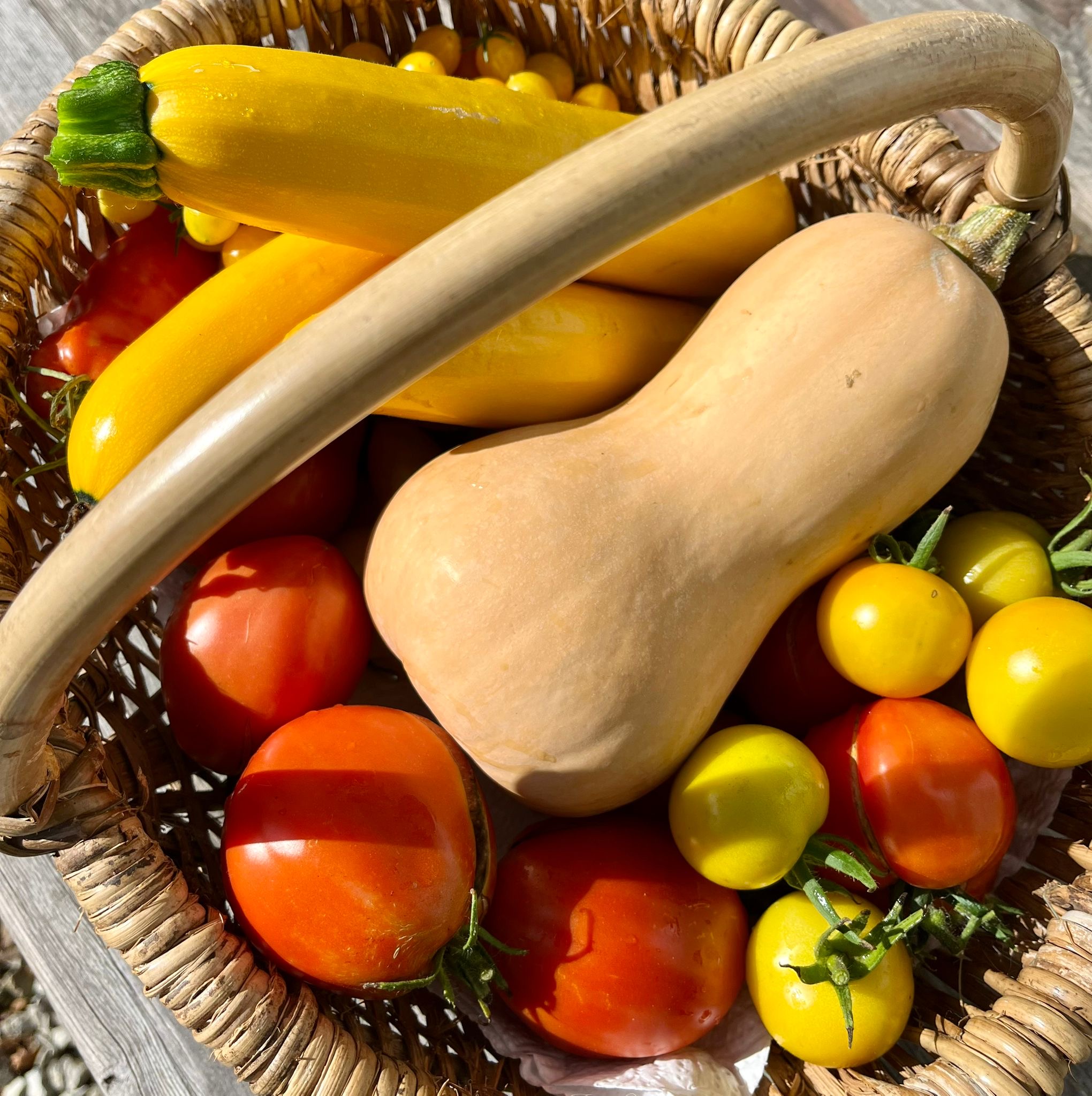
That photo at the top of this post, by the way, is one day’s harvest from our “potager” (veggie plot) here in France. I can honestly say everything in that basket tastes delicious, and all of it has enhanced my quality of life…..which strikes me as a pretty good way to choose my own diet. You should choose yours.

Read Full Post »

Before he became famous for his predictions, Nostradamus was an acclaimed doctor, who during a plague treated patients successfully. What kinds of treatments did he use which were successful back in the early 16th century?

Well, primarily, he gave good advice about how to live healthily….recommending that people went outdoors to get fresh air as much as possible, teaching them about hygiene in the home, getting them to rid themselves of rats and excreta in the house, changing and washing the bedsheets, and eating a healthier diet (low fat, I read, but I’m not sure of the details).

On top of that he prescribed a herbal remedy based on rose hips which contained high levels of vitamin C.

So about 500 years ago the most successful ways of dealing with infections and epidemics was already known – it came down to good hygiene and healthy living conditions, combined with a decent diet rich in vitamins. When it came to our most recent pandemic, Covid, the same proved to be the case. The highest rates of infection, serious illness and death were in those who were already suffering from chronic diseases and/or who were living in poverty, in overcrowded housing, and with inadequate diets. Great claims have been made for vaccines, but, at the end of the day, the best way to maintain the health of populations is the same as it’s always been – a good healthy living environment.

That’s why I think we should take good care of our commons – the air, the water, the soil – reducing pollution, and investing in healthy environments. It’s also why I think we should radically change our industrialised farming and food production to produce healthy, vitamin rich food, which should be the basis of everybody’s good diet. It’s also why I think we should invest in good housing, well insulated, easily maintained, and accessible to everyone.

In addition, I think Universal Basic Income and taxing the rich to reduce inequality and poverty are worthwhile policies to pursue (even if our current governments don’t seem to be doing that)

Finally, comes better health care. We do need to improve our health services, and our health care methodologies, but the way to healthy, resilient populations, has a lot less to do with health care than it has to the provision of healthy living conditions.

Read Full Post »