Feeds:
Posts
Comments

Archive for April, 2026

I have a long, long love for the French language and culture. I’ve found books, articles, magazines over the years which do a couple of things which I didn’t come across in Scotland, reading English. It’s not just the way these texts are written, nor the way they use beautiful graphic art and images, it’s the subject matter they consider worth while spending time on. 

One particular book from 2009 opened up a whole way of seeing for me. The book is called “La Maladie cherche à me guérir”, and it’s by a doctor called Philippe Dransart. The book has never been translated into English as far as I’m aware, but the title in English would be something like “The Illness is searching for a way to heal me”. Dr Dransart starts from the idea of the embodied metaphor. Now, I have read about this idea elsewhere, not least in the books like “Metaphors we Live By”, by George Lakoff and Mark Johnson. But Dr Dransart draws from his own clinical experience to show us how often the actual words patients use, especially the body-focused metaphors they use, can be the key to understanding their suffering. Understanding not only their diseases, and why those diseases might have appeared in specific organs or tissues, but also understanding their psyche and life story, and how that connects so deeply to their unique patterns of illness. Put simply, he discovered, time and again, that when someone presented with a problem in a particular part of the body, then they’d often use metaphors about that very part when talking about themselves. 

In his book, he systematically considers metaphors and figures of speech used by patients presenting with problems in pretty much every system and organ of the body, but for my purposes here, I want to focus on only one – the heart. And, as an English speaker, I’m going to focus on the heart metaphor phrases which we use in the English language. 

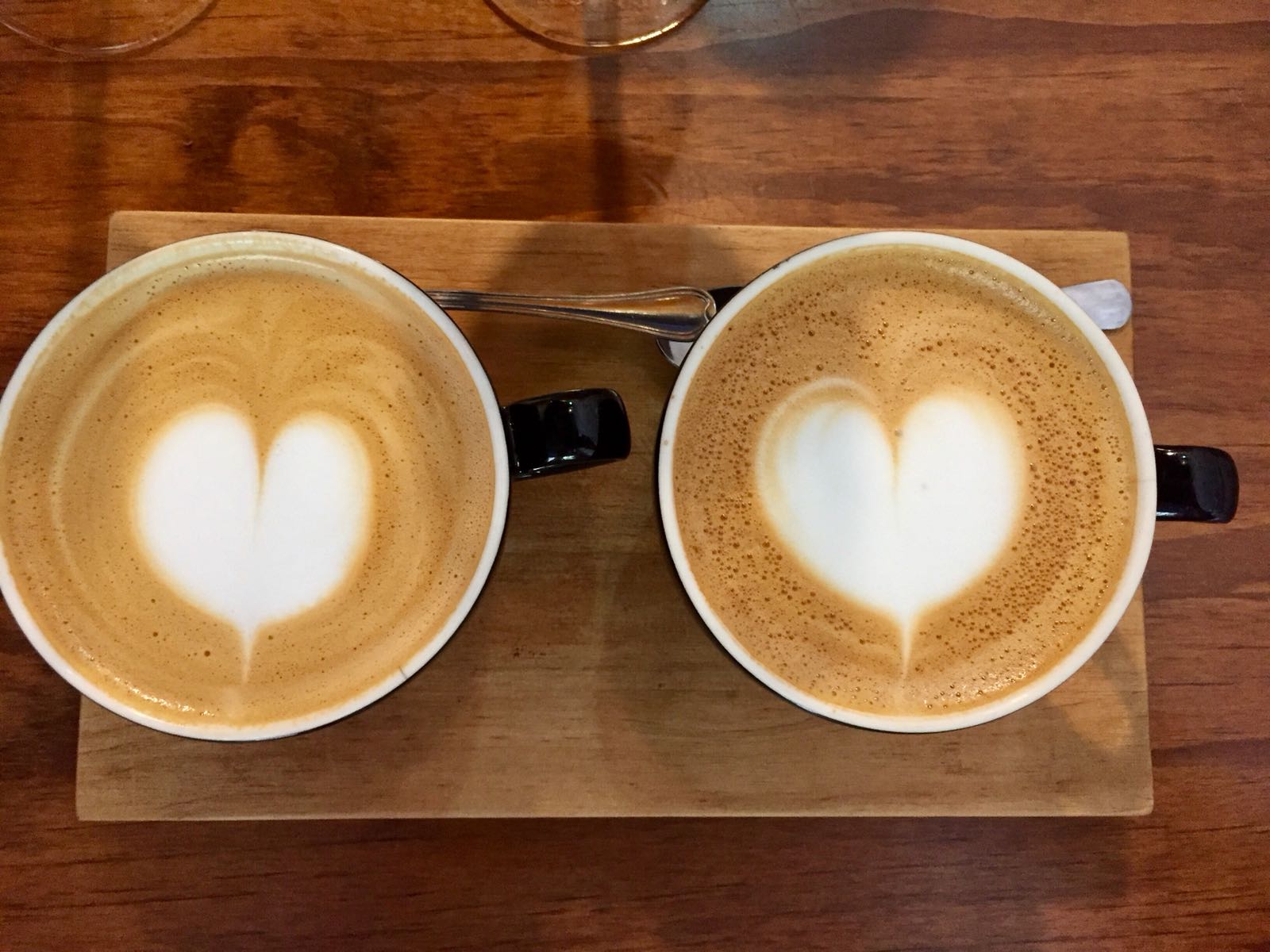
I’ve already mentioned one at the very beginning….having a heart to heart. When we say that we imply that our conversation will be true, important, and intimate. You don’t have heart to heart conversations with just any stranger you might encounter in a coffee shop, do you? We have heart to hearts with loved ones, with family and friends, and with trusted professionals. In a heart to heart conversation we will talk about what’s important to us, and also, to what is shared between us. A heart to heart, does, after all, involve two people. It’s not something you do yourself, and it’s not something you’d normally try to do in a group. It’s personal. It’s specific. It’s an opening up to another. 

Let’s look at some other heart metaphors. Do you know someone who is “big hearted”? It means they are generous doesn’t it? Not at all the same as someone who is “big headed”! And notice we don’t say people are “big kidneyed” or “big livered” by the way. On the other hand, do you know anyone you think of as “heartless”? We might even apply temperature differences to these opposites. So maybe someone is “warm hearted” and another is “cold hearted”. A warm hearted person will often do, or say, something we’d describe as “heart warming” when we feel that comfortable, cosy feeling inside. 

What would you say if I were to ask you what was “dear to your heart”? You might say, not what, who, and tell me of loved ones. Or you might tell me about whatever it is that is most important to you, whatever you feel most passionate about. In fact, we tend to think of the heart when we think of passion, don’t we? Maybe we associate “will” with the head, but we associate “passion” with the heart. On the other hand, when we are de-motivated, we might say our “heart isn’t in it”. We are not really committed. It doesn’t move us, inspire us. 

We apply a weight to the heart too, don’t we? When did you last feel “light hearted”? Can you think of a time when you felt free of anxieties, content, even happy, where “light hearted” would be a good description? When I think of someone “light hearted” I think of them smiling, moving easily, maybe even skipping (if they are still young and fit enough to skip!) It’s a joyful image. But what gives you a “heavy heart”? When do you get sense of dread, a sinking feeling? We often move our metaphors down into our abdomens when we have these heavy feelings, don’t we, describing a “gut feeling” of something not quite right. Isn’t it interesting that we “feel” intuition in our hearts and in our guts? As if our bodies are telling us something, our brains haven’t quite figured out yet. 

The heart, of course, is the seat of love, isn’t it? We use a stylised image of a heart, usually a red one, as an emoji to say we love someone or something. We put red hearts on the Valentine cards. We make a heart symbol with our two hands when we want to communicate love at a distance. How often do you see athletes or performers do that when their fans are loudly applauding an achievement? 

When we fall in love, the very sight of our loved one can make our hearts “skip a beat”, and if they abandon us, we feel “heart broken”. In unresolved grief, we might even say someone died of a broken heart. 

The heart is also the seat of excitement. There’s a Dutch knitting podcaster who my wife listens to, who often talks about something being “heart jumping” – which, although not an expression I’ve heard much in English speakers, is a great one for conveying what is exciting, what stirs her or inspires her. 

Can you think of any others?

There are two more I’d like to consider. The first is how we oppose the head and the heart, saying someone lets their heart rule their head, or vice versa. Usually there, we are talking about the balance between rational thought, cognition, and feelings and emotions. 

And here’s my most favourite one, which comes from “The Little Prince” by Saint-Exupery. The fox asks the Prince if he want to know his secret. 

“It is very simple. The important things in life you cannot see with your eyes, only with your heart”

Isn’t that wonderful?

But how do we do that? How do we find the important things in life by seeing with our heart? 

When I was at university I was taught about the heart, its structure of four chambers, with valves between the atria and the ventricles, its muscle cells with their astonishing ability to beat out a rhythm, its incredible system of production and distribution of electrical currents to co-ordinate the beating of those muscle cells, its blood supply and its nerve supply, and a lot about the diseases of the heart, how to diagnose and treat them. 

But it was only years after graduation, when I was working as a young doctor, that I came across the discovery that the system of nerves around the heart was much more complex and powerful than had previously been thought. 

There’s a special kind of nerve in the human body called the neurone. We have somewhere between 80 and 100 billion of these cells in our brains, and another billion spread throughout the body. These neurones either transmit information up to the brain from our sensory organs and from specialised sensors which are spread through the other tissues of the body. Or they are responsible for sending electro-chemical signals from the brain to all our muscles, co-ordinating which contract, and which relax. 

The 100 billion neurones in the body are each directly attached to as many as 5,000 other neurones forming an astonishingly complex web known as a neural network. I mean, these numbers are beyond our comprehension, aren’t they? They are just mind boggling! 

For a long time we’ve paid a lot more attention to the neural networks in the brain than we have to the ones in other parts of the body. But we now know that there are in fact important neural networks which surround especially the heart and the gut. That discovery is fascinating enough, but, what I find even more fascinating is that the nerves connecting the network around the heart to the one in the brain are mainly carrying information from the heart to the brain. Only a minority of them are carrying instructions from the brain to the heart. 

So, it turns out, the heart is more than a complex muscular pump responsible for distributing blood around our arteries and veins. It’s actually doing some of the processing we used to think was exclusive to the brain. 

What’s it doing? Well it’s now known as heart intelligence. It’s gathering information and processing it before passing it on to the brain. 

I mean, that’s fascinating enough, isn’t it? But there’s more. We’ve discovered something else. Everything in the world which beats a rhythm sends out electromagnetic waves. As the rhythm of the heart changes so does the pattern of these waves. 

You know how in medical dramas on tv there is often a heart monitor attached to some sick person lying in a bed? The monitor shows the beating rhythm of the heart, with a little line running across the screen. A flat line means the heart has stopped beating. A healthy pattern is of little spikes appearing in that line at regular intervals. 

Well, it turns out, those intervals shouldn’t be too regular. The actual gap between each beat of the heart should be varying, ever so slightly. We can measure that variation and we call it “heart rate variability”. 

Different degrees of variability send out different patterns and strengths of electromagnetic waves. We’ve discovered a particularly important pattern, which we call “coherence”. When the rhythm of the heart achieves coherence a number of powerful, important healthy changes occur throughout the body. This rhythm affects the release of certain hormones and other chemicals, it affects the tone of the other muscles, and it affects the activity of the brain. Not only that, but heart rate coherence is associated with very distinct emotional states. It’s a two way process if you like. We can focus on the heart and induce both coherence and particular emotions, and we can relive certain emotional experiences and induce heart rate coherence.

I first learned about all this when I came across the publications of a group of researchers in America who described this phenomenon, and were teaching people how to achieve it. They called it “Heartmath”. I took the training programme and taught the techniques to many of my patients over the years. 

I’d like to teach one of these techniques right now. It’s called “Quick Coherence”.

There are three steps to achieve “Quick Coherence” – a basic Heartmath technique, and by the way, you can find out a lot more about these techniques at the website of the Hearthmath Institute. 

Step 1. Heart focus. Bring your attention or your focus to the heart area of your body. Remember how important attention is? It activates and it magnifies. So we want to bring our attention now to the heart area of the body.

Step 2. Heart breathing. Take three, slow, deep, even breaths, filling the heart area of your body with oxygen, then emptying your lungs of all the carbon dioxide. Slowly in, slowly out, for three breaths. Just these three deep, diaphragmatic breaths resets a part of the nervous system we call the “autonomic nervous system”, calming us down, settling us.

Step 3. Heart feeling. Now recall an event where you experienced one of the positive, heart felt emotions. Here’s a couple of ones I use to give you an idea of the kind of event I mean. One is one of my grandchildren running up to me, shouting “grandpa!” and jumping up into my arms. That’s a great one! Another is looking out over Ben Ledi from my living room window when we have one of those gorgeous deep red sunsets – just amazing! Pick one of your own, and recollect it. Stay with that memory until you become aware that you are feeling that feeling again. This is about recreating a feeling. Once you have it, that’s it. You’re there.

Congratulations, you just managed “Quick coherence”.

Many of my patients would use that technique to escape from a panic attack, or to settle a state of agitated anxiety. It’s quick. It’s effective. And it gets more effective the more you practice it. 

I describe the exercise in a bit more detail here – https://heroesnotzombies.com/2012/02/07/heartmath-a-simple-guide/

But we can do something else with this state of “coherence”. We can use it to access our heart intelligence. Let me just suggest one way to do that. Start by following the steps to achieve coherence, then ask your heart what it wants you to know. Just sit quietly for a few minutes, maintaining this coherent state with slow, deep breaths, and notice what comes up for you. Alternatively, ask a specific question. Is there something you are trying to decide? Is there a problem you are trying to solve? In the state of coherence, ask your heart for its suggestions. Ask it to help you decide. 

All this is a very deliberate, very conscious way of accessing our heart intelligence. But, in reality, this is just the way we are. We are using heart intelligence all the time. It never goes away. It’s just that it is occurring in the background, below the level of consciousness. 

But heart coherence isn’t just an exercise. As the research has shown it is associated with certain emotional states, namely, love, awe, joy, excitement, and contentment, ease, calm and peace. So when we experience an everyday event which generates one of those emotions in us, it sets up the heart to enter into coherence. The same thing happens if we re-create in our minds a particularly vivid memory of an event where we experienced one of those emotions. That’s the step 2 in the quick coherence exercise. 

There’s a way to make all this happen more often. Practice. Both the practice of an exercise like the one I’ve just described, or setting an intention at the start of the day. When we set an intention, it doesn’t mean that the universe magically aligns itself to that intention, but it can feel like that. It means we heighten our ability to notice whatever might align with that intention. 

You can prove this for yourself with a simple exercise. Pick a colour. Any colour. Now during the course of the day take a photo of whatever you see that is that colour. It’s likely you’ll pretty quickly start to see that colour everywhere. 

Well you can do the same with the heart. How about you set an intention to notice the moments in the day when you feel warm hearted, or light hearted? Or how about moments when you experience what the Dutch vlogger calls “heart jumping”? 

It’s that old thing of attention magnifying whatever it is focused on. An intention like this is a kind of focus, and it increases the chances of you experiencing what aligns with it. 

You can also increase your experience of heart centred living and seeing by reflecting at the end of the day – what did I experience today that was “dear to my heart”? What did I do which made me feel “my heart is in this”? Did I have any “heart to heart” conversations? 

Because there is another aspect to this heart coherence thing that I haven’t talked about yet. Remember how I said anything which beats with a rhythm sends out waves into the world? Well, anything which CAN beat with a rhythm can pick up those waves, and align itself. 

You know there is a story about the clockmaker who had several old clocks in his workshop. The kinds of clocks which work with a pendulum. At the end of the day, he would set each clock pendulum swinging. Before he left the room he could see that each pendulum was swinging its own rhythm, left to right and back again. When he came back to the workshop the following day he noticed that every single pendulum was swinging in synchrony. They had aligned themselves. That’s a physical phenomenon called “entrainment”…..the rhythms coming into alignment with each other. Well, the Heartmath researchers discovered they could measure the electromagnetic waves coming from the human heart. In fact they could measure them outside of the body as they spread into the environment. And you know what? They found that if someone achieved heart coherence, then the person standing next to them was more likely to develop it too. The wave pattern travelled from one person to the next….entrainment. Or, maybe you could say, “attunement”. Now this happens, not only with coherence, but with other patterns too. Maybe that at least partly explains why we feel uncomfortable around certain people, or why we can “pick up an atmosphere” in a room. 

But here’s the exciting part. If we deliberately practice coherence, both through exercises and emotional experiences, the we can spread those healing waves to others. 

Do you find that surprising? Well, let me tell you one other finding….that the power of the transmission increases when two people touch. So, one person whose heart is in coherence, holding hands with another is likely to induce coherence in their heart too. 

Now, you’re probably thinking…isn’t this a two way process? Isn’t the disturbed or anxious pattern likely to be transferred too? Yes, I’m pretty sure that’s true. But signals have a power, and the more we practice coherence, the more powerfully we will transmit that to others. 

Intentions and reflections. They can both train our attention. So let’s put our heart into both of them. 

How about a Mary Oliver poem?

An Old Story

Sleep comes its little while. then I wake

in the valley of midnight or three a.m.

to the first fragrances of spring.

which is coming, all by itself, no matter what.

My heart says, what you thought you have you do not have.

My body says, will this pounding ever stop?

My heart says: there, there, be a good student.

My body says: let me up and out, I want to fondle

those soft white flowers, open in the night. 

Her heart says, “there, there, be a good student”. Why not take that advice? Give it a go. Sit yourself down somewhere, take the three, deep breaths slowly, and ask “what does my heart have to say?” Maybe nothing will come to mind. Maybe something clear will appear. Maybe something will suddenly pop into your consciousness later, even at night, asleep, in a dream. 

In episode two of my podcast, “More Good Days”, I shared some music with you which I collected together into a “More Good Days” playlist. So, I thought, today, I’ll make a playlist for this episode, “Heart to heart”, gathering songs which mention the heart. 

I’m going to start with Neil Young’s “Heart of Gold”. This goes all the way back to my first year at university, 1972, and even though, now, I’m really “growing old”, I think the “heart of gold” is still worth seeking out in life. I feel so blessed to have discovered so many of them! 

I am a life long Genesis fan, not just the Peter Gabriel years, and I’ve got many, many favourite Genesis tracks in my favourites list. “Hold on My Heart” still moves me every time I hear it. 

“Heartbeats” by Jose Gonzales, is a beautiful song, with the memorable line – “sharing different heartbeats in one night”. We are all different, but is there anything more beautiful than sharing our different heartbeats?

“Heart” by Sleeping at Last, only mentions the heart in the title, not in the lyrics, yet it is a gorgeous, heart felt song. 

“My Heart Will Go On”, Celine Dion. Oh my, this ballad has been played a bit too much at times, but, returning to it today, flipping heck, it still reduces me to tears! 

“Heart and Soul”, by Roseaux and Olle Nyman, might be completely new to me, but the line “You’ll remain like a song in my heart and soul” reeled me in. Isn’t that what Celine Dion sings about in “My Heart Will Go On”? And isn’t that a beautiful metaphor that illuminates the deepest truth – that we keep each other “like a song” in our “heart and soul”? 

“The Shape of My Heart”, by Sting. Sting is another of my favourite singers who has written so many beautiful songs. This song asks me, and asks you, what is the shape of your heart? 

Finally, I’m suggesting an instrumental track, Max Richter’s “On the Nature of Daylight” which holds my heart and makes it soar. 

Until next time, bonne journée. Have a good day. 

Here’s a link to a Spotify playlist of these songs – 
Read Full Post »

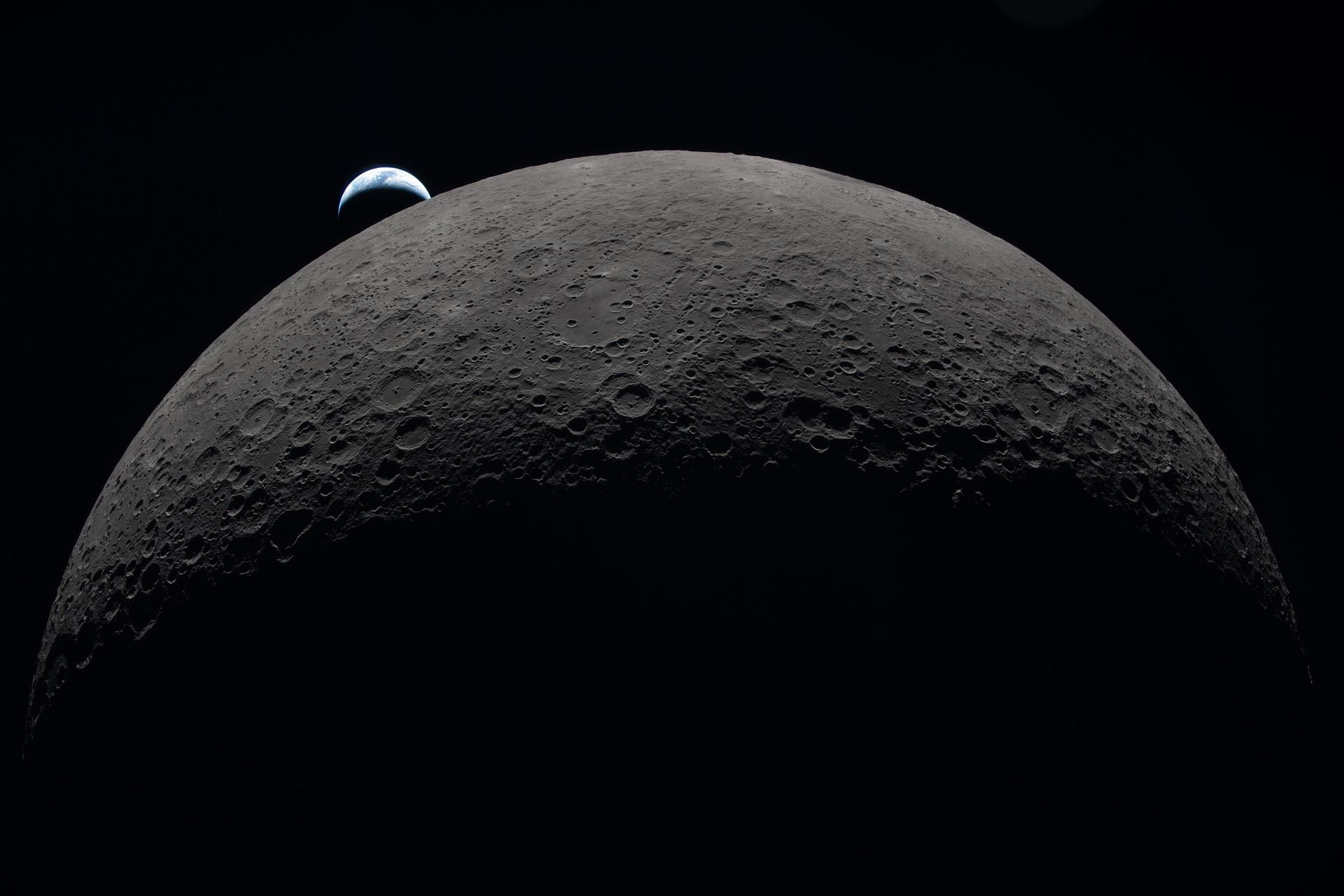
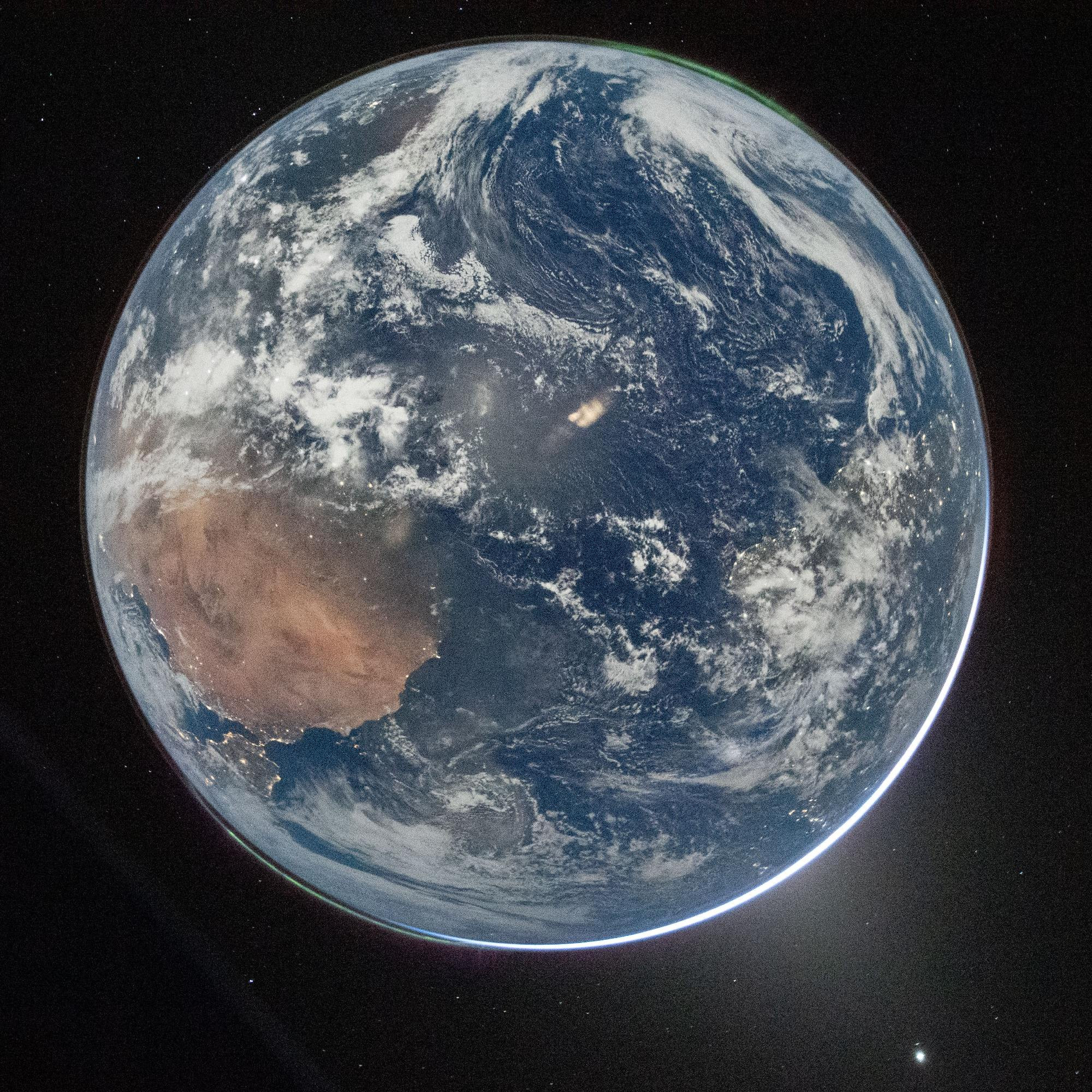
When NASA shared this photo taken from Artemis II I was entranced. I can’t tell you how much time I’ve spent looking at this. This is a view of planet Earth which few of us will see with our own eyes, but thanks to the astronauts, all of us can see it. Look how much water there is! I know, 71% of the Earth’s surface is covered with water, but it still takes me aback to see these great expanses of oceans. And guess what? There are no divisions between one area of water on the planet and another. The great water cycle, from the oceans and seas, to the swirls of rain-soaked clouds which constantly change shape and size, to the streams, rivers and lakes….what goes into the water, flows from one part of the world to all the others.

The second thing I notice are the auroras, one top right of the image, and the other bottom left. In both cases a thin green glow, illuminating just how short is the distance from the surface of the Earth to the airless atmosphere above. There is this incredibly thin layer around our planet, which makes life possible. Compared to the planet herself, this life sustaining layer is astoundingly thin. It looks so delicate. So fragile. Staring at this slip of atmosphere I’m impressed by how, like the water cycle, all of the air we breathe is undivided. What goes into the air at one point on the Earth, quickly spreads around the entire globe.

Nanci Griffiths sings, in “From a Distance” –

From a distance there is harmony
And it echoes through the land
It’s the voice of hope
It’s the voice of peace
It’s the voice of every man

From a distance we all have enough
And no one is in need
There are no guns, no bombs, no diseases
No hungry mouths to feed

and, later, in the same song……

From a distance you look like my friend
Even though we are at war
From a distance I can’t comprehend
What all this war is for

“From a Distance” was written in 1985 by Julie Gold, and recorded by Nanci Griffith for her album, “Lone Star State of Mind”. I heard Nanci perform it in Edinburgh in the early 1990s, and it delights me still. Yet, there is, of course, a sadness there, because all these years on and there are still pathological narcissists flinging bombs, missiles and bullets at people, killing, destroying, and sowing fear and chaos.

It doesn’t need to be this way.

Human history tells us that we humans excel at killing each other, destroying habitats, and wiping out whole species. But we are also capable of great art, from the cave drawings of Lascaux, to Botticelli, Michaelangelo, Picasso, Van Gogh, and so on. We are capable of creating the most exquisite music, of writing the most astonishing poems and stories. We are able to invent mind boggling technologies. And, most of all, we are one of the most social animals on the planet, deeply desirous of love, affection and caring relationships.

I look at this photo and I think of all of that. I think, with sadness, of the hate, the selfishness, greed and destruction. I think, with hope, of the kindness of strangers, of the infinite creativity of humans. And, most of all, I think, what a tiny, finite world we all share, spinning on this little planet as it flies, soundlessly, across the universe.

We are well capable of creating a better world, recognising what we share, caring for this planet, and all the marvelous diversity of life living here.

Maybe the view from on high will remind us of that, and inspire us to work to achieve it.

Read Full Post »

Wonder and awe

Episode 2 of my More Good Days podcast is available now, come and subscribe to my substack to receive each episode, free, in your inbox.

Here’s the text, if you’d like to read it……

Are you having a good day? Was yesterday a good day? Whatever your answer, and, yes, I would really like to know about your good day, let’s make today a good day. I’d like to help you do that, and I think the best way for me to do that is to share with you what I’ve learned from my experience with thousands of patients who told me what makes a good day for them, as well as sharing what makes a day a good day for me. 

We are all different. We live according to our own values, tastes, desires, our own relationships and issues, so what goes towards making today a good day for me, may well be different from what makes a good day for you. However, we also have a lot in common, there’s a lot that we share. 

In this podcast, I’ll share with you lots of actions you can take to make today a good day. There are tried and tested principles underpinning these actions. Many of them have been taught through different cultures and traditions over centuries. Some we’ve only discovered more recently. 

You can take any of these principles, try any of these actions, for yourself. Make them your own. The way you apply these ideas in your everyday life will also be unique. That’s great. That’s how it should be. Your day is unique, because you are unique. Nobody else is living, will live or has lived the exact same life as you. We might all be made from the same star stuff, we might all share the same air, the same water, and food produced from the same ground, on this little blue marble of a planet, but there are no two of us who are, were, or ever will be, exactly the same.

When I ask if today is a good day, I know there aren’t just two kinds of days. Good ones and bad ones. Our experiences are much more nuanced than that. Our days are more multi-coloured than that. You may well have some good experiences today, but there might, as well, be some not so good ones, and only you can decide if you’d like to call today a good day. 

In the evening, maybe before you head off to bed, you might reflect on your day, ask yourself, how does it feel? Are you going to call this a good day? If so, why? What particular moments, which specific experiences or encounters made this a good day? 

And if you don’t feel you can call this a good day? Well, why not? What happened today, what experiences did you have that lead you to say that today wasn’t a good day? 

As you think back over the day, even if you conclude it was a pretty crappy one, were there any moments in it which felt good?

You might like to just spend a few minutes on this, this reflecting, this thinking back over the day. 

Why not get a notebook, a journal, and write your thoughts down? These days some people prefer to speak their thoughts, rather than write them and that’s so easy now. Our phones and computers all have easy to use dictation software on them now. So, you could record your thoughts by speaking them into a digital note. Paper, phone, computer, whatever works best for you. The important thing is to make it a habit. Do it every day. Spend a few minutes, reflecting and noting down what made today a good day (or not a good day!)

Remember what we pay attention to, grows. So, my suggestion is to become more aware of what, in your opinion, makes your days good ones, and to spend some time remembering, and so reinforcing, whatever made them so. 

L’émerveillement du quotidien

If there was just one thing I’d recommend to anyone wanting to increase the quality of their everyday life, it would be to nurture a capacity for wonder and awe. 

There’s a French phrase which has appealed to me a lot from the very first time I encountered it – “l’émerveillement du quotidien”. It’s not that easy to translate, because I don’t think any single English word substitutes for “émerveillement”, but the “du quotidien” bit is easy – it means everyday, as in “ordinary”, “typical” “daily” – but the key is the “émerveillement” which contains the meanings of “wonder”, “amazement”, even “awe”. 

I’m fairly happy to translate it as “the wonder of the everyday” as long as that phrase also conveys the idea of “the extraordinariness of the ordinary”. 

The thing is, every single experience we have, we are having for the first and last time ever. Every single experience is unique. Every encounter is unique, just as every person and every relationship is unique. We can get in touch with that uniqueness by stirring up a sense of wonder. 

Actually, the practice of becoming aware of first and last times, is an ancient “spiritual” or “philosophical” practice, which I’ll go into in more detail another time. But, for now, let’s spend a little time wondering about wonder….where can we find the inspirations that make us wonder?

Wonder in Nature

I find natural phenomena to be the greatest source of wonder. I can be amazed at the sight of a butterfly, the colours and patterns on its wings, (astonishingly, the colours in a butterfly wing are mainly produced by the microscopic scales which cover the wing. These scales reflect and absorb light to produce the appearance of colour. I’m not sure I can quite get my head around that). I watch in wonder at the way a butterfly flits from flower to flower, constantly changing and direction. I try to predict which flower they’ll fly to next, and I never get it right. I’m sure I once read that physicists haven’t managed to work out how on earth a butterfly manages to fly that way. As I watch the butterflies I think of how different they are from the caterpillars which they were when they were younger. How on earth does a creature like a caterpillar, create a cocoon for itself, and emerge some time later utterly transformed into a beautiful, butterfly with the ability to spread its brand new wings and fly? 

I can be entranced by the little lemon tree growing outside my front door, now full of buds, then flowers, amazed at the dark, unexpectedly reddish colour of the new growth leaves, delighted at the appearance of the lemons, first as small green globes, swelling and ripening over many weeks to beautiful yellow lemons.  I can lose myself gazing up at the shapes of clouds in the sky, watching them constantly morphing from one shape into another. I can be surprised and captured by the way the petals of a flower catch the sunlight making it seem like they are glowing, looking as if they are shining this energy from within themselves. You get the idea, I’m sure. 

I love to walk amongst the trees, to pause, take deep breaths and smell that cool, slightly damp, woody smell. I delight in the diversity of colours and shapes of their leaves, their blossoms, the sometimes immense girth of their trunks. I think of how some trees have been alive for centuries, and how, despite the fact they don’t have brains, and they can’t move from place to place, they’ve evolved the ability to live on this planet for much longer than we humans can. I think of the scientist, Richard Feynman who said that trees are created out of the air. They take in carbon dioxide and water from the air, and turn it into trunks, branches, twigs, leaves and blossoms. They capture the sunshine for energy and create the oxygen without which every single animal, including humans, would die. You might think that trees get their water from the ground, but, Feynman said, yes, but where does the water in the ground come from? It comes from the sky. Trees really do create themselves from sunshine and air. Isn’t that incredible?

By the way, there is a lot of evidence that spending time amongst trees is good for your health. I’ll tell you about that in another episode.

If you ever browse through the photos people post on social media you’re likely to find plenty of pictures of sunsets. We love sunsets, don’t we? Especially sunsets over the oceans. How often do people gather on beaches, or along promenades to watch the sun go down? One sunset that really made a great impression on me was in the movie, “Le Rayon Vert”, The Green Ray. The film is based on the Jules Verne novel of the same name, although his story is set in Scotland, whilst Eric Romer’s film is set in France. The green ray in question is a rare phenomenon which can occur just as the last of the sun sinks below the horizon of an uninterrupted view across an ocean. The legend, Jules Verne created, was that when someone observes the green ray, they can see into their own heart, and into the hearts of others. 

I don’t live on a coast, but any time I notice the clouds in the sky turning pink as the sun sets, I feel compelled to go outside into the garden, to look up, and just savour the glorious, fast changing colours, in those last few moments of the day.

Meanwhile, which natural phenomena caught your attention today?

Wonder in people

Also, I’m amazed by people. I looked forward to every Monday morning at work because there would be a new clinic, with new patients come to share their utterly unique and wonderful stories with me, and then there would be others coming to relate the changes they had experienced since their last visit. You couldn’t predict what they were going to say, and you never heard an identical story twice. Time and time again patients would tell me about their experiences of trauma, events which had wounded them sometimes which had happened decades ago. Events which shocked and upset me, but which they’d survived. They would demonstrate astonishing abilities to cope and to keep going. Many times I would think, wow, you are an amazing person. Many, many times patients would say to me “You’re the first person I’ve ever told that. I’ve never spoken about it to anybody else”. The fact that we could create such trusting relationships made me feel very, very privileged. I’d hear people say, “You know me better than anyone else ever has”, and I was convinced that meant they now understood themselves better than ever before. 

These comments were common in my place of work. Colleagues had the same experiences. Both during my years as a GP, and my years working at Glasgow Homeopathic Hospital, I was privileged to have colleagues who shared a holistic, non-judgemental approach to patients. It really was normal for me to hear my partners and co-workers describe their enthusiasm about such impressive, and even awe inspiring encounters. It wasn’t like that 100 percent of the time. We all had our share of misunderstandings, disappointments, and frustrations. But it happened enough of the time for those days to feel like good days, and for there to be enough of them for us to feel that this way of practicing Medicine was a life worth living. It felt like we were helping to make the world a better place, for one person at a time. 

Wonder in learning

When I was a child my parents subscribed to two part work magazines for me. One was called “Knowledge” and the other was “Look and Learn”. I loved them and looked forward, every fortnight, to each and every new issue . I collected them in especially designed folders, gradually creating my own encyclopaedia. In fact, I was so taken with the range of knowledge, discovery and wonder available in an encyclopaedia, that, at 24, when I graduated from medical school, and received my first month’s pay as a Junior Doctor, I bought a complete set of “Encyclopaedia Brittanica”. I still have it. I know the internet, what with wikipedia, and everything, have made something like that pretty redundant, but I still enjoy pulling out a volume at random and opening it to discover something new to me. It’s the serendipity of these discoveries which delights me. 

You’ll be familiar with the old saying “Every day’s a school day”. It’s often used when something goes wrong, but something we can learn from, or where we suddenly realise something. Insights and understandings are the kind of learning which can thrill me. Those, “aha” moments, where something becomes clear. By the way, learning, it appears, is good for you. People who learn a second language, for example, have been shown to have healthier brains. Maybe it’s the old “use it or lose it” phenomenon, but whether or not that benefit is real, I find that on the days I learn something, I’m more likely to experience that day as a good day. 

When I retired from medical practice in Scotland, I emigrated to France, partly because I was drawn to French culture and French weather, but, also to immerse myself in learning a second language. Twelve years here and I learn a little more French every single day, reading it, listening to it, and having everyday conversations with neighbours. It’s even inspired me to begin to learn more languages, which is a bit of a surprise, because I was never keen on language learning at school. So, if “every day is a school day”, I find that learning is actually a lot more fun now than it ever was back in the day when I was actually a school boy. Learning is a form of wonder for me. I’m delighted and amazed by what I discover. 

Wonder in the human body

When I studied Medicine at university, I was frequently amazed by what I learned about the human body. I remember especially the lectures in embryology, illustrated beautifully in coloured chalks by the Anatomy professor. I was utterly astonished by how two cells, at the very beginning of a human life, a sperm and an ovum, after merging, would double and double, again and again, organising themselves into a complete human being, with arms, legs, a face, and all the bodily organs and systems. All in exactly the right places. It still astonishes me to think of that. 

I was amazed at the healing powers of a human body. How it could knit together a broken bone, seal a cut in the skin, resolve a bruise, or reduce a swelling. I saw how the body did all those things and more, not because a drug had been prescribed, but because that’s what a body does. That still amazes me. 

At seventy years old I realise more than ever just how little we humans can know and understand about life, about this planet we live on, about the universe. I know that I understand much more now than I did when I started work aged 24, but I am humbled by the realisation of how little that is in the grand scheme of things. 

So wonder keeps me engaged with the present day world, and it keeps me humble and open minded. Moments of wonder delight me. They can stop me in my tracks. They bring me joy, a smile to my face, a deep sense of belonging in this incredible world which we all share. They stir a feeling of gratitude, and that’s such an important part of making a day a good day. They make me feel it’s good to be alive. 

I’ve got two poems for you today, both of which have something to say about this sense of wonder.

The first is “Lost” by David Wagoner….

Stand still. The trees ahead and bushes behind you

are not lost. Wherever you are is called here,

and you must treat it as a powerful stranger,

must ask permission to know it and be known.

The forest breathes. Listen. It answers,

I have made this place around you.

If you leave it, you may come back again, saying here,

no two trees are the same to the raven.

No two branches are the same to the wren.

If what a tree or a bush does is lost on you,

you are surely lost. Stand still. The forest knows

where you are. You must let it find you.

This is such a beautiful poem. It’s about presence and the power of Nature. It reminds us of the basic fact of uniqueness, how no two moments are the same. It’s entitled “Lost” and it tells us clearly that when we are feeling lost, we just need to turn our attention to the natural world around us, and feel that deep connectedness which arises when we open our hearts and minds to the living world. 

The second poem is by Gregory Orr…

Ask the tree or the house

ask the rose or the fire

hydrant – everything’s 

waiting for you to notice.

Everything’s waiting for you

to wrap your heart around it.

That music has been playing

since you were born.

You must be mad to resist it.

Always the beloved

surrounds us,

eager to dance.

All we have to do is ask.

Here the poet includes inanimate objects, a house, a fire hydrant. He reminds us that this world we live in is an abundant one. We only need to turn our attention to whatever is around us to become aware of that. And, I think, crucially, he says we need to pay a particular kind of attention….you need to “wrap your heart around it”. It’s Mary Oliver’s “loving attention”. It’s Saint Exupery’s Little Prince learning that what’s most important is what we see with the heart. “That music has been playing since you were born. You must be mad to resist it.”

So, there we have it. My main sources of everyday wonder spring from the natural world, from people, from learning and from the amazing human body. 

How about you? If you do start to note down what makes a day a good day for you, then over time you’ll start to become aware of your own personal sources of wonder, of awe, amazement, and, yes, joy. All of these experiences are likely to create good days for you, and as that becomes your norm, I’m convinced you’ll start to feel, more and more, that you are living a life worth living. As you experience that, as I experience that, as we, and our friends and family experience that, we’ll build the strength, the ideas and the will to make this world a better place. 

Last time I included a poem by Mary Oliver, and this time I’ve read you two poems, one by David Wagoner, and one by Gregory Orr. I think poems engage us in a unique way. I’ve learned that they stimulate and reinforce the part of our brain which is responsible for a particular kind of attention – a broad, appreciative, attention which reveals patterns, connections and the whole to us. I’ll tell you more about that part of the brain in a future episode. But, for now, I’d be really interested to hear from you if you have any favourite poems. Please, get in touch and tell me what they are. I’d like to include them in future episodes, so that we, you and I, can build our own poetry collections to dip into, to savour, relish and enjoy. 

I’ve read that poems were originally music, originally sung. I’ve also read there is a theory that music preceded speech in human evolution. Whether or not that’s the case, there is no doubt that both poetry and music go deep into our souls. I can’t imagine life without them. Well, I can, but it would be a diminished life, a poorer one. 

So, what about music? How much do you listen to music? What kind of music do you like? It’s a fair bet that our musical tastes and preferences are unique to us, but I’d like to share with you some of the music which means so much to me. Because I listen to music every day. I listen casually, playing music while I’m doing something else, but I also listen deliberately, sitting down and paying attention, just to the music. Music can affect my mood, and I’m willing to bet it can affect yours too. A particular song has the power to take right back to a day long ago, in the same way that Proust’s madeleine did for him. In fact, there’s good evidence that music has the power to affect our brain function, improving everything from memory to cognition. I’ll say more about that some other time. 

I have a vinyl record collection which I bought, one record at a time, mainly through my teens and twenties. But I suppose I mainly listen to music these days on streaming services, like Spotify and Youtube. I’ve created a More Good Days playlist on both Spotify and Youtube, where I’ve started to add songs that, I find, contribute to more of my days becoming good ones. Check them out, and let me know if there are any particular songs you’d like me to include. Or make your own playlist, for your own enjoyment. If you’d like to, send me a link to your own playlist and I’ll check it out. 

The easiest way to find my playlists is to use one of the links here – 

Here’s the link to the Spotify playlist – and here’s the link to my youtube one – 

Here are the first songs on my More Good Days playlist – 

First off, I like Days Like This, by Van Morrison. I’ve got quite a number of Van Morrison albums on vinyl and this song is one of my favourites. For those days where everything feels just right.

I was born in 1954 and the first records I bought were by The Beatles. I still play many of their songs, but one which actually mentions good days is “Good Day Sunshine”, a simple song about how sunshine and love can make the day a good one. Brian Wilson, of the Beach Boys said this was one of his top 10 favourite Beatles songs.

One Day Like This by Elbow. I love Guy Garvey’s singing voice. Another song about sunshine and love, but with the great line “kiss me like we die tonight” which is spot on for the old “first and last” technique the ancients taught. I also like that Guy sings that one day a year like this would be good enough for him. I know not all days can be good ones, and I sure hope you have more than one every year, but, from time to time, we’ll all have really great days. Just like Van Morrison’s mama told him!

Next up is Lovely Day by Bill Withers. This goes back to the late 70s, and again, sunshine and love are credited for the creation of a good day, but the focus here is really the loving relationship. “Just one look at you and I know….”

I’d never heard of the band Luce until I searched for songs with “good day” in the title, but this is a good one. It also focuses on those themes of love and sunshine, but like Bill Withers song, the loving relationship is the key.

Another song that came up on my search was Good Days by Rodell Duff. I’d never heard this one before either…more sunshine and a loving relationship in play here, but the lines that really connected to me were “so let’s don’t let these Hours and minutes and seconds go to waste, hey ‘Cause these are the good days” which reminds me to reflect on the moments which made today a good one, not least to reinforce them in my life.

Going back to my single buying days, I had to include Thank you for the Days by the Kinks which reminds me of the power of gratitude. I’ll return to that subject, but expressing gratitude for what you’ve experienced today is a powerful psychological practice which contributes to mental health and wellbeing. 

Colin Vearncombe, who sang as “Black”, had a beautiful voice and I’ve long since been a fan of his bit hit with Wonderful Life, which reminds us “There’s magic everywhere”

And, finally, so far, a classic from Louis Armstrong, What a Wonderful World. I mean, this is just perfect, isn’t it? He sings of the natural world, of seeing friends shaking hands and of the miracle of witnessing a child growing up. 

That’s nine songs, and a playlist of 33 minutes. I hope you enjoy all of them, or, at least, some of them!

If you’ve enjoyed this podcast, I’d love to hear from you. You can find me on Bluesky where I post pretty much daily. Just pop my name, bobleckridge, all as one word, into the Bluesky search box and you’ll find me. There’s only one Bob Leckridge! And if you do decide to follow me there, please say hello and introduce yourself. 

I’m just getting started on Substack but you can find this podcast there, you can find a transcript there, and, if you subscribe, you’ll start to receive regular emails from me. But you can also say hello, and introduce yourself there, and if you send me a message, I’ll always reply. 

So, until next time, au revoir et bonne journée, bye, and have a good day. 

Read Full Post »

Belonging

I’m back in the town of my birth, Stirling, this week. My mother in law passed away at the weekend so this is a rather sad, unplanned visit.

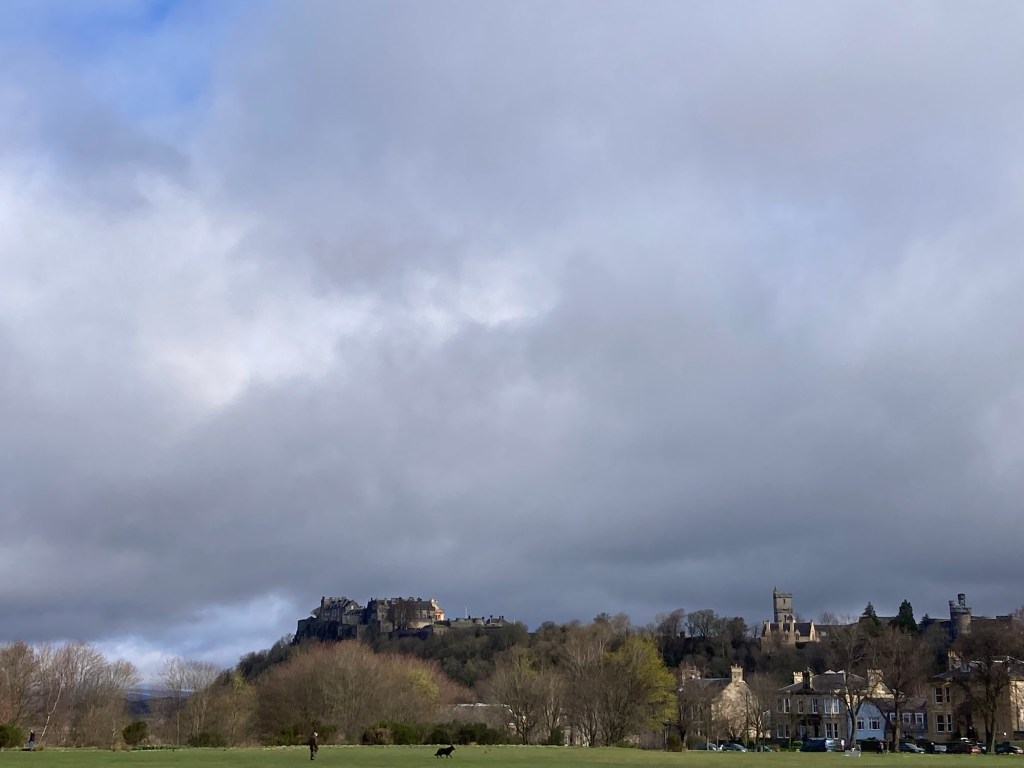
Yesterday I decided to walk into town, following part of the route which I used to take to get to work each day for the best part of twenty years. My routine, weather permitting, was to walk from home to the railway station where I’d catch a Glasgow train. In the winter it’d be pitch black over Kings Park, but for most of the year I’d walk through it taking in the long views to the hills, and enjoying the big green space of the park. It was a good start to the day.

Stirling Castle has always been my favourite Scottish castle, but you could say I’m biased, seeing as I was born in Stirling. My gran used to tell me that made me a “son of the rock”.

Seeing the castle again yesterday as I walked through the park, I had a feeling of belonging, a feeling that this is where I came from, but I didn’t feel I’d come home. Stirling has changed a lot over my seventy years on this planet.

My wife’s mum is the last of our parents to go, few relatives still live here, and our old school friends have long since dispersed across the planet, so I don’t recognise anyone as I walk the streets, and no-one recognises me.

I realise it’s the castle, the Wallace monument, the Ochil Hills and the “bens” around Ben Ledi towards the Trossachs which make me feel like I belong.

But it takes people to create a sense of home. People, routine and day after day of everyday wonder.

It strikes me there’s a similar inner experience at work. When we look at photos of ourselves from school days we know “That’s me”. We don’t doubt it. But at exactly the same time we think “Goodness, is that really me?” Because although we have a sense of continuity of the Self, we’re just as aware of how much we’ve changed.

I suppose that’s the nature of change. There’s a continuity within it. The present emerges from the rapidly receding past and we’re already imagining all kinds of possible futures. The flow of time doesn’t break up into neat, separate seconds, minutes and hours, that mechanical view of time is a much more recent invention. For most of history we humans have lived with the rhythms of sunrises and sunsets, and of the cycles of moon phases and seasons.

The philosopher Bergson helpfully showed us the difference between the real lived experience of time which he called duration, and the artificial measured time. Strange that we now let our lives be dominated by the latter over the former.

The long timescales of the mountains and the castle have the power to create this feeling of belonging, despite all the other changes which have dissipated the feeling of this being home.

Read Full Post »