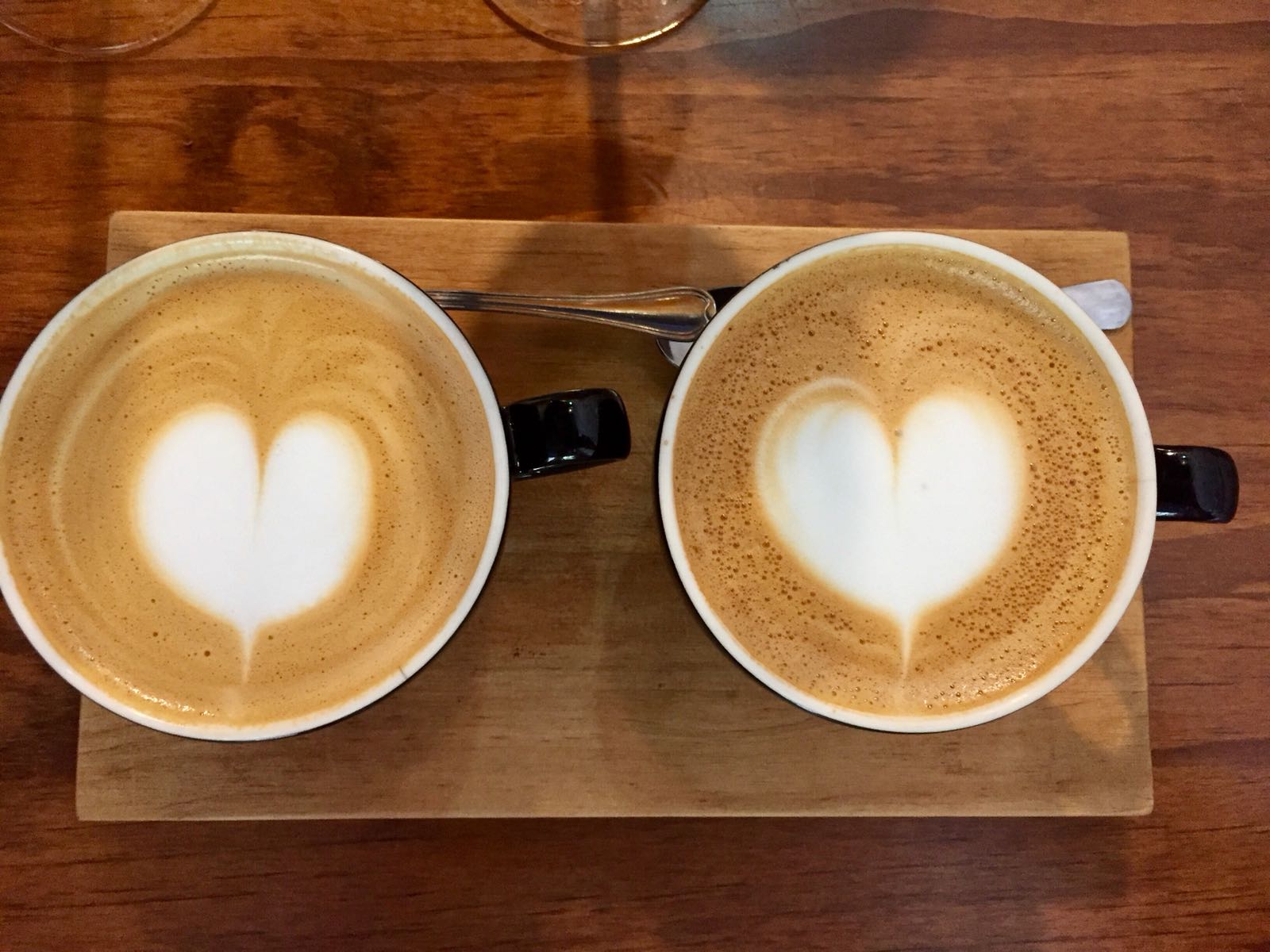
I have a long, long love for the French language and culture. I’ve found books, articles, magazines over the years which do a couple of things which I didn’t come across in Scotland, reading English. It’s not just the way these texts are written, nor the way they use beautiful graphic art and images, it’s the subject matter they consider worth while spending time on.
One particular book from 2009 opened up a whole way of seeing for me. The book is called “La Maladie cherche à me guérir”, and it’s by a doctor called Philippe Dransart. The book has never been translated into English as far as I’m aware, but the title in English would be something like “The Illness is searching for a way to heal me”. Dr Dransart starts from the idea of the embodied metaphor. Now, I have read about this idea elsewhere, not least in the books like “Metaphors we Live By”, by George Lakoff and Mark Johnson. But Dr Dransart draws from his own clinical experience to show us how often the actual words patients use, especially the body-focused metaphors they use, can be the key to understanding their suffering. Understanding not only their diseases, and why those diseases might have appeared in specific organs or tissues, but also understanding their psyche and life story, and how that connects so deeply to their unique patterns of illness. Put simply, he discovered, time and again, that when someone presented with a problem in a particular part of the body, then they’d often use metaphors about that very part when talking about themselves.
In his book, he systematically considers metaphors and figures of speech used by patients presenting with problems in pretty much every system and organ of the body, but for my purposes here, I want to focus on only one – the heart. And, as an English speaker, I’m going to focus on the heart metaphor phrases which we use in the English language.
I’ve already mentioned one at the very beginning….having a heart to heart. When we say that we imply that our conversation will be true, important, and intimate. You don’t have heart to heart conversations with just any stranger you might encounter in a coffee shop, do you? We have heart to hearts with loved ones, with family and friends, and with trusted professionals. In a heart to heart conversation we will talk about what’s important to us, and also, to what is shared between us. A heart to heart, does, after all, involve two people. It’s not something you do yourself, and it’s not something you’d normally try to do in a group. It’s personal. It’s specific. It’s an opening up to another.
Let’s look at some other heart metaphors. Do you know someone who is “big hearted”? It means they are generous doesn’t it? Not at all the same as someone who is “big headed”! And notice we don’t say people are “big kidneyed” or “big livered” by the way. On the other hand, do you know anyone you think of as “heartless”? We might even apply temperature differences to these opposites. So maybe someone is “warm hearted” and another is “cold hearted”. A warm hearted person will often do, or say, something we’d describe as “heart warming” when we feel that comfortable, cosy feeling inside.
What would you say if I were to ask you what was “dear to your heart”? You might say, not what, who, and tell me of loved ones. Or you might tell me about whatever it is that is most important to you, whatever you feel most passionate about. In fact, we tend to think of the heart when we think of passion, don’t we? Maybe we associate “will” with the head, but we associate “passion” with the heart. On the other hand, when we are de-motivated, we might say our “heart isn’t in it”. We are not really committed. It doesn’t move us, inspire us.
We apply a weight to the heart too, don’t we? When did you last feel “light hearted”? Can you think of a time when you felt free of anxieties, content, even happy, where “light hearted” would be a good description? When I think of someone “light hearted” I think of them smiling, moving easily, maybe even skipping (if they are still young and fit enough to skip!) It’s a joyful image. But what gives you a “heavy heart”? When do you get sense of dread, a sinking feeling? We often move our metaphors down into our abdomens when we have these heavy feelings, don’t we, describing a “gut feeling” of something not quite right. Isn’t it interesting that we “feel” intuition in our hearts and in our guts? As if our bodies are telling us something, our brains haven’t quite figured out yet.
The heart, of course, is the seat of love, isn’t it? We use a stylised image of a heart, usually a red one, as an emoji to say we love someone or something. We put red hearts on the Valentine cards. We make a heart symbol with our two hands when we want to communicate love at a distance. How often do you see athletes or performers do that when their fans are loudly applauding an achievement?
When we fall in love, the very sight of our loved one can make our hearts “skip a beat”, and if they abandon us, we feel “heart broken”. In unresolved grief, we might even say someone died of a broken heart.
The heart is also the seat of excitement. There’s a Dutch knitting podcaster who my wife listens to, who often talks about something being “heart jumping” – which, although not an expression I’ve heard much in English speakers, is a great one for conveying what is exciting, what stirs her or inspires her.
Can you think of any others?
There are two more I’d like to consider. The first is how we oppose the head and the heart, saying someone lets their heart rule their head, or vice versa. Usually there, we are talking about the balance between rational thought, cognition, and feelings and emotions.
And here’s my most favourite one, which comes from “The Little Prince” by Saint-Exupery. The fox asks the Prince if he want to know his secret.
“It is very simple. The important things in life you cannot see with your eyes, only with your heart”
Isn’t that wonderful?
But how do we do that? How do we find the important things in life by seeing with our heart?
When I was at university I was taught about the heart, its structure of four chambers, with valves between the atria and the ventricles, its muscle cells with their astonishing ability to beat out a rhythm, its incredible system of production and distribution of electrical currents to co-ordinate the beating of those muscle cells, its blood supply and its nerve supply, and a lot about the diseases of the heart, how to diagnose and treat them.
But it was only years after graduation, when I was working as a young doctor, that I came across the discovery that the system of nerves around the heart was much more complex and powerful than had previously been thought.
There’s a special kind of nerve in the human body called the neurone. We have somewhere between 80 and 100 billion of these cells in our brains, and another billion spread throughout the body. These neurones either transmit information up to the brain from our sensory organs and from specialised sensors which are spread through the other tissues of the body. Or they are responsible for sending electro-chemical signals from the brain to all our muscles, co-ordinating which contract, and which relax.
The 100 billion neurones in the body are each directly attached to as many as 5,000 other neurones forming an astonishingly complex web known as a neural network. I mean, these numbers are beyond our comprehension, aren’t they? They are just mind boggling!
For a long time we’ve paid a lot more attention to the neural networks in the brain than we have to the ones in other parts of the body. But we now know that there are in fact important neural networks which surround especially the heart and the gut. That discovery is fascinating enough, but, what I find even more fascinating is that the nerves connecting the network around the heart to the one in the brain are mainly carrying information from the heart to the brain. Only a minority of them are carrying instructions from the brain to the heart.
So, it turns out, the heart is more than a complex muscular pump responsible for distributing blood around our arteries and veins. It’s actually doing some of the processing we used to think was exclusive to the brain.
What’s it doing? Well it’s now known as heart intelligence. It’s gathering information and processing it before passing it on to the brain.
I mean, that’s fascinating enough, isn’t it? But there’s more. We’ve discovered something else. Everything in the world which beats a rhythm sends out electromagnetic waves. As the rhythm of the heart changes so does the pattern of these waves.
You know how in medical dramas on tv there is often a heart monitor attached to some sick person lying in a bed? The monitor shows the beating rhythm of the heart, with a little line running across the screen. A flat line means the heart has stopped beating. A healthy pattern is of little spikes appearing in that line at regular intervals.
Well, it turns out, those intervals shouldn’t be too regular. The actual gap between each beat of the heart should be varying, ever so slightly. We can measure that variation and we call it “heart rate variability”.
Different degrees of variability send out different patterns and strengths of electromagnetic waves. We’ve discovered a particularly important pattern, which we call “coherence”. When the rhythm of the heart achieves coherence a number of powerful, important healthy changes occur throughout the body. This rhythm affects the release of certain hormones and other chemicals, it affects the tone of the other muscles, and it affects the activity of the brain. Not only that, but heart rate coherence is associated with very distinct emotional states. It’s a two way process if you like. We can focus on the heart and induce both coherence and particular emotions, and we can relive certain emotional experiences and induce heart rate coherence.
I first learned about all this when I came across the publications of a group of researchers in America who described this phenomenon, and were teaching people how to achieve it. They called it “Heartmath”. I took the training programme and taught the techniques to many of my patients over the years.
I’d like to teach one of these techniques right now. It’s called “Quick Coherence”.
There are three steps to achieve “Quick Coherence” – a basic Heartmath technique, and by the way, you can find out a lot more about these techniques at the website of the Hearthmath Institute.
Step 1. Heart focus. Bring your attention or your focus to the heart area of your body. Remember how important attention is? It activates and it magnifies. So we want to bring our attention now to the heart area of the body.
Step 2. Heart breathing. Take three, slow, deep, even breaths, filling the heart area of your body with oxygen, then emptying your lungs of all the carbon dioxide. Slowly in, slowly out, for three breaths. Just these three deep, diaphragmatic breaths resets a part of the nervous system we call the “autonomic nervous system”, calming us down, settling us.
Step 3. Heart feeling. Now recall an event where you experienced one of the positive, heart felt emotions. Here’s a couple of ones I use to give you an idea of the kind of event I mean. One is one of my grandchildren running up to me, shouting “grandpa!” and jumping up into my arms. That’s a great one! Another is looking out over Ben Ledi from my living room window when we have one of those gorgeous deep red sunsets – just amazing! Pick one of your own, and recollect it. Stay with that memory until you become aware that you are feeling that feeling again. This is about recreating a feeling. Once you have it, that’s it. You’re there.
Congratulations, you just managed “Quick coherence”.
Many of my patients would use that technique to escape from a panic attack, or to settle a state of agitated anxiety. It’s quick. It’s effective. And it gets more effective the more you practice it.
I describe the exercise in a bit more detail here – https://heroesnotzombies.com/2012/02/07/heartmath-a-simple-guide/
But we can do something else with this state of “coherence”. We can use it to access our heart intelligence. Let me just suggest one way to do that. Start by following the steps to achieve coherence, then ask your heart what it wants you to know. Just sit quietly for a few minutes, maintaining this coherent state with slow, deep breaths, and notice what comes up for you. Alternatively, ask a specific question. Is there something you are trying to decide? Is there a problem you are trying to solve? In the state of coherence, ask your heart for its suggestions. Ask it to help you decide.
All this is a very deliberate, very conscious way of accessing our heart intelligence. But, in reality, this is just the way we are. We are using heart intelligence all the time. It never goes away. It’s just that it is occurring in the background, below the level of consciousness.
But heart coherence isn’t just an exercise. As the research has shown it is associated with certain emotional states, namely, love, awe, joy, excitement, and contentment, ease, calm and peace. So when we experience an everyday event which generates one of those emotions in us, it sets up the heart to enter into coherence. The same thing happens if we re-create in our minds a particularly vivid memory of an event where we experienced one of those emotions. That’s the step 2 in the quick coherence exercise.
There’s a way to make all this happen more often. Practice. Both the practice of an exercise like the one I’ve just described, or setting an intention at the start of the day. When we set an intention, it doesn’t mean that the universe magically aligns itself to that intention, but it can feel like that. It means we heighten our ability to notice whatever might align with that intention.
You can prove this for yourself with a simple exercise. Pick a colour. Any colour. Now during the course of the day take a photo of whatever you see that is that colour. It’s likely you’ll pretty quickly start to see that colour everywhere.
Well you can do the same with the heart. How about you set an intention to notice the moments in the day when you feel warm hearted, or light hearted? Or how about moments when you experience what the Dutch vlogger calls “heart jumping”?
It’s that old thing of attention magnifying whatever it is focused on. An intention like this is a kind of focus, and it increases the chances of you experiencing what aligns with it.
You can also increase your experience of heart centred living and seeing by reflecting at the end of the day – what did I experience today that was “dear to my heart”? What did I do which made me feel “my heart is in this”? Did I have any “heart to heart” conversations?
Because there is another aspect to this heart coherence thing that I haven’t talked about yet. Remember how I said anything which beats with a rhythm sends out waves into the world? Well, anything which CAN beat with a rhythm can pick up those waves, and align itself.
You know there is a story about the clockmaker who had several old clocks in his workshop. The kinds of clocks which work with a pendulum. At the end of the day, he would set each clock pendulum swinging. Before he left the room he could see that each pendulum was swinging its own rhythm, left to right and back again. When he came back to the workshop the following day he noticed that every single pendulum was swinging in synchrony. They had aligned themselves. That’s a physical phenomenon called “entrainment”…..the rhythms coming into alignment with each other. Well, the Heartmath researchers discovered they could measure the electromagnetic waves coming from the human heart. In fact they could measure them outside of the body as they spread into the environment. And you know what? They found that if someone achieved heart coherence, then the person standing next to them was more likely to develop it too. The wave pattern travelled from one person to the next….entrainment. Or, maybe you could say, “attunement”. Now this happens, not only with coherence, but with other patterns too. Maybe that at least partly explains why we feel uncomfortable around certain people, or why we can “pick up an atmosphere” in a room.
But here’s the exciting part. If we deliberately practice coherence, both through exercises and emotional experiences, the we can spread those healing waves to others.
Do you find that surprising? Well, let me tell you one other finding….that the power of the transmission increases when two people touch. So, one person whose heart is in coherence, holding hands with another is likely to induce coherence in their heart too.
Now, you’re probably thinking…isn’t this a two way process? Isn’t the disturbed or anxious pattern likely to be transferred too? Yes, I’m pretty sure that’s true. But signals have a power, and the more we practice coherence, the more powerfully we will transmit that to others.
Intentions and reflections. They can both train our attention. So let’s put our heart into both of them.
How about a Mary Oliver poem?
An Old Story
Sleep comes its little while. then I wake
in the valley of midnight or three a.m.
to the first fragrances of spring.
which is coming, all by itself, no matter what.
My heart says, what you thought you have you do not have.
My body says, will this pounding ever stop?
My heart says: there, there, be a good student.
My body says: let me up and out, I want to fondle
those soft white flowers, open in the night.
Her heart says, “there, there, be a good student”. Why not take that advice? Give it a go. Sit yourself down somewhere, take the three, deep breaths slowly, and ask “what does my heart have to say?” Maybe nothing will come to mind. Maybe something clear will appear. Maybe something will suddenly pop into your consciousness later, even at night, asleep, in a dream.
In episode two of my podcast, “More Good Days”, I shared some music with you which I collected together into a “More Good Days” playlist. So, I thought, today, I’ll make a playlist for this episode, “Heart to heart”, gathering songs which mention the heart.
I’m going to start with Neil Young’s “Heart of Gold”. This goes all the way back to my first year at university, 1972, and even though, now, I’m really “growing old”, I think the “heart of gold” is still worth seeking out in life. I feel so blessed to have discovered so many of them!
I am a life long Genesis fan, not just the Peter Gabriel years, and I’ve got many, many favourite Genesis tracks in my favourites list. “Hold on My Heart” still moves me every time I hear it.
“Heartbeats” by Jose Gonzales, is a beautiful song, with the memorable line – “sharing different heartbeats in one night”. We are all different, but is there anything more beautiful than sharing our different heartbeats?
“Heart” by Sleeping at Last, only mentions the heart in the title, not in the lyrics, yet it is a gorgeous, heart felt song.
“My Heart Will Go On”, Celine Dion. Oh my, this ballad has been played a bit too much at times, but, returning to it today, flipping heck, it still reduces me to tears!
“Heart and Soul”, by Roseaux and Olle Nyman, might be completely new to me, but the line “You’ll remain like a song in my heart and soul” reeled me in. Isn’t that what Celine Dion sings about in “My Heart Will Go On”? And isn’t that a beautiful metaphor that illuminates the deepest truth – that we keep each other “like a song” in our “heart and soul”?
“The Shape of My Heart”, by Sting. Sting is another of my favourite singers who has written so many beautiful songs. This song asks me, and asks you, what is the shape of your heart?
Finally, I’m suggesting an instrumental track, Max Richter’s “On the Nature of Daylight” which holds my heart and makes it soar.
Until next time, bonne journée. Have a good day.
Here’s a link to a Spotify playlist of these songs –


Leave a comment