Feeds:
Posts
Comments

Archive for May, 2026

I’ve visited Copenhagen a number of times. In the winter months there are no direct flights from my part of France to Scotland so when visiting family before Christmas, a few times we’ve taken the train up to Paris, flown from there to Copenhagen, then from there to Edinburgh, returning by the same route. We stop over for a couple of nights in Copenhagen and in Paris as part of the trip which makes the journey into a bit more of an adventure and takes away time pressures related to train and flight connections. 

One of my most favourite places to go in Copenhagen is the Glyptotek. It’s a beautiful museum in the heart of the city. It has a lovely internal garden courtyard with a cafe restaurant which serves delicious Danish food. But the main reason to go there is to see the exhibits of sculpture. Their permanent displays include a vast number of marble sculptures and, honestly, they are magnificent. 

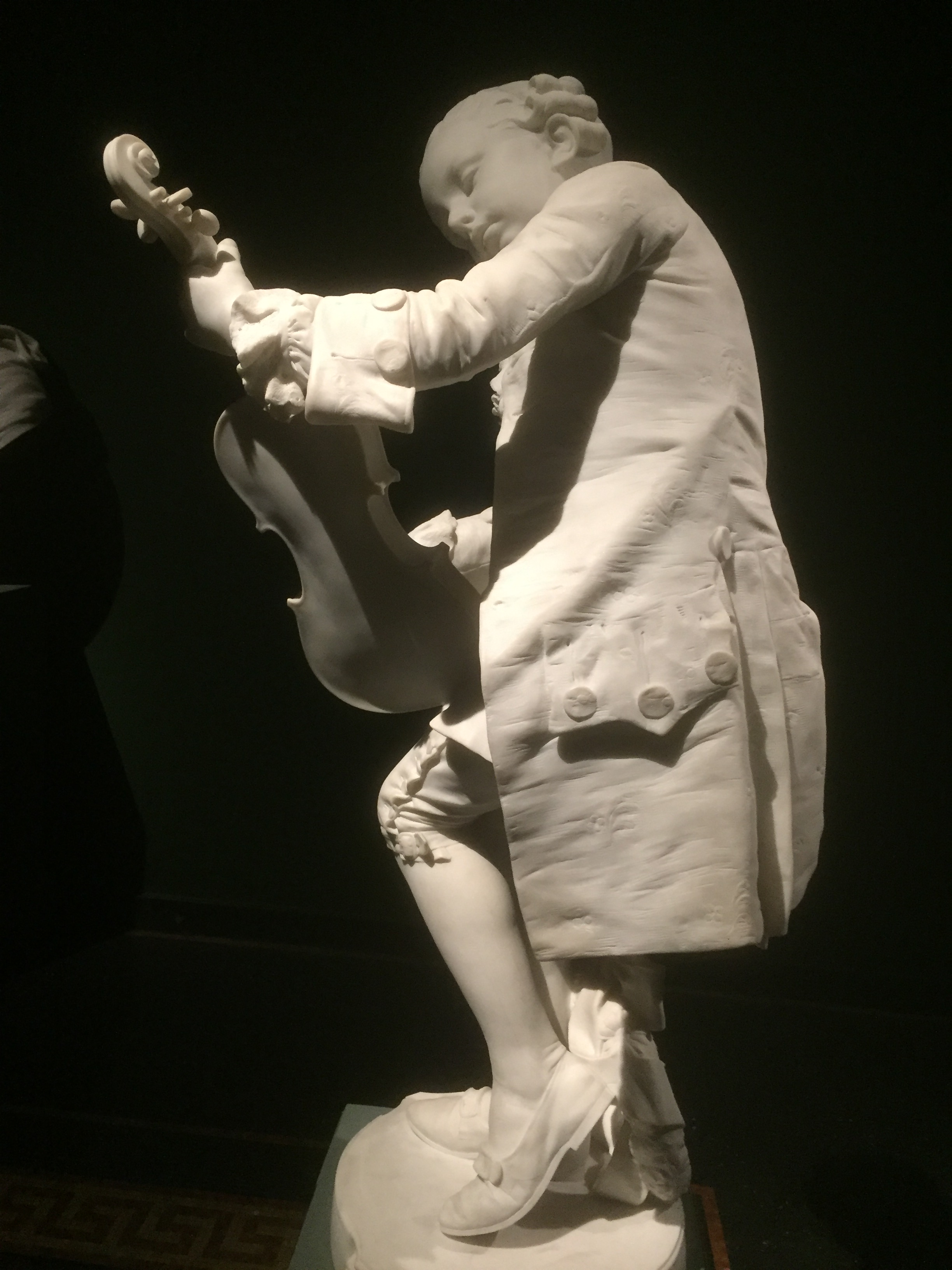
I took this photo during my first visit there. It is the “Young Mozart” by Louis Ernst Barrias. I couldn’t quite believe this was carved out of a block of marble. Look at the detail! Here’s a section of his coat…..
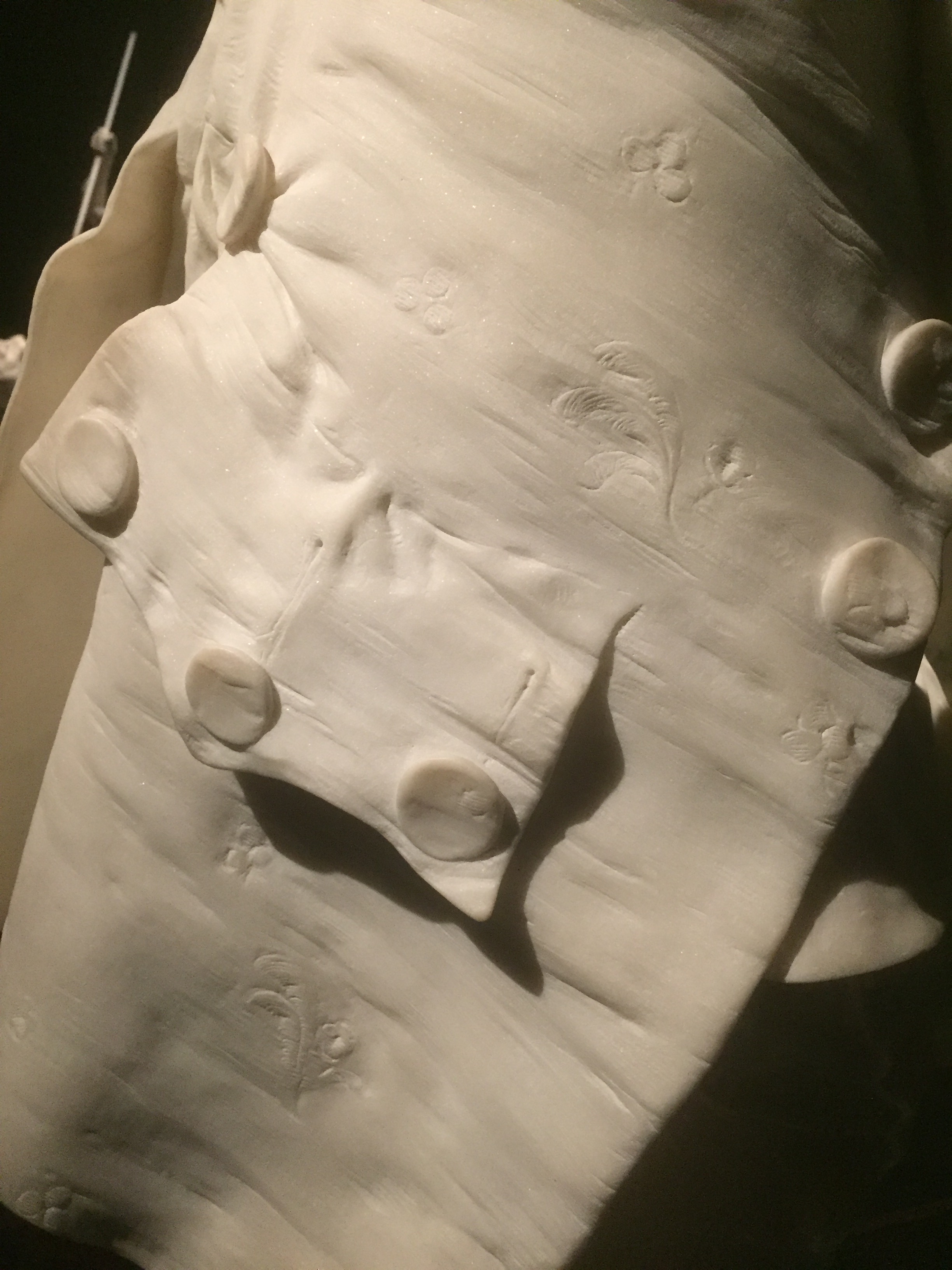
….it looks like real cloth. This is the kind of art which stops me in my tracks and takes my breath away. The skill involved in carving this is astonishing. The whole piece is a real beauty, and, beauty, I contend is one of the most life enhancing phenomena we can encounter. I’d have been happy to have seen just this single work that day, but, in fact, there are many, many more just as impressive. 

The subject matter here interests me too. I’m not a classical music buff, but I know enough about Mozart to be astonished at his youthful creativity. There is a whole catalogue of his works written between the ages of eight and twelve years old. 

What can we make of such extraordinary talent? Where does it come from? I have no idea, but surely one of the most significant characteristics of our species, is our creativity, and how, we express it through the Arts, Sciences, Philosophy, and even in everyday problem solving. 

But there are always those whose talent, whose genius, appears first at a very young age, and develops throughout their adult lives. It’s a gift. It’s a gift they have received, and it’s a gift they give to us every time we encounter their works. 

I wrote about Saint-Exupery in the last newsletter, but I didn’t tell you about one of his inspirations for The Little Prince, which occurred during a train journey through Poland. Here’s what he wrote

“I sat down [facing a sleeping] couple. Between the man and the woman a child had hollowed himself out a place and fallen asleep. He turned in his slumber, and in the dim lamplight I saw his face. What an adorable face! A golden fruit had been born of these two peasants….. This is a musician’s face, I told myself. This is the child Mozart. This is a life full of beautiful promise. Little princes in legends are not different from this. Protected, sheltered, cultivated, what could not this child become? When by mutation a new rose is born in a garden, all gardeners rejoice. They isolate the rose, tend it, foster it. But there is no gardener for men. This little Mozart will be shaped like the rest by the common stamping machine…. This little Mozart is condemned.”

This was written in 1935 as dark clouds were gathering over Europe, so, maybe his rather gloomy conclusion should be read in that context. Isn’t it interesting that he thinks of the “child Mozart” when he sees this little boy? And, he was so right to point out that “a life full of beautiful promise” could either be nurtured to fruition, or crushed by the machine-like forces of industrial society. 

Just before Christmas last year I went to a concert in the Art Deco, “Eden Theatre”, in Saint Jean d’Angely, my local town. The concert was a performance by a young French violinist, Esther Abrami, who I’d read about in the French press. She is one of the most talented violinists I’ve ever heard. One of her albums is called “Women” and features compositions by female musicians. Esther told a little story about each composer before she played one of their works. I’d never heard any of these stories before. The concert was a real eye opener, and ear opener too? So, I was delighted to learn that she had written a book about women in music. It was published just last week and I got my pre-ordered copy delivered on Friday. I’ve been delighting in it every day since. 

Esther’s own story is fascinating. She is from Aix en Provence, and as a little girl, was gifted a violin from her grandmother, a particular instrument her grandmother had, herself, played as a girl. But her first lessons didn’t go well which she puts down to the fact that she found her teacher unkind and difficult. However, only a few years later, she was inspired by another violinist and persuaded her parents to let her try again. This time, things clicked, and she’s turned out to be the excellent professional musician she had dreamed of becoming. That story reminded me of how important it is to nurture and nourish little children. Not that they will all grow into musical prodigies but surely at least one purpose for us all is to become the fullest expression of our uniqueness, and we can’t do that alone. 

One of the female composers she described in her concert, and writes about in her book (“La Musique est (aussi) une affaire de femmes”) is Chiquinha Gonzaga, Brazil’s first female conductor, who was born in 1847. She was a remarkable woman who led a quite astonishing life, divorcing her husband to whom she had been forced into an arranged marriage, after he asked her to choose between him and her music. She chose her music, which meant she had to give up a life of riches and servants, to become a poor, single mum making her living teaching piano and selling music sheets of her own compositions. 

She eventually found success, love and happiness, and composed over 2000 works, living to the ripe old age of 87.

One of the most astounding parts of her story is that she composed her first musical work, the song “Canção dos Pastores”, at the age of 11. 

You can listen to it here – https://open.spotify.com/track/43AB805Bd0sKhCQ2FtWp0P?si=1fe230517e11432c

Go and have a listen. If you don’t use Spotify, search for it online. I’m sure you’ll find it elsewhere. But, seriously, she composed this at 11 years old?

You can find a playlist of over 500 videos of her compositions here – https://youtube.com/playlist?list=PL6nx2WTN7S1-NtIL3PY1Yf2QEhuHW223s&si=lFgmVQZcIIhlItmx

Esther Abrami’s book is just out in French, but I think she plans an English language translation. I’ll tell you about it when it gets published. Meanwhile, if you can read French, do get yourself a copy. It’s a real treat. 

Back to Esther and her own skills…..if you’d like to explore her work, I suggest you start with one of her own compositions, “Transmission” which she wrote for the grandmother who gifted her her first violin. It’s on her album, “Women”, and here’s the link to it on Spotify – https://open.spotify.com/track/0w8AtUiGnz0Khf5AZOPLu4?si=3cc4b13d9c714fff

At her concert, as well as featuring music from her album, “Women”, she played a number of pieces from another of her albums, “Cinema”, and my favourite from that album is probably “Yumeji’s Theme” from the movie, “In the Mood for Love”. 

Have you ever seen that movie? Oh, it’s on my list of all time favourites. One of the most beautifully filmed movies I’ve ever seen, and “Yumeji’s Theme” fills my mind with gorgeous scenes from it which I’ll never forget. 

I’ll leave you to go exploring Esther’s work wherever you listen to music. I know we all have different musical tastes, but I think you’ll be delighted by both the beauty of the music and the skill of this young violinist. 

Can I leave you with a question? 

Who are some of your own favourite sculptors and who are some of your own favourite composers/musicians? 

I’d really like to know. 

And if you’d like to receive my weekly newsletters and fortnightly podcast episodes please come and sign up here – https://bobleckridge.substack.com/

Read Full Post »

I’ve started a weekly newsletter about how to create More Good Days, to supplement my new podcast episodes.

You can subscribe to both the podcast and the newsletter for free at https://bobleckridge.substack.com/

I’ll publish an episode of the podcast every Full Moon and every New Moon, and I’ll publish a newsletter every week, keeping in sync with the phases of the Moon. Why have I chosen to link my publishing schedule to the phases of the Moon? Maybe the recent Artemis II adventure was one of my inspirations, but my main one was Peter Gabriel, who published his i/o album, releasing one track every Full Moon over the course of a year, and is now doing the same with his latest o/i album. 

Why publish a weekly newsletter in addition to the fortnightly podcast? 

Well two of my most favourite activities are taking photos, and writing, so I decided I could combine them to make a weekly newsletter to share with you. Each issue will have one of my own photographs attached, which you are free to download, print out, make into a screensaver, or just collect in your own photo album. There will also be a short piece of reflective writing inspired by whatever I see in the photo, and I hope, together, the photo and the text will inspire you with your own creativity, and contribute to making more good days. In addition, in each issue I’ll share with you some of what has brought me joy, some of what has stopped me and made me wonder, some of what I’ve found inspiring or moving this week, and I hope those joys, wonders and inspirations will also contribute to making more good days for you. 

You can expect to find my encounters with music, art, sculpture, and nature, and with stories, poems and articles I’ve read, because those are the places I find my greatest joys and inspirations. I look forward to sharing both of these with you – the fortnightly podcast episodes and the weekly newsletter. 

The photo I’m sharing with you today is of a front door. Many modern doors are glass and it’s easy to see who is outside, but, in the past most doors were solid and the only way to see who was calling was to use a hole cut into the door, and, often covered with a flap which could be raised. This was eventually superseded by the insertion of a small lens in the door, through which the home owner could look to get an often fisheye view of the street, the corridor or hallway. 

I hadn’t really stopped to think about this until I saw this particular door, but what does the world look like to whoever is looking out from within? 

In the traditional square hole covered by a flap, it would be like looking through a picture frame. The closer you put your face to the door, the more you would see of the outside world, but, usually, your view would still be restricted, limited by the four sides of the hole. The little lenses gave a more wide angle view, but, pretty much everything appeared distorted as a result. 

I wonder what the world looked like to whoever looked through this heart shaped hole? I like to think it enabled a more loving gaze, a kinder, more positive view of the world. 

Then I got to thinking, maybe a hole like this isn’t for peeking through, but for letting light in. And with that thought I had an image in my head of a heart shaped stream of light illuminating the whole house. Now, wouldn’t that be delightful? 

But, whether this heart shape, cut into this wooden door, enabled a view of the outside, or allowed light to stream into the interior, I couldn’t help but wonder if it inspired the owner to “see with the heart”, as the fox revealed to the Little Prince. 

Maybe seeing the heart every time they approached their doorway, inspired them to pay loving attention to whatever they were about to encounter. 

I don’t know, but I’ve returned to this photo many times because it does exactly that for me. It reminds me to pay loving attention to the world. 

Antoine de Saint Exupery, born in 1900, was a French writer and one of the first commercial airline pilots, flying routes between France, Africa and South America, for the postal service. He was shot down in 1944 somewhere over the Med while flying a reconnaissance flight over Corsica for the Free French Air Force. 

He wrote and illustrated “The Little Prince” in 1942, and it has since been translated into over 600 languages and sold over 140 million copies worldwide making it the best selling work of fiction in the world. 

The Little Prince is the story of an aviator whose plane crashes in the desert and who encounters a young boy, who he calls, The Little Prince. Whilst he is trying to repair his plane, the boy tells the narrator various stories. 

The book can be seen as a children’s book, but it is also a philosophical work which has inspired countless adults. Not least of the lessons in the book is that “It is only with the heart that one can see rightly; what is essential is invisible to the eye.” It’s a phrase I have returned to again and again, throughout my life, and I became a firm believer in the fact that “what is essential is invisible to the eye”, something which inspired me to stay focused on each patient’s story of their unique experience. In other words, to keep their invisible experience of their illness to the fore, rather than only the physical measurements of their disease. 

This is the eightieth anniversary of the publication of The Little Prince, and I discovered, in my local newsagent, in Saint Jean d’Angely, a special issue of the rather unique “1” newspaper dedicated to Saint Expupery and his Little Prince. The “1” newspaper is like nothing else I’ve ever encountered. It is a single sheet of A1 sized paper, which is folded, first in half, to make an A2 size, then once more to create an A3 size, and finally again to make an A4 size publication which sits on the shelf with the other newspapers. Each issue takes a focus on a single issue, and it is richly illustrated with graphic art. One of the articles in this special edition, is by Riad Sattouf, whose illustrated edition of another Saint Exupery book, “Terre des Hommes“, coincidentally (if there is such a thing as coincidence) I stumbled across and bought in a “librairie” (in France, a “librairie” is a book shop, and a library is a “bibliotheque”) in Orleans, where my wife and I recently spent a few days to celebrate her birthday. 

In Riad Sattouf’s article he considers the fact that the Little Prince is a sort of Peter Pan character, a little boy who never ages, and reveals that he discovered that Saint Exupery had a younger brother who died at about the same age as his Little Prince appears to be. Saint Exupery never wrote or talked about that death, but it does seem highly likely that that experience of a brother who never aged (because he died) inspired him to imagine the Little Prince. 

I’m currently about half way through Riad Sattouf’s Terre des Hommes, or should I say Saint Exupery’s Terre des Hommes, in this special edition illustrated by Riad Sattouf and I’m savouring it. 

I can read French pretty well now, but I definitely read it more slowly than I read English, however I don’t find that is a handicap. I love to take my time with a French text, enjoying each phrase and image, one after the other. 

Riad Sattouf says he discovered Terre des Hommes in a bibliotheque in Rennes when he was an adolescent and has read it every year since. He’s 47 this year. His illustrations are a true work of art. I am so enjoying his book. 

When I read, in his introduction, that he had read this book every year since he was an adolescent, I thought again about a conversation I had at the beginning of the year, with the teenage grand-daughter of a friend, who told me Donna Tartt’s “The Secret History” was her all time favourite book which she, at just 15, had read eight times. I’ve never read any book eight times. Have you? From time to time I come across an article where someone says they read the same book every single year. “Don Quixote” was one example. I’ve never read the same book every single year. Have you? 

It made me wonder if there are two different approaches to reading….those who always want to read something different (I’m in that camp), and those who find a work so special that they want to re-read it time and time again. I honestly don’t think one strategy is better than the other and I can see pros and cons of each. I’m not saying I never re-read a book. In fact, I have a shelf of “special books” on one of my bookshelves where I keep certain books which I turn to again and again….it’s just rare for me to actually read any of them all the way through more than a couple of times, and all of them are works of non-fiction. 

Are there any fiction books you have enjoyed so much that you’ve read them more than once? Do let me know. 

The Moon

Neil Armstrong said the famous words, “That’s one small step for [a] man, one giant leap for mankind” as he walked on the surface of the Moon on 20th July 1969 when I was 15 years old. I remember watching him on TV, mesmerised by the whole adventure, as were millions of others. 

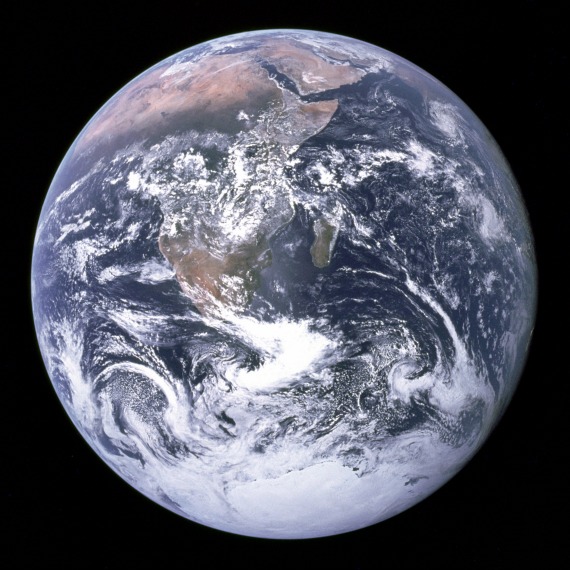
Three years later, Harrison Schmitt, aboard Apollo 17, took the now famous “blue marble” photo of the Earth. 

It’s an image whose power has never diminished. You only have to look at it for a second to recognise the beauty, and the fragility of our little planet. 

I don’t know if it inspired Nanci Griffith’s “From a Distance”, but I always hear her song in my head when I look at this. I only saw Nanci perform live once, in Edinburgh, at the Usher Hall, but I still have six of her albums in my vinyl collection. And, although the “blue marble” is a picture of Earth, when I look at it, I also hear Nanci Griffith sing in my head, “Just once in a very blue moon”. 

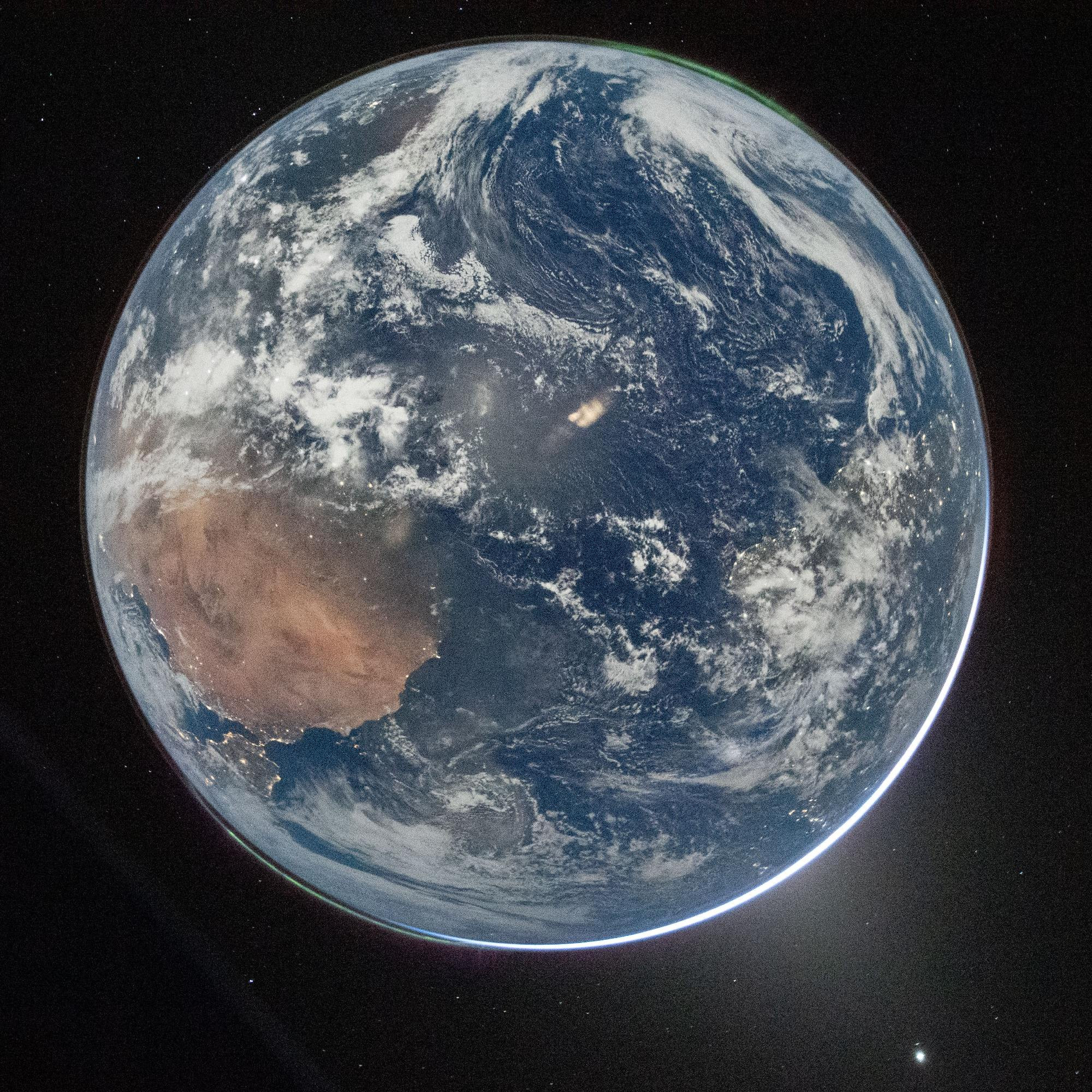
Well, all this came back to me again this week as I looked at a couple of the astonishing photographs taken by the astronauts on Artemis II. Did you see them? This one, is very like the blue marble, but, in addition you can see the glow of the aurorae top right, and bottom left, which highlight just how thin a layer of life giving atmosphere we have. 

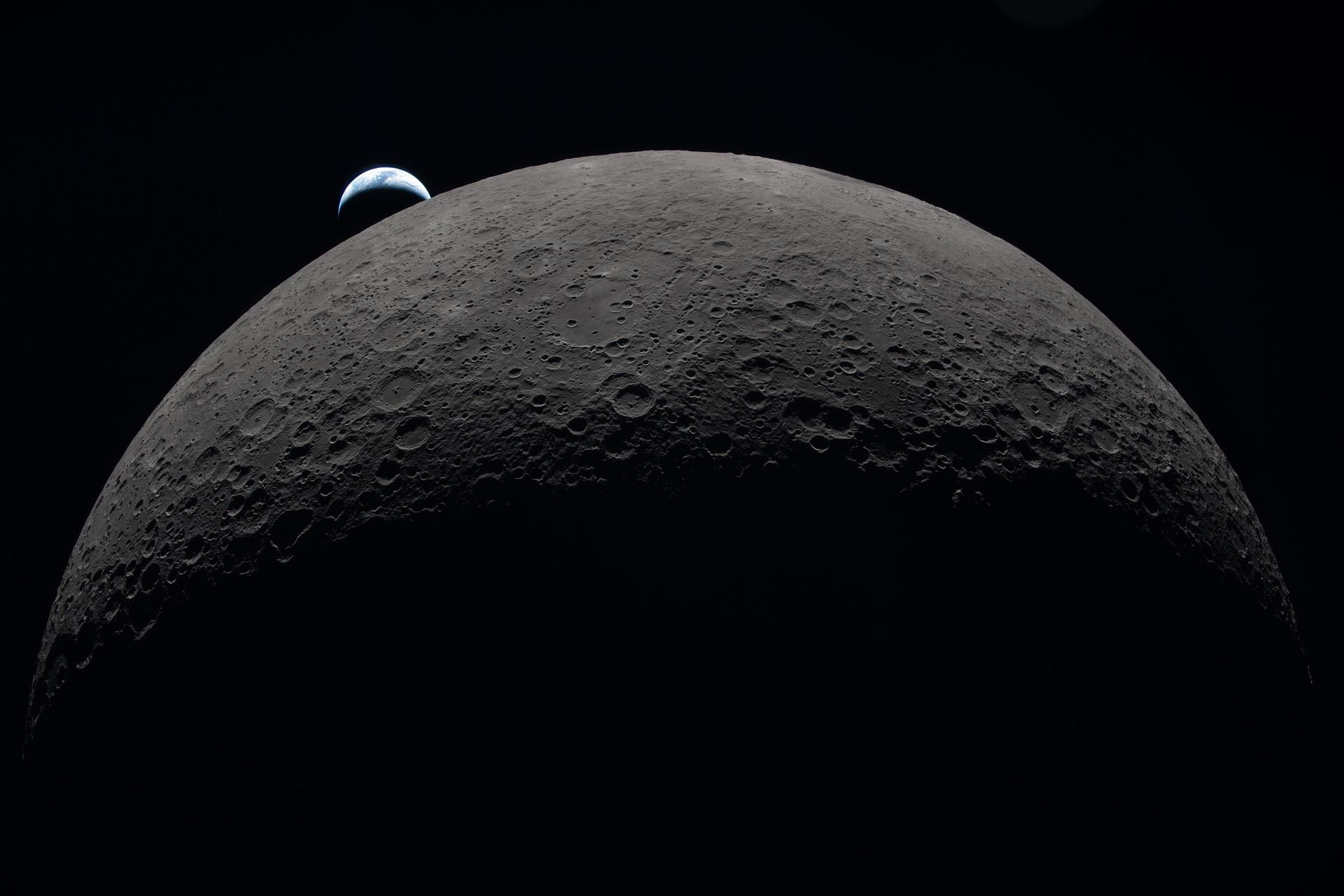
and this one, where a crescent of Earth can be seen just over the lunar horizon, a complete reversal of the image we are more used to, of a crescent moon appearing over a horizon after sunset. 

These are awesome images.

Awesome in the most significant way. They make me feel tiny, and they make me feel infinite. All at the same time. But more than anything they imprint on me the finite nature of our planet, and how we should all be working together to care for it, to nurture it and look after it for all of Life which exists here. 

Surely, an image like this can help us to reject the imaginary borders which artificially divide up the planet, and to see our inter-dependence on, not just others, but on all the elements of the biosphere, all the animals, like the fox, all the plants, like the rose, and all the other creatures which are, like us, way too small to see from this far out. 

Is it foolish to hope for a world which turns away from selfishness, greed, violence and destruction, towards selflessness, sustainability, peace and creativity? I hope not. I think we can make it happen by turning a loving attention to the world in which we live, and by creating true bonds of care with the plants, creatures and people with whom we share this planet, this life. 

I read a Mary Oliver poem this week which seems extraordinarily relevant. It’s called “I Worried”

I Worried

I worried a lot. Will the garden grow, will the rivers

flow in the right direction, will the earth turn

as it was taught, and if not, how shall

I correct it?

Was I right, was I wrong, will I be forgiven,

can I do better?

Will I ever be able to sing, even the sparrows

can do it and I am, well,

hopeless.

Is my eyesight fading or am I just imagining it,

am I going to get rheumatism,

lockjaw, dementia?

Finally I saw that worrying had come to nothing.

And gave it up. And took my old body

and went out into the morning,

and sang.

That line about worrying about getting rheumatism reminds me of a story about Jack Benny, who, on receiving an award, said “I really don’t deserve this, but I have arthritis, and I don’t deserve that either” 

Finally, a song which really touched me this week….well, it has to be Nanci Griffith, from her “Lone Star State of Mind” album…. “From a Distance”. 

I recommend it. 

Read Full Post »