Feeds:
Posts
Comments

Archive for July, 2026

When I was in Clinical Practice and trying to help a patient who was overwhelmed with stress and distress, I’d often draw a simple straight, horizontal line.

I’d say the left hand end of the line represented the day they were born. We know that date. The right hand end of the line was the day they would die. None of us can know that date. And I’d put a cross in the line somewhere around the middle, and say, this cross represents today, this moment. Everything from the day you were born until the present moment, we call the past. Everything from this moment until the day you will die, we call the future. If you pay most of your attention to the past, ruminating, regretting, rehearsing the hurts and wounds of the past, and the rest of your time paying attention to the future, wondering and worrying about whether this or that might happen, filling your mind with “what ifs”, then the one place where you aren’t investing your attention, your energy and your time is here on this day, on this moment.

Imagine if you spent more time and energy focused on the present….this would inevitably be accompanied by less time and energy spent on the past and the future. Doing this bring a double bonus. It helps you become more aware of this moment, more able to savour it, enjoy it, fully live it. And it reduces the time and space in your mind occupied by hurts, wounds, worries and fears.

I still think this model is a bit simplistic. I mean, the past, present and future are not so linear as this little drawing implies. Life tends not to follow straight lines, but rather loops and cycles. However, there’s a value in simplicity, if we take it as a starting point.

I have a couple of large filing cabinet drawers filled with old notebooks which I’ve written and drawn in over several decades. From time to time I pick one out at random and browse it. The one I pulled out this week had a lot of notes about relationship between the past, the present and the future. I’ve always tended to use notebooks for thinking. They aren’t really diaries in the style of I did this, and then that, today. They are more phrases and sentences which have struck me in whatever I was reading at the time, and simple diagrams to help me think something through. They are full of ideas and thoughts and explanatory models.

Here’s what I was exploring about the past, present and future. It seems to me that we access the past through memory, the present through awareness, and the future through imagination. We need all three.

I turn to my memories when I want to reflect. Whether that be at the end of a day, the beginning of new month, or revisiting some shared memories with family or friends.

I turn to awareness to experience the here and now, to find beauty and wonder and joy in the everyday. To find peace and contentment through a savouring of what I see, what I hear, what I smell, touch and taste in this still moment.

I turn to imagination to solve problems, to innovate and create, and to plan.

But, of course, none of this fits well into three separate boxes, or along a single horizontal line. Memory involves imagination. We re-create our experiences and thoughts as we remember. They don’t lie dormant in some drawer, just waiting for us to pull them out and have another look. We know from neuroscience that it isn’t like that. The filing cabinet metaphor of memory is a very poor one. Remembering is a thoroughly active, creative process. We use our imaginations to make our memories.

Imagination draws on memory. If I want to solve a problem, I need to remember what I’ve done to tackle the issue on previous occasions. We don’t innovate and create out of a void. We do it by drawing on both memory and awareness.

And the present moment can only be experienced by a complex, active, ever changing interaction between memory, awareness and imagination. I can’t remember where I read it, but I read we can’t see what we’ve never seen. We need a starting point. We need some foundation ground to every new experience.

But the simple model still works I reckon, because, although all three “zones” are in a constant flux of interaction and change, whatever we focus on grows bigger in our minds. By deliberately paying attention to the present moment, we direct our attention and fill our minds with what we are experiencing right now. And if we really are stuck, devoting so much of our waking hours to memories of wounds and fears and anxiety about futures which might never come, then we denying ourselves the chance to be fully alive today.

One phrase I found in the notebook, was

“Let me understand what was, know what is and imagine what will be.”

I think I must have been reading some of John O’Donohue’s blessings at that point, because I don’t usually write in the form of a prayer or a blessing. But I rather like it….

We look back to understand, piecing together what might have led to what we are experiencing today.

We are aware and awake in this present moment in order to appreciate the world as it is, and,

We dream, daydream, imagine, to look ahead and envision where we want to be.

But there’s something else to add to all this. Nothing is fixed. I think we can accept that when we think of the future. The future isn’t a destination, waiting for us to arrive. It emerges, moment by moment, influenced by the events and experiences of the present. We make choices. Others make choices which affect us. And, we musn’t forget the power of chance. We can also accept that the present isn’t fixed. The present is influenced by past experiences, future possibilities, and the multiple contexts and environments within which we live our everyday. But the past? Isn’t it gone? Isn’t it behind us, written down in black and white? And therefore fixed? I don’t think that’s a helpful way to think about it. It’s said that history is written by those who win the battles, by the conquerors. But those stories are just the stories told from that perspective. Change the perspective, change the focus, and you find other stories. Pull together a diversity of those stories and you get a more holistic view. But, at the very least, even if we can’t change the past, we can change the effects the past is having on us now. That’s how we heal. That’s how we manage to break out of depression, move on from grief….not by changing our past experience, but by changing how we respond and react to it.

And, one more thing……as we try to understand our lives, we look back, we reflect and review. Our default is to see the chain of events as cause and effect. This happened, which led to that, and that led to where I am now.

There’s a danger in relying too heavily on the cause and effect analysis though. Sure, it’s how we learn, but cause and effect is often more a statistical probability than something we can prove. How many times have you read articles about, say a hundred year old man or woman, asked what’s their secret? How did they manage to live so long? Some will say by eating only vegetables, some will say by going to church every week, others will say because they have exercised regularly, but others will tell you it’s because they had a whisky every day and spent as much time as they could with their friends and family. There isn’t A secret. Not A secret which each of us can adopt, nor even a single secret which explains why someone has reached the grand old age of 100.

Thinking about that reminds me of an old joke about Jack Benny who on receiving an award, said “I really don’t deserve this, but, then I have arthritis and I don’t deserve that either!”

Jung believed we didn’t pay enough attention to synchronicity, to the “coincidences” which were connected only through meaning, not through “cause and effect”, and he pointed out that by relying too much on “cause and effect” we tend to ignore the effects of chance. Often, we are just in the right place at the right time (or, conversely, at the wrong place at the wrong time!)

I think we don’t pay enough attention to factors and influences. We’ve learned from science and Public Health, that if we improve the quality of housing people live in, improve the quality of the water they drink and the food they eat, give them more opportunities to be creative and to make good social connections with each other, then many. many more people will experience better, healthier lives…even in the face of randomness, multi-factorial influences, and personal choices.

So, I reckon, as we attempt to have more good days, to lead a more meaningful life, and contribute to the creation of a better world, we need to have a bit of humility, accepting we can never know everything, and we need to accept the reality of change and chance.

Where does that leave me and you?

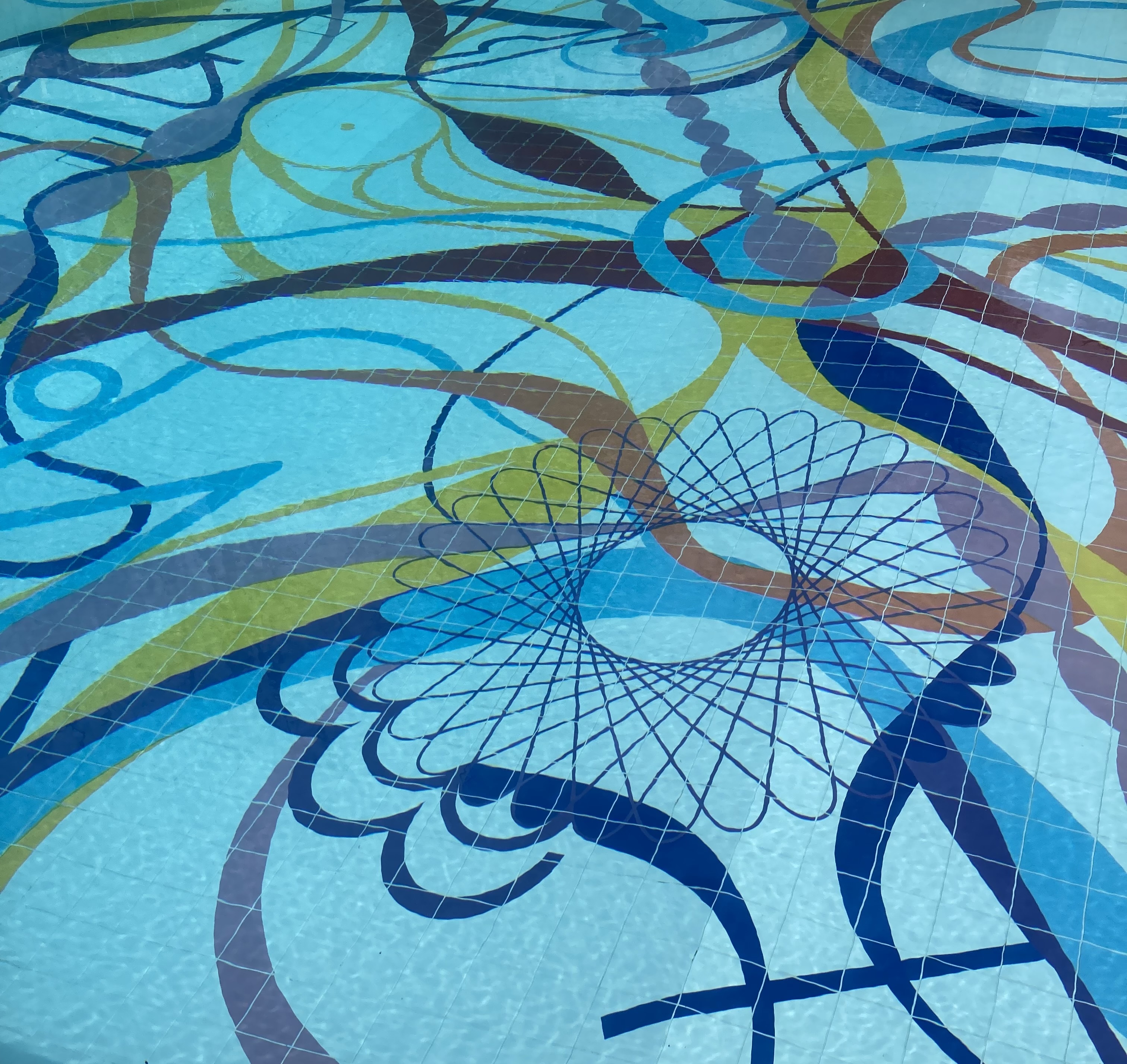
I think it leads right back to that point, or zone, on the straight line I mentioned at the beginning of this piece….the zone marked “the present”. The best we can do is to focus on this moment, this day, this period of our lives, and be aware, consciously choosing to be on the lookout for moments of wonder, beauty, and love. Maybe it’s not a point on a straight line, but an intersection of multiple memories, creative imaginings and awareness…..a bit like that image I put at the beginning.

Savour the day.

I posted this, originally, on my substack which you can find at https://bobleckridge.substack.com/

Please come along and subscribe there, where you can find all my newsletters (15 issues so far, as I write this) and all my podcast episodes (just shared episode 10 this week). That way, you’ll get every newsletter and every podcast episode delivered to your email inbox whenever they are published
Read Full Post »

You’ll have noticed I’m pretty keen on stories. In issue 10, I wrote about the need to change the dominant stories about immigration. Racists and xenophobes, and those who crave dictatorships, flood our lives with their negative stories about immigration, yet human being have always moved around this planet. We need to counter this negativity and hatred with stories of diversity, of the richness of diversity, of the poverty of monocultures. We need to counter them with stories of compassion and love and the power of good, mutually beneficial relationships. 

Then in issue 11 I shared with you the philosophy of stories, of what stories do for us, helping us to make sense of our lives, how they help us to create “concord” out of “discord”. 

In the midst of writing those two issues I was reading Erin Morgenstern’s “The Starless Sea” which is one of those novels which puts stories front and centre. I’m not a big reader of fantasy novels, although I do have my all time favourites in that genre (Earthsea by Ursula LeGuin, Tolkein’s Lord of the Rings, and Mervyn Peake’s Gormenghast) but a novelist who can create a whole othewr world for you to get lost in for a bit, is a good novelist in my opinion. Anyway, “The Starless Sea” is simply bulging full of stories. She sprinkles tales and fairy stories throughout the narrative, and my favourite one is “The Inn at the Edge of the World”. In fact, for me, the book was worth reading just for that story alone. I decided to record myself reading that story, The Inn at the Edge of the World one, uploaded the mp3 to Dropbox, and shared it. If you’d like to hear it, send me an email, or message me, and I’ll send you the link. 

However, I noted a couple of passages in The Starless Sea which really got me thinking. Here’s the first one – “Everyone is part of a story, what they want is to be part of something worth recording. It’s that fear of mortality, “I Was Here and I Mattered” mind-set.”

This set off a couple of trains of thought for me. The “everyone is part of a story” made me think of how everyone changes the world just by living. There really is no such thing as a disconnected, entirely separate individual. The way we live our lives changes the world around us. We might not intend that. We might not even be aware of it. But we change the air by breathing it. We change the planet by what we eat and drink. We change the planet by what we choose to do every single day. That’s why I’m so keen on “awareness”, because instead of making unconscious changes, driven by habit and algorithms, when we become aware, we become the heroes of our own stories, making conscious choices about how we might affect the world we live in. 

“….what they want is to be part of something worth recording” – the “I was here and I mattered” mindset really stopped me in my tracks. 

When someone close dies, we have an immediate sense of loss. Their physical presence disappears so quickly and feels so complete. But the person who they were was more than their body, and, even at the funeral, we celebrate that, by telling the stories of their life. We share memories, events and experiences. We share the phrases they used, perhaps the jokes they told. We share the feelings they evoked when we were with them. And we share the marks they made, the works they created. In some ways, I think, a person is never quite gone as long as we still tell the stories about them, and as long as we still enjoy their creations. 

It’s easier to be aware of that in people who made a big impact on the world and became famous…Shakespeare, the great poets, writers and artists….the great composers and musicians, each with their utterly unique, distinct, and instantly recognisable styles. 

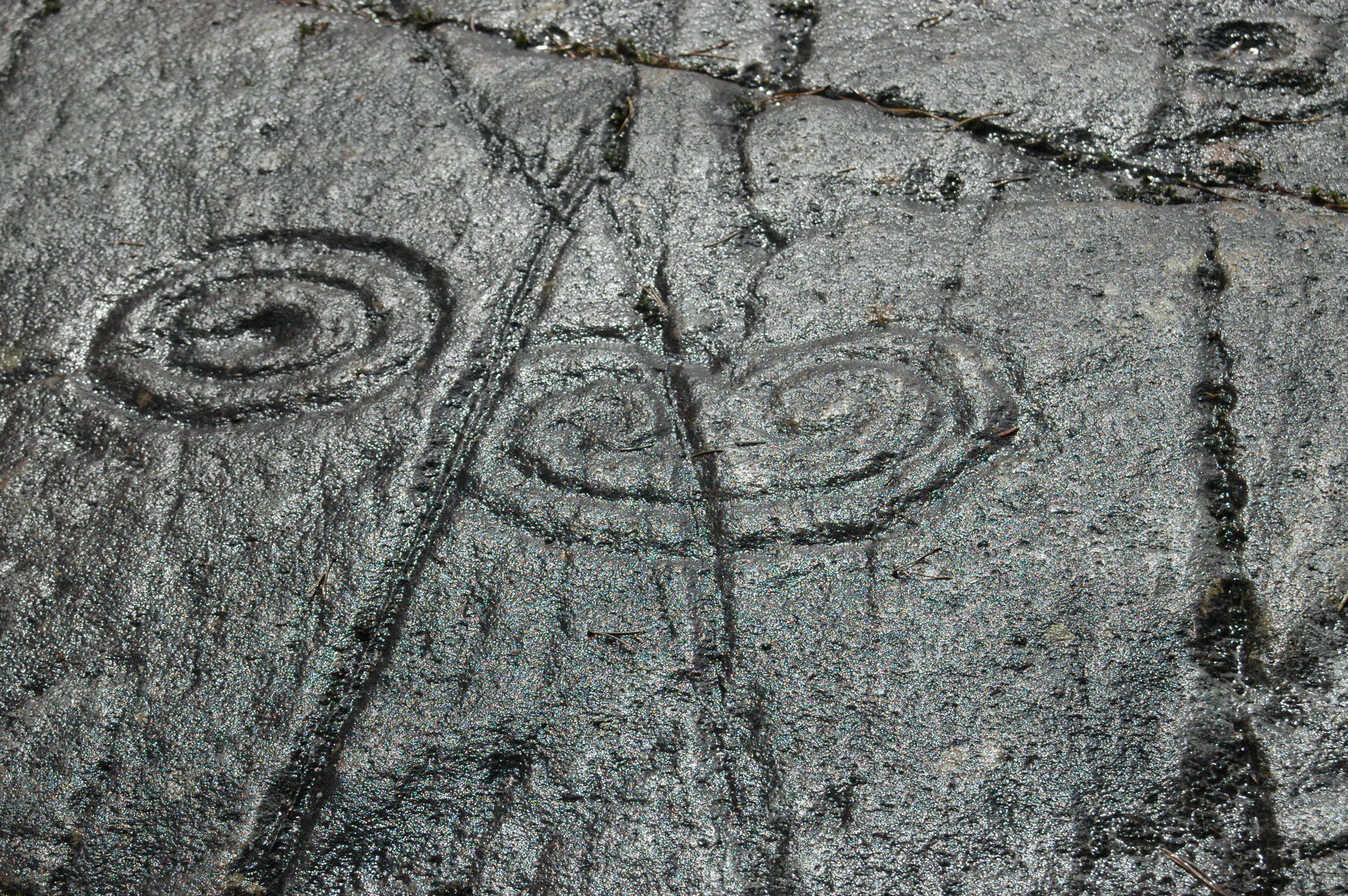
But I also see that from the stone circles, the cairns, the ring and cup markings left by the first settlers in Scotland. Two of my most favourite place are Orkney with its stone circles and remains of ancient villages, and Kilmartin Glen with its standing stones, circles, cairns, and, especially the spirals, circles and cup markings engraved on the rocks so many thousand years ago. Nobody knows why our ancestors made these marks. One theory is it was to say “I was here”. Maybe that’s as good a theory as any, but I can’t help thinking these marks meant more than that.

Everyone leaves some marks, leaves some stories, some memories and creations. We keep others in our lives that way. 

The second passage which struck me was “Stories – something was, then something changed. Change is what a story is, after all.” which comes after she reminds us that change happens all the time. This is maybe another aspect of story I didn’t touch on in my last two newsletters…change. 

Change, transience, and flow, are all important to me. They seem so fundamental to our existence. Nothing is fixed. We are, all of us, in a continuous process of becoming. In fact, that’s the sub line on my blog, Heroes not Zombies, “becoming not being”. It’s a phrase I picked up from reading two French philosophers, Bergson and Deleuze. In many ways I think it captures the essence of being alive. The importance and the beauty of transience really came home to me when I visited Japan and encountered how fundamental that was in their aesthetic, demonstrated not least, in the annual festivals of the cherry blossom. Do you know that, during the season of the cherry blossom, TV news programmes, and national newspapers show maps of Japan, just like the weather maps, but instead of showing the weather, they show the progression of the appearance of the cherry blossom, from the South East up to the North West of Japan. And once the blossom appears, people come out in the thousands, to wander below the trees, taking photos of each other, taking selfies, settling down under a pink cloud with a blanket and a picnic. It’s really something. 

“Stories – something was, then something changed” OK, you can capture everything about what a story is in one phrase, but, that’s a really thought provoking sentence. Many of the patients who came to see me had been suffering for a long time. One of my favourite questions to ask them was “when did you last feel completely well?” Pretty much everyone can answer that question, even if it takes a little time and patience. But getting someone to think back to when they last felt completely well often opened up not only the details of what changed in their life, but, the circumstances, the time and place, the events, which occurred and, maybe influenced those changes. It was a way of understanding this present illness in the context of a whole life. 

Another of my favourite questions was “What has changed?” A question I would always ask during follow up visits. How else could I make any sense of what my treatments were doing without asking what changes the patient had noticed since I saw them last? How else could I follow the progression of the disease, or, hopefully, the expansion of healing? 

So, yes, the idea that “change is what a story is, after all” is a good one, a useful one. 

I started my podcast, More Good Days, as a way of drawing together and sharing some of what I’ve learned about what goes to making not just good days, but a meaningful life, because I think that’s our path, individually and collectively, towards making this world a better place. 

But I said right at the start that life is nuanced, that there aren’t simply two kinds of days, good ones and bad ones. Pretty much every day will be filled with experiences which we will rate all the way along the spectrum from good to bad, and back again. There are delights, wonders, joys, moments of peace, of calm and of loving and being loved. And there are challenges, difficulties, sadnesses, moments of anxiety, anger and disconnection. It’s never all the one and none of the other. My focus has been on the former….what brings all those positives, and how our quality of life can be increased by paying attention to them. But, I want to keep this real, and June turned out to have many challenges and difficulties for me. 

The whole of France experienced a “canicule”, a heat wave, like never before, with temperatures rising into the forties for several days in a row. The thermometer out in our garden reached 44 in the shade. It was exhausting. It was hard work to keep the plants alive in the “potager”, rising early before the Sun rose above the trees, to do some watering, and returning again late in the evening to give the plants some more. We live in a traditional, old, stone house with thick walls and wooden shutters, so were able to keep the place pretty comfortable by having all the shutters closed all day, but it was strange to spend day after day in semi-darkness. If you stepped outside, you felt like you were stepping into an oven. Millions of French people would have found it tougher than me. It was a huge challenge for those who lived in apartment blocks with no air conditioning, and buildings that got hotter and hotter every day. 

At the beginning of the month I was hit by some weird but potent virus which floored me like I’ve never been floored before. As the fever raged (reaching 41 before the rest of France would reach 41 a few days later!) the symptoms progressed and followed a path which baffled me. I’m still not sure I understand it, but, thankfully, I’d say, I’ve recovered. 

Then an old school friend of mine passed away the other day. We’d lost touch decades ago, but it still came as a shock, still made me sad. It also precipitated a flurry of communication between old friends, each of us sharing our memories of Ian, sharing old photos, and stories, some personal to each of us, and others we heard from the first time in the script prepared by the Humanist Celebrant for the funeral. Stories help us to remember, help us to know another, and helps us to connect. 

But we did something else, too, my little group of friends who share a life long love of music. Ian was part of the original Stirling Record Club, and so each of the four of us in the current version which emerged during the pandemic, shared the music we most associated with our old friend. 

Music helps us to remember, helps us to know another, and helps us to connect.

So, maybe take a moment, to reflect about a loved one…..either someone still in your life, or someone who has passed…..and think of the stories you associate with them, then think of the music you shared. Those connections, those stories and that music, together make something quite unique, something that connects you, something that will always connect you. Because just as every one of us is unique, so is every relationship. There are no two the same.

There’s one particular song which came to me this week was – Simon and Garfunkel’s “Old Friends”

“How terribly strange to be 70. Memory brushes the same years….”

Yet, throughout this challenging month, I’ve continued to find flowers and plants in the garden which have amazed me, bird song which has delighted me, and moments of joy and beauty sprinkled through the days. More than that, however, has been the experience of the relationships in my life, the reality of being cared for and looked after by my wife, and supported and encouraged by family and friends around the world with messages, emails and video calls. 

Not every day will feel like a good day, but even in the more difficult days, we can experience love and wonder and beauty. We can be aware of, and strengthen, our connections with others, and share with them, this one precious life. 

Au revoir et bonne journée

PS if you’ve missed any of my podcast episodes (there are eight of them available now) you can find them on Spotify ….. search for “Bob Leckridge’s More Good Days Podcast” …. or follow this link – https://open.spotify.com/show/42bZ4WoIZ0WqiMfyqOKiVD?si=c055dbcc3caf49d6

And if you want to catch up with the newsletters as well (there are twelve of them so far including this one) then come and find me on Substack – https://bobleckridge.substack.com/ – and if you sign up, for free, you’ll get access to all the past newsletters and podcast episodes, and get all future ones delivered direct to your inbox. 

Read Full Post »