Feeds:
Posts
Comments

Archive for October, 2026

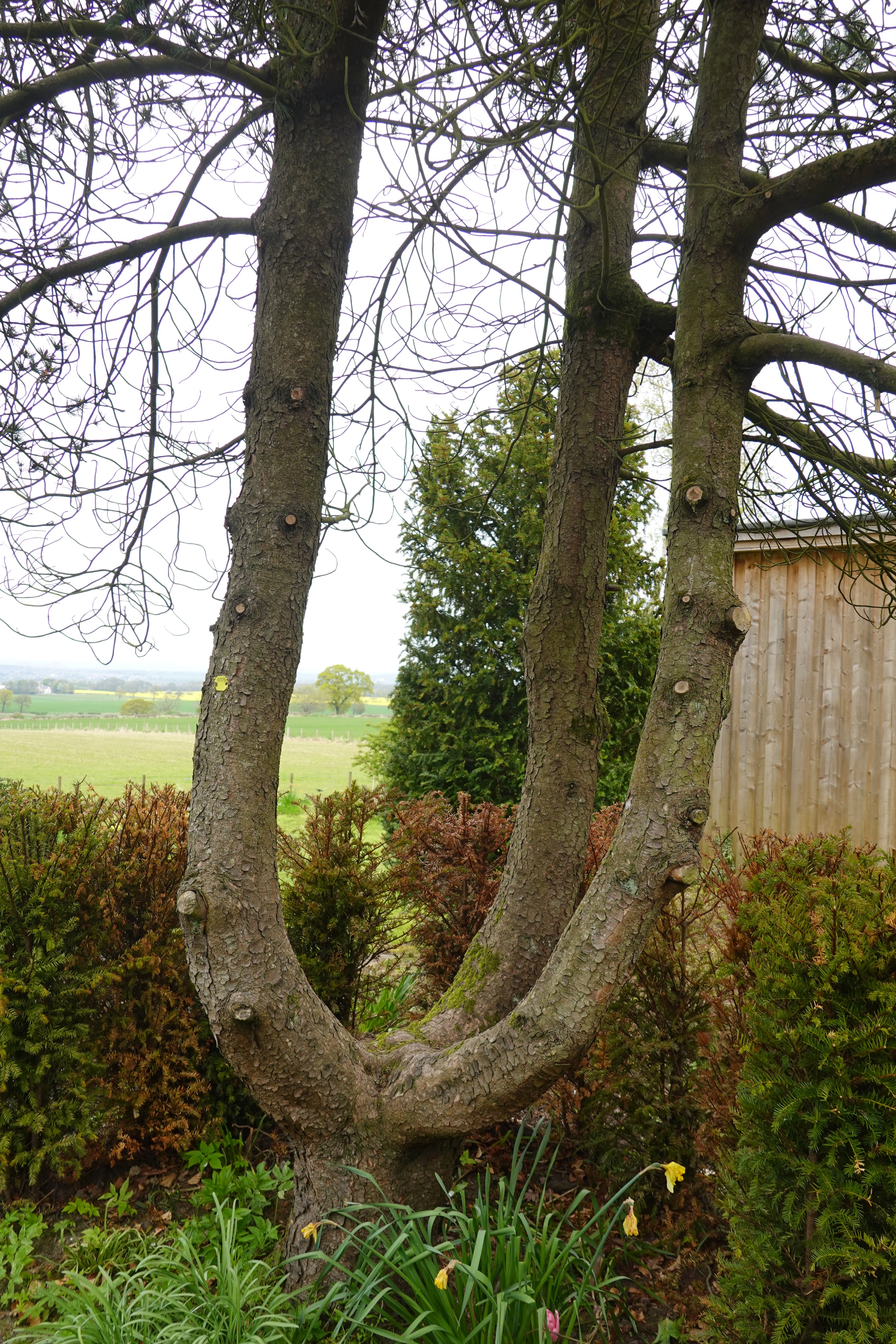
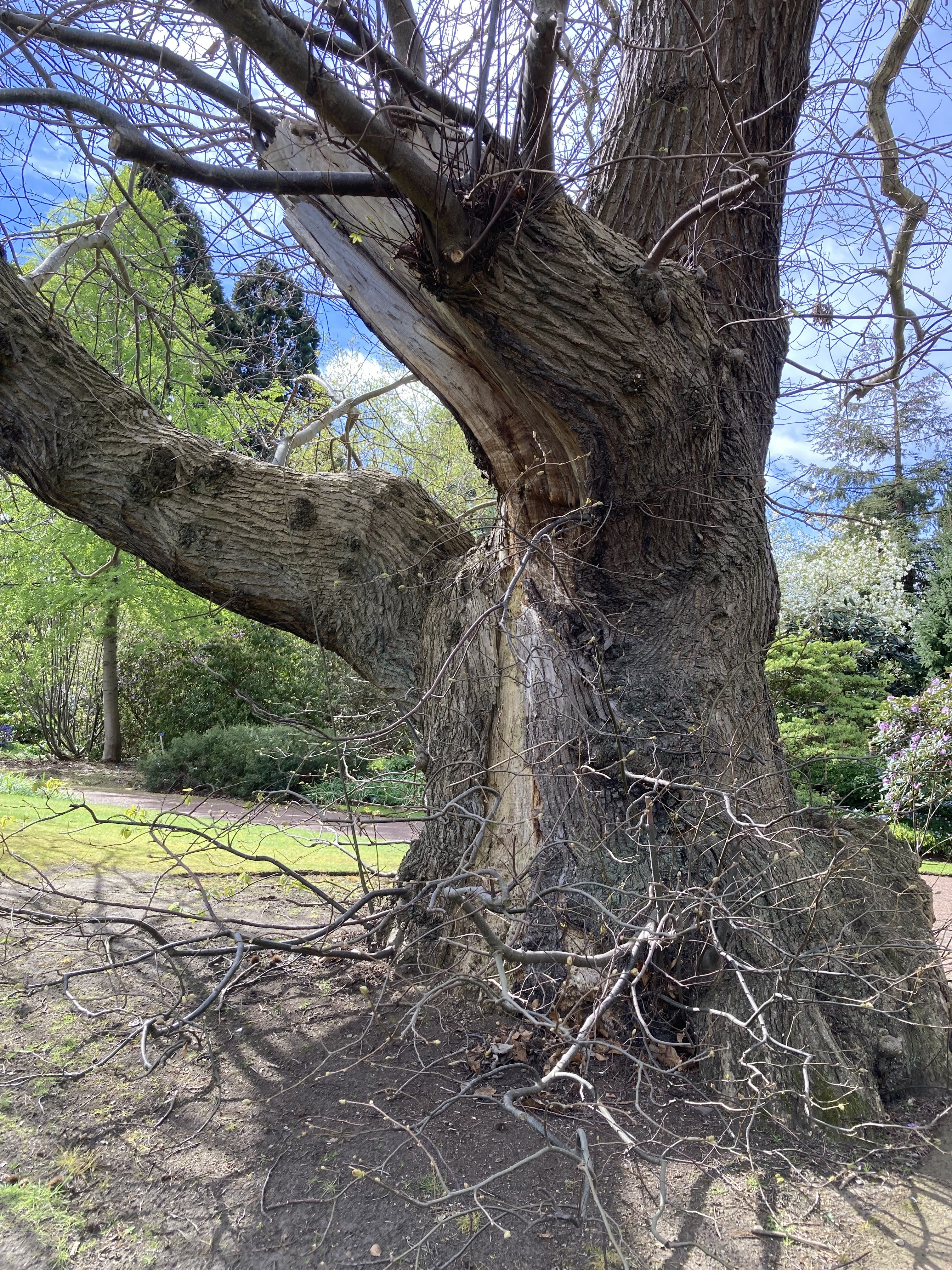
I came across this tree in Edinburgh’s Royal Botanic Gardens recently.

I’m pretty much a life long user and fan of “the Botanics”. When I was a medical student, my wife and I rented our first flat in Rodney Street, a short stroll from the gardens. I went there a lot. Really, a lot. I found being outside amongst the trees and flowers a great environment for study and would take my stacks of revision cards down there to try and get all those new facts into my brain. But it was also the place I’d go when I was feeling stressed out, by exams, or whatever. As I wandered around the rock garden, or paused amongst the great Sequoias, my heart rate, my breathing and my mind would quickly settle down.

It’s a place of great pleasure for me. But it’s also a place of healing.

Years later, when I was learning homeopathy, I’d delight in finding the plants, whose medicinal powers I was just discovering, and I’d wish that botany and plant medicine had been included in my medical curriculum. Mind you, something would have to have been removed from it too because it was crammed full.

On this recent visit I found this tree, which, in its pre-storm state, I had encountered many times. My first feeling was sadness. This was one of the tallest of the ancient trees in the garden, and to see how much it was damaged was really a shock.

But, then, as I looked closer, I noticed all the new growth emerging from the base of the trunk. This tree, clearly, is not dead. How will it develop from here? Surely it can’t just keep growing branches from so low down? Well, maybe it can. Which made me very conscious of two things – the power of healing adaptation which is shared by all forms of life, and the unpredictable nature of repair and development.

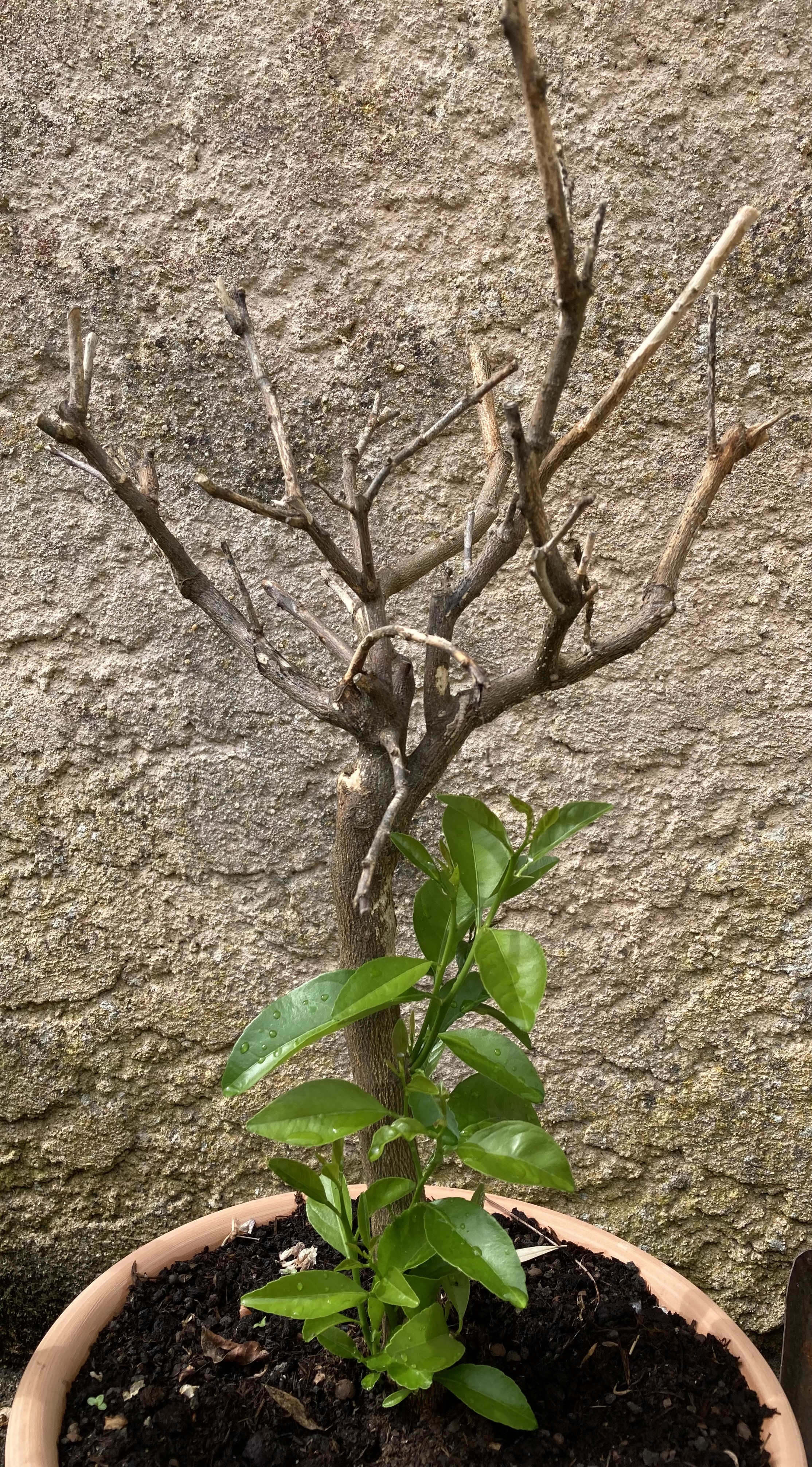
When I returned home to France, I noticed the little lemon tree which I thought had been thoroughly killed off by the unexpected frost and even deep snow this last winter, is showing real signs of life. Just like the great tree in the botanics, the lemon tree has started to recover from the base up. Now, that really is a surprise. And what, I wonder, will happen next? Well, I’ll water it, feed it and give it some attention, and in time, all will be revealed. Pretty exciting, actually.
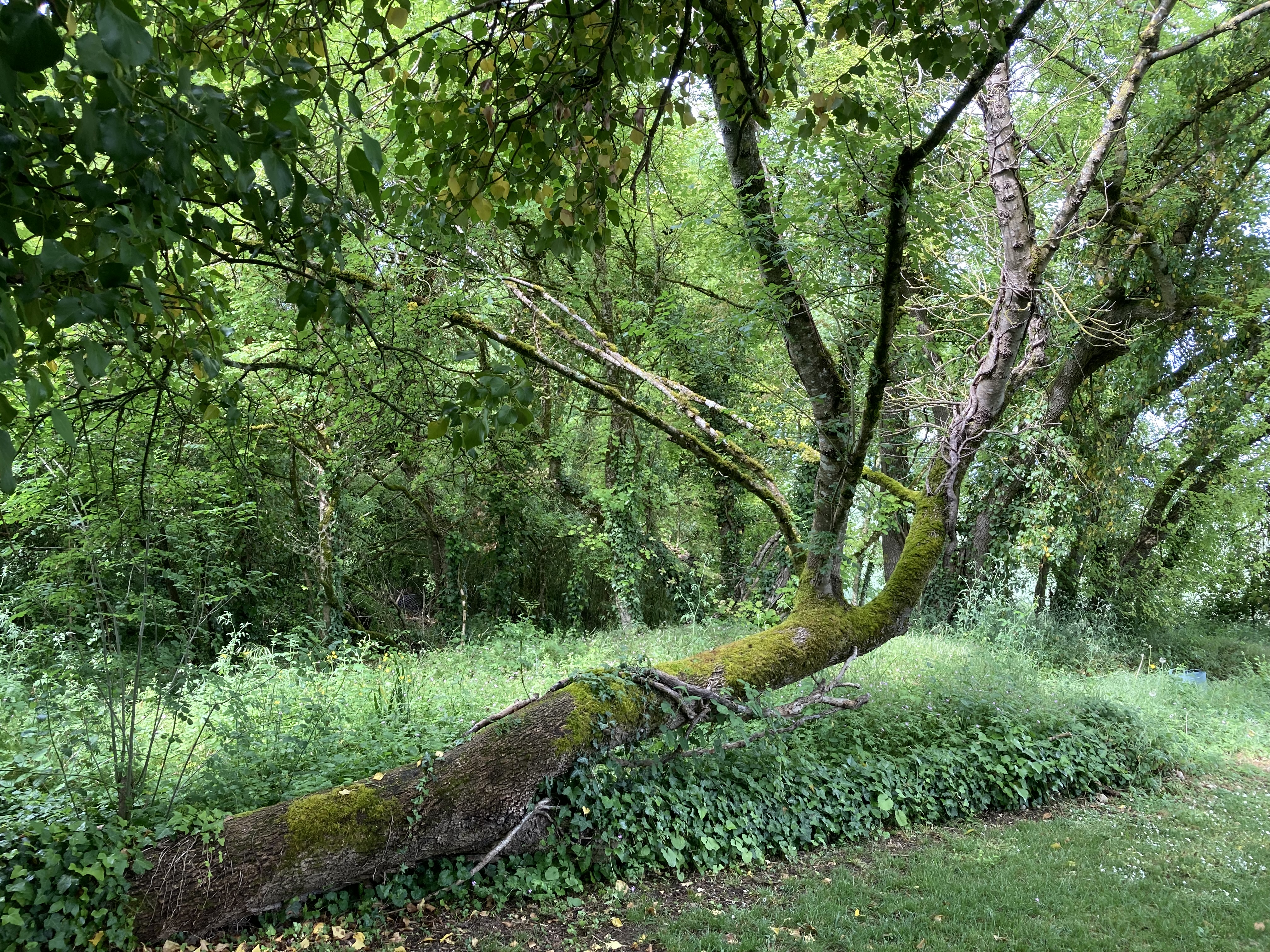
There’s another tree in my garden which is an astonishing example of recovery and growth. When we first moved here I thought I’d found a bit of a wall, but it turned out to be the roots of a tree, embedded with stones, a tree which had been uprooted in a storm long ago. It hadn’t died as it lay horizontally across the ground. It just started growing up again towards the light. Look at it now!
And, you know, it’s exactly the same with human beings. I think the way Medicine has gone with an emphasis on parts over the whole, and a default to the use of drugs and surgery in pretty much all circumstances, we’ve lost sight of the innate power of healing.

I’m not talking about anything magical or fanciful. I mean, if you break a bone in your body, a good orthopaedic surgeon will support the bones, with plasters, splints, or plates and screws, but the actual knitting back together of the bone to make it whole again? That’s all down to your body’s natural power of healing.

Same thing on a lesser scale, with a cut or a bruise. You body will repair the damage…in many cases leaving no trace of the original injury. Yes, you an apply creams and plasters, but it’s your body which is doing the healing.

What if you get an infection? If it’s bacterial, modern medicine can give you and antibiotic to fight the bug, but, by and large, if it is a virus, it’s up to you to recover. Actually, even if an antibiotic does what it is intended to do, it’s still your natural power of healing which will repair the damaged surface of your throat, your lungs, your bladder, or wherever the infection took hold.

Isn’t that amazing? Isn’t it surprising how little we understand how that happens, or why it happens more quickly, more completely, in some people than it does in others?

Did you know that patients with a view of nature out of the ward window will recover more quickly after an operation, will require less painkillers, have less complications and will be able to go home more quickly?

That’s one of the reasons the architects of the hospital where I worked in the second half of my career, built it around a garden.

We promote healing by providing the conditions for healing.

And we can’t predict just what path that healing will take.

There’s no doubt we are changed if major accidents or illnesses come into our lives. We might heal. We might adapt. But we will always be changed.

Just like those trees, we are likely to grow in new directions. We are likely to recover according to our own personal uniqueness.

It seems to me that if we want to be resilient, if we want to give ourselves the best chance of recovery when we get ill or hurt, then we need to get in touch with whatever it is that encourages and supports healing. That will, likely, include, some engagement with nature, with good food, with care and attention, and, I believe, with art.

I’ll be exploring more of all of that in my future newsletters and podcast episodes.

Sign up to my Substack account so you don’t miss any of it.

https://bobleckridge.substack.com

It’s free, by the way.
Read Full Post »

I read Daisy Fancourt’s “Art Cure” this year. She’s a Professor of Psychobiology and Epidemiology at University College London, and in this book she tells us about the huge evidence base for the impact on health which can be made by participating in art.

She describes art broadly, encompassing singing, listening to music, dance, drawing, reading, crafting, visiting museums, galleries and going to the theatre. And she shows astonishingly high levels of benefit on everything from depression, anxiety and pain, to blood pressure, mobility and cognitive function, and even changes to dementia, and increases in longevity.

I found it both convincing and inspiring. I hope it convinces those who think the arts are a luxury.

Mind you, I don’t listen to music, visit galleries, read, or write creatively for the good of my health. I do these things because I enjoy them and they give me more good days.

But who wouldn’t want to live a longer, better life quality life? No matter your current state of health.

Two chapters especially struck me. In one she describes the impact of “Magic Camp” on children with cerebral palsy, enabling them to improve their motor skills, boost their confidence, and find access to whole new worlds of possibility. What teaching these children how to do magic tricks can result in enormous breakthroughs which regular physio and psychology couldn’t achieve.

In another she describes a music therapy where patients with fibromyalgia and other chronic painful conditions listened to music with their eyes closed for twenty minutes twice a day for two months. Their pain levels were halved. As was their level of depression and anxiety. The music was “U sequence”, using genres the patients preferred, starting with stimulating 90-120 beats per minutes, moving to slow 30-40 beats per minute pieces, and ending with moderate 60-80 beats per minute.

I don’t know how to find music I like by beats per minute but I’m going to research that further. Maybe you know ways to do that.

But imagine if your doctor could recommend two twenty minute music listening sessions a day which could halve your pain levels?

Early in her book she mentions the “five pillars of health” – diet, exercise, sleep, nature and art.

Most of us only hear about the first three, so it’s incredibly refreshing and exciting to explore the fourth and fifth ones.

I’ve often written about the health benefits of nature, and you can find several such posts on this blog. Forest bathing is one of my favourites. Many studies have shown the positive effects on the immune and inflammatory systems of spending time amongst trees. But in fact engagement with the natural environment is available to all of us every day. 

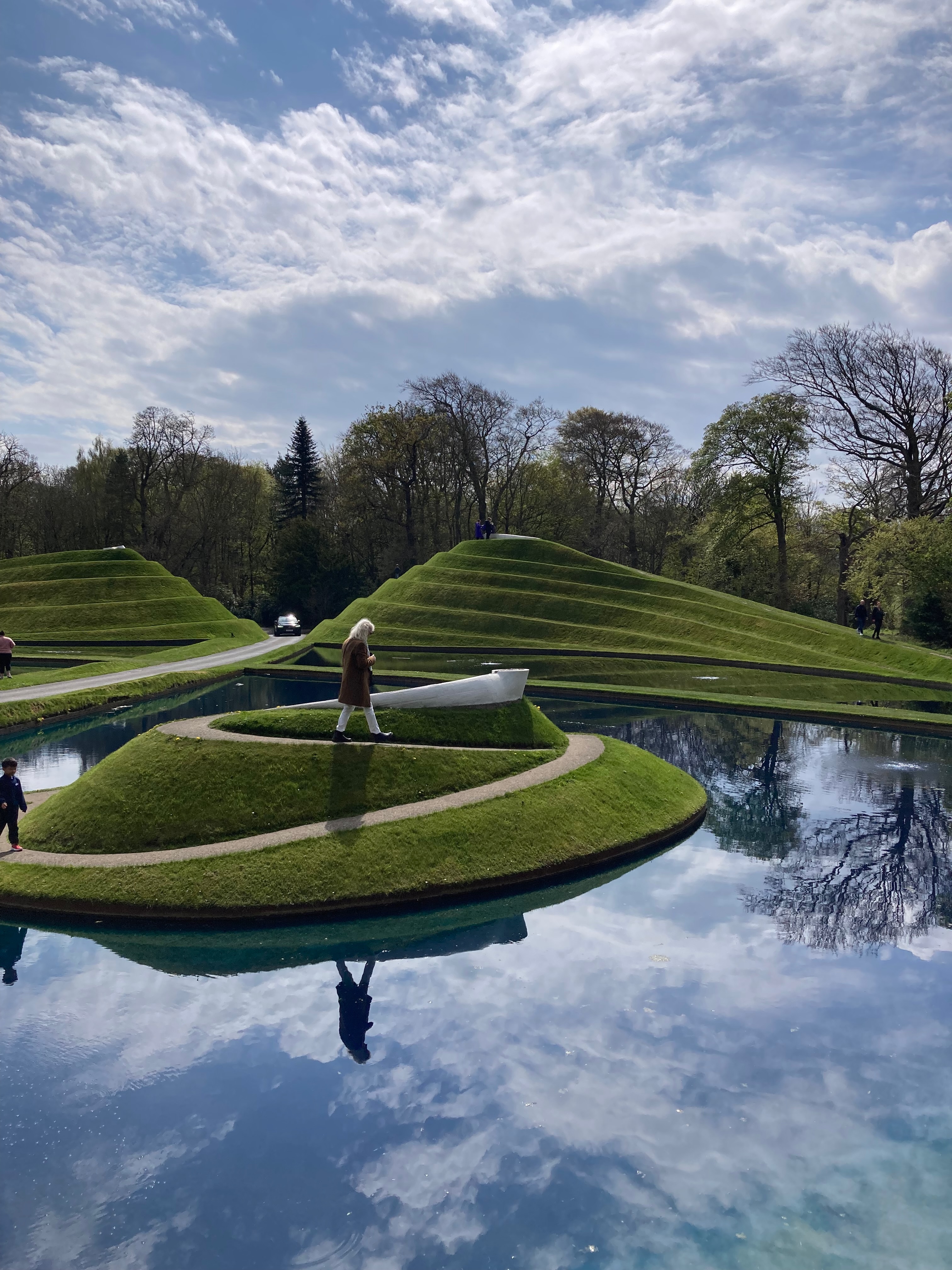
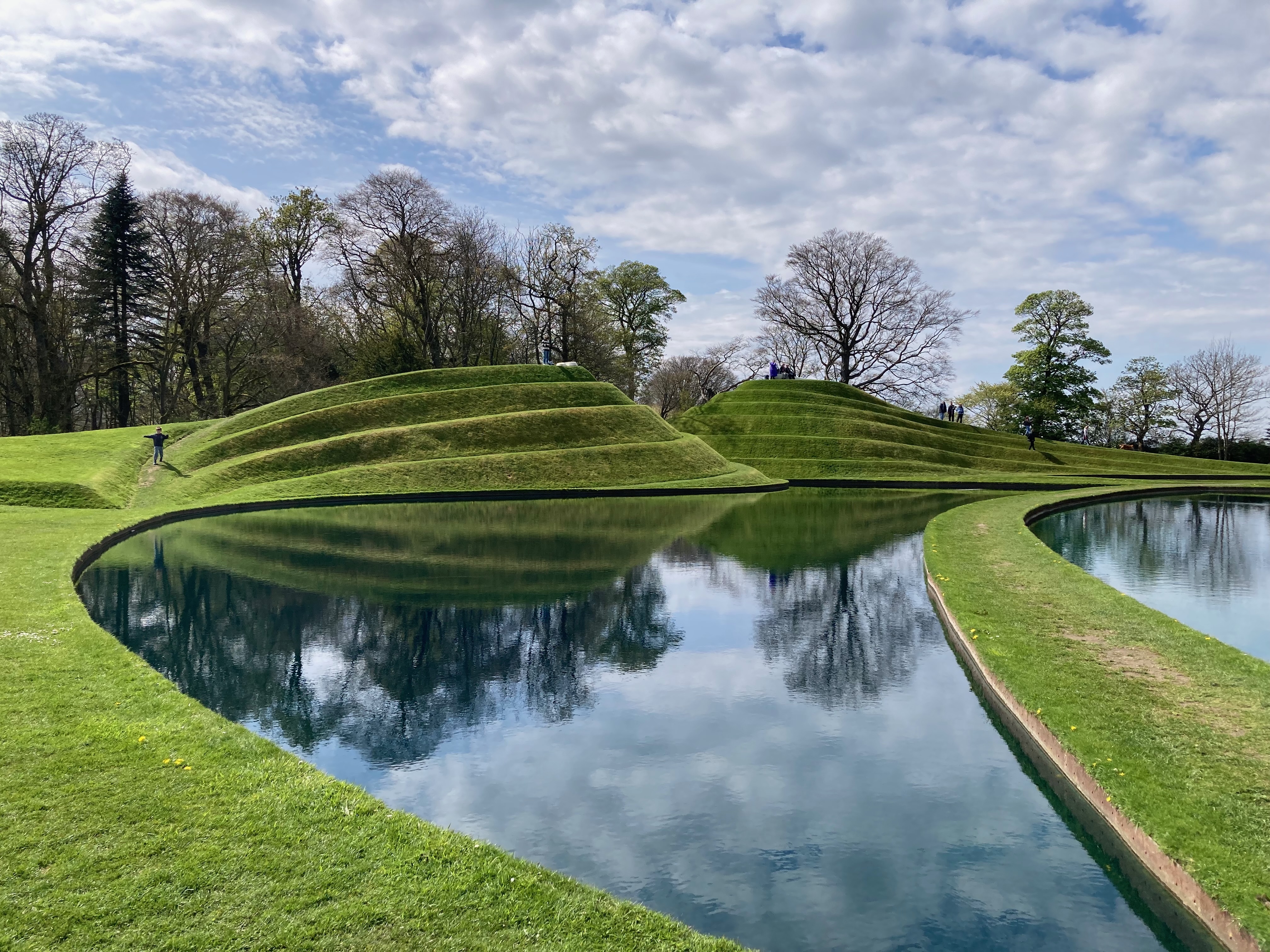
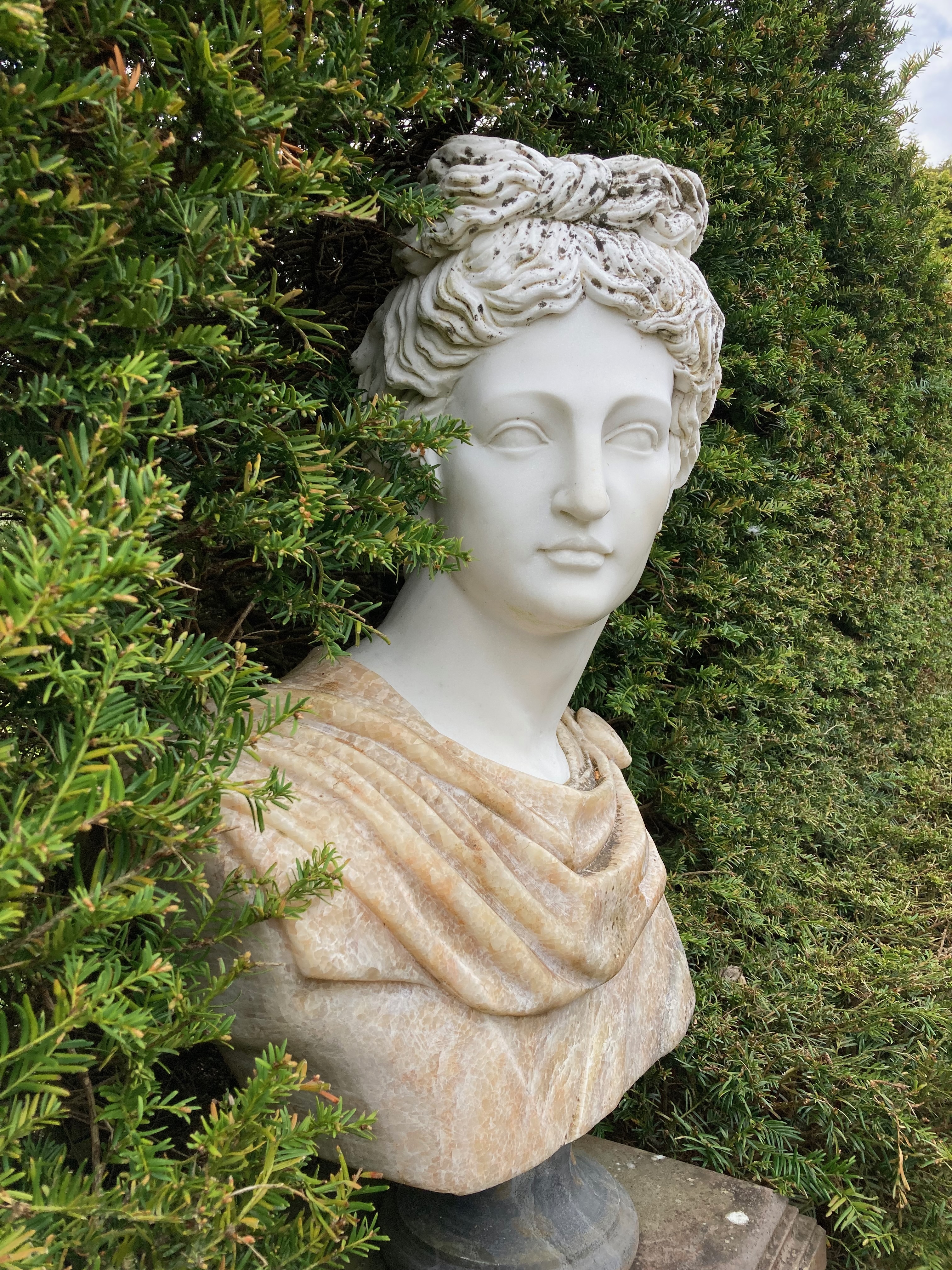
One weekend in Scotland, I paid a visit with some of my family to Jupiter Artland which is just outside Edinburgh. It’s truly one of the world’s special places created around a forest walk sprinkled with sculptures and art installations.

In other words, it offers the opportunity to experience two of the five pillars of health at the same time – nature and art. I love that combination.

OK, so maybe you’re wondering, why haven’t I said anything about the first three pillars – diet, exercise and sleep. Well, mainly because we are flooded with information about all three of these. There are so many variations, and, the truth is, no one size fits all, so you have to find the diet, the exercise regime and the sleep routine that works best for you, but essentially, it seems to me that a healthy diet includes diversity of foods, and is mainly, if not exclusively, non-ultrahigh processed foods. On top of that, most healthy diets recommend eating more plants than meat, and, if possible, eating food which hasn’t travelled all that far. I guess I’m lucky, living here in rural South West France, because there is an abundance of weekly markets within an hour from where I live. At any of these markets you can easily find seasonal foods, and locally grown ones.

As far as exercise goes, the main rule isn’t about a certain number of steps every day, it’s about not spending too much time just sitting. Many of us have pretty sedentary jobs, or lifestyles, and there’s no doubt that the less we move each day, the more likely it is that we will develop severely limited mobility. Again, it’s a matter of finding what works best for you, but most specialists advice both strength training exercises, and some exercise which puts your heart rate up.

Sleep? It comes down to finding the routine that works best for you, and sticking with it. That includes both determining when you want to go to sleep, and when you want to wake up ( 6 – 8 hours sleep is usually recommended ) and developing a wind down routine pre-bed time. It’s pretty much common sense, but, the underlying principle is to gradually reduce your exposure to stimulants, whether they be food and drink, or activities.

Anyway, you really won’t find it difficult to find advice about those first three pillars of diet, exercise and sleep. What I will keep coming back to in these newsletters, posts and podcast episodes, is the value which nature and the arts can bring to our lives, to our health, and, to making more of our days, good days.

As I’ve so recently enjoyed that perfect combination of art and nature, during my visit to the Jupiter Artland, outside Edinburgh, I thought I’d share a few photos with you. I hope you enjoy them and that they add to your own personal more good days.

So, here’s my quick summary advice for this week – listen to music, treat yourself to some art experiences and, if possible, allow yourself some time in nature.

Read Full Post »

I have a ton of notebooks which I’ve filled, or partially filled, over decades. I’ve also posted articles on this blog, www.heroesnotzombies.com since March 2007 (some 3600 posts altogether). I like to dip into both of these collections from time to time, and because I’ve been writing for so long I often come across something in there that I don’t remember writing, and I think…..”hey, that’s interesting” So, these are my inspiration banks. I must admit I do get inspiration all around the place….in nature, art, and daily life, as well as from newsletters I subscribe to, podcasts I listen to, magazines I buy, and so on….but my own notebooks, paper and digital, have become a rich source for me. 

Recently, as I was preparing the next episode of the my podcast, (More Good Days) which will, at least in part, feature the importance of stories in our lives, I discovered notes I’d made about a book entitled “The World is made of Stories’, by David R Loy [ISBN 978-086171-615-9]

I read a lot about stories, as well as reading, and hearing, stories every day, but this book is a bit different because it’s written from a Buddhist perspective. I’m not a Buddhist, but it’s refreshing to read a different take on stories. Here are two passages which made a particular impression on me.

Like the proverbial fish that cannot see the water they swim in, we do not notice the medium we dwell within. Unaware that our stories are stories, we experience them as the world. But we can change the water. When our accounts of the world become different, the world becomes different.

and

The world is not composed of facts, because what counts as a fact is determined by the theory – the story – it is related to. Science is not primarily about discovering facts. It is about accounting for the relationships that make them meaningful.

What I like about both of these passages is that they highlight the foundational importance of stories in our lives, and explain how we can alter our world by altering our stories. Stories are how we come to understand the contexts for our experiences….both in our personal and collective lives. And stories are how we create the world we live in. Changing the stories is like “changing the water” we all swim in.

Some of the dominant narratives we all encounter have been particularly bothering me in recent weeks, and I guess it all came to ahead with the riots in Belfast and various cities in the UK the other day. Headline after headline in the papers, on the TV and on the radio, described the groups who attacked the police, singled out cerrtain houses and properties in their communities and burned families out of their homes, as “anti immigration” protestors.

These were not anti immigration protestors. They were attacking anyone who wasn’t white, targeting families who had lived in their communities for decades, but who weren’t white. These people were motivated by xenophobia and racism.

Yet telling these events as stories about immigration continues and inflames the anti-immigrant narrative which is, sadly, so prevalent these days. Singling people out for different treatment on the basis of their colour, race, country of birth or religion, is xenophobia and racism.

We need better stories.

We need the stories of integration, of adventure and travel, of diversity and sharing. Those stories exist, just waiting to be told and re-told. Whole sectors of the economy in countries like the UK would collapse without the contribution of workers who weren’t born in the UK….from health care, to hospitality, from agriculture to universities, from football to film-making.

Have you ever seen any of Stanley Tucci’s travel programmes? We recently watched one of his series from Italy. Everywhere he goes looks great, and all the food he gets to eat looks so tempting. He’s really good with people, very respectful and enthusiastic. Time and again he’ll highlight the diverse origins of a particular local cuisine, and make the point that the blending of cultures produces really great recipes and traditions.

I also remember a series the chef, Nigel Slater, made for TV where he visited different families from different ethnic origins, who lived in and around London. In each programme he visited them, told their stories, and learned one of their key dishes. Then at the end of the series he invited them all to his place to celebrate their cultures and foods together. The series made such a strong case for the benefits of multi-culturism, where people respect each other, and form good, enriching relationships.

I know my focus in these newsletters and podcast episodes is how we can, each of us, have more good days, but it’s important to remember that none of us live in isolation. We humans are deeply social creatures and even our very individual uniqueness arises, primarily, from our singular sets of relationships and connections.

Sadly, we have a concentration of power and wealth in the media, and, too often, the agenda is set by a small network of rich and powerful people telling the stories which suit their own perspective.

I’ve just started reading about something called “Market Humanism” which is a term coined by Nick Hanauer and Eric Beinhocker. They convincingly demolish the dominant economic and social narrative, which is known as “neoliberalism”, a philosophy based on understanding individuals as unique, separate and selfish. They challenge the idea that the market is a way of achieving balance, growth and equitable reward distribution. They show that nothing has worked out the way the neoliberals claimed it would and we now have greater inequality (with no significant “trickle down” or “lifting all boats”), stagnant growth, growing division and disillusionment. On top of that, the idea that the Earth is a resource bank to be plundered for the greatest profit is driving both our climate and species diversity to collapse.

Their alternative story makes so much more sense to me….that we humans are actually social creatures, that we need each other, achieve our greatest achievements when we work together, and that the planet functions as a huge complex adaptive system of interconnected feedback loops. They propose we consider human flourishing as a better measure of economic health than the value-free “GDP”, and that governments and the private sector work together to create an economy focused on solving human problems, rather than one focused on maximising shareholder returns. I’ve a lot more to read in this work, but I think it’s another exciting, alternative narrative……stories which weave together to create a better paradigm.

We do need a new paradigm.

When we come to understand the world as precious, finite and delicately balanced, and our lives as unique, diverse and deeply embedded with the lives of others, then, as David R Loy, says “When our accounts of the world become different, the world becomes different.”

Another TV programme which I think brilliantly demonstrates our interconnectedness and our entangled origins, is “Who Do You Think You Are?” where a celebrity is helped by genealogists, social historians, and archivists, to discover the stories of their ancestors. If you were to tell your story in terms of your relationships and connections around the world, and, at the same time, trace some of the threads and flows from the past which have led you to where you are now, what will that story sound like, look like?

I think those stories are worth telling.

I think they can change the world.

Read Full Post »

The embrace

In “Saving Time”, Jenny Odell (who also wrote the excellent, “How to do Nothing”), writes –

“my definition of being alive is simply that: the embrace”

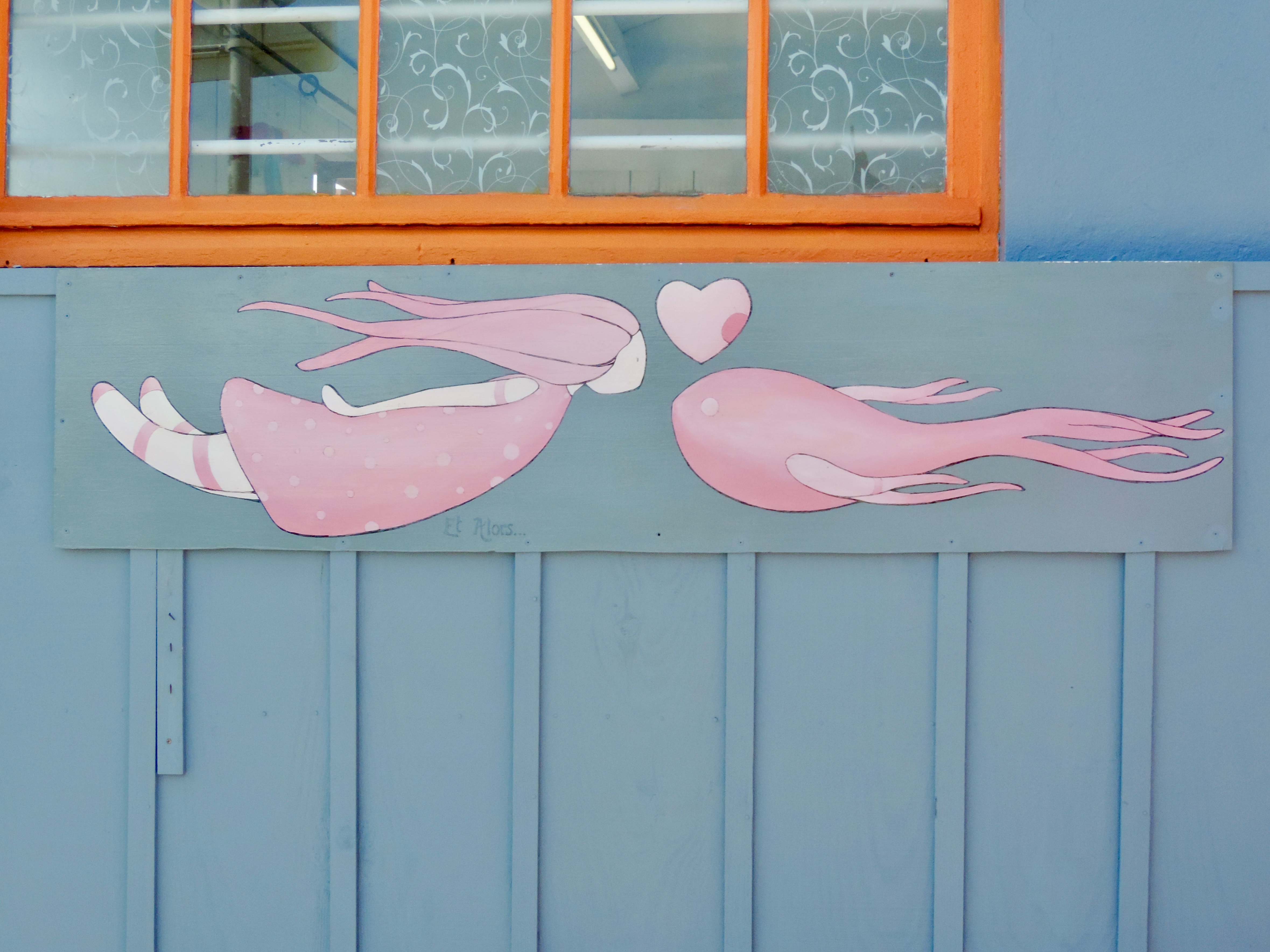
A long time ago I took this photo of a painted door of one of the craft shops on the Ile d’Oleron, which is only about an hour west of where I live. I loved it the moment I saw it. It’s pretty simple, really, but it captures several ideas in one little graphic. A human, in this case a young girl, encountering a sea creature, a “medusa”? They are almost kissing, looking directly into each others eyes. This is an encounter. A meeting. An interaction. The heart, the universal symbol of love, tells us that this a loving encounter. An embrace.

I think Jenny Odell is onto something….being alive is an embrace. Because everything which exists, exists in a vast web of connections and relationships, and if those relationships are loving, then they are nurtured, then they grow. The poet, Mary Oliver, says that we should pay a particular kind of attention to the world, a loving attention. She’s right.

Elsewhere in Jenny Odell’s book she quotes Harmut Rosa –

“Resonance is something that can only happen between us. Love as a resonant experience thus refers not to the fact of loving or being loved, but to the moment or moments of mutual, transformative, fluid affecting encounter” – Harmut Rosa.

I love this concept of resonance as an interaction. When we resonate with another, we create a harmony between us. We are on “the same wavelength”. And when we make that heart to heart, soul to soul, connection, then we experience moments which are both mutual, and transformative.

Resonance also occurs between us and other forms of life. That’s pretty easy to see when we consider animals. Our relationships with animals are a two way phenomenon. How we behave towards them, changes how they behave towards us, and vice versa. In fact, the resonance which can occur between humans and dogs, for example, results in the multiple ways in which a dog can become a “helper”, whether that’s to someone with partial vision, or someone who has epileptic seizures.

Doesn’t the same thing apply to plants, even? I know many people who talk to plants (though I’ve never met anyone who claims that the plants talk back to them!) but, I’m sure the benefits which accrue to plants from loving human attention, are clear to see. Any gardener will tell you so. It’s not just what The Little Prince had to say about “his rose”.

Plants, it appears, are able to respond to about fifteen different environmental factors all the time. They have elaborate, highly evolved systems of detection and response. Much more than we realised when we didn’t look close enough.

One of my favourite writers about physics, is the Italian physicist, Carlo Rovelli, (“Seven Brief Lessons on Physics” and “Reality is not What it Seems”) wrote this beautiful passage –

The world is not a collection of things, it is a collection of events. The difference between things and events is that things persist in time, events have a limited duration. A stone is a prototypical ‘thing’: we can ask ourselves where it will be tomorrow. The world is made up of networks of kisses, not stones.

“the world is made up a networks of kisses, not stones”……..isn’t that lovely? Of course, stones only appear as “things” because they change so slowly. Every one of them came about through a sequence of events too. The “limited duration” he refers to is the timescale of a human life, mostly. There was a time when every single “thing” we see didn’t exist, and there will come a time when it ceases to exist. But in the meantime, and here’s the even more important point, I think, every “thing” is constantly changing. Maybe kisses don’t last long, but their effects can ripple out through our lives for years…..generations even!

I read Rebecca Solnit’s latest book, “The Beginning comes After the End”, this week. I love her writing, and this collection which is focused on how everything is connected to everything else, is superb. In it she writes – “A new subfield called processual biology looks at the world as made up of processes rather than objects, as phenomena forever flowing and changing and thereby exchanging with each other and changing into each other. It proposes that it is more useful and accurate to think of ourselves and most of what we call things as events.”

This strikes me as another way of saying that reality is made up of embraces, of “kisses not stones”.

Actually, I think there’s an even more important point than the fact that everything is connected to everything else and that’s the fact that absolutely everything constantly changes. Reality is a network of relationships. Each of us is a mind-bogglingly complex network of cells and molecules, constantly interacting with each other. And each of us lives in a multitude of environments, physical, psychological, social, cultural, and so on….which means we are constantly exchanging molecules, energies and information with the rest of the universe.

There is nothing I can do, say or even think, which isn’t going to send out ripples through these networks and environments and there is nothing in those environments which can be walled off to prevent them from setting off actions and reactions too.

I think that’s why we should do our best to be loving, kind and understanding, rather than judgemental, angry and hating. The former creates, stimulates and grows, the latter poisons and destroys.

How about a Mary Oliver poem? I think this one is really pertinent to this idea of life full of embraces.

On the Beach

On the beach, at dawn:

four small stones clearly

hugging each other.

How many kinds of love

might there be in the world,

and how many formations might they make

and who am I ever

to imagine I could know

such a marvelous business?

When the sun broke

it poured willingly its light

over the stones

that did not move, not at all,

just as, to its always generous term,

it shed its light on me,

my own body that loves,

equally, to hug another body.

Finally, Do you know the Canadian singer songwriter, Tenille Townes? I love her melodies, but I most especially love her lyrics. This song, somehow, also seems appropriate to include in this post. I hope you enjoy it.

Read Full Post »