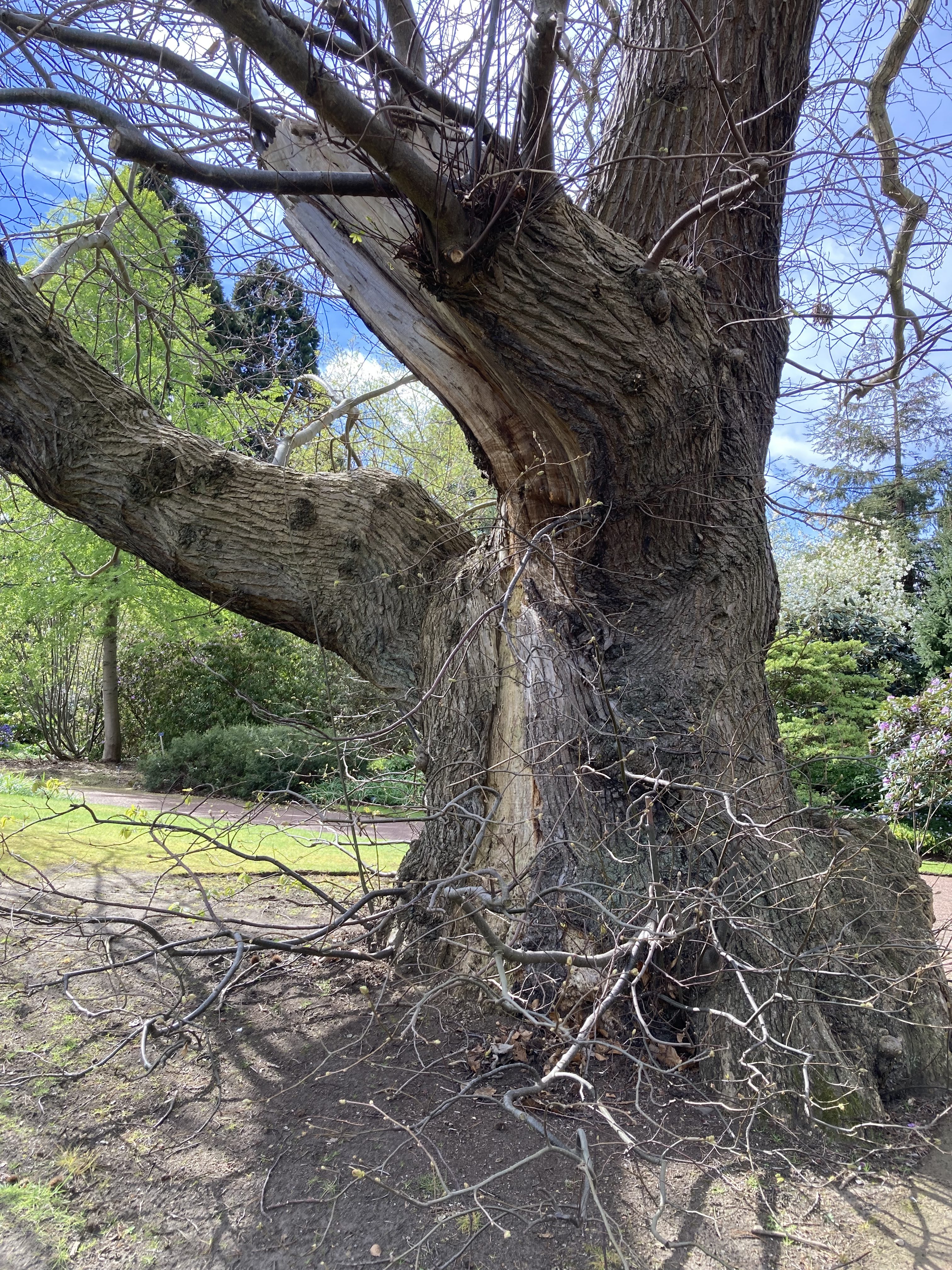
I came across this tree in Edinburgh’s Royal Botanic Gardens recently.
I’m pretty much a life long user and fan of “the Botanics”. When I was a medical student, my wife and I rented our first flat in Rodney Street, a short stroll from the gardens. I went there a lot. Really, a lot. I found being outside amongst the trees and flowers a great environment for study and would take my stacks of revision cards down there to try and get all those new facts into my brain. But it was also the place I’d go when I was feeling stressed out, by exams, or whatever. As I wandered around the rock garden, or paused amongst the great Sequoias, my heart rate, my breathing and my mind would quickly settle down.
It’s a place of great pleasure for me. But it’s also a place of healing.
Years later, when I was learning homeopathy, I’d delight in finding the plants, whose medicinal powers I was just discovering, and I’d wish that botany and plant medicine had been included in my medical curriculum. Mind you, something would have to have been removed from it too because it was crammed full.
On this recent visit I found this tree, which, in its pre-storm state, I had encountered many times. My first feeling was sadness. This was one of the tallest of the ancient trees in the garden, and to see how much it was damaged was really a shock.
But, then, as I looked closer, I noticed all the new growth emerging from the base of the trunk. This tree, clearly, is not dead. How will it develop from here? Surely it can’t just keep growing branches from so low down? Well, maybe it can. Which made me very conscious of two things – the power of healing adaptation which is shared by all forms of life, and the unpredictable nature of repair and development.
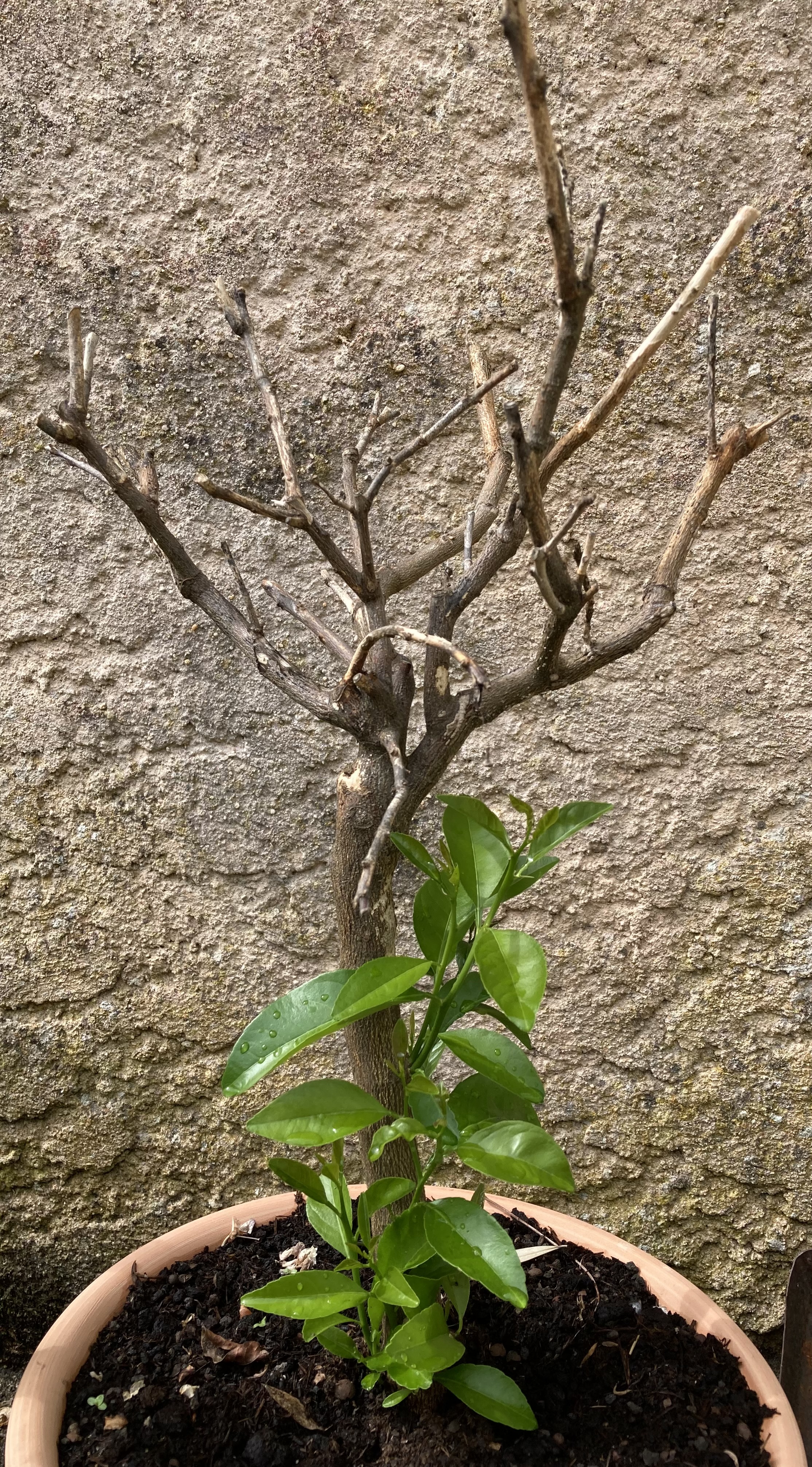
When I returned home to France, I noticed the little lemon tree which I thought had been thoroughly killed off by the unexpected frost and even deep snow this last winter, is showing real signs of life. Just like the great tree in the botanics, the lemon tree has started to recover from the base up. Now, that really is a surprise. And what, I wonder, will happen next? Well, I’ll water it, feed it and give it some attention, and in time, all will be revealed. Pretty exciting, actually.
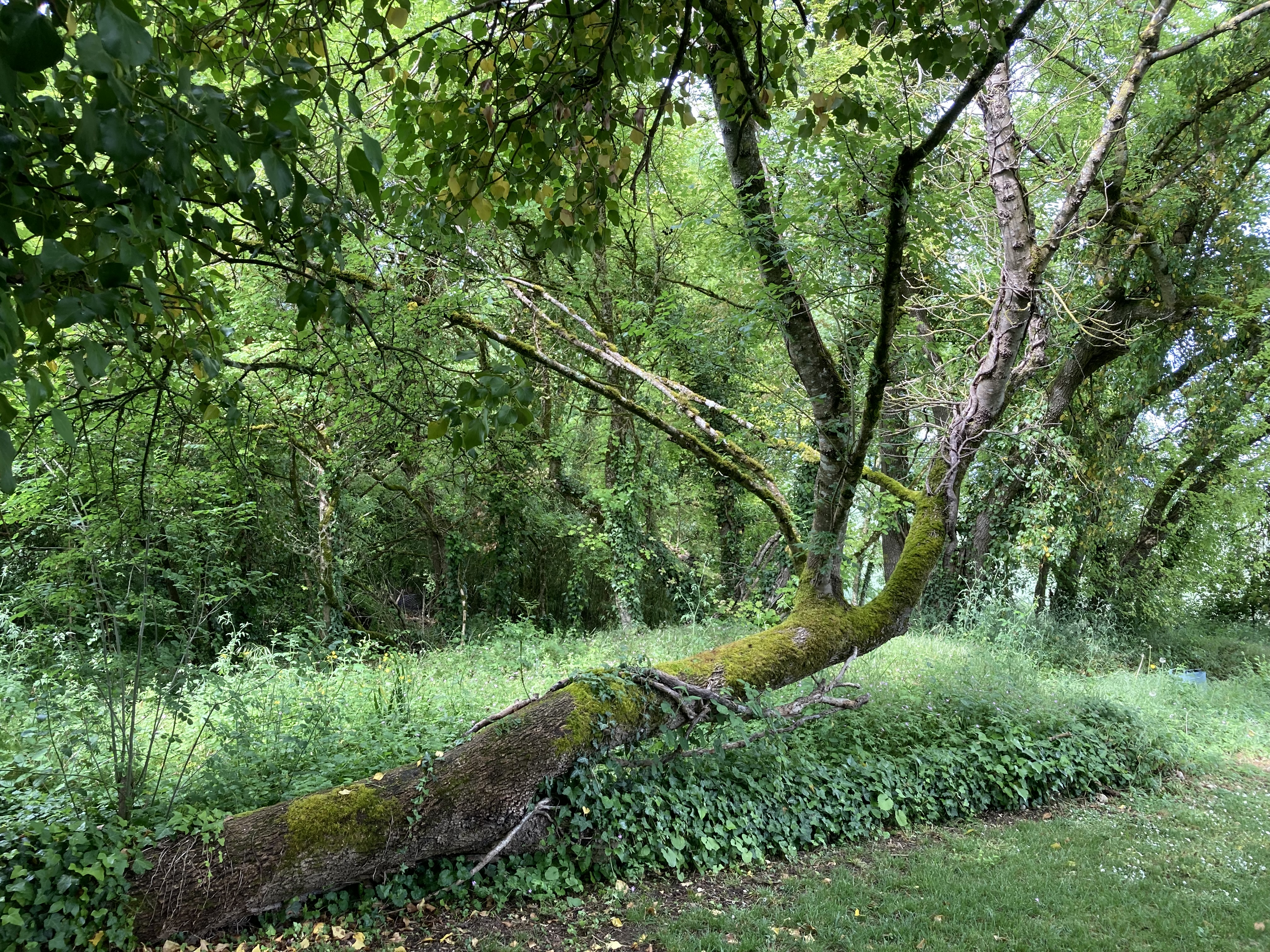
There’s another tree in my garden which is an astonishing example of recovery and growth. When we first moved here I thought I’d found a bit of a wall, but it turned out to be the roots of a tree, embedded with stones, a tree which had been uprooted in a storm long ago. It hadn’t died as it lay horizontally across the ground. It just started growing up again towards the light. Look at it now!
And, you know, it’s exactly the same with human beings. I think the way Medicine has gone with an emphasis on parts over the whole, and a default to the use of drugs and surgery in pretty much all circumstances, we’ve lost sight of the innate power of healing.
I’m not talking about anything magical or fanciful. I mean, if you break a bone in your body, a good orthopaedic surgeon will support the bones, with plasters, splints, or plates and screws, but the actual knitting back together of the bone to make it whole again? That’s all down to your body’s natural power of healing.
Same thing on a lesser scale, with a cut or a bruise. You body will repair the damage…in many cases leaving no trace of the original injury. Yes, you an apply creams and plasters, but it’s your body which is doing the healing.
What if you get an infection? If it’s bacterial, modern medicine can give you and antibiotic to fight the bug, but, by and large, if it is a virus, it’s up to you to recover. Actually, even if an antibiotic does what it is intended to do, it’s still your natural power of healing which will repair the damaged surface of your throat, your lungs, your bladder, or wherever the infection took hold.
Isn’t that amazing? Isn’t it surprising how little we understand how that happens, or why it happens more quickly, more completely, in some people than it does in others?
Did you know that patients with a view of nature out of the ward window will recover more quickly after an operation, will require less painkillers, have less complications and will be able to go home more quickly?
That’s one of the reasons the architects of the hospital where I worked in the second half of my career, built it around a garden.
We promote healing by providing the conditions for healing.
And we can’t predict just what path that healing will take.
There’s no doubt we are changed if major accidents or illnesses come into our lives. We might heal. We might adapt. But we will always be changed.
Just like those trees, we are likely to grow in new directions. We are likely to recover according to our own personal uniqueness.
It seems to me that if we want to be resilient, if we want to give ourselves the best chance of recovery when we get ill or hurt, then we need to get in touch with whatever it is that encourages and supports healing. That will, likely, include, some engagement with nature, with good food, with care and attention, and, I believe, with art.
I’ll be exploring more of all of that in my future newsletters and podcast episodes.
Sign up to my Substack account so you don’t miss any of it.
https://bobleckridge.substack.com
It’s free, by the way.


Leave a Reply