On the Substack platform this year I created a series of podcast episodes around the subject of “more good days”, sharing what I’ve learned both from patients and from my own life experience about what contributes to making days, “good days”. I had a couple of ideas at the start, and, as I pretty much always do, drew a sort of mind map which enabled me to create a structure around the inter-related domains of a personal daily life, of a lifelong project of the meaningful life, and of the conditions which create a better world.
As 2026 draws to a close, I’ll be publishing the last two episodes, and their complementary newsletters, through the month of December. If you haven’t checked them out already, why not start now. You can find them all at https://bobleckridge.substack.com
It’s free, and you’ll find 20 episodes there (by the end of December), and you can listen to them in any order you like.
Today, I’d like to emphasise the importance of two particular “activities” which I reckon contribute towards making each day a good one. In fact, I think they also contribute towards our over all state of health, no matter how we are currently. There’s good scientific evidence that both of these activities improve wellbeing, our mental health, and also, contribute towards a more optimal state of physical health (damping down inflammation, supporting immune health, and, even, in some studies, slowing down the ageing process).
I use the word “activities” because these are not therapies. They aren’t drugs. They aren’t something you swallow. And they needn’t involve the help of any “therapists” or “experts”.
They are Nature and Art.
I was very impressed with the Japanese art of Shinrin-yoku when I first came across it. It’s become much better known in recent years in the West, where it tends to be called “Forest Bathing”, which, simply, means spending time in amongst trees. It has measurable effects on immunity and inflammation. Stimulating the former and dampening down the latter. It that’s all it did, it would be worthwhile. But it’s more holistic than that. People who go “forest bathing” report improvements in mood, cognition, and over all “well being” (that diffuse, impossible to measure, vitally important aspect of human life). We can experience it by taking a trip to forest and wandering through it. The benefits kick in within minutes. You don’t have to spend all day there. But, I’ve actually found that you don’t need to search for a big forest. In my garden there’s an area which is predominantly trees. Not a huge area, and not very many of them, but I created a small network of paths through that area and from the moment I step onto one of those paths I notice a distinctly different environment. The light is different. The sounds are different. It smells different.
The fact that one particular area of my garden gives me this different experience made a lot more sense once I read about the broader effects of spending time in natural environments, like gardens, parks and seasides. Some people call this “Nature therapy”. It doesn’t have to be a forest. It can be at the side of a river, time spent wandering along a beach, a stroll in a city park, or working in a garden or allotment. All have been shown to produce both measurable (objective) and invisible (subjective) health benefits. In fact, we’ve known for a long time that even a view of Nature from a hospital window can reduce pain levels, and speed recovery post-surgery in hospital inpatients.
All of this appeals to me, as a doctor, but I also want to emphasise that enjoying natural environments shouldn’t be reduced to a utilitarian exercise. Even if it didn’t have measurable benefits on health, I’d still do it, and I’d still recommend it, because time spent in Nature puts me in touch with beauty, joy, wonder and awe. And all of those make for more good days.
The second of these activities is art. I read a compelling book about this subject this year, “Art Cure”, by Daisy Fancourt. It’s by far and away the best written, best researched, most convincing account of the impact that engagement with Art can have on our health – both mental and physical. She shows us remarkable scientific studies showing positive effects of art, even on slowing the ageing of our cells, and improving cognition in patients with dementia. I thoroughly recommend this book.
But, like exposure to natural environments, I’d recommend engagement with Art, even if there were no scientific studies showing measurable benefits. Because Art, like Nature, isn’t a utility. I don’t engage with Art in order to improve my health. The fact that it might do is certainly welcome but it’s not the purpose of seeking it out.
Daisy’s work encompasses a wide range of activities under the heading of Art, from creative acts like playing music, singing, painting, writing, dancing, to participating or witnessing Art in galleries, at the theatre and cinema, and concerts. She shows time and again that there is this vital mix of creativity and social connection in engagement with the arts, and that both those aspects contribute towards its power.
We are all different, and what kind of Art I enjoy and practice will be different from yours. Or, at least, they will overlap but they will still be different. I listen to music every day. I read every day. I love to visit galleries, and to see both sculpture and paintings. I don’t go to the cinema or theatre very often, but I do enjoy it when I do. Maybe you sing in a choir, or maybe you go dancing. Maybe you have a season ticket for the opera. We are all different. But the key is, engagement with Art contributes to making more good days.
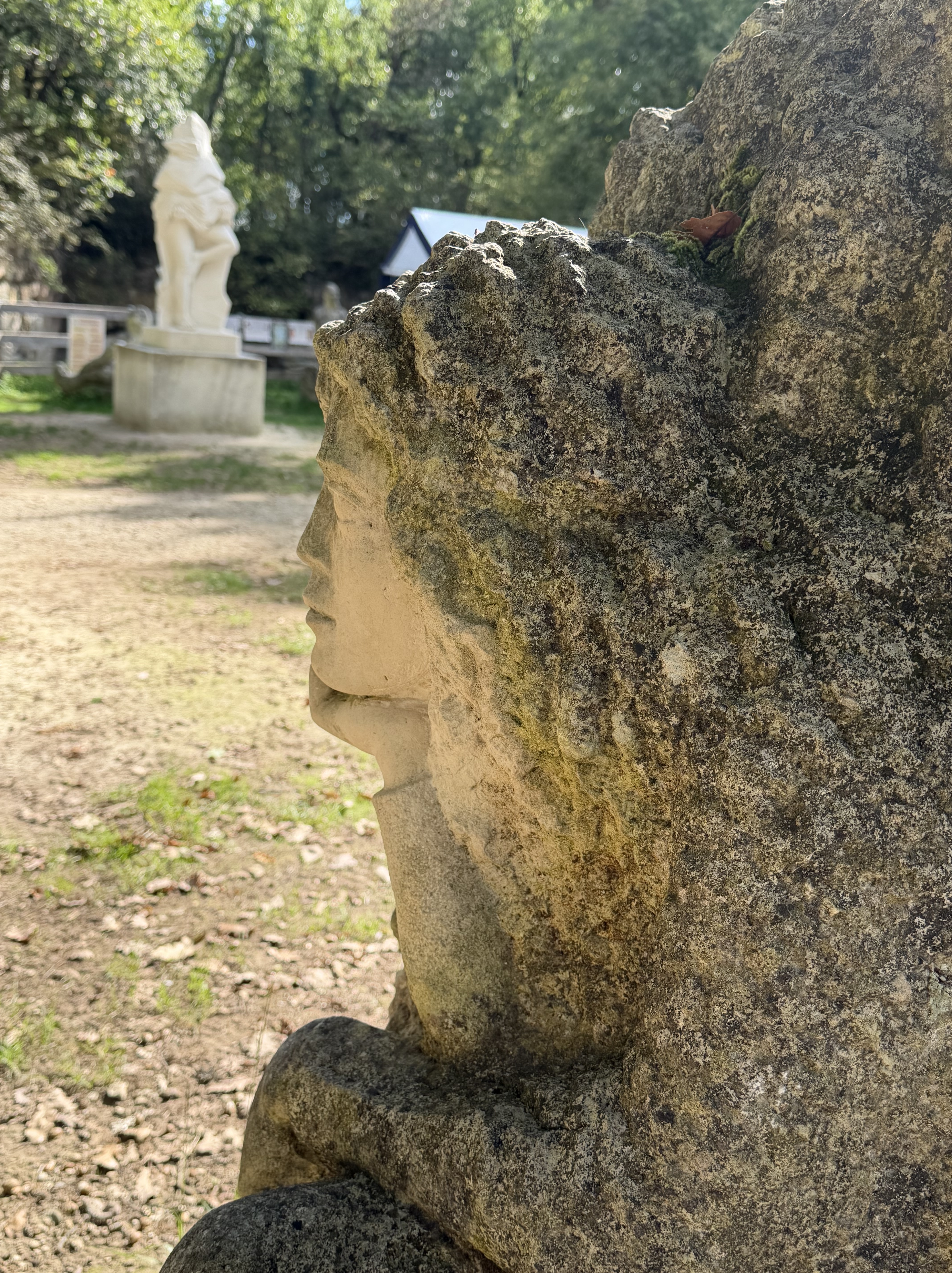
So, as my photo at the top of this post hints…..both exposure to Nature and engagement with Art are, at one and the same time, good for you, and improve your chances of having more good days. So, whatever you do over this holiday season, I recommend both – get out into Nature and seek out some Art.


Leave a Reply