Feeds:
Posts
Comments

Posts Tagged ‘space’

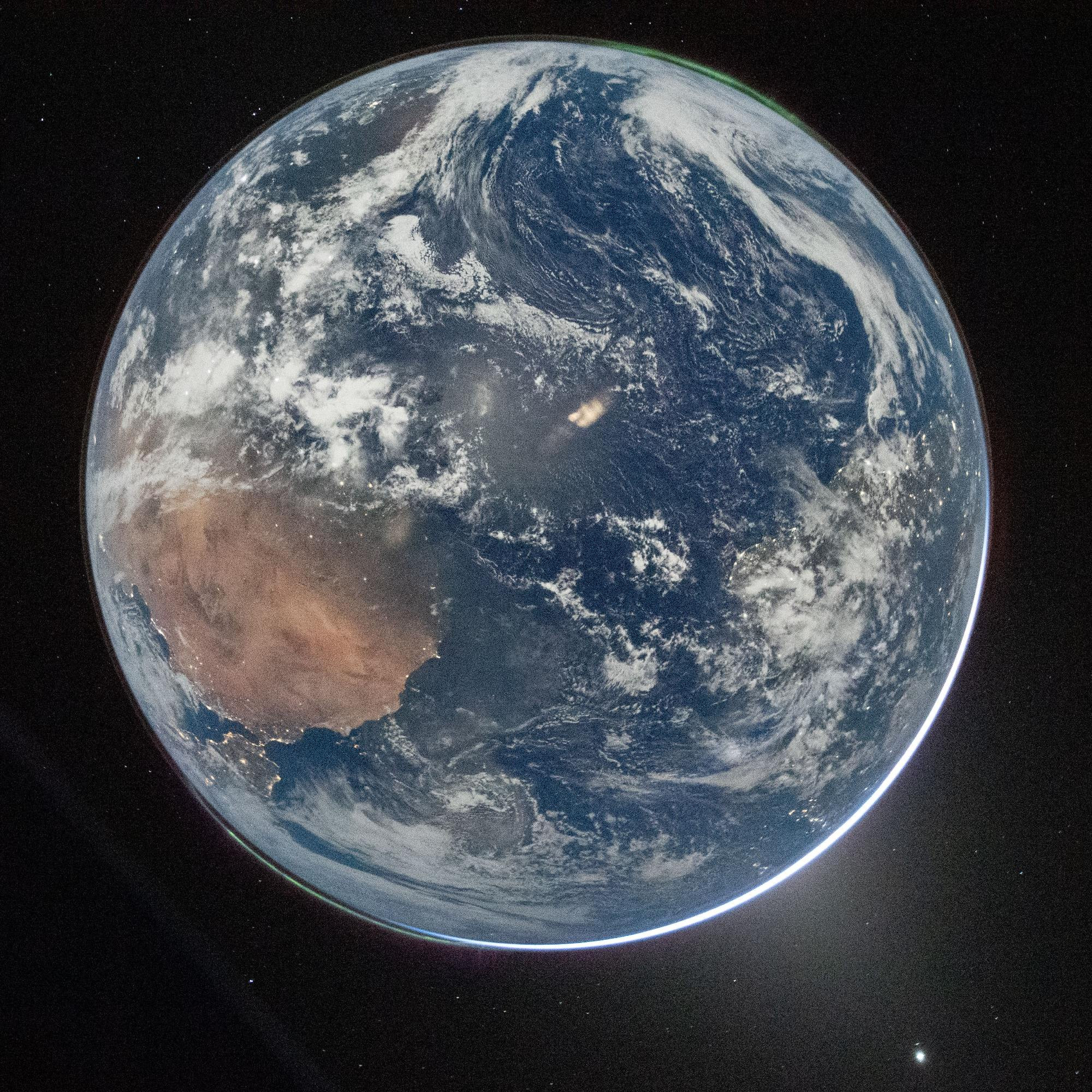
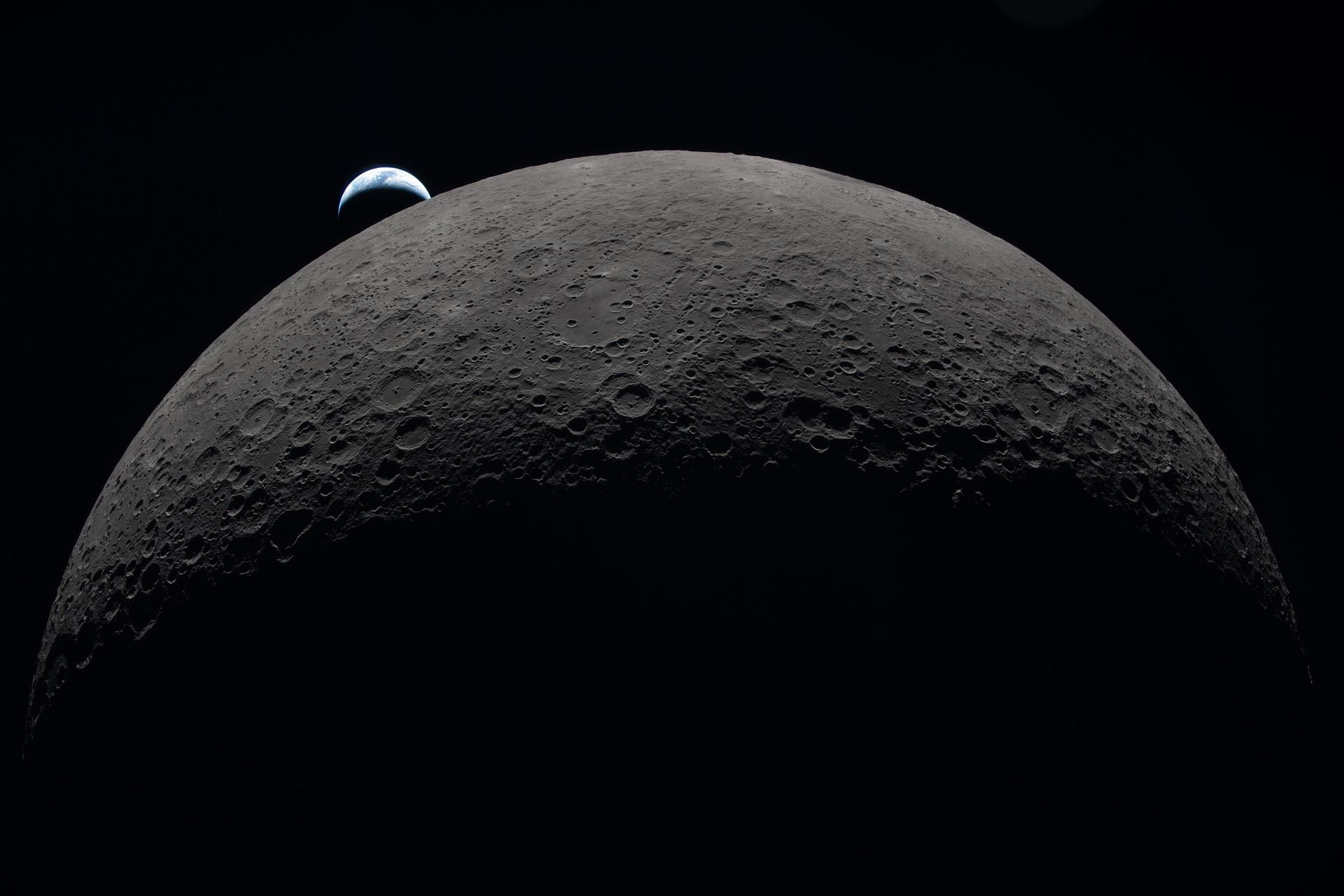
When NASA shared this photo taken from Artemis II I was entranced. I can’t tell you how much time I’ve spent looking at this. This is a view of planet Earth which few of us will see with our own eyes, but thanks to the astronauts, all of us can see it. Look how much water there is! I know, 71% of the Earth’s surface is covered with water, but it still takes me aback to see these great expanses of oceans. And guess what? There are no divisions between one area of water on the planet and another. The great water cycle, from the oceans and seas, to the swirls of rain-soaked clouds which constantly change shape and size, to the streams, rivers and lakes….what goes into the water, flows from one part of the world to all the others.

The second thing I notice are the auroras, one top right of the image, and the other bottom left. In both cases a thin green glow, illuminating just how short is the distance from the surface of the Earth to the airless atmosphere above. There is this incredibly thin layer around our planet, which makes life possible. Compared to the planet herself, this life sustaining layer is astoundingly thin. It looks so delicate. So fragile. Staring at this slip of atmosphere I’m impressed by how, like the water cycle, all of the air we breathe is undivided. What goes into the air at one point on the Earth, quickly spreads around the entire globe.

Nanci Griffiths sings, in “From a Distance” –

From a distance there is harmony
And it echoes through the land
It’s the voice of hope
It’s the voice of peace
It’s the voice of every man

From a distance we all have enough
And no one is in need
There are no guns, no bombs, no diseases
No hungry mouths to feed

and, later, in the same song……

From a distance you look like my friend
Even though we are at war
From a distance I can’t comprehend
What all this war is for

“From a Distance” was written in 1985 by Julie Gold, and recorded by Nanci Griffith for her album, “Lone Star State of Mind”. I heard Nanci perform it in Edinburgh in the early 1990s, and it delights me still. Yet, there is, of course, a sadness there, because all these years on and there are still pathological narcissists flinging bombs, missiles and bullets at people, killing, destroying, and sowing fear and chaos.

It doesn’t need to be this way.

Human history tells us that we humans excel at killing each other, destroying habitats, and wiping out whole species. But we are also capable of great art, from the cave drawings of Lascaux, to Botticelli, Michaelangelo, Picasso, Van Gogh, and so on. We are capable of creating the most exquisite music, of writing the most astonishing poems and stories. We are able to invent mind boggling technologies. And, most of all, we are one of the most social animals on the planet, deeply desirous of love, affection and caring relationships.

I look at this photo and I think of all of that. I think, with sadness, of the hate, the selfishness, greed and destruction. I think, with hope, of the kindness of strangers, of the infinite creativity of humans. And, most of all, I think, what a tiny, finite world we all share, spinning on this little planet as it flies, soundlessly, across the universe.

We are well capable of creating a better world, recognising what we share, caring for this planet, and all the marvelous diversity of life living here.

Maybe the view from on high will remind us of that, and inspire us to work to achieve it.
Read Full Post »

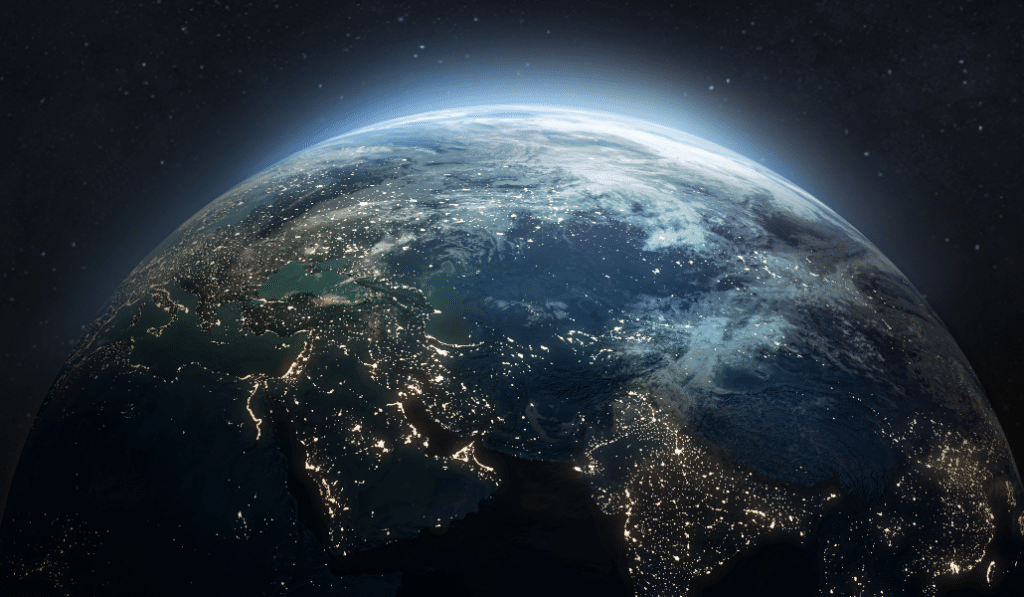
In “Orbital”, by Samantha Harvey, she describes how the astronauts aboard the International Space Station are first entranced by the Earth at night. It’s when night falls over the surface of the planet that the presence of human beings becomes most obvious….the networks of streets, buildings, roads sparkling and shining so brightly you can easily see them from Space. Then as daylight comes they see the Earth as a planet where humans beings are invisible, see it as a living, whole organism with its oceans, clouds, weather systems, forests and deserts. But then they come to realise just how much of the Earth is the way it is exactly because of human choices and actions.

We change the planet just by living here. How it changes comes down to our collective choices and those of the corporations and individuals with the greatest power and wealth.

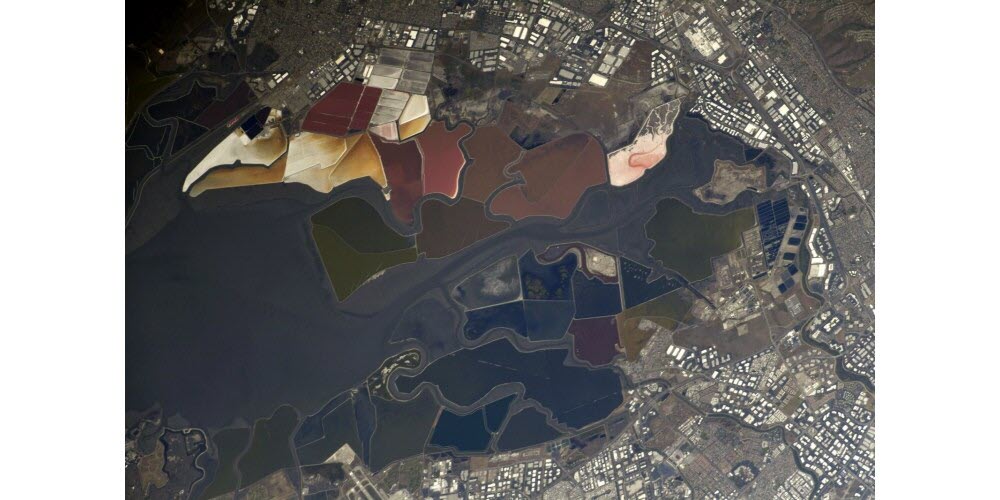
Normally I use my own photos to illustrate my posts but, having never been to the International Space Station, this time, I’m borrowing a couple of photos from the French astronaut and photographer, Thomas Pesquet. Look him up. Check out his photos. They are simply astonishing.

“They come to see the politics of want. The politics of growing and getting, a billion extrapolations of the urge for more……The planet is shaped by the sheer amazing force of human want, which has changed everything, the forests, the poles, the reservoirs, the glaciers, the rivers, the seas, the mountains, the coastlines, the skies, a planet contoured and landscaped by want.” – from “Orbital” by Samantha Harvey.

This is the modern version of a very old philosophical exercise – taking the view from on high – to stand apart, above, and look out over the greater whole.

Read Full Post »

The Earth

“The Earth is a mother waiting for her children to return, full of stories and rapture and longing.”

“Orbital”, by Samantha Harvey, describes the experiences of six astronauts aboard the International Space Station. It’s a beautiful little book, which reads as a poetic meditation on The Earth, Nature, Life and Space exploration. One of the lines which struck me, early in the book, was the one above.

The idea of Earth as a mother is an ancient one, but one we’ve become distanced from. The truth is we are born on this planet, emerging from millions of years of flows and interactions between energies, molecules and information. We have evolved as a part of Nature, with the planet’s resources of air, water, and nutrients, supporting us, enabling us, and with the Earth’s atmosphere protecting us from harmful solar and cosmic rays. We couldn’t exist without her. Mother Earth. We only exist because of her. Mother Earth.

But our direction of travel over the last few hundred years has been to distance ourselves from her, to objectify her, to treat her as a resource to be plundered, a wildness to be tamed. We talk of Nature as if “it” is something not human, as if “it” is something “out there”, separate from us, apart from us. And I think we’ve lost a lot along the way.

In this sentence, Samantha Harvey describes the mother as “waiting for her children to return”. Shall we return? We should. We really should.

And we’ll find her waiting for us with our “stories and rapture and longing”. That’s what we humans excel at – stories – telling the stories which enable us to make sense of ourselves, of our lives, of others and of our universe.

What kinds of stories are we telling these days? I think we need more stories of “rapture and longing”. I love the French phrase, “l’emerveillement du quotidien”, the wonder of the everyday. That’s where rapture lies….if we slow down, pay attention and allow ourselves to be filled with the wonder and beauty of the everyday. If we pay a particular kind of attention….the attention of longing and loving. Not a longing to possess, to control, to hold onto. But a heart’s longing, a soul’s longing, of deep resonance with “the other”, a harmony, a connection, a loving, caring attention.

Shall we do that now? Shall we return to Mother Earth filled with our stories of rapture and longing? It would take a change of direction….and a healthy one, I believe. But let’s start today.

Read Full Post »