Feeds:
Posts
Comments

Archive for the ‘creativity’ Category

At Otagi Nenbutsu-ji outside of Kyoto, there is an extraordinary display of sculptures – read more about them here. They are all small figures, but the emphasis is on the faces. Each one was created by a different person, so each one is completely unique. You can see several of them if you click on the link in the first sentence of this post.

This particular one has a gorgeous expression. What does this convey to you? To me, it conveys delight, happiness, contentment, and a certain open hearted, loving sense of wonder. I know, I know, what we experience is an interplay that emerges from the connection between ourselves and whatever we have engaged with, so a lot of what this conveys to me comes from personal disposition and preferences. But that’s just how life is. You can’t take your subjective reality out of your daily experience!

What effect does this expression have one you? Because it does have an effect. It calms me. It soothes me. It stirs feelings of love and kindness in my heart. And as those emotions start to flow, they will change the complex balance of chemicals in my body, boosting my immune system and calming down my inflammatory system. Isn’t that amazing? I can change the chemical status of my “inner environment” and so my state of health by what I choose to engage with.

We do this all the time. Subconsciously for the most part, but we do it all the same. Our inner state, and our wellbeing, change constantly in response to the signals and triggers we encounter every day, and according to our own reaction and response patterns and habits. We can become more aware of them, and when we do, we can move more of our lives from react-mode to response-mode which frees us up from living in auto-pilot, or what I call “zombie living”. That lets us become more autonomous, more able to develop new patterns of response, and, yes, even reaction. More able to develop new behaviours, new habits, and new patterns of thought.

That’s the first thing I wanted to share with you when I looked at this image again today, but there’s something else too.

As we walk around our every day world there is one face we don’t see – our own. OK, we can see the mirror image of our face (which isn’t what other people see) and we can see photos of ourselves (look how many selfies people take nowadays!) so we do have opportunities to be able to see our faces. But we have to stop what we are doing and change our expressions to do both of those things. We can’t see the “live view” which other people have…..the expressions on our faces when we meet them, when we converse with them, when we engage with them.

Yet, look again at this image – it’s clear, isn’t it, that the facial expression has an effect on you? Well, that’s true of you as well. Your facial expression is having an effect on everyone who sees it. So, I wonder, what kind of effect do you want to have on other people? What kinds of responses and changes within them do you think might occur when they see the expression on your face?

I’ve said before that we can’t not influence the world we live in. We change it moment by moment by our breath, by our movement, by our actions and behaviours, whether we choose them consciously or not. But here’s another way we influence the world we live in – through our facial expressions.

Of course we can’t go about our lives consciously fashioning particular facial expressions all the time, but when we spend part of each day generating feelings of love, kindness, gratitude and wonder, then that will all play out in our faces, and we will literally radiate those vibes.

In contrast, when we spend a lot of our day in fear and anger then……guess what? That reminds me of the old story about the hungry wolves inside us.

Read Full Post »

I’ve been fortunate to have had the chance to visit Japan on a number of occasions. One of the things I always loved to do there was to visit temples and shrines (if I understand it correctly there are buddhist temples are shinto shrines). I’m not a Buddhist and I know only a bare amount about Shinto but I found these places to be what some would call “sacred” places. They feel sacred because they feel special, they stir something inside which surpasses wonder and appreciation of beauty. They are amongst those places in the world where the boundary between the material world and the spiritual world seems thin. I have had similar experiences in stone circles in Scotland, and in the cloisters of old monasteries in southern Europe.

What makes a place a sacred space? For you, I mean. What places in the world have you had experiences of stepping into somewhere enchanting, somewhere which stirs energies deep within you?

This photo is of a particular part of a particular place, but I want to focus on it today because every time I return to this image it calms me, it soothes me, it draws me out of myself and into a deeper connection with the whole. Let me just draw your attention to the elements (which I think are repeated in some form again and again in these Japanese temples and shrines).

There is running water. I do think this is a key element – not that you need running water to make a place sacred but in the context of these Japanese places it seems to be essential, and I love it. I love that the running water isn’t dramatic and showy like so many huge city centre fountains in France and Italy (although I must say I DO like those fountains too!). I like how it really demonstrates a continuous flow. It seems to me that this is the basis of all Life – continuous, always changing, but somehow also always constant, flow. We understand water so poorly, yet without it nothing of what we know would exist.

There are rocks and often one or more of them form a basin for the water to pour into. The rocks have age, they bring the past into the present, and they expand the range of time available to us as we stand in front of them. Have you ever stopped to wonder where rocks come from? Well, that’s a whole other story, but a truly fascinating one.

Lying on the rock are two strips of bamboo which are bound together to create a rest for the bamboo ladle. The ladle is used to scoop out some water and pour it over your hands…..a ritualised cleansing. I wonder if all religions have this element? This use of water to “cleanse” as part of a spiritual experience?

There is also a small sprig of flowers……Japanese flower arranging creates great beauty by simple and sparse combinations of plants. It inspires both wonder and delight. But the flower isn’t the only plant there…..there’s also moss. Now, moss has a particular special place in Japanese gardens and spiritual places. It’s revered in ways I haven’t encountered anywhere else in the world. Are there other cultures which revere moss? I would say it’s my encounters with moss in Japanese gardens and temples which completely changed my opinion of it. I love it now. I only saw its beauty once I had encountered it in places where it was revered. Isn’t that interesting?

This image still works for me, and I hope it brings you some delight and joy as well.

Here are my leaving thoughts – What places feel special this way for you? Do you have photographs of them? Did you paint them? Or write about them? How might you create such a special place for yourself? What elements would you like to include? And, don’t you think your life could be enriched by encounters with such places?

Read Full Post »

One day, as I was walking to the railway station to go to work, I saw this little guy apparently checking out surfing! Ok, I know, it’s actually the stick from an ice lolly but, hey, to a snail, maybe that looks like a surf board? I paused to take a photo, smiled, then continued on my way to work. But this photo still makes me smile every time I look at it.

It reminds me of two of the most important things in life – slowing down and playing.

I emigrated from Scotland to France when I retired in 2014, and I now live in the Charente. This region of South West France has a snail as part of its logo. There is a strong culture here of slowing down, staying calm, and enjoying the everyday. Slowing down is what I had to do to take this photo. I was on my way to work, and for most of us, that’s something we do somewhat hurriedly. After all, I had a train to catch. However, stopping for a moment, getting my camera out of my bag and taking the photo, pulled me right out of my head full of “to do” lists and schedules, right back into the here and now. That’s what slowing down does. It gives us the opportunity to be present, and to savour the moment. It gives us the opportunity to pay attention to reality, right here and right now, instead of surfing across the face of life with our head in the clouds. It also prompts you to reflect and consider. I find that when I pause, or slow down, and notice what is around me, that whatever I’ve noticed lingers for a bit. It affects my mood for a bit. It stimulates a line of thought that I carry forward…..on that particular day, into the train, where I got out my notebook and jotted down some thoughts about the “slow movement” – “slow cities”, “slow food“, “slow medicine“.

The second thing is that this is just fun. It’s amusing to think of a snail taking up surfing. It’s about play. The neuroscientist, Panskepp, describes seven fundamental emotions we can find in many living creatures (including humans!). The three “negative” ones, are the ones we are all probably familiar with – Rage, Fear and Panic. Interestingly, though, he names four “positive” ones – Seeking, Care, Lust and Play. (read this interview with him in the “Journal of Play” – yes, there really is such a thing!) Play turns out to be a really important driving force, stimulating curiosity, experimentation, imagination and creativity.

You only need to spend a few minutes with a toddler to see how important play is. They press every button (yes, including your buttons!), as they explore what each object can do, and what they can do with each object. As they get a little older you see children totally absorbed in imaginary worlds….whether playing with toys, with found objects, or with other children. Give a child a piece of paper and some crayons or paint and they don’t stop to wonder if their art skills are up to the challenge of creating something, they just start to draw and to splash the colours around. How much do children like dressing up? Building spacecraft, houses, vehicles from cardboard boxes (thank you Amazon)? Play is absolutely fundamental. Pansepp has studied this in depth, and much of his work has been on the way animals play. He’s gone a long way to help us understand the importance of play and thank goodness for that, because otherwise we are likely to dismiss it as “childish”. It isn’t.

So, here’s my recommendation for this week – follow the surfing snail’s example – slow down and play a little!

Read Full Post »

“Don’t draw attention to yourself!” “Keep your head down!” “Don’t stick out like a sore thumb!”

Social pressure to conform.

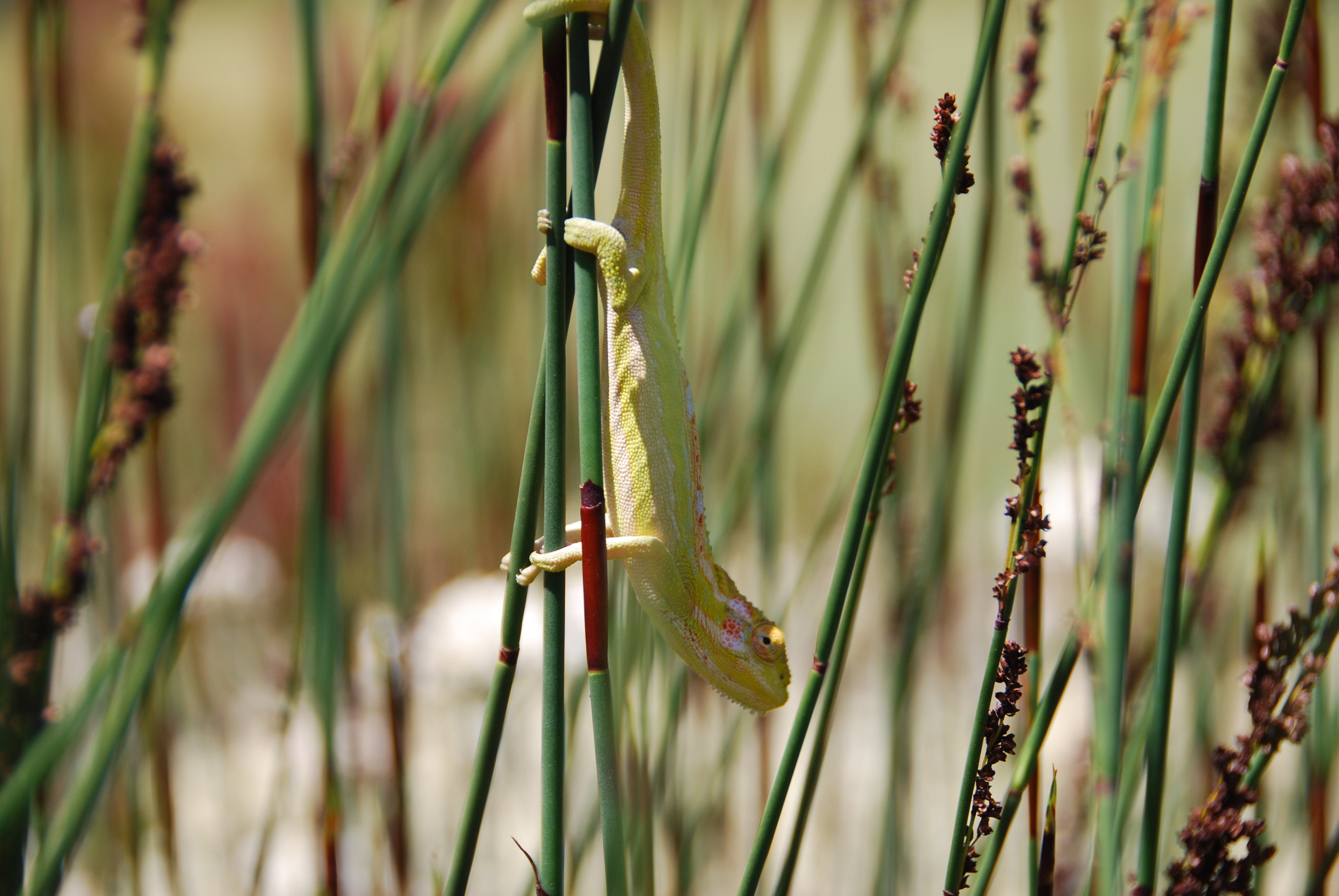
I bet you’ve heard a few of those instructions before. Or others which say pretty much the same thing. The basic idea is that to be safe you need to hide yourself away. Isn’t it a common experience at school that the kid who is really different gets picked on? You can see where all this advice comes from…..as this chameleon demonstrates, disappearing into your environment is a good way to avoid predators, and so stay alive!

But we aren’t chameleons. While there are real advantages to “fitting in” and conforming, every single one of us has a strong sense of Self, and deep feelings of uniqueness. There is, after all, nobody who is “just like you”. The truth is we need to do both – we need to function well socially, which means building healthy mutually beneficial relationships with others, and we also need to develop our autonomy and our self-expression.

The social powers of human beings are incredible, and, as a species, they are responsible for a lot of our survival and development….our success, if you like. But, equally, is there any greater diversity possible between members of the same species as their is between two humans? I’m not sure there is. We’ve evolved such complex nervous systems, such sophisticated bodies and brains. We have consciousness, imagination, language. We just can’t stop ourselves from co-creating and from expressing our uniqueness.

I wrote a book based on “and not or” because I think this is perhaps the most important characteristic we have – the ability to handle paradoxes. It’s built in. The cortex of the human brain is divided into two almost equal parts, with each part (hemisphere) engaging with the world in its own distinct way……the right seeking connections, the new, relationships and an understanding of the raw whole, whilst the left focuses, analyses, labels and categorises. One half giving priority to living relationships, the other most at home with objects and machines which can be measured and controlled.

It’s the same then with conformity and uniqueness. We do actually need both, because we need to be aware of our uniqueness and self-fulfillment involves fully expressing that uniqueness, and we equally need to form mutually beneficial relationships with others, which involves finding points of connection, shared values and desires, tolerance and respect.

Read Full Post »

My word for 2021 is a French word – épanouissement. Translated into English it has various connotations but basically it means “blossoming” or “opening up”. It’s also used in psychology to refer to the development of the personality, or the self – it means “fulfilment”, or, more specifically, “self-fulfilment”. It can also be used in the description of someone’s face, as when their face “lightens up”. You get the idea?

This peony which I saw in Ueno gardens in Tokyo many years ago captures this notion for me by somehow conveying motion within a still image. Because the beautiful petals are unfolding and opening up in a spiral manner, this looks a bit like one of those little windmills you might have played with as a child. As a physical pattern this spiralling, whether in an opening up, or a closing up, speaks to us of movement. It’s not as static as some other geometric patterns appear.

That element of motion conveyed by this flower’s petals is, I think, an essential part of the whole concept of “épanouissement” – in other words, it’s always a work in progress. It’s not a goal, at least not as an end point, or an “outcome”. It’s a ongoing, growing, developing, evolving, ever-changing phenomenon. And that’s exactly what I think the development of the Self is like.

We are not fixed entities with identities held in aspic. We are not separate, not unconnected, not static. Rather we emerge from within the vast web of Life, never leaving that web, but developing a coherent sense of Self within it, a sense of Self which never stands still, and which, ultimately ebbs back into the great web itself.

Here’s the exciting extra part that you and I can access – consciousness. We have Will and we can make choices. We are “agents”. We are the “co-creators” of reality. We can do that consciously, and deliberately, or we can drift, reacting rather than responding to every change and signal which comes our way. When we wake up, become more aware, then we can choose how to respond, moment by moment, day by day, year by year.

So, here we are, still in the throws of this pandemic, but we have not stopped changing. The thing is – we are now more aware of our inter-connectedness, our inter-dependence, not just with other human beings across the entire planet with all of Life, all of Nature, all of The Earth, as active, living members of Gaia.

So what does that mean for our “épanouissement”? For our “unfolding”, our “self-fulfilment”, our “flourishing”? How are we going to blossom now?

Those are some of the questions that float around in my head these days. These feel to me to be some of the most important questions for me to answer now. This pandemic has challenged our values, our aspirations and our modes of living. How do we want to evolve all three of those? Our values; our aspirations; our modes of living.

Read Full Post »

Taking pictures is one of my favourite ways of improving the quality of my life.

I’ve taken photographs, on and off, at different stages of my life, and I’ve used several cameras over the years. Nowadays, most of us have a perfectly decent camera on our mobile phones. What do I mean by a perfectly decent camera? One that we have easy access to, are likely to use, and which can create images of a quality which we find pleasing. I know that “serious photographers” and professionals have different standards and needs and will have much more expensive, technologically developed equipment which will meet those needs for them. However, I’ve never had a really expensive camera and as well as several albums of prints, I’ve got a library of tens of thousands of digital images I’ve taken over the years.

Here’s why I like to “think take a picture” on an ordinary day –

  • First of all, having the intention to take a photograph today heightens my awareness of the here and now. It improves my ability to notice what is around me. Whether I am carrying a camera, or my smartphone, in my pocket, having the thought “take a picture”, puts me “on the lookout”. It just helps me to notice what might otherwise pass me by.
  • Second, taking a photo requires me to frame a shot. It involves paying attention to composition – to the elements, colours, shapes, and their inter-relationships. That “framing the shot” adds to my simple “noticing”. It engages me with my surroundings. I look this way and that, focusing in on this then that, re-framing, re-focusing, until I find an image which pleases me. Then I might look at the photo I’ve just taken, and revise it by picking out, selecting, or re-framing to make another image.
  • Third, as you can probably tell, from the second point, taking photos slows me down. It’s too easy to whiz through life on auto-pilot, never stopping to actually be present. Taking photos helps me to counter that. It literally slows me down and draws me into the immediate here and now. There’s an enormous benefit from slowing down and many ways to do it, but taking photos is one of the ways for me.
  • Fourth, when I review photos on my computer later, I see things I never saw at the time. I notice elements, juxtapositions, aspects of the scene, that I just didn’t see as I took the photo. This enhances my pleasure further – it’s a second bite of the cherry. It doubles, or more, the delight, the wonder, the awe, or whatever comes up for me as I look at the image.
  • Fifth, my images are my main source of inspiration and reflection. You’ll have noticed that my posts here all have one of my photos in them. More than that, every single post starts with one of my photos. I do that for two reasons – because I like to share the joy my photos bring, and because I don’t know what I’m going to write until I select the photo. It’s the photo which is the creative spark. It’s the image which sets off my memories, thoughts and imaginings. It’s the picture which is my creative muse. My inspiration.

Read Full Post »

Apparently we are the only creatures on the planet to create works of art. I know, you’ll have seen some painting done by a chimpanzee or an elephant, but they aren’t exactly spontaneous acts of self expression or interpretation are they? No, Art is something unique to being human. There are many examples of “wall art” or “cave art” in France, discovered in recent years but painted some tens of thousands of years ago. It seems that even way back when our ancestors were nomadic hunter gatherers supposedly spending most of their days on the survival needs of food, water and shelter, they still had time to create astonishingly complex art, and, for some reason, often carried them out in the most difficult locations deep underground.

I’m using the term “art” here as broadly as I can, but I mean the kind of art which included drawing and painting. I’m not excluding the fabulous arts of sculpture, of music, of storytelling, poetry, dance, and so on, but, for today, I’m focused on visual art.

For me, Art is an experience. I don’t regard Art as an object, or a collection of objects. It’s an event. It’s an engagement. It’s a moment where we connect to what is greater than ourselves. It stirs our emotions, sparks our imaginations, and stimulates our empathy……we connect to the artist and/or the world as experienced by that artist.

Every work of art was created in a particular place at a particular time, and I mean that not just in the externals of geography and history, but in the internals of a personal life story, an individual, subjective, lived experience. So when we encounter that work of art at some other time, in some other place, we experience a (sometimes) powerful connection with the artist, with the life of the artist. I put “sometimes” in brackets there because it’s certainly not the case that all art has a powerful effect, and I’m not even clear about what it is that makes the difference. I do know, however, that the power of art is dependant on both the person creating the art, and the person experiencing it.

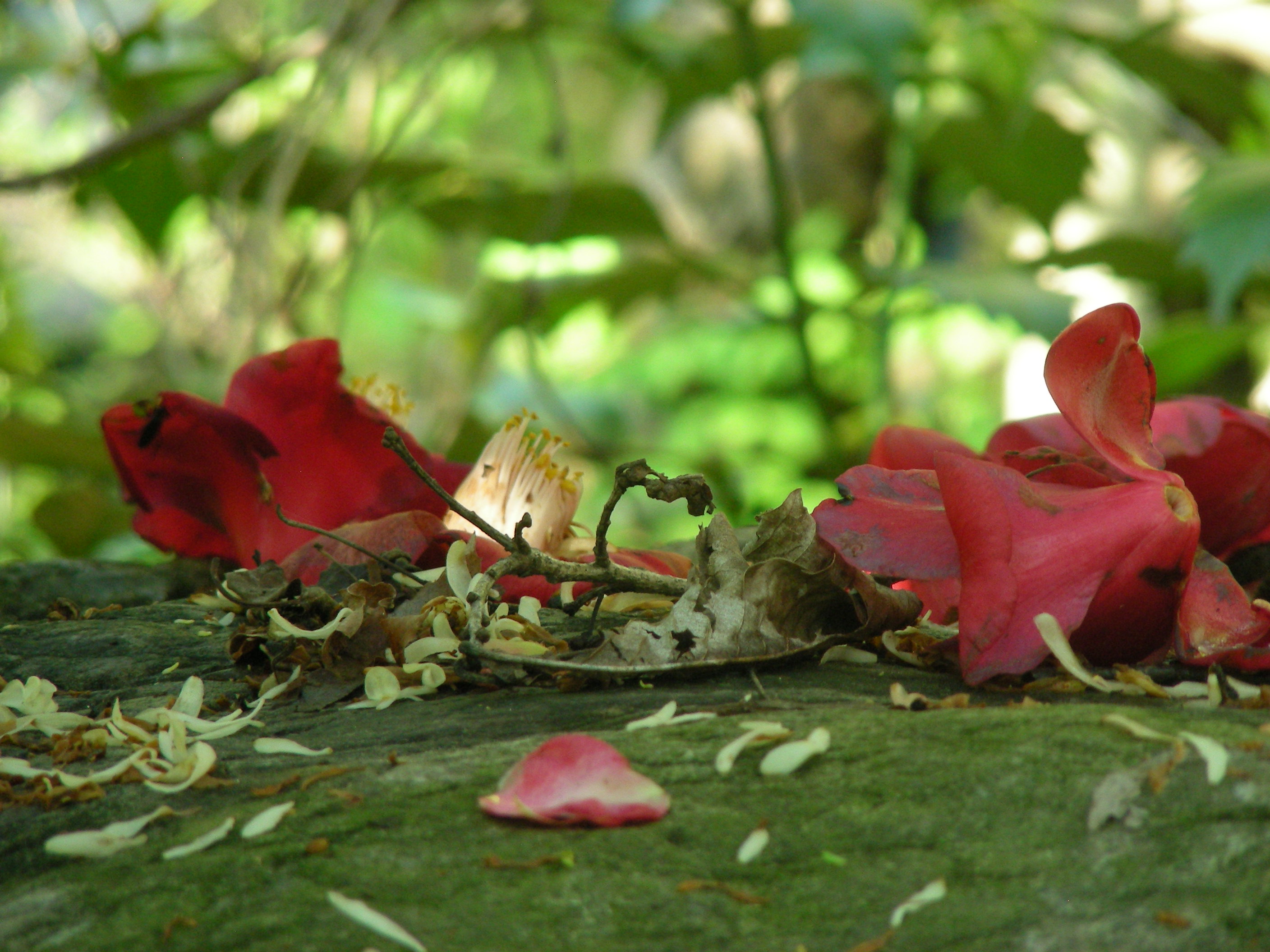
All this came to mind when I looked at this old photo I took in Japan many years ago. It just looks like a work of art to me. It reminds me of the classic traditions of “Still Life” (which I find such an odd term because no life is still), or, as it is called in French “Nature Morte” (which translates as “Dead Nature” – nope, can’t say I like that any better!). The twig, the leaf, the petals and the stone all look as if they have been arranged in the most beautiful way.

But here’s the thing….I don’t think this was created by human hands. I just stumbled upon some fallen parts of plants, lying on a stone in a garden, crouched down, framed it, and took this shot. OK, so maybe I’m the artist. Maybe the work of art is the photograph. But what I mean is that so much of everyday Nature looks like a work of Art. Creation, the cycles of birth and death, the seasons and the weather, the light, the water and the air, the myriad of diverse lifeforms everywhere, all adds up to an infinite number of opportunities to encounter deeply moving Art.

Because this moves me, this image. Yes, I know, I have a set of memories connected the to event of taking the photograph, which you don’t have, but there’s something about the colours, shapes and nature of the elements in this arrangement which I find deeply moving……which stir in me, memory, imagination and wonder, which provokes joy and delight, which makes me amazed to be alive in this, this most astonishing, small blue planet, we call Earth.

In an image like this, the artist I connect to is Planet Earth.

Read Full Post »

It’s interesting how we use the verb to light in English. This photo is of a full moon, but what it shows best is the foliage of the tree through which I took the photo. I like the effect very much.

The Moon has no light of its own. It’s not like the Sun. It doesn’t generate any physical light, but, rather reflects the light of the Sun. That makes the light of the moon a completely different kind of light than that from the Sun. For a start we can gaze directly at the Moon for as long as we want, but we daren’t even stare directly at the Sun for a second without running the risk of damaging our eyes. I suppose that makes it easier to contemplate the Moon than it does the Sun.

The Moon’s light is a softer, gentler light, but on a clear night with a Full Moon you can still find your way around in the dark. It’s enough to give us a hint about what is around us in the world. But the colours aren’t there, and neither is the clarity which daylight brings. So, it almost demands that we use our powers of imagination and creativity more. After all, vision is a creative process. You know that, right? Our brain doesn’t contain something like a movie screen for us to watch the moving images. In fact, light itself doesn’t even get into our heads. Instead our eyes convert the light to electrical signals which are passed along a vast network of nerve cells in the brain and the brain does the job of analysing all the signals, and somehow creating clear images for us to perceive – images without any gaps in them, despite the fact that the back of the eye has a “blind spot” where no light can be detected. We literally create the images we see moment by moment.

Creativity involves an interplay of memory and imagination with the current information being received by the sensory system. It’s a true, continuous blending of the present, the past and the possible futures.

I think that by moonlight, without the clarity of colour and forms, we demand more of the imagination and our creative powers to enable us to see our way in the world.

Moonlight also works through symbolism and story – is it possible to contemplate the Moon without thinking of Venus, of Love, of Romance, of the Divine Feminine? It is, but it’s not nearly as rich an experience when we ignore all that. We associate the Moon with the unconscious, with feelings and with rhythms of tides and hormones. We associate the Moon with a certain wildness of thought – the word “lunacy” meaning madness has the word for “moon” right in there – “luna”. I’m not going to get into a detailed description of the history of madness and psychiatry here, but let’s just say our understanding of the psyche and of “mental illness” is ever changing and we still don’t really understand the more severe forms of disturbance, the “psychoses” which come with “hallucinations” and “delusions”.

So, when I see a Full Moon, or even one of the phases of the Moon, I don’t just see the physical, reflected light of the Sun, but I see a whole world of imagination and enchantment.

Read Full Post »

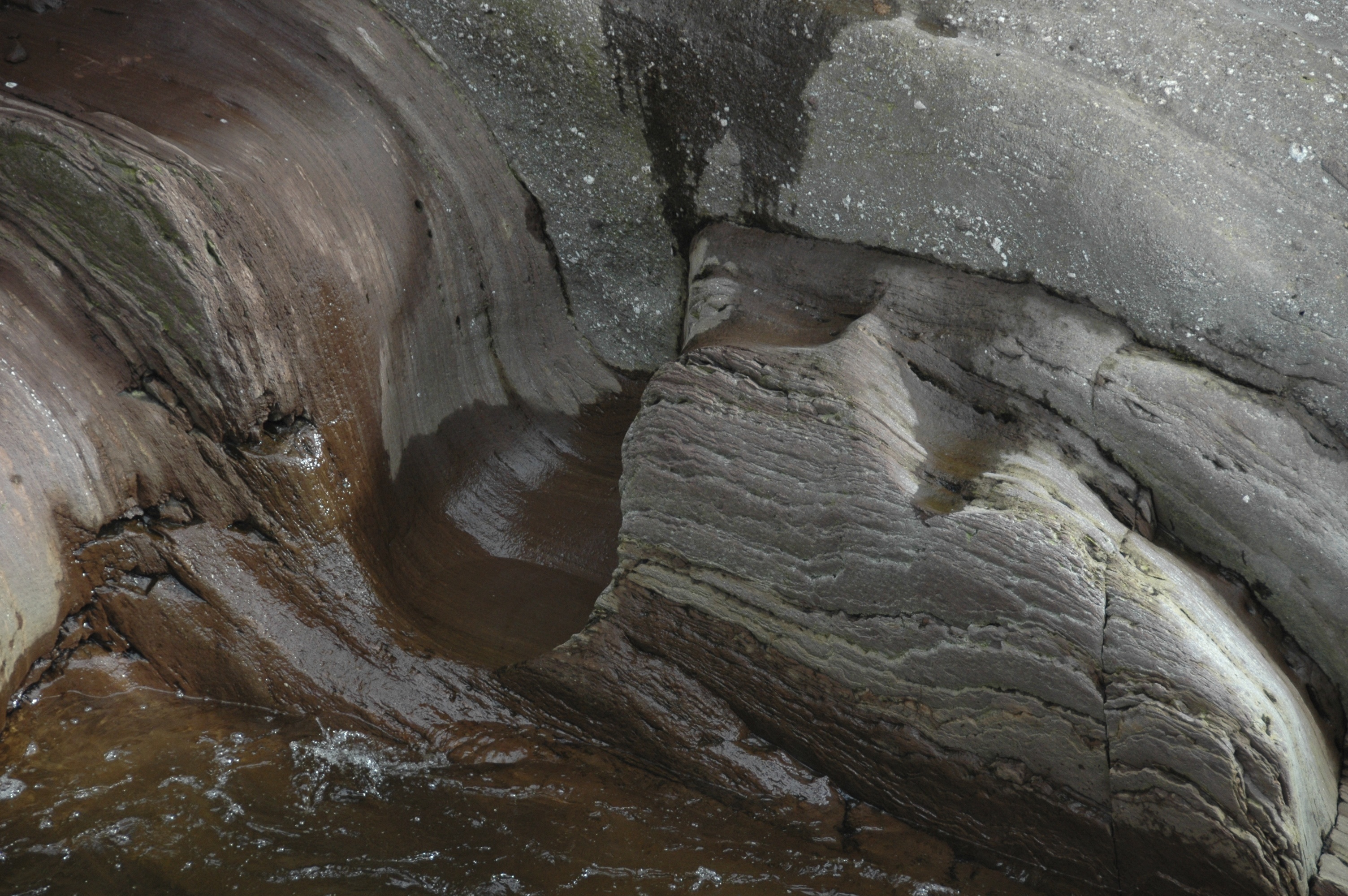
I took this photo many years ago at a waterfall in Scotland. I’ve long since been fascinated by the interplay between water and rocks in streams, rivers and, especially waterfalls. I suppose in waterfalls the power of the water to sculpt the rocks is at its greatest as the water roars down the hillside.

In this particular photo you can see how the water has smoothed the surface of some of the rocks to the extent that they actually look like water streaming over them. It’s as if the water has fashioned the rock in its own likeness.

One of the other rocks is revealing its multilayered structure in such a way that it, too, resembles, the flow of water, and reminds us of the often hidden depths that lie beneath the surfaces of what we see.

What shape is the water?

That’s a strange question, isn’t it? Because water always seems to assume the shape of whatever contains it. Certainly the rocks, whilst not permanent in their forms, create the boundaries or limits against which the water can flow. When there is no clear, solid container, water evaporates, disappearing into the air, rising upwards to form clouds, or staying close to the earth to make mists and fog. But even then it’s contained within the atmosphere. It doesn’t disappear away out to the rest of the universe (at least not in significant amounts, I don’t think).

So water is the shape of what contains it. But that statement doesn’t quite capture reality does it? It assumes that both the water and the container are passive…..that neither changes the other……but we can see, even in this photo, how the water constantly changes the rock and how the rock constantly changes the water. In fact, that interaction carries on at microscopic levels which we can’t see with the naked eye, as minerals and micro-organisms are exchanged between the water and the rock, changing the actual composition of each moment by moment, year by year, aeon by aeon.

That’s the nature of reality, isn’t it? A constant flow of co-creation. Nothing exists in isolation. Nothing lives outside of everything. Connections, interactions, relationships and co-creation are at the heart of universe. They are the fundamental, inescapable basis of reality.

And that’s both beautiful and wondrous, wouldn’t you agree?

Read Full Post »

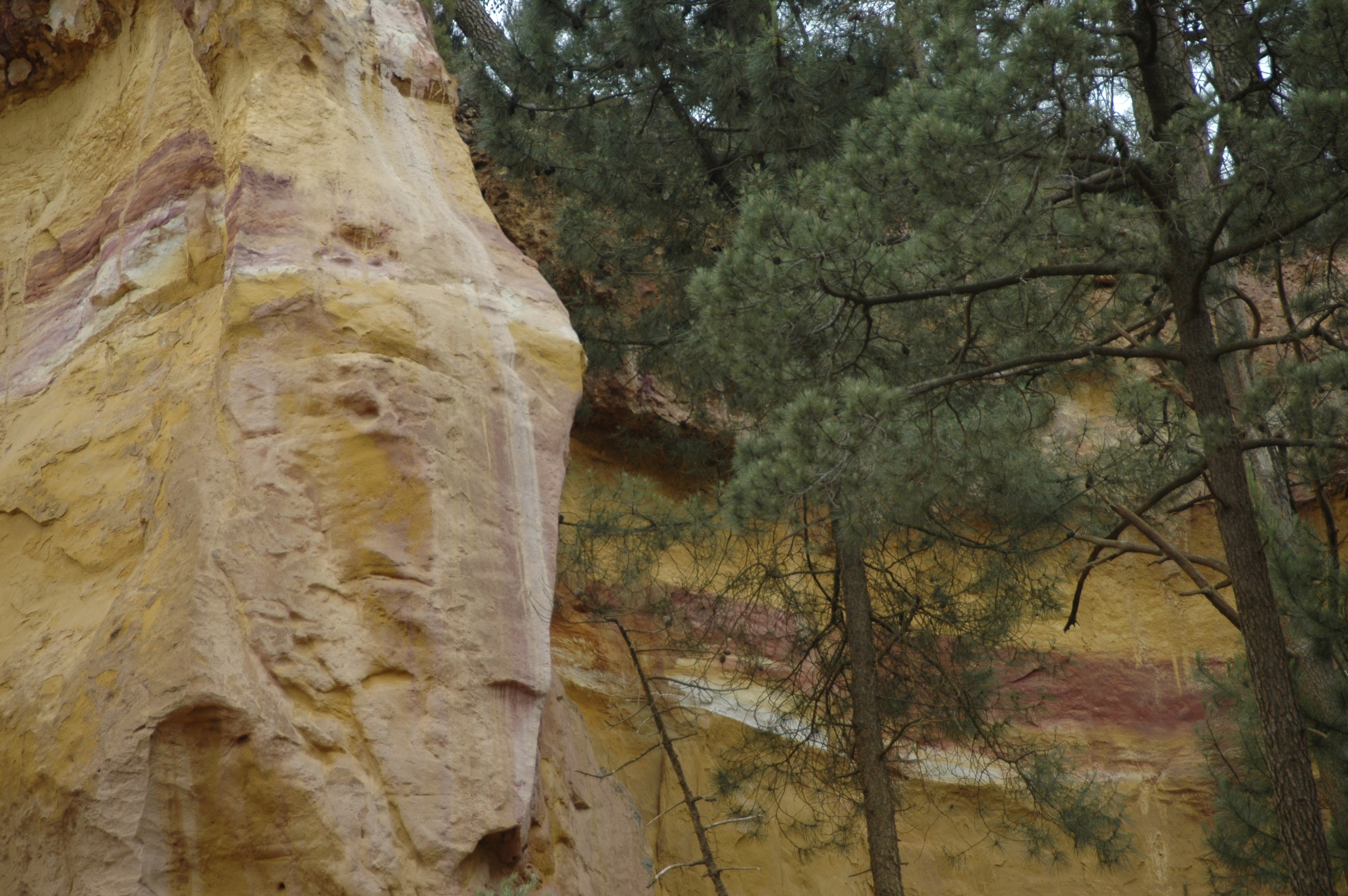
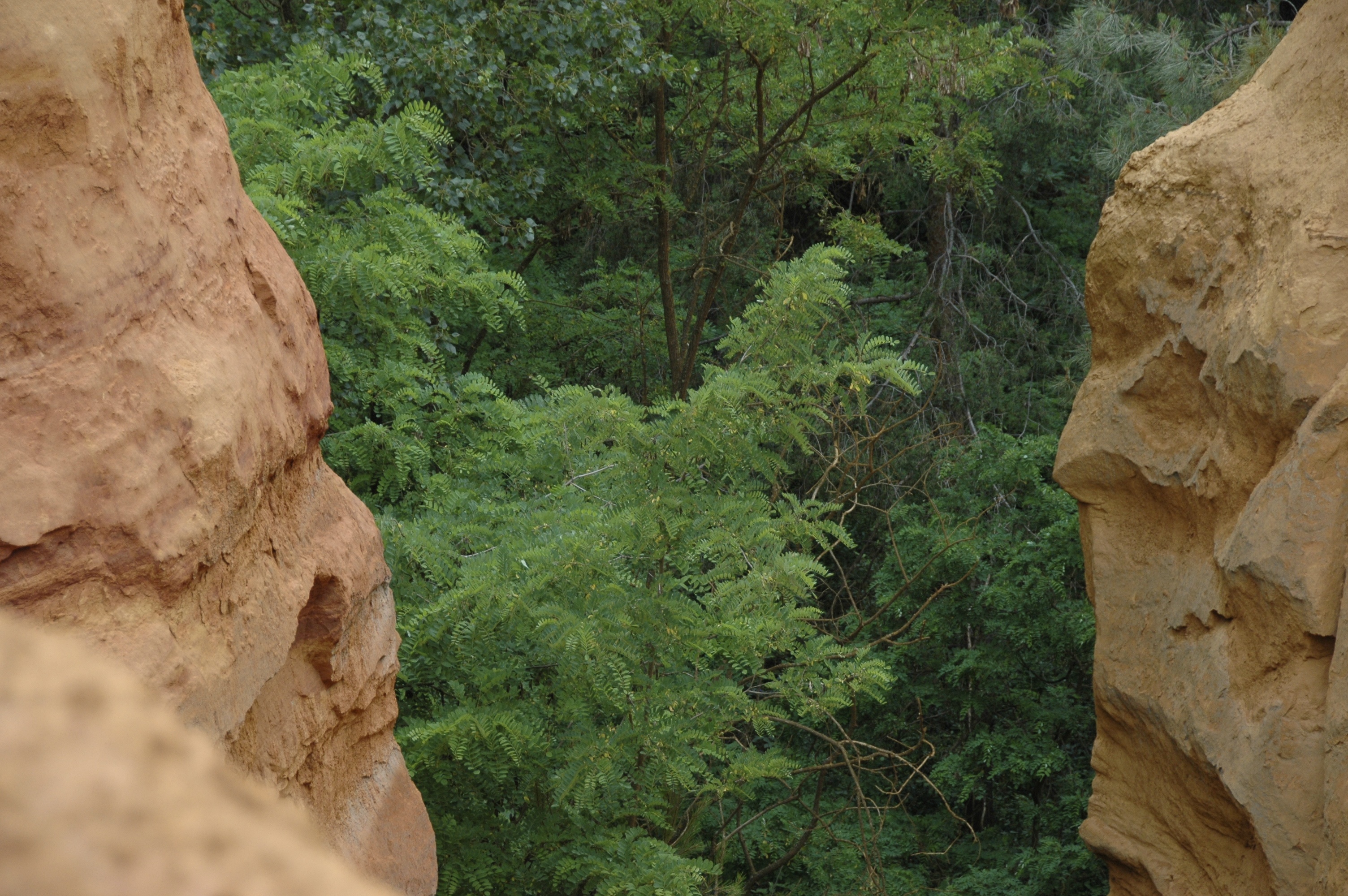
It isn’t difficult to be utterly entranced by this world. Near the town of Roussillon, in the South of France, there is an ochre trail you can follow through a forest. Two things have made this place as amazing as it is…first, and foremost, the Earth herself, which has created the most incredibly beautiful ochre rocks….pink, rose, yellow, orange, and many shades in-between. They are really, really gorgeous. Secondly, human beings who have mined this rock in the past, and have since, allowed, encouraged, and nurtured the forest to grow up around the rocks. So you look at a site like this and you see that interplay of human and non-human forces.

One of the most stunning features of the ochre is how often the surfaces look like faces. As best I know, these are not art works. Nobody deliberately carved the rocks to look like this – although it would be none the less beautiful if they had. No, it seems that we see the faces because of that part of the human brain which has evolved a special skill in seeing and recognising faces. Yes, there really is such a part of the brain! We use it to recognise other humans, but it works all the time, showing us what appear to be faces in rocks, clouds, trees….you name it.

I love that all of this – the geological creativity of the Earth, the living world of trees, and the evolution of the human brain, all combine to make a place like this feel utterly magical. This is the kind of “enchantment” I think we humans long for. This is the kind of “spiritual longing” which only the Earth can satisfy.

For me, these images will always be “The Ochre Gods of the Forest”. Aren’t they fabulous?

Read Full Post »

« Newer Posts - Older Posts »