I don’t like putting things into boxes with rigid edges.
I find life is so complex, rich and varied that to default to “two value thinking” (categorising experiences or phenomena as either “this” or “that”) diminishes rather than enhances.
Focusing on the between does at least two things I find. It heightens my awareness of change, because all I see, hear, taste, feel, think about, is constantly becoming. Secondly, it focuses me on relationships and connections. To look for the between involves considering between what, and so, not only what is being connected, but on the very quality and nature of the connections and relationships themselves.
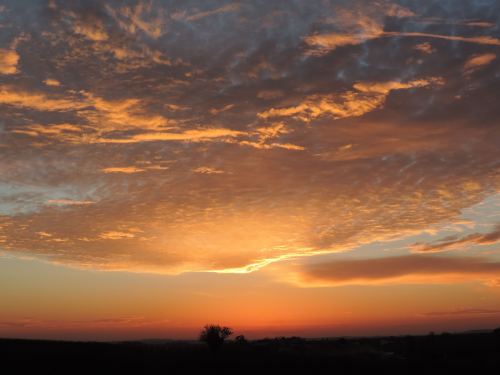
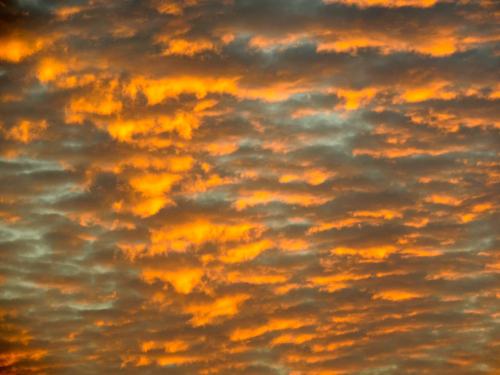
The moments just after the sun sinks below the horizon are a fantastic opportunity to immerse yourself in the between. If day is when the sun is in the sky, and night is when it is below the horizon and the light has gone, then these moments, one of which is in the photo here, are somewhere in between day and night.
Try it for yourself and see what it feels like. Experience the between!
There is nothing that should be recommended so much to youth as activity and vigilance. Our life is nothing but movement…
When I read this I automatically reframed it into a more modern language and something which fitted better with the themes which are important to me – actions and awareness.
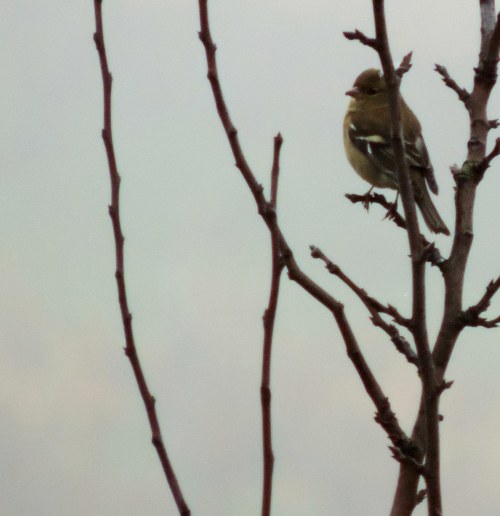
I also thought immediately of the birds in the garden. How they seem to be busy all the time and also, continuously “vigilant” or aware.
If I was to single out two characteristics which make the difference between zombie mode and hero mode in our lives it would be these two –
Activity
In some ways you could argue that we are what we do. When writing stories we create and reveal character by describing the choices they make. William Glasser developed a whole therapeutic approach based on making people more aware of the choices they are making all the time – because we do choose all the time. It’s just that for a lot of the time the choices happen automatically as part of habits, routines or manipulation. That’s the zombie way in my view.
The auto-pilot way. We’re not experiencing our human-ness to the full when we live that way. But we are active all the time. Even if that activity is simply sitting and breathing.
If you’d like to explore this in more depth, then search for my posts in the “a to z of becoming” series on this site where I reflect on 52 different verbs, each of which is an action we can take to further our “becoming”.
If life is significantly about the activities we are undertaking, then might it not be better to be aware? To reflect and consider so that we can choose? Even if we choose to continue doing what we were doing anyway?
That leads to the second characteristic –
Awareness
People talk a lot about mindfulness these days, but that word is really just another word for awareness. To be “mindful” is to be aware.
Awareness is partly about paying attention. It’s about focus. Where are we directing our attention? What is catching our attention?
And it’s partly about reflection, because as we reflect on what has just occurred or what we have experienced we heighten our awareness and deepen our understanding of ourselves and our lives.
As Ellen Langer says, mindfulness is the opposite of mindlessness. Why would you choose the latter?
So, maybe there’s something to learn from the birds – and from Montaigne – that “activity and vigilance” are to be recommended!
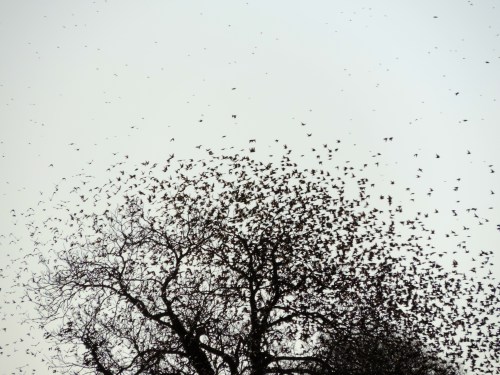
Look at this tree. Those aren’t leaves, they’re birds! Hundreds of them, thousands maybe.
I’ve never seen such a large flock of birds near me before. Maybe you haven’t either. What do you think your response would be? Would you think of Alfred Hitchcock?
Not me!
I didn’t think of that for a moment.
I was fascinated, entranced, drawn outside with phone and camera to do my best to record something of this phenomenon.
Here’s what I put together from my short video clips and some photos.
Later, while reading Montaigne, I read
He who fears he will suffer, already suffers from his fear.
It got me thinking about the stance we take towards the world, about our default attitude. Because isn’t there so much fear around? In fact, it seems to me that fear is often used deliberately as a weapon of control.
What’s the greatest fear?
Some say it’s the fear of death. That this “existential fear” is the foundation of all other fears. For example, as a comedian I heard once said “I don’t have a fear of flying. I have a fear of crashing!” People who fear the dark, fear what dangers might be hidden in the darkness. People who fear dogs, fear that the dogs will attack them. People who fear illnesses, fear suffering and death.
Montaigne says if you spend your life fearing suffering, you’ll be suffering throughout your life. Yet so much of the health advice offered to people is based on trying to avoid death (the greatest fear).
If fear is our default, we don’t just suffer, we live in a shrinking world, fearing difference, the “other” and change.
What’s the alternative?
Dread one day at a time??!!
Nope.
The great thing about alternatives to fear is that there are so many of them.
There’s courage. Courage is the determination to go ahead even when you are feeling fear. That’s something I’ve been practising since coming to live in France. When you start to live in another country with a different language, not only are customs and habits different but at first you’ve no idea how to ask the simplest things. So a trip to a post office, or the local Mairie, or the garage can be quite intimidating. Until you summon up your courage, and just go. And, in my experience here, each and every time I discover there has been absolutely nothing to be afraid of. People are friendly and they want to help. (Then next time you go the fear has diminished, or even gone away entirely)
There’s wonder. Wonder and curiosity. That’s the response I had when I saw all the birds. That’s the attitude I hope to take into every day – l’émerveillement du quotidien.
There’s love. Love comes with a desire to make connections and with an intention to care, or at very least, not to harm – and that applies in relation to plants and animals as much as to other human beings. How often does it seem to be that when your intention is a loving one, that you meet the same response? When I was a GP, my partners and I built a new clinic and the reception was an open one – no glass or metal barriers between the patients and the staff. We were warned that we’d be vulnerable to being attacked. It never happened. Not even remotely.
Fear closes.
It closes us off from the world and from life.
The opposite is whatever opens – courage, wonder, curiosity, love…..add your own favourites at the end of this sentence!
I prefer the opposites for what they bring in themselves, but I resist fear for another reason. I don’t want to be controlled. Heroes not zombies anyone?
Except for old age, which is an indubitable sign of the approach of death, in all other ailments I see few signs of the future on which to base our divination.
When I read this I immediately remembered a conversation I had with a patient one day. She’d just told me that her husband had been diagnosed with cancer and had been told he had six months to live. I asked her how she felt about that.
“I’m angry”.
That’s not such an uncommon response when people hear such bad news, but I don’t take anything for granted so I asked her to say why she felt angry.
“How come he gets to know how long he’s got, and I don’t get to know how long I’ve got?!”
Well, that surprised me! I hadn’t heard a response like that before.
So I took some time to explain that having a particular disease did not bestow any certainty about the future. Prognosis is a tricky a practice. When speaking statistically about groups or “cohorts” in studies we can say one thing, but when speaking about an individual, it’s actually much, much harder.
The diversity of human experience undermines predictions every day. I think that was one of the best lessons I learned as a doctor. Beware of false certainties!
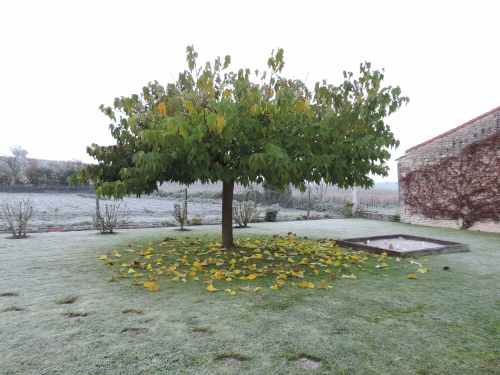
When I woke up the other day and saw the frost on the grass, and how, under the mulberry tree, in addition to it dropping an attractive circle of yellow leaves, the grass was unfrosted. I don’t know if that is because the leaves on the branches create an invisible zone of warmer air preventing the frost from forming, or whether its warmth from the activity of the roots under the soil, but it’s striking isn’t it?
It made me think how just by living we affect the world we live in. What we breathe in, what we breathe out, what we eat, what we excrete, and all the actions we take.
I reckon even our thoughts start to ripple out into the universe. Our thoughts affect our the metabolism of our bodies, our immune and inflammatory systems (our defences), what we say to others, and our actions. In all these ways the environment around us changes. Maybe just a little, maybe quite a lot.
None of us live in a vacuum or a bubble. The world is different today because you are living in it. Guess it’s worth taking some time to reflect and wonder what kind of ripples we are sending out, what shadows we cast.
The COP21 conference in Paris comes up next week. A good time to consider how our choices and our lifestyles affect the rest of the world…..
Montaigne had strong views about health and doctors. He disparaged those who claimed to be better able to tell him what was good for him than he was.
He trusted his self-knowledge more than what others said or wrote about such matters, saying, for example, “I would rather be an authority on myself than on Cicero”. That strikes me as an admirable goal – to become an authority on yourself – to know yourself!
He said of medicines – “If it is a pleasant medicine, take it; it is always that much present gain. I shall never balk at the name or the colour, if it is delicious and appetizing. Pleasure is one of the principal kinds of profit.”
He said of “advice”, or rules for living prescribed by a doctor, “The disease pinches us on one side, the rule on the other. Since there is a risk of making a mistake let us risk it rather in pursuit of pleasure.”
One of my teachers said “Your patient’s life shouldn’t be harder for them when they leave your consulting room, than it was when they came in.” That struck me as wise advice. Montaigne would have agreed!
His issues on this subject weren’t just about doctors and medicines however. He was concerned about people telling others how to live. He gives examples of the diverse lifestyles of shepherds and fishermen and asks if it is sensible to give such different people exactly the same advice.
That’s an issue which troubled me throughout my career. Over the years we’d hear that fat was bad for you, fat was good for you; milk was good for you, milk was bad for you; hormone replacement therapy should be offered to all women, hormone replacement therapy should be avoided at all costs…..and so on.
As advice moves from how to recover from, or “manage” an illness, to prevention, the whole situation becomes infinitely worse.
Is there really any point in living a life of avoidance as a core principle? Avoid this, avoid that, don’t eat this, don’t drink that, don’t do this, don’t do that…..Montaigne quotes the sixth century poet, Maximianus, to back up his stance.
Obliged to wean our souls from things on which they thrive,
We give up living, just to keep alive.
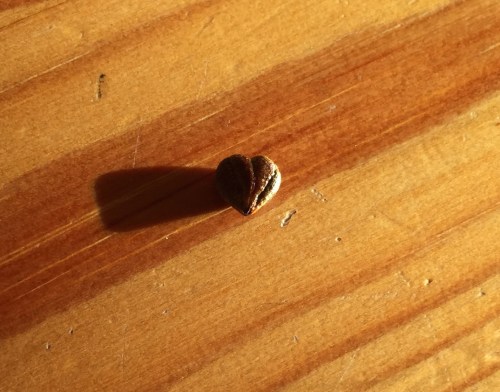
“We give up living, just to keep alive”. Wow! That’s the heart of it. Surely there’s a seed of something wonderful in that one line?
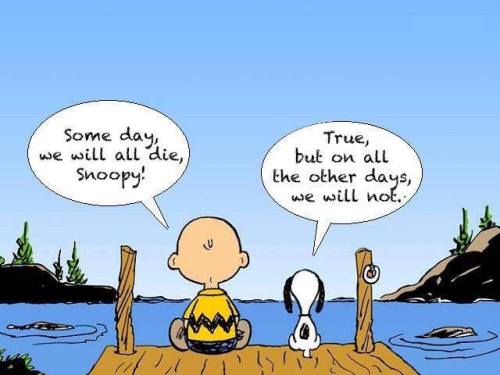
Life’s for living. Death avoidance has a 100% failure rate…..eventually!
The other morning the sky turned pink as the sun was getting up out of bed and it cast a delicate rosy hue to the frosted grass.
The pink had faded away within minutes and the frost was gone by the end of the morning.
Transience is held in high regard in the Japanese aesthetic of “wabi sabi”. I’ve written a few times about the phenomenon of the annual cherry blossom festivals in Japan, but that’s just one of the most prominent expressions of this admired quality.
What is it about transience that makes something so special? Isn’t our instinct to want to hold on? To grasp at whatever pleases us? To try to resist change?
Well, there’s no doubt we have those qualities, but just as all human life is filled with paradoxes and opposites, we have this attraction to transience too.
I knew instantly that the pink in the sky would be gone within minutes. And I was pretty sure the frost wouldn’t last all day either! But that drew me right in to being fully present. And that’s what I think this quality of transience does for us. It heightens the experience of now.
The pre-socratics used to say start every day knowing that whatever you experience today will be for the first time ever, and knowing also that whatever you experience today will be for the last time ever. Every moment is unique. Every day is special. No two experiences are exactly the same.
So whatever you encounter today, savour it, relish it, enjoy it to the full.
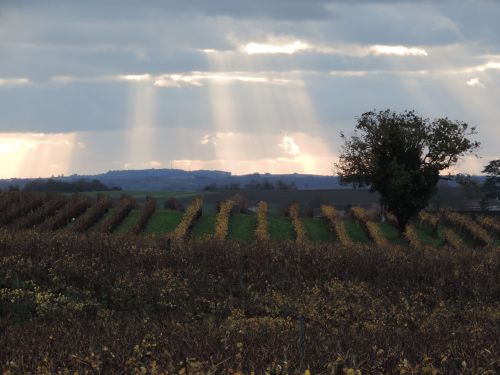
There are moments when the universe catches your attention.
Hey, says the universe, look at me! Look what I can do!
And you look and you see sunbeams pouring down onto the surface of the Earth from so high in the sky, and you see the flourishing of millions of years of evolution as trees and vines and grass reach up and capture these rays.
And you know that with apparently no effort at all, they are turning the sunlight into colour and oxygen and nutrition for Life.
And you see the fruits of years of human toil and imagination stretching over the hills, working with the elements of fire, earth, water and air, collaborating with the plants and nurturing them.
Montaigne wrote in one of his essays that he once met a wealthy man who he found studying in a corner of his great hall, with only cloth hangings partitioning him from the noise and bustle of his servants. He told Montaigne
that he derived profit from this racket, as if, battered by this noise, he withdrew and concentrated in himself better for contemplation, and that this storm of voices drove his thoughts inward. While studying at Padua, he had for so long a time a study exposed to the rattle of coaches and the tumult of the square that he trained himself not only to disregard the noise but to use it for the benefit of his studies.
Have you had that experience? I’ve read of several writers who would write in cafes, but others who find such a buzz too distracting. Montaigne himself was one of the latter –
I am quite the opposite; my mind is sensitive and ready to take flight; when it is absorbed in itself, the slightest buzz of a fly is the death of it.
Since Montaigne’s day we could add another scenario – studying, or reading, while listening to music. Again I think there are some of find this beneficial, and others who just find it too distracting.
When I was studying Medicine in Edinburgh there were two places where I studied best. One was in the Botanic Gardens, and the other was in the Anatomy Museum! Well, what does that say about me??
How about you? Do you need peace and quiet? Or do you find a hustle and bustle around you conducive?
The arts that promise to keep our body in health and our soul in health promise us much: but at the same time those who profess these arts among us show the results of them less than any other men. The most you can say for them is that they sell medicinal drugs; but that they are doctors you cannot say.
Montaigne is frequently pretty harsh about doctors and the practice of medicine in his “Essais”. The last sentence in that passage above did really strike me however. “The most you can say for them is that they sell medicinal drugs; but that they are doctors you cannot say.”
A number of thoughts sprang up from there.
First up was Professor Peter C Gøtzsche, a researcher who published “Deadly Medicines and Organised Crime”. Read this from the introduction to that book –
The main reason we take so many drugs is that drug companies don’t sell drugs, they sell lies about drugs. This is what makes drugs so different from anything else in life … Virtually everything we know about drugs is what the companies have chosen to tell us and our doctors … the reason patients trust their medicine is that they extrapolate the trust they have in their doctors into the medicines they prescribe. The patients don’t realise that, although their doctors may know a lot about diseases and human physiology and psychology, they know very, very little about drugs that hasn’t been carefully concocted and dressed up by the drug industry … If you don’t think the system is out of control, then please email me and explain why drugs are the third leading cause of death … If such a hugely lethal epidemic had been caused by a new bacterium or a virus, or even one hundredth of it, we would have done everything we could to get it under control.
This is an “evidence based” book from an “evidence based” expert. It’s not a conspiracy theory – and that, actually, makes it all the more shocking. Montaigne might have said that doctors only sell drugs, but Gøtzsche says pharmaceutical companies sell “lies about drugs”.
Then I thought about a doctor friend of mine who was told by their Clinical Director to spend less time talking to patients because that wasn’t a doctor’s job. A doctor’s job, according to this senior doctor, was “to write prescriptions”. (The astonishing thinking behind this was that only doctors have the legal right to write the full range of prescriptions so that was what they should focus on)
Regular medicine’s dominant influence when “CAM” integration by medical delivery organizations began in the mid-1990s was the industrial value of service production. Mayo Clinic’s director of innovation captures this concisely when he recently spoke of medicine’s historic focus on “producing” services rather than on “creating health.”
What he is writing about is a report from the RAND corporation about Complementary and Alternative Medicine which focuses on the issue of practitioners being reduced to providers of “products” – e.g. a chiropractor does a manipulation, an acupuncturist puts in needles. In fact, although this is not where that article goes, doctors are being reduced to prescribers.
So, full circle, back to Montaigne again – what does he mean when he says “The most you can say for them is that they sell medicinal drugs; but that they are doctors you cannot say”? Personally, I think he is saying if you reduce a doctor to someone who just supplies you with medications, then you don’t have a doctor any more. I agree. A doctor undergoes an immense, broad, arduous training. I think a doctor should always keep the focus on the whole patient, seeking to understand them in their uniqueness. The doctor should be an expert in diagnosis, able to figure out what’s happening by great listening skills, great observational skills and the knowledge and experience of dealing with patients with a wide range of diseases. When it comes to doing something therapeutic (apart from understanding and supporting their patients, which is therapeutic in itself) then, surely, we want to be able to offer more than just a prescription for a drug?
A few days back I wrote a post about biomimetics. Wouldn’t it be great if doctors became experts in health? In how a human being stays healthy? And in how a human being recovers from injuries and illnesses (we used to call that “healing”). I reckon there’s mileage in the biomimetics idea. We could be learning how living organisms stay healthy, repair and recover when injured or ill, then developing techniques which support, or mimic, those strategies and processes.
I welcome constructive criticism and suggestions. I will not, however, tolerate abuse, rudeness or negativity, whether it is directed at me or other people. It has no place here. ANYONE making nasty comments will be banned.




 Heroes Not Zombies