Feeds:
Posts
Comments

Archive for the ‘from the dark room’ Category

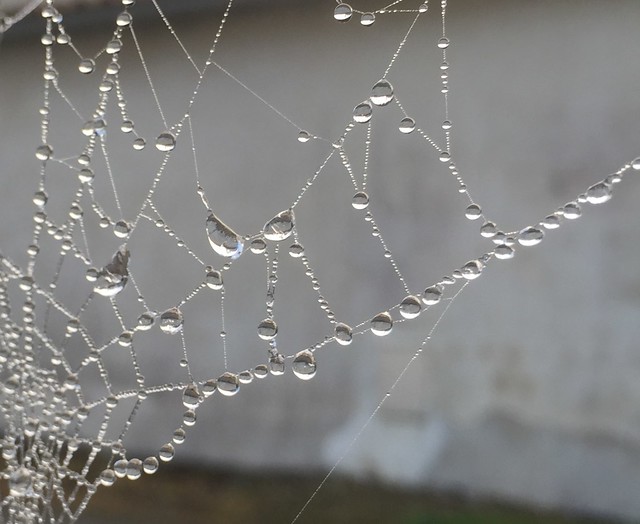
webdrops

beehive

Marx wrote –

A spider conducts operations that resemble those of a weaver, and a bee puts to shame many an architect in the construction of her cells. But what distinguishes the worst architect from the best of bees is this, that the architect raises his structure in imagination before he erects it in reality. At the end of every labour-process, we get a result that already existed in the imagination of the labourer at its commencement.

What I like most about that quote is the emphasis on the creative power of imagination.

Our imagination is one of our most incredible resources.

It would be a shame to use to to scare ourselves each day with fears instead of using it to dream and to help us achieve our hopes.

Read Full Post »

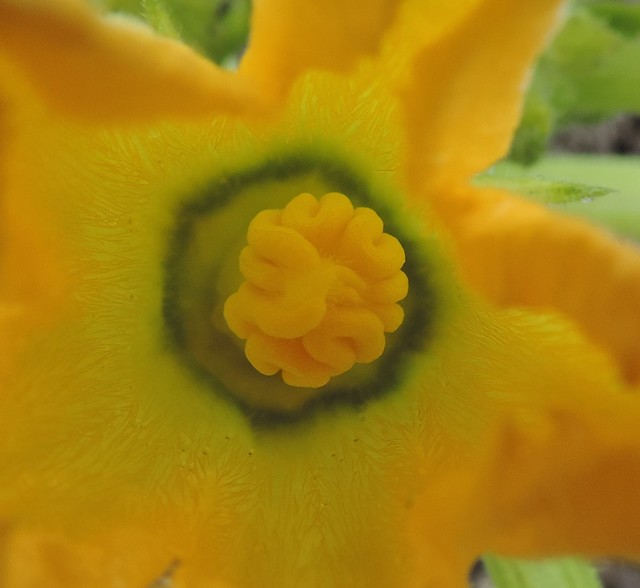
courgette stamen

This is a close up of the stamen of a courgette (zucchini) flower growing in my garden.

Doesn’t it remind you of the human brain…..just a little? Picking up on my last post, isn’t it amazing how many echoes there are between the three “kingdoms” of Nature?

And the other thing I thought was how the intelligence of a flower is certainly not found in its brain (it doesn’t have one!) but that doesn’t mean to say it can’t perceive, respond and communicate. Plants do all of those things all the time.

And how true is it that even though we do have brains you can’t find our minds or our intelligence solely in there.

Like all other life forms, we perceive, process and respond with our whole beings.

Read Full Post »

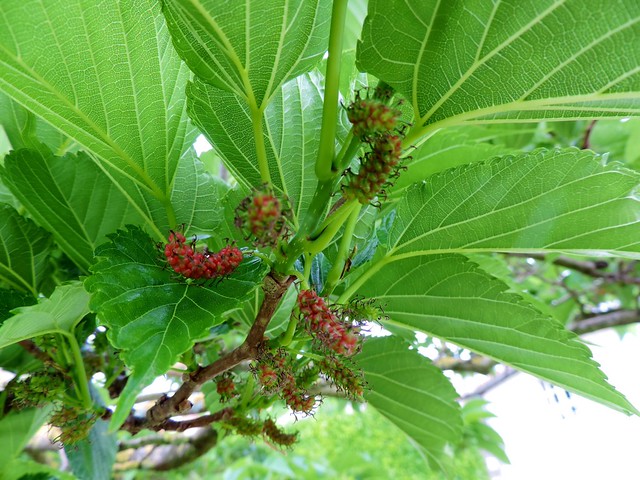
Mulberries

Mulberries.

Have you ever seen them before?

This is a first for me. We’ve a mulberry tree in our garden in France and as this is our first year here, we’re watching it change through the seasons. And here comes the fruit.

Don’t they look like little creatures?

How often do we see that in Nature, where some kind of organism develops the characteristics, or features of another?

I love how we can see such inventiveness and rich variety in Nature.

Read Full Post »

strawberries ripening

In my A to Z of Becoming, S stands for “Slow”.

This is one of my favourite verbs. I find the “slow movement” very appealing. I’ve no doubt that slowing down, taking your time, allows you to be more fully present and so, to more fully appreciate and enjoy the everyday.

Too often we find our lives are so full of…..what? Stuff, tasks, duties, distractions?? And time flies past so fast. But time, of course, isn’t something that exists outside of us, it’s an experience (as Bergson, I think, says with his idea of “duration”).

So, how to find a way to experience time differently? To find the ways to enjoy life more fully?

I’ve a tendency to look to Life, Nature, and the Body, when I want to learn something. And here’s what a strawberry teaches me.

This photo, taken recently, is of strawberry plants in my garden. Slowly, little strawberries began to appear. Slowly, they started to grow, and now, slowly they are turning red. Only one thing remains – to eat them – SLOWLY!

You can’t hurry a strawberry.

Why hurry anything else?

What a joy to watch the daily growth and ripening of these fruits.

And what a joy to pick them one at a time, enjoying just one each day as it comes to fruition, savouring it, a bite at a time.

What a joy to live, slowly.

Read Full Post »

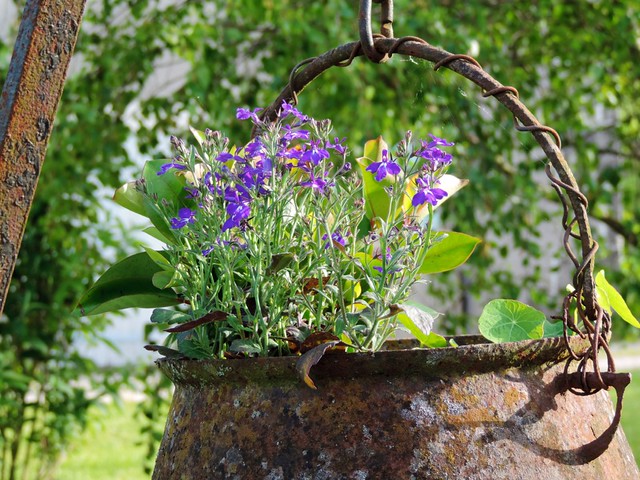
cauldron flowers

When you look at this photo you’ll see something living, the plants, and something “inanimate”, the cauldron. Some of you will also say you notice the sunlight and the shadows.

Every day these plants look different as they grow, flower, and, ultimately wither.

Every day the cauldron doesn’t look that different, but if we could see what it looked like on that first day when it was carried from the foundry to the shop, we’d see that it has changed a lot.

Everything changes. Just at different rates. Living organisms change rapidly, whilst inanimate objects change much more slowly, except for moments of catastrophic change where, for example, an object is broken.

We forget that, don’t we? That change isn’t optional, but the speed of change can be.

We are creators, we humans, and when we create we embrace change, we engage with it, we bring our imaginations to bear upon it, and so we make the world we live in.

“All power to the imagination”

Read Full Post »

sand pit

The world is different with you in it. It wouldn’t have been this way without you.

Each of is alive in this world, and living is a process of change.

Your breathing changes the air in the room where you are now. You breathe in oxygen, and breathe out carbon dioxide.

The heat of your body changes the temperature of the room and the temperature of the room changes your circulation, your consumption of energy and your expenditure of it.

Every action you take, every thought you have, changes the world you live in.

Sometimes we change the world quite consciously – as I did when I took the rake to the sand pit the other day.

But all the time, we are changing the world with our choices, our behaviours and just by living.

Each of us in unique. Every one of us lives in a different place and different time. Every one us thinks our own thoughts, has our ideas, tells our own unique story.

The world is different with you in it.

Read Full Post »

redstart on the antenna
I haven’t posted any music here for a while, but this photo I took the other day instantly reminded me of one of my favourite songs…..

Read Full Post »

Cotard

I was watching an episode of Vikings the other day, and was startled when one of the character, King Ecbert recited a few lines of poetry which were completely familiar.

Time present and time past
Are both perhaps present in time future,
And time future contained in time past.
If all time is eternally present
All time is unredeemable.
What might have been is an abstraction
Remaining a perpetual possibility
Only in a world of speculation.
What might have been and what has been
Point to one end, which is always present.
Footfalls echo in the memory
Down the passage which we did not take
Towards the door we never opened

T S Eliot! From the Four Quartets! Dramatically it worked, even if you couldn’t help thinking, whoa there, T S Eliot in the Vikings??!

I studied Eliot at school and he is still one of my most favourite poets. I remember reading this passage and feeling enthralled by it, but I had no idea what he was talking about. Now, as I encounter it again, I’m surprised how well it fits with what I have since discovered about time and memory.

In fact, by one of those strange quirks of synchronicity, this month’s “Philosophie” magazine has a central section on Bergson’s concept of memory. Bergson was way ahead of his time and many of his philosophical ideas about the mind have since been backed up by research findings in the field of neuroscience.

Much as I can be thrilled by reading the work of a philosopher, or research work in neuroscience, neither of these comes close to the power and beauty of Eliot’s poetry.

Draw all three of these strands together, and we have a vision of experience which is not of the past filed away in some cabinet or pigeon hole in the brain, nor of the future lying like the landscape just over the next hill, waiting for us to discover it. No, instead we have a vision of the present which contains the past and the future. This is where we encounter time and reality, in a never ceasing interplay of the ripples of the past, the imagined possibilities of what might be, and the phenomena of the present moment.

So it isn’t just what happened which influences us now, but those passageways we didn’t take, and doors we didn’t open, are also still influencing what we see, hear, feel and think about today.

Read Full Post »
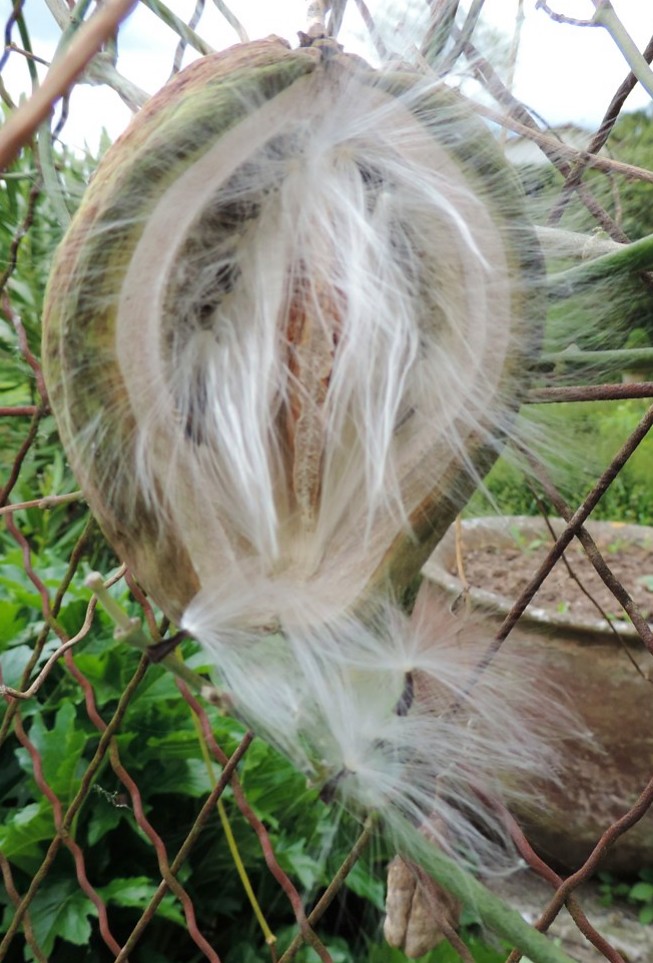
seeds

I’ve no idea what this is.

Some kind of seed head with soft, fluffy, fibres attached to the seeds so they will fly off in the wind, but I’ve never seen this actual plant before.

There’s something satisfying about naming things, isn’t there? We see a plant like this and instantly we want to say “what it is”. But it isn’t it’s name anyway.

It is what it is becoming…

And that’s what interests me even more than its name…..what does this seed grow into? So I collected a couple of them, and planted them in my garden. Will they grow into a plant? “On vera” (“We’ll see”)

Read Full Post »

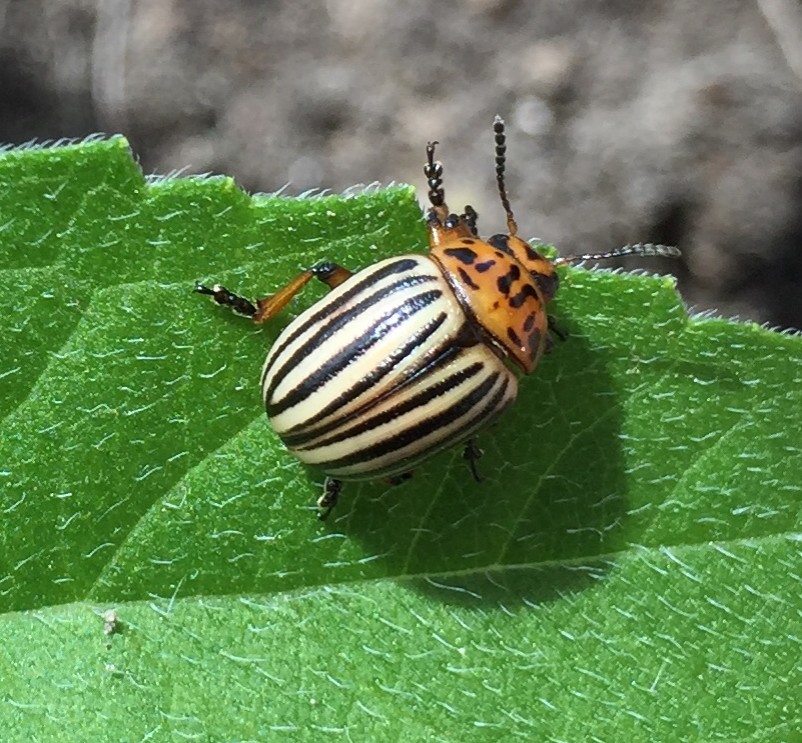
Beetle

Even when kneeling down pulling out weeds, turning over the soil, you can encounter something for the first time.

Look at this little beetle! What astonishing markings!

For me, it’s these little first time, unexpected, brief encounters which can really make a good day great.

I have no desire to catch, kill, or collect creatures like these, but to see them, be amazed by them, and to take a photograph – I like all that.

What little, unexpected but amazing encounter did you have today?

Read Full Post »

« Newer Posts - Older Posts »