Feeds:
Posts
Comments

Archive for the ‘from the dark room’ Category

hoopoe

If we are to prioritise difference, we have to start noticing it more.

One way to notice difference is to spot the unusual. This is one of the easiest ways because its the very fact that what we are seeing is SO different which catches our attention.

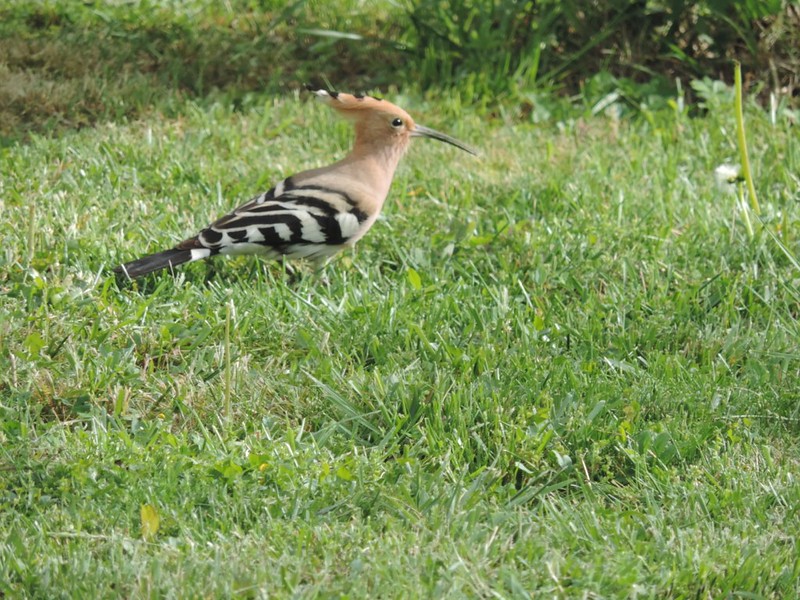
I’ve seen some interesting and different species of birds in my garden here in the Charente, but yesterday look what appeared!

I have never, ever seen a bird like this!

It seems it is a “hoopoe” – nope, I hadn’t heard of it either. But isn’t he spectacular?

Only the one, not a pair, and certainly not a flock. He pecked around and had a bit of supper then flew off. Maybe I’ll never see a hoopoe again, but it was a sheer delight to see one this time!

What is unusual is often striking. And what is striking catches our attention easily. The pleasure and delight can be maximised by allowing your attention to be caught and then lingering awhile – spending a few minutes just watching, noticing, enjoying.

Has anything unusual caught your attention recently?

Read Full Post »

Redstart

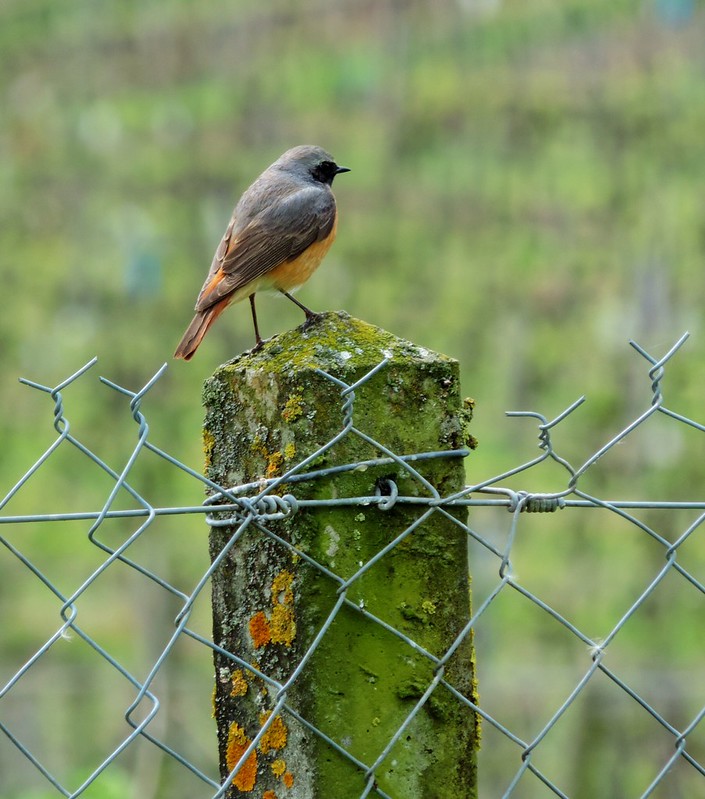
For many weeks I’ve noticed a Robin in my garden, but recently this little guy has turned up.

At first I thought he was maybe a different Robin, or maybe a Bullfinch (I’m not an expert in birds!) but I’ve just discovered he is a “Redstart” with his red breast, black mask and white skull cap. I’d never even heard of a “Redstart” before but apparently they are from the Robin family – you can see similarities with the more common Robin, but he is clearly different.

We live in a society which prioritises sameness. Mass production, mass consumption, standardisation, health care by protocol, science based on abstraction and categorisation.

We do have a lot in common, and that’s partly how we connect to others – shared interests, preferences, values and so on.

I was aware throughout my practice as a doctor that every single person I saw had some things in common with others who I had seen, but who also was unique – different from every other person I had seen. I’d make a diagnosis – chest infection, diabetes, asthma, psoriasis etc by prioritising the signs and symptoms which I had learned were associated with those diseases, but then I had to pay attention to the person and ask who this was who had this disease, ask how it appeared in their particular life, how it affected them in their unique way.

What I’m wondering just now is what might the world be like if we prioritised difference instead of sameness?

What would health care look like if we prioritised the uniqueness of every patient AND every practitioner?

What would the economy be like if we prioritised the uniqueness of each member of the population?

What would education be like?

What would society be like?

Are there certain underlying principles which would come to the fore if we prioritised difference?

I’m going to explore those questions here over the next few days.

Read Full Post »

The dominant idea in our society seems to be one of control. From the economy, to society, to health and education, those who hope to improve matters have been seduced by a certain philosophy (typical of what is referred to as “scientific”) which is based on measuring starting points, setting end points and employing the tools to control the process of moving from the one to the other.

Actually, in “open systems”, which are “complex” (based on multiple non-linear relationships between the parts), this idea fails to match reality.

We cannot completely measure or control living systems.

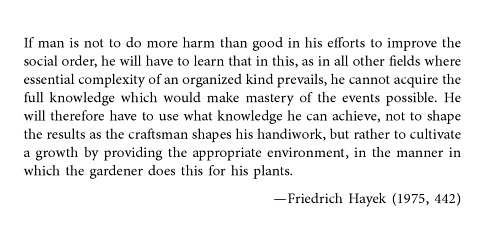
The economist, Hayek, put it this way –

So, here’s the question – what is an “appropriate environment”?

What sets the conditions for health? For the creation of healthy individuals, healthy societies and healthy economies?

Read Full Post »

St George de Didonne

I took this photo of my son and his children on the beach at Saint George de Didonne recently. It so happened we were the only people on the beach at that point.

In my A to Z of Becoming, P can stand for Pause.

I wonder how you make the pauses in your life?

In the part of France where I live now Sundays are still a very different day of the week. Shops close – even the supermarkets – and the pace and feel of a Sunday is distinct. In many societies we have lost that regular point in the week where we can step off the treadmill, relax, sit back, reflect, or do whatever we need to do get a bit of space again in what so often is an over-stuffed busy week.

Holidays can be a time to pause too. A few days in the year where we can just step out of our routines and get the chance to re-connect to ourselves, our values and our priorities.

A time of pause gives us the chance to make conscious choices because it creates a space – in turn, this gives us a chance to shift our perspective and see our lives in their contexts.

So, maybe it would be good to work out where you can create your opportunities to have pauses. And maybe you should allow yourself to enjoy one sometime very soon!

Read Full Post »

Working the vines

Living surrounded by vineyards is influencing my perspective on life.

There is a little shop next to the tourist information office in the nearby village of Segonzac where you can drop by and taste a cognac or two and explore the individual produce of several local distillers. This is small scale cognac production – families who have worked the same vineyards for generations, tended the vines, plant by plant, through the seasons of each year.

Every year they strive to produce the best quality grapes they can from their vineyard. And each year they strive to produce the tastiest cognac they can – taste which is not just pleasurable but unique and distinctive.

It’s delightful to head home with a bottle of cognac produced 40 years ago by the father of the man who sells it to you.

The focus is quality. Quality and that unique, distinctive flavour. These vineyards and distilleries have been productive for years and years. They don’t “succeed” by producing more and more every year.

They don’t survive by buying up all the surrounding vineyards and becoming global mega-corporations. (there are cognac producers in the area which are a bit like that – big, multinational companies).

They thrive by doing well what they do well. Their focus is on quality and what makes their particular cognac unique.

We hear so much these days about the need for “growth” – more consumption, more production, more sales, more profits.

There is another way.

Read Full Post »

Dandelion

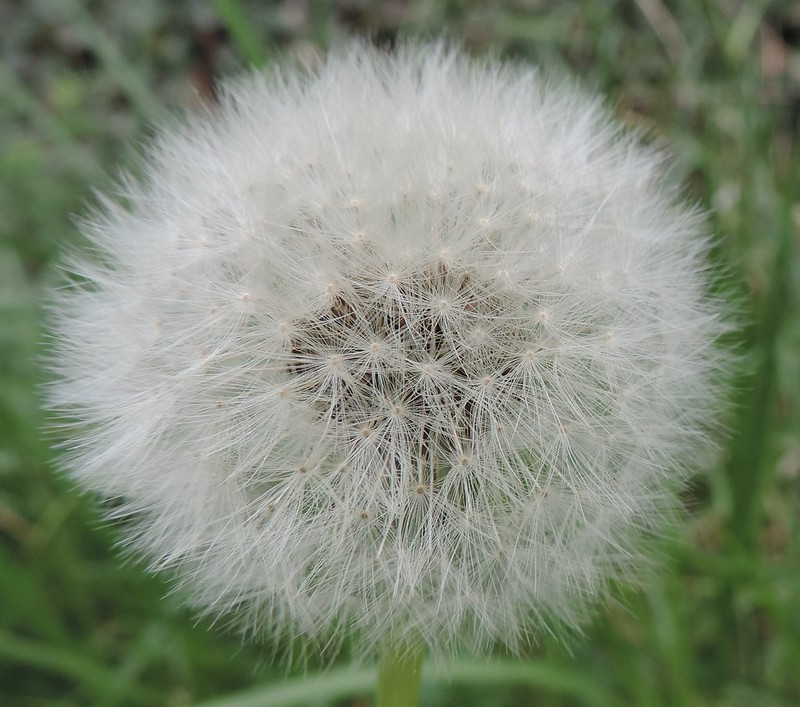
A dandelion seed head – did you ever play with one, blowing the seeds off and counting the number of blows it took to scatter them all, saying that the number equalled the time of day? We even called the dandelion seeds like this a “dandelion clock”.

Strange game when you think about it. Was there ever a relationship between the number of puffs and the hours of the day?

Yet, this image remains a powerful symbol of the passage of time, and hence of change.

It’s one of my favourite images.

i don’t know if you have ever stopped to think about what the inevitability of change really means. You might be surprised to know that it’s only in fairly recent times that scientists have begun to describe the universe in a historical and evolutionary way. Before this understanding there has been a way of thinking based on the idea of permanent laws – laws of physics, laws of the universe, laws of Nature – laws which don’t change. But this idea is undermined by the discovery that the universe is constantly changing. As it changes, it changes itself, because we have also discovered that everything is connected, that there are no “essential fixed, unchanging elements” which are the raw materials or building blocks on which these so-called laws act.

This new understanding shifts the focus from being to becoming, and gives becoming primacy.

All is in a constant process of becoming.

There are no fixed states. There are no permanent entities. There are no unchanging laws.

Yes, there is what endures. Yes, through our lifetimes there is plenty which seems to last. But ultimately, if you take a longer term perspective, nothing endures. Nothing is fixed.

Some people might find this scary. Some people might find the uncertainty this brings hard to handle. But I find it stimulating. Understanding the inescapable nature of change helps you to become aware of emergence – life is in a continual process of emergence – constantly producing the new, constantly creating.

It’s this connection between impermanence, change, emergence and creativity which excites me.

Shifting the emphasis from being to becoming, shifts your focus to the processes of creation. It also moves the attention away from objects and onto connections/relationships and actions. (See my series on this blog under the A to Z of becoming title, for practical ways to explore this)

This “dandelion clock” becomes a symbol of change, and so one of creation – after all it is a SEED head, literally bursting with potential new lives.

Read Full Post »
Dandelion path

Flourishing.

A lovely word. As a descriptor of a quality of life, it says so much more than just surviving, existing, or getting by.

It’s a word which says something about realising potential. It’s about blossoming, growing, developing and essentially about becoming all you can be.

Flourishing as a verb refers to a process. It’s not a fixed state. It’s not a goal which can be achieved then there’s something else beyond that. Flourishing is ongoing. Flourishing is a way of living.

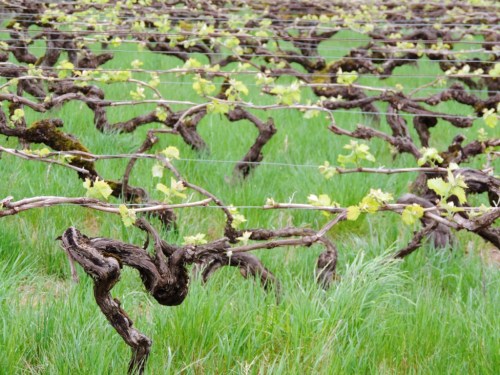
What strikes me about this photo is that it really is a snapshot of that process of flourishing. There is an abundance of life, and there is also an abundance of potential. I know that as I return to this path through the year I’ll see a even more flourishing as the vines grow and the grapes appear.

How to live?

A question we all ask ourselves from time to time.

i suggest one way is to get into the flow of flourishing…..to pursue whatever it is that furthers flourishing – both our own personal flourishing, and that of all the other Life around us. Because in prioritising flourishing we can not only become, as fully as possible, all we can become, but we become the person who supports and encourages the flourishing of others.

Thats the Flourisher’s Way.

Read Full Post »

Cockerel

This is the bird which lives a couple of houses away from me. I hear him every day but now I have seen him!

And it sure looks like he has seen me too!

In my A to Z of Becoming, O can stand for Observe. So that’s my theme for this week.

I’m sure you will have had the experience of traveling a familiar route and when you arrive you realise you have been so lost in thought that you haven’t noticed anything en route. This can even happen when you a driving car. It’s not that you aren’t seeing anything but I think these experiences say something interesting about how we observe. In other words, observing is not just about what our eyes “see”, it’s about how we process that flow of information and energy within us.

One way to change what you observe is to set an intention to observe. Before you head off on your usual journey you can ask yourself “what am I going to notice today?”. Then while you are out, you are more likely to notice what is around you and so observe.

I find an easy way to increase your awareness and so your observation is to set the intention to photograph what you notice. These days with smartphones, we all have a camera in our pockets or bags, but the way to make sure you take more photographs is to actually have the device in your hand. I do that with my camera. When I set off out to observe and to photograph I set off with my camera in my hand – not in my bag or my pocket – in my hand.

Happy observing!

Read Full Post »

Where we live is important in understanding who we are.

I don’t just mean the environment or the climate, although those things are certainly important. I mean more that aspect we think of as culture.

Not culture in the sense of theatre, opera and so on. But culture in terms of an approach to life, a focus on certain activities, a set of values and priorities which all influence design and choices.

The interaction between ourselves and the environments and cultures in which we live is a constant two way feedback loop. We are influenced by what is around us, and that influences our choices. Our choices then change the environment around us and fashion a culture. And then back around again..being further influenced by what is around us.

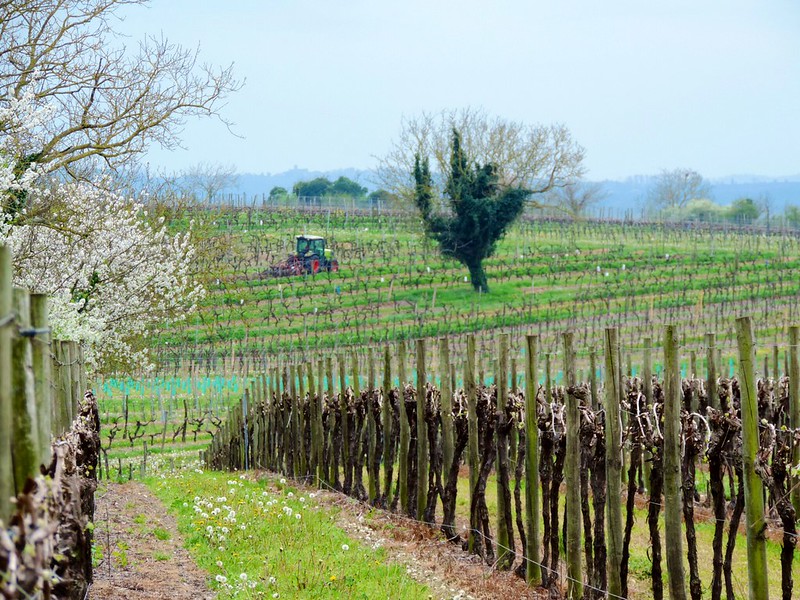
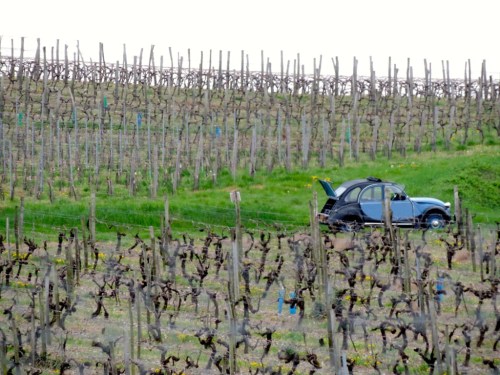
I think this photo I took the other day captures something of the culture of France. Or at least of the part of France where I am living now.

It says something about priorities. It says something about a connection to Nature and seasons. It says something about a kind of economic activity. It says something about aesthetics and design.

It’s hard to define the culture we co-create, but living it is clear.

Living it is a different kind of knowing from defining, labelling and categorising.

Read Full Post »

To be fully alive is to be engaged with the rhythms and patterns of the natural world, but to be fully human is to reflect upon and celebrate this relationship – David Fideler


There is a tendency to reduce thinking to rational thought. But thinking is not only about logic.

Thinking involves contemplation, reflection and the experience of sensations and emotions.

It does seem to me, however, that one way to move from zombie to hero mode, is to think – in the fullest meaning of thinking – to become aware and then to make conscious choices

Read Full Post »

« Newer Posts - Older Posts »