Feeds:
Posts
Comments

Archive for the ‘photography’ Category

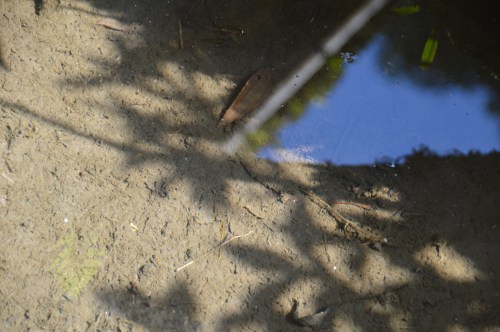
When I looked at this image I saw an earthy path with a puddle lying on it. The puddle is beautifully blue because it is reflecting the sky above. There’s an enticingly intricate pattern of shadows on the earth, cast by the sun shining on the leaves of some trees. At the edge of the puddle the reflected green of the leaves borders the sky.

Then, I thought, hold on, there’s something odd about this. That puddle is a really, really strange shape. It’s almost a triangle. Something’s not right here.

So, I looked more carefully, and a different interpretation leapt out at me.

This isn’t an earthy path, and that isn’t a puddle.

This is a photo of a pond. The water is so clear you can see right through to the muddy floor. The shadows are cast right through the invisible water and the reflected sky is on the surface of a pond, not a puddle lying on the earth.

When I realised this I was quite surprised. No matter how hard I look I still can’t see any water lying over the earth. The reflected sky, however, reveals the water. It makes it more obvious.

This got me thinking (well, if you’ve read a few of my posts, you’ll be familiar with how my images provoke my thoughts). It got me thinking, I wonder how often I don’t see reality because I don’t look carefully enough? I wonder if taking my time allows me to notice the peculiar, and how often it’s the peculiar, the strange, the thing that doesn’t fit, which is the key to the door of perception.

There are two lessons in that thought…..slow down, and be open to what’s different, what seems peculiar.

I guess a lot of the way I engage with the world is at a superficial, faster level, with an eye open for what’s familiar, what I know already…….that way I can quickly tell myself I know what I’m looking at, and move on. I’m sure those mental behaviours are valuable, but I do think they are over-used.

That’s my lesson to myself today –

Remember to slow down and savour.

and

Remember to look out for what is strange, rare, or peculiar.
Read Full Post »

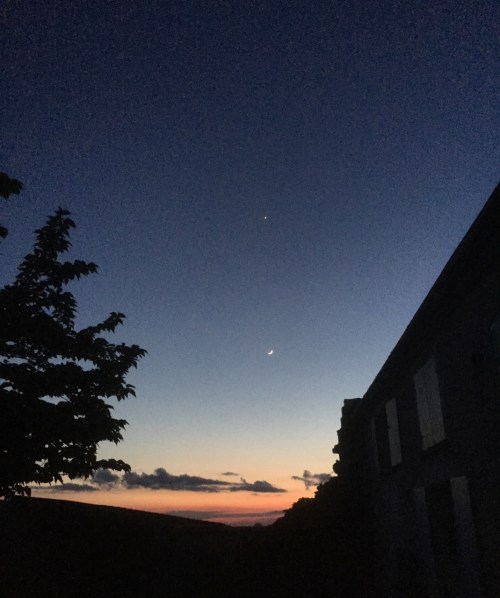
When I stepped out to close the shutters on the windows a couple of nights ago I looked up and saw Venus and the Moon shining so brightly they were almost dazzling. When I looked closely I could see the full black disc of the moon with just a thin silver crescent on the lower right edge. Above the Moon sat Venus, like a queen on her throne.

Both Venus and the Moon are symbolically and mythologically linked with the feminine. And, oh how we need that energy now. Actually, oh how we are seeing the flourishing of that energy now.

Taking a perspective from myth, symbol and spiritual experience, I have always found it helpful to think of two energies, two streams or channels of flow, within each of us at an individual level, within our societies, and, within Life. We call these two forces the masculine and the feminine. I’m not talking about gender or culturally determined social roles for men and women here. I’m thinking instead of something much deeper, something more fundamental.

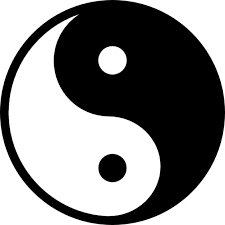
I wear a yin-yang symbol around my neck. I’ve worn it for decades. Although I was born in Scotland and brought up in the Church of Scotland during my childhood years, by the time I was a teen I discovered Buddhism and Taoism. I bet the way I came across those schools of thought is pretty unusual. It was in reading the novels of Jack Kerouac. Books like Dharma Bums and Satori in Paris. I guess we all have our own particular paths and stepping stones which we’ve followed to develop our beliefs and values. I have never called myself a Buddhist or a Taoist but I’ve read a lot of books about these and other Asian philosophies. They are a constant source of inspiration for me.

Probably the single most powerful and useful concept I learned in those readings was idea of yin and yang. The feminine yin and the masculine yang, sometimes referred to the receptive and the active principles. I don’t intend exploring these ideas in detail here but when I look up at the Moon like this I immediately think of the yin-yang symbol.

Interestingly, when I looked up a couple of night ago and saw what I’ve photographed in that image at the start of this post, I saw vastly more yin than yang.

That seems appropriate. I see signs of a strengthening feminine energy all around.

I’m sure there are whole books exploring these two forces but one simple version which I’ve found helpful is to think of the male energy as “provide and protect”, and the female as “nurture and nourish”. Remember, I’m not talking gender or gender-based social roles here. I think these two forces exist in all of us and an imbalance produces illness and dysfunction at both the levels of the individual and of society.

In the UK Thursdays at 8pm have become the time for people to get to their window or front door and “Clap for the Carers”. This is an astonishing new level of recognition and collective expression of support and gratitude. It’s not only happening in the UK. It’s happening around the world. And it extends out from front-line nursing, medical and care staff to all kinds of workers who are now seen as “essential” – all the people without whose daily efforts society would collapse. I saw a photo online today of someone’s garden gate in a French town. The person living there had made a variety of posters, covered them in plastic to protect them and pinned them up on their gate post. One said thank you to the refuse collectors. One said thank you to all the health workers. One said thank you to the postie.

I’m seeing those sentiments expressed every day now. I’m seeing and hearing people say thank you to others every day now. Saying thank you and declaring support. Showing appreciation. How ironic, you might think, given how under-valued these very jobs are. Often they are poorly paid with precarious job contracts and work which is under-resourced. If there is one sliver of silver lining (like at the edge of that moon up in the sky just now) then I hope its a re-evaluation of what is important in society and how we resource and reward those who make life possible.

How often are women the ones who are the carers – both from nursing and caring professions, but also in child care, teaching, in nurseries, and on the checkouts in the supermarkets? This is a strong feminine energy and these new “heroes” we are asked to clap for, are more often “heroines”!

Of course, there are many, many men who are doing essential jobs too, from the refuse-collectors to the lorry drivers, delivery men, farmers, emergency services and those who keep the power supplies and communication systems flowing. Employment and work activity is too gendered. Are we ready to recognise that more clearly?

There’s much to think about and discuss about the economics of work and social life, and I do really hope this pandemic is shining a light on the dysfunctions which have made us more vulnerable as well as laying out new paths to follow as we go forward.

I think there is a surge of the yin – we are seeing an increased emphasis on the importance of relationships, of caring and of collaboration.

Can that surge flourish? Can it change the landscape? Can it move us away from acquisition, consumption and competition? Can we build a new world by pouring our energies and resources into nurturing and nourishing…not just bodies, but minds and spirits too?

Venus and the Moon…..your time has come!

Read Full Post »

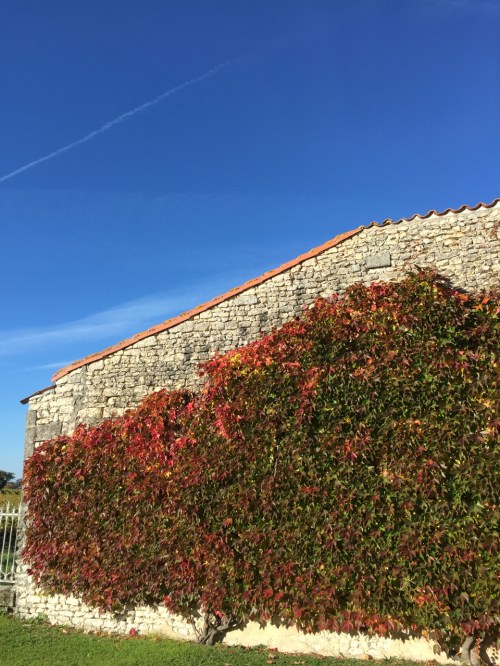
When we moved to this house in the Charente five years ago, one of the most attractive things was a glorious “Boston Ivy” growing up the ancient tall wall which divided this garden from the one next door.

We rent this property and the landlord asked me to keep the vine trim so it didn’t grow over the top of the wall. Over the years I got quite good at it, but during the seasons where the leaves covered the vine it was pretty challenging to trim at the top. I was at the very top of an extending ladder and reaching above my head to trim to runaway creepers. A friend of mine calls this plant a “mile a minute” plant because it grows so quickly. She chose a good name for it.

Through the seasons this vine brought lots of life to the garden. Several birds nested in it every Spring, and it buzzed with hundreds of bees in the Summer. In the autumn whole flocks of starlings would descend on it to eat the berries. It gave me experiences I’ve never had before, the most amazing of which was late summer when the seed pods would pop just after the sun has passed to the other side of the wall. The first time I heard them it was like a waterfall and I was convinced water was cascading down it from the top. It wasn’t. It was the sound of thousands upon thousands of seeds and seed casings crashing down through the leaves.

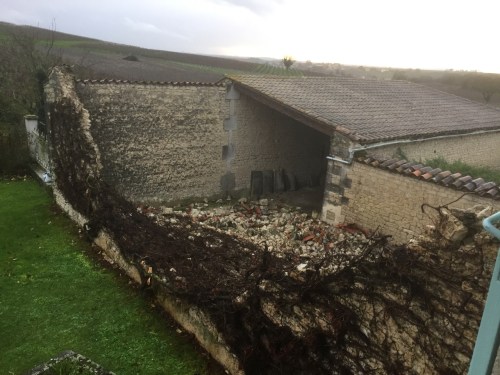
Last December, after a storm, we heard a loud noise and went outside to look. This is what we saw.

Virtually the entire wall had collapsed, taking the vine with it.

It was a real shock and for a long time I’ve been grieving for the loss of wonders of that glorious vine. This gaping hole looks very like an open sore. It’s a wound. For reasons which are too technical to bother about here, there has been no progress in having the wall repaired.

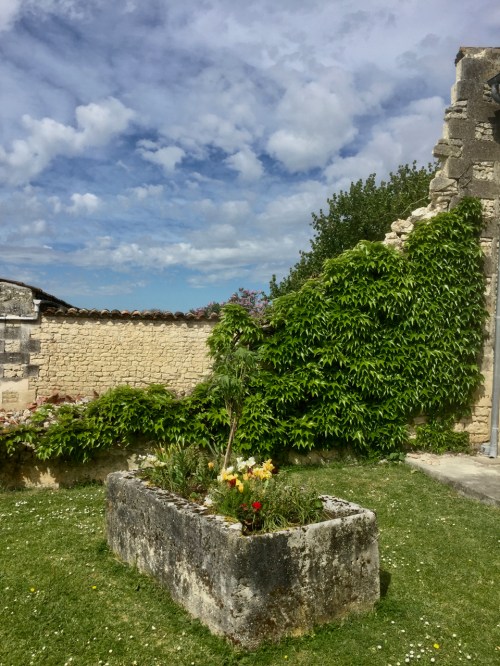
So, here we are, some four months on. Spring has come again and although the wall is still a pile of rubble now, the vine has woken from it’s winter slumbers.

I have to say – it is starting to look WAY better!

I know that when the time comes and the neighbour gets builders in to repair the wall, the vine will be removed (at least that’s what our landlord says). But until that time, I’ll continue to delight in the LIFE of this incredible plant. (And, yes, I think we all realise the plant might have had something to do with the fall of the wall!)

So, this has been a metaphor for me. It began with a traumatic, sudden catastrophe. Then we had to live with the wound. Now we are seeing the recovery of the vine and how it brings beauty back. How it transforms something ugly into something glorious.

Read Full Post »

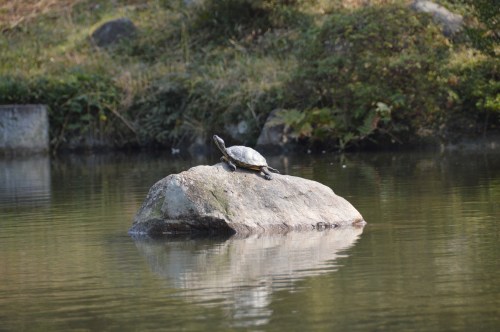
This photo of this wee guy on the stone all alone in the middle of the pond caught my attention again today.

Look at him. Look at his posture. He’s stretching his neck to raise his head as high as he can make it go.

That got me thinking about the stories of boredom, tiredness, and loneliness which seem to be everywhere just now.

It’s true, we are experiencing unprecedented amounts of physical separation these days. I know it’s referred to as “social isolation” or “social distancing” but I think there’s a fair body of experience now to demonstrate that social contacts have increased, not decreased. They’ve just moved into the non-physical dimension. Phone calls, text messages, WhatsApp and other messenger services, FaceTime, Zoom, and other video calling technologies are all surging. Goodness, if only they’d open the post offices, stationers and newsagents maybe we’d start writing and sending letters and postcards again!

So, like a growing number of people, I prefer the phrase “physical distancing” to “social distancing”.

Whatever we call it, many of us are perched on our own rocks in the middle of the world pond. Just like the wee guy in the photo.

But look what he is doing.

He’s got his head lifted as high as it can go. He’s trying to touch the sun with his nose. Trying to catch whiffs of delight in the air. I cut the grass in the garden again a couple of days ago and I was immediately blessed with that gorgeous scent of cut grass. Delightful.

What happens when we lift our heads and look up?

We see…..

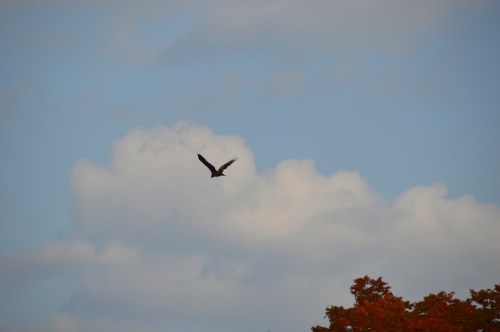
…birds?

Look at this one hovering in mid-flight. I see a lot of buzzards here in the Charente. (This photo was taken in Kyoto years ago by the way). I can look up and watch them circling way, way up in the atmosphere, their high pitched calls resonating across multiple vineyards. I love to see them soar, dive, and glide through the air. I see kestrels here quite a lot too. They hover in, what has become to me now, a very familiar distinctive way. Takes my breath away every time.

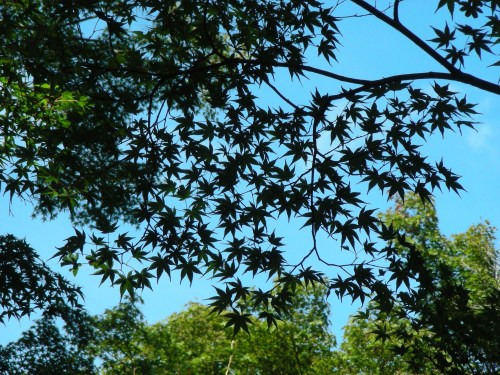
Or maybe we see the leaves in the trees (depends which season your part of the world is in now) – here’s one of dozens of photos I have of acer leaves (again, taken in Kyoto, years ago)

I think they are stunningly beautiful. I adore the shapes of these leaves. They look like stars. A galaxy of stars against a blue, blue sky.

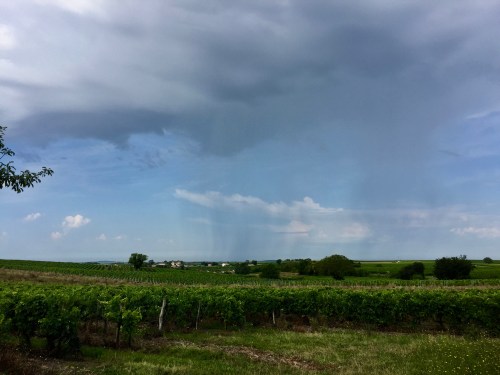
Or maybe you can see the clouds and notice the rain falling in a thin curtain draped from the sky to the earth.

There’s something else about this lifting the head…..its the opposite of “hang dog”. It’s the opposite of closing down. It’s an opening up.

Try it.

Drop your chin to your chest, gaze down at your body and the ground below you. How does that feel?

Now lift your head up, stretch your neck back and open your eyes wide to what is above you. How does that feel?

The thing is, we actually need both. There are times we need to centre ourselves, withdraw and experience the solitude. And there are times we need to lift up our heads and open up to the world we are living in.

Read Full Post »

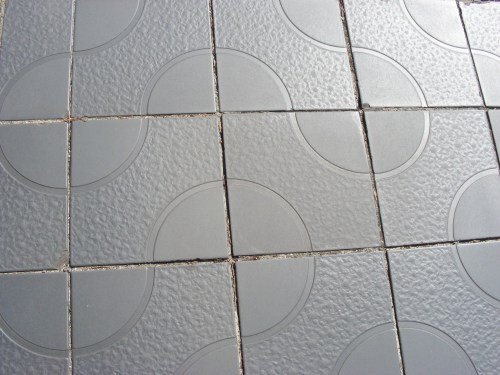
I wonder how much attention you pay to the shapes at your feet? To the surfaces you walk on, the paths you follow, the ground you stand on.

These tiles impressed me because they contain two pairs of contrasting forms. The hard straight edges and right angles of each tile, disrupted by the continuous flowing curves. And the areas of smoothies and roughness on every tile. I love those contrasting presences. Each enhances the other. And not or.

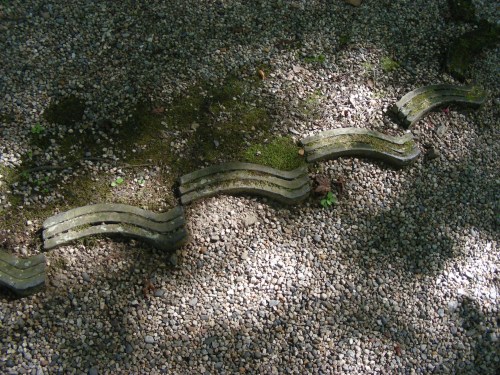
This stony path I walked along in Japan once had the most unusual border. How many paths have you seen which are bordered by straight, continuous lines of concrete, metal or wood? Here, the border is discontinuous and each tile is a soft curve. Together they give the impression of waves. They made me think of the boundary between the sea and the sand, rather than a man-made hard edge.

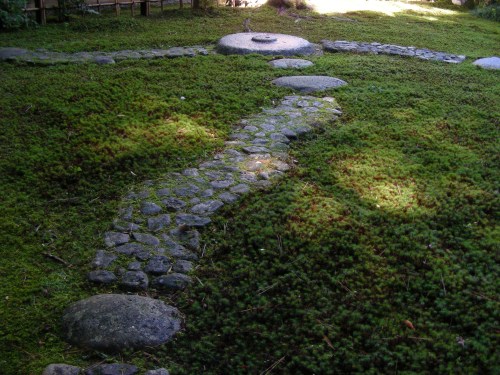
In a moss garden in Nara, I came across these paths, each one made of irregular stones. No two stones cut to the exact same shape and size. The paths wind. They don’t take the absolute “most efficient”, shortest route between two points. Isn’t a straight line defined as the shortest distance between two points? And they are all punctuated by large, smooth, circular stones, of various sizes. The whole thing was utterly delightful. You were unconsciously led to wander and to linger.

Oooh, what lovely words – wander and linger.

I do think the shapes, textures and forms of the ground we stand and walk on influence how we move through the world.

What do you see at your feet today?

Read Full Post »

Last year there was a wave of complaints from people about “over-tourism”. Several cities, like Venice, Barcelona, Prague and Edinburgh were accommodating so many tourists that locals felt life was becoming difficult. There were even problems with the number of people visiting the Isle of Skye in Scotland.

Well, this year, look what’s happened. Nobody last summer could have seen this virus coming, and none of us have lived through an experience like this, but as I read yesterday about Spain, Italy and France all experiencing a complete collapse of tourism and making plans to prevent holiday travel into their countries for the foreseeable future I couldn’t help but be amazed at how much things had changed.

That also got me thinking about the old phrase “Be careful what you wish for. It might come true.”

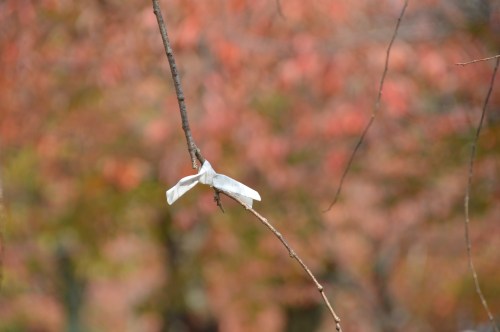
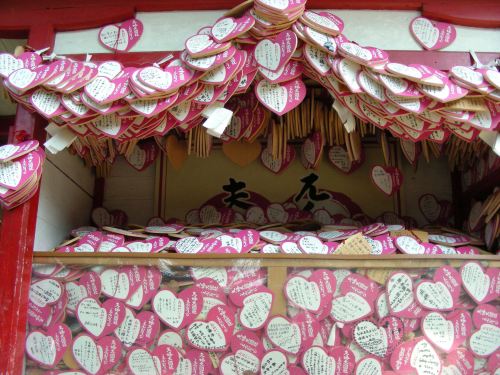
I’ve visited Japan a number of times and one thing which has always struck me is the practice of writing down wishes and hanging them up in temples and shrines. That photo above is of one such simple wish. Often you’ll see a whole tree covered in little paper wishes like that.

In some shrines, wish-making is more organised and focused. For example, in Nara, I came across this one –

I understand these particular ones are from married or engaged couples and are hopes for a good future for their relationship.

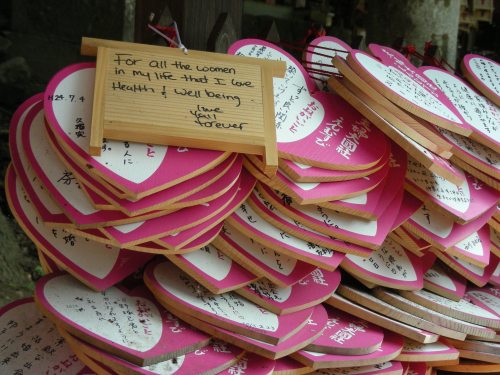
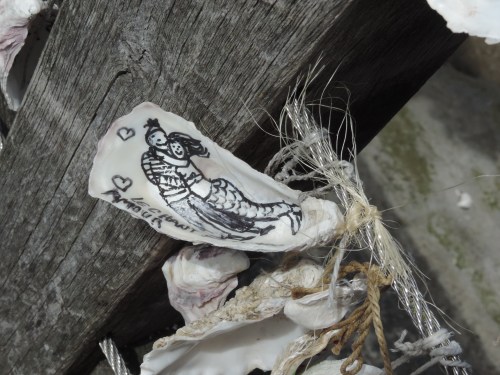
Though, it would seem some non-Japanese speaking guy didn’t quite understand that….

Of course, I don’t know if the author of this wish (and where did they get that different, non-heart shaped plaque?) was referring to their grandma, mum and big sister, but it sure struck me as strange!

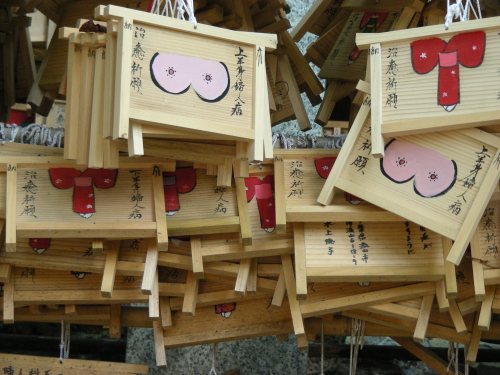
Connected to that particular shrine in Nara is one where the focus is on women’s health and wellbeing.

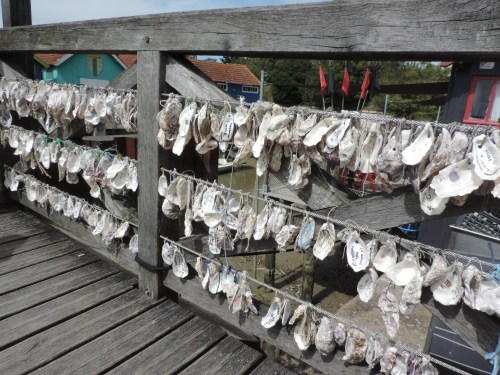
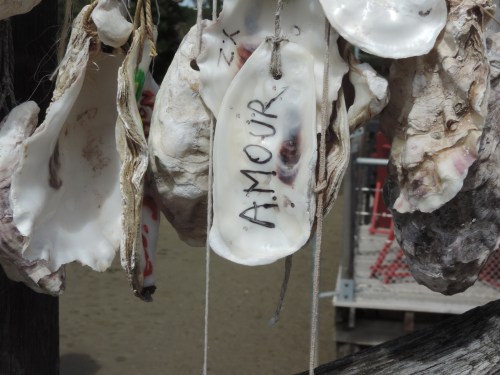
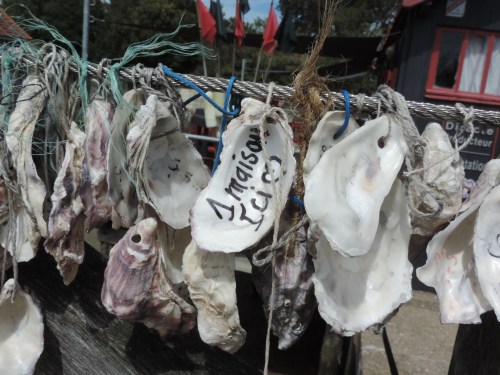
Back here in France, last year, I came across these wishes on an island where the main industry is oyster farming.

It’s interesting how many of these practices are perhaps not so much wishes but love hopes. They are declarations of love and an expression of desire for that love to last.

But not all, are about love. This person clearly loved their holiday on the island so much they’d like to live there full time.

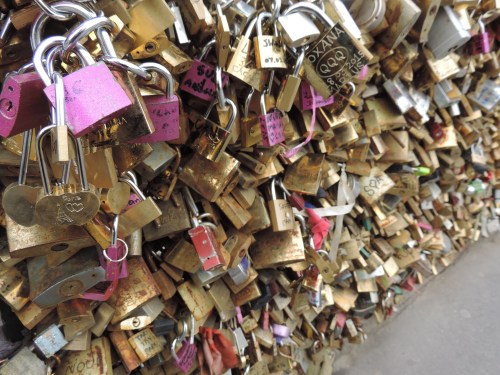
In many parts of Europe you can find the padlock version of the love hope/wish –

I do find it heartening that so many people choose to focus on a relationship and their hope/wish for sustainable love when they make these public declarations. The first time I came across the padlock version on a bridge in Paris I found it really incredibly moving.

So, I wonder what you are wishing for at this strange time in our lives.

And I wonder what will change if your wishes come true.

Read Full Post »

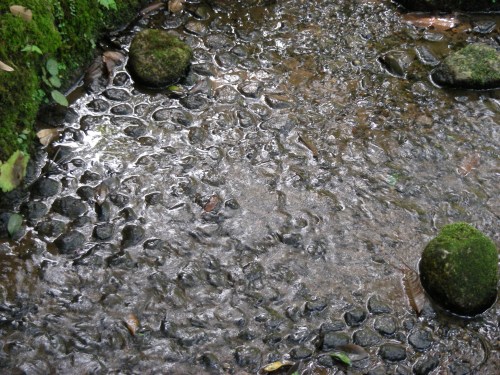
This is a stream I saw in the Japanese town of Nara several years ago. The water flowed in such an unusual way in this stream. It was more than a trickle but almost less than a steady flow. The bed of the stream had been made by laying many stones close together, mainly smooth, round-ish stones. The interaction between the water and the stones created this really fascinating texture. Quite unlike any stream I’d ever seen before.

In Scotland the streams (burns) and rivers flow over huge irregularly shaped rocks creating white foam and loud crashing noises. This stream flowed quietly, the water hardly making any sound as it slipped over the smooth surfaces of the stones. Where I live now, in the Charente, the river is well known for its constant smooth flow. It is never still, but it never breaks into foam or makes a noise. This stream in Nara has some similarities to both of these waterway forms.

So, as I look at this image now, I recall standing in Nara taking this photo. I can hear the gentle sound of the water over the smooth stones, but I also bring into my mental space waterfalls in the Trossachs, and a river just a few kilometres from where I am now. I love how the mind weaves the memories a specific scene with multiple others which had something in common – in this case, flowing water, but also turbulence and calm.

Then I notice the moss covered stone in the bottom right of the photo and I immediately recall another photo I took near this stream.

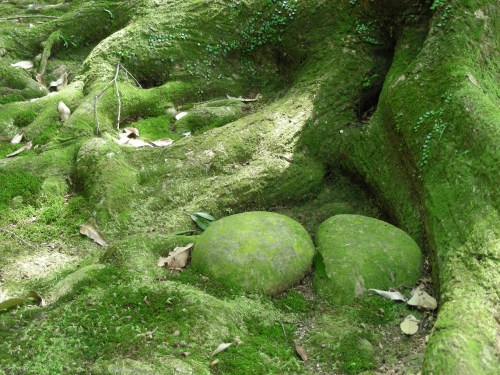
When I first stumbled across these I thought the tree had laid two eggs!

I imagined them hatching out millions of years into the future…..what kind of creature would emerge? Some tree-dragon?

The smoothness of these stones is just like that of the ones in the bed of the stream, and their mossy covering makes them look just like that larger stone at the bottom of the previous image.

I delight in following threads of similars.

Which ones will you notice and explore today?

Read Full Post »

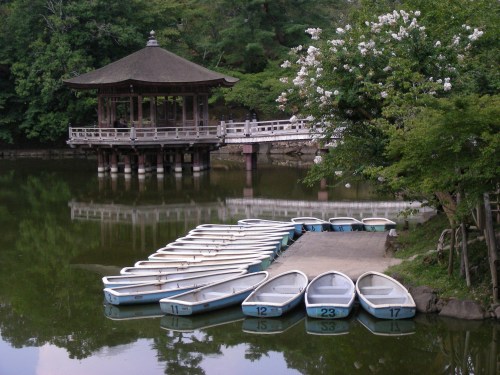
It strikes me that this is a pretty good image for this present moment.

All our boats are tied up at the dock. Empty. Nobody there.

Actually, when you look really carefully there is somebody in the pagoda. It’s hard to see them. I have the impression they might be a ghost!

Moored is the word we would use to describe the situation these boats find themselves in. They’ve been carefully set aside, brought home, tied up to the dock to keep them safe. I guess we’re all a bit moored just now, aren’t we? Although, frankly, an increasing number of people are feeling quite the opposite – un-moored!

But let’s stick with this image for a wee bit longer.

I see nineteen boats arranged around this platform, and, yes, it bugs me that they aren’t aligned by number – what does that say about me? – but, worse than that, one of them is number 23 – and I can only count 19 of them! Are there are at least four missing? Where are they? Are they OK? So, already, what at first glance looks like a completely peaceful scene, with the reflections of trees, clouds and blue sky on the surface of the still, still water, starts to become a little…..unmoored?

Then I see the blossom of the tree above the boats, and instantly, I’m back to enjoying the beauty of the scene. My gaze follows the hidden path to bridge, and across to that gorgeous pagoda, itself perfectly reflected in the calm lake. Then I notice that indistinct person, that ghostly presence, and I start to unravel again.

Now, here’s the thing, until today, every time I’ve looked at this image I’ve seen and experienced nothing but calm, and I’ve delighted in its beauty. This “un-mooring” is new. It doesn’t come from the photo itself. It comes from where I am, here and now.

Well, this is a great truth…..whatever we perceive, whatever we see, notice, appreciate and experience, is always, but always, an interaction between our “self” and what is around us. This is the way I understand the teaching that there is no real world “out there”. This is how I understand relativity. It’s not that there is nothing objective, or that nothing exists unless I see it, hear it, or otherwise sense it. It’s that my lived experience of reality always, but always involves my memories and my imagination.

We co-create our world.

Read Full Post »

Several years ago I visited the town of Nara, in Japan, and as I wandered through this park I came across all these people sitting drawing and painting. As I look at this again today I’m struck by how it would meet the requirements of social distancing that we are all being urged to follow (except, here in France, as in some other countries, parks and forests are currently out of bounds to everyone!).

But what really strikes me about this image is how it captures a fundamental human characteristic – creativity.

We are creative creatures.

We invent. We solve problems. We compose and perform music. We draw. We paint. We carve. We write and we share stories, poems, ideas and observations. We are brilliant at creating and manipulating symbols and signs. We make maps and plans. We build. We weave, sew, and knit. We create pots, cups and mugs from clay. We create jewellery from precious metals and stones. We make gardens, parks and forests, sewing seeds, nurturing seedlings, fashioning the landscape to our pleasing. We transform nutrient laden plants into nutritious food. We heal and develop new ways to heal.

I could go on……[add some of more of you own liking].

Yes, I know, some of you will be thinking, human beings are pretty damn destructive too. Aren’t we spoiling, ravaging and polluting too?

Yes, we are. And if we are to survive as individuals and as a species, we are going to have to tackle that. But what will we tackle it with? Creativity.

Has there every been a better time to foster, practice and share our creativity?

I don’t think so.

In this time of pause, when everyday life has been put on hold, we are going to need all our creativity to get out of this situation and wouldn’t it be wonderful if we used our creative powers to make a better world “after-the-pandemic”, to resist those who will want a return to the old ways which got us into this situation?

How might you change the way you live #after-the-pandemic?

What new habits are you going to create?

What new behaviours are you going to develop?

How do you think you can maximise your creativity today, and in the days and years to come?

What are you going to write, or draw, or paint, or build, or weave or……….?

Are you going to start today?

Read Full Post »

This little chameleon hugging the stalks of grass wasn’t easy to see. From the distance he was, to all intents, invisible. He’s designed to have that as his core quality.

We think of chameleons as creatures which are brilliantly camouflaged. Their colouring perfectly matched to their surroundings.

Many of we humans have that tendency too. We like to “blend in”. We like to be “one of the crowd”. Even in the earliest years of school, children will pick out the one who is different. And, often, that’s not a good thing. They’ll be singled out for insults or blows.

There’s a message there – it doesn’t pay to be different.

Conform! Keep your head down! Don’t attract attention!

There is a tendency in human communities to demonise “the other”. A new inhabitant might be treated as “an outsider”, or “an in-comer”. “You ain’t from round here, are you?” The more different they are, the more they are likely to arouse suspicion and prejudice.

It’s not very appealing, is it?

But this little chameleon….he’s pretty appealing, isn’t he? Clearly there is something potentially valuable in the strategy of blending in, and hiding, of not getting noticed.

There’s a safety in being “normal”, “one of the crowd”.

But it’s not enough, is it?

We need quite the opposite.

From the moment a baby is born they demonstrate their core skill – attracting attention! They scream and yell when they are hungry, when they are thirsty, when they are uncomfortable and when they want company. Failing to attract attention would be fatal. Literally.

None of us want to be ignored or passed by. None of us want to be unseen and unheard. Well, most of us don’t, anyway.

There are many paradoxes at the heart of being human and this is one of the biggest ones – how do I fit in, or belong, and at the same time, get noticed (at very least to avoid being neglected)?

There’s no one right way here is there? It’s not a binary choice. We need both.

As I became aware of paradoxes like these I developed a mantra – “And not or”.

That has become my core mantra. It’s a perspective of understanding, of tolerance, and of humility. It lets me open up to the views, beliefs and values of others. It allows me to avoid opting for reductionism and simplicism. I prefer to explore the whole, and the complex.

It’s NOT about “having your cake and eating it”. We have to make choices. But it does mean accepting that every decision should be made as best I can at the moment when I make it, knowing that, pretty quickly, things will change, my understanding and knowledge will change, and I might need to make a different decision next time, in the light of all that.

It means nothing is fixed in stone. Everything is fluid and uncertain. Does that scare you? Does that offend you, even?

And not or.

Can I suggest you just explore it? Play with it? Try it out? See if it helps you to navigate the world better than the binary, good/bad, right/wrong, abstracted and reductionist approach does. I find it’s more human.

But, seriously, explore it. That’s what I’m doing. And I would love to hear your experiences and thoughts about it.

Comments on this blog are “fully moderated”. That means I need to deliberately share them to make them public, so you can send me a comment, and tell me you don’t want it made public, and I’ll respect your wish. We can have a conversation privately. In fact, if you would like to start a conversation with me about anything on this blog, just comment on one of the posts, asking me to get in touch, and including your email address. I’ll reply from mine, and I won’t publish your comment or your address.

See, I welcome comments which people want to share with each other. I’ll publish those. But I also welcome personal conversations. I won’t publish those. And not or!


Read Full Post »

« Newer Posts - Older Posts »