Feeds:
Posts
Comments

Archive for the ‘photography’ Category

It’s good to have someone looking out for you, isn’t it? It’s good to know that someone has your back. It’s good to know that someone is keeping an eye on you, to keep you safe, and make sure you have what you need.

During the pandemic lockdowns, millions of people looked out for others. They checked on elderly or vulnerable neighbours, got their shopping and their necessary medication for them. Millions of people got in touch with others to say hello, to see how they were, to let them know they hadn’t been forgotten.

I live in a village in Southwest France, and although people live quietly and privately here, they look out for each other. There isn’t an organised “neighbourhood watch” but there is an awareness of the presence of vehicles, of unusual noises, and even of people walking down the streets.

We humans are social creatures, and whilst there is undoubtedly a lot of greed, cruelty and selfishness in this world, there is also an abundance of care and concern. Yes, I know Food Bank use has risen by over 30% in the UK, and it’s terrible that the economic and political decisions taken have made that happen, but the other side of that story is all the volunteers and donors who make the Food Banks happen.

The only effective way to deal with an epidemic, as shown in every epidemic the world has known, is to identify those who have caught the infection, and isolate them. With Covid scientists quickly discovered that the vast majority of people who caught it didn’t experience any symptoms at all. So the only way to find those who are infected is to do tests. Now we are moving into a phase of demanding proof of a negative test to travel, or, soon, perhaps to attend a sports event, a concert, or even to go to a restaurant or cafe.

Alongside the increase in surveillance technologies related to the pandemic we’ve already seen a massive expansion of CCTV, technologies to track mobile phones, to analyse credit card spending, and so on. And what about the internet technologies? The harvesting of personal data, the planting of “cookies” on your computer and phone, and the tracking technologies which follow you around the internet and report back what they find to allow for “targeted advertising”? All that “looking out for” doesn’t feel so good, does it?

The differences arise from intention, autonomy and open-ness (or the opposite – manipulation and secrecy). When the intention is care, we are off to a better start than when the intention is to exploit or manipulate. That’s pretty clear, huh? It’s one thing to look after someone or to support them, it’s quite another to seek to profit from them or trick them. The autonomy bit is equally important. If I agree to participate with someone who wants to watch over me, then that’s my choice. If they do it behind my back, then there’s a risk they are trying to exert power over me, or to diminish the power I have to decide things for myself in my own life. And even with good intention, and voluntary participation, I’m still not comfortable with secrecy.

Sometimes I think that one of the biggest problems we have in the world now is a lack of transparency. Politicians, security services, private companies, multinational corporations, lobbyists, and the rich elites all seem to prefer to avoid transparency. As reports emerge of dodgy deals, as politicians and the media “spin” stories to hide the truth, as those responsible for damage to others and the environment escape responsibility, then trust erodes more and more.

We need more transparency, more accountability, more open-ness, more co-operation, if we are to counter the worst effects of those who turn “keeping an eye on you” into exploitation and manipulation.

Isn’t it high time we, we collectively, we the societies who want democracy and freedom, forced the selfish, the greedy, and the cruel out into the light of day?

Isn’t it time for us to “keep an eye on” the politicians, the lobbyists, those with wealth and power, the corporations and the multinationals? We humans have the desire and the ability to care for each other, but we can’t “look out for each other”, if we are being spied on, manipulated and exploited.
Read Full Post »

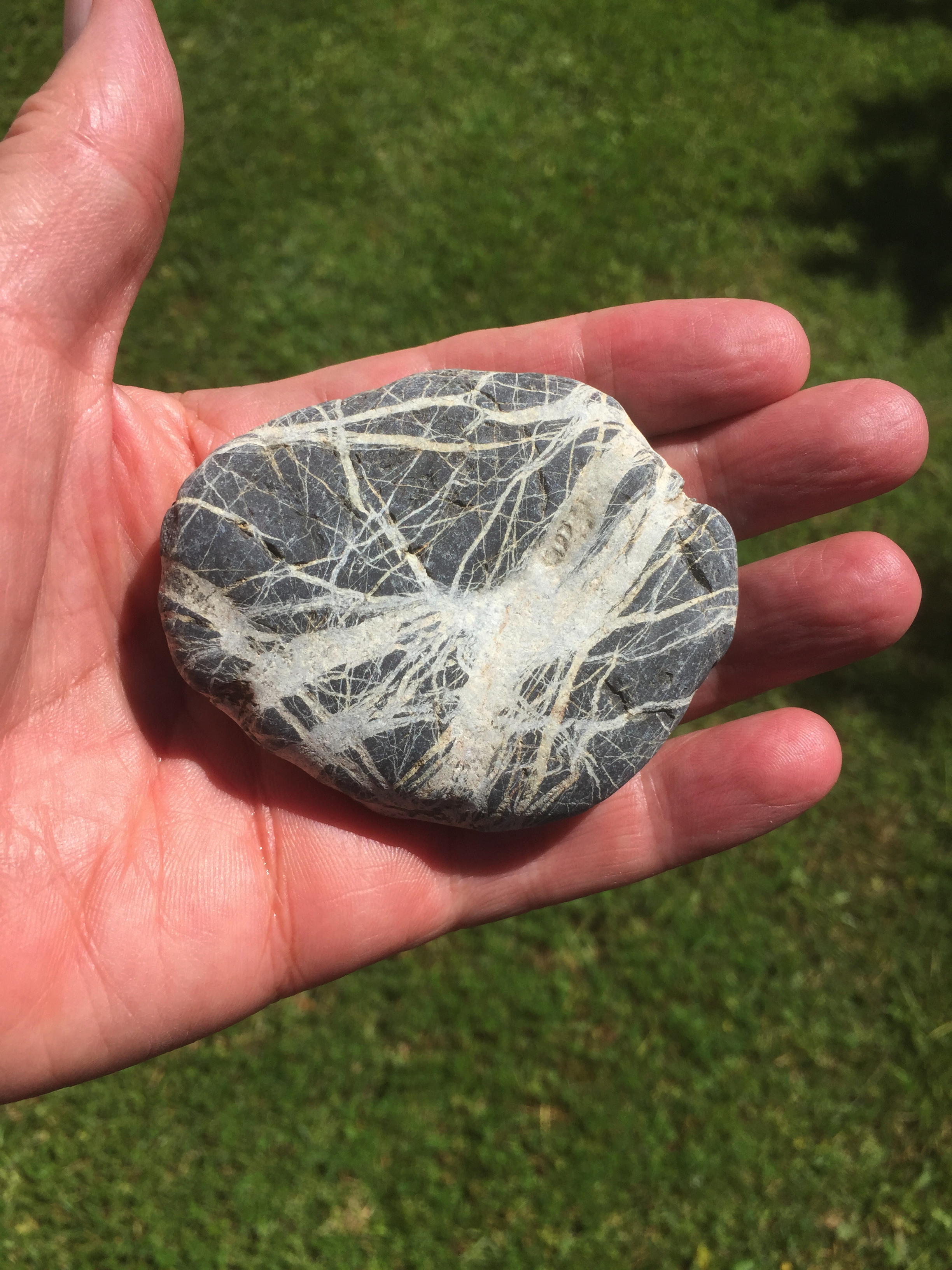
Sometimes you come across a stone that just demands to picked up, turned over, contemplated and brought home. That was the case with this one which I still have with me. I like it partly for its almost heart shaped form, but I like it most for the pattern you can see on it.

When I look at this, I see a number of lines of varying breadths and lengths, criss-crossing the surface and I think of each of them as a representation of a path, or a journey.

When I trained in Medicine, we were taught “how to take a history”. While I developed a bit of discomfort around the use of the verb “to take” there, I kept the concept of the history. In fact I’d tell people a large part of my work was about enabling people to tell their own personal history…..or their story. I used the idea of “story” a lot in my work. I’d ask people to tell me about their present experience in the light of past events and within the scope of their fears and hopes for the future. The traditional life story has a clear timeline, starting at birth and ending with the person’s death. Except, I quickly discovered, that in order to understand a person well I had to explore the family stories too….in other words to hear what happened before the patient was even born……as well as exploring the stories of many of the others (brothers, sisters, other relatives, friends and colleagues) whose stories intersected with the patient’s story.

So, I was quite surprised when I read a small article in “Philosophie” magazine about maps – they described how the French philosopher, Giles Deleuze said that our “subjectivity” was created from our movements, from our meetings, and from the relationships we had with other beings, other things, and other places. He said the map was an imprinting of all these movements, encounters and relationships which was laid down in our psyche, and so, when analysing ourselves we had to explore more as a geographer than as a historian.

Now, as you know, I’m a great “and not or” person, so I wouldn’t replace the work I did, or the way I make sense of my life with a geographical approach instead of an historical one, but I find that notion incredibly appealing.

What if, next time you are exploring your life, your experience, and your “self”, you make a map – a map of the journeys you’ve taken, the places you’ve gone, the experiences and encounters you had there, and the relationships with people, other living creatures, things and places which you’ve woven into your soul as you have lived?

What might that map look like?

It strikes me that adding this geographical approach to my life opens up new insights because it reveals and highlights the interactions, relationships, encounters and experiences of my life. The historical approach, of course, can reveal the characters, the events and the chronology of a life, but this shift of focus from my “story” to my “map” has, I think, loads of potential.

Read Full Post »

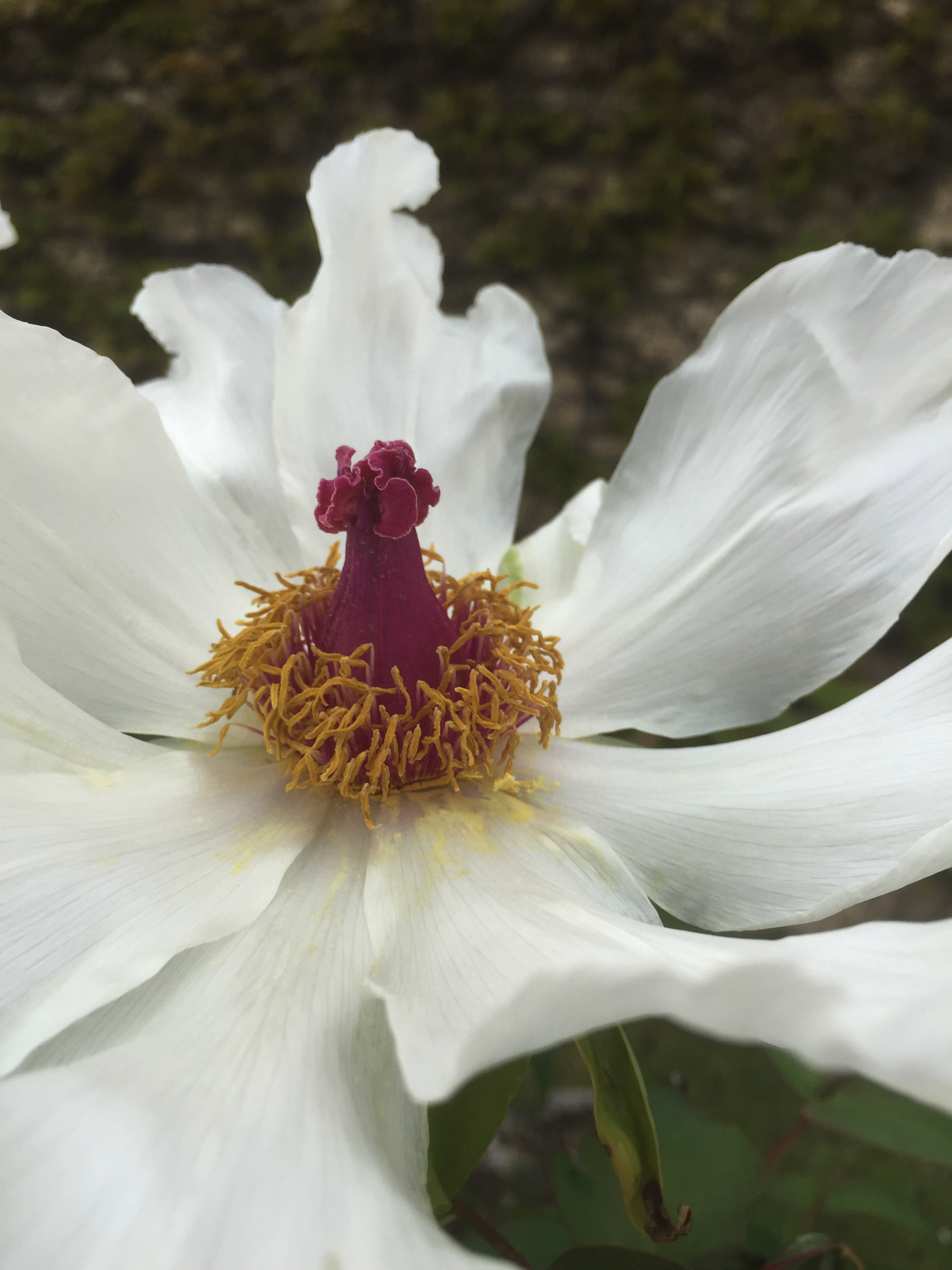
We have a tree paeony in the garden. It’s quite a tall plant now, and it produces a glorious flower once every year. I think in its best year it produced three flowers, but most years, it just produces one. That rarity makes the flower even more special. How amazing is it to wait a whole year, anticipating the swelling of a bud, seeing the curled petals emerge then unfurl in the sun to fully open up to the world for a few days. Look at the abundance of pollen. There’s so much it has spilled out all over the white petals. The flower lasts for only a few days, then the petals fall off and the paeony gets into creating and distributing fertilised seeds again. That transience also enhances the sense of awe I have when I see this beautiful flower.

In Japanese aesthetics transience ranks very highly. They celebrate the cherry blossom every year by reporting it on the nightly TV news and splashing photos across the front pages of the newspapers. I’ve seen cherry blossom maps on TV in Japan which are the equivalent of weather maps but instead of showing the weather track the progress of the cherry blossom across the country from the south to the north.

I remember going to see a “millennium plant” once in the Royal Botanic Gardens….one of those creatures which only produces flowers once every hundred years or so. I can’t remember the proper name of the plant, but I felt so privileged to witness its flowers in full bloom.

We have a similar response to eclipses, and to unusual conjunctions of planets or stars in the night sky, and to the appearance of comets. Their rarity makes them more special, and we then experience these events as more significant.

Awe and wonder. The more I experience awe and wonder, the higher I rank the quality of my life. In France there is this word, émerveillement, which is one of my most favourite French words. It means “wonder”, “amazement”, “awe”, “marvel”, and various other English words, because in English there isn’t a direct equivalent single word. “L’émerveillement du quotidien” is one of my most favourite French phrases. It means to find this wonder and awe in daily life.

Well, I guess it’s pretty easy to find wonder and awe in the face of the unusual, the long anticipated, the rare and the peculiar. But actively seeking amazement, awe and wonder in the everyday takes life to a new level. Will you find some every day if you are looking? My answer would be “probably”. I do. But even if you don’t having the intention, having the goal if you like, every day of seeking out what’s awesome and marvellous, will open your mind and your heart to the exactly those possibilities.

I think the conscious intention to seek “émerveillement” opens us up in the way this tree paeony flower has opened up in this photo I’m sharing with you today. And when we do that life becomes just a bit more special, just a bit more magical.

Try it for yourself.

Read Full Post »

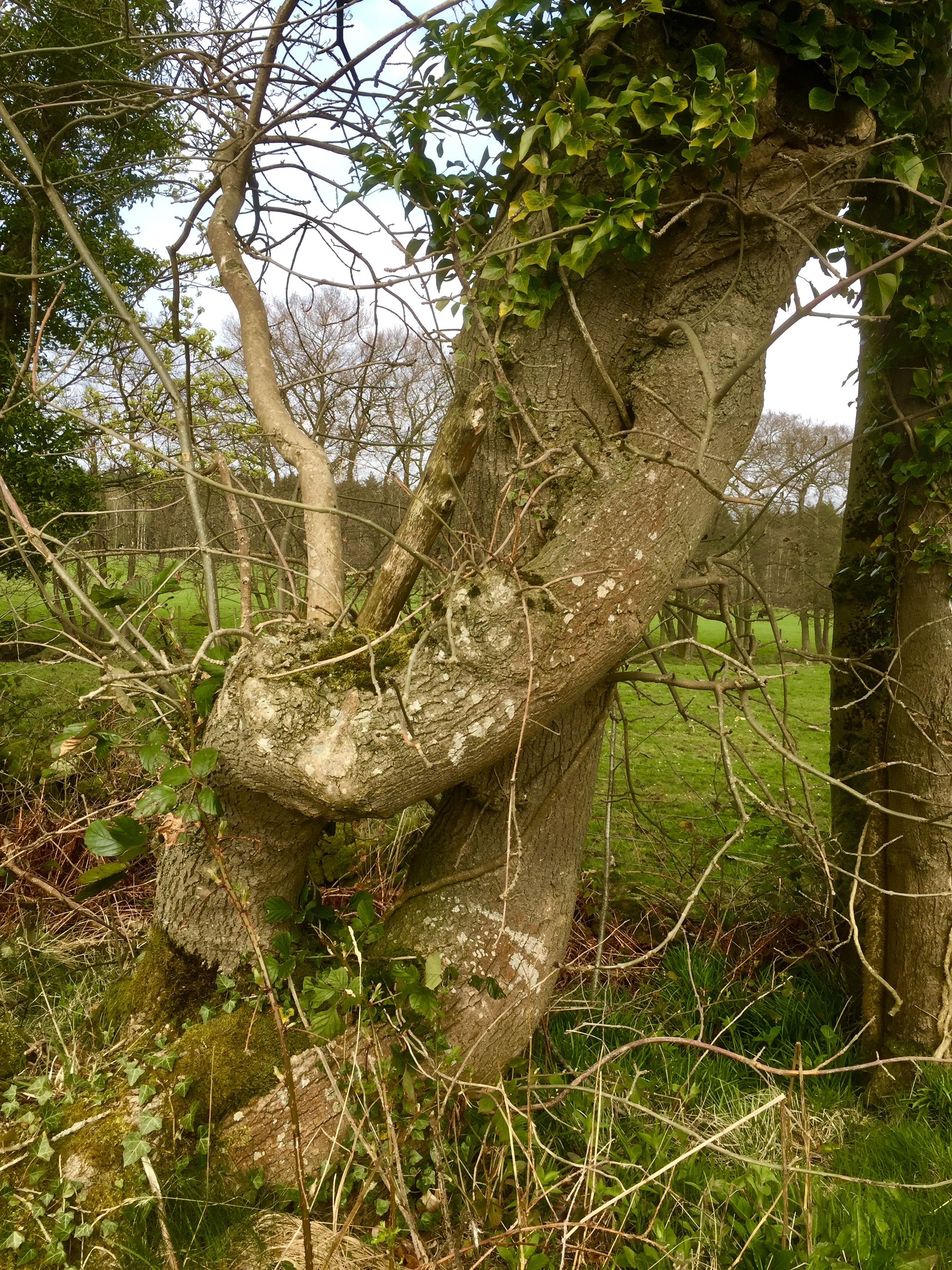
I reckon we pretty much expect trees to grow straight up, then branch a bit, then grow further, still straight up. But, actually, of course, this is seldom the case. Trees, even their main trunks often veer off this way and that, or bend in one direction, only to turn in a totally different one a few metres further on. I confess I don’t know what makes a tree take the twists and turns that it does.

Look at this one for example, not only has it swerved around an almost 90 degree angle but it seems to have entwined itself on the neighbouring tree. What do you think? These trees are lovers? They’ve entangled themselves in each other’s lives forever?

It looks that way to me.

So maybe some of the shape of this tree can be understood in relationship to the other tree. Now how often is that the case with we humans? Do we ever reveal our character in any other way than by responding to what we encounter and by acting in response to the others in our social world? Can you really understand anyone without understanding their place in a family, in a community, a society? Can you really understand anyone without seeing how they respond to others, without exploring the nature of their relationships? I don’t think so.

A belief in the uniqueness of every single human is at the core of my world view and my practice as a doctor. But I never attempt to understand a person solely in isolation. I can only get an idea of who they are by hearing the stories of their experiences and relationships, and by observing how they respond to others….including myself.

I’ve no doubt that all our interactions with others change us. I would not be who I am today without having been changed by all the doctor-patient relationships I experienced in my life. You could say patients made me who I am. Not only patients of course, you also have to take into account the others in my life, family, friends, colleagues, even those who challenged me, or disliked me.

Our lives are entangled.

That’s just how it is.

But we can make choices, and we choose both who and how. We can choose to pay attention to certain people, to care for them, to engage with them, to collaborate with them, or to compete with them. All of those choices weave our unique, personal web of inter-relationships. And that constantly evolving cloth forms the very tissue of our being…..or should I say of our “becoming”.

When I look at this photo today it leads me to contemplate the people in my life, those who are no longer present, those who I’m actively relating to, and those who played significant roles in fashioning my experiences and creating the memories I have. You could say, it leads me to consider the characters in my life story. Who they are, who they were, what experiences we had together and how we become entwined and entangled.

I am grateful to them all. We made each other who we are…..together.

Read Full Post »

Last time I went to the coast was about a month ago, and the time before that was probably about a year ago…..because of the restrictions on movements due to the pandemic. So, when I went I was struck by just how much had changed. There had obviously been high tides and storms and the whole area between the beach and the dunes which lead to the forest had been completely reshaped by nature. Gone were the wooden walkways, and gone were the slopes down to the sand, replaced with steep, cliff-like edges which were impossible to traverse.

This photo here is of a the coast much further south from here, but looking at it again today I was struck by the evident power and activity of the sea, and the shaping of the rock.

We tend to dismiss rock as something static, but you only need to have a long enough interval between visits to see more clearly just how much it changes. On this particular cliff you can so many layers. When we walk on the layer of soil over the rock we aren’t aware there are so many layers beneath us.

I like the image of the layers, partly because I think they act as a metaphor for our life experience. Beneath the surface of our conscious daily behaviour and character lie layer upon layer of memories, emotions, ideas, beliefs and values. The layers constantly shift on each other and every day we lay down new ones. Every layer has an effect on the others and the totality of them all shape and influence our perception, our world view and our responses to daily events.

This particular cliff seems to have the shape of a face. Do you see that? Our brains are great at seeing faces….we even see them where there aren’t any present! Like here! That’s partly because social connections, relationships and the ability to interpret the inner lives of others is so, so important to we humans.

Then I look at the sea, and it isn’t a quiet, passive sea. It’s full of energy. It’s constantly shaped by the winds, the tides and the energies carried across oceans in the water’s own version of layers. Maybe the layers in water don’t look like the ones in rock, but they are layers, all the same, each with their own ecosystems and each in constant interaction with the others.

The water and the rock are also in constant communication, also permanently changing and shaping each other, which is what life is like for all of us too. We are constantly being changed and shaped by our environments and by others, and, in turn we are constantly shaping them.

So, that brings me back to why I’m sharing these photos and these reflections. I hope to put something positive out into the world. I hope to send out energies, emotions, perceptions, and thoughts which will touch you, dear reader, and stir something creative, something delightful, in your life today.

Read Full Post »

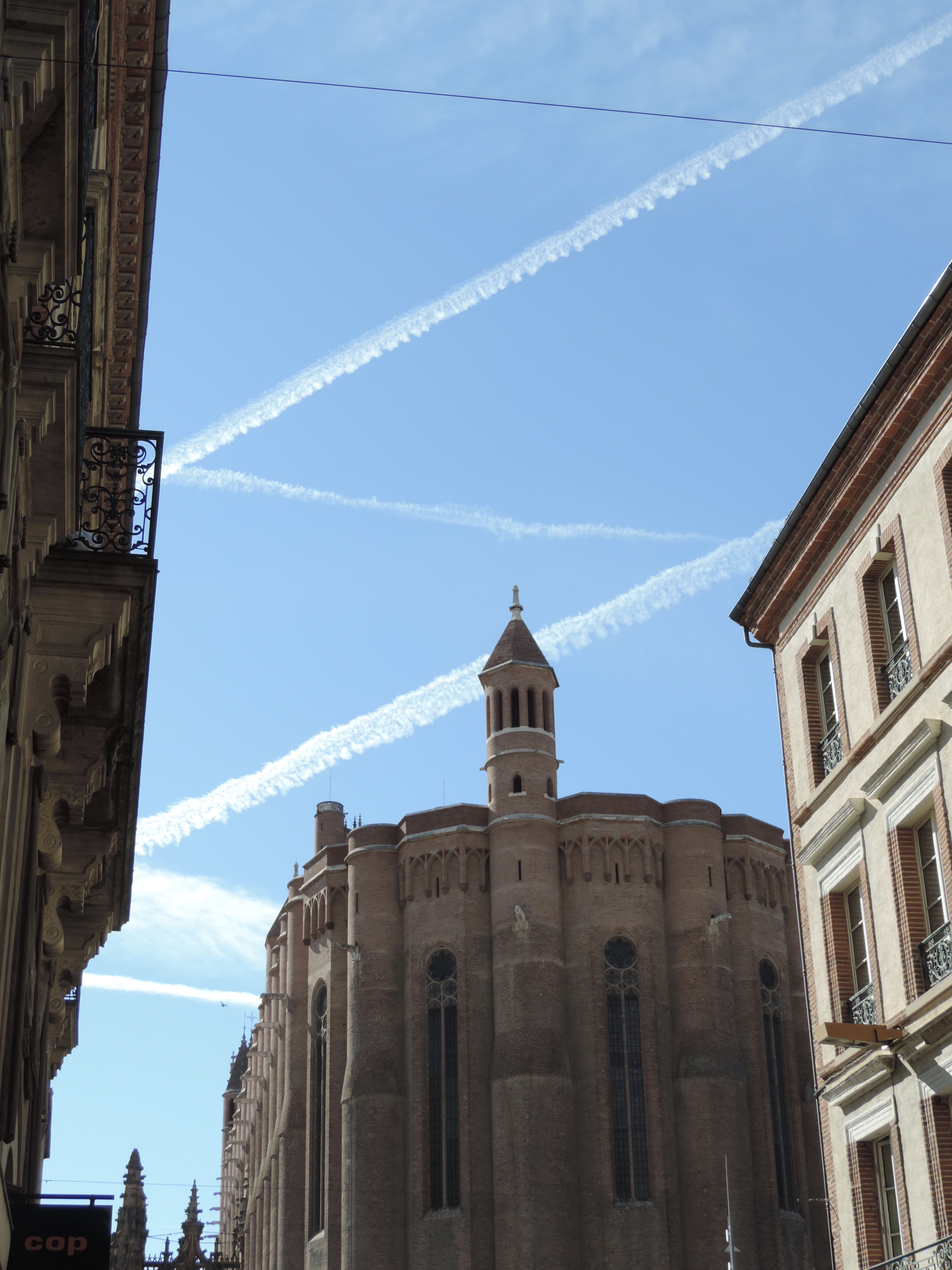
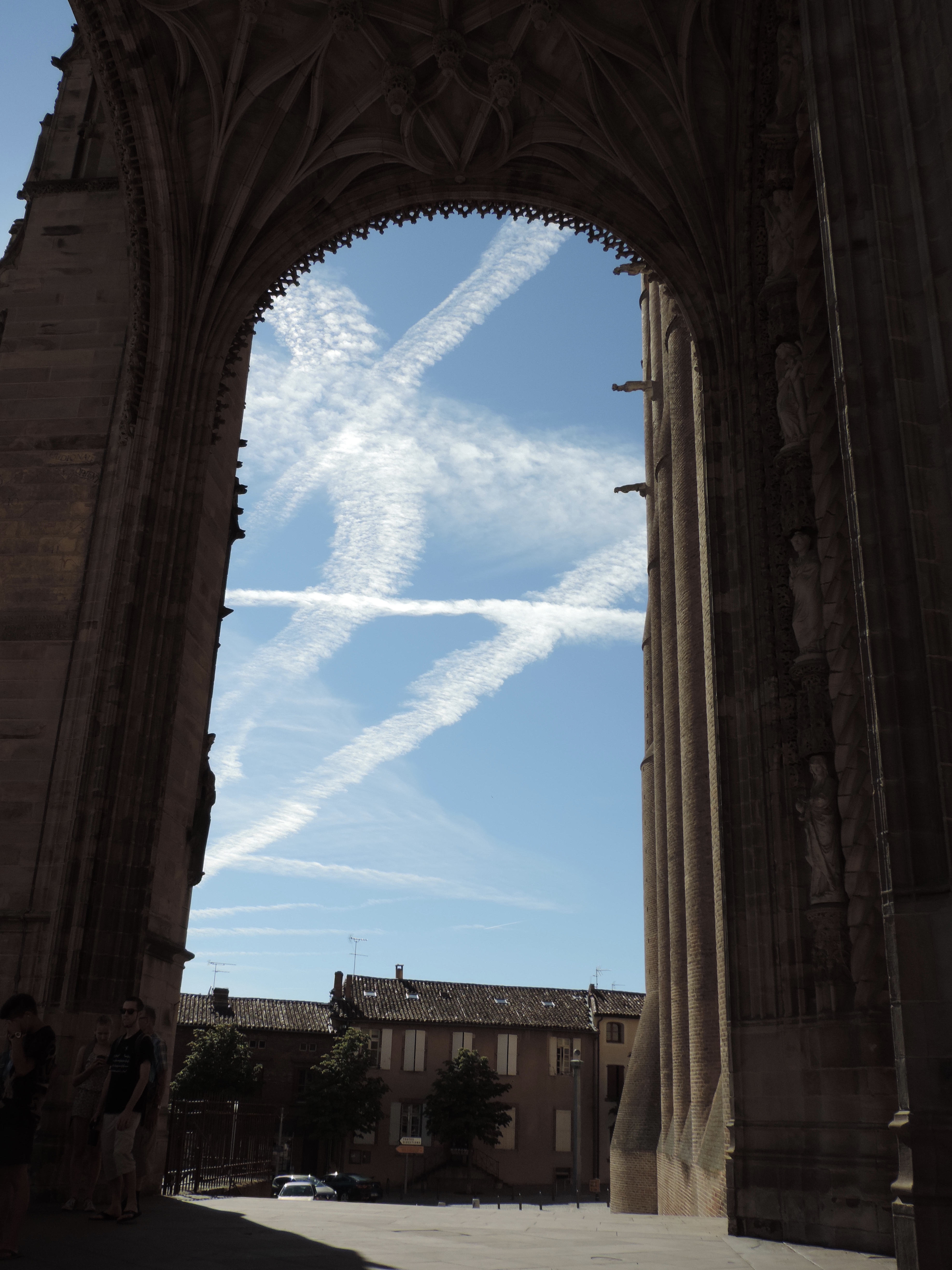
These two photos grabbed me today. I took them both in the city of Albi about three years ago ie pre-pandemic. Look at the number of plane trails criss-crossing the sky. There seems to be some kind of order to them in the first photo, then in the other one, take through a big arch at the front of the cathedral, the paths look pretty chaotic. I like them both. The both please me.
I live in South West France (further north than Albi) and the skies here were covered with these trails every single day. Now there are hardly any.
I think what makes these two photos especially appealing is that they aren’t just photos of trails on a blue sky. In each case, those trails are bordered or framed. One by tall buildings and the other by the tall arch.
We don’t like limits, do we? They feel like the impair our freedom. They feel like a constraint. They feel frustrating. But the truth is we live with limits all the time because we humans are mortal. We’re only here for a few brief years and we live within the boundaries set by our genes, by our upbringing, by the circumstances of our family and individual lives, by the laws of Nature, and by the politicians, economists policies and rules.
Limits in themselves aren’t bad things. Some of them are just the ones we have to learn. We can’t fly like Superman. We won’t live forever. Health isn’t infinite. We have talents in some areas and lack them in others. I just don’t think it is true to tell people they can be whatever they want to be. What is true, however, is that we can each be the fullest expression of our individual uniqueness. Nobody else will manage to achieve my uniqueness better than I can!
What’s the “serenity prayer” again?

God, grant me the serenity to accept the things I cannot change,
courage to change the things I can,
and wisdom to know the difference.

That’s the thing, isn’t it? The trick is to become aware of reality, instead of trying to force the world to comply with our desires and imaginings, then to understand how much we can indeed change, and to have the courage to do that.
Although I feel these limits keenly, I know I have to become more flexible. I know I have to adapt. I know I’m going to have to live differently….at least for the foreseeable future, and perhaps for the rest of my life. If I spend my time and effort raging against that, what kind of life will I have? A life of raging?
So, I’m looking at these photos again today, remembering the many trips I’ve made around the world, the places I’ve visited, the people I’ve met, and I’m beginning the process of thinking how I want to live now. Today, tomorrow, in the weeks, months and years ahead.
I’m also more aware now that we live collectively. I’m more aware of our inter-connectedness, and I’m determined to contribute what I can to making our shared world a better a place.
When I think of it that way, I find the frustrations ease, and an excitement rises.
How about you? How are you coping? How are you feeling? Does it open something up for you if you consider the limits this way?

Read Full Post »

When the Stranger says: ‘What is the meaning of this city?

Do you huddle close together because you love each other?’

What will you answer? ‘We all dwell together

to make money from each other’? or ‘This is a community’?

T S Eliot. Choruses from The Rock

Is there any greater social creature than the human being? Our offspring are more dependent on us, and for longer, than any other living organism. Babies just wouldn’t make it to adulthood without the intense and dedicated parenting and care they need. Even the very structure of the brain of those who are deprived of love and attention in the first few months of life is poorer than the brain of a child who has been cared for. They develop less brain cells and less connections between the cells they have.

Children learn much faster than adults, but we all learn through strong social bonds. We learn by mimicry, by copying others, by adopting the attitudes, values and behaviours of those around us.

Ideas and insights spread like wildfire around the world. So do emotions, whether they be fear and despair, or joy and celebration. Emotions are infectious.

Think of the experiences you’ve had in large groups – whether are a spectator/fan at a sporting event, or a member of an audience at a concert, or festival. The experience of collective excitement and joy is transcendental. It is deeply moving.

Solitary confinement is the cruellest, hardest form of punishment meted out on human beings.

We need to belong, we need to connect, we need to form relationships. We need to love and be loved.

Not one of us would last long without the contributions and actions of countless others.

So why do we “huddle close together” as Eliot’s Stranger asks? Maybe it’s not because we all love each other. We don’t. Maybe it’s not “to make money from each other”, although that seems a strong possibility!

I think it’s because we are born into communities, and we live our lives in them. Back in the depths of history people lived in tribes, then they settled with the development of agriculture, and created larger and larger communities in towns and cities. The last couple of hundred years has seen an acceleration in urbanisation and more of us now live in mega-cities than at any point before. Yet, cities don’t hold that well together, do they? They all seem to have wealthy, privileged areas, and vast tracts of poverty and deprivation.

In the last few decades it’s become easier and easier to communicate over distances and now we have “virtual communities” which don’t share geographical territory together but are often much more cohesive and close than the “physical communities” we find in cities.

This pandemic has forced us from the physical into the virtual. It’s driven us into asynchronous communications of messaging and emails. It’s connected us through connected screens, and forced us out of shared workplaces and shared physical spaces of entertainment and recreation.

We’ll start getting back together in our towns and streets soon.

But I still like Eliot’s challenges from the Stranger. I think it’s a great idea to reflect and ask ourselves – what kind of communities do we want to build and/or belong to? And why?

Read Full Post »

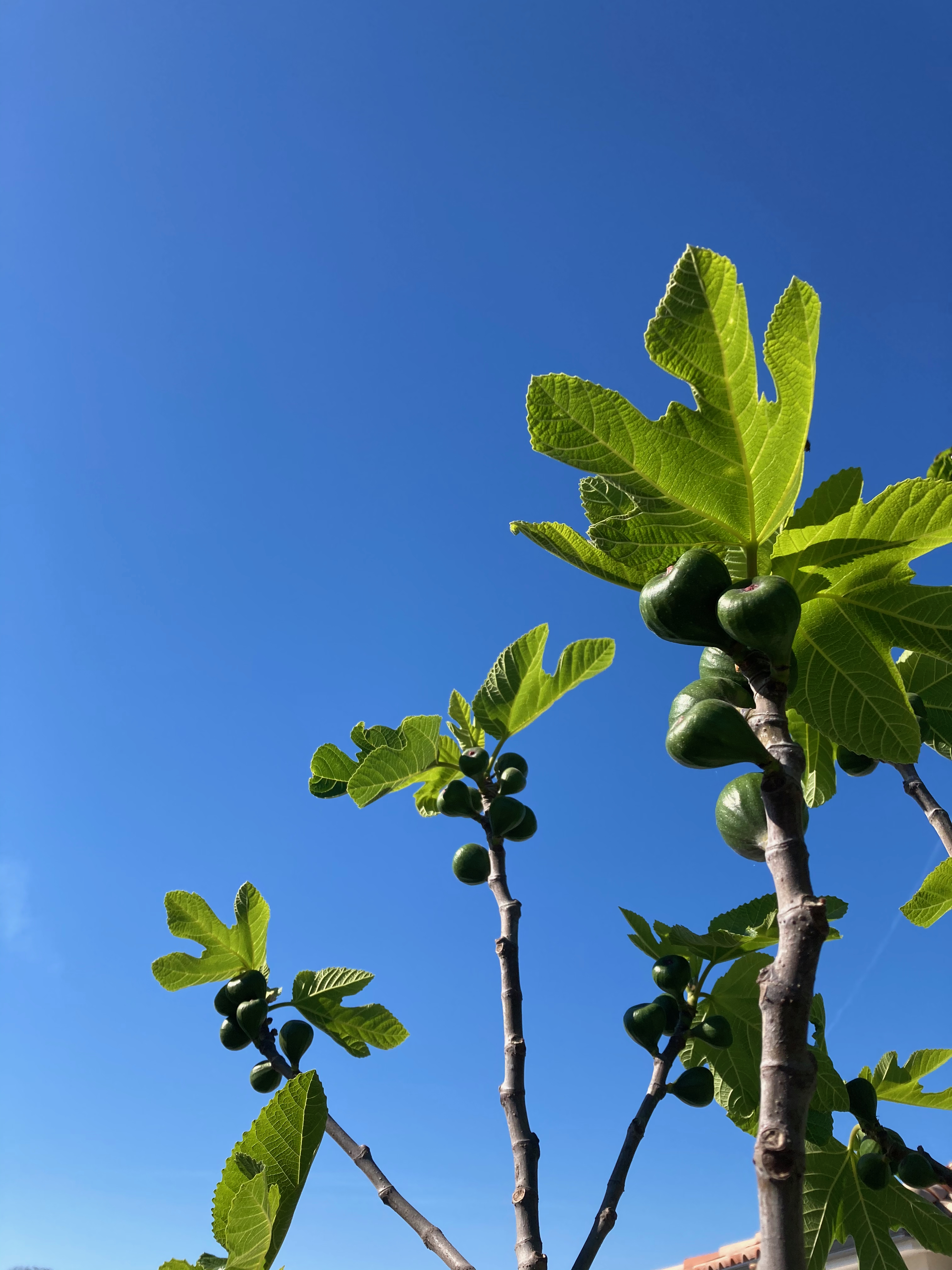
We planted a little fig tree a few years ago. It grew very quickly, didn’t produce much fruit the first year, produced more the next year, and here we are this year with what looks like is going to be bumper crop.

Abundance.

Maybe that’s not a word we think of on a daily basis, but maybe we should. For many reasons we are in the habit of living with a scarcity mindset. We feel we never have enough, we are always lacking something.

Whole economic systems and societies have been constructed on the foundation of the scarcity mindset. Already, even before this pandemic is over, you’ll read economists and politicians saying what we need now is to get people out to the shops and start buying. Buying what? Stuff. Doesn’t matter what. Just consume more, buy more, get more, have more.

And then what? All will be well?

Advertisers stir up discontent and desire, trying to convince us that unless we buy what they are selling our lives will be empty, devoid, incomplete. Trying to convince us every day that we lack…..

What do we lack?

Whatever they are selling.

But what if we lived with an abundance mindset instead? What if we realised that the universe had created the ideal conditions for Life to emerge? What if we realised that Planet Earth has evolved to allow Life to proliferate?

The issue isn’t one of scarcity. It’s one of uneven and unequal access. We could create societies where everyone had access to clean air, clean water, healthy food, comfortable homes, caring relationships, satisfying work.

Couldn’t we?

I just don’t believe the issue is scarcity. Because the universe didn’t just create the conditions for Life to emerge. It sustains Life. It develops Life. It proliferates Life.

I find that when I get in touch with an abundance mindset, I feel more gratitude. And gratitude is good for both mental and physical health. It’s one of the easiest and best things we can do – start a gratitude journal, and note down two or three things daily for which we feel grateful.

I find that when I get in touch with an abundance mindset, it opens my heart to others. It makes me more likely to be generous, kind and tolerant.

I find that when I get in touch with an abundance mindset it’s easier to enjoy the present moment, anxieties and fears start to settle, and creativity begins to flow.

I know that there is a lot of poverty, hunger, violence, cruelty and greed in this world. But I believe it can be different. Not least because we live in an abundant universe.

Is it hard to imagine a better world? Is it hard to believe we have the skills, the abilities, the knowledge and enough love in our hearts to make it happen? What do we need to make it happen? Intention, desire, determination and patience? If we bring those to bear with an abundance mindset, who knows what we could achieve?

Read Full Post »

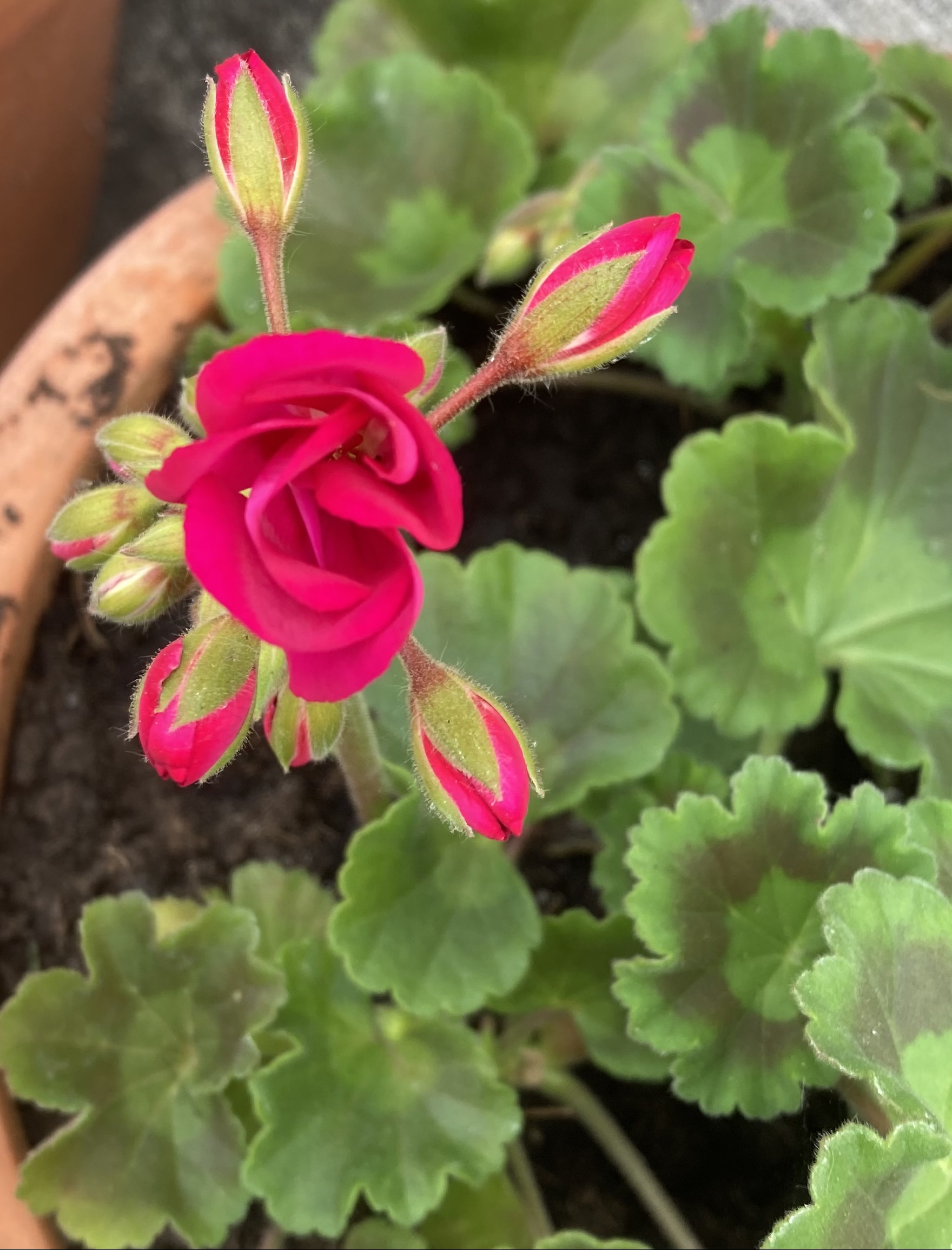
One of the most beautiful things to see in any garden is the unfurling of the petals of a flower. That phase where the bud opens up and the gorgeous coloured petals unfurl themselves captures an essence of Life for me.

I see this and I think “becoming not being” – you’ll have noticed that phrase at the top of my blog? I wrote that as a subtitle because it is the most fundamental lens through which I see and understand the world.

The difference between those two words is movement…a particular kind of movement…..movement of change from one state to another.

Everything is in the process of becoming. It’s easy to see that in living organisms. The trillions of cells which make up the human body are in constant process of birth, growth, maturing and dying. They are replaced at different rates according to their type (blood cells living much shorter lives than bone cells for example), but none of them stay the same for the whole lifetime of the person.

When we look at an old school photo we might recognise ourselves, but when we compare that to one taken a decade later, then another and another, we see very, very images of the same person. All might be photographs of me, but all look utterly different.

This process of growth and development is a key characteristic of health for me. When I was working as a doctor, it was important for me to have a positive definition of health. I wanted to to help people to become healthy, and healthy, I think, is a positive state in its own right, not just an absence of symptoms or disease.

When I used to look out of my window in Central Scotland I could see the mountains, and the distinct shape of Ben Led always caught my eye. It amazed me that every day it looked different. Of course, I wasn’t close enough, or around for long enough, to see the physical structure or the surface of the mountain change (though change it did, over millennia). But my daily experience of the mountain was created more than rocks and earth. It was created by the light, the clouds, the sun, and the seasons. And all that changed all the time.

Nothing is fixed.

That’s my point.

Nothing can be understood in isolation from its environment, from its network of connections and relationships, or from its unique history and potential.

Stories….narratives….are always in the process of becoming….because stories weave together the past, the present and some possible futures, into one beautiful cloth. A dynamic cloth, which is always unfurling, always becoming, not being.

This image stirs all of this for me. I love how the “becoming not being” lens makes every day so much more alive!

Read Full Post »

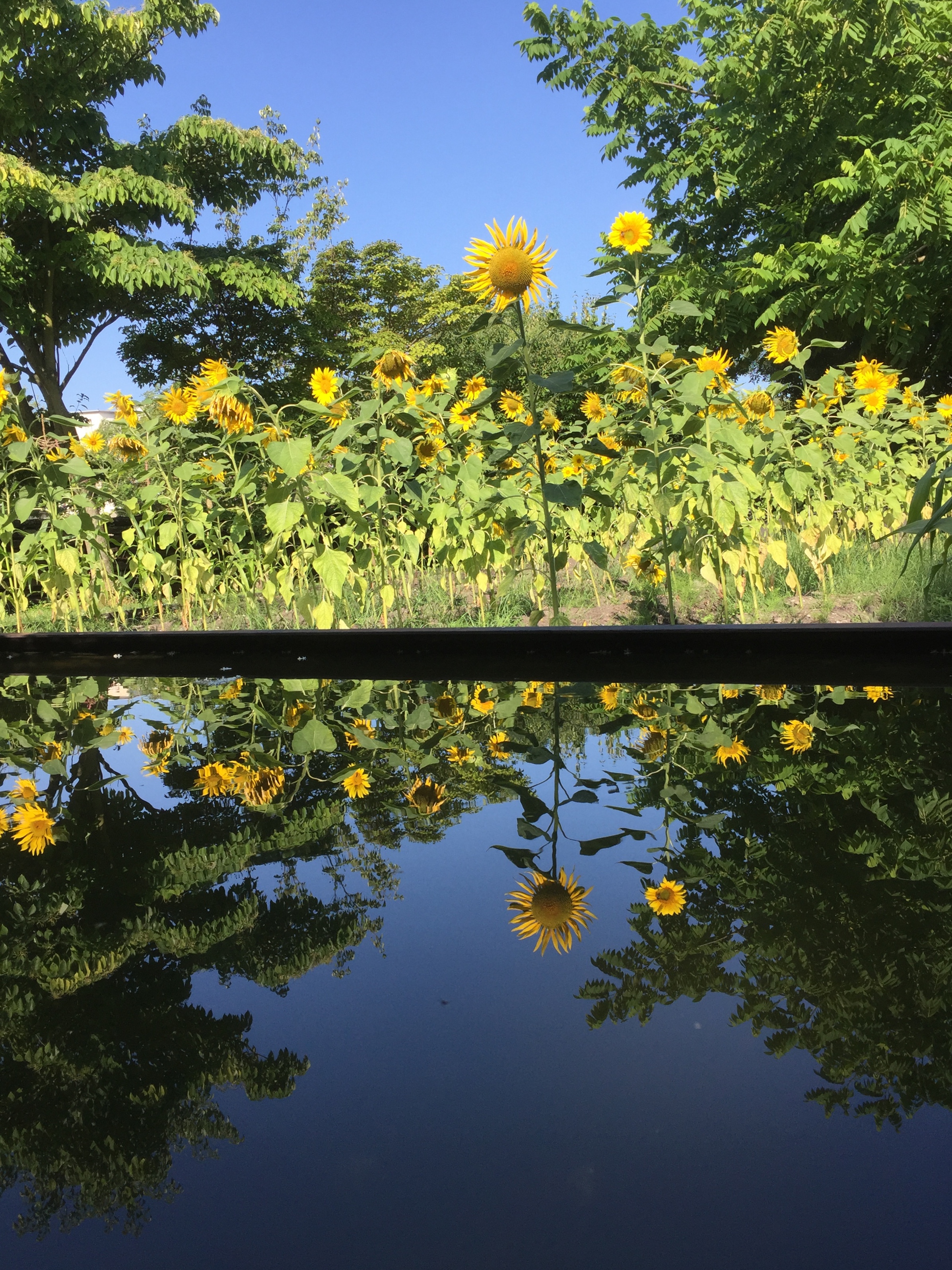
Why do we like reflections so much? I have many to choose from in my photo library. This is one of my favourites. I took two shots when I saw this. One in landscape format, and one in portrait. I find it hard to choose between them but the portrait one here has a little something extra which is that it reminds me of a playing card. You know how the Jack, Queen and King in a standard set of cards look the same whether they are “the right way up” or “upside down”? Well, this image reminds me of that effect.

I think reflections are something which “catch our attention”. When I see one, I’ll stop, take it in, probably take a photo. So it does two crucial things which make all the difference between drifting through life on autopilot, and living a conscious life.

When we notice something and pause to look more closely we’re activating, what Iain McGilchrist, in The Master and His Emissary, calls “the necessary distance”. This human capacity to make a space allows us to make responses, not just react. When we are on autopilot we are under the influence of our habits and reflexes. We find ourselves experiencing emotions or taking actions which we don’t understand. But when we pause, create the distance between cause and effect, between stimulus and reaction, then we open up the gates to choices, to imagination which can lead to novel solutions to problems or can stimulate us to create works of art and self-expression. This distance cuts the strings which others can deliberately pull, and allows us to re-assert our own values, our own beliefs and to tell our own, unique, individual stories.

There’s something else about this kind of reflection I’m sharing with you today. Half the image is upside down. When we look at the upside down half we are challenged to do two things – to make sense of what we are looking at, and to see the unreflected reality differently because we are engaging more actively. Is that clear? What I’m trying to say is that the reflection stops me, the upside down part of the image challenges me, and between them these two halves combine to make me pause, which gives me the opportunity to become more alert, more aware, and to enjoy the experience of the present moment more fully.

Finally, a photo like this just brings me joy because of the sheer beauty of the image. I hope it brings you some joy today, too.

Read Full Post »

« Newer Posts - Older Posts »