Feeds:
Posts
Comments

Archive for the ‘psychology’ Category

James Hollis, in “The Middle Passage”, says

The invitation is to shift gears for the next part of the journey, to move from outer acquisition to inner development

and

…it is this emphasis on inner, rather than outer truth, that distinguishes the second adulthood from the first.

Whilst I think these developmental shifts are a perpetual presence in our lives, there is no doubt that we are more aware of the transition phases at some times than we are at others, and this is where I am now, at the end of 2013, in one of those transitions. So, I’m enjoying shifting gears, and throwing myself more fully into the process of becoming.

Are you ready to accept the invitation to change gears? I wonder what inner truths we’ll discover?


Read Full Post »

fractal cloud


Ursula Le Guin, in the introduction to her selected short stories, “Where on Earth”, says

I had been writing realistic stories (bourgeois-USA-1948) because realism was what a serious writer was supposed to write under the rule of modernism, which had decreed that non-realistic fiction, if not mere kiddilit, was trash. I was a very serious young writer. I never had anything against realistic novels, and loved many of them. I am not theory-minded, and did not yet try to question or argue with this arbitrary impoverishment of literature. But I was soon aware that the ground it offered my particular talent was small and stony. I had to find my own way elsewhere. Orsinia was the way, lying between actuality, which was supposed to be the sole subject of fiction, and the limitless realms of the imagination.

How liberating! How inspiring! Of course, all fiction is a work of the imagination, whether you call it “realism” or not, and, actually, isn’t Life, which can only be lived from the perspective of the subject, also a work of imagination? Or at least, it’s a work of finding that path between “actuality” (the objective Real), and the “limitless realms of the imagination” (how we subjectively interpret and experience that Real)?

I also love her phrase “arbitrary impoverishment of literature”. Why indeed should we limit ourselves to “realism”, especially if that same realism ignores, or worse, denies, the inclusion of the imagination?

Finally, I like that phrase “the ground if offered my particular talent was small and stony”. Isn’t it true that for each of us, our particular talents flourish in quite different environments, or on quite different paths?

Read Full Post »

Hmmm…..haven’t come across this acronym before but its an exciting one!

It stands for Music Evoked Autobiographical Memories.

This interesting study used “No. 1 songs” to stimulate autobiographical memories in patients with brain injuries. They compared this method to the standard psychological “AMI” – Autobiographical Memory Interview. It’s a very small study of 5 patients and a very specific type of problem so the conclusion that music was more efficient than verbal prompts at eliciting autobiographical memory needs further study.

However, this whole idea has pricked my imagination. How often does a particular song or piece of music take you right back to a particular place, time or person in your life? How often do we share music with old friends or family to recreate our shared autobiographical memories?

One element of the study which is especially interesting is that most of the MEAMs were associated with positive emotions. When you think of our brain’s bias to negativity (Rick Hansen says our brains have velcro for negativity and teflon for positivity), and the common claim that we need a ratio of 3 – 5:1 positive to negative thoughts a day to experience flourishing, then surely music must be a GREAT tool for embedding positive, accessible experiences into our memories.

I know, there are lots of other reasons why music plays an important part in our lives, but, hey, MEAMs just sound such fun!


Read Full Post »

I don’t really like the term “mind body medicine” because it assumes a duality which is a delusion. That delusion isn’t just a problem which prevents real understanding of a patient’s suffering, it has wider and deeper effects…..as John Dewey (1859 – 1952) describes –

“The very problem of mind and body suggests division; I do not know of anything so disastrously affected by the habit of division as this particular theme. In its discussion are reflected the splitting off from each other of religion, morals and science; the divorce of philosophy from science and of both from the arts of conduct. The evils which we suffer in education, in religion, in the materialism of business and the aloofness of ‘intellectuals’ from life, in the whole separation of knowledge and practice — all testify to the necessity of seeing mind-body as an integral whole.”

I really like that phrase “habit of division” – a nicely different way of referring to reductionism and one which recalls Ian McGilchrist’s brilliant analysis of how we use our two cerebral hemispheres. Like all dualities, each part offers something unique, but either part, on its own, is just missing something important…….

bridge

Read Full Post »

Here’s an interesting piece of research for this time of year….it’s one of several publications which show that buying stuff isn’t that good for you!

If you’re a materialistic individual and life suddenly takes a wrong turn, you’re going to have a tougher time recovering from that setback than someone who is less materialistic

It’s pretty easy to find research which shows you materialistic values are stronger in people with low self-esteem, and that what people who have these values do when they are stressed is find materialistic coping strategies……you’ll have heard of “retail therapy”. This particular piece of research looks at how this world view and coping mechanism affects recovery from stressful events.

In times of stress, people often seek solace through shopping,” he said. “The idea here is that we need some form of a cultural-based coping mechanism, because the research suggests that there is actually a short-term fix with retail therapy. Soon after purchasing something, there is a reduction of anxiety. But it doesn’t last very long. It’s fleeting. Materialists seek that as one of their coping mechanisms. And Black Friday and the holiday shopping season play into that

I think this issue relates to more complex, underlying factors but it does highlight the issue of how values and how we see the world influences our coping strategies and that not all coping strategies are equal.

I’ve read a number of other works which make it clear that experiences are more powerful than things when looking at their impact on happiness. In other words, spending a good time with someone contributes more to the happiness of the participants than spending in a shop. Retail therapy just isn’t that therapeutic!

Read Full Post »

Robert Burns statue

David Suzuki writes (in “The Sacred Balance”)

Definition identifies, specifies and limits a thing, describes what it is and what it is not; it is the tool of our great classifying brain. Poetry, in contrast, is the tool of synthesis, of narrative. It struggles with boundaries in an effort to mean more, include more, to find the universal in the particular. It is the dance of words, creating more-than-meaning, reattaching the name, the thing, to everything around it.

Iain McGilchrist, in his astonishing, “The Master and His Emissary“, describes the brain’s left hemisphere approach to the world as analytical, naming, classifying, analysing. And he cites poetry as one of the great functions of the right hemisphere’s way of engaging with the world. The right hemisphere “struggles with boundaries”, sees the connections, synthesises, holistically discovers “the universal in the particular”.

Read Full Post »

clouds

Jung said

life is a luminous pause between two great mysteries

James Hollis, in “The Middle Passage” ends that book with

A great mysterious energy is embodied at conception, bides a while and finally goes away. Let us be gracious hosts, let us consciously assent to the luminous pause

Isn’t that wonderful?

Read Full Post »

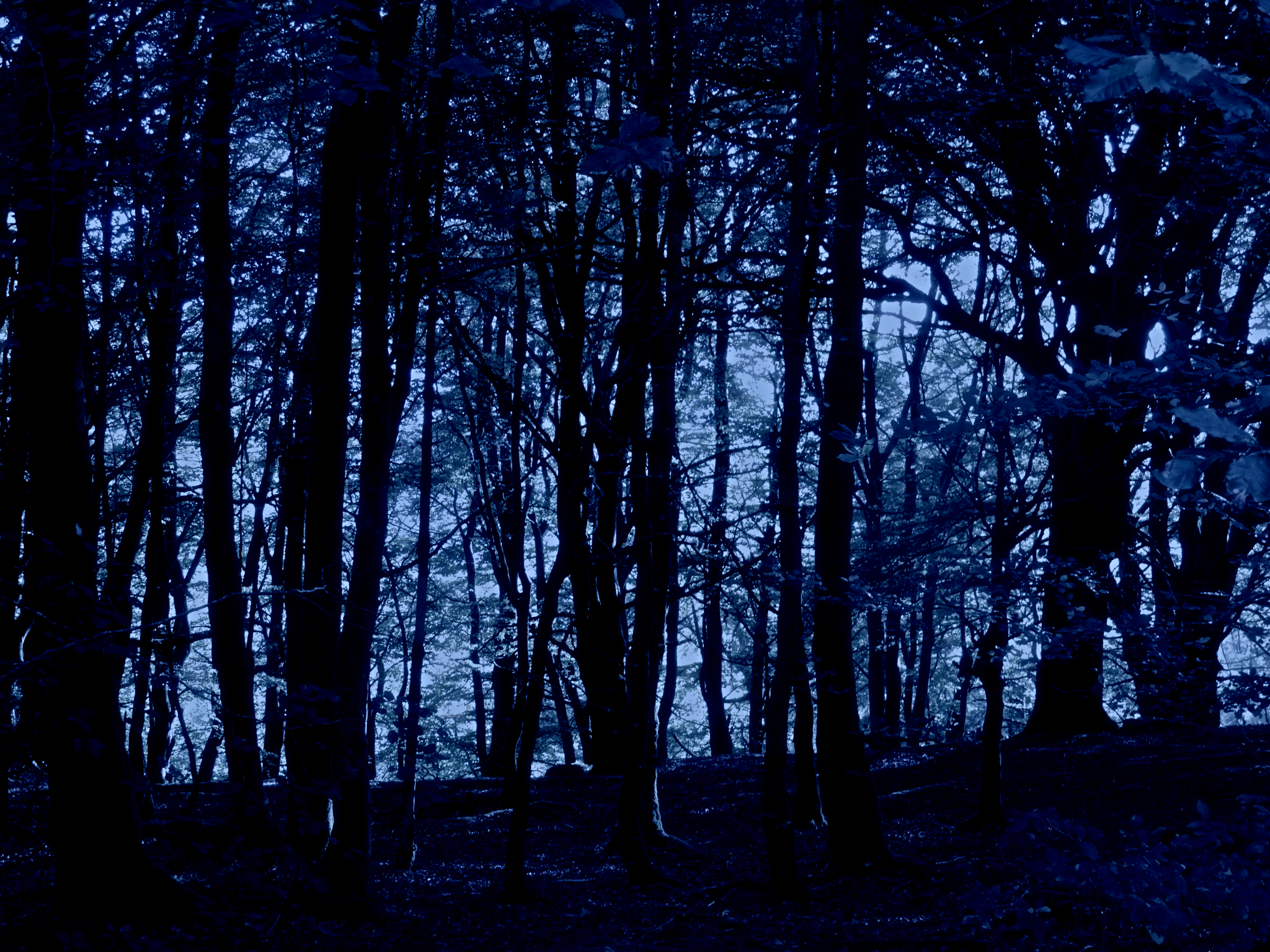
moonlit forest


James Hollis, in his “Creating a Life” says

As powerful as the will is, as urgent and insistent the élan vital, the imagination creates the world in which we live. The only question is: whose imagination, whose images, whose myth are we living in the course of that which we call our life?

I couldn’t agree more. Imagination is one of our most powerful qualities. We need imagination to see the possible. We need it so see the invisible. We need it to create. We need it to put ourselves into the shoes of others (and without that, where is compassion?). We need it for hope.

But imagination also allows us to fear – and how often is fear used now to control us?

So whose imagination are you living?


Read Full Post »

There are many ways in which writing can help us to understand ourselves better, heal wounds and gain a deeper insight into our lives. Here are three ways you might like to explore.

A. Regular continuous writing

Julia Cameron, in The Artists Way, describes an exercise she calls “Morning pages”. Essentially it involves writing every morning until you’ve filled three pages of an A4 notebook. With one additional, and crucial, rule – you can’t stop. Not for a moment. Your pen or pencil shouldn’t leave the paper, and your hand should never pause. This is not a thinking exercise. You aren’t to work out what you are going to write, and if you find yourself writing “I don’t know what I’m writing and I can’t stop moving the pencil so I’d better keep going and…..” – well, that’s OK. It’s a stream of consciousness thing.

People do different things with this kind of exercise. Some swear it only works if you do it as the very first thing you do on waking, others just in the mornings, some at other times of day. See what works best for you. What I have found is that the greatest benefit comes from it if you don’t read what you’ve written. At least not for a pre-fixed period of time – a week, 30 days, a month, three months. Again, see what works best for you.

Try it. I’m pretty sure it’ll surprise you

B. Gratitude journal

There are many traditions which recommend creating and regularly using a gratitude journal. Quite simply, it involves having a special notebook and every night, before you go to bed, taking a few moments to reflect on the day and recall something, just one thing, for which you are grateful. It might relate to something you saw or heard, something you ate, a conversation you had, a moment of being held…..it’s up to you. Then just note it down. You can write it in as much detail as you like. I find this has at least two benefits. It gives you an opportunity to re-experience a positive emotion (and that’s good for your heart, and good for your health). And it means you head off to bed with your most recent experience being a positive one.

C. The story you live by

In the inspiring “the stories we live by”, by Dan P McAdams, he describes a template to help you write out the story of your life, in a way which will enable you to clarify your own main themes and influences. I like this approach. I like the idea of the story of the self, especially as stories take us from the past, into the present and forward to the possible futures. Here’s a very brief synopsis of Dan’s template. It starts with writing down your chapter headings for the story of your life, then moves down through the seven further points of focus and reflection. You might want to try the whole thing, or you might like to pick and mix. As ever, see what works for you……

1. Chapters – titles and brief contents

2. Eight key events –

  1. Peak experience
  2. Nadir experience
  3. Turning point – significant change in understanding of yourself
  4. Earliest memory
  5. An important childhood memory
  6. An important adolescent memory
  7. An important adult memory
  8. Other important memory

3. Four significant people

4. Any heroes

5. Future script

6. Two areas of life where you are experiencing stress, conflict or challenge

7. Personal ideology

8. Life theme

Read Full Post »

seeds


Look at this wonderful cluster of seeds with the sun shining through…..simply bursting with potential…..this is me, today. This is you, today…..

simply bursting with potential

Which seeds will you water?

Reminds me of Thich Nhat Hahn’s teaching on watering the seeds…..

If you live in a couple, if you live in a family, if you live with another person or several persons, you may ask them to be careful. You may ask them to be aware of the seeds you have in your store consciousness. “Darling, I know that I have these negative seeds in me. And every time these seeds manifest, I make myself suffer and I make you suffer, also. So, please, if you love me, if you care for me, be careful not to water these seeds in me.” Among lovers, there should be such an agreement. That is the practice. “Darling, if you really love me, water the positive seeds in me, because I do have the seeds of understanding, of compassion, of forgiveness, of joy in me. Even if they are still small, if you know how to touch them in me every day, I become a much happier person and when I am happy, you don’t have to suffer as much.”


Read Full Post »

« Newer Posts - Older Posts »