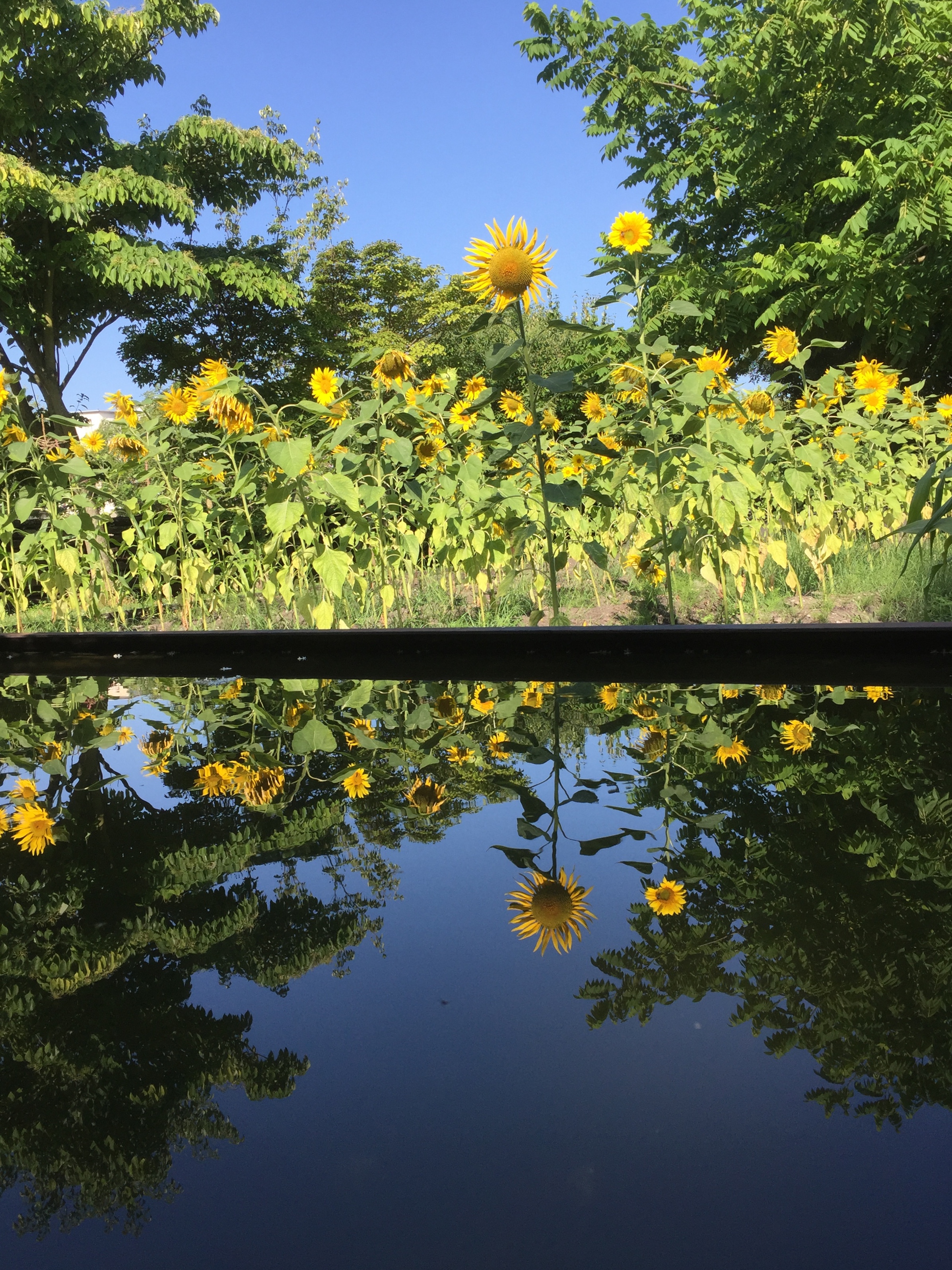
Why do we like reflections so much? I have many to choose from in my photo library. This is one of my favourites. I took two shots when I saw this. One in landscape format, and one in portrait. I find it hard to choose between them but the portrait one here has a little something extra which is that it reminds me of a playing card. You know how the Jack, Queen and King in a standard set of cards look the same whether they are “the right way up” or “upside down”? Well, this image reminds me of that effect.
I think reflections are something which “catch our attention”. When I see one, I’ll stop, take it in, probably take a photo. So it does two crucial things which make all the difference between drifting through life on autopilot, and living a conscious life.
When we notice something and pause to look more closely we’re activating, what Iain McGilchrist, in The Master and His Emissary, calls “the necessary distance”. This human capacity to make a space allows us to make responses, not just react. When we are on autopilot we are under the influence of our habits and reflexes. We find ourselves experiencing emotions or taking actions which we don’t understand. But when we pause, create the distance between cause and effect, between stimulus and reaction, then we open up the gates to choices, to imagination which can lead to novel solutions to problems or can stimulate us to create works of art and self-expression. This distance cuts the strings which others can deliberately pull, and allows us to re-assert our own values, our own beliefs and to tell our own, unique, individual stories.
There’s something else about this kind of reflection I’m sharing with you today. Half the image is upside down. When we look at the upside down half we are challenged to do two things – to make sense of what we are looking at, and to see the unreflected reality differently because we are engaging more actively. Is that clear? What I’m trying to say is that the reflection stops me, the upside down part of the image challenges me, and between them these two halves combine to make me pause, which gives me the opportunity to become more alert, more aware, and to enjoy the experience of the present moment more fully.
Finally, a photo like this just brings me joy because of the sheer beauty of the image. I hope it brings you some joy today, too.
In order to learn and grow we need two, apparently opposite, behaviours. We need to do, or discover something different, something new, or else we’d be stuck where we are. We need to move out of our comfort zones, and to try new things, if we want to develop.
But we learn nothing well, if we never repeat things. Have you ever tried to learn a new language, or acquire any new knowledge? It’s a lot easier if you go over the new words, new concepts or information, again and again. In fact, a key insight from learning theory is to re-present to you, at timed intervals, whatever it is you are trying to learn. There are many pieces of software which facilitate this, and language learning programmes use this technique as well. They present you the words you’ve just learned and test your learning. If you pass, the item is shown to you again after a longer interval than it is if you fail. So the items you haven’t quite learned yet are repeatedly presented to you over a short period until you’ve got them into you brain.
At university, studying Medicine, we had to acquire a lot of new knowledge. I remember being presented with three volumes of a manual of human anatomy before we started dissection class, and I asked the tutor, “Which bits of this do we need to learn?” His reply was “Which bits of a human being do you hope to treat once you qualify?” OK, I got it. It was ALL of it! Everything described in those three volumes! And that was just human anatomy.
Well, we all pretty quickly created our methods to learn and retain all these new facts, writing notes in notebooks, copying out the notes into other notebooks, turning some of the information into flashcards and shuffling those packs time and time again until we got them all right.
Our right cerebral hemisphere is great for seeking out and learning what’s new. It seems to have a real predilection for novelty. Our left hemisphere on the other prefers what it has already encountered. It loves to repeat again and again, rehearsing and refining everything which the right hemisphere presented to it. That’s why it’s good to use the whole brain – we need to encounter the new, and we need to repeat and revise to learn.
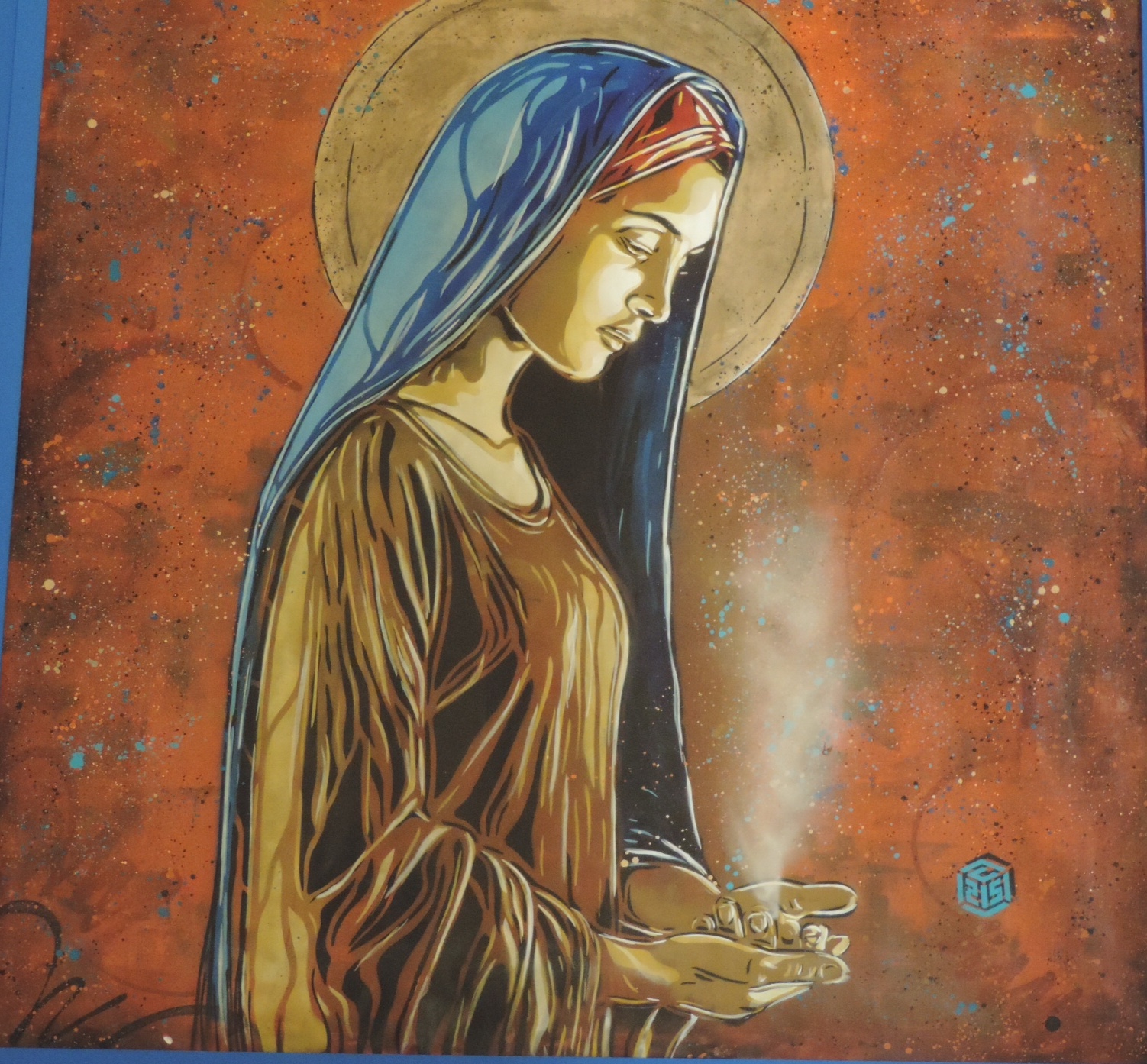
I came across these two works of art at very different times, and in very different places. One is on the gable end of a city centre building in the middle of Malmo, Sweden, and the other is in a church in the little town of Saint Savin, in France. Both are by contemporary street artists. I really like both of them.
One of the things that strikes me about these two image is the position of the woman’s hands. In the Swedish one her left hand loosely holds a rosary or some other religious object, whilst her right hand is upturned and a lit candle rests on her palm. In the French one both hands are held upturned and in their palms there is a puff of smoke, or a breath, perhaps a suggestion of a spirit. Both of these images are spiritual. The Swedish one has imagery from more than one religion, whilst the French one, which is in a church, is more Christian.
I’ve often looked at these images since I captured them and maybe they will bring you some peace, some joy, or some sense of connection to what’s greater than any of us if you spend some time with them, too. I love this upturned hand gesture. Try this for yourself. Clench your right hand into a fist. Squeeze tight, and ask yourself what you are feeling. Now open your hand and turn it, palm upwards, and ask yourself what you are feeling.
It’s different, isn’t it? The clenched fist feels tight and tense. There a sense of trying too hard to grasp something, of preparing to strike out and fight. The open handed gesture feels exactly that…..open. It feels light, comfortable and expansive.
The one feels ready to hold on, and the other feels ready to let go. The first puts us in the place of seizing or fighting, whilst the other opens our hearts and our minds to be ready to receive. I guess we need all of these functions in our life, but I have a strong feeling that the closed fist tends to go with closed hearts and closed minds. And I think what we all need now is to open our minds to new ways of living together, open our minds to new ways of organising our societies. I think we need to open our hearts to others, to feel the flows of love and care which course through this world……do they? Yes they do! We’ve seen plenty of examples during this pandemic.
Oh, yes, of course, there is still plenty grabbing and seizing going on, but what has struck me so much more this last year or so is the awareness that many of us now have of being interconnected. Hasn’t this tiny, invisible, little virus show us that? That we live on One Earth. That we are so deeply interconnected and interdependent that our barriers and boundaries count for little. If the open handed gesture goes with open minds and open hearts, which I believe it does, then this is what we need more.
We are opening our hearts to others, we are opening our minds to new ways of living, we are opening our hands to receive an awareness of the Spirit. In both these works of art, what the woman holds on her upturned hand is a symbol of Spirit, of Soul, of what is invisible, and what is greater than any of us.
Oh and one more thing…..it’s no coincidence that these are both images of women, perhaps even of the Divine Feminine. And isn’t that exactly what we are needing now? A shift away from the Masculine Dominant societies and cultures back towards what we humans once knew…..the importance of the Divine Feminine.
Sometimes I think I don’t say it clearly enough, so I’m focusing on it today.
Here’s my core belief – I believe love is the strongest force in the universe. I believe that love, in all its manifestations, underpins the creation of Life, the existence of human beings, and the constant movement towards ever greater complexity through the creation of an infinite network of connections.
I believe that it is love manifests as attraction. From the blending together of energies and universal forces, to the binding together of subatomic elements to create atoms, the building up of atoms into molecules, and molecules into complex materials which combine to create living cells, to the desire of cells to live together and form mutually beneficial bonds so creating multi-cellular creatures, right up to the way we humans are fundamentally social creatures where none of us could exist in utter isolation.
That deep intense love a parent feels for their new baby from the moment they set eyes on each other. Without that love, no bond would form, and without the bonds of selfless care, that baby would die. With an abundance of love and care that baby can more than survive, they can develop, grow and excel in becoming the unique individual that only they can be.
I believe it is love for other creatures, other forms of life, for this little planet, Earth, in which we all live, which stokes our curiosity, opens our hearts, moves us towards each other and to towards new discoveries. It’s our love of knowledge and understanding which underpins everything from science to philosophy. It’s our love of beauty which underpins so much creativity and art.
I believe it is our love for justice which drives us to demand it.
As I look around the world in these pandemic times, of course I see lots of evidence of cruelty, unfairness and neglect. But I also see an outpouring of love, of people reaching out to each other, of people caring for each other, of people risking their very lives for each other.
I am attracted to those who have loving hearts and minds. I am repelled by those who are driven by hate and cruelty. But here’s the strange thing, from my experience of a lifetime of work as a doctor working with patients one to one I believe that love has the potential to heal even the most hardened, most hurt, most closed off hearts and minds.
So, let me say it clearly once more.
I believe love is the strongest force in the universe.
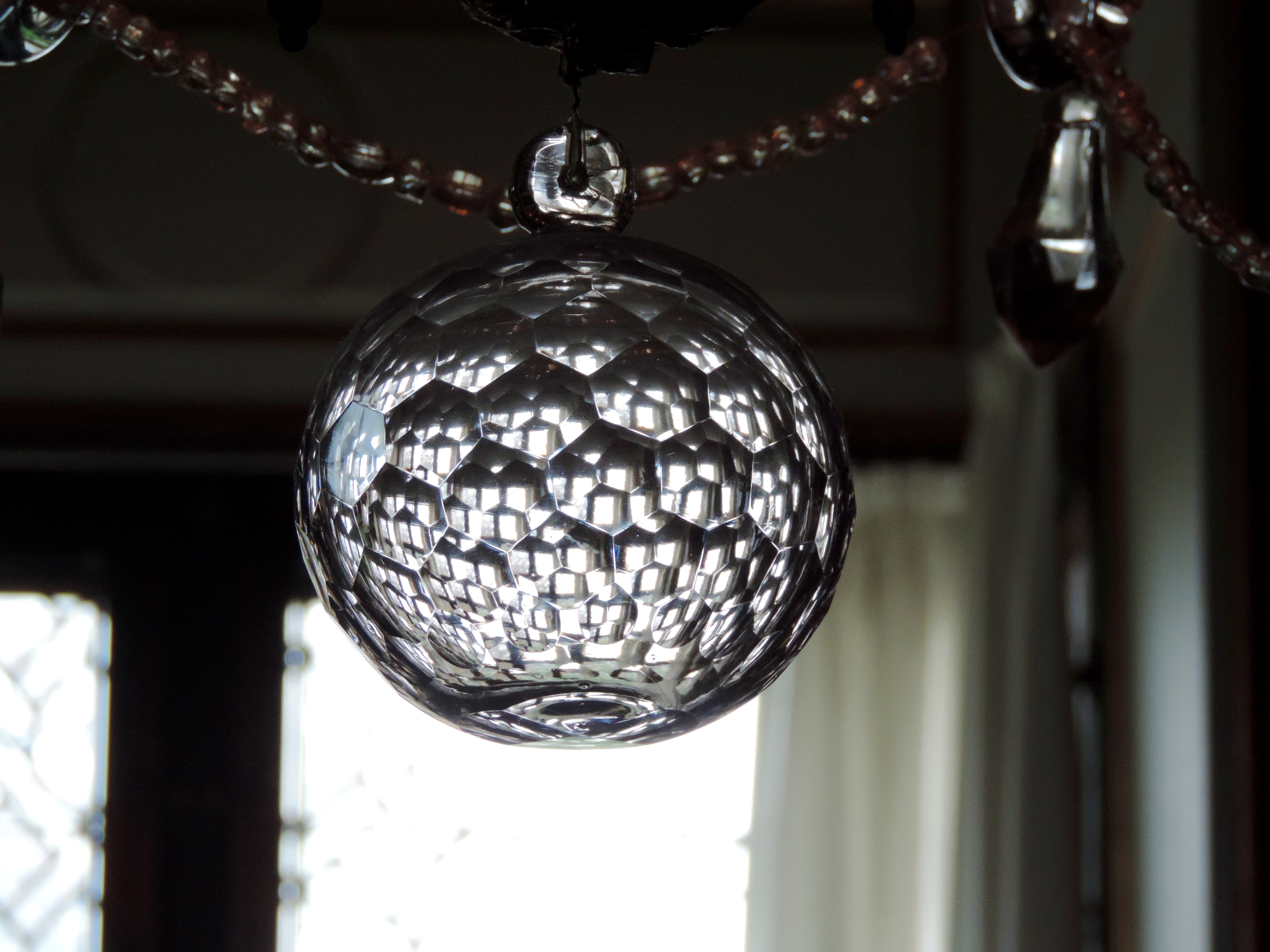
This cut crystal really hits the spot for me – firstly, I see it and I think it is really beautiful. The beauty of it delights me. Secondly, I’m amazed by it. The craftsmanship involved in imaging then fashioning a piece like this utterly astonishes me. Thirdly, it fascinates me. I gaze at it and look at the way the light travels through it. I see how each facet acts like a lens through which I can see the other facets, and how all the facets act as lenses on the window and the rest of the room.
I can have that blend of responses to many of the photos I have and I think that’s got a lot to do with my decisions about which to gather together into my “best photos” folder. Beauty, amazement, wonder and fascination. Altogether they bring me joy. And, without falling into the habit of ranking and creating hierarchies, I think joy is one of the most emotions we can have in our daily lives. Joy activates a whole set of physical and psychological changes in us. And, it just feels GOOD.
But this image does one more thing for me, the thing I really look for in my special collection of best of the best images – it inspires, stimulates thought, curiosity, wonder, and a potentially infinite web of threads of thought.
This idea of a multi-faceted interface gets me thinking about how we humans are like this. Whenever a patient told me their story, as we explored different themes, events and experiences, I’d see them shining like this – each aspect, each theme, each way of behaving, of experiencing, of engaging with the world glimmering like one of these facets. There are many selves within each of us. In 1977 the Scottish psychiatrist, Miller Mair, described a model of the “self” coining the term “community of self” – his idea was that none of us can be reduced to one simple set of characteristics, behaviours and qualities. Each of us exhibits a different self in different contexts – for example, there would be differences in how I was with patients, from how I was with my family, with colleagues and with friends. But that each of these selves were not separate, at least, if we were mentally healthy. Instead, they would all be integrated into one – into one community where they all interacted to give us the sensation of a unitary, or single, self. I liked that model. It opened up the possibilities of exploration of different aspects of a person, often contradictory or opposing aspects, while allowing every one them a place where they could be accepted.
This idea also makes me think of Indra’s Web – that beautiful idea of the universe consisting of an infinite be-jewelled web, where everything is connected, and every gleaming jewel reflects all the other jewels. I think that’s a great model for understanding the world in which we live.
It also makes me think of how we use multiple lenses through which to see, and understand, the world. In fact, if we reduce ourselves to seeing everything through just one small lens or window we find that we tumble into division and conflict with others who don’t share that single lens. But when we embrace the multiplicity of lenses through which we can see the world we can find points of connection with others.
That’s my final thought for today – not only are we all like this multifaceted cut crystal, but when one of our facets lights up in connection with one of someone else’s facets, then we don’t just make a connection, we can brighten each others lives.
I hope this lens, this shining small facet, here today, brightens your life today, and that you, too, feel the stirrings of joy, of wonder, of delight and of connection.
Every connection we make is a bond. Every relationship we have involves an interaction between ourselves and the other which changes both parties in the process. In Saint Exupery’s “The Little Prince” he describes two key relationships, one which the Prince has with a rose, and one with a fox. In both cases he makes the point that creating the relationship changes how they see each other. In that process they become unique to each other, they start to care about each other, and, in fact, they become responsible for each other.
An entirely new scientific story is emerging that challenges many of our Newtonian and Darwinian assumptions, including our most basic premise: the sense of things as separate entities in competition for survival. The latest evidence from quantum physics offers the extraordinary possibility that all of life exists in a dynamic relationship of co-operation. All matter exists in a vast quantum web of connection, and a living thing at its most elemental is an energy system involved in a constant transfer of information with its environment. The world essentially operates, not through the activity of individual things, but in the connection between them – in a sense, in the space between things.
We often have the tendency to think of a bond as a limitation, even something which imprisons us, as if each bond is a chain. But, I prefer to think of bonds as relationships, as connections which, at their best, are “integrative” – that is – mutually beneficial bonds between well differentiated parts. That, after all, is how the body works. Every single cell, every organ, every tissue and every system within the body exists in constant interaction with all the others. It functions because the basis of all these relationships is the creation of mutually beneficial bonds. And as I often think, what happens inside the body, happens outside the body. In other words, what we come to understand about the nature of reality by coming to understand ourselves helps us to understand the entirety of reality.
Carlo Rovelli, the nuclear physicist, advocates a relational understanding of the universe. He says
The world is not a collection of things, it is a collection of events. The difference between things and events is that things persist in time, events have a limited duration. A stone is a prototypical ‘thing’: we can ask ourselves where it will be tomorrow. The world is made up of networks of kisses, not stones.
Once we shift our awareness away from parts and separate entities towards relationships, connections, experiences and events, we find a whole other set of values develop.
I know, I know, you’re thinking, “didn’t I see that photograph yesterday?” Well, you did. And if you didn’t you can see it now if you scroll down to yesterday’s post “The edge of the Storm”.
I don’t know how this universe works, but one thing I do know is that synchronicities occur which are both attention-grabbing, and have the potential to take our understanding to a whole other level.
Let me start further back…….back in the 1960s when I was a child. One year we took a family holiday to the Isle of Man. We took the ferry from Scotland, a thrill in its own right, and as we sailed through the Bay of Ramsay, if my memory serves me well, we passed a boat with the name “Radio Caroline” emblazoned on the side. Radio Caroline was a “pirate radio station”. Which kids don’t want to be pirates? I loved Radio Caroline. I loved the fact that it was broadcasting outwith the control of the British state. Pirate radio stations were ones which didn’t have approved licences to broadcast, and even at that age I wasn’t fond of Establishment controls which tried to tell us we could only listen to the BBC. So it was a thrill to listen to Radio Caroline. You felt as if you were part of some underground movement. But as a radio station they just played fabulous music. I discovered several artists on Caroline who I don’t think I’d ever have found on mainstream radio.
Fast forward to last year…….I got a pair of pro AirPods for my birthday, and I just loved/love the quality of sound which they deliver. I found an app, called “sTREAMs” which made it easy to find radio stations which made full use of the surround sound capabilities of the pods. Guess what I found there? Radio Caroline! Hey, it’s still there! Of course, not a pirate station any more, and now with internet radio, is there any such thing as pirate radio any more? What a joy! But, a little browsing on the app took me to another station I’d never heard of before….Radio Paradise. Well, I’ve been listening to Radio Paradise A LOT in recent weeks. There are no ads, no “stuffing”, just one good, high quality, track after another. It delivers old favourites to me, so I know “I’m on their wavelength”, but it also serves up lots of artists I know nothing about. It’s like opening a door to a new treasure room of delights! I love it! Well, yesterday I used the photo of the storm, and I wrote the post “The Edge of the Storm”, contemplating about our reactions to looming storms, our ways of both reacting to, and responding to, threats. Then in the afternoon, I’m sitting out in the sunshine and I’m listening to Radio Paradise and on comes this song……..”Storm comin’ “ by the Wailin’ Jennys. I’d never heard this song before and I’d never heard of the band either but I was hooked! What a great song……..here’s a link to the youtube video so you can hear it.
Ok, that was surprise enough, and counts as a synchronicity for me, because how likely is it that I’d write a post about a storm coming in the morning, and here this song, apparently, “just by chance”, on a radio station in the afternoon? But listen to the lyrics. This isn’t a song about the fight/flight/freeze reactions I wrote about in the morning. It’s a song which says “don’t run for cover” – “let whatever is coming rain down on you” – in other words, have courage, and don’t hide, but go with the flow, lean into it, and continue to be present. Well, that’s a whole other level of response from the ones I wrote about in the morning, so listening to this deepened and broadened my understanding of how we might respond to the challenges and stresses which come our way.
Maybe in acute situations, freeze/flee/fright might be just what we need, but I suspect in the longer term we need to face whatever comes our way, allow ourselves to be present with it, and live the experience. There’s a teaching about acceptance in here. There’s a teaching about adaptation. There’s a teaching about immersing yourself in the full flow of LIFE.
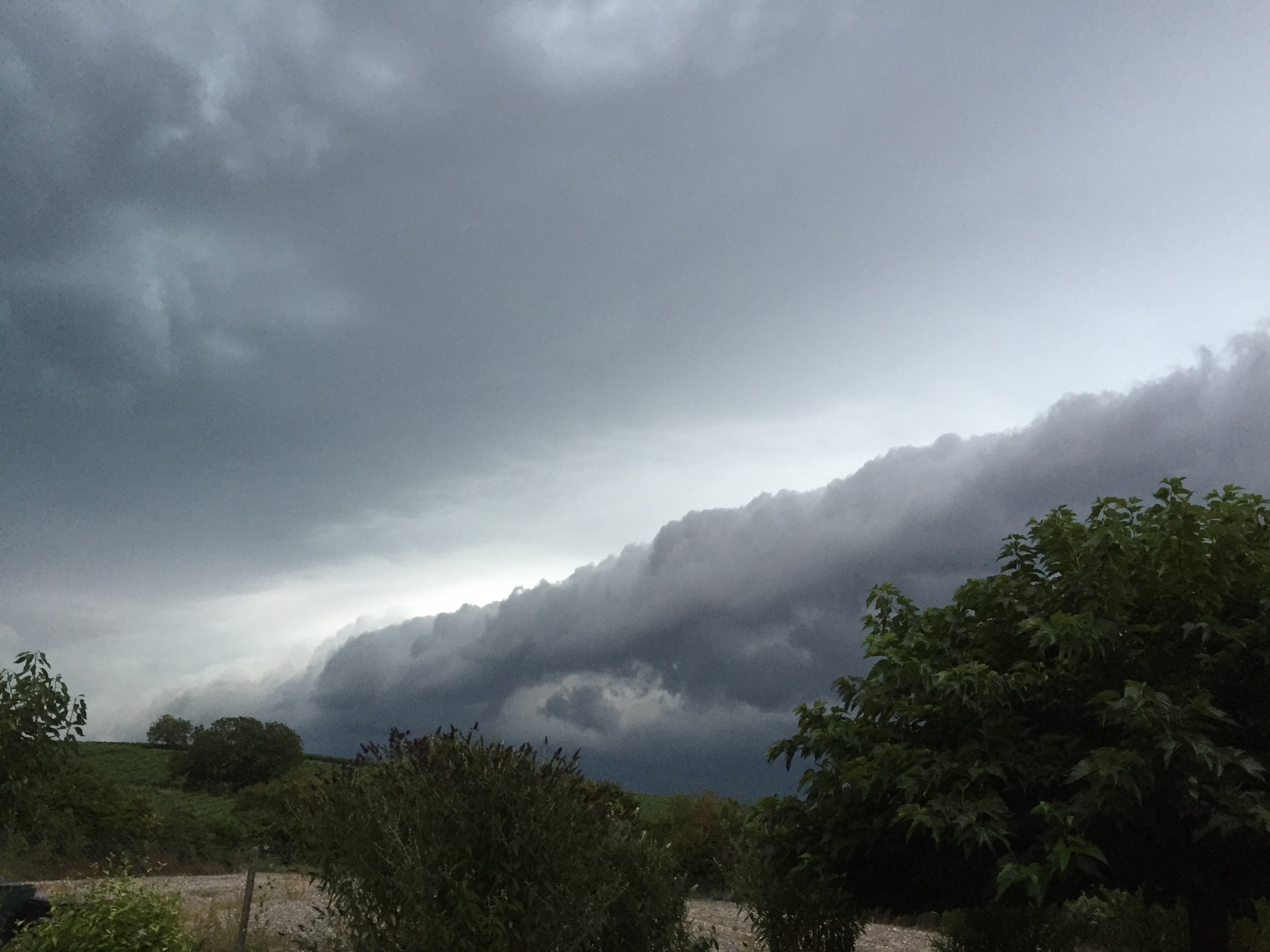
I took this photo five years ago, but I still find it one of the most dramatic images of a storm that I’ve ever taken. You can see the leading edge of the storm system making its way from the West, heading over the vineyards to where I live.
Of course, if you weren’t actually there you might think this is the back edge of the storm system which has passed over and is now receding. You’ll have to take it from me that that’s not what was happening.
What do we do when we see a storm coming? Brace ourselves? Batten down the hatches? Run away? Or just do nothing apart from feeling afraid?
I don’t mean only literally in the face of a weather event……I mean what do we do when we think we see the signs of a big challenge or problem looming over the horizon?
Our body’s nervous system sets off three possible responsible responses to threat – you’ve probably heard of the “fight or flight” response – well, in addition, there’s a “freeze” response. I always remember watching the news footage of the bombing of the Boston marathon. After the blast the first thing you hear is silence and then quickly after that screaming and shouting as people run in all directions. That first silence really grabbed me. That’s the freeze response. Part of our defence system (the parasympathetic nervous system) kicks in at that moment and basically shuts down a lot of activity so we can really pay attention, really become aware, then after that the adrenaline/sympathetic nervous system response is activated and we are set to fight or flee.
Of course our range of reactions and behaviours is incredibly varied and individual, but we all share these basic reactions as the information and energy flows through us.
What I’ve just described there is the “acute” response. It’s short term, time limited, often very brief and kicks in when there is a clear and imminent danger. But on a day to day basis our whole system responds to our thoughts, to the words and behaviours of others, and to both memories and imaginings with aspects of these systems playing a part in creating “chronic stress”. That chronic stress is pretty damaging, impairing our immune systems, creating chronic inflammation in our bodies, and undermining our mental well-being.
What can we do about it?
I always start with awareness. When I worked as a doctor, usually my first priority was to understand – to figure out what was going on, to make a diagnosis, to assess the situation. That usually involved an element of analysis, but you can’t analyse anything until you are aware of it, so the first response is to be present. In becoming present, you become aware. In fact, being present is a powerful therapeutic behaviour. It’s good for the patient and it’s good for the doctor, too.
I think the next step involves responding with intention. It’s one thing to become aware, and even to figure out what’s happening, but it doesn’t amount to much without an intention which shapes your next thoughts, ideas and behaviours. In Medicine, that intention is to care. If you care, if you give a damn, if you activate love and kindness, then the healing responses will fall into place.
I reckon it’s the same with life. I think a good place to start is with awareness and intention. If we aren’t present, if we aren’t aware, we’re on autopilot, “zombie” mode, and we are open to the manipulation of others, and to becoming stuck in habits created by rumination and pain. But if we do wake up, we have a chance to recognise what’s happening, to stand back a little, by taking a pause, or a few deep breaths, and then make a choice…..make a choice formed by our intentions.
What if our intentions are kindness, love, and understanding? What if our intentions are to feel joy, wonder, and connection? What if our intentions are to build “mutually beneficial bonds”? What if our intentions are what the French call “bienveillance”…….well-meaning, well-wishing?
What do you think the experience of seeing a looming storm would be like then?
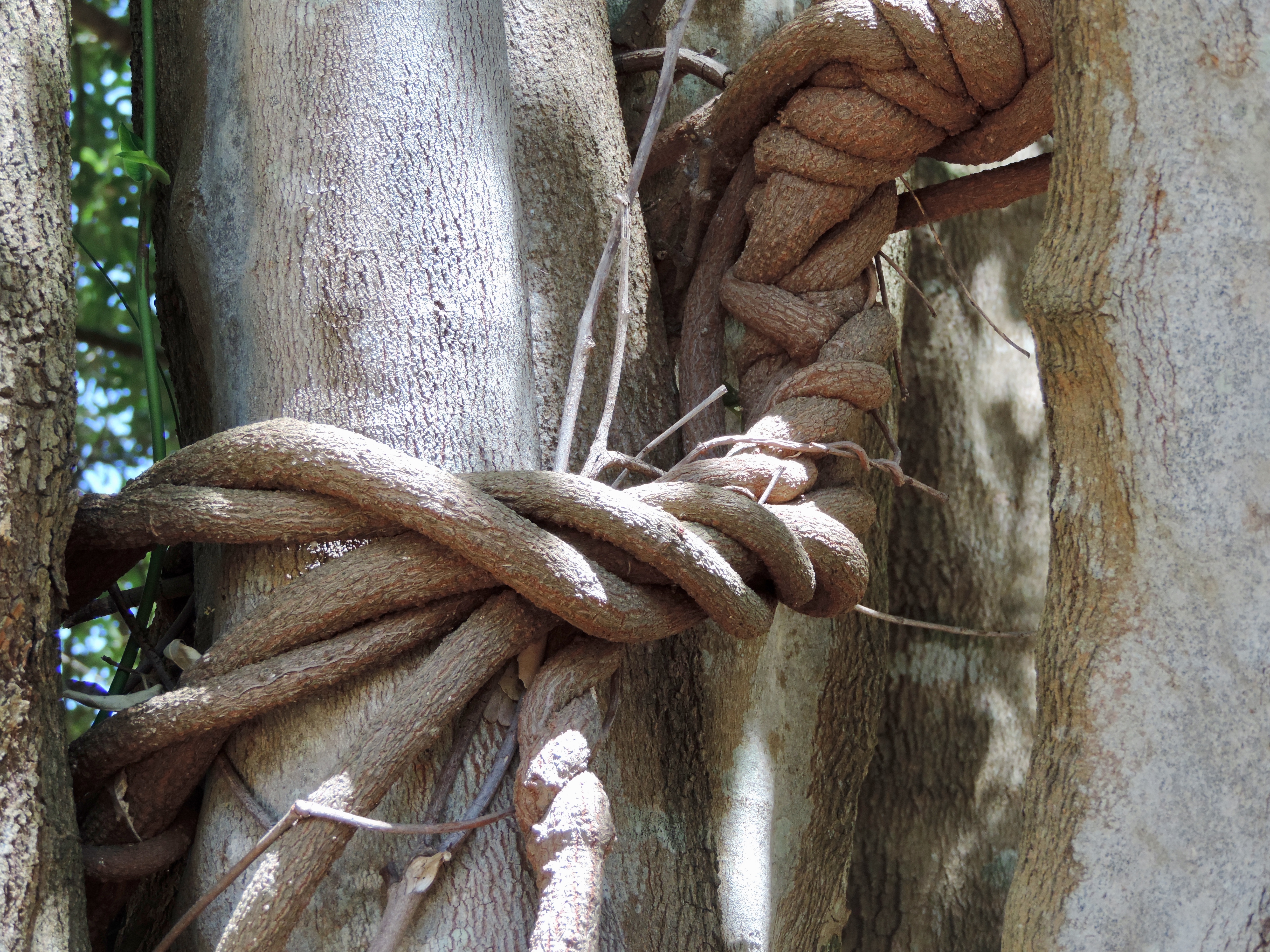
The pine forest at the “Côte Sauvage” in the Charente Maritime, the “Foret des Cedres” in Provence, the deciduous forest around the Bracklinn Falls in Central Scotland, the maple forests around Kyoto……these are some of my most memorable forests. They delight me.
It’s many years since I learned about the Japanese practice of “forest bathing” – which simply means spending some time in a forest – well, actually, not so much just passing some time there, but immersing yourself in it, really engaging with it, listening to the sounds of birds calling, of the branches swaying in the wind, breathing deep the scents of pine, cedar, and other trees, watching the play of sunlight through the leaves as together they create whole performances of light and shade, of shape and shadow – you get the idea.
We have learned a lot about forest bathing in recent years. We’ve learned of the benefits it brings to everything from a sense of well-being to a boost in some of the chemicals and cells involved in our immune system, to a calming of the harmful chronic inflammatory activities inside our bodies which occur as a result of stress. It’s just GOOD for you! And that’s a sweet spot for me – finding what is BOTH good for me and just utterly enjoyable – health boosting and happiness boosting – result!
We’ve also learned a lot about the lives of trees and forests in recent years. We’ve learned that trees don’t live in isolation, that they are in constant communication with each other, sending out warnings when they are attacked or vulnerable, sharing nutrients, and supporting each other. They do this both by sending out chemicals through the air, and by an astonishingly complex network of root systems intertwined with microfibres of fungi creating what has been termed “the wood wide web”.
Here are some of the main books I’ve read which have taught me what I know about how trees and forest demonstrate inter-dependency, how they communicate with each other, and how they behave as one complex adaptive organism. “The Hidden Life of Trees“, by Peter Wohlleben, subtitled, “What they feel, how they communicate: discoveries from a secret world”; “Gossip from the Forest” by Sara Maitland, subtitled, “The tangled roots of our forests and fairytales”; “Braiding Sweetgrass” by Robin Wall Kimmerer, which blends “indigenous wisdom” with “science and teachings of plants”; and, the novel, “Overstory“, by Richard Powers. You can probably add your own favourites to that list, but if this is something you want to explore, you could do worse than start with any of those books.
This fairly new knowledge of forests is part of a much wider trend in science – the attempt to understand connections. I think this is a radical, and much needed, shift. The reductionist science of understanding parts has led to an explosion of knowledge, but too often, we fail to really understand the real world because we fail to see that every single part only exists as an embedded, inextricable element of the whole. The fabulous improvement in that approach mirrors a shift in the use of the left hemisphere of the brain which engages with the world by separating it into parts to analyse and categorise, towards the use of the right hemisphere with engages with the world as a whole, and focuses our attention on connections and relationships.
We are now looking much more at whole environments, whole webs of inter-relationships. We see such networks everywhere, from the activity of micro-organisms in our guts (the “microbiome”), to the “neural networks” within the brain, the inter-relationships of species within ecological “niches”, or “biomes”, and in world wide cycles of movement of water, gases, and other molecules.
One concept which is useful in all these areas is the one of the “connectome” – this is the activity of mapping out the interactions and relationships within whatever we are studying. In terms of the brain it can be helpful to imagine that every single thought has the “neural correlate” of a “connectome” of nerve cells. Apparently we have so many neurones in our brain, and each of them is so massively interconnected, that if you were to consider all the potential permutations of activity of little networks within the greater network, then that number would be greater than the number of atoms in the universe! Well, I don’t know how anyone works out something like that, but suffice it to say, the potential for our imagination, for our cognition, for our memory, for our ability to visualise, conceptualise, analyse, synthesise and create, is pretty damn close to infinite!
There’s something else interesting about all these “connectomes” – they are related to each other. Each one is nested into several others, and each one of them sets up resonances and harmonies with other ones. Perhaps that partly explains how we feel what other people feel, how we come to think what other people think, and, maybe even how our inner environments are affected by our external ones.
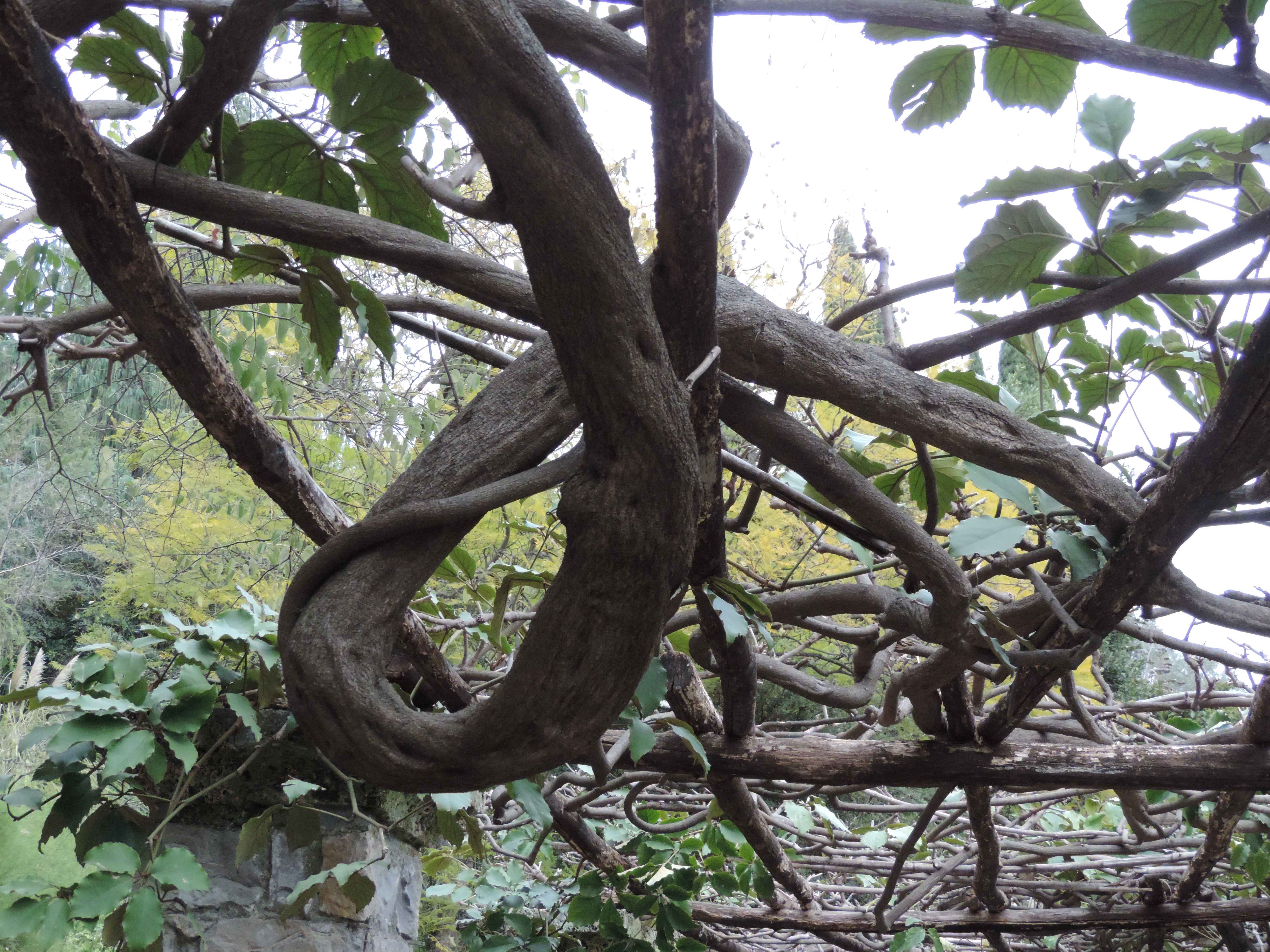
This isn’t the only plant I’ve seen which twists and turns a lot, but perhaps this is one of the most striking. I always find myself wondering two things when I look at an image like this one.
The first thing is just how amazingly complex the structure is. When this plant started as a single seed, nobody could have predicted the shape it would achieve today. Even more, at no point in this plant’s life could anyone predict with accuracy the detail of the directions it would take, the exact places where it would turn to the left, the right, head up, or head down. Its shape size and uniqueness at every point are unpredictable in the details. And that’s the same for us in our own lives.
Every individual patient who ever consulted with me had a unique, personal story to tell. Nobody could have predicted the detail of their story from the day of their birth. That truth remains the case day after day after day. What I mean is that whatever treatment I gave someone, the only way I could know whether or not it would help them, and, in particular, just how it would help them, was to have another consultation with them, days, weeks, or months further on and listen to them tell me their unique experience. Only the patient could tell me how helpful the treatment was. I think that, sadly, that’s a bit forgotten in a lot of modern medicine. We can’t know for certain what the outcomes are going to be for an individual patient, no matter what “evidence base” we are aware of.
Secondly, I look at this plant and I wonder about the events in its life. What happened, and when, to produce those particular dramatic significant turns of direction. When I consulted with patients I liked to ask “When were you last completely well?” Then we would explore the emergence of their illness and the contexts of their personal life in which the symptoms appeared. Asking that didn’t just help me make a diagnosis, it helped me and the patient to make sense of their illness and their life. The events of our life play a significant role in the emergence of the illnesses we suffer. But they play a significant role in our growth, our development of character and personality, and in our experiences of joy, love and satisfaction too.
I welcome constructive criticism and suggestions. I will not, however, tolerate abuse, rudeness or negativity, whether it is directed at me or other people. It has no place here. ANYONE making nasty comments will be banned.




 Heroes Not Zombies