Feeds:
Posts
Comments

Archive for November, 2013

clouds

Jung said

life is a luminous pause between two great mysteries

James Hollis, in “The Middle Passage” ends that book with

A great mysterious energy is embodied at conception, bides a while and finally goes away. Let us be gracious hosts, let us consciously assent to the luminous pause

Isn’t that wonderful?

Read Full Post »

floating petals

I came across this statement the other day

You can’t direct a living organism, you can only disturb it.

I think this is such an important truth, yet we lose sight of it all the time in health care.

Our current reductionist, mechanistic model of living organisms has resulted in our unsustainable version of health care, based on the premise that diseases are entities which can be defined, isolated, attacked and removed, using “evidence based” interventions which are certain to produce the outcomes demonstrated in clinical trials.

Life, of course, isn’t like that. The intended “outcomes” are difficult to achieve, impossible to predict in individuals, and turn out not to be the end of the story when life carries on.

Why is that?

One reason, it strikes me, is because you can’t “direct a living organism”. You can’t control a living organism. People aren’t like cars. Living beings contain many, many parts (cells which work together to create tissues, organs and networks), but those parts relate to each other in non-linear ways.

Simply, that means that doing X to Y will not predictably produce Z.

The failure to remember that leads to polypharmacy where each “evidence based” drug is prescribed to direct a part of the living organism – the heart, the brain, the lungs, the stomach etc – but when that part changes under the influence of the drug, it’s relationship to the other parts changes – unpredictably (and the drug, which is not specific to the part it is trying to direct, produces changes in many other parts at the same time)

If we remember that we can only “disturb” a living organism, not “direct” it, then we are called to be more humble, less certain (and so more aware, more reflective at every stage), and more holistic.  We are called to constantly return to the focus on the person, on this unique individual we are caring for, and to assess, with them, how life is changing as a result of this “disturbance”.

We can’t control individuals. But we can disturb them, and then ask with them, how is life now? What direction is life taking?

Read Full Post »

the colour of light

Václav Havel said

[Hope] is not the conviction that something will turn out well, but the certainty that something makes sense, regardless of how it turns out.

One of the commonest things patients tell me is that our work together has given them hope. That’s always very heart-warming feedback, because without hope, it is difficult to live.

But reading Havel’s statement about hope not being “the conviction that something will turn out well” got me thinking. I suppose because I completely agree. I don’t think hope is about giving people the conviction that all will be well. How could anyone give that guarantee after all? The future remains unknowable….whether we are well, or whether we are sick.

But if hope is not about believing a disease will go away, what is it? Havel says it is the “certainty that something makes sense” and I think that is right. One of the values of integrative practice is that it is sense making. Taking a holistic, individualised approach to a person, listening empathically and non-judgementally, with full attention and acceptance, sets up the potential for understanding – for the practitioner to understand the patient, and, for the patient to understand themselves, their illness and its place in their life. Understanding is sense making.

I think hope is something else too, though. A lot of people who consult me feel stuck, trapped, suffering, or in despair…..they are scared that this is now how life is going to be. Hope emerges when it becomes clear that change is not just possible but probable. Havel uses the word “certainty” and as the future is unknowable in detail we can’t offer certainty about specific outcomes.

But change is one of life’s certainties. As every individual is actively involved in creating their own experience, hope emerges when we realise life can be different, and that our choices can influence how different it can be.

Read Full Post »

sunset


Thoreau writes, in Walden –

I learned this at least, by my experiment; that if one advances confidently in the direction of his dreams, and endeavors to live the life which he has imagined, he will meet with a success unimagined in common hours.

There’s a lot in that sentence. Does it inspire you? If it does, what does it inspire you to do?

It inspires me to become more aware of my dreams (and to try to distinguish my dreams from the dreams I’ve acquired). It inspires me to experiment, to see whether or not I’m surprised by how well those dreams can be realised if I take action – if I choose to “advance” in the direction of my dreams.

Read Full Post »

water green from reflected leaves

I love stories. I love the stories I hear every day in my consulting room. New stories. Amazing stories. Unique stories.
Years ago, when I started this blog, I called it “Heroes not zombies“. My hope is that what people read here will inspire them or stimulate them to wake up, reflect, and create a brand new story. In the story of YOU, you are the hero.

James Hollis in his “Creating a Life” says this about stories –

Each of us lives out a story, a dynamic narrative whose only consistency is that we somehow show up in each of the scenes…….The gods set things in motion, but the choices are ours. The sum of those choices, and their consequences which may ripple through generations to come, is the story of our life.

What story are you living? And what story will you choose?

Read Full Post »

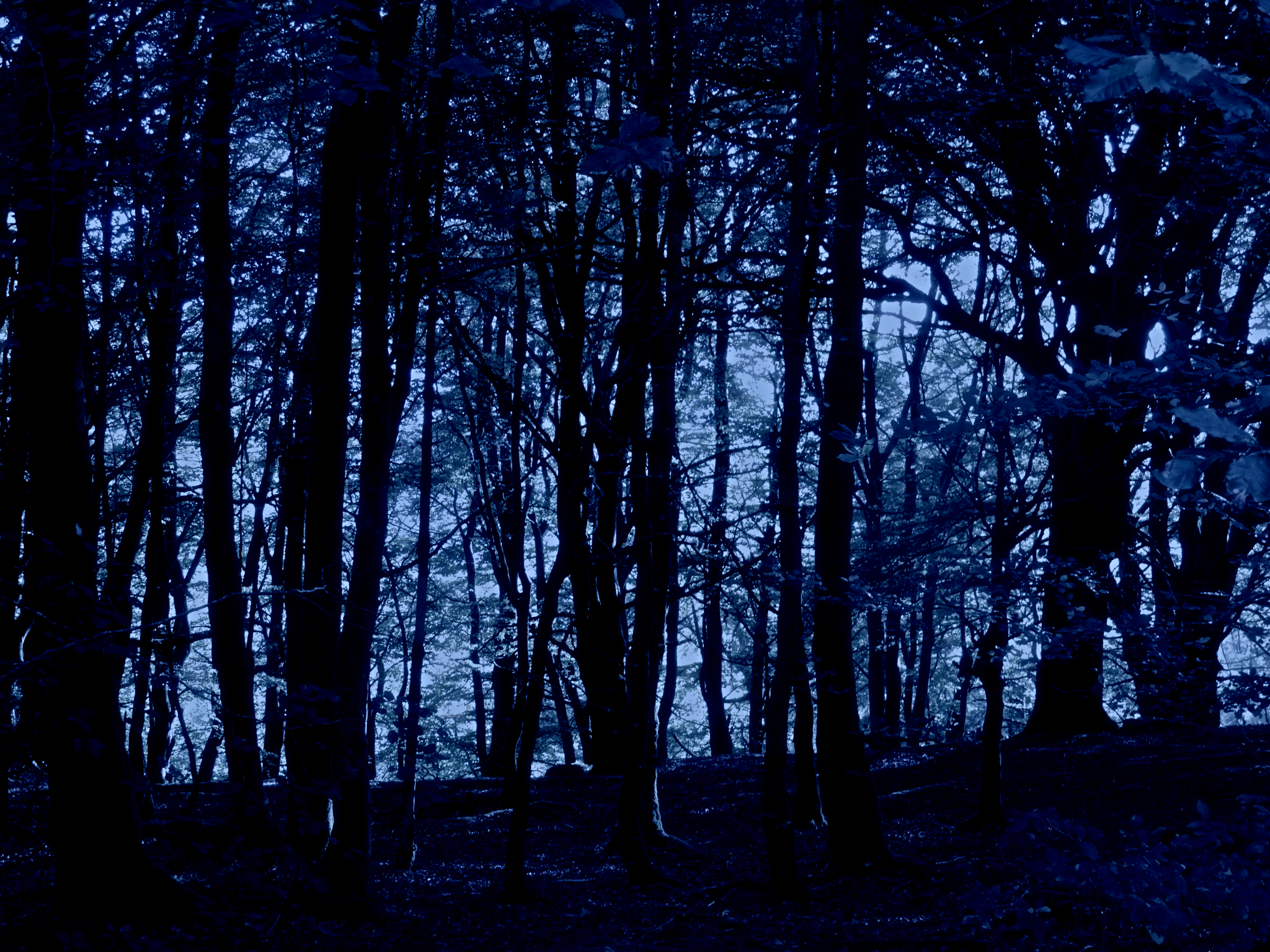
moonlit forest


James Hollis, in his “Creating a Life” says

As powerful as the will is, as urgent and insistent the élan vital, the imagination creates the world in which we live. The only question is: whose imagination, whose images, whose myth are we living in the course of that which we call our life?

I couldn’t agree more. Imagination is one of our most powerful qualities. We need imagination to see the possible. We need it so see the invisible. We need it to create. We need it to put ourselves into the shoes of others (and without that, where is compassion?). We need it for hope.

But imagination also allows us to fear – and how often is fear used now to control us?

So whose imagination are you living?


Read Full Post »

Untitled

I know the colour of November will depend on where you live, but here’s the image I have on my calendar this month (I make my own calendar every year). When I turned the page from October to November on Friday I had one of those intake of breath moments. This image has done that for me since the day I took it. It looks like the fiery power of LIFE just radiates from this forest.
What’s the colour of November where you live?

Read Full Post »

I read a lot about “complex adaptive systems“, and so a lot about “complexity science”. I think this gives me a set of concepts to create a framework for myself which helps me understand life. I think it gives me a language with which to think and communicate, but the trouble is the word “complex”. When people hear that word they think of “complicated” – which isn’t the same thing at all.

What’s the difference?

A machine can be complicated. A machine is constructed from parts, each of which can be understood separately. A machine can be understood by examining the parts and how they interact with each other. You can take it to pieces and build it back up to be the same machine. You can predict how the machine will behave….what it will do. The more parts a machine has, and the more connections there are between the parts, the more complicated it is. That means it is harder to understand. But it can be understood.

A living organism is not complicated. It’s complex. A living organism might have billions of parts (cells, for example), but there are two distinct features about how they interact – they are all “agents” – that is every single part affects, and is affected by, other parts; and the nature of the interaction is “non-linear” – that means you can’t add one part to another and predict what the result will be…..a small change at the beginning, can produce enormous differences in how the organism as a whole changes – think of the “butterfly effect”.

Once you grasp the basically simple concepts which underpin this idea of “complex systems”, then you can look at everything from living organisms, to ecosystems, forests, organisations, communities or institutions from this perspective. I think it’s amazing what such a perspective reveals.

One paper I read recently looked at understanding leadership from the complex adaptive system perspective. The author, Kowch, highlights three characteristic of organisations which learn, adapt and grow. Each of these characteristics is worth thinking about because the less your organisation has of these, the less healthy it will be, the less likely it will thrive, or even survive in these rapidly changing times.

  1. Diversity – Nature loves diversity. The more conformity and uniformity in a system, the less adaptable it is. Monoculture might produce large quantities of something for a while, but, ultimately, it becomes vulnerable. Yet, command and control seems to be the preferred management method. Great effort is put into achieving conformity and uniformity. With globalisation, and the power of oligopolies, differences are often seen as problems to be removed.
  2. Specialisation – nobody can do everything. Although Darwinists have pushed the idea that evolution occurs through a “survival of the fittest”, with a perspective of continuous competition and warfare, in fact, others argue that its the ability to co-operate which has allowed human beings to develop as a species. Co-operation involves both good relationships (integrative relationships ie where the relationship is mutually enhancing for all the individuals involved), and specialisation – some develop a lot of skill in one area, whilst others in quite a separate area.
  3. Redundancy – this means duplication, or having “more” than it seems the organism “needs”. In organisational terms, if all the staff are fully employed, fully scheduled, each in their own specialist area, then when something changes (such as sickness, increase in demand etc) then there is no way to cope with that – there’s nobody to cover, and there’s no ability to meet the change in demand.

So, what does your organisation look like? How’s it doing in terms of diversity, specialisation and redundancy? How healthy and adaptable do you think your organisation is?

floribundance


Read Full Post »

The local robin

This robin isn’t any robin. This is THE robin whose territory includes the bush which grows right in front of the space where I park my car at home.

I’ve often tried to capture a photo of him, but he is camera shy and disappears too quickly for me. But this time…..oh, isn’t he wonderful?!

If one does not become the eccentric, unique, one-of-a-kind person he or she was meant to be, then a violation of some large purpose of the cosmos has occured. James Hollis

Every one of us is a one-off. Every one of us is unique. My local robin reminds me of that.

Read Full Post »

When I was reflecting (for my annual appraisal) the other day, I got to wondering again about just how we understand what a doctor does.

Then I stumbled upon the Greek origin of the word therapy – therapeuein……which means to pay attention or to listen to.

That’s it!

That’s what I do – I pay attention.

That’s what I hear is most appreciated – patients tell me they appreciate having the chance to express themselves, to tell their story, and for that story to be listened to, attentively and without judgement. But paying attention isn’t just about listening, it’s looking out for patterns, seeking out connections, creating meaning and sense by weaving it all together.

Paying attention is therapeutic.

And that got me thinking…..isn’t that how I try to go through life…..paying attention? So is that therapeutic? For Life? For Nature? For the world? For me?

Read Full Post »

« Newer Posts