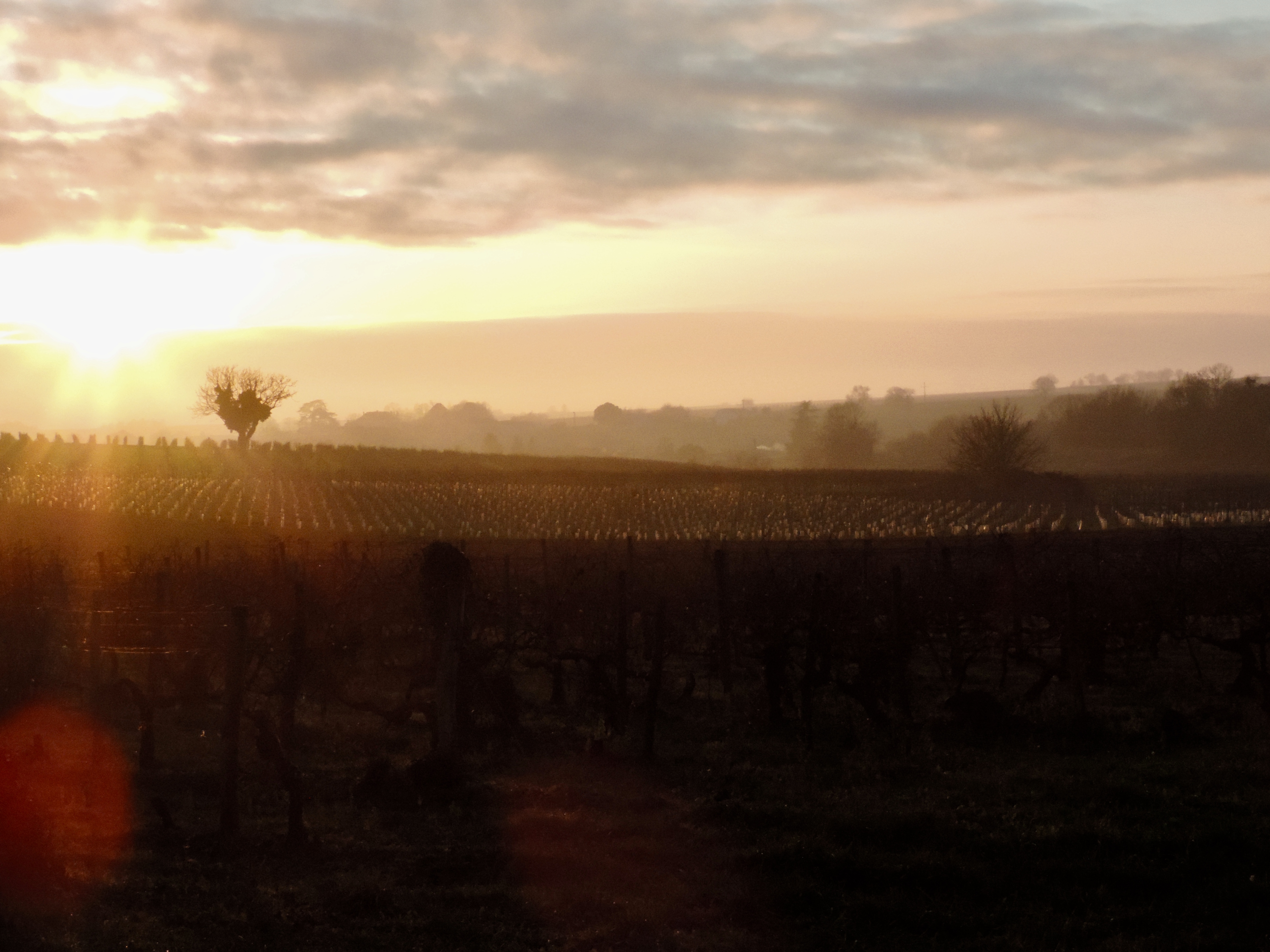
I was never aware of the “Belt of Venus” before I moved to South West France. The first time I saw it, I thought, how come there’s that’s pink colour just above the Western horizon as the Sun rises in the East? When I looked it up, I discovered it was the “Belt of Venus”. Since then, I’ve noticed it many times.
I suspect I am more likely to look towards the East in the morning as Dawn breaks, and to the West in the evening as the gorgeous sunsets transform the sky into works of gold, tobacco brown and all shades of red.
But now I know to look the other way. I look towards the West when I am up at dawn, and what beautiful rewards await me for making that decision.
We are creatures of habit. We tend to observe in habitual ways. We tend to think in habitual ways. So, we repeat the same experiences again and again. Sometimes that can be a good thing, when our habits bring us joy, comfort and contentment. But, it seems to me that often those habits extort a high price, keeping us stuck, blinding us to opportunities, engulfing us in rumination and regret.
So, I find it’s good to look the other way sometimes. Not as in denial, neglect or in choosing ignore someone or something which needs our attention, but in consciously setting up the opportunities to change the tune, to open a few more doors, to release our abilities to imagine and to dream….in other words to increase our joy, our wonder and our delight, and to embrace our natural capacities to create, to invent, and to change.
You might think that this is a call to do the opposite of whatever it is you are doing, but I don’t think it’s limited to that. Looking to the West in the morning is not a simple opposite to looking to the East (after all, I do look to the East to see the sun rising as well). It’s more about expanding the attention, stepping out of narrow, well-trodden paths, and seeing what else is here…..right here, right now.
This exercise of looking the other way is, for me, one of releasing myself from the familiar, sticky, narrow focus of the left brain, to develop the broader, novel-seeking, particular-seeking, connection-making focus of the right brain.
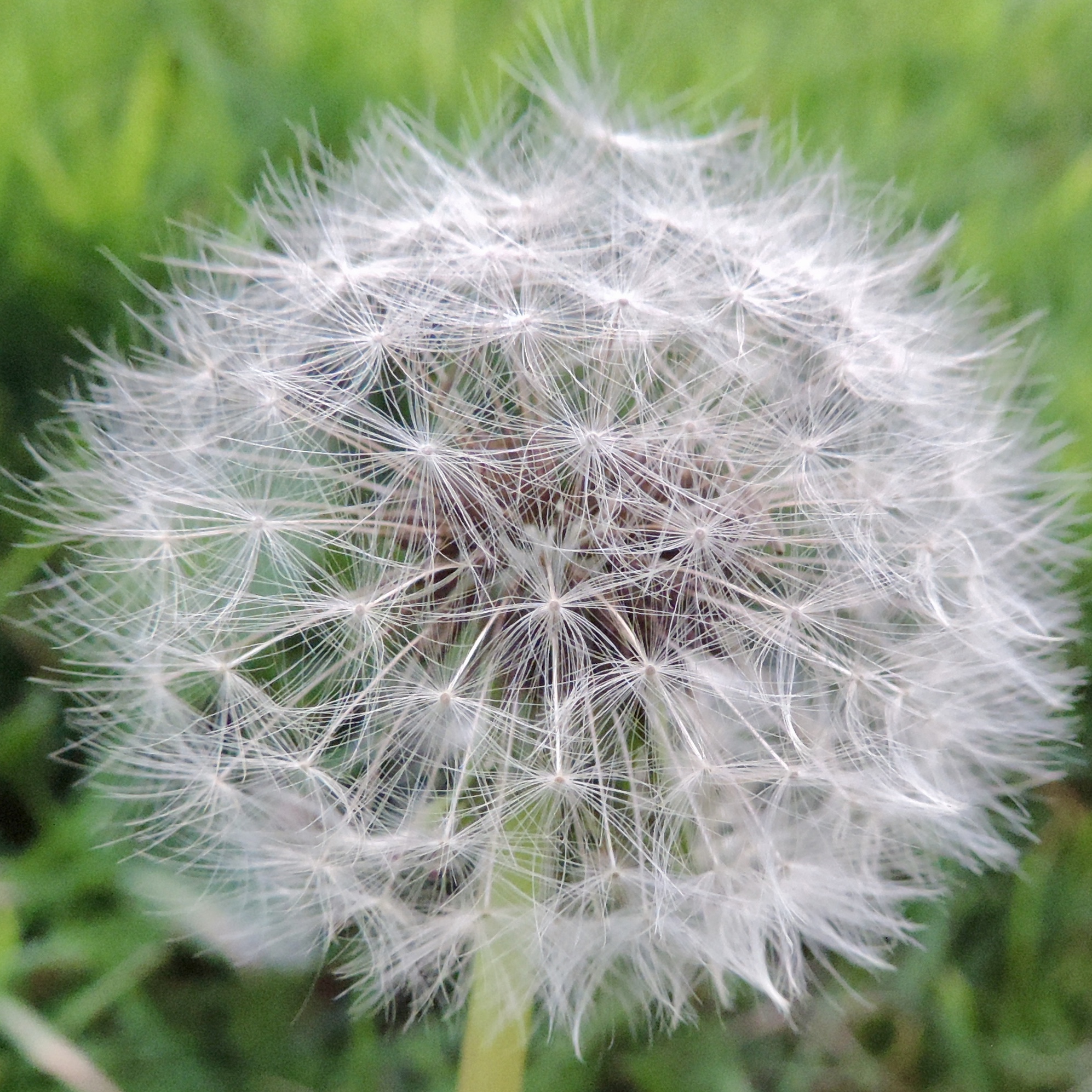
I know, you’ll have seen photos like this one many times. It’s almost a cliche. But, hold on, let’s just pause for a moment and take a closer look.
Plants which use wind dispersal of their seeds often produce a spherical display like this one. Even at first glance, they are beautiful, but once I stop to look closer, I can see each individual seed held on the end of its own delicate stalk and surrounded by a myriad of soft, fluffy, fibres, just waiting to catch to the wind. In that moment I am amazed. I am caught, the way the seeds hope to catch the wind. The delicacy, intricacy and complexity of this structure is actually quite mind boggling, but, still, it’s just part of normal life for a little plant like this.
I think we are apt to pass this by too easily. I think that when we stop, look more closely, and reflect on what we are looking at, we can’t help but be impressed by the creative power of plants, the creative power of Nature.
But I think something else now when I see a seed-head like this. Because this has been the year of the pandemic, of the rapid, global spread of a tiny virus, hopping from one human to the next, infecting millions, killing hundreds of thousands. If that hasn’t given us pause for thought to realise that we might live in a civilisation of nation states, but we share the one, small, utterly inter-connected planet, then I don’t know what will.
So, I see this little plant now, waiting for the wind to come and spread her seeds far and wide, and I am reminded of how Nature is One, and how we humans are neither separate from each other, nor from the rest of the living planet.
Aren’t we going to have to move on from the dominant mythologies of capitalist materialism? Don’t we realise now that we cannot dominate Nature, that we are not separate from Nature, and that if we want to survive and thrive we need to learn to live together by creating mutually beneficial bonds and relationships – do you remember that definition? It’s the definition of “integration”.
I think that’s the new story we need to learn, those are the new myths, beliefs and principles we have to adopt…..the ones which teach us about, and which promote, “integration”.
My actions are like these seeds.
My words are like these seeds.
My thoughts are like these seeds.
They are going to spread far and wide, and so are yours. That’s just how it is. So maybe I should consciously choose the actions, words and thoughts which will spread “integration”, will spread kindness, will seed happiness, love and joy….wouldn’t that be something?
When I looked up at these trees and the sky above them, I saw the clouds as leaves on the outstretched branches of the trees….almost an impressionistic presentation of leaves of course….white, fluffy, almost like individual brush strokes painted onto the blue canvas.
Just a moment of imagination.
I didn’t at any point misconstrue the clouds. I knew they were clouds floating high above, and the trees were trees growing far below the blue sky, but in that moment of imagination the experience becomes a little magical, a little less mundane.
What’s the alternative? To notice severely pruned trees in the foreground and clouds in the sky above with absolutely no connection to what was growing down here on the surface of the Earth?
Well, that’s one of the reasons I like imagination…..not only does it enable us to see the invisible connections between everything…..in the same way that we humans have seen invisible lines joining stars at night into constellations which we can then use to navigate, or to know when to plant and when to harvest. But it enhances our daily experiences, giving them qualities which feel enchanting, delightful, joyful, or expansive. Qualities which would be hard to experience from a “simple” consideration of “facts”.
The world is not full of disconnected “objects” dispassionately viewed by disconnected “subjects”.
It is a whole, a fully integrated web of connections, contexts, environments, and flows of matter, energy and information, which is alive, vibrant, beautiful and awe-inspiring.
I don’t think we would realise that, were it not for the powers of our imagination.
I’ve long since been drawn to Romanticism. I feel they bring some extra, something deeper, something substantial to the dominant perspectives of the rationalist Enlightenment thinkers. It’s a funny thing, because in many ways I think I’ve lived with a foot in both camps. I trained in Medicine, practised as a General Practitioner for the first half of my career, then as a Specialist in what we came to call “Integrative Care” for the second half. That second half move was enabled by my training in Homeopathy which gave me a different framework to understand individual health and illness, as well as a set of therapeutic tools. We specialised in the care of people with long term conditions at the “NHS Centre for Integrative Care” in Glasgow, with the majority of our patients coming to us for help when they felt orthodox care wasn’t helping them enough. But we had a foot in both camps there, because our hospital was embedded within the Scottish NHS and we had access to all the tools, specialist help and advice of all that orthodox care could offer.
What does that have to do with Romanticism? I’m not sure, but I’ve recently been inspired to explore the Romantics in more depth, because I heard an interview with Eugene McCarraher about his new book, “The Enchantments of Mammon“. He talked a lot about the Romantics and I remembered that Iain McGilchrist had written about them too, so I picked “The Master and His Emissary” off my “most significant books bookshelf” (yes, I do really have such a shelf in my bookcase!), and yesterday sat down to re-read his chapter on Romanticism. One of the first lines in that chapter is
As always it was the clashes of theory with experience that showed up the cracks in the edifice of rationalism.
Well, that’s it in a nutshell……it was the “cracks in the edifice of rationalism” which opened the door to my enlarging my Practice to include a focus on the qualitative, and the “unmeasurable”. And, boy, was that a set of “clashes of theory with experience”!
Then this
Differences are as important as generalities
Now, this must be what became THE foundation stone of my Practice as a doctor. It still makes me a mixture of sad and annoyed when Medicine is conducted as if generalities trump differences every time. There continues to be a real struggle for individuals to have their stories heard and believed, especially when they don’t fit with either “generalities” or “theory”.
The idea of individual difference is central to romanticism
Well, if that is true, then I need to know more about romanticism, because the importance and the inescapable reality of individual difference lies at the heart of my life values.
What’s all this got to do with the photo I’m sharing today? Well, I just read this line
The Romantics perceived that one might learn more from half-light than light
OK, I’ve taken it out of the context of the rest of the chapter but Iain is arguing that a difference between the left and right hemispheres is that the left wants certainty, clarity and exactness, where the right is more interested in the whole, in the synthesis of opposites, in the distance between where we are and where we can almost see.
There’s real beauty here. There’s mystery and enchantment. There’s wonder and amazement. Well, I just love all of that.
Three elements in this photo induce me to think about dreaming – sunset, a plane trail, and the moon (yes, look closely, she is there!)
We associate dreaming with sleep, even if we often wake up, knowing that we have been dreaming but have not a single memory of what it was we were dreaming about. Don’t you think that is strange? That the brain can be so active while we are not awake, creating images and whole stories for us to experience, yet somehow so little of that reaches the level of memory. There’s this annoying phenomenon of the first thought on waking – if your first thought is about the dream you were having, then you have a good chance of remembering at least a part of it. But if you are woken by an alarm, or your radio, or somebody wakes you and says something, then the dream is gone. It’s like you have one shot only to recall what you’ve just been experiencing inside your own mind just minutes ago. Turn your attention outwards, and the opportunity is lost.
We don’t only dream during sleep of course. “Day dreaming” has a bit of a bad press. It’s often condemned as distraction, as not paying attention. Or it’s dismissed as fanciful, not useful, not real. But I’m really not sure that dream processes only occur during sleep. After all they aren’t under our conscious control, are they? (lucid dreaming practices aside) So why should we think they aren’t happening below the level of consciousness all the time? Do we need to be asleep for dreaming to occur? I’m not sure that we do. Let’s imagine for a moment that dreaming goes on all the time. Is that where sudden insights come from? Is that where apparently random thoughts come from? Is that where we find inspiration, find our “muse”, tap into our creativity? I think, perhaps, it is.
Our dreams are sometimes thought of as goals or aspirations. They are focused on the future, and suggest new destinations for us to reach for. I’m not a big fan of goals. I think they’re rather over-done. After all, the future is never predictable in detail so what seems a relevant goal now, can become quite irrelevant by the time we get there. And life flows on a continuum. It isn’t broken into discrete, separated parts. Maybe a goal can be thought of as the end of a chapter in an ongoing story, but there’s a danger that goals are seen as conclusions. I’m sure lots of people like to have goals, and find them very useful. They can certainly give us something to progress towards, something to aim for. And if they do that, then fine. They can be motivating and they can help us to focus. And that’s good too.
So, I’m not against goals. I just don’t think they are ever enough. We need more than goals. We need dreams, we need free-floating thought, and we need to keep our eyes open for the whole picture, for the contexts and consequences of our ideas and aspirations.
I suppose I’m saying we need both – to be focused, and to be free-floating. Strangely, dreams can be both of those things at the same time.
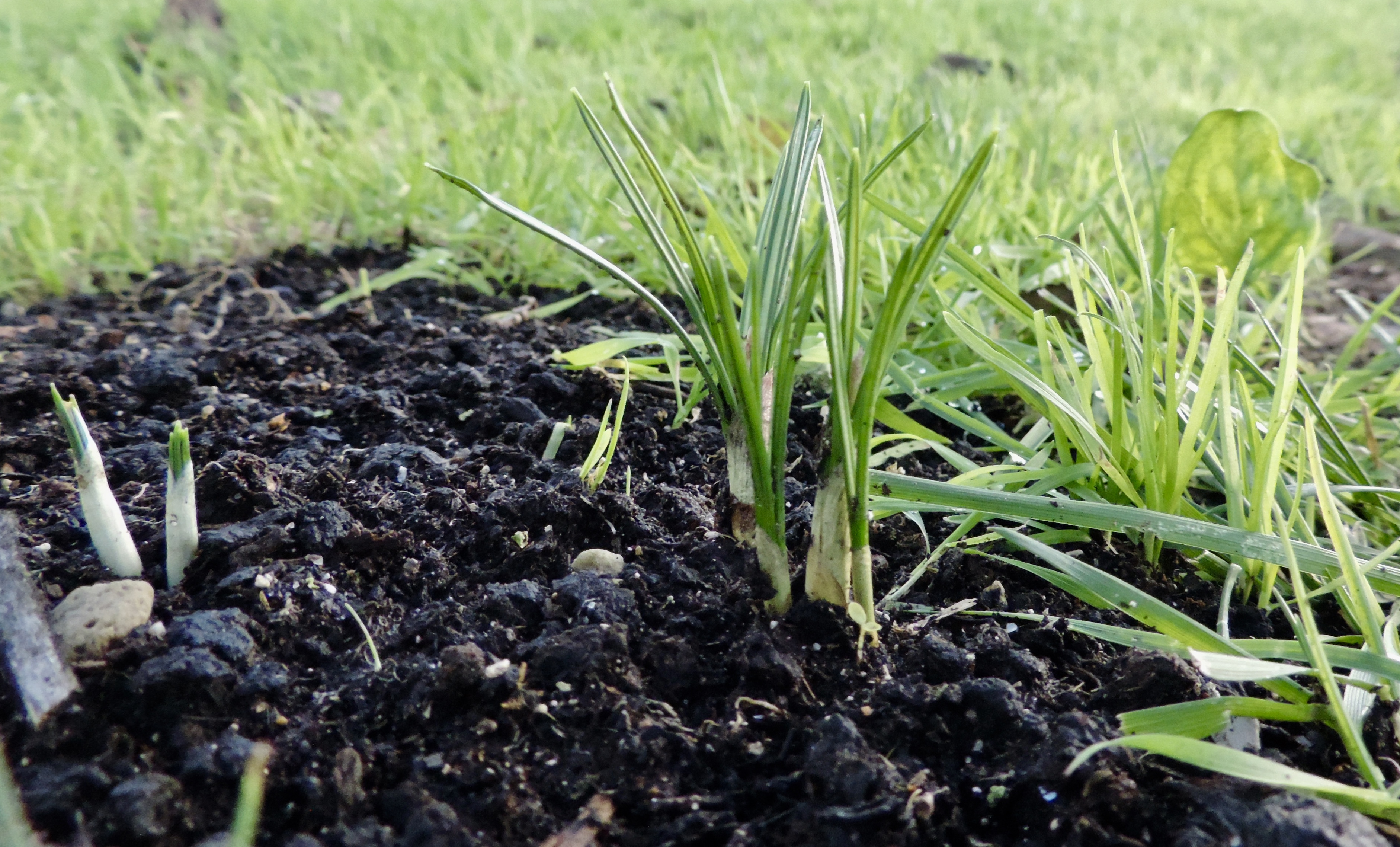
I tend to associate new growth with the Spring, but, these crocus plants popped up from under the soil through the month of December. I took this photo on December 24th last year, and so far, on the 6th December, as I write this, there is no sign of them yet.
But that just reminds me – that creation is going on all the time. The phase, or season, or time of new and emergent growth is not limited to the Spring. It’s not limited to any single season, any particular month, or even any specific day.
We have a great tendency to chop the flow of life into pieces. We did that when we invented measured time – by making clocks and “time pieces” with their minutes and their hours. We weren’t even satisfied to stop there, but chopped the minutes into seconds, driving everything faster and faster, measuring this thing we call time in ever shorter, ever smaller units.
The thing is – those units are a human invention. Time flows in Nature. It flows continuously, the way a river does. Time is experienced by each of us in different ways. It flies past when we are enjoying ourselves, drags when we are bored, can’t pass quickly enough when we want to escape. However, the one constant is…..time is continuous. And so is creation.
The other thing this image provokes in my mind is how much is going on that we just don’t see. Are these crocus bulbs lying sleeping, unmoving, unchanging under the dark soil, then in a flash they turn into green shoots stretching towards the Sun? Nope, it’s not like that. But life often seems like that to us because we invent disconnections. In reality change, growth, development, maintenance, on the one hand, and dis-integration and dying on the other, are happening all the time, and all at once. They don’t fall into nice neat boxes. Nothing in life does.
I like the feelings which arise when I think of this – I like the focus on flow, on continuity, connectedness, on the whole, on change, and on invisibility. They bring me joy, delight, and wonder. Hey….so do little crocus plants shooting up from under the black earth!
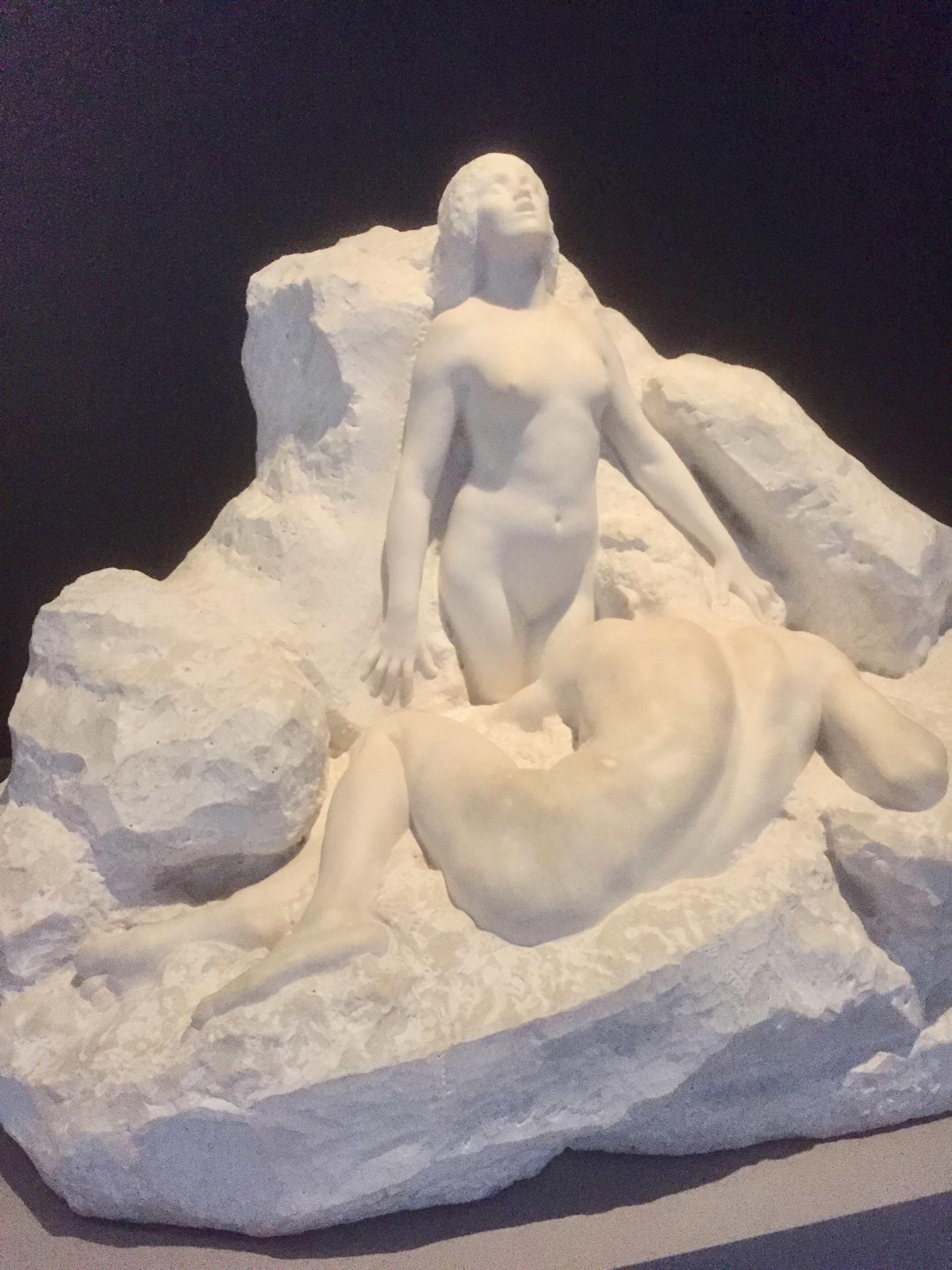
This sculpture in the Glyptotek Museum in Copenhagen is called “Creation Fantasy”, and it’s by a Norwegian-Danish sculptor called Stephan Abel Sinding.
It reminds me of some of Rodin’s work, not least the “Hand of God“, which is one of my most favourite of Rodin’s works.
I love how the male and female bodies are emerging from, but are not separate from, the rock. It think this captures a deep truth – that we are not separate from the Earth, not separate from “Nature”, not separate from each other. But instead we emerge within all that exists, and we remain forever, embedded in everything. I think one of the most pernicious beliefs human beings have adopted is the notion that we humans are “apart from” not “a part of” Nature, that Nature is something “out there”, maybe even something to go and visit from time to time. Worse still, that The Earth and all that “out there” Nature is a resource to be plundered, consumed, polluted at will, as if none of that activity will affect “us”, we humans, because we are outside of Nature.
I hope we are beginning to move away from that terrible misconception. I hope we are beginning to KNOW that we emerge within Nature, and that we live inextricably within all that exists.
It reminds of me of the “Universe Story” – which tells how all the elements of the Periodic Table were created in the giant furnaces of stars throughout the universe, and how once the Earth was formed, all the elements which had been created in distant stars were gathered together, almost like being dealt a hand in cards. How every material substance which has ever existed on Earth has been made from those initial elements. The Earth doesn’t create new elements. She transforms what she has into every molecule, every cell, every organism, every substance which we find on our one small blue planet.
This sculpture makes me think of something else – the relationship we have between men and women. It seems to me we need to learn from sculptures like this one. For far too long we’ve built civilisations and societies on the basis of male dominance. It’s well past time to redress that imbalance and create more loving, more respectful, more mutually nurturing relationships between the sexes.
So, there’s my “Creation Fantasy” – that we are called to live by – that we humans emerge within Nature on this single planet, and that men should not dominate women.
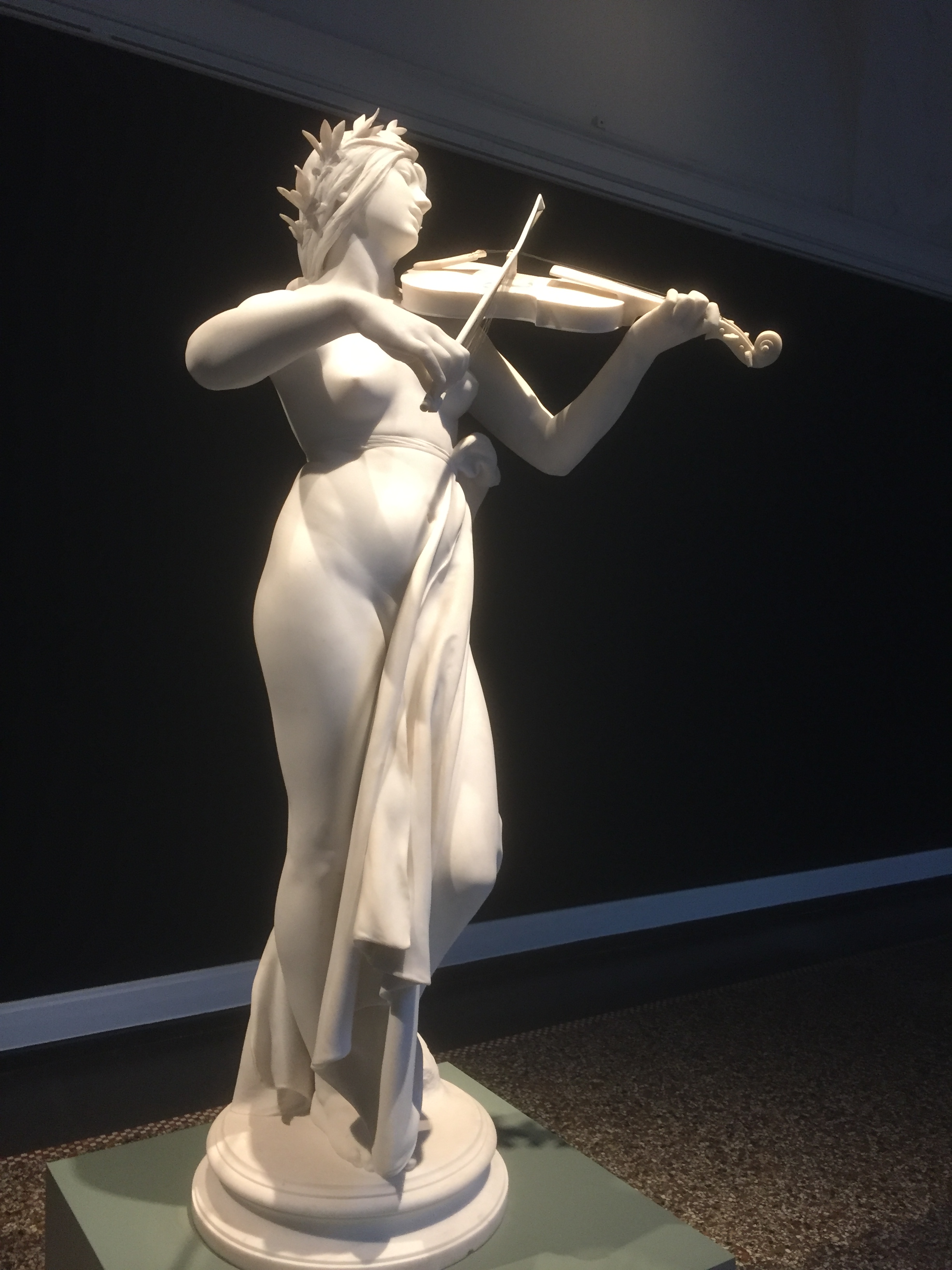
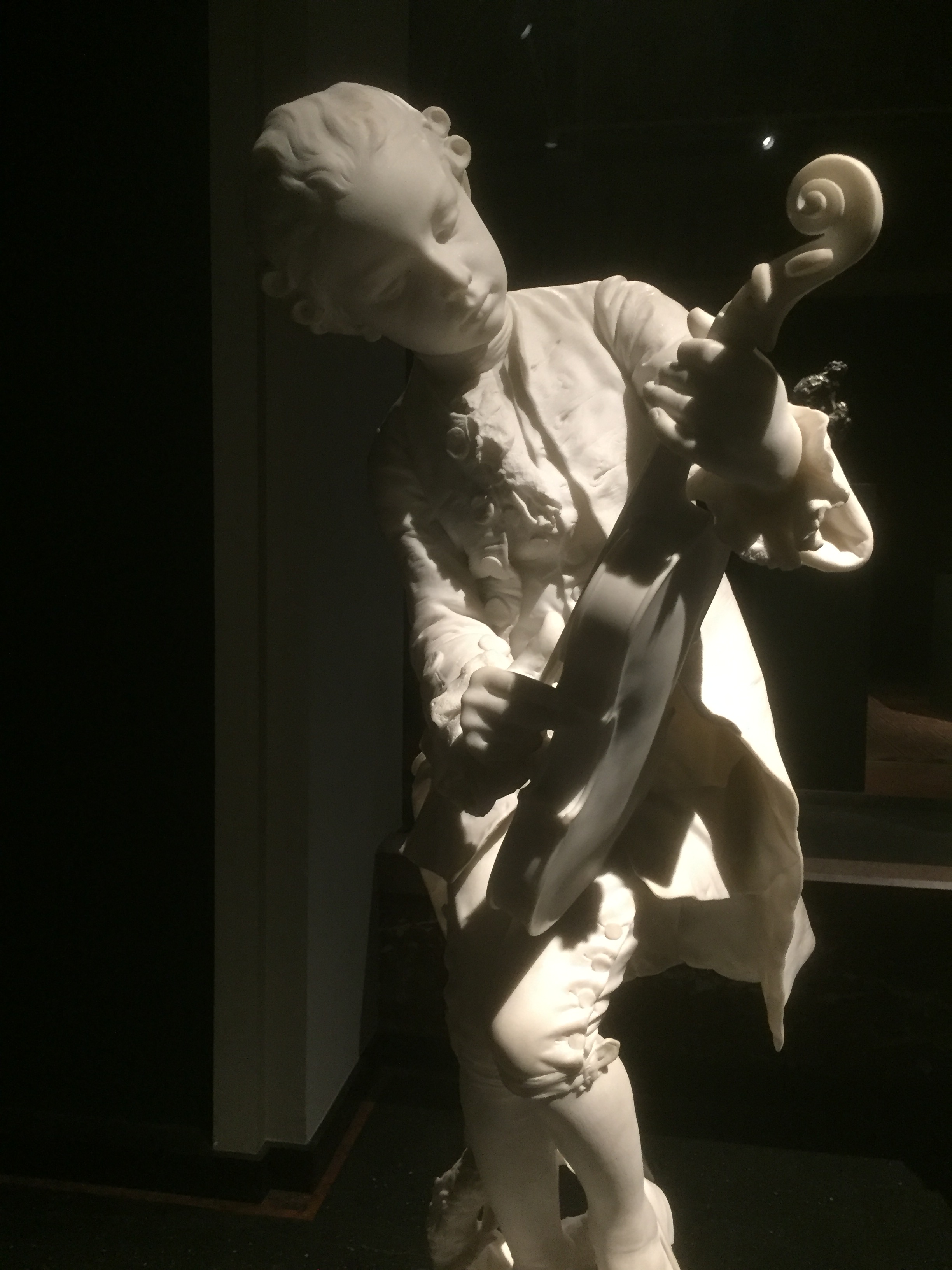
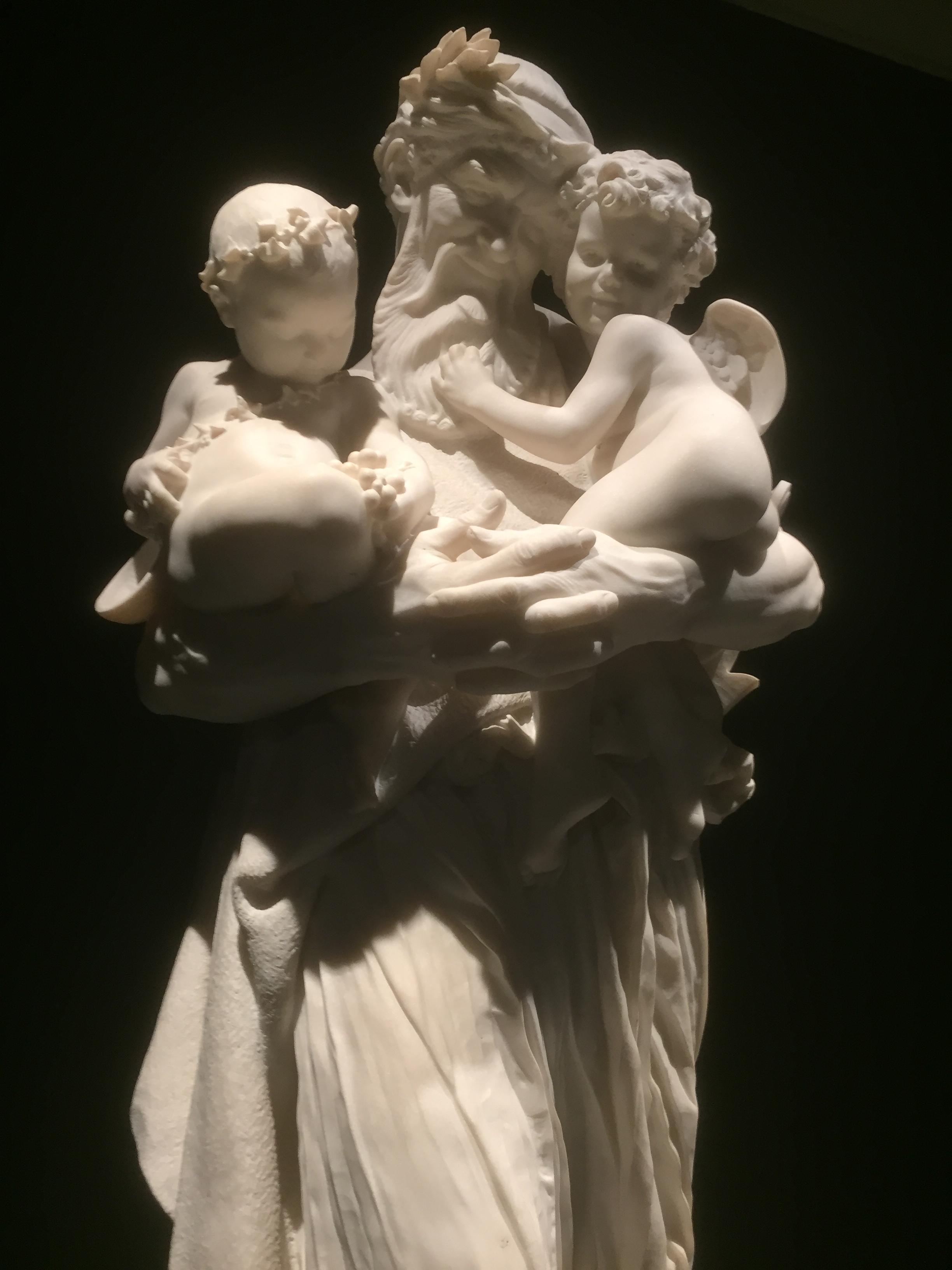
I can’t stress too highly the importance of art in life. We seem to be the only creatures on the planet who have the immense creative powers to produce drawings, paintings, sculpture, poetry, stories and music (OK, I know, there are other arts you can think of, but I’m just choosing these ones today)
In the Glyptotek museum in Copenhagen you can find these three sculptures in a room filled with many similar gorgeous works of art. Part of the beauty we experience when we look at these images is created by the way the works are lit (and there’s another layer of creativity between my experience and yours because I’m the one who took these photographs).
At the top, are two sculptures about music. Look at the violins, the bows, and the musicians fingers….all carved out of blocks of marble. Aren’t they incredible? The one on the right is titled “Young Mozart”, and I’m afraid I can’t remember the title of the one on the left (if you know, maybe you could let me know in the comments?)
I read in Iain McGilchrist’s “The Master and His Emissary”, that one theory of language is that human beings sang before they spoke. It seems there is some evidence to support the idea that the first humans created a variety of sounds, and only later, turned some of those sounds into spoken language. Written language followed a long, long time later. Also, in his book, he explores how music works, not as a collection of notes, or moments or sound, but as a combination of notes and silences between the notes. When you stop to think about music it’s incredibly difficult to pin down what seems so simple – where is the music, actually? It’s not in the notes by themselves. It’s not in the spaces. It’s in the whole – in the phrases, the bars, the themes, the entire melody and the rhythm. I love how it seems to resist reduction – you can only appreciate it, and enjoy it, when it’s whole.
Another thing about music is how personal it is. I bet you had the experience when you were younger of your parents just “not getting” the music you enjoyed. Perhaps always telling you to turn it down? Or saying “That’s not music!” Then as you got older, if you’ve had children of your own, you might find they like a lot of the music that you like, but I bet you’ll also find that they enjoy some music that has you saying “That’s not music! Turn it down!”
Music is intensely personal. It’s one of the best, most powerful ways, to evoked memories. A certain song can take you right back to a particular moment years ago, or can evoke all the feelings you have for a loved one. It stirs us, moves us, changes our entire physiology, affecting our breathing, our heart rate, the mobilisation of chemicals and hormones in our bodies. It affects our muscles, our movement, our stomachs.
I saw a short piece on French TV recently about Melody Gardot, who at age 19 had a serious bike accident. She was in hospital for over a year and had many difficult neurological problems. At one point a doctor suggested music therapy and her mother bought her a guitar. She taught herself to play it, started writing songs, and made a full recovery. She is now an internationally famous, beautiful jazz singer. Check her out. Quite a story! And such beautiful music!
The lower photo above is of Anacreon the poet. Poetry, like music, is handled mainly by the right hemisphere of the brain (whereas language, words stories are largely handled by the left). Poetry is closely related to music. It’s not about conveying instructions or information. It evokes emotions, changes our bodies the way music does, and also has the power to evoke intense memories. In this sculpture, Anacreon has two infants in his arms….and doesn’t he so obviously love them? They are Bacchus and Cupid. Bacchus is the God of Wine, and Cupid the God of Love. Well, not hard to see why he loves them so, huh? Bacchus is also known as Dionysus. You can read a bit more about him here. He’s the God of a lot more than wine. Cupid, the God of passionate desire, of affection and attraction.
Finally, here’s an interesting fact connected to this issue of how our two cerebral hemispheres engage with the world in different ways. Iain McGilchrist’s thesis is that we’ve become a bit stuck in our left hemispheres and we need to develop a better integration of the two halves. One way to do that might be to consciously use the right hemisphere more – so, what better way than to start with spending more time each day listening to music and reading poetry?
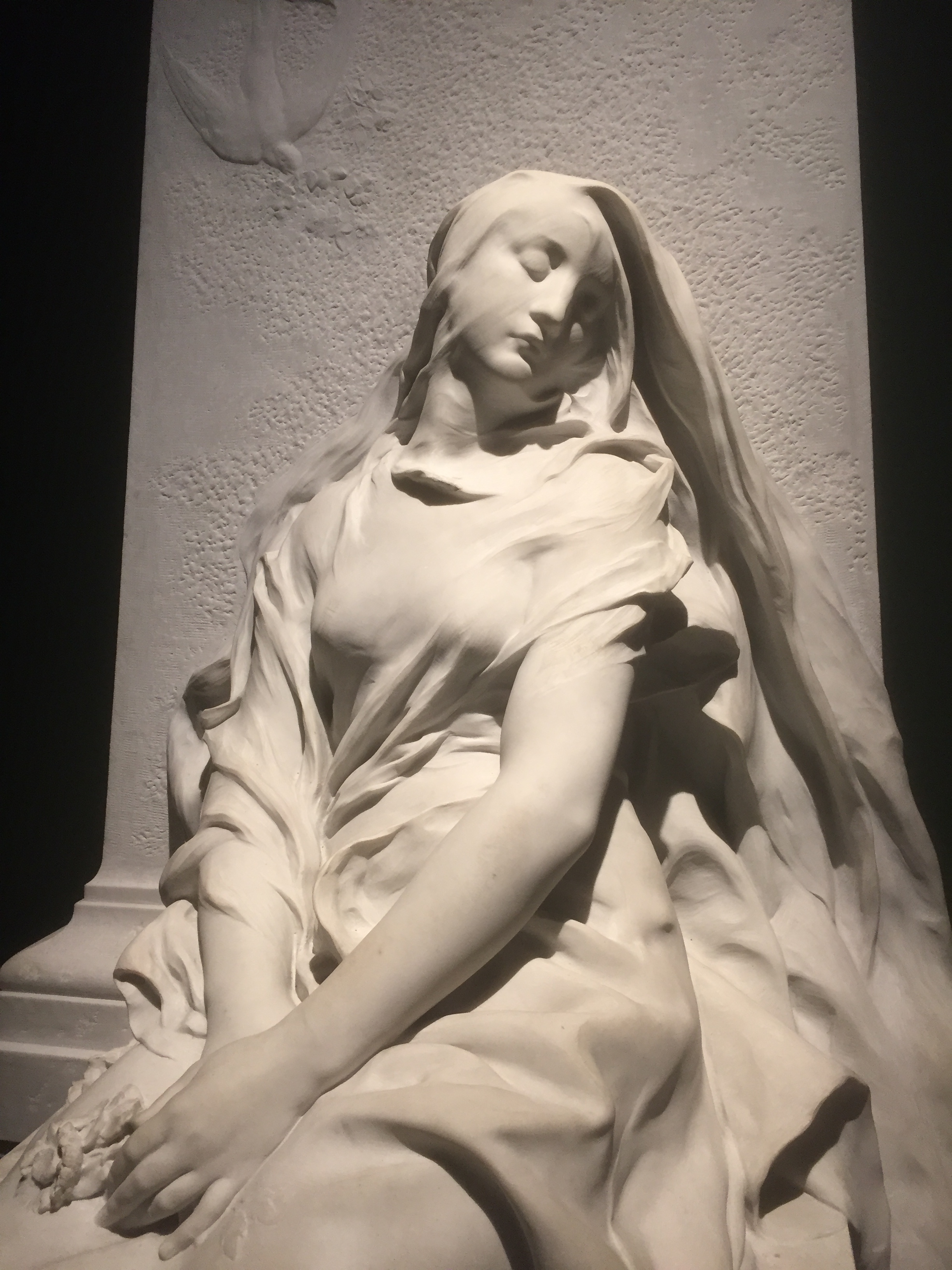
One of my most favourite museums in the world is the Glyptoteket in Copenhagen. One of their permanent exhibits is a sculpture room filled with beautiful works by French and Danish sculptors. Many of them are utterly breath-taking. Over the next few posts I thought I’d share some photos I took during my visit there back in the pre-Covid era!
Look at this! Carved from a block of marble. I think it is astonishing. What incredible skill to make solid rock look like soft flowing fabric.
That’s what I wanted to focus on today, because I think when we pay attention to the perceptions and sensations of the everyday present, life seems better. And even though many of us are still living under stringent restrictions, we can experience sights, sounds, scents, tastes and textures every single day. I’m a very visual person. I take lots of photos, and I’ve been re-viewing and organising thousands of my images this year. Despite the fact I suffer from tinnitus and my hearing isn’t as good as it was when I was younger, I also love sounds. Where I live in the French countryside, I’ve been able to hear more bird songs this year than I’ve ever done before, thanks to the quietening of human activities – especially those human activities involving machines! I love music too, and a day doesn’t go by without me listening to, and/or playing music.
This image though, reminds me of the importance of the sense of touch. And with all this physical and social distancing going on, I suspect most of us are missing that kind of contact. Zoom calls, WhatsApp groups and so on can be good for communication but they aren’t a substitute for physical contact, are they?
So, I wonder if it might be an idea to focus on the sensation of touch for a day? What textiles are in contact with your body? How does that feel? What surfaces do your fingers touch today? How does that feel? How many different sensations of touch have you experienced today? And how would you describe them?
That’s my idea for today, inspired by this astonishing sculpture – take a day to consciously experience the sensation of touch. Notice each sensation and make a short note about it in your diary or journal……or in the Notes app on your phone. Then, at the end of the day, review what you’ve written. How does that make you feel? In other words, what emotions are created by the physical texture of your day?
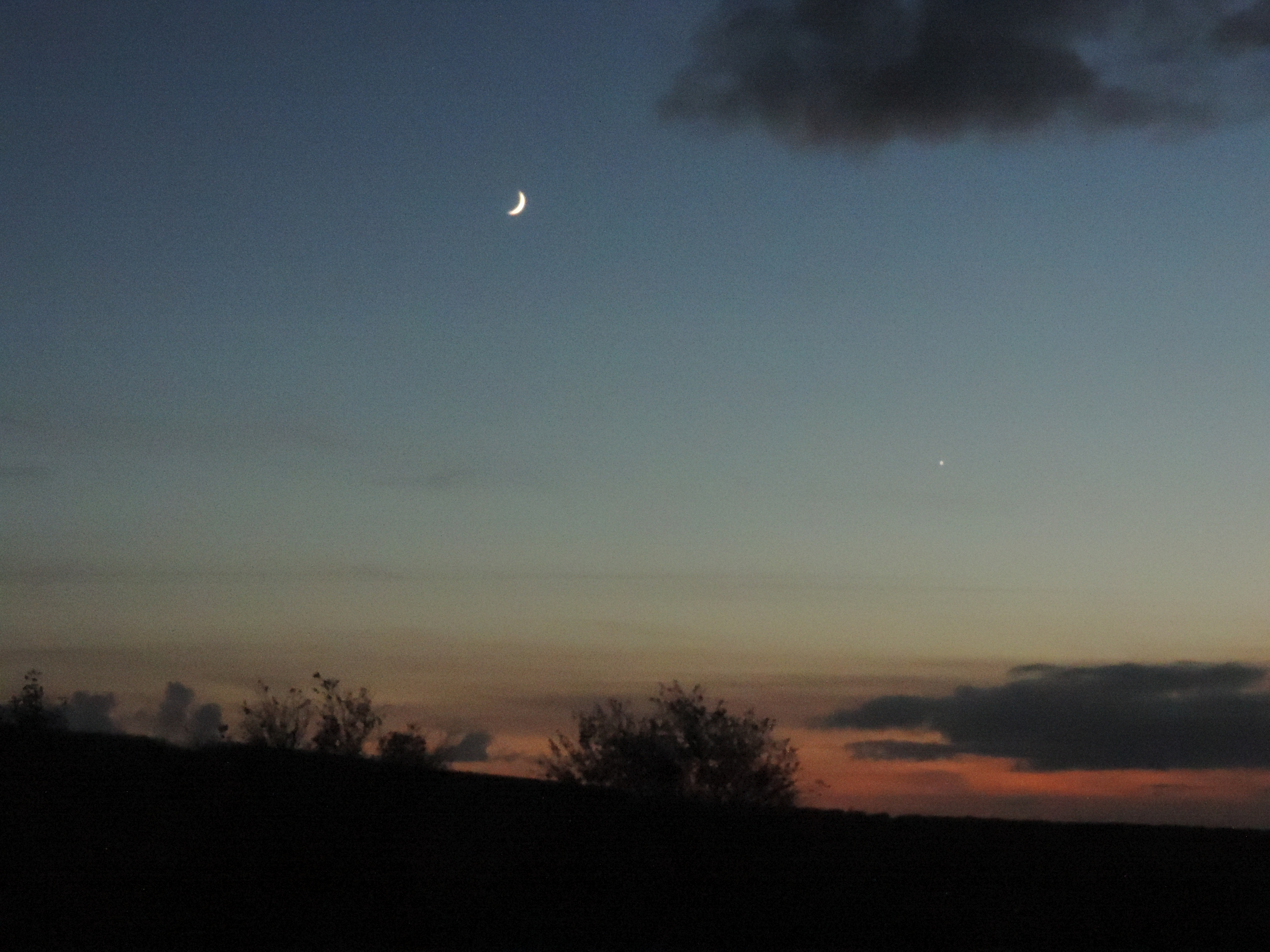
I wonder how much the sky influences our lives. I don’t just mean how a blue sky lifts our spirits, and a heavy grey cloud cover can dampen them. I’m not only thinking of the reds, tobacco browns, and goldens of a setting sun. I’m thinking about the evening sky, like this one, and the night sky which you know, looking at this, is only a few minutes away.
I don’t share this photo because it’s a great photo of the Moon and Venus in a twilight sky. I share it because it sets off a train of thought in my mind. It gets me thinking about the rhythms of our planet, and how, for millennia, we humans have learned to understand some of those rhythms by looking at the night sky. I know there are stories of how ancient peoples navigated by the stars and worked the Earth by the progress of the constellations. I know that even now, there are farmers and gardeners who plant, cultivate and harvest according to the phases of the Moon. I know I get a lift in my heart when I see Orion appear for the first time on the Eastern horizon, knowing that I’ll be able to see him make his journey to the West every night until Spring comes again, knowing that Orion is a winter companion in this part of the world.
But I also look at a sky like this and am struck by both the Moon and Venus, and, instantly I’m thinking of the Divine Feminine, as both the Moon and Venus are associated with goddesses. I wonder if they evoke the anima in me. I wonder if they start me thinking about intuition and beauty.
Actually, I don’t wonder that at all. They do. For sure. I look at this scene and I am entranced, I am enchanted, I am absorbed in feelings, thoughts and images of intuition and beauty.
Have you ever wondered how much the sky influences your life?
I welcome constructive criticism and suggestions. I will not, however, tolerate abuse, rudeness or negativity, whether it is directed at me or other people. It has no place here. ANYONE making nasty comments will be banned.




 Heroes Not Zombies