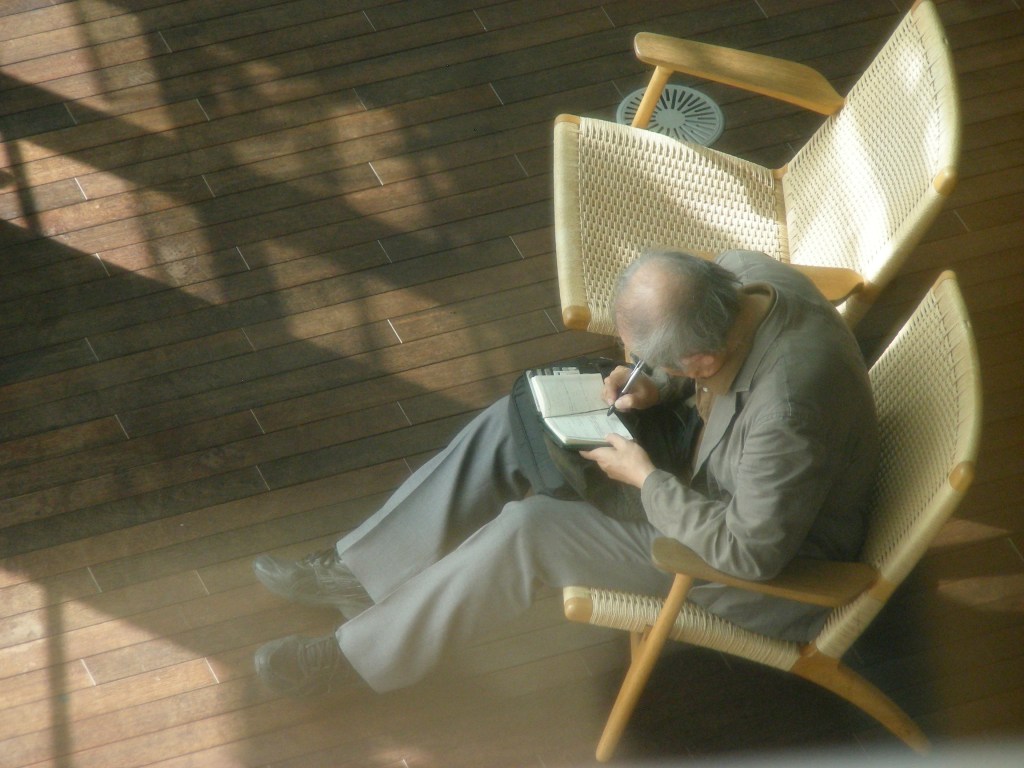
I looked down from the balcony in this Tokyo museum a few years ago and spotted this man busy entering something into his notebook.
I have to tell you that if you’re a notebook fan, Tokyo is a kind of heaven. Actually if you’re a stationary fan, it’s totally a kind of heaven.
Confession – I am a huge fan of stationary and notebooks!
Everyone has their favourite way of making notes. I guess for many one of the notebook apps on their phone does the trick for them. For others, nothing is better than paper and pencil or pen, so a lined, blank, or squared notebook will be their favourite.
I have a bit of the “and not or” approach – surprise, surprise! I use Evernote on my phone, pad and computer, mainly to store interesting articles and quotes. But I prefer a blank paper notebook when I’m reflecting or thinking something through.
I’m a mind mapper but not in any rigid formalised way. I just find it helpful to write my key ideas or points across two blank pages then to connect them up with lines and frames.
I’m also a visual thinker so I draw a lot of diagrams when I’m working something out.
I think, whatever your preferences, notebooks are great for recording what you’ve noticed or experienced. But, I reckon, more than that, notebooks are my main thinking tools.
First I notice, then I reflect and note. Then later I gather my thoughts and reflections to write posts, create presentations and talks, and just to do more thinking!
How about you? Are notebooks a big thing in your life?
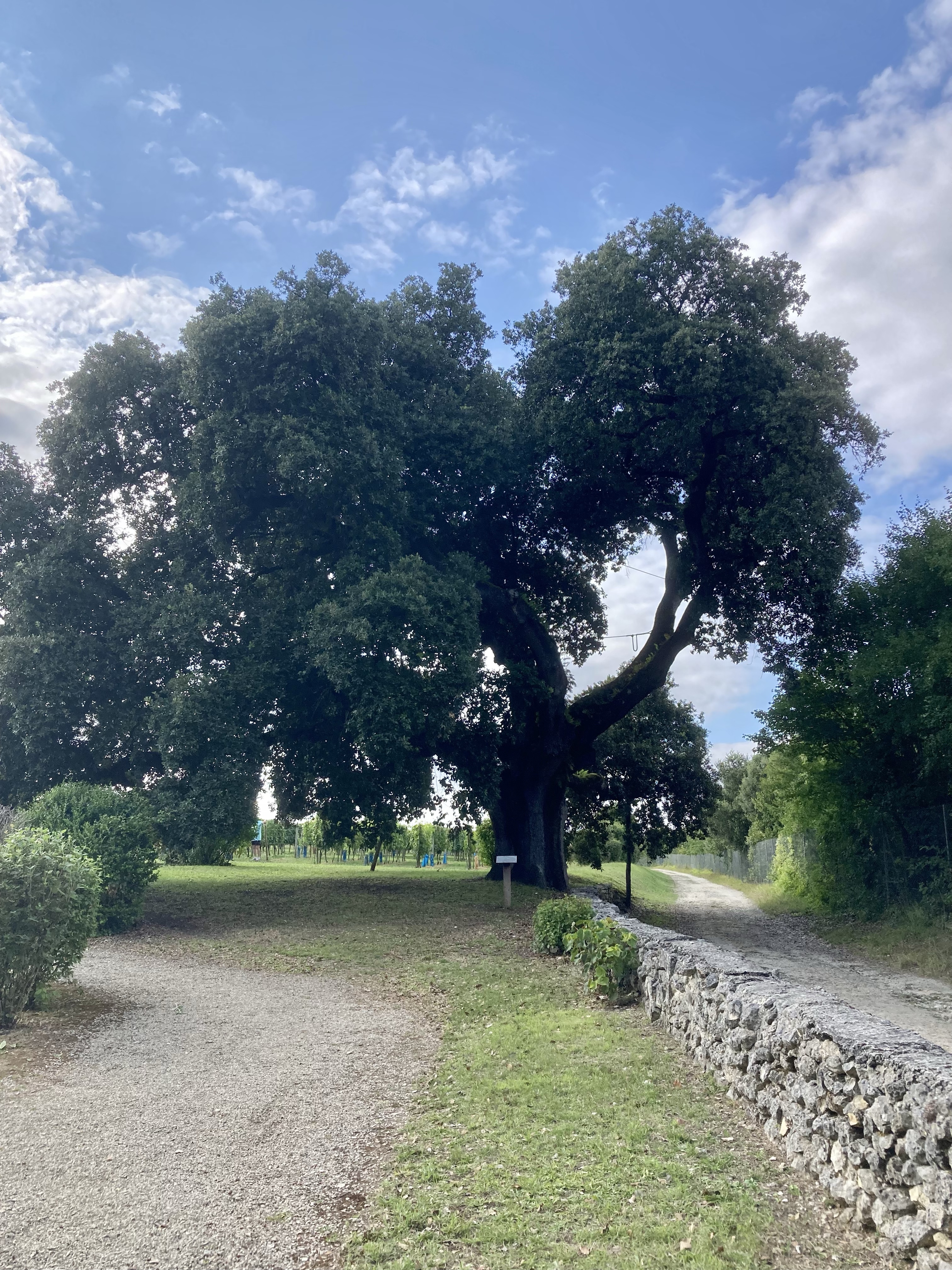
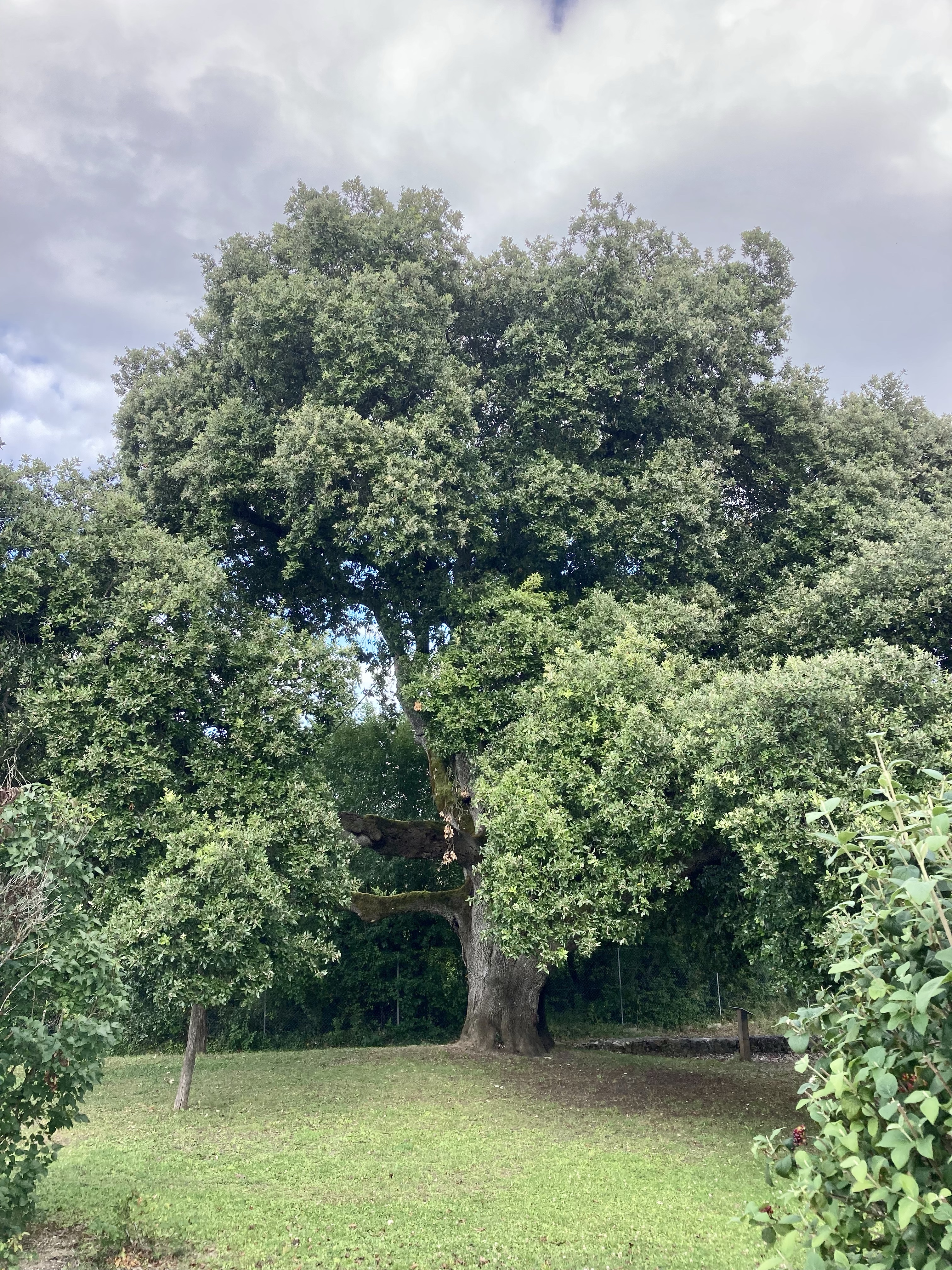
Yesterday I went to visit this tree. These four photos give you some idea of what it looks like.
It was planted here in South West France to celebrate the birth of Francois Premier, King Francis the First, who was born in 1494.
That makes this tree over 500 years old.
Can you imagine being alive for 500 years? Being alive and thriving?
We humans have a real belief in our superiority in this world but look at this tree. It can capture the Sun’s energy directly and use it to convert the carbon dioxide and water in the air into sugars to nourish itself. It can breathe out oxygen, without which none of us could exist.
This tree has learned how to survive and thrive on this planet Earth in ways we humans can’t even dream of, not even with all our knowledge and technology.
I’m not saying we would be better off being trees. But I am saying there’s a lot we can learn from a tree like this.
Shouldn’t we be learning from Nature rather than trying to exploit and dominate her?
This fossil fuel based focus on grab and consume is fast reaching its outer limits. It’s time to change course isn’t it?
Time to learn how to adapt, how to survive and thrive in ways which enable us, and Nature as a whole, to live and grow. Learn how to live sustainably. Learn how to savour and relish our every day lives.
I don’t think we humans will ever live for hundreds of years. We’re not trees. But I can trace back my personal family tree back to the early seventeen hundreds in Scotland. That’s 300 years. Will that family tree survive another 300 years?
I know that stretches the traditional seven generations thinking a bit, but why not? The truth is my family tree….our family tree….the one you and I both belong to…goes back a lot further than the 18th century. So why not allow ourselves to dream, to imagine, and to conceive of another 300 years?
We’re going to have to change our attitudes and habits though aren’t we? We humans I mean. We’re going to have to give up on the fantasy of infinite consumption and perfect control of the world we live in.
But then this pandemic, and the rapidly increasing frequency of floods, fires and storms is telling us that, isn’t it?
There are certain numbers which are described as magic numbers in particular cultures. Whether they are magic or not, there are clearly some numbers which are powerfully significant and which appear widely a huge variety of forms.
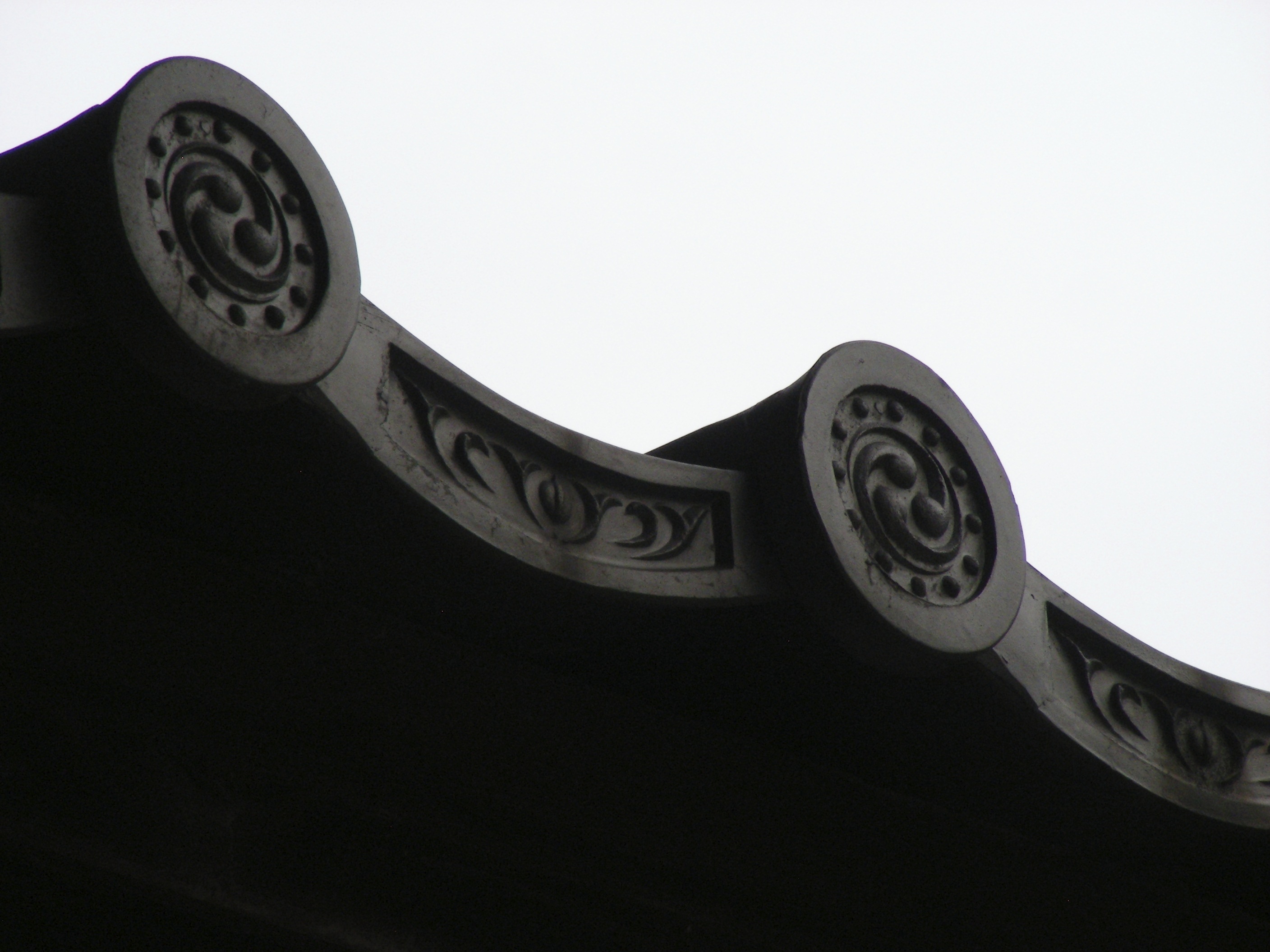
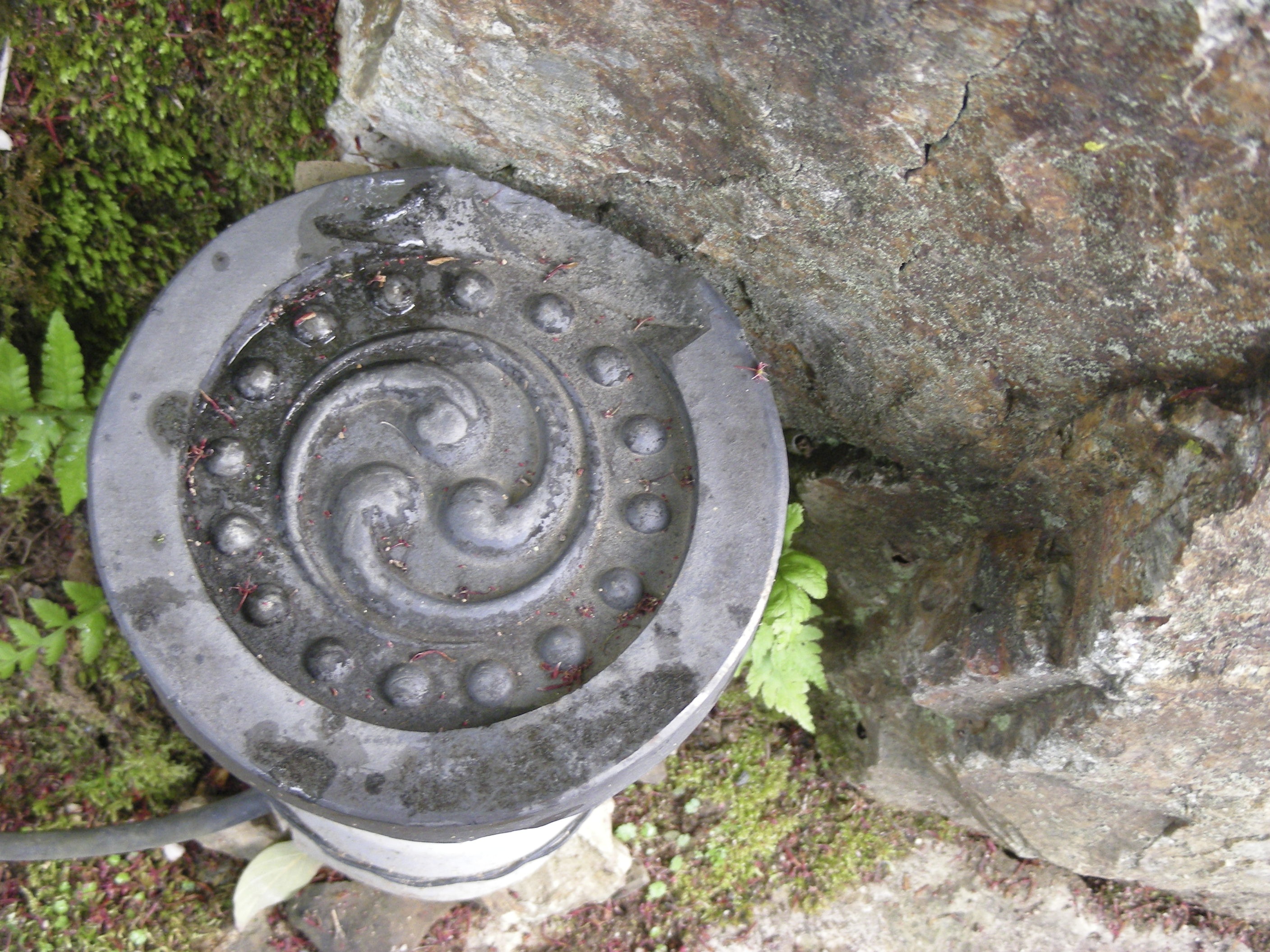
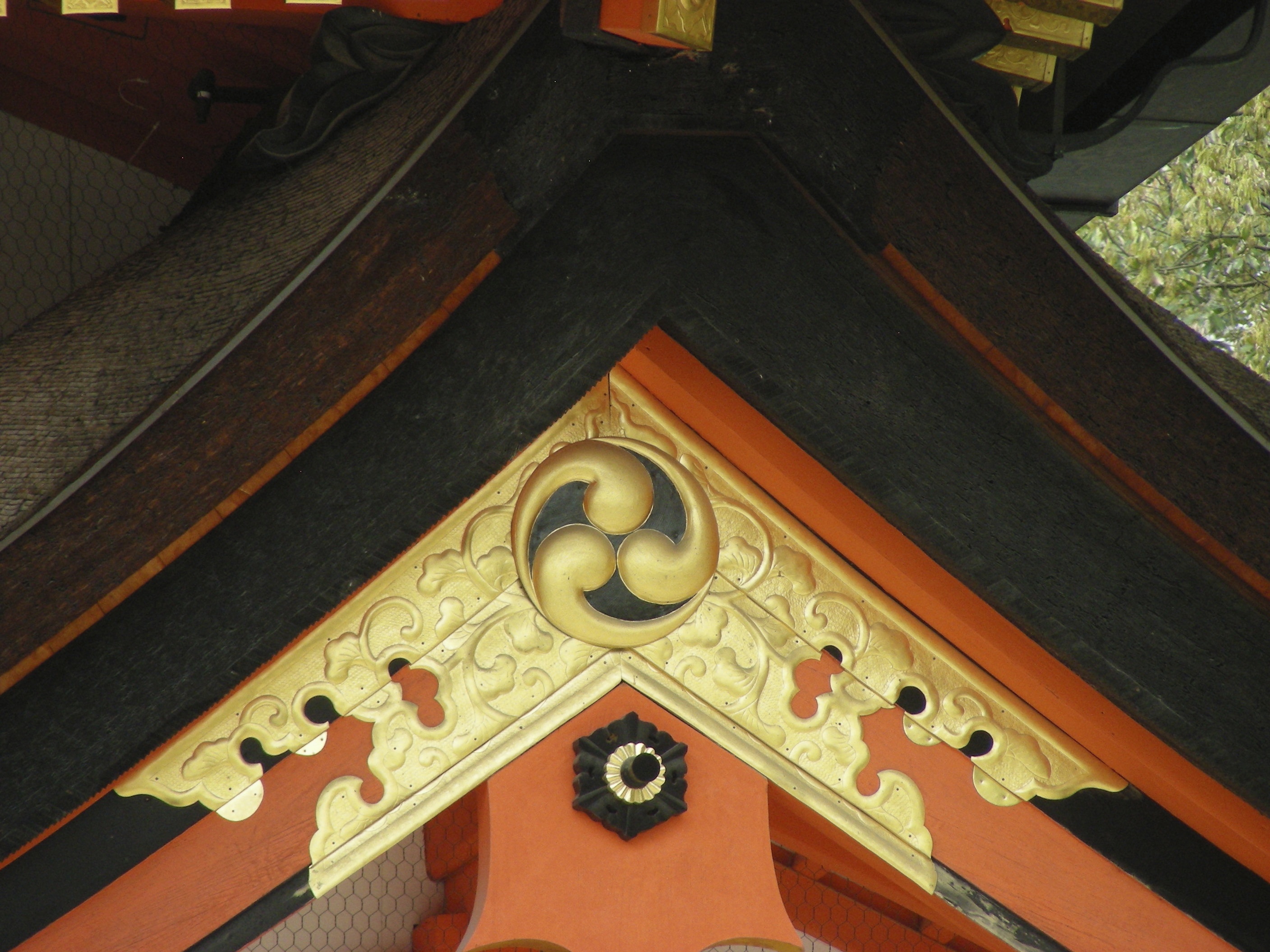
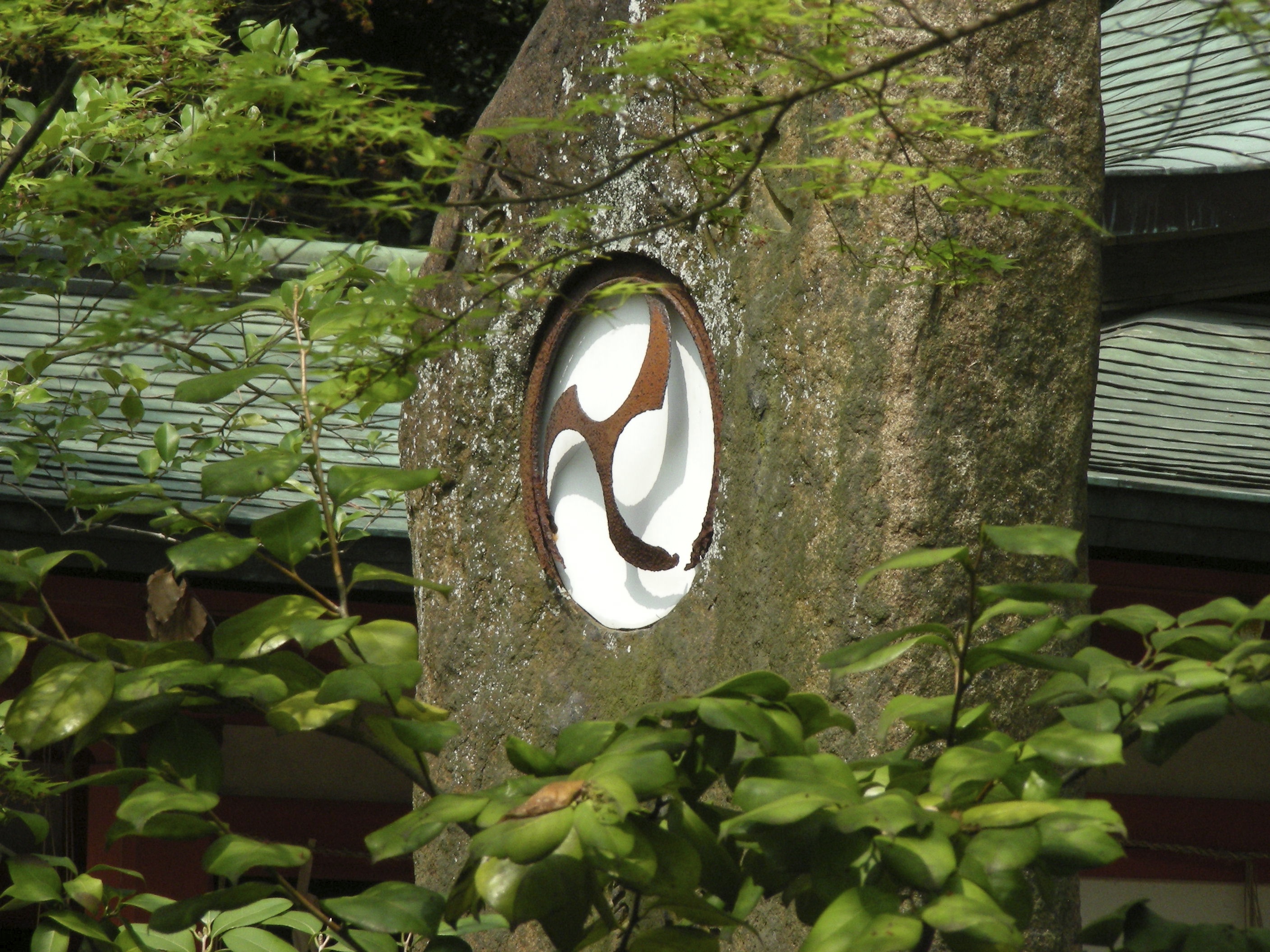
I could probably make the case for most single numbers to be thought of as significant numbers. But the one I want to highlight today is “3” because I just stumbled across this little group of photos I took during a trip to Japan some years back.
This symbol, of three “comas”, or “tomoe”, is one I kept coming across everywhere. The first photo shows it at the end of a roof, and this is really, really common in traditional Japanese architecture. The second one shows it on the lid of a pump at a fountain. I really like that something everyday, something otherwise quite functional or mundane, is made more beautiful this way. The third one is at the other end of the scale – it’s gold and magnificent. But perhaps the one I like the best is the biggest image in this collection. It’s embedded into one of those wonderful, standing rocks you find at temples and shrines. The white background looks like a light source, but it isn’t. I love the “wabi sabi” appearance of the rusty, reddish metal which forms the shapes of the three commas, and I especially like how the sun casts the shadow of the same symbol onto the white background.
Maybe I find this symbol of three commas especially attractive because it reminds me of the dual, yin yang, symbol, a version of which I wear around my neck. But more because the Celtic form, known as a “triskele” is a symbol which was around me as I grew up and lived in Scotland.
But to come back to the number 3……why do I, and I suspect, so many others, find that such an attractive, even magical number?
Well, for me, I relate it to “body, mind and spirit”, which is one of the key ways to think about an holistic approach to human wellbeing and health. Throughout my entire career, both as a GP in the first couple of decades, and as a Specialist in Integrative Medicine, in the second couple up to retirement, taking a holistic approach was the keystone of my everyday work.
As a medical student back in the 1970s I was hugely impressed with a “Biopsychosocial” understanding of Medicine. There’s another “3” – the biology, the psyche, and the social – all of which, my teachers impressed into me, were important in health care. In fact, it’s been the dominance of the “materialist” approach which has been my main source of discomfort in our form of health care which reduces human beings to data sets and Medicine to pharmacology. That never impressed me, and it still doesn’t.
It’s always struck me that whether I come from a “body, mind, spirit” position, or a “biology, psyche, social” one, that only one of the elements of those triples, is visible. Only the body, or the “biology”, can be observed, palpated, measured. The other two, the mind/spirit or psyche/social, are invisible, and, frankly, I’d say irreducible to measurements. Materialism can’t capture them. Maybe that’s why I’ve always given such emphasis to the individual story, to emotions, thoughts, values and beliefs.
As I understand it, it’s not completely clear exactly what the triple commas represent in Japan, but it’s sometimes related to something like three kingdoms – of Earth, of Heaven, and the Mundane World, or to the Gods who rule each of those kingdoms. In Western thought, perhaps the triad would be Heaven, Earth and the Underworld.
It does strike me as interesting that Freud came up with Ego, Id, and Superego, as his tripartite model of the human psyche. And Lacan, I believe, wrote about the Imaginary, the Real, and the Symbolic in his model of the psyche. I’m also struck by the more modern psychoneurological triad based on the structure of the central nervous system – the “triune” model of the “reptilian”, “limbic” and “neocortex” structure, something which I used a lot with patients after I learned Dan Siegel’s “hand model of the brain“. By the way, he also describes the “map making” capacity of the frontal cortex as an ability to create maps of “me”, “you” and “we” (another interesting triad)
Hey, I could go on, but I’m sure you could add your own favourite triads and triples to this understanding.
Powerful as the number 3 is, I often think in terms of other numbers. I’m quite a visual thinker and as I explore ideas I’ll often find I’ve created little maps of 4 zones, or 5, 6, or 8 pointed stars. How about you? Are you aware of these numbers and their symbols in your thinking and your culture?
What makes it so noticeable? It’s difference from other paths, to be sure. In other words it’s uniqueness. But also it’s the fact it’s made of so many, different, diverse parts.
It isn’t a path of standardised, homogenised, industrially produced slabs.
All of our life paths are like this path. No two days are the same. At least, not if we pay attention to the here and now. Because there are many opportunities to marvel about, be amazed by, and to delight in, the uniqueness of the every day.
Heroes not zombies, folks. Choose awareness and active, non judgemental attention over autopilot.
Why are so many Beatles songs coming into my head these days? Cos, that’s the first thing that happened when I looked at this photo of the trail left by some little creature on the dew covered table in the garden. I don’t know what the little creature was because it had either left or it was invisible! But it sure looks like it took a long and winding road
Although I don’t know what it was that took this winding, seemingly random, constantly changing path, but it immediately strikes me as NORMAL.
Have you ever watched a butterfly in the garden? It flies like this. If you could visualise the trail of its path through the air it would look a lot like a 3D version of the one in this photo.
The hummingbird moth is the same. As it flies from flower to flower on the buddleia bush the path it takes is just as apparently random and chaotic as this.
The Hoopoe running around the garden stopping to drill his long curved beak deep into the soil under the grass takes a path like this.
In every case the path looks chaotic and random. It is utterly unpredictable at every moment.
We humans have developed industrialised ways of living. Industrial management demands consistency and efficiency. We are taught that a straight line is the shortest distance between two points, and is, therefore, the best. Industrial work demands that human beings set aside their uniqueness and perform the pre-ordained tasks set by management standards to achieve “the same outcomes” every time.
Mass industrial production favours sameness and promotes brands over creative difference turning street after street and town after town into lookalikes.
There’s a comfort in that industrial approach. It’s familiar. It’s predictable. You can have the same experience in McDonalds in Paris, Tokyo or Moscow as you do in New York.
But the price of all this efficiency and standardisation is a loss of humanity, a devaluing of the unique, singular individual.
And it makes me wonder about the whole concept of efficiency which focuses on predictability, straight, linear lines and processes and sameness.
After all, if evolutionary theory is right, all these creatures would have developed systematised, predictable, standardised ways of behaving instead of these apparently chaotic, squiggly, random ones, wouldn’t they?
Looking at it from this perspective isn’t Nature showing us the evolutionary advantage of randomness, irregularity, and unique difference?
I think it is.
Here’s another aspect of that little trail – it kind of looks lost doesn’t it? Either it’s the trail of an explorer, turning this way and that, following instinct and whim, moment by moment, millimetre by millimetre. Or it’s a wanderer, ambling around, stumbling across this and that.
Isn’t that appealing?
Wouldn’t you prefer to be an explorer and a wanderer to being a standardised cog in somebody else’s machine?
Wouldn’t you prefer to make your own unique, singular path through this life, than follow the straight, linear, programmed, standardised one?
The gardens in front of The Gallery of Modern Art in Edinburgh has several thought provoking sculptures. I photographed this one many years ago.
I suppose you could look at this and see a pretty simple set of goalposts. But they aren’t set on a pitch. So rather than thinking of sport I find they always make me wonder about the whole phenomenon of goal setting.
We humans have imagination. Imagination allows us to look into the future and have visions or ideas about it. On the one hand imagination is the source of all our fears. We look into the future and we’re afraid…afraid of dying, afraid of harm, of loss and of failure (add your own favourite fears here!)
But imagination is also our creative super power which enables problem solving, the expression and communication of ideas, thoughts and feelings.
Imagination does something else too – it fashions our aims and goals. In this respect it powers our ability to achieve.
Creative visualisation has been shown to be a powerful tool which enables achievement. It’s used, for example, in sport. The Olympics are happening as I write this and you’ll often hear sportsmen and women say how they have visualised winning a medal, maybe since they were children.
But let’s return to this photo. I took my time to choose my viewpoint. What I liked, and still really like, is how you can see a small tree growing in the frame of the goalposts. That makes me focus on the tree, but it’s not just a tree growing in some random place. It’s a tree growing in the context of a goal.
That makes it a vision of the future for me and sparks my thoughts about how goal setting is more than just imagining an endpoint (which it often is). We can set our intentions on nurture and growth. We can look ahead and imagine the kind of world we would like to seed, to plant, to nurture and to care for. And we can anchor ourselves in the here and now and do what we can do today to tend to, look after and support whatever it is we want to grow.
I want to grow more love, care, understanding, wisdom and mutually beneficial relationships.
This image helps me to do that.
How about you? What future would you like to nurture today?
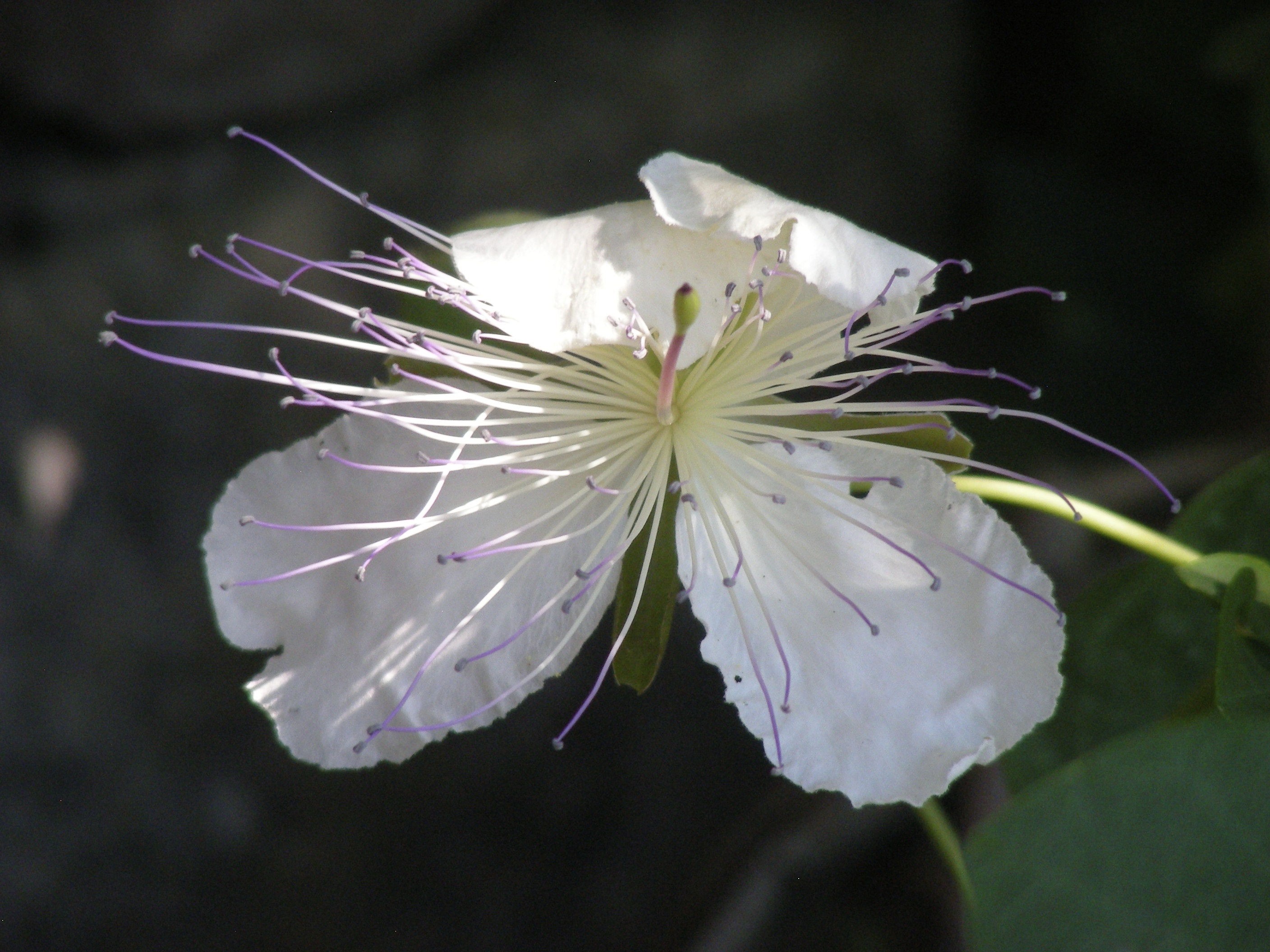
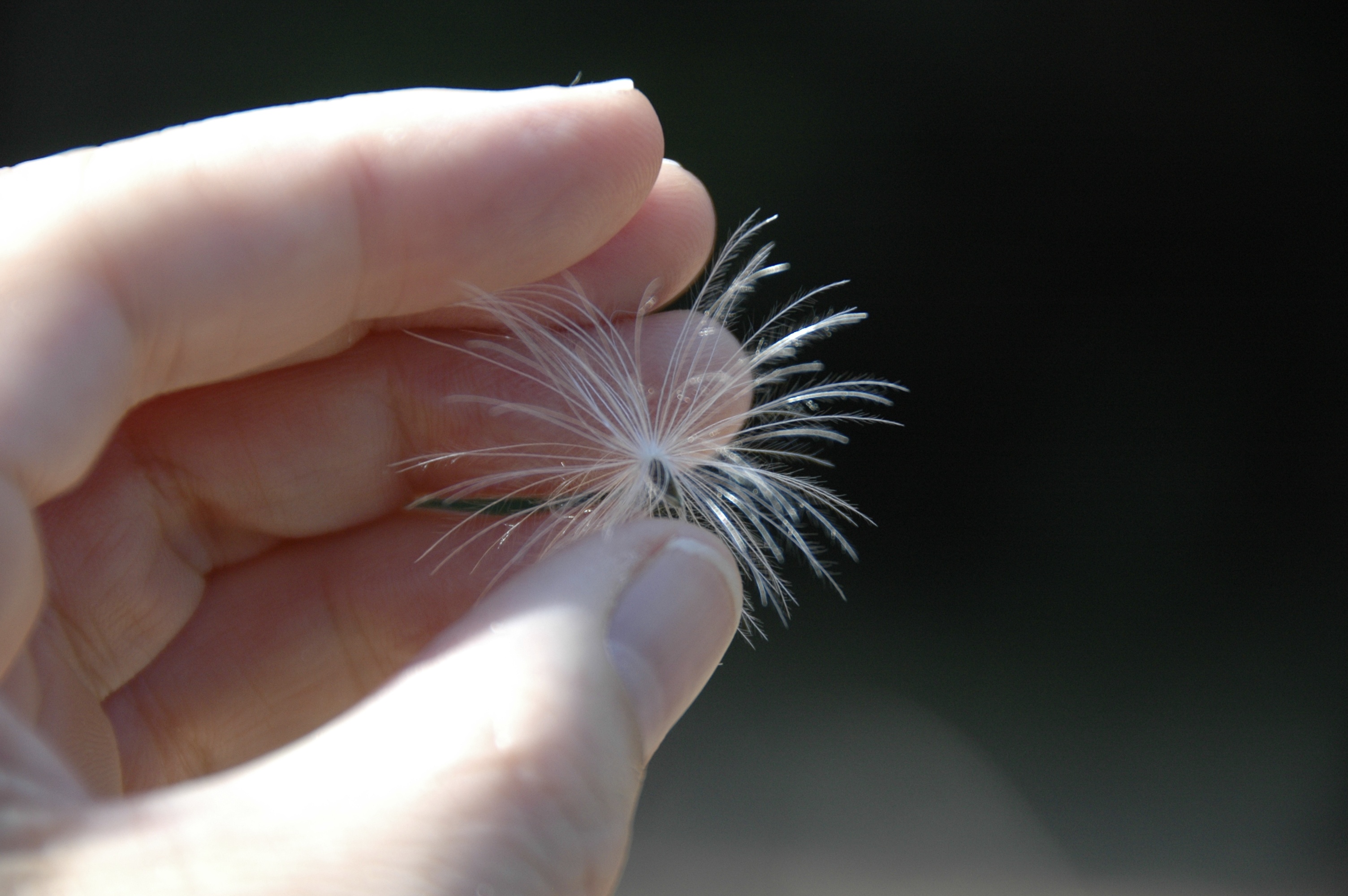
I stumbled across these two photos today and was immediately struck by the similarities between them. The one on the left shows a flower with a fabulous array of stamens, spreading out like whiskers, each one just waiting for its pollen to be collected, then hopefully used to fertilise some new seeds. The one on the right shows a single seed with its wind catching fibres reaching out, again, just waiting to be collected and transported somewhere else.
In both cases there is something astonishingly passive about these important features. I suppose passivity is much more obvious in plants than it is in animals, but looking at these images reminds me just how much of Life is dependent on chance and good fortune. But is this really passivity? Or is it maximising their chances?
The plants have no way of ensuring either their fertilisation, nor the successful dispersal and future growth of their seeds, but they have invested all their energy and evolutionary development into maximising their chances.
I’m struck by the rise of uncertainty in recent times, by how nobody seems to know for sure what’s going to happen next in this pandemic, or even how best to respond to it. And, yet, alongside that heightening of uncertainty there seems to be an increase in the numbers of people claiming certainty……whether it’s government ministers claiming that at all times they are taking, and have taken, the absolute best decisions, or it’s experts confidently predicting what’s going to happen next.
Maybe uncertain times increase dogmatic, authoritarian voices to meet the unmet need – the need we all have for a degree, at least, of certainty and predictability in our lives. But surely another way is possible. Surely we could opt for transparency, honesty and humility?
In several spheres at once…..Public health, the environment and climate, the economy, politics and society…….we are more acutely aware of uncertainty and unpredictability than ever before. So, maybe instead of seeking false reassurances we’d be better investing our time and energy in developing resilience and adaptability.
Isn’t that a better way? Like these flowers we can do our best to maximise our chances of both surviving and thriving…….not by seeking certainty, but by focusing on the underlying principles of Nature – diversity, adaptability, flexibility, and making “integrative” connections (mutually beneficial bonds between diversely different parts).
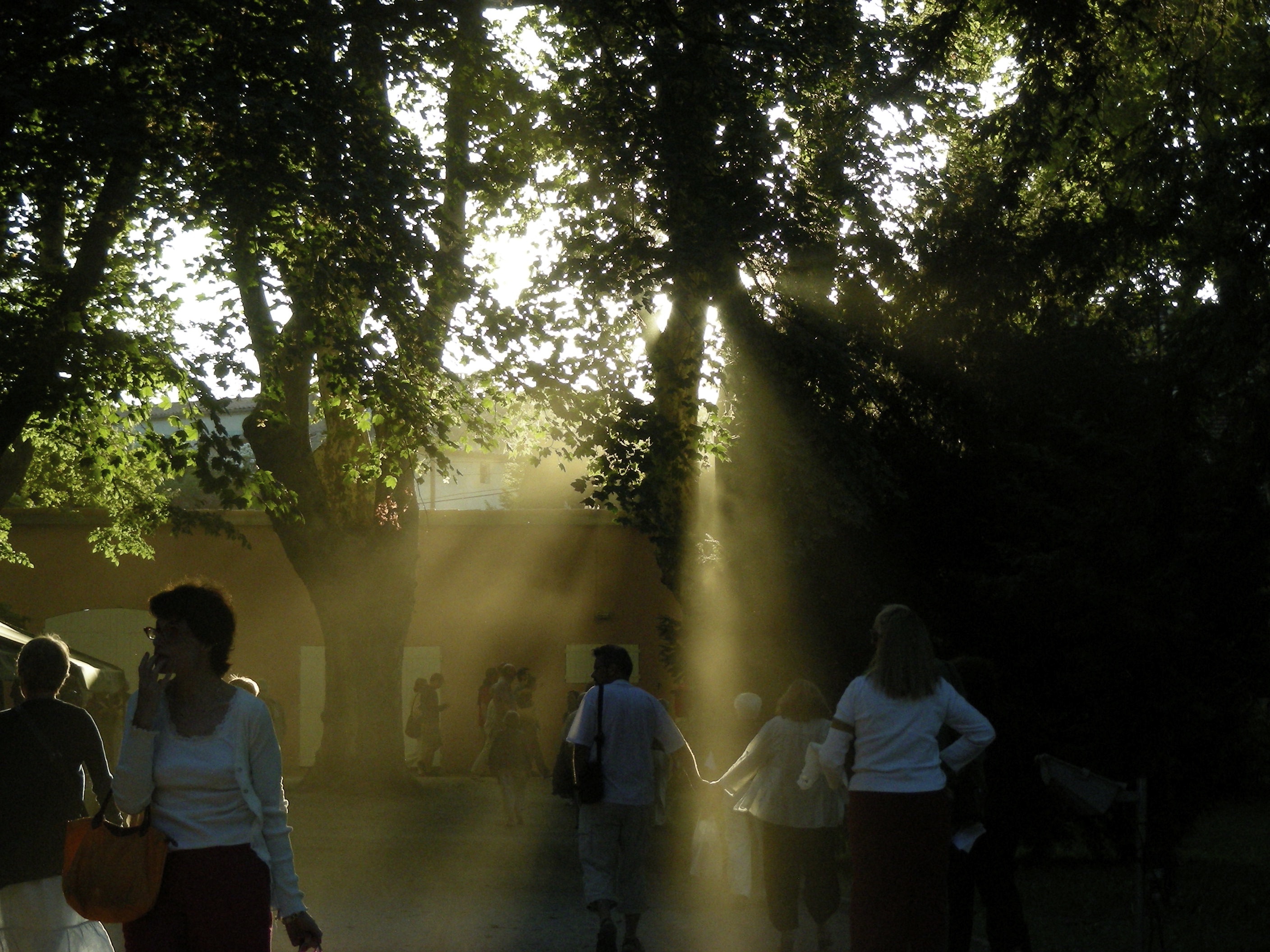
I took this photo at a festival in Provence many years ago. As we were all leaving the venue (it was a piano recital in a forest), the sun was sinking a bit lower and the shafts of light streaming through the trees caught my attention. It’s one of those photos which only revealed a whole other dimension once I looked at it on my computer. See how the brightest sunbeam is illuminating a couple who are holding hands. Actually, it is illuminating their hands, drawing our attention to exactly this – holding hands.
So, when I came across this again this morning, yet again, it inspired a train of thought about holding hands. I know that since this pandemic began we’ve been forced into way more social isolation and distancing than most of us are happy with, and a lot of the focus has been about holding loved ones again…..about having a hug. Well, I share that, and look forward to hugging some loved ones soon. But in addition to the desire for hugs, I think there is this important part of human, physical contact which is about holding hands.
Maybe holding hands isn’t as passionate as hugging, but it is such an important part of the way we connect. It’s an important part of our personal lives and physical hand holding is something which almost casually, almost unconsciously connects us with others to whom we feel close. It’s a longer term connection than a hug too. You can go for a walk and hold hands all the way. You can stroll along a beach, through a forest, along a city street, or sit quietly on a park bench, or in a cafe, holding hands.
Most hand-holding occurs side by side. It’s that connection which embodies and symbolises having “someone by my side” and “someone who stands with me”, or someone who is sharing a part of life’s journey with me. We all need people, not just to “have my back”, but to “be by my side”.
But we can hold hands across a table too. You can look into someone’s eyes, raise a glass, tell them you love them, whilst holding hands across a table.
There are other situations too where hand holding is important and powerful……I’m thinking of the shared times between patients and carers. Holding someone’s hand as an act of compassionate connection is a terrifically powerful thing to do. We can connect, you and I, through words, through talking and listening, but touch magnifies the connection enormously. I don’t know if you know about the work of the Heartmath Institute, but they have shown that our heart beat rhythm radiates an electromagnetic field which can interact with that of another who is metre or so away from us. If my heart rhythm is in a state of “coherence” I can induce a similarly coherent state in the heart of someone standing next to me. If we hold hands, that harmony increases several fold, producing coherence in both of us, more quickly and more powerfully, than when we are standing apart.
So, this is my salute to hand holding. Maybe it doesn’t get much publicity or promotion but I honestly feel that the more we hold hands, the better our relationships are going to be…..and vice versa.
This single distinct sunbeam pouring down from under the base of the cloud sitting atop Ben Ledi is beautiful. When I look at it I can’t help but see that it illuminates a particular area of the ground.
On a blue sky day the sunlight illuminates large areas of ground pretty equally but with weather like this where sunbeams drill down through gaps in the clouds we see certain parts, particular areas, more distinctly than the rest.
We do employ these two modes of attention all the time. We have a wide, open attention which takes in the whole scope with a broad brush. And we have narrow focused attention that emphasises certain parts.
I was taught the practice of Medicine in a particular sequence – the story, the physical examination, then the investigations.
Diagnosis begins by paying attention to the whole person, using both these modes to elicit particular aspects of the patient’s story whilst continuously contextualising every element.
I was taught that the bulk of diagnosis would emerge from the story. After that a “relevant” physical examination would allow the potential discovery of certain physical changes in the body. Finally, some tests might be needed to be more sure – blood tests, x rays, scans etc.
We were taught this process in a pretty linear manner. But the idea was that as you gained experience and skill you integrated the various approaches, no longer needing to stick to a rigid, linear sequence.
What I gradually came to realise was that this approach prioritised the subject, not the object. It shone the bright light of understanding on the unique person’s story, on the particulars of their experience and contexts. None of that could be measured.
The accessory elements were those which considered the person’s body as an object, to be examined, probed, observed and measured.
It was all important of course and not hierarchical….each aspect informed the whole, the understanding of the whole person.
The trouble, I think, emerges if we prioritise the object to the exclusion of the subject.
I’ve heard young doctors say they’ve learned “Don’t believe what the patient says. You can only trust the data” (by which they mean the measurements). This strikes me as seriously misguided. If the doctor doesn’t believe what the patient says how can they know them, how can they understand them, and how can they establish trust? In fact how can they even make a good diagnosis?
There’s a danger in putting too much attention onto the physical findings….especially when the physical findings don’t reveal the problem.
So much of what we experience can’t be observed and measured by another – pain, energy, nausea, dizziness, itch, hypersensitivity, emotions, thoughts, values and beliefs.
Only the unique human subject can express those experiences others. And they do that through their story, through their behaviour, and, ultimately through their body.
Funny how we need to pay attention to the invisible to know the human, huh?
You could say “It’s just a cloud”, but that word, “just”, sets up a whole series of limits. It limits the imagination, cutting it off before it gets going. It limits meaning, preferring only the superficial one, and choosing not to dive any deeper. It limits attention, because who is going to linger over anything that is “just” something? Who wouldn’t want to move on and try to find something which is “more”?
So, it’s not “just a cloud” when I look at it.
This cloud has shape and form. It seems to come from a narrow origin point down in the bottom left of the photo, and to swell out rapidly to fill the image’s entire top edge. It has a form like a cone. Or like a river expanding into an estuary. Or it is like a puff of smoke spreading out into the wide blue yonder.
Or it’s a genie……just escaped from a bottle.
I heard that phrase used the other day there, so that’s probably why my mind opened up the possibility of this being a genie. I heard an epidemiologist replying to the question, about covid, “When will this all be over?” (haven’t we all been asking this question again, and again, for many weeks now?) He replied “Once that genie got out of the bottle, there was no putting it back”.
So, that’s that then.
Covid is here to stay.
Or it’s not.
Because, if there is one thing I’ve become ever more sure of during this pandemic, it’s that nobody knows. Nobody is any good at predicting the future.
There’s something else I’ve become sure of during this pandemic. You can’t be sure of anything.
There have been, and continue to be, plenty of people claiming certainty. People claiming they know exactly what to do, what measures to enact, what advice to give. People claiming they know that they are making the best possible decisions based on the best possible science. But then things change again. And it turns out their certainty was misguided, or worse, a pretence.
Does all that sound a bit bleak?
Well, I think it probably does, and there are certainly times during this pandemic where each of us feels somewhat overwhelmed, a bit flattened, a bit done in by it all. Different people have had different challenges, different traumas, different problems to deal with. Some, on the other hand, have profited. Some have cashed in with lucrative contracts. The richest 0.1% have got a lot richer I believe. But that just goes to show, this genie doesn’t have the same effect on every one of us, does it?
But here’s the thing. This genie has made a few things a lot more clear.
It’s clearer now than ever that change is the only constant. The virus has changed, our responses have changed, the pandemic has changed. And that isn’t going to stop. So when the epidemiologist says covid is here to stay, it doesn’t mean life is going to stay this way……because that’s not what life does.
We change too. We adapt, we reflect and re-consider. We make new choices. We can make new choices.
What I see more clearly now than ever is that our societies are vulnerable, our way of life has become precarious, and that we should attend to those failings if we want a healthier, more sustainable, way of life. Just look at who has been hit the hardest by this bug. The elderly, the poor, the disadvantaged, the chronically sick. Is it beyond us to come up with better ways to look after the elderly, to reduce poverty, to address injustice and unfairness, to enable those with chronic ailments to live healthier, stronger lives? Surely not.
Actually a lot of light has been shed on many issues since this genie got out of its bottle.
We’ve learned the value of community, of living locally, of spending more time with family and less time commuting. We’ve discovered some of the joys in the everyday present, some of the wonders and delights of the here and now. We’ve realised how interconnected and interdependent we all are.
We’ve seen and heard countless stories of acts of care, compassion and commitment. Can we build on those? Can we nurture those?
We’ve learned that many of the poorest paid workers are actually “key workers” or “essential workers”. Will we remember that, as the pandemic wanes?
Perhaps more than anything we’ve learned that we human beings are social creatures. We need each other. Relationships and communication are important to us. We’ve learned that when we work together, when we collaborate, rather than competing with, or fighting with, each other, we can achieve some pretty amazing things. Can we build on that? Can we nurture that?
There will be other genies on the way, and we’ll need the same skills, talents and values……care, compassion and collaboration. It strikes me that if we build on those we can create a better, more resilient, more sustainable way of living. Is that possible? What do you think?
I welcome constructive criticism and suggestions. I will not, however, tolerate abuse, rudeness or negativity, whether it is directed at me or other people. It has no place here. ANYONE making nasty comments will be banned.






 Heroes Not Zombies