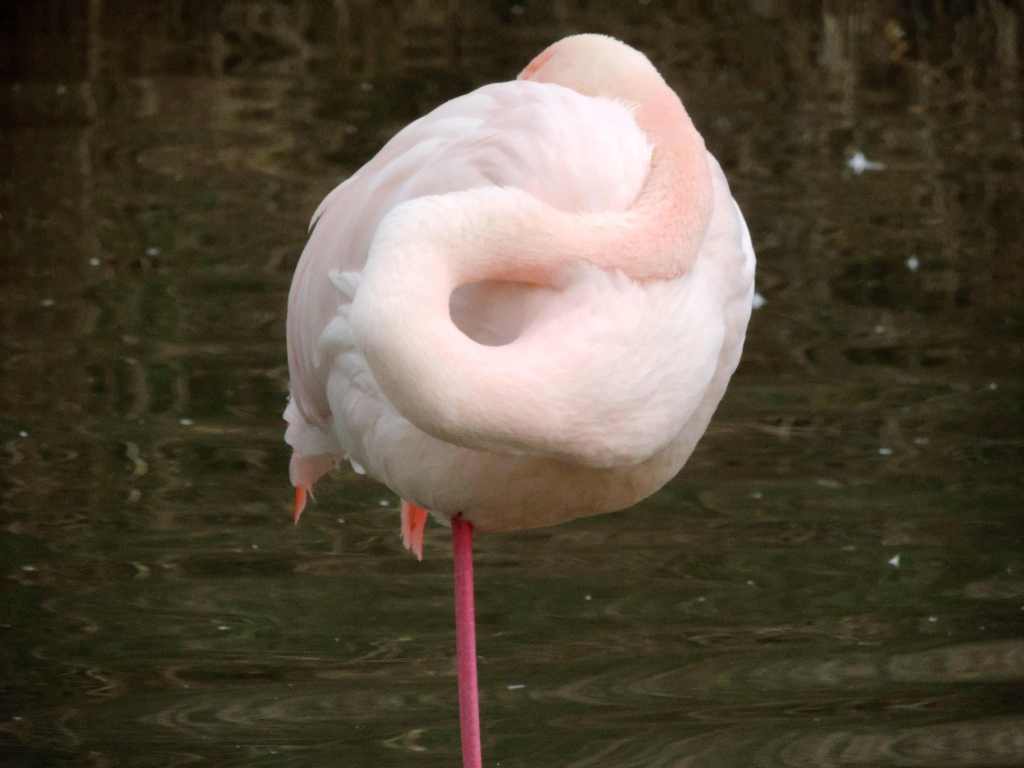
Probably not the same as this flamingo! These are the extraordinary creatures. The way they move flicking their heads back and forth, walking as if on stilts. When they fly they look prehistoric. And when they are sleeping….look how they stand on one leg and curl that long neck around their body. Astonishing.
I’ve visited the flamingos in the Camargue in the south of France a number of times. They are always impressive, always wonderful. There was an item about them on the French lunchtime news yesterday which prompted me to browse my collection of photos of them and share one with you today.
The phrase that popped into my head when I looked at this one was “Are you sleeping comfortably?” which got me musing about uniqueness again and how, over the years, patients told me all kinds of different ways they’d try to get comfortable when they were ill.
And that reminded me of how we shouldn’t judge. What might look odd, or even bizarre, to us, may well be the absolutely best coping strategy for someone else.
It takes practice to observe, listen and understand without judgement but goodness, how it open doors and builds trust.
We could do with more understanding and less judgement in the world these days. We are all different after all.
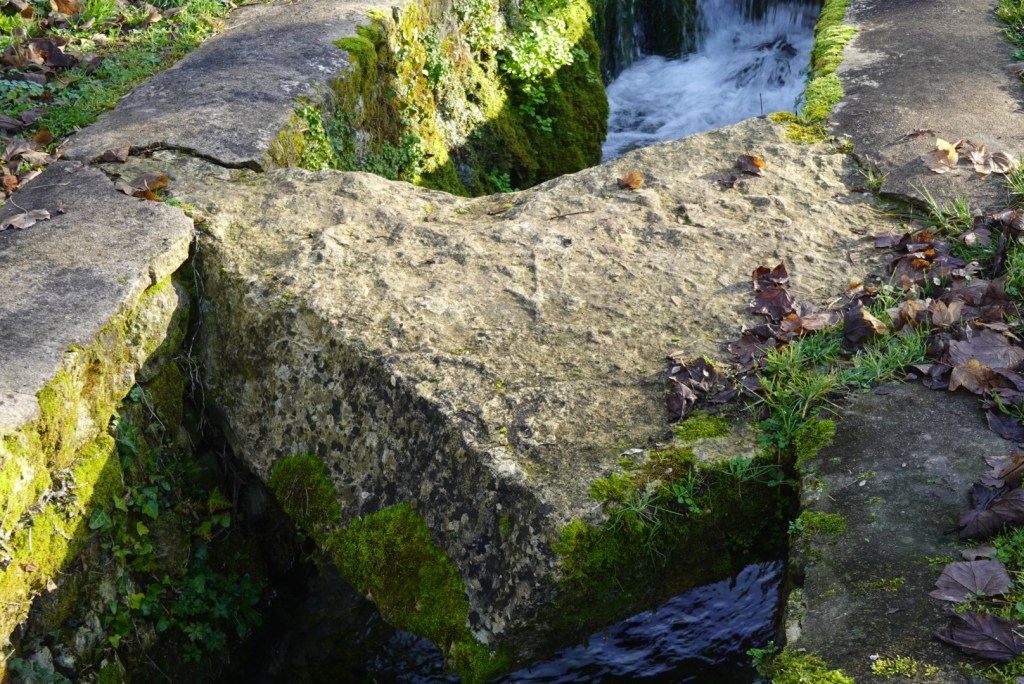
In the grounds of the Roman spring near my house I noticed this simple footbridge over the start of the aqueduct. To me, this looks heart shaped. So that got me thinking….
Saint Exupery says that what’s most important is what’s invisible and that we see the invisible with the heart. I think our scientific understanding of the heart has advanced a lot since I was at university in the 1970s. We know now that there is a neural network around the heart which is intimately connected with the brain. The heart, both through this network and by emitting electromagnetic waves through its rhythmic beating processes signals and communicates with the brain and the rest of the body.
We know now that the metaphors of the heart have an anatomical and physiological basis. When we talk about “heart felt”, “heart broken”, or having a “heart to heart” with someone we are using more than metaphors. We are describing a physical phenomenon.
I think this partly explains the “therapeutic consultation”. When the doctor and patient make a heart to heart connection, the patient feels more than heard and understood….they feel “felt”.
This powerful connection does more than enable good communication however. I think it also facilitates the healing response in the patient.
In fact I think this is true of all our relationships. When we build a heart bridge between ourselves and another we create a powerful channel for healing energies, for understanding, for empathy and for care.
Isn’t this one of the best ways to improve both our own lives and those of others? By establishing heart bridges.
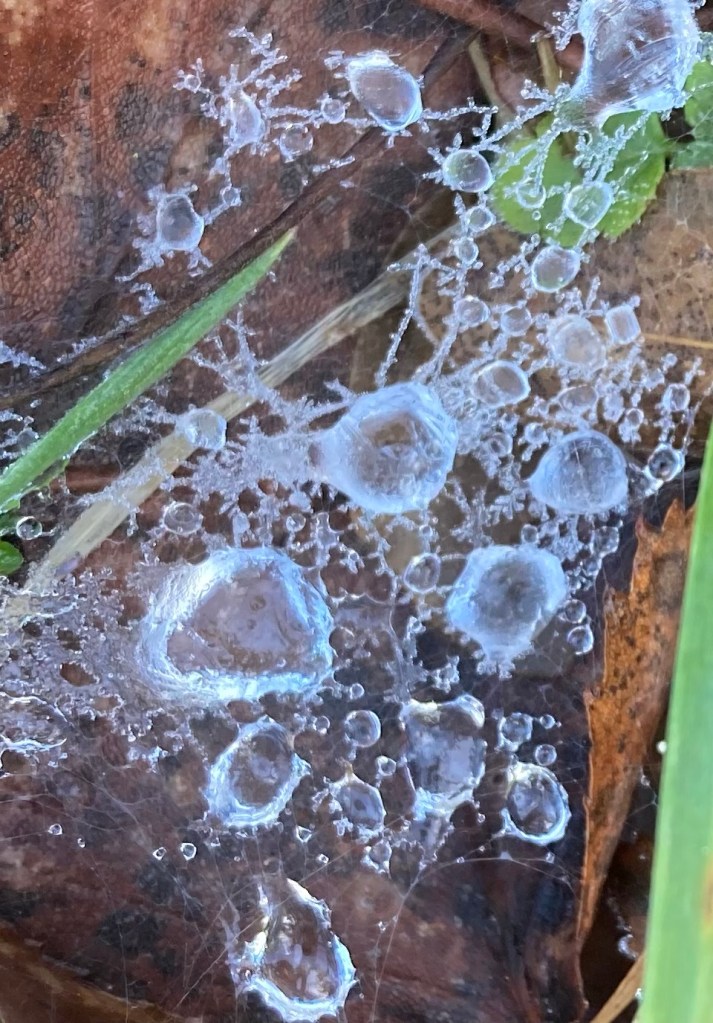
In the early morning at this time of year the grass is full of bejewelled spider webs. This is one of them. You could say there are hundreds like this, which would be true, but it’s equally true that every single one of them is unique. Try as hard as you like you won’t find two which share an identical pattern of water droplets and threads. Not only that, they change moment by moment as the temperature and humidity change and water molecules evaporate into the air. If you come back tomorrow you won’t find the same ones.
This beautiful creative process of interplay between a whole array of diverse elements amazes me…..grass, spiders, water, air, the Sun….and so on.
The basic characteristics of their structure is in fact the same – links and nodes. This network form is surely at least one of the most fundamental structures of reality.
I can look at this image and see morning spider webs in the grass, constellations in the night sky, satellite images of cities at night, neural networks in the brain…..
And as a representative model this same form describes social relationships, communities, road, rail, sea and air routes, cities….
Isn’t that remarkable?
At school in chemistry class we were taught a different model of reality – molecular models made of coloured balls and sticks. To an extent I can see that structure in this one but the key difference I think comes from a radical shift in perspective.
The old perspective is one of separate, fixed, often identical units – building blocks. The new one is of massively interconnected, dynamic, unique instances of natural occurrences.
I love this model. It’s a wholly different lens revealing those three great principles of reality – connectedness, dynamism and uniqueness.
One of the things which struck me during my many visits to Japan several years ago was the practice of tying wishes or prayers to trees in the gardens of shrines and temples. Even in the middle of Tokyo you’ll come across all kinds of sacred places where you step out of the bustle, noise, concrete and glass of the city environment into a magical, tranquil oasis of a temple or shrine surrounded by a garden.
This photo is one of many variations of the tying a wish or prayer to a tree tradition. When you see one of these trees from the distance you can be fooled into thinking it’s a tree in full bloom, especially when the little papers are pink like these ones. But when you step a little closer you see that what you’re looking at is an abundance of hope – a blossom of dreams, desires, wishes and visions of the future…..just waiting to be harvested.
I think this is a beautiful practice. My default in life is optimism, even though at times I can slide into gloomy despair and catastrophising! Can’t we all? But I think I’ve carried dreams, visions, hopes and expectations throughout my entire life. I still do.
I believe that wishes, hopes and prayers are important. They create aspiration and stimulate imagination. They give us targets and goals to aim for. They create “north stars” to guide our path forward. They stoke up motivation and will. They help to organise our energies to help us realise the life we want to lead.
I don’t know how this fits into your life but for some people affirmations are a way of achieving this. For others, it’s the creation of vision boards. And for others it involves guided visualisation. For some it’s probably a system of diaries, planners and lists.
Maybe this year I’ll write out some of my personal wishes, hopes and prayers and tie them to one of the trees in my garden. Hmm…..there’s something to explore (I should tell you I moved house about a month ago and the large garden has gone wild over the last few years whilst the house has been uninhabited, so I’m still venturing into thickets and discovering all kinds of plants, bushes and trees)
How about you? Have you a way of bringing out your hopes, wishes and prayers and using them to create the life you want to live?
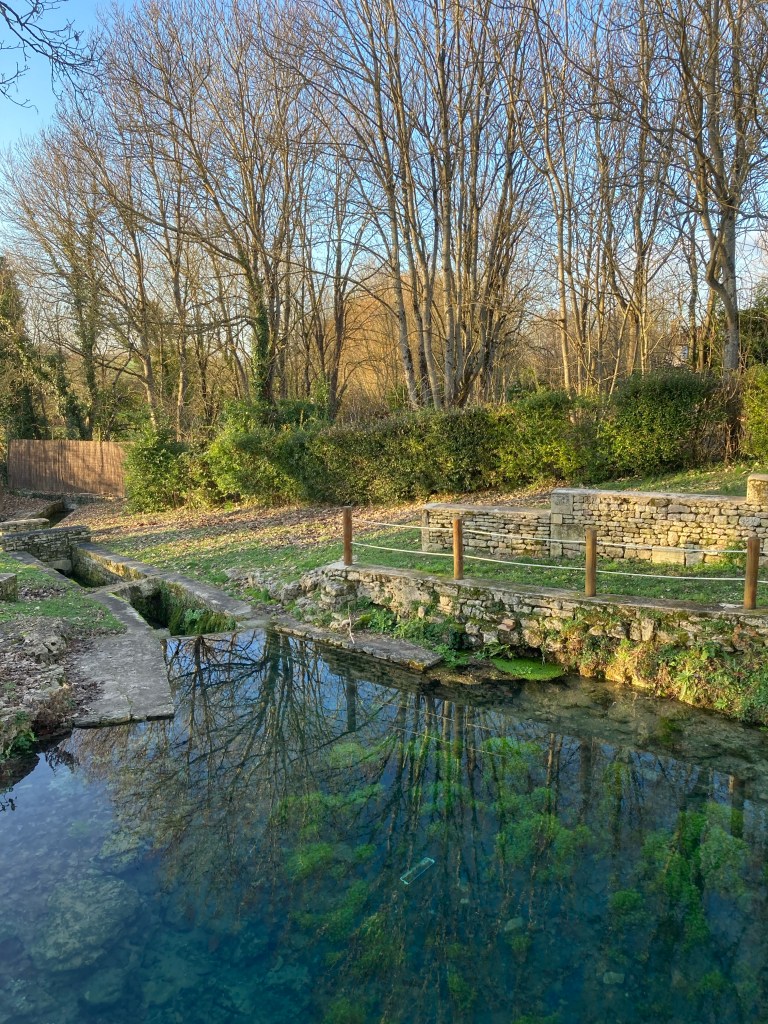
A couple of hundred metres from my house is a Roman spring (a “source” in French – isn’t that an inspiring word?). Here’s a photo I took there this week.
The water in the spring is so amazingly clear. It’s quite astonishing. So I’ve been taking a few photos down there since I moved in.
Take a look at this one. It’s a lovely image of trees which are perfectly reflected in the pool.
But wait a minute….the trees are bare, but in their reflection they seem to be completely covered in leaves! How can that be?
Well, look more closely and you’ll see that those leaves are actually green plants growing under the water – those leaves that have magically appeared on the winter trees aren’t anything to do with the trees at all!
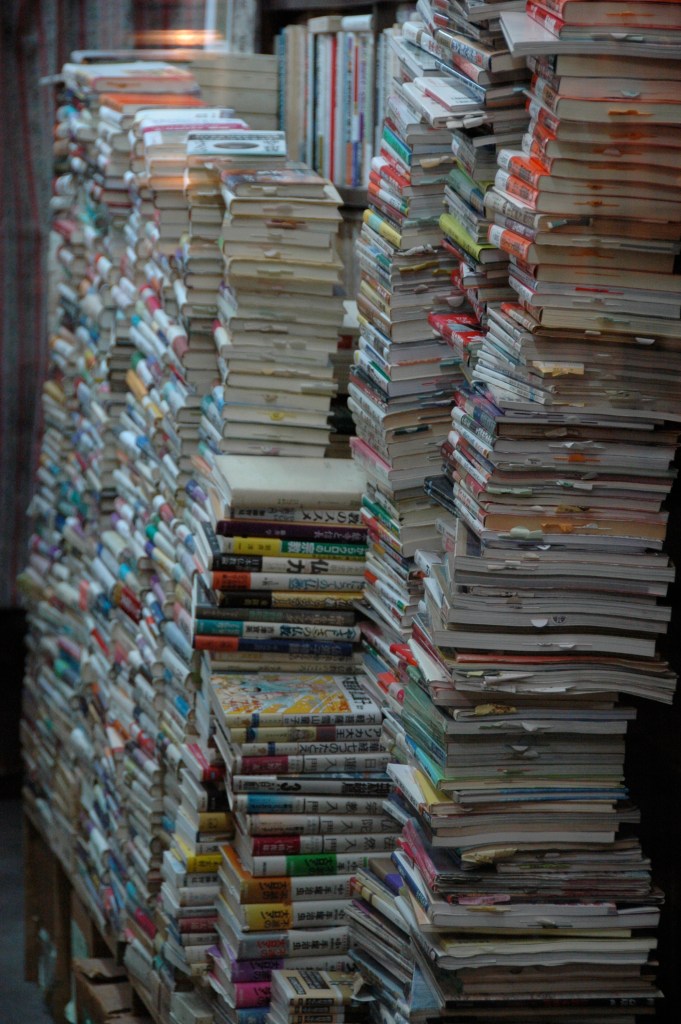
This is not a photo of my house! It’s a bookshop in Japan. However, I’ve just moved house and that’s entailed me putting every single book I own into cardboard boxes. I am now in the throes of emptying all those boxes and putting the books onto shelves. I imagine if I did empty all the boxes and stack the books up on the floor I could well take a photo like this! I haven’t counted my books (I read them but I don’t count them!) but I know I have a lot.
I’ve always delighted in books which nourish my curiosity and delight me with great stories. So I have many non-fiction books, many fiction books, and many books of art and poetry.
I’m finding that this process of packing and unpacking has led to me handling and considering every single volume so as I place each one on a shelf I’m doing so with deliberation and fully conscious thought.
This is exciting me! I’m rediscovering books which I haven’t seen in years, reaffirming my interest and/or joy in others and finding yet others which I meant to read but somehow never got round to it.
I’m sure you’ll have your own way of storing and organising your books. Maybe you store them by size or colour, maybe you use the Dewey Decimal coding system, but I just group them according to interest. I have all the poetry books together, all the philosophy books together, all the health books together and so on. I also have a special section for special books – ones which made the biggest impact on me, and which I return to again and again.
I know there’s a tendency to promote the biggest as best – the greatest number of something, the largest something or the most powerful something.
I’ve read we live in the attention economy where businesses compete for our attention by promoting the outrageous, the extravagant or the ridiculous. They try to catch our attention with shock, fear and anger. It’s not very appealing is it?
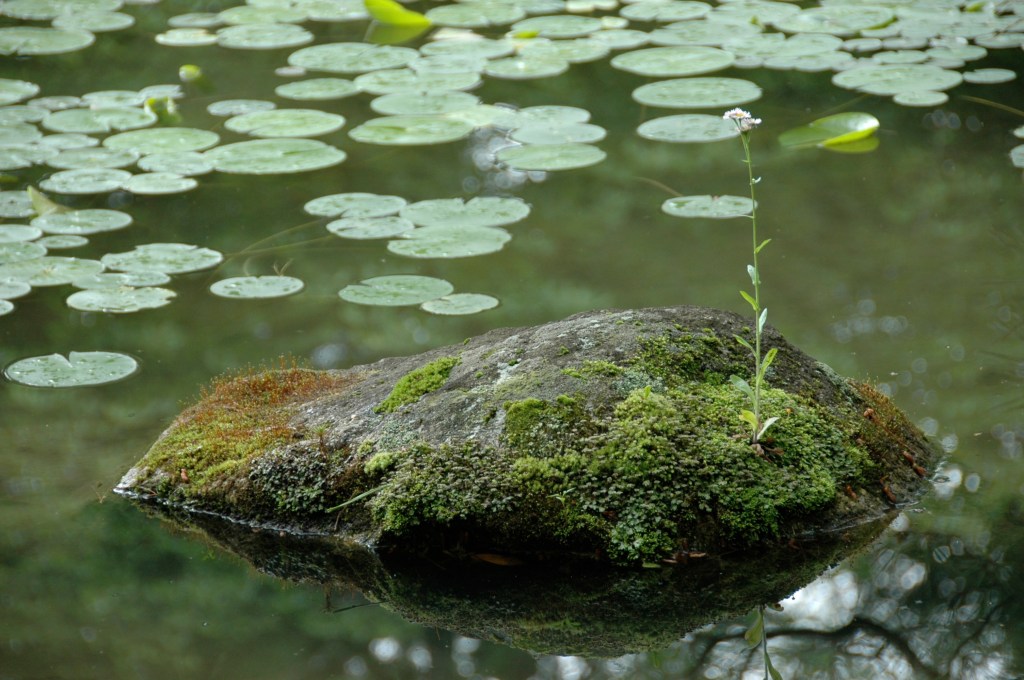
So at the opposite end of the scale I thought I’d share this photo I took of a single plant growing on a rock in the middle of a pond.
Doesn’t it astonish you? How does a little seed find the inner strength and driving vital force to grow sufficient roots on the surface of a rock and stretch itself right up towards the sun, then at the top of that spindly but strong stalk it flourishes, producing a delicate, and delightful, little flower.
I often think Nature is astonishing and it’s usually something small but remarkable like this which catches my attention.
Whenever I look at this photo I think of the phenomenon of bars or restaurants on the same street where one will be crowded and another virtually empty. The place I noticed that most was in Aix en Provence, along the Cours Mirabeau. It wasn’t even that one bar was awful so always empty. The crowds would move over a number of months, deserting the popular one to make a less popular one now THE place to be!
Maybe you’ve had a similar experience on holiday checking out the options for a place to eat. The really busy place exerts a pull, and those waiters hanging around outside the empty restaurant aren’t tempting.
Part of the explanation for this is the social instinct we humans possess (and other creatures, including these guys on this rock have it too). We are born with a drive to make connections. We have to bond to a carer to survive. In fact the social instinct is so strong in human beings that it surprises me that competitiveness is thought to play such an important role in development.
The other thing I think of when I look at this photo is the passage from T S Eliot’s The Rock –
When the Stranger says: “What is the meaning of this city ? Do you huddle close together because you love each other?” What will you answer? “We all dwell together To make money from each other”? or “This is a community”? Oh my soul, be prepared for the coming of the Stranger. Be prepared for him who knows how to ask questions.
Why do we congregate to form such large cities? Well, the social instinct is surely one of the factors. And here’s the thing, this instinct seems to operate primarily below the level of our awareness. Much of the time we don’t realise the power it is exerting over our choices and actions.
Look at this photo. What do you see? Do you see the light cast on the wall from the lamp, with an unusual shadow pattern in it?
What could be making that pattern? A cut out filter in front of the light bulb perhaps?
I think this is a very human phenomenon – we see connections between parts as we try to make sense of the world around us. That takes observation, imagination and memory.
However, this image isn’t what it appears. It’s a photo of sunlight shining first through a tree, then through a window to cast this pattern on the wall. By chance, the patch of sunlight is exactly above the fitted, electric light – which isn’t switched on.
Isn’t it beautiful? Doesn’t it catch your attention and fire up your curiosity?
I like this, “in its own right”, so to speak, but something extra gets added by imagination and curiosity.
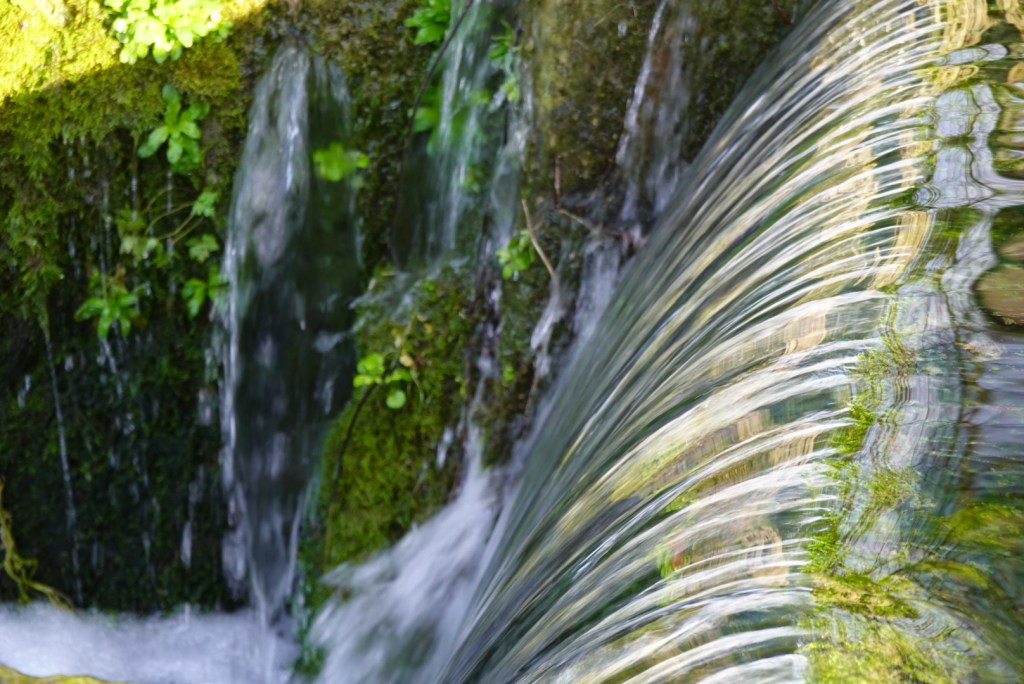
When I look at a photo like this I think of the word “flow”, but there’s a related word which comes to my mind as I reflect on this particular photo today – movement.
I took this photo yesterday in the “source”, or “spring” which lies a couple of hundred metres from my house. The water which appears in the pool and then flows strongly off down the old Roman water channels is as clear as you could imagine.
Standing looking at this “source” I can’t help but think that I’m looking at something which is alive – or, at least, something which is at the basis of Life.
One definition of Life is that which has a “self-moving capacity”. When we see a rock we know it’s not going to go anywhere under its own volition or its own steam. But all creatures, from single celled organisms right up to complex human beings and other mammals move all the time – they move on the inside with the flow of nutrients, chemicals, electrical signals, as they maintain an internal environment – we call that homeostasis. They consume, metabolise and transform other elements. Some have a beating heart, and/or lungs which cycle through inspiration and expiration. All forms of Life show continuous movement inside.
Living forms are also always on the move on the planet too – sending seeds great distances, stretching up and climbing walls, spreading roots deep underground or walking, running, flying, swimming from one place to another.
Many creatures are migratory traversing huge amounts of land and sea every single year. Others move habitat from one place to another. All are seeking to survive and thrive.
This is true of human beings which is why I find nation state attempts to control the movement of people so disturbing. People will always move. Individually, in families or in large groups. Dividing neighbours into “citizens” and “foreigners” is fraught with difficulties and injustices. Hatred towards “the other” is counter to the human need to connect, to travel, to migrate.
It’s also true of viruses. This pandemic is often described as a war we are waging on a virus – a virus we want to eliminate. Except it’s very hard, almost impossible, to eliminate any viruses from the planet.
As we move ahead I wonder if we need to change our emphasis and change our societies and systems to make them both more resilient and more adaptable. We can’t just ignore epidemics or pandemics. We need to respond to them. But maybe we do that best when we create populations which are well housed, well fed and well educated. Maybe we do that best when we develop health and social care to successfully treat the sick, and to care for the elderly and vulnerable in our communities.
So, I’m just reflecting today on the importance of movement in all its forms – change, adaptation, resilience, growth and flourishing.
I welcome constructive criticism and suggestions. I will not, however, tolerate abuse, rudeness or negativity, whether it is directed at me or other people. It has no place here. ANYONE making nasty comments will be banned.




 Heroes Not Zombies