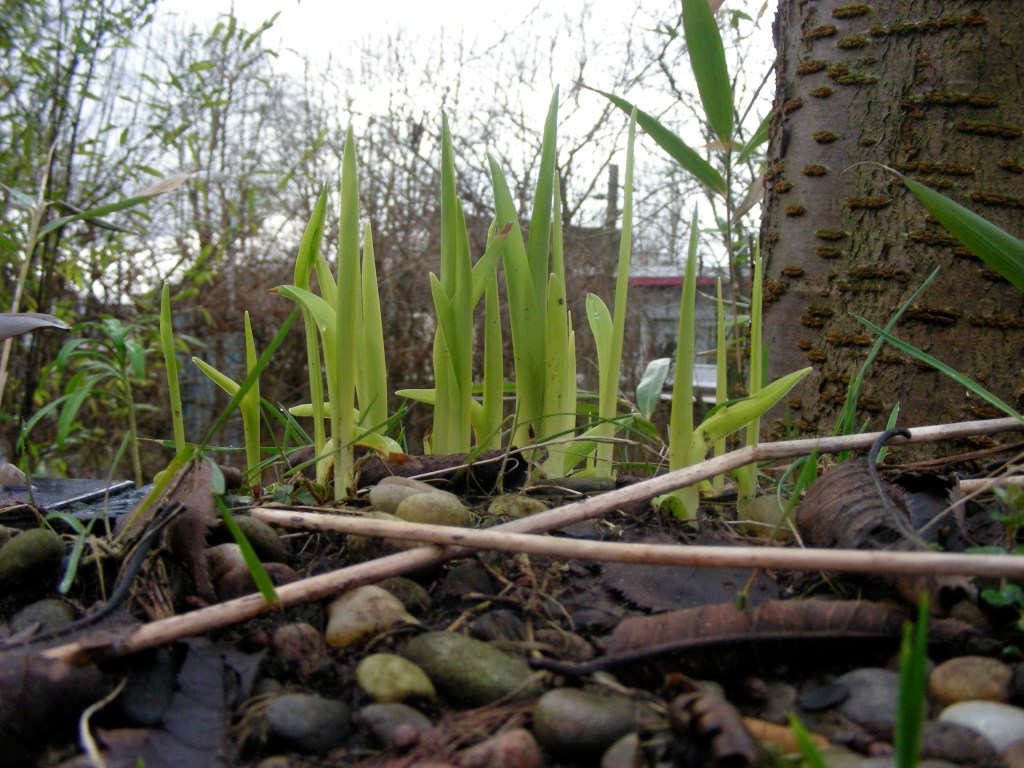
In the winter months it can seem as if all, or most, the plant life is dead. We even talk about them as “dying back” in the winter. But then along comes a bit more sunshine and suddenly there are green shoots everywhere.
The last episode of David Attenborough’s Green Planet looked at how plants find enough to root into, to grow and flourish in the tiniest cracks in tarmac or concrete. So even in the middle of “concrete jungles” in our biggest cities if you look carefully you’ll see green leaves popping up.
Put that alongside the ability of seeds to lie dormant for years then burst into activity the moment some sparse rain falls, then you realise that Life is everywhere on this little planet. It just needs the right circumstances to manifest.
It’s like that in our lives too. Our natural state is one of readiness – to survive, to grow and to flourish. We just need the right circumstances to allow all that to be manifested.
And there’s the problem – as this pandemic has made clearer than ever – we don’t organise our societies in a way where we maximise the supportive conditions for survival, growth and flourishing.
Shouldn’t we do that? Shouldn’t we organise ourselves around provision, protecting, nurture and nourishment? Or, to put it more simply, around care and the creation of opportunities for Life?
When my son was very little, one day he asked for something that was too expensive for us to buy. I told him I didn’t have enough money to be able to buy it and he replied “Just go and get some more from that hole in the wall” (He meant the ATM cash machine)
It was a pretty logical response because he thought that’s where money came from. He didn’t know I had to put it in the bank in the first place.
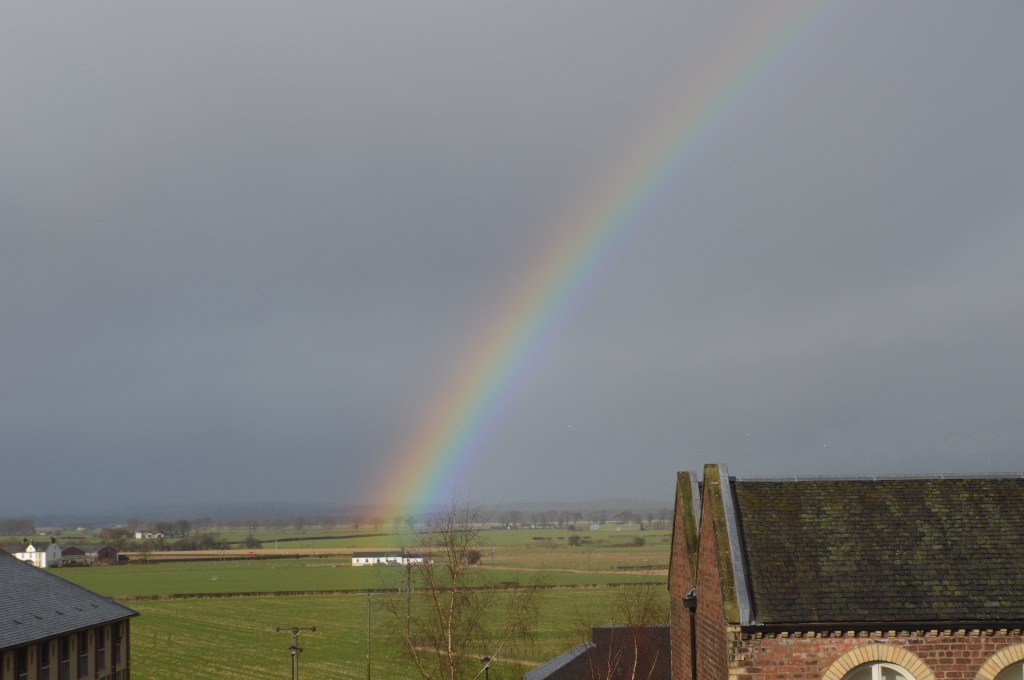
There’s an old myth that at the end of a rainbow you’ll find a pot of gold. Of course, the catch is that you can never get to the end of the rainbow – it’s always further away.
You’ll have heard a repeat of the old myth about why a government wants to impose austerity measures including cutting back on essential services and depriving the poor of the little they have. It’s called “There is no magic money tree”.
The odd thing about that one is there seems to be an endless supply of money when a government wants to wage a war, or to find billions during a pandemic. So maybe the magic money tree only exists when certain people say it does?
So where does money come from?
A common belief is that it comes from taxation. I’m sure you’ll have heard phrases like “taxpayers money” and “we have to increase taxes to pay for X”.
But if you think about it money doesn’t grow anywhere, and the only people who can create money are the governments which issue the pounds, dollars, yen or whatever.
To pay taxes, the money must have been created by the government and distributed into the economy in the first place. Taxation gathers some of that money back from people to the government.
So when you hear the “how are we going to pay for X?” or “we have to pay for what we spent in the pandemic” remember that the money comes from political decisions. The government decides to create some. Or it doesn’t.
But, wait, that doesn’t mean they can just create as much as they like without limits! The limits are the limits of the resources of the country – the people and the physical resources. As Prof Kelton makes clear in “The Deficit Myth”, the deficits are not enough trained people working at delivering what we all need, deficits in housing, deficits in health care and deficits in education.
People create money. It’s not a natural resource like water, air or food. Just remember who those people are and challenge them if they claim they can’t fund better work, better housing, better education or better health care.
We live in troubled times. Fear, anger, frustration, anxiety and uncertainty are feelings all too familiar to far too many of us. These disturbing feelings are, much of the time, there for a reason. They are alerting us that something isn’t right. They are provoking us to deal with something.
I know the preferred response is to soothe them, to take the edge of them, blunt them, or try avoidance through distraction.
And, like all feelings, if they are too strong, or last too long, then they can become all consuming.
So we need to do a couple of things, don’t we?
We need to find the ways to cope and to respond so that we benefit from these rather unpleasant feelings.
I think what’s most important is that we understand them, that we understand what we are experiencing and why.
Some of it is personal. There’s an issue to address, a relationship to improve, a task which we should complete, a habit we should change.
But a lot of it is collective. We live in a world undergoing climate change. We live in political systems which are controlling and untrustworthy. We live in economic systems which favour the rich, punish the poor and vulnerable, and which are becoming more and more unequal. We live in social systems which promote greed and selfishness. We live in mass production industrial systems which pollute and poison.
When we understand what’s underlying all the fear, anger and anxiety, then we need to act.
I find there are two types of action which help. One is to do what I know makes me feel more calm.
This photo is an example. It’s a scene of peace and calm. I experienced a profound sense of wholeness and tranquility there that day and I can recreate those feelings today by looking at this photo, taking three, long, deep breaths, and activating my imagination to recreate that moment in my mind. You can do that too, with your own photo, your own memory of such an experience, or by using this photo to spark your imagination into recreating a similar time of peace and calm which you experienced in your own life.
There are loads of other ways to build positive emotions and to cope with disturbing ones. The important thing is to act – to do whatever works for you.
But I think there’s another stream of activity needed too….the one focused on our shared world. The causes of these disturbances are real and we need to act together to change them.
I’m not going to enumerate all the ways we can address and respond to these complex issues but I think that deciding to live more consciously is an important first step. That can lead to changing my daily life by choosing to eat food which is less processed, more local and more seasonal. It can lead to different choices about buying and consuming. It can lead to deliberate communication with others and to participation in campaigns.
Taking action, achievable action, to address the causes of fear, anger and frustration is a good step towards more peace and calm.
I’ve taken countless photographs of sunsets and sunrises. The way the sun lights the sky is an endless source of fascination for me. Sometimes it’s the Sun itself which captures my attention, as it changes colour to become a deep red sphere sinking below the horizon.
But maybe some of the most spectacular events are where the entire sky changes colour. When this happens it feels like you are inside the colour. It’s a shift from standing looking at a far away event to finding yourself immersed in the very heart of it.
I’ve never seen a full eclipse or the Northern Lights but I’ve seen film footage of people experiencing both of those phenomena and what strikes me is how emotional they become. I think I’d be the same.
There’s a difference between standing at a distance feeling outside of something and having the full immersion experience of being within it. The latter strongly stirs our emotions. The former might, but mostly, I find, not so much.
This reminds me of C S Lewis writing about the shaft of sunlight illuminating the dust in his shed and distinguishing between looking at the sunbeam and looking along the sunbeam. That profound shift of perspective to become aware of our existence within what we experience.
After all, this ability to stand “outside” of daily experience is a sort of trick of the mind which we use to create a distance between ourselves and whatever we are witnessing.
The reality is we are never “outside” of reality, of Nature, of Life or of daily experience. We are constantly immersed in the cosmic flow, responding, reacting, participating.
Isn’t that wonderful? To be immersed in the glow of beauty and wonder? Isn’t it deeply moving?
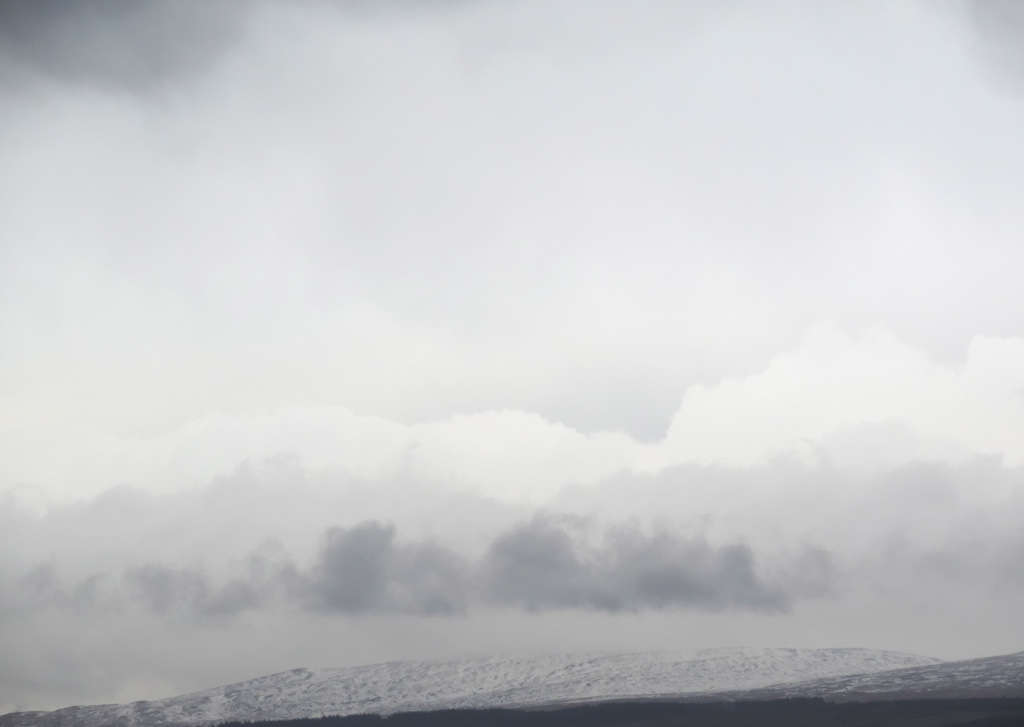
It’s been very cloudy recently so this old photo seems very relevant. This is one of those images which evokes music in my head. Simon and Garfunkel….
Cloudy The sky is gray and white and cloudy Sometimes I think it’s hanging down on me
Cloudy My thoughts are scattered and they’re cloudy They have no borders, no boundaries They echo and they swell From Tolstoy to Tinker Bell Down from Berkeley to Carmel Got some pictures in my pocket and a lot of time to kill
Do you find that happens to you? A particular image or scene or a moment sets off a song or a tune in your head?
Sometimes I think my life has a soundtrack, the same way a movie does. The music which plays in different situations, which accompanies different experiences, does what it does in the movies. It creates an atmosphere, stirs emotions. In other words, it enriches each particular experience.
Usually this is something which just happens inside my head but sometimes if I start to whistle, hum or sing the song that’s come to mind, the person I’m with says they too had just recalled that same music in their head. For instance, maybe you looked at this photo just now and you, too, heard the “Cloudy” song. Some of you will have. Others will hear it the moment I mention it, which is why I shared some of the lyrics. Yet other readers will be saying to themselves “What’s he on about? I’d better Google Cloudy by Simon and Garfunkel and find out”.
There will be different degrees of sharing depending on our own memories and whether or not we are familiar with the same music. When it does evoke the same music then we deepen our relationship with each other. Music can do that.
I love this photo because it looks like mountain ranges, one after another, reaching back towards the horizon. Then when I look more closely I see only the foot of one mountain, the rest are all clouds.
In that moment everything becomes transitory. The solid nature of mountains melts into something more ephemeral and I’m reminded of the fact that absolutely everything changes. Even mountains. And absolutely everything is connected, interacting, slipping from one phenomenon into another, because Life flows.
“…no borders, no boundaries. They echo and they swell” – like my thoughts.
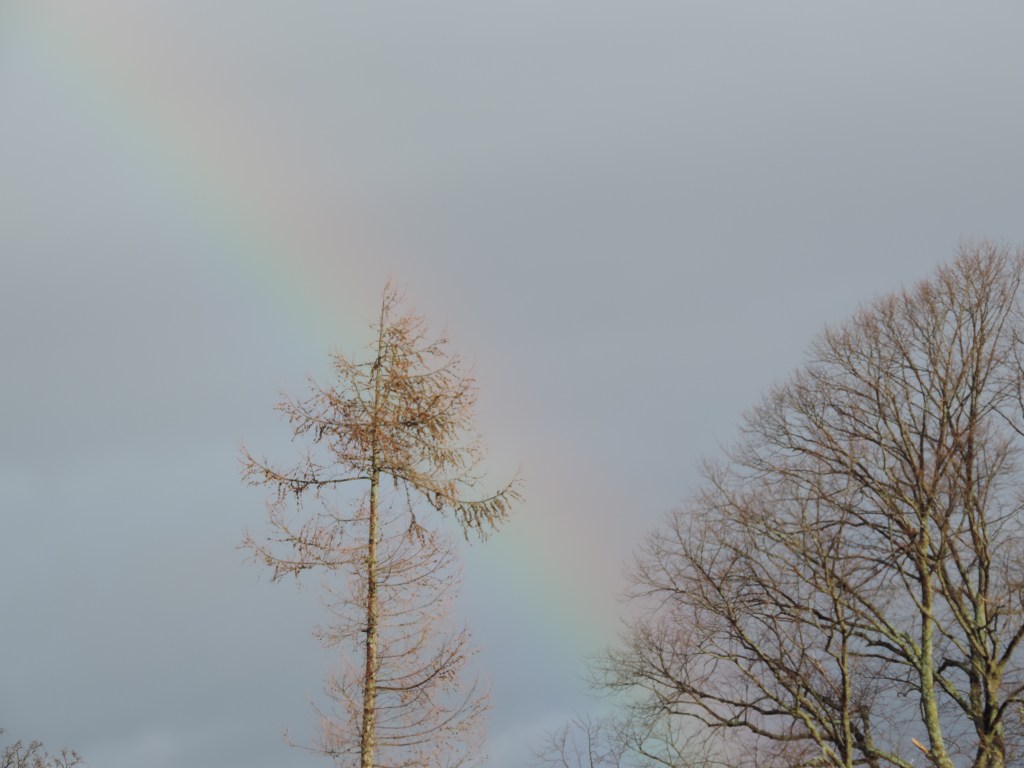
What would you say this is a photo of? A couple of trees? A grey sky? A rainbow?
The answer, of course, is “all of the above”. But it’s more than that as well.
I have lots of photos of rainbows. Rainbows are hugely popular, both with children and adults. They never cease to grab our attention and stir a sense of wonder. The rainbow is a symbol – of hope, of the possibility of a pot of gold over there, of a promise, of diversity.
All my photos of rainbows are different. I like this one because it doesn’t “foreground” the rainbow. Instead it provides a backdrop to the trees and a layer of colour between the trees and the grey sky.
Rainbows reveal some of the rich diversity of what creates invisible or white light. Without rainbows or prisms we aren’t aware of that richness, that beauty, that complex diversity which is contained within everyday sunlight.
I think that’s one of the reasons I like rainbows so much – they remind me of the beauty of depth (and of how much we don’t see when we keep our gaze on the superficial or the partial).
Understanding progresses as we explore the depths, the what lies beneath the apparent. There’s nothing I enjoy more than increasing my understanding of a person, of myself, and of this world.,
One thing I’ve been so aware of throughout my years of practicing Medicine is the need that every human being has for both separateness and belonging.
Each of us is unique and needs a certain amount of autonomy and a good sense of self. We seek to make our own choices, to express ourselves and to construct our unique narratives.
But none of us exist in isolation. We are all inextricably embedded in multiple networks of relationships and in physical, social and cultural environments.
You can’t know a person if you try to see them in complete isolation. Good diagnoses arise from the uncovering of the contexts and stories of an individual life. They also arise through the consideration of what makes this person different from all the others who are experiencing “the same disease”.
Similarly we need healthy boundaries. We feel safe within them and need to have them respected by others. Yet at the same time a solitary life is impossible.
We all become who we are through our relationships and experiences with others. “Ubuntu” – I am because you are. That’s one perspective on it. In fact, I think the “self” is multiple. We are multi-faceted, woven of countless different threads.
This is where the apparent paradox of separateness and belonging come together….our uniqueness emerges from the flow of all our connections, past, present and future.
When I looked at this photo again today I thought it was a picture of the night sky.
But it isn’t.
The “stars” are little white lights strung between the branches of the trees in a forest and if you look a little more carefully you can see whole lot of snowdrops on the ground.
I took this photo many years ago, one February, in Cambo Estates Gardens, in Fife. I don’t know if they still do this (I don’t see any mention of it on their website today) but they used to have these night walks through their woodland amongst thousands of snowdrops. They lit the gardens with gorgeous coloured lights, and at the end of the walk you could have a hot chocolate in their cafe. Delightful!
We humans are an imaginative and creative species. We love to create experiences which stimulate our senses and stir our hearts.
Beyond the mundane, the “efficient” and the “practical” or “utilitarian” we access a deep world of the invisible where we encounter emotions, ideas, thoughts, fantasies, meaning, purpose, wonder, awe, and love.
We engage with the invisible through art, music, dance, storytelling and poetry. We engage with the invisible in shared experiences. We live in the invisible in our intricate web of relationships.
How much richer are our lives because we go beyond the superficial and the utilitarian?
I welcome constructive criticism and suggestions. I will not, however, tolerate abuse, rudeness or negativity, whether it is directed at me or other people. It has no place here. ANYONE making nasty comments will be banned.




 Heroes Not Zombies