It’s probably just me but I’m walking along and I notice the contrast between these two patterns in this path, and I think “order and chaos”……
On the one dude are regular parallel lines. Highly ordered. On the other side, chaos.
The universe wouldn’t exist without the synthesis of this polarity.
Whether you think of it as order and chaos, or discipline and wildness, Cristal and Dragon (search for any of those pairs on this site), we have a brain which is perfectly evolved to appreciate both, and to integrate them.
Our left hemisphere organises what we see, analysing, categorising, labelling. It seeks and creates order, routine, habits. Our right hemisphere gathers what we see and focuses on patterns, seeks novelty and creates links, connections and relationships. Between them they enable us to make some sense of our existence.
Wow, well there’s the key! The secrets of the universe are right in front of us, right behind us, all around us. We discover them through the practice of everyday wonder.
He saw metabolism, repair, and replication. And there it is! The key to a system evolving to become an organism is that it must reach some point where it achieves all three of these functions. We have never designed a machine like this and for very good reason. We build machines to last. One of the first and most crucial aspects of the evolving living system was its failure to last! It was in a condition of being torn down as fast as it was being built up and this is what allowed it to evolve. Stability is the return to a condition after being perturbed from it. How much more stable could something be than to have both its construction and destruction under strict limits? Both construction and destruction are systems properties. The systematic tearing down allows rebuilding, replication and evolution. The details we know, but the strategy was masked by the details. Molecular biology is indeed an oxymoron. Biology is the study of life and life does not exist at the molecular level.
Mikuleky
“Metabolism, repair and replication”….In those three words lie the key to understanding why human beings are not machine like. We are not assembled from a collection of independent different objects. Disease is not a wonky part or a piece needing replaced. You can’t maintain health the way you maintain a machine.
We have never invented a machine which can achieve all three of these processes – metabolism (the assimilation of, transformation of, and breaking down of nutrients), repair (the only healing which exists is that delivered by the self repairing capacity of the living organism) and replication (not just reproduction but making new cells in order to grow and develop).
This passage adds a further important insight though. When you buy a lawnmower it stays a lawnmower. It doesn’t grow into a bigger lawnmower. When you buy a car, it stays a car. It doesn’t grow into a stronger, larger car. But when an egg is fertilised and an embryo grows into a baby in the womb, and that baby is born, it never ceases to change. It grows and develops into a child, an adult, a mature person.
Over a lifetime every single cell of the billions in the body die and are replaced by new ones. This happens several times over.
Machines are built to “do what it says on the box” and to stay the same.
Living creatures never stay the same. Not for a moment. Without that triad of metabolism, repair and replication there would be no growth, no development, no evolution.
Living cells are designed to constantly create and constantly tear down.
Astonishing, isn’t it?
We need to rid ourselves of the mechanical models of reductionist materialism if we are to create health and healing. We need to see that Life is nothing like an assembly of separate bits.
Life is, rather, a constant flow of energy, information and materials. Wholly interconnected, inextricably embedded in contexts, environments and relationships. Every organism unique but interdependent living a singular life which is unpredictable but not random.
The materialist view of reality continues to be the dominant one. In this view complex phenomena like this flower can be understood by breaking them down into smaller and smaller units. Starting with the whole plant we can focus on just the flower, then just the petals, then the cells which live together in the plant, just the cells in the petals, then the various “organelles” inside each cell, right down to the DNA. Now we find the essence of the plant, say the geneticists. But wait we go further down to the molecules in the DNA, then the atoms which constitue the molecules. But still we don’t find “life”. Still we don’t find the essence of this little plant. So, then we look at the atoms which the molecules are made of. Surely now we’ve reached the essence, the solid bedrock of reality? Nope, say the physicists, turns out we can look inside atoms, find subatomic “particles”, but then we look further and “poof!”, they disappear.
Now the physicists tell us reality is fields of energy and particles are impermanent manifestations of ripples produced by the fields.
It turns out the essence of a plant isn’t in its cells, its DNA, or its particles. It’s in its whole being. Because reality is what emerges from the interactions, from the ripples, from the relationships between the “parts”, not the parts themselves.
It turns out that relationships are the basis of reality. We’ve been looking in the wrong direction. The universe isn’t made of solid objects. Living creatures are not “machine like” at all.
It’s energy all the way down. And understanding emerges from a consideration of whole beings and their interactions.
I know our brains are particularly good at spotting and recognising faces but when we see faces where “there aren’t any” that always fascinates me.
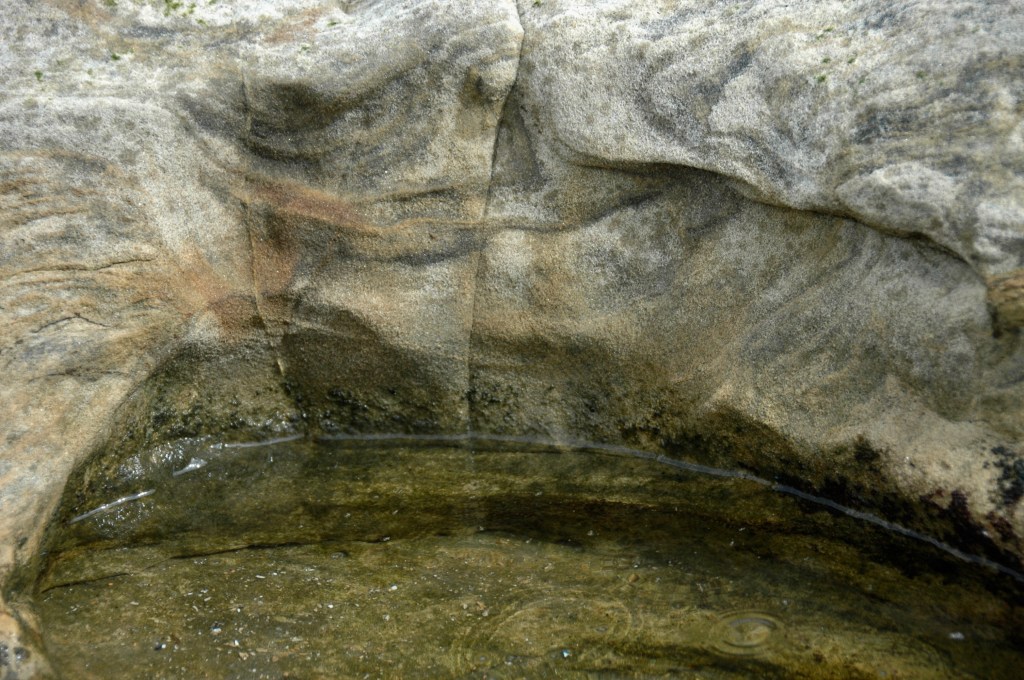
I took this photo because I liked the swirly shapes in the rock which make the rock look dynamic. In contrast, this rock pool is so still you can’t see any sign of movement in the water. That contrast flipping what we’d normally expect to see caught my attention.
I still like this photo for that reason. It also speaks to me of co-creation – how the rock is shaped by the water and vice versa. And it’s also a good representation of how everything changes – even unseemingly changing rock.
But after taking this photo and looking at it later I was struck by something else – if you look at the vertical line down the middle it seems to me that I can see two faces, one pressed up against the other! Both of them smiling!
Now maybe you find that creepy or troll like, but I don’t. It’s delightful!
I know there aren’t “people” in the rock face but I wonder if this sort of experience led people to think of gods or spirits in Nature. Did this contribute to a more enchanted experience of the world? I think it probably did because I still feel it enchanting.
And even if I don’t believe there are gods or spirits in the rock, this perception inspires me and triggers my sense of wonder leading me to reassert my conviction that everything in this world has value….a value which can’t be reduced to a mere “resource”, and it reminds me that every day we can find wonder and delight and we can be enchanted.
Don’t you think that life could benefit from a little more enchantment?
I’ve been getting pretty upset at all the terrible stories of selfishness and cruelty in the world these days. Whether it’s acts of war in some countries, mass shootings in America, or stories of women raped and/or murdered as they walk in their own neighbourhood, it seems stories of violence are everywhere.
On top of that there are increasingly bitter divisions in many societies, a huge rise in anger and abuse towards people both in person, but especially on the internet.
Inequality has gone through the roof and while more and more people go hungry and live in fear of soaring fuel bills and inflation, a significant minority seem to possess insatiable greed, grabbing ever more just for themselves.
On top of all that we are facing climate change with both more and more extreme weather events and disastrous loss of habitat and diversity.
It’s all enough to make you despair, because who, in power, either through politics or wealth, is actually trying to change the system which is favouring all of this?
But then I see something like the forest fires south of Bordeaux, and I see neighbours looking after each other, opening their houses to each other, providing food and shelter. I see dozens of firemen from eight countries across Europe speeding to France to help the French “pompiers” get the fires under control.
I see the same instant and generous help in floods, again with ordinary people saving neighbours, providing food and shelter.
And I realise there is a strong, natural instinct to care in human beings.
The problem seems to be that our current mechanistic view of reality has created an economic and social system which encourages greed and enables narcissists to rise to positions of power. Somehow those with power and wealth repeatedly exhibit the worst of what it is to be human, while neighbours, families and friends at a local level are those most likely to help others, and to act on our instinct to care.
We need a system change and we need a change of world view. We need a system which privileges empathy, care and tolerance in those who gain power and wealth, and we need to return to a view of reality which allows us to see that everything is connected, the Earth’s “resources” are limited, and that neither human beings nor the living planet are machines.
Can we shift our dynamic away from privileging individualism, selfishness, greed and competition towards the creation of systems and societies which nurture and support uniqueness, empathy, generosity and collaboration?
“The Midnight Library” by Matt Haig is my favourite book of the year so far (I know it was published back in 2020, what I mean is my personal favourite of all the books I’ve read this year so far).
The story centres around the multiverse hypothesis, with the lead character choosing different books in the library she finds herself in after she dies. Each book allows her to experience one of the alternative parallel universes which spooled out with each particular choice she makes in life.
There’s one book she keeps coming back to which is The Book of Regrets. This book gets thinner each time as each alternative life allows her to let go of regrets about paths not taken.
I find this story really thought provoking, challenging me to think about the place of regrets in life as well as about all those “if only….” lives we often think about.
But what I liked best about it is how it gradually built up the insight that every day is full of potential and every one of us, similarly, is full of potential.
Because by the end of this story I’m thinking “why not?” Why not imagine, not paths not taken in the past, but just how abundant are the many different paths which still lie ahead?
Because it’s TODAY when I have access to the multiplicity of potentials in the rest of my life. Just imagine what some of them might be!
Only you can tell the world because nobody else sees exactly what you see, hears exactly what you hear, touches, tastes or smells what you experience today.
We bring our whole selves into every single daily experience. My present moment is rich with my memories and impacts of past experiences. My present moment contains a multiplicity of possible futures only I can imagine.
Every one of us is truly unique.
If I want to know what you are experiencing I have to listen attentively and non-judgementally to what you tell me. Machines are not a substitute. Blood tests, scans, can’t tell me what it’s like to be you.
Listening empathically is the only way to understand the experience of the other.
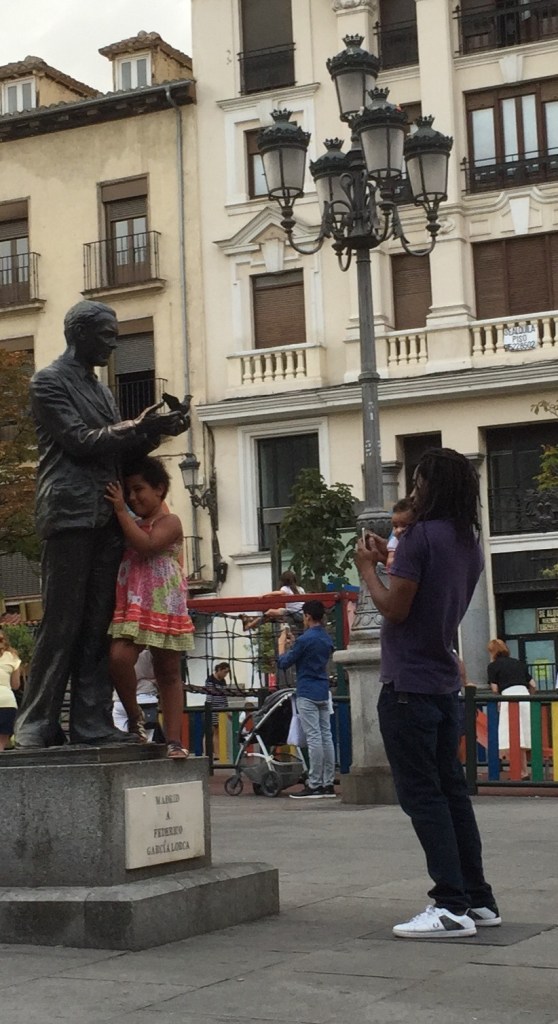
This is one of my favourite photos. I took it one evening in the Plaza de Ana in Madrid. In the middle of the square is this statue of the poet, Lorca. I had noticed some parts of the statue seemed highly polished, the consequence of the touch of thousands of hands over many years. I then noticed that lots of children seemed drawn to this statue.
Look at this little girl. How affectionate, how gentle, how delighted, she is, giving Lorca a cuddle.
How many statues have you seen where people, especially children, interact with it this way? Quite extraordinary. And the fact that this is a statue of an artist, a poet, playwright and composer makes this all the more wonderful.
To be fully human we need the creative arts in our lives.
If you’ve been reading my posts for a while you’ll be familiar with the theory of left and right hemisphere imbalance, (if you’re new here, hi, welcome! Put “hemisphere” into the search box, top right of the home page, and have a browse through what comes up).
We use our right hemisphere when we listen to music, when we read poetry and when we focus on the personal, so one way to get a better balance might be to read more poetry and listen to more music. And, hey, even if you don’t accept the hemisphere theory, I reckon you can still improve the quality of everyday life by setting aside some time to enjoy poetry and music.
Let’s celebrate our poets, musicians and artists. They change lives for the better. They help our society to be more human.
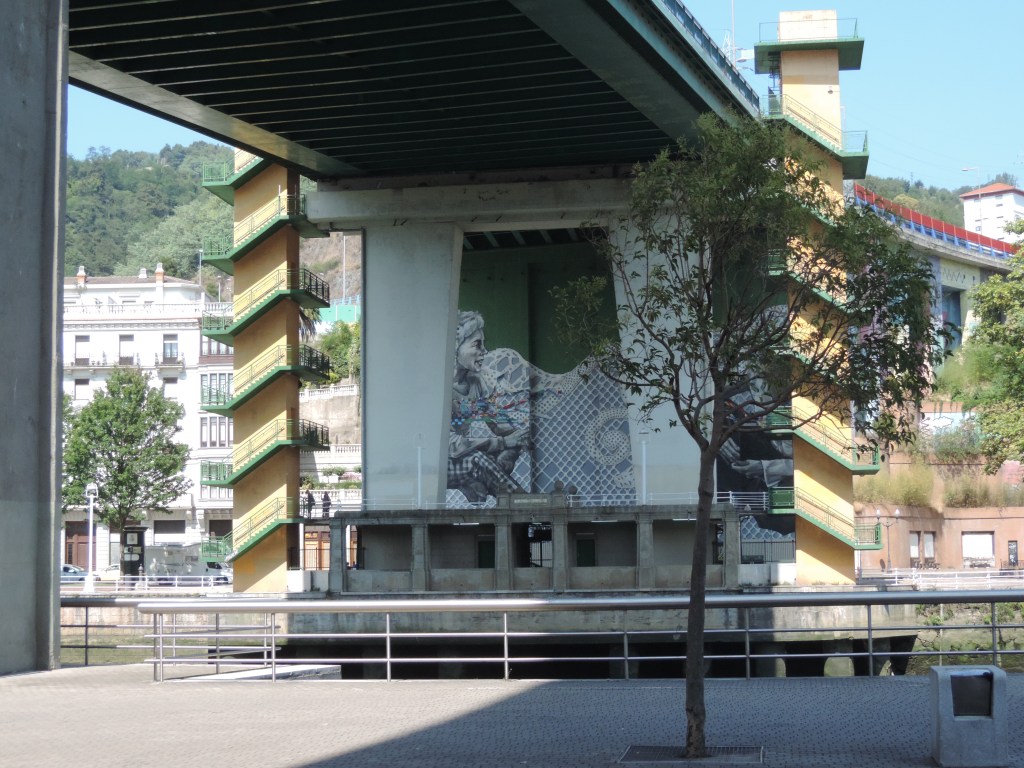
The dominant mind set for a long time has been a materialist rationalist one. In this way of thinking roads, flyovers and bridges are built right through the middle of cities “to enable vehicles to cross the city quickly and easily”. Whilst this might make sense logically and functionally it often dehumanises living spaces, creating ugly “redundant” areas which degrade the lived environment.
Here’s a photo of some beautiful wall art painted under an urban roadway in the city of Bilbao. I suppose a materialist functionalist urban planner would say “what’s the point?” But I think art like this is beautiful and is a great example of that human characteristic of creativity and artistic expression.
I’m greatly saddened to hear that universities are closing down Humanities departments and that one Tory leadership candidate has said he’ll close any university course which doesn’t lead to graduates making a significant income within six months of leaving university.
These developments seem barbaric to me. They deny what it is to be fully human. If we reduce education to training for jobs with salaries of a certain size, and if we make our decisions about the lived environment on the basis of short term materialist goals then we will experience more and more dehumanisation of society.
Can’t we have a richer, more beautiful, more compassionate view of what it is to be human? I think we need to shift our emphasis away from this narrow, limited agenda if we’re going to create a better world which will enable more people to do more than survive – to enable them to grow and to flourish.
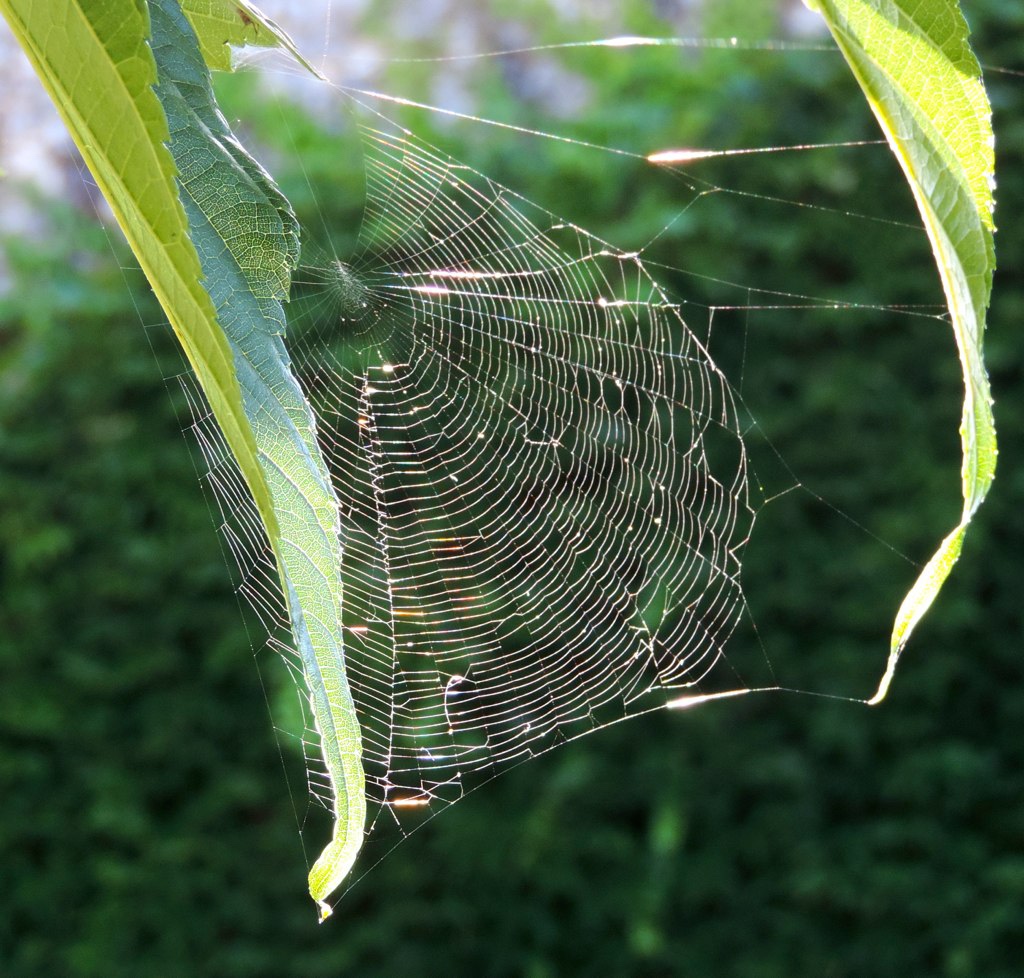
I find webs fascinating. It astonishes me that a single spider can spin such a creation with her own skill and with material produced by her own body. I’m especially drawn to the webs which are bejewelled with water droplets. But this one is quite different from all of those.
You might have to look more carefully, or to zoom in, but you can see rainbows of colour in this web. It’s acting as a kind of prism or crystal and revealing the colour spectrum which makes up the light of our world.
It’s a colour catcher. Or a colour revealer. Or a light catcher and revealer.
Light is such a fundamental part of life but for much of the time we’re not that aware of it. Perhaps we are most aware of it when it’s not there…when we are in the dark. Or most aware of it when a small amount of it appears in the dark, the way we can spot a lit window or a car’s headlights from far, far away, at night.
Or perhaps we become aware of it when it’s intense….when we have to shade or close our eyes, put on dark glasses, or pull down a visor.
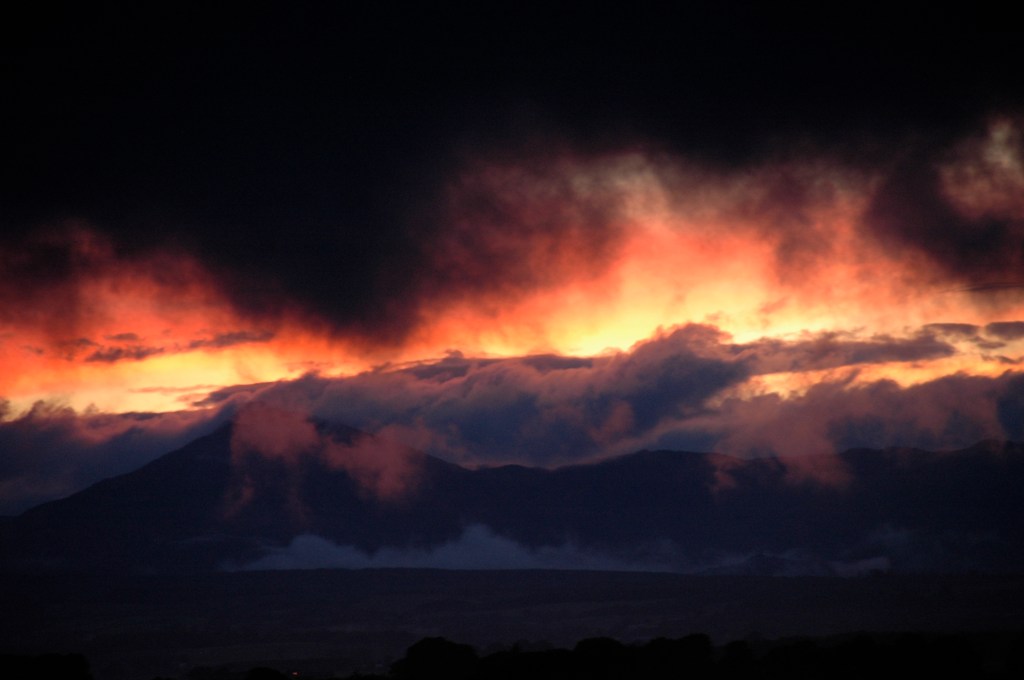
But mostly I think we become aware of light when it changes, when a cloud moves in front of, or away from, the Sun. We are instinctively drawn to sunsets and sunrises where the changing light is most dramatic and often most colourful.
There are other times we are aware of the light, times associated with particular places. How many artists have sought out places such as towns on the coast in the South of France “because of the quality of the light”?
When are you most aware of the light? When and where?
And why not consciously notice the light somewhere today? Where did it catch your attention? Where did your attention catch the light?
I welcome constructive criticism and suggestions. I will not, however, tolerate abuse, rudeness or negativity, whether it is directed at me or other people. It has no place here. ANYONE making nasty comments will be banned.



 Heroes Not Zombies