Feeds:
Posts
Comments

Archive for July, 2024

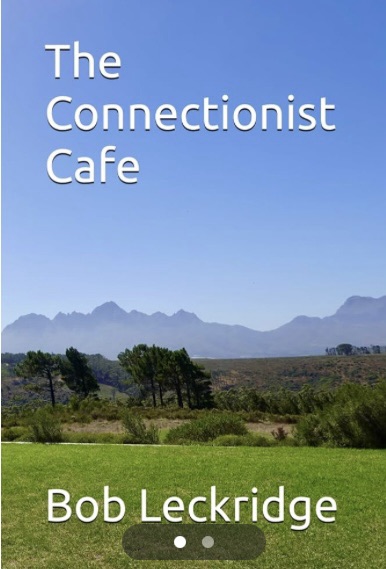
In The Connectionist Café, people gather to discover and make connections.

In the chapter which describes a group of strangers and acquaintances getting together to explore the philosophy of connections and networks, the group leader gets them to write a list of what, and who, they love.

As they share their lists, she creates a map of who has what in common with who – a rapidly developing complex “rhizome” of their connections.

Why not try this for yourself? There are two phases, the first, where you make your own list, prompts you to reflect on what and who you chose to put on your list.

The second phase, is a group phase. You have to do it with several others – either people you are already familiar with, or people you’re meeting for the first time (for example at a workshop or other event).

The Connectionist Cafe is an interlinked collection of short stories about everyday Glasgow folk discovering connections in their lives which deepen their experience of life and help them to better understand themselves and others.
In the Connectionist Cafe people meet, talk, explore, learn and connect together. It’s a place to enjoy and a place to grow.

The paperback – https://amzn.eu/d/0dBoLdm8

The kindle version – https://amzn.eu/d/06trj5Xb
Read Full Post »

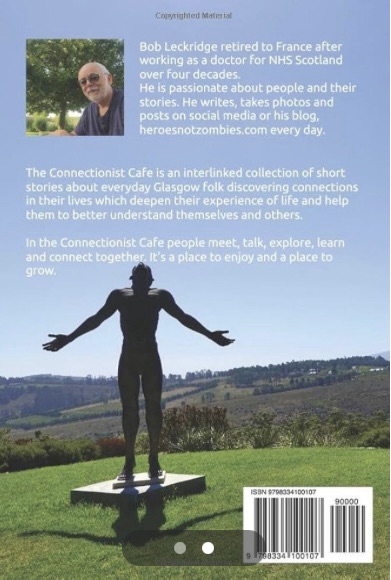
The Connectionist Cafe is an interlinked collection of short stories about everyday Glasgow folk discovering connections in their lives which deepen their experience of life and help them to better understand themselves and others.
In the Connectionist Cafe people meet, talk, explore, learn and connect together. It’s a place to enjoy and a place to grow.

I’ve been writing short stories ever since I retired from clinical practice. Over the years I developed the idea of focusing on the importance and power of connections in life and in the world. This collection of stories has grown from that idea.

You’ll find many references in my blog, here, to Iain McGilchrist’s insight into how our two cerebral hemispheres engage with the world. The left hemisphere uses a narrow focus to separate out elements from within the stream of phenomena and information within which we live. It sets them apart, labels them and allows us to grasp them. The right hemisphere uses a broad focus to see the flow as a whole. It enables us to see patterns and connections, to appreciate reality within its unique and diverse contexts.

As a doctor, I was constantly amazed by patient’s stories. Every story completely unique and every individual understood only by seeing them in their contexts, by listening to them tell me about the events in their lives and seeing how those events connected to form a cohesive personal narrative which would enable me to understand them, and, in the process, enable them to better understand themselves.

We’ve gone too far down the road of separating, dividing and isolating. We need to repair, to heal, ourselves and the world. I’m convinced we’ll do that by discovering and making connections, by building bridges, not walls.

We need to pay a loving attention to others, to the amazing everyday reality and to how we live together on our shared, little planet.

“The Connectionist Café” is available as a paperback or on kindle. Here’s the link to the paperback – https://amzn.eu/d/0dBoLdm8

And here’s the link to the kindle version – https://amzn.eu/d/06trj5Xb
Read Full Post »

Cause or effect?

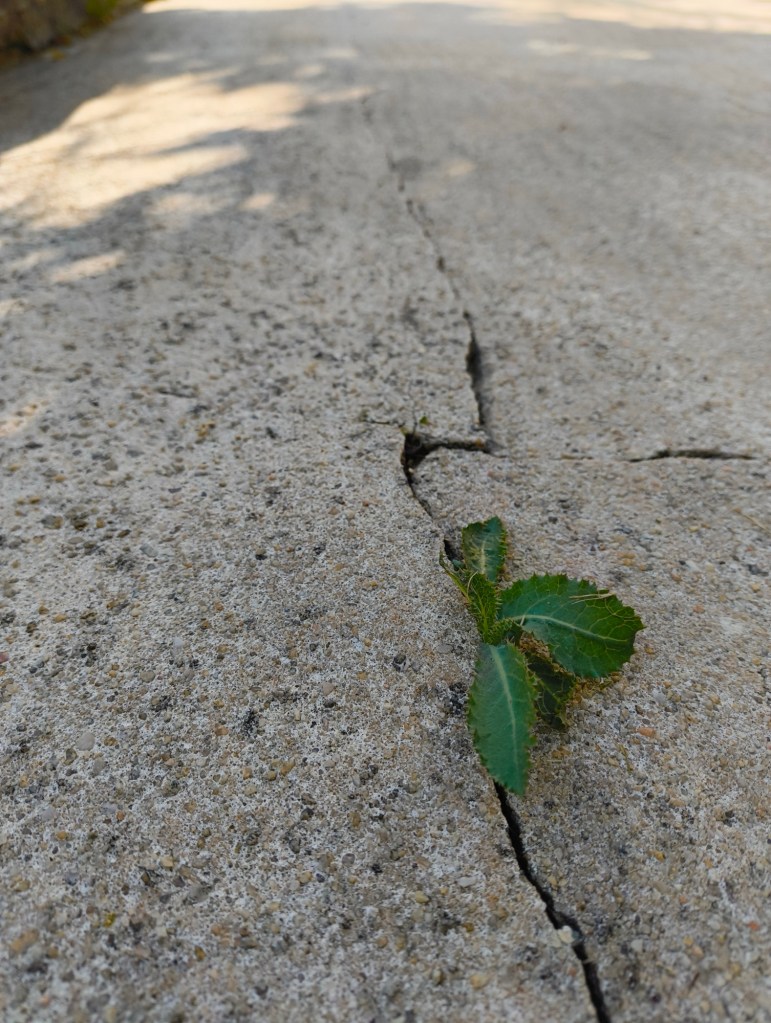
We are a bit obsessed with “outcomes” and determining “cause and effect”. But look at this photo. Do you think this shows cause and effect? Do you think this little plant has split open the concrete path?

I don’t think so. Of course, I know the crack was there long before this little weed popped up. I don’t know why the concrete is cracked or when it happened. It was like this when we moved here over two years ago. But I do know that from time to time a weed will turn up here or hereabouts.

Plants are brilliant opportunists. Give them the conditions which they need and they will thrive (even if you don’t want them to!)

I think it’s the same with all forms of life. Create the right, supportive, environment and life will thrive. All living organisms are adaptive and opportunistic. All are utterly unpredictable.

The best way to create health is by providing the environment and opportunities for life to thrive.

Read Full Post »

A recent report in the U.K. focused on prevention rather than cure. It proposes a “pre-NHS Service” to deliver mass vaccination programmes coupled with blood tests including cholesterol levels and genetic testing to get “at risk” people to start taking lifetime drugs and changing their eating and exercise habits.

Although this is promoted as innovative, visionary and “personalised”, I can’t help feeling such an approach ignores the importance of the environmental and socio-political factors which underpin population health and well-being.

There’s something about a lifetime of drugs just doesn’t feel right to me – this is really a definition of “health”? You’re not healthy, you’re just not sick yet. You’re pre-sick and that needs drug treatment.

There’s another thread to this approach – the underplaying of the importance of emotions. We are not simply “rational” creatures. We are emotional and social creatures with rational capabilities. We process the world, first, emotionally and socially…then we try to rationalise our experiences.

Fear and despair lie at the core of much chronic illness and poor health. They charge up inflammation, damage immunity and can contribute to both ageing and cancer.

At a population level, poverty, job insecurity, poor housing, pollution, industrialised highly processed foods and climate change all contribute to massive insecurity which feeds both fear and despair.

So, if we really want to invest in prevention, it’s not a “pre-NHS” we need, it’s political and social action to reduce poverty and inequality. It’s work to improve the daily workplaces, and the job contracts which most people live with. It’s better housing, better insulation and less polluted air and water. It’s more respect for others, more kindness and care, more autonomy and acceptance. And, and, and……

In other words I think we need to put in the energy and resources to create better societies, and healthier environments. That way we create the conditions which can benefit everyone, not just those who sign up for a lifetime of drugs.

Read Full Post »