Feeds:
Posts
Comments

Archive for the ‘art’ Category

Paris Spring

If you choose to look for beauty you can find it very easily. There is so much beauty in this world.

Setting an intention is a good way of raising your level of awareness and increasing your chances of making what you intend transpire.

Why not try today? A simple thought or affirmation will do. You can write it down or just think it.

I am going to see beauty today.

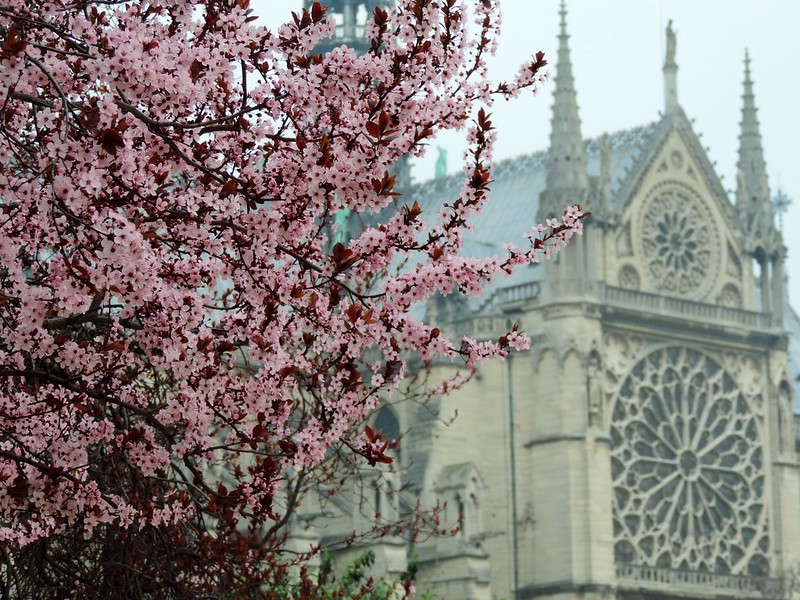
Beauty, it is said, is in the eye of the beholder. Look at this image here. Do you agree it is beautiful?

For me, the image itself is beautiful (if you agree you’ve already started seeing what is beautiful today)

I see beauty in Nature every single day. This cherry blossom is gorgeous for me.

But I also see beauty in creation – in art, architecture, design and so on. Look at Notre Dame from this angle. Isn’t it beautiful? Isn’t it an astonishing creation?

And finally, look at them in relation to each other. Such different kinds of beauty, the one enhancing the other.

When you look for beauty, and you see beauty, and you contemplate beauty, how does that influence the quality of your day?


Read Full Post »

Pont de l'Ardevêché

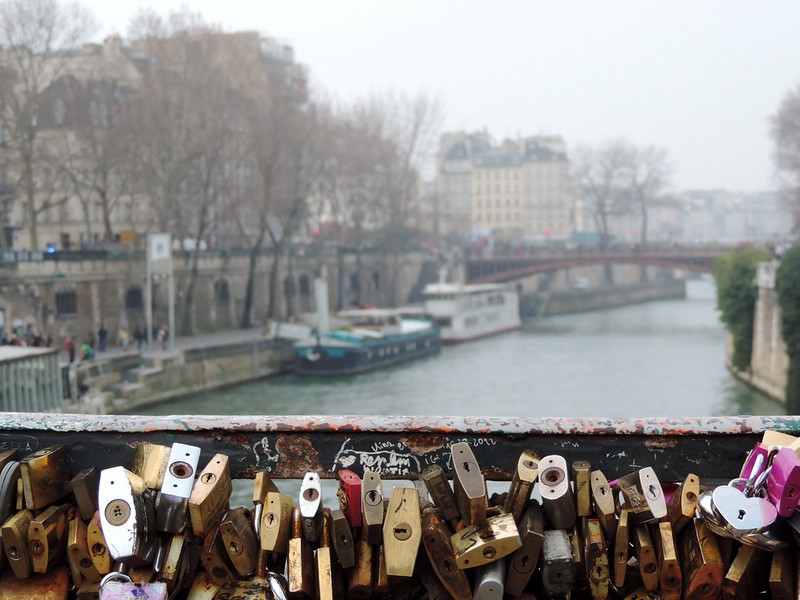
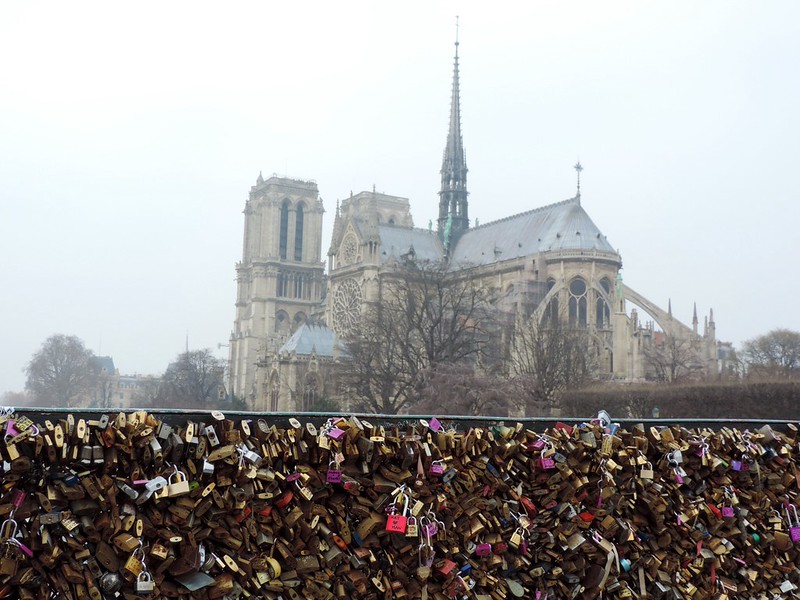
On the Pont de l’Ardevêche in Paris lovers fasten a padlock to the bridge, or more likely to other padlocks padlocked to the bridge, then they throw the key in the Seine.

Love locks Paris

It sounds a bit silly, or like a fad, but when I walked onto the bridge, and I saw the immensity of it, every single lock the physical marking and declaration of the love between two people, I was deeply, and suddenly, moved.
It is beautiful, not in an artistic way, but in that way in which we humans make the important invisible visible.

I thought of the loving wishes hung on temple trees in Kyoto, similar, but very different……

wishes

Then I turned and saw Notre Dame, that incredible cathedral of great beauty, and I kneeled down and took this.

Love locks

How many ways to make the important invisible, visible?

Read Full Post »

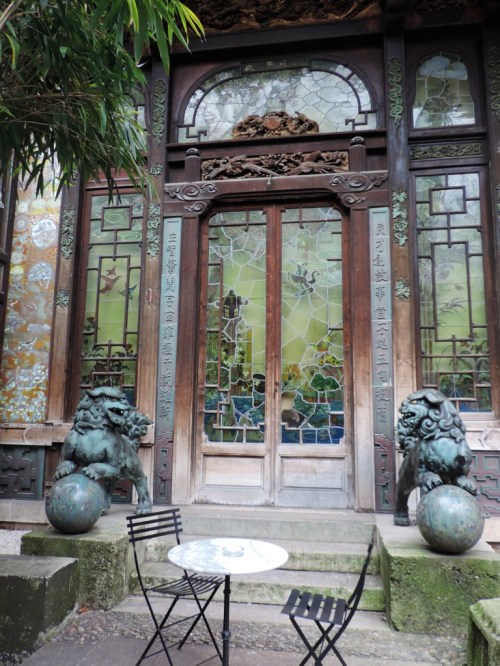
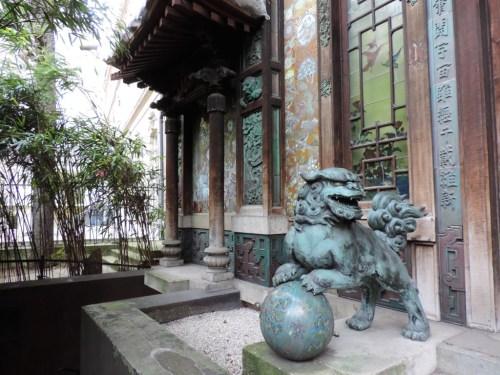
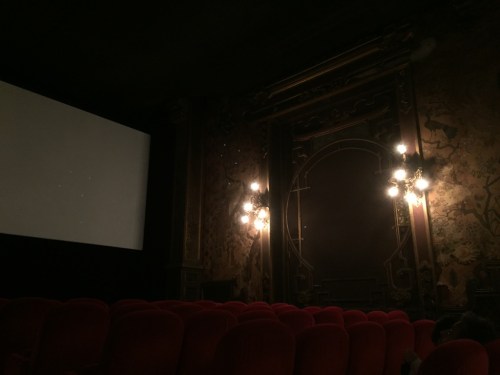
Recently when I went to Paris I discovered a magical cinema – La Pagode

You can see some of the photos above.

I went to see a movie in the main auditorium which is called the “Salle Japonaise”.

There is often something magical and enchanting about going to the movies, but it seems to me that most multiplexes take some of that magic away.

The physical spaces where we have our experiences definitely colour, or even determine, the quality of the what we do there.

How I wish I could find more truly magical cinemas like the Pagode! 

Read Full Post »

DSCN3272

In my A to Z of Becoming, one of the K verbs is KISS.

What makes us human?

There are many answers to that question of course, but it strikes me that art is one of the answers. Why art? For me, partly because art is an act of creation, and I think creating is at the heart of becoming. But also because I think art enchants life.

It seems to me that there is a lot of dis-enchantment around, so I’m exploring the ways in which we can re-enchant our lives.

Art can rekindle the magic in our lives. And, wow, can human beings create art?!

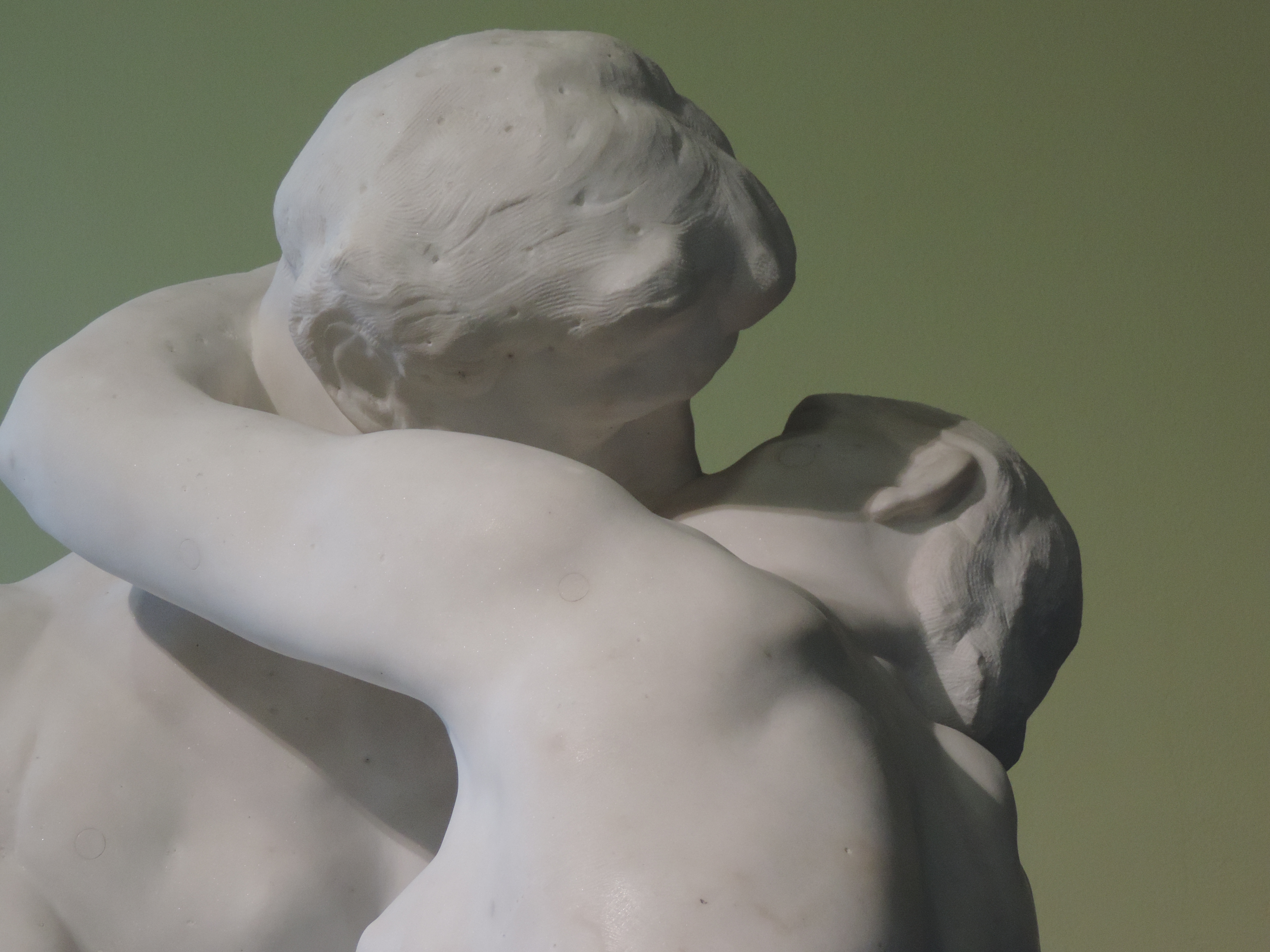
I was lucky to be in Paris last week, and popped into one of my favourite places there – the Rodin Museum. The main building is being refurbished just now but many of the great works were on display including “The Kiss”. I don’t know how many times I’ve been to the Rodin Museum but every single time the work astonishes me. That these soft, flowing, sensitive and sensual forms can be carved out of a block of marble! Really, it takes my breath away.

And look at this kiss. What a kiss!

Sometimes I think words aren’t enough…..art and kisses……words can’t substitute for either.

Read Full Post »

John Berger writes

Because true translation is not a binary affair between two languages but a triangular affair. The third point of the triangle being what lay behind the words of the original text before it was written. True translation demands a return to the pre-verbal. One reads and rereads the words of the original text in order to penetrate through them to reach, to touch, the vision or experience that prompted them. One then gathers up what one has found there and takes this quivering almost wordless “thing” and places it behind the language it needs to be translated into. And now the principal task is to persuade the host language to take in and welcome the “thing” that is waiting to be articulated.

Interesting, huh? That mechanical translation matches word to word then seeks to get the grammar correct, but is the original idea or meaning translated well that way?

As I begin to live in a country where the language is not my first language, I find that, at least in this first phase, I’m translating all the time. Reading or hearing French and translating it into English in my head to understand the meaning. But already there are phrases which seem to require no translation, and phrases that pop into my head fully formed in French. I’m guessing that gradually I’ll do less and less translation.

But actually although Berger is talking about translating a text from one language into another, I think maybe the same issues apply to all communication. I have an idea or a feeling to express, pick some words, some phrases. I’m translating it into written or spoken language. Aren’t I? Which leads me to wonder about the rich diversity of inner lives. I’m sure we all get that experience, from time to time, where we think that someone else seems to come from another planet. Where their worldview is so different from ours that we don’t even seem to be speaking a common language, despite the fact that a superficial observation would lead to the conclusion that we are indeed speaking the same language.

When Berger mentions the third point of the triangle, I suspect he is thinking of our inner lives. That leads me to three questions today.

  1. How can I know my inner life?
  2. How can I express or show my inner life?
  3. How can I know the inner life of another?

For me, the first involves practices of awareness and reflection, the second, creative acts, and the third requires ongoing dialogue. Isn’t it interesting that all three have no end? I will never know myself completely, never be able to fully express myself, and never fully know another. That makes me feel both excited and humble.

Excited because all that is an adventure, a voyage of discovery, and a constant stream of revelation and wonder. It is the ‘émerveillement du quotidien‘.

Humble because nothing can be known completely, fully or finally. Montaigne knew that with his ‘Que sais-je?

Over to you now. How do you answer those three questions? You, personally, in your own life?

  1. How can I know my inner life?
  2. How can I express or show my inner life?
  3. How can I know the inner life of another?

Read Full Post »
Art is such a characteristically human activity. What would the world be like without art? What would the world be like if we only had science and judged everything only by its utility?

These beautiful works of art, so contextually sensitive and clever, change the lived environment of Angoulême.

Angoulême

Moon and plane

The newborn ange d'Angoulême

L'hotel sur l'hotel

Read Full Post »

I love symbols, and am always drawn to explore the symbolic meaning of a drawing, or other communication. They have such deep, and rich power.

Here’s one I found recently on the Cathedrale Saint-André Primatiale d’Aquitaine.

DSCN1983

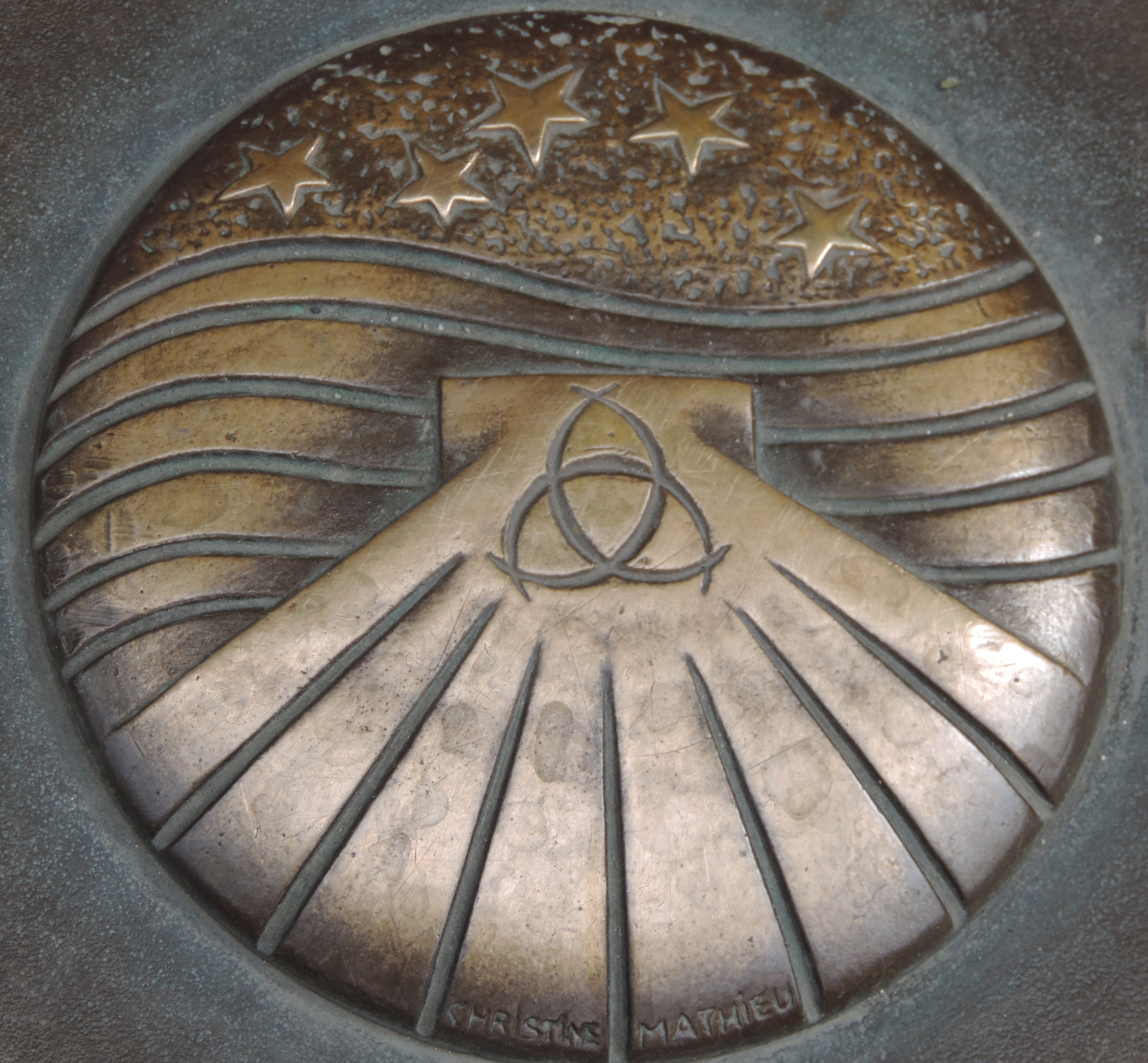
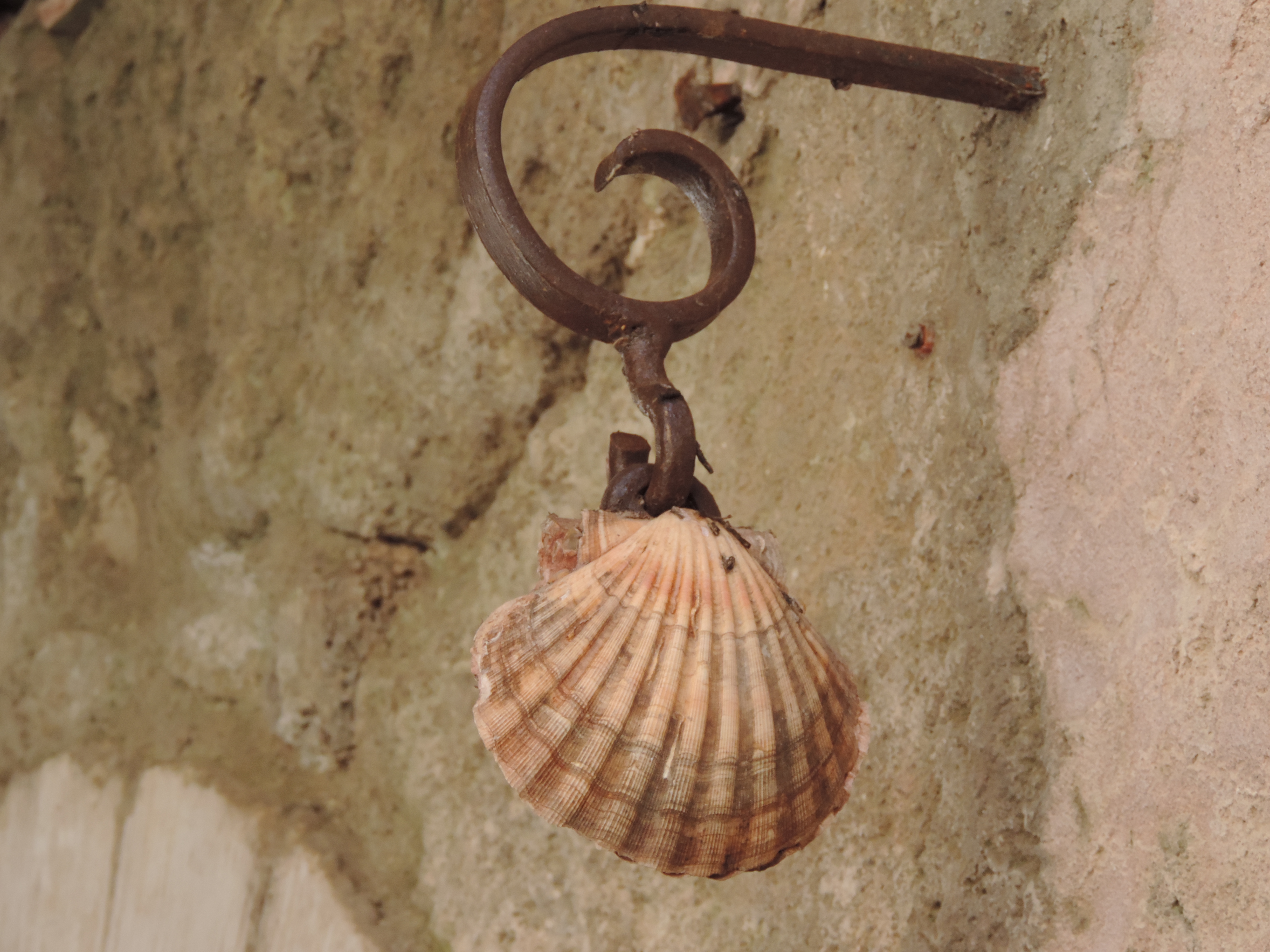
I suspect this might be quite modern, but I love it all the same…..see the scallop shell from the Compostella Pilgrims’ Way

DSCN1100

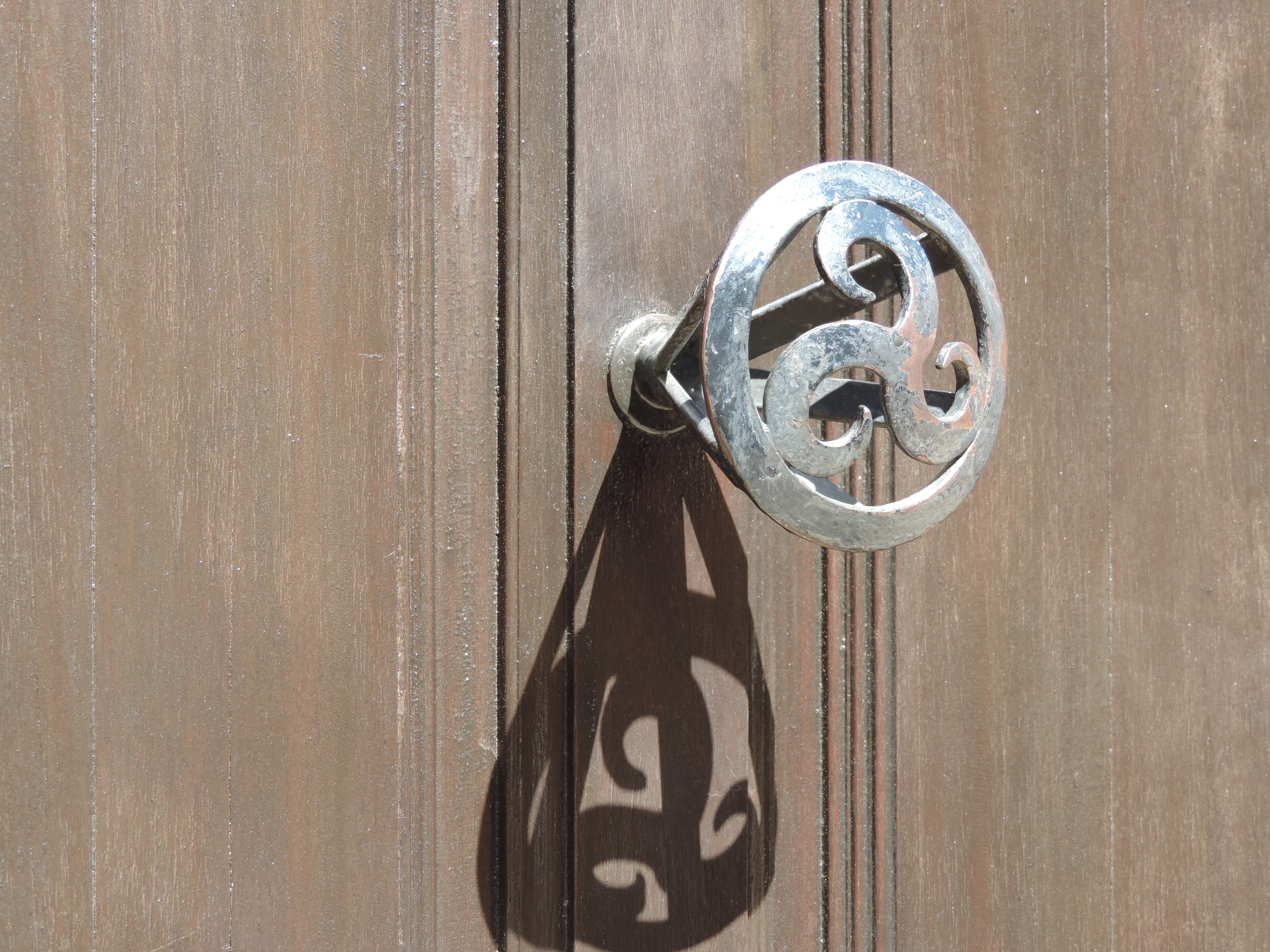
…..a very modern version of a triskele (body/mind/spirit? or earth/sky/heaven?)

DSCN1091

……the waves of the sea, and the stars in the sky to guide you.


Read Full Post »

eau potable

The earliest form of photography was the daguerreotype (named after its inventor, Monsieur Daguerre). It was a process which captured images onto silver coated copper plates. It didn’t involve using negatives and every single “print” was a one off. They couldn’t be duplicated or transferred onto paper.

The daguerreotype was remarkable for the accuracy of the image produced. It was sharp and detailed (you could use a 50x magnification lens to look at part of the daguerreotype and see crisp details). Partly because of its accuracy it was initially used as a “scientific instrument” and found in laboratories, but as the technology became more portable the taking of portraits, landscapes and cityscapes soon proliferated.

As photography developed, an artistic intention was soon brought to it. The newer processes of making negatives and printing onto paper, were quickly taken up by artists.

I’m a keen photographer, as I’m sure you can tell if you browse through this site. I’m also very curious about how we experience the world and how we communicate our experiences to other people. Recently I’ve been wondering about the differences between “representation” and “manifestation”.

Just as the daguerreotypes were great for re-presenting what could be seen, I think we often believe that is what we are doing when communicate our observations and experiences to others. Certainly in scientific publication, the scientists are trying to “re-present” what they have observed as “objectively” as possible.

However, as it’s not possible to experience any “out there” from anywhere other than “in here”, there is always an aspect of “manifestation” to the “representations”. Every “re-presentation” involves some “manifestation” of the subjective experience of the person who is making the image (or writing the document).

Maybe in all Art we can see these two aspects – there is some re-presentation of what the artist experiences (including what he or she observes) – but there is always some degree of manifestation too. I wonder to what extent Art could even be said to be primarily a way of manifesting the subjective – a way of a human being making manifest the otherwise invisible, unique, personal experience of the world.

Look at the image I’ve placed at the top of this post. It’s a photo I took in a “beau village” in France. It’s a sign to show that the water here is drinkable. But it isn’t just a sign. Even the way the words “eau potable” (which means drinkable water) are carved reveals something of the creator of the piece. And what about the shell? Why is that there? The shell is the symbol of the pilgrims heading to Compostella. So this is a drinking fountain to help quench the thirst of the pilgrims. That manifests something of the artist’s world view doesn’t it?

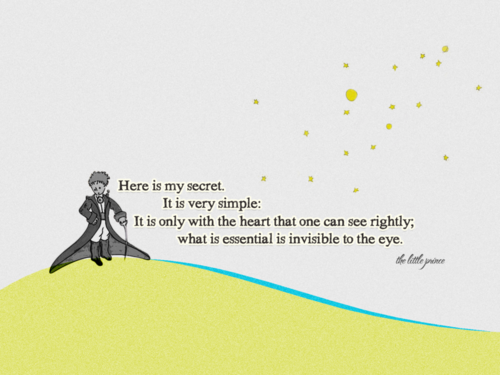
Saint-Exupéry said

saint exupery invisible

So how are you going to manifest YOUR unique, invisible, essential experience of reality?

Read Full Post »

Facing the Med

There’s a lot of talk around just now about “patient centred care”. It’s one of those concepts that nobody argues against. In fact, pretty much everyone claims to be doing it. If that’s true, then it must mean different things to different people. Or it must have so many aspects, that different people resonate with the concept because they understand and value one of those aspects.

There’s a vast and growing literature on “patient centred care” but I’d like to make a contribution to the debate. I’m writing here from the perspective of a generalist, holistic, integrative doctor. I work at the “NHS Centre for Integrative Care” which, we claim, is a patient centred service within the NHS.

Some health care services are disease centred. There are Diabetic Clinics, Asthma Clinics, Hypertension Clinics and so on. These are specialist services where only people with particular diseases are seen, and where progress is measured primarily by measuring changes in the disease activity.

Some services are therapy centred. When you attend one of those services, only particular therapies will be used, no matter what your diagnosis, or who you are. The two biggies are surgery and drugs. Most services are designed to support the delivery of one of those two therapies. “CAM” (“complementary and alternative medicine”) clinics are often therapy centred too. Acupuncture Clinics, Osteopathic Clinics, Homeopathic Clinics etc. When you go to one of those you will see someone who has specialised in that particular therapy, and they will try to help you using that therapy.

Integrative Care is a patient centred therapy. It delivers individualised, multidisciplinary care using a range of different therapies, based on a holistic, personalised understanding of the individual patient. It is generalist, in that it is not limited to patients with specific diseases, and it is integrated in that it is not limited to the use of one particular therapy.

Now, I’m sure, there are many who will explain why their disease-centred, or therapy-centred service is also patient-centred, but I hope it’s helpful to clarify why an “integrative care” service cannot be defined by either the therapies used, or the disease diagnoses of the patients attending.

Read Full Post »

photo

photo

In the main foyer of the National Portrait Gallery in Edinburgh, as well as the spectacular friezes, there are these stunning lamps.
I was especially taken by the design of the chains supporting the lamps – look at the lovely three circles within a greater circle, creating an inner Celtic triskele….

photo

Read Full Post »

« Newer Posts - Older Posts »