Feeds:
Posts
Comments

Archive for the ‘art’ Category

Picking up on yesterday’s post about threads and weaving life stories, I thought I’d share this photo I took in an old weaving factory in Aubusson. Isn’t this a fabulous stock of yarns? Look at the colours!

Probably because I was thinking about the metaphor of threads and weaving in the way we create our reality through our stories, I looked at this image again today and thought “Well, that’s what they have to work with. That store of colours and shades” So what if we think about how that idea might apply to how we create our daily experiences?

What is there in your palette? What can you select to weave together to create your unique, singular experience of today?

What if these yarns are like beliefs, ideas, thoughts and emotions? Which ones do we have to draw on, and which do we keep going back to, perhaps over-using, when we could be shifting our attention and using a different section of the palette if we want today to be really different?

I remember reading about a theory, which seemed to be validated by studies and observations, that when a baby is born, at the moment when the umbilical cord is cut, they experience their first existential threat. In those first few seconds if the baby doesn’t take their first breath, they won’t live. Perhaps, in those few seconds, the baby experiences certain strong emotions. We don’t have access to those memories because in our early years, our consciousness and memory functions haven’t formed to allow us to access them, but that doesn’t mean to say they aren’t happening, all the same. After all, most emotions occur below the level of consciousness, and becoming aware of them takes time, attention and practice.

So, what emotions might a baby experience in the midst of this first existential crisis? The theory proposes three – fear, anger or separation anxiety. Makes sense to me. So, the idea is that maybe which of the three dominates is genetically determined, but, whether it is or not, that particular pattern of those three emotions sets itself up as a core as we continue through life and try to make sense of our experiences.

So, some people have fear at the core, and that’s the main colour they use in their daily palette. For others, it is anger, and for yet others it is separation anxiety. You can try this for yourself. See if you can think back to your very earliest memory. Preferably one form before the age of five, from before you started school. When you recall that event, what emotions do you associate with it? Is it fear, anger or separation anxiety? I found with patients that some would identify one of these very clearly, some would identify a mix, or find more than one strong early memory, each with a different dominant emotion. Others would find none. They either couldn’t access any early memories at all, or they wouldn’t be able to say which emotions they associated with any they could remember.

For people who can find one, it is interesting to then follow that thread through life. To what extent does that emotion seem a foundation to other significant life events? Remember that with each emotion, we might suppress it, express it, or deal with in some hybrid way. So, if it is fear, then both fear and courage might appear. If it’s anger, both temper and avoidance of conflict might appear. And so on…..

Well, that’s one way to start to think about what palette you have, and what section of the palette you draw upon most frequently to create your daily reality.

You can also become aware of your dominant emotions, thoughts and beliefs by journaling….for example by doing “morning pages”. In fact, there are many ways to become aware of our habitual patterns of emotion, thought and belief.

I think it’s good to explore this, but we can take it a stage further by deliberately choosing certain part of the palette, or even adding new sections. We can decide we want to colour each day with more joy, more wonder, more love. We can decide we want to see each day through more half full glasses than half empty ones. We can do that with affirmations, with visualisations, with making more conscious choices about where to focus our attention, our time and our energies.

But all that is maybe for another day. Today, I’m just suggesting an exercise in awareness. Can you become more aware of what your personal palette looks like? Can you become more aware of which sections of that palette you keep going back to again, and again, and again? Finally, which underused sections of your palette would you like to pay more attention to? Or as you look at the vast range available, which colours of yarn would you like to add now?

Read Full Post »

I love stories. I always looked forward to hearing the stories patients would tell me, and I’m sure a significant part of my work was to be an active co-creator of stories. It would be common for a patient to sit down next to me for the first time, and I’d begin “Tell me your story”. Quite often that opening would be met with surprise or even some puzzlement, but I’d just stay quiet, maintain eye contact, and show I was waiting with undivided attention. Sometimes people would ask “Where will I start? How I am now, or what went wrong first?” I’d suggest there wasn’t a right or wrong place to start so just choose to start wherever they like.

The first part of the story would be up to the patient, but then I’d ask certain questions to explore particular aspects of the story, or to open up other areas which hadn’t been covered. So, together, we’d enable the telling of a unique story, a life story, with a certain focus – health and disease. Because, I am a doctor after all.

Now when I see this photo of threads beginning to be woven into a tapestry I think that rather than “focus” in that last paragraph, maybe I’d be better using the word “thread”. Because often the life story of health and disease is a story which needs unravelled, untangled, to identify the important threads, colours, textures, and images, or the important events, themes, experiences and patterns.

Maybe, in fact, the life story of health and disease is just one of the tapestries we create from all the threads and colours which allow us to create and experience our one, unique, and singular life.

So, threads, tapestries and images turn out to be as important for me as stories.

Where do the threads come from? The ones we weave into our personal experience? Some come from our genes. There are threads of lineage which run through each of us. Some come from our birth experience, and our response in those first few seconds to the cutting of the umbilical cord. Others come from our experiences, from the events of our lives and both our reactions and responses to those events. Yet others come from our relationships and from the physical environments in which we live.

Then there are other kinds of threads which we pick up and make our own. The threads of myths and legends. The threads of other peoples’ stories, beliefs and values. The threads of culture, music and art. In other words, the threads of our collective imagination.

Finally, as well as threads, the weaver has to have some idea of what they want to create. They have to have a vision, have imagination, maybe even have a pattern or a plan to follow.

I wonder what threads you can find in your life. I wonder what visions, thought patterns, feeling patterns, behaviours and influences create what you do with those threads…..

Read Full Post »

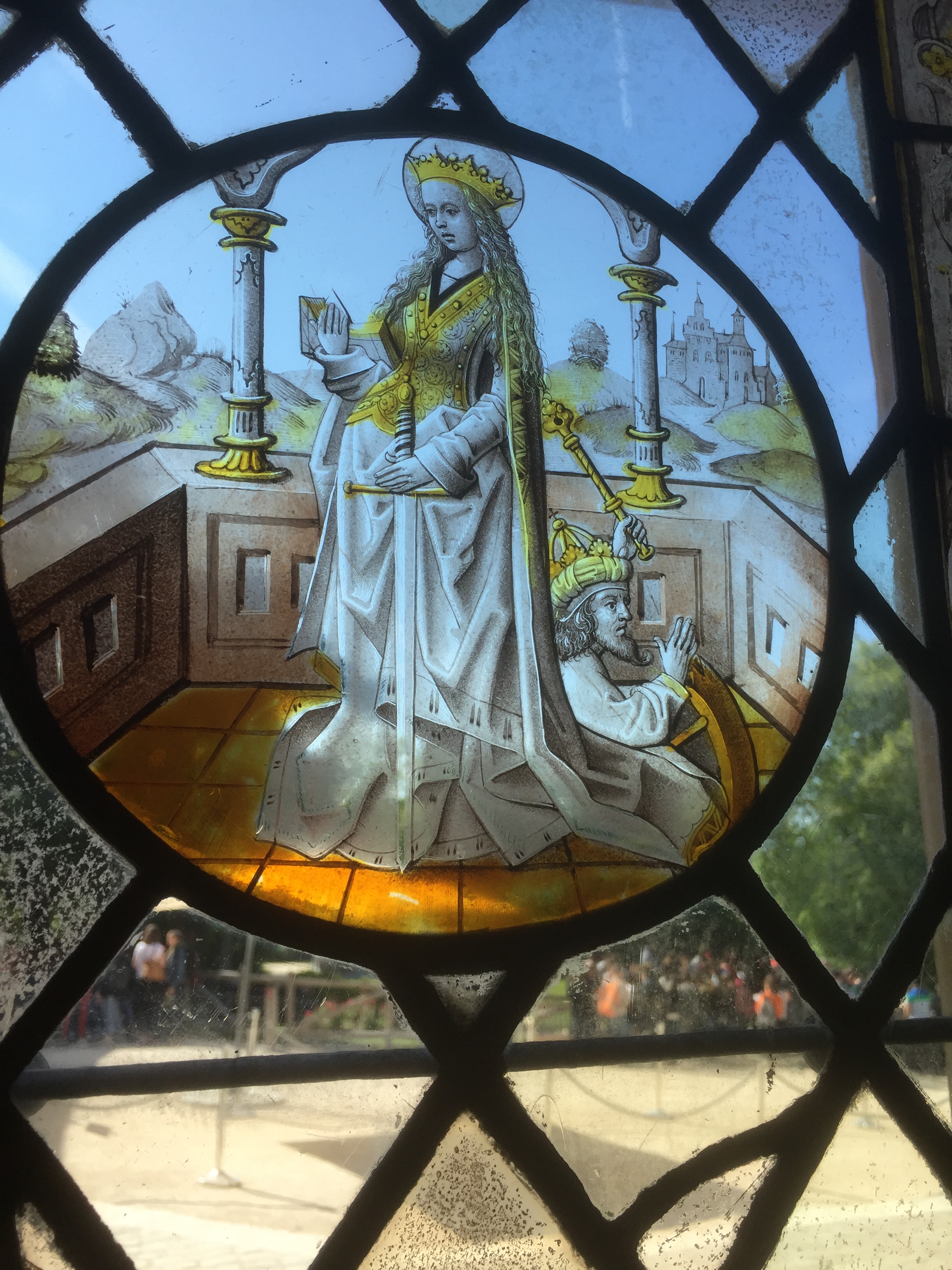
I guess none of us really paint scenes onto our actual windows these days but isn’t this beautiful? It gets me wondering what kind of scene or image would I like if I were to get, or make, a window like this? I wonder if I’d want a natural image of a beautiful tree, flower or bird, perhaps? Or would I want something highly symbolic, something resonant of myth and memory? Or would I want something visionary to inspire my thoughts of the future?

I suppose that in some ways a painted window like this could be a sort of vision board…..one of those walls where you collect images which inspire you in an attempt to inspire and focus your attention, desire and will to achieve what you want in life……or to attract it, “manifest” it…..or, at very least to colour your thoughts and your days.

I’m not a hugely goal-orientated person. I don’t set myself targets and “SMART” goals. But I know those things work for a lot of people. I suppose I prefer to set my values, my attitudes and my intentions, then open myself up to “emergence”…..to the realisation of experiences which I couldn’t have predicted. Maybe I prefer that to any attempt to force the world to deliver what I’ve already decided I want. After all, it turns out this universe has way more potential than any of us humans can imagine. So, I don’t really try to alive by organising my life around pre-determined end points.

What I do like to do is to repeatedly reflect and re-orientate my life around curiosity, wonder, joy, love, kindness and positive intention. So, that’s what I should represent on my painted window (or my “vision board”) – the images, symbols, stories and myths which stimulate and inspire my curiosity, my sense of wonder…..which bring me joy…….which stoke my feelings of love and kindness…..and which strengthen my intention to act, speak and think positively.

All of this constitutes a kind of “conscious creation” I think. A deliberate choosing to make and maintain reinforcing loops of the attitudes, values and behaviours which I want to experience in the world….which I want to manifest in the world.

Ok, folks, here’s my list (for me to return to as I move this idea forward, but also, if you wish, for you, if this inspires you or resonates with you).

Curiosity

Wonder

Joy

Love

Kindness

Positive intention

I’m going to use this list to consciously create the world I want to live in.

Read Full Post »

I saw this door panel in the Chateau Chenonceau. Isn’t it wonderful? What an incredible piece of craftsmanship carving this scene. I love the waves below the characters and the clouds above them, and I especially like how the clouds break out of the frame.

The scene is Poseidon and Amphitrite (I think!), the God of the Sea and his wife. They are being blessed with a wreath and a flower (a lily perhaps?) by two creatures with human bodies, fish tails and wings……nymphs I presume…from Amphitrite’s ancestry.

Apart from the beauty of this image in it’s own right, it is laden with symbolism, as are many of the carvings and tapestries of that period. Exactly what the significance is of each symbol and, indeed, of the myths of which they are integral part can be uncovered to a certain extent with study and research.

I invite you explore this for yourself. What can you find out about the characters represented and what stories are there about them? What can you find out about the nymphs, about the cupid figure, the trident, the bow, the wreath and the flower?

Some historians say that in their time the people who had these works of art created were well versed in the answers to all those questions. They could “read” a scene in the light of the knowledge they’d gained. They had been told these stories, taught these symbols, and they wouldn’t just look at an image like this and think “how beautiful” – the work would evoke whole sets of emotions, memories and fantasies for them. When I think of that I feel we’ve lost something because most of us haven’t had the education which allows us to have a similar experience.

Symbols and myths are an integral part of human life. Creating works of art is fundamental to our nature. I was listening to a BBC podcast the other day about cave art and the experts said the wall drawings of bulls, aurochs, deer and so on date way back to the times of not just the earliest humans, but to neanderthals too. Some of the cave art was created in caves so deep that not only were they in perpetual darkness but there could be no real reason for human beings to go there….other than through sheer curiosity, or to hide and protect their art works.

Who were those images created for, and what part did they play in their lives….of both the artists and the spectators? We don’t really know. But whatever the answers to those questions there is no denying that we are a species which does more than hunt, gather and farm. We create and live with art. It’s in our bones!

Read Full Post »

I saw this framed poster a couple of years ago in a shop in Copenhagen. I kinda wish I’d bought it! It’s a simple but elegant representation of something which has become my core model when I consider reality – networks.

When people say everything is connected to everything else they are right and the easiest way to both visualise and explore that is the network.

A picture of a network is simply some nodes connected by lines. The nodes might be people in your life, including you, with each line representing relationships. The nodes might be cells in your body, some more directly interconnected than others but all living in each other’s influences. The nodes might be neurones in your brain, each of which is connected to up to 50,000 other neurones! Can you imagine that? It’s literally mind boggling.

Networks can map thoughts, feelings and actions. They can help us trace the influences on any single moment cast by the past and the future if each node is an experience, real or imagined.

We have two halves to our cerebral cortex and it seems the left half is particularly good at noticing and exploring the nodes – the parts, the elements, the items, components or data. The right half, on the other hand, is particularly good at noticing the links, the bonds, connections and relationships.

Think of the constellations in the night sky, each twinkling star a node. When I look out now I see Orion has reappeared and makes his way each night across the winter sky from east to west. He’s been gone all summer and now he’s back I know winter is coming. But how do I see Orion? By tracing the invisible lines which connect the individual dots (stars).

When I first read about complexity science it was this model of networks which made it all clear to me, and, in particular, learning about the non-linear nature of the relationships between the nodes in living creatures helped me grasp the concept of the “complex adaptive system”…..which shone a bright light of understanding on everything from self-healing, to uniqueness.

If you’d like to explore this subject a bit more, here are some of the best books I’ve read about this concept of networks, connections and links.

Read Full Post »

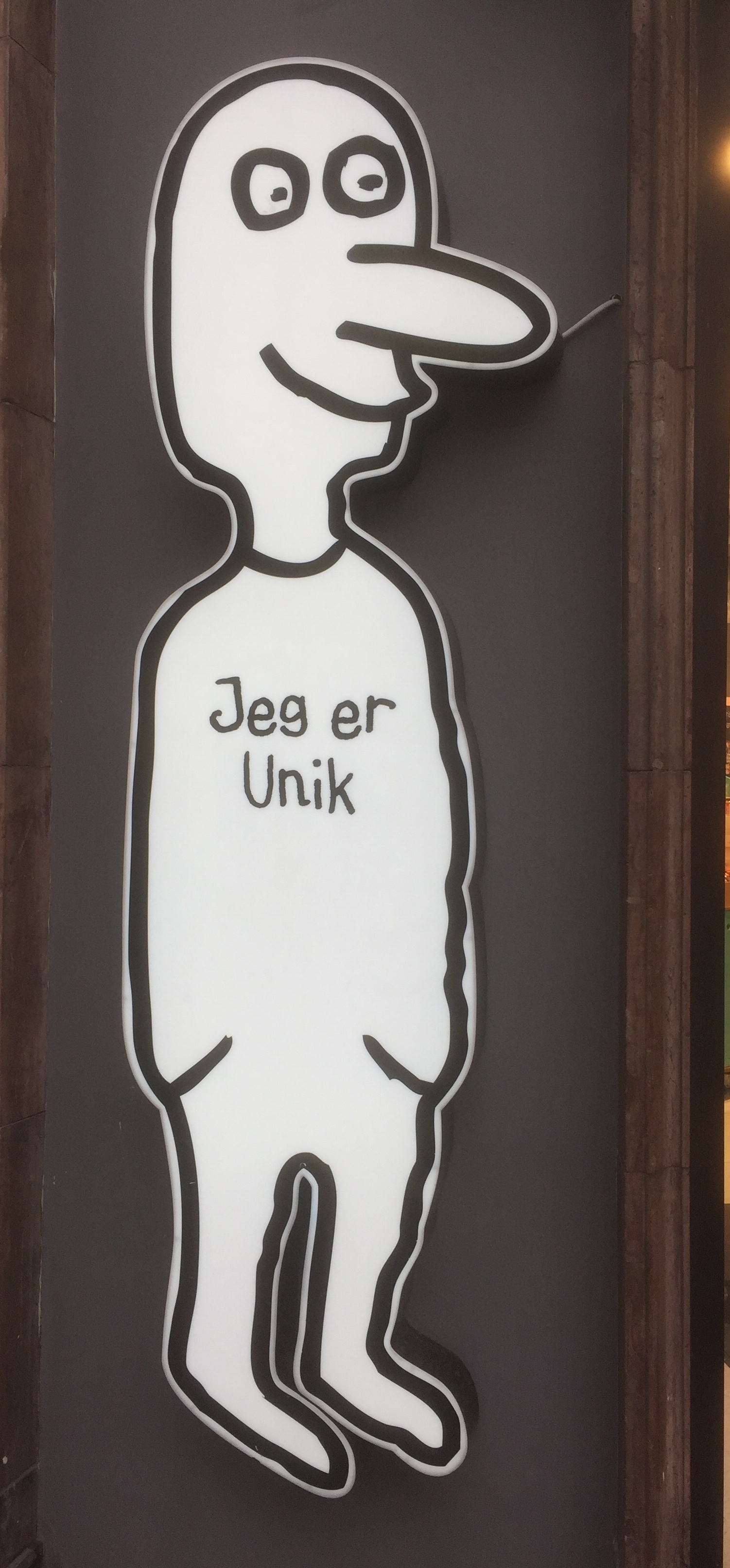
A couple of years ago I saw this image on the front of a shop in Copenhagen. Uniqueness is an important quality for me. Every single patient I ever treated was unique. Every single one had a unique story to tell me. I feel unique. I see you as unique.

So, what makes someone unique?

Is it your DNA? That’s part of it. There are no two human beings with identical genomes. Is it your face, your eyes, or your fingertips? That’s part of it too. There is scarily effective face recognition equipment already deployed everywhere from airports to security cameras. You can even get access to your phone by having it recognise your face. Iris recognition technologies have been around for some time allowing restricted access to closed spaces, and fingerprinting has a long history in detection work.

So, each of these characteristics can be said to be unique to you, but none of them captures your uniqueness, because YOU can’t be reduced to your fingertips, your eyes, your face, or your DNA. Maybe these features can help to name you….to tell others how to identify you from within a crowd, or a group.

But is this the same as “identity”?

I don’t think so. The reason why I don’t think so is that identification has spilled over from the capture of these physical features to encompass a whole person.

You are not reducible to any of these features, just as you are not reducible to any other “characteristics” such as country of birth, ethnicity, gender, religious belief, height and weight, or hair colour.

You are a person, and a person has a subjective reality, a life of memories, experiences, imaginings. A life of emotions, thoughts and beliefs. A unique, and singular story to tell, which is not, and never can be, the exact same as anyone else’s story, past, present or future.

Our uniqueness isn’t found in our characteristics or our features. It’s found in our connections….the connections which connect the past to the present, the present to future, our selves to other people, our unique set of experiences and life events, the contexts and environments of our existence. It’s found in the invisible nature of our subjective reality, with our own consciousness, our own unconscious being, and our ever changing, ever developing sense of self and person.

I abhor the reduction of a human being to a data set.

Because every human being is unique.

Read Full Post »

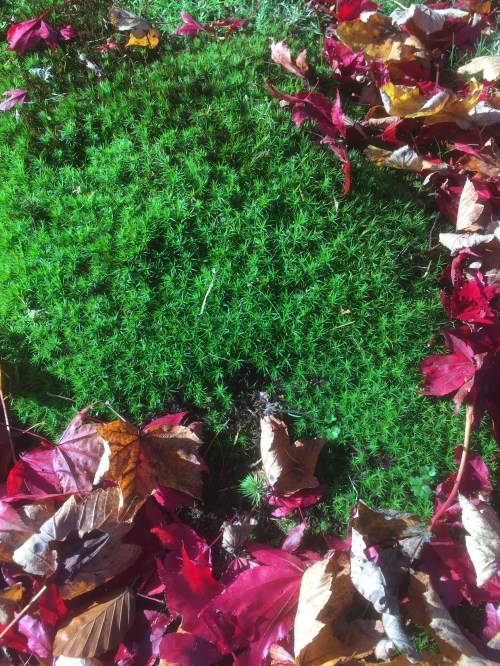
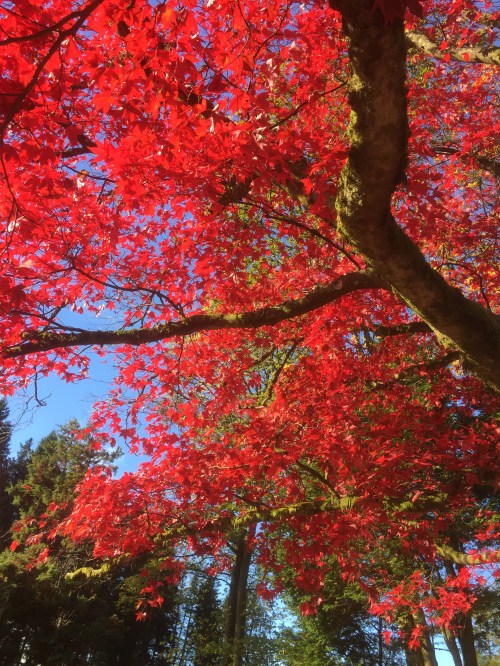
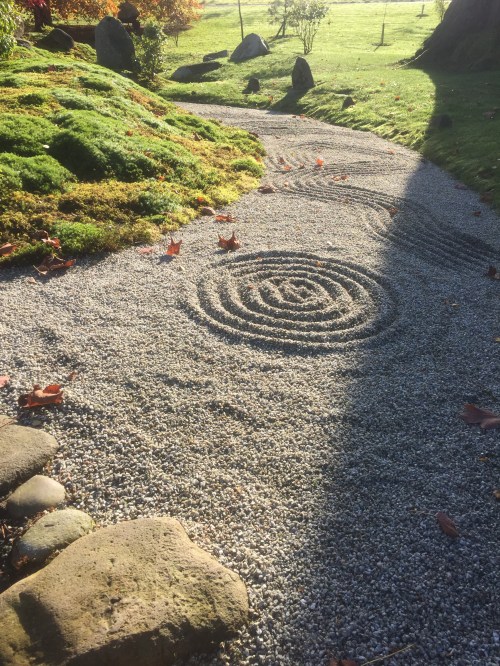
I took this photo in a Japanese Garden in Scotland in October two years ago. I’m steadily working my way through my digital photo library (from oldest to newest) and I’ve just reached October 2018…..which is pretty appropriate given its now October 2020.

This photo leapt out at me. I just LOVE it! Those gorgeous reds and greens together are quite stunning!

The next two photos also really transfixed me…..

I just think they are breathtakingly beautiful.

And, hey, isn’t a great idea to share some beauty today?

Read Full Post »

From the perspective of complexity science an “attractor” is an area of organisation within what otherwise appears as a chaotic system. Think of the phenomenon of a “Black Hole”. It’s like a sink hole where everything, even light, disappears into it. It’s like a point in the universe which pulls everything within its reach into its centre. A “Black Hole” is a sort of attractor.

An attractor appears around a focus, and once it is there it exerts this kind of “gravitational” or “magnetic” pull on anything which comes close to it. But the simplest way to think about it is the emergence of a consistent pattern in the midst of chaos. If there weren’t these points of organisational focus in the universe then space would be even, smooth and featureless. But space isn’t like that. It’s full of features, full of phenomena, of areas and points of organisation.

You can see something similar happen in the brain where distinct networks of neurones which “fire together”, “wire together”. There are examples of brain imaging which show the thickening of neural pathways when something is repeated…for example, when practising the piano (where you can see a thickening of the brain nerves used to control the fingers). It’s sort of a neural equivalent to what happens to muscles when someone practices body building.

The same thing happens with our habits of thought and emotion. The loops which start to fire in relation to particular thoughts or emotions have a pulling power. Many years ago I read a book by the psychologist Edward de Bono, “Water Logic”, where he described this tendency for thought patterns to become embedded in our brains by likening them to the way water makes its way down towards the sea from the heights of a mountain. The rain falls pretty evenly over the high lands, but starts to run together to form streams, rivulets, rivers and finally estuaries into the oceans. The next rain which falls tends to follow the paths already carved out by the previous rain.

I thought that was a pretty powerful image and I shared it with many patients over the years. It helped explain phenomena like flash-backs, compulsions and addictions to some extent. But I always thought it was only part of the story, and it wasn’t until I discovered “attractors” that I realised what the other part was.

So, it seems to me, that events which are accompanied by strong emotions can make new attractors in our minds. They can be traumatic events, accompanied by fear, anger, shame, or pain. Or they can be life-enhancing events like joy, wonder, tranquility, or a sense of one-ness with the world.

When we recall one of those events we are drawn back into the same original pathways and loops. Or when something new happens which is pretty similar to one of those attractors, then the whole thing kicks off quickly and powerfully once more.

Once I understood this I realised we can actively create our own new attractors, by having, and/or re-creating, the kinds of experience which we want….the ones of love, joy, belonging, tranquillity, awe or transcendence.

Attractors, it seems, are not fixed entities. They need to be fed to keep them growing, and neglect makes them likely to wither away. The more attention we give them, the more powerful they become.

I was thinking about this today when I looked at this photo of mine, taken in a zen garden in Japan. What I like about this image is not just the spiral, which is indeed very attractive, but the wider scene – how there are different flows, paths, bends, loops and spirals across the whole expanse of the stones. Can’t we do this with our minds? Create our own unique inner landscapes of pattern by becoming aware of existing attractors, and actively creating new ones?

Read Full Post »

I’m pretty keen on biology….as you might imagine for a doctor! I’m interested in how the body works, the way the different cells, organs and tissues all function so beautifully together. I’m interested in discovering the connections within us with all the incredible feedback loops and cascades. I find it all fascinating.

But it was very clear to me from very early on in my work as a family doctor that human beings can’t be reduced to biology. There’s more to us than biology can explain. I often refer to the three flows which pulse through our very beings every moment of every day – the flows of materials, energy and information. Biology is pretty good at shining a light on the first two flows, but its the third one where things start to get so uniquely interesting when thinking about human beings.

One of the aspects of information flow is art. Now, I don’t mean to reduce art to information, or at least, not in the sense that information is “data”. I mean information as signals, not simply data. Information as meanings. So language, music and visual art all connect with us, and our whole being responds. You can blush because someone says something to you. Your heart can race because you hear a certain song. You can catch your breath, or feel a range of emotions, from disgust to delight, when you see a work of visual art.

Our lived environment is not just physical. We imbue it with meaning. We react to particular colours, designs, patterns, sounds, scents and physical touch. A particular taste can set off a cascade of memories….one of the most famous examples being Proust’s “madeleines”.

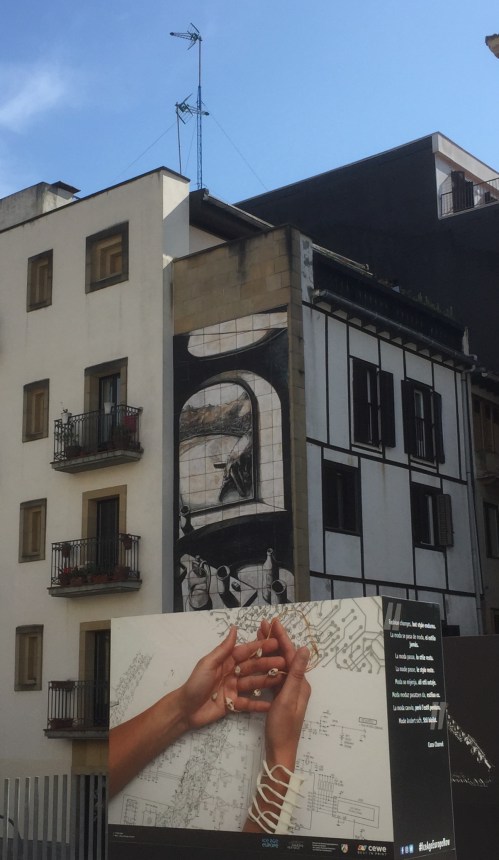
I think both street art, and advertising, affect us deeply. The images trigger certain responses within us…..maybe certain emotions, certain thoughts, or particular memories. But whatever they do, they change us. And because we are not compartmentalised, those changes ripple through our entire being. We don’t keep them in our heads.

I think we’re often quite unaware of the images and art around us. They often exert their influence in sub-conscious ways. But I like to be aware of them. I like to notice them, stop, and reflect.

In this photo I’ve captured both street art and advertising. What do you feel when you see them? What do you think when you see them? What effect do they have on you? (If any….because of course we are all affected differently by different images)

We co-create our lived reality, we humans. We do it collectively and we do it as individuals, creating and publishing, or “showing” our creations. We do that whether we are artists, or writers, or whether we simply talking to each other. We change the lived environment by constantly changing our behaviour, our language and by using our creative powers.

What kind of reality are you going to co-create today?

Read Full Post »

Maybe one the most important concepts at the base of all my understanding of people, of Life, and of the world, is that everything is connected. Nothing exists in isolation.

If I want to understand a patient, a friend, a relative, or myself, I have to follow as many of the threads which create the rich tapestries of Life as I can. I can never know them all. The daily judgement is deciding that I know enough to act, keep an open mind and awareness, and watch to see how things change after the act. I don’t really know any other way to live.

In scientific terms we humans are “open systems”. That means we don’t have impermeable walls or borders which separate us out from the rest of existence. It is just not possible to know an individual in total isolation. Our whole being is continuously immersed in flows of materials, energies and information which change us as we change them. We are influenced by, and impacted by, the environment in which we live, the food and drink we consume, the behaviours and emotions of other human beings, and the experiences of all non-human life every day. And vice versa……everything we do, what we consume, what we discard and excrete, how we act towards other humans and other forms of life changes the planet we share every day.

I loved hearing the stories patients had to tell me. Every single story was unique. Every story was a story of events, experiences, and change as a result of interactions between the person and their vast interconnected webs of environment and relationships.

I was taught that good medical practice is based on making a good diagnosis. A diagnosis is an understanding. It was my job to listen to the story, examine the patient, and, if necessary order some tests, to discern the patterns within their experience which I had been taught to recognise. In my early years as a doctor those patterns were almost exclusively pathologies, or diseases. Over time I came to understand that diagnosis, or “understanding”, needed to be both deeper and wider than that. It wasn’t enough to name the disease. A doctor had to learn to see and understand the person who was experiencing the disease. That shift from pathology to person involved teasing out the threads, exploring the influences, the impacts and the personal responses.

Each of us have distinct patterns which occur and re-occur throughout our lives. Patterns of thoughts, emotions, behaviours run through our stories. Patterns of memory, experience and fantasy cycle and spiral across whole lifetimes.

They are amazing. They are remarkable. They are astonishing. I can’t see a time will come when I’m done with this. It seems to me that every day there are new patterns to discern, threads to follow, new connections to find and to create.

What a life! What a remarkable, awe-inspiring, wonderful phenomenon is Life.

Read Full Post »

« Newer Posts - Older Posts »