Feeds:
Posts
Comments

Archive for the ‘books’ Category

the geometry of flowers

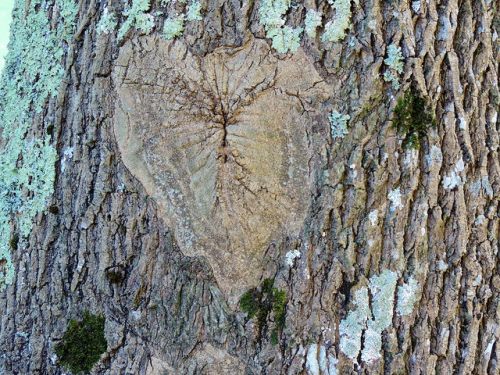
Isn’t this beautiful?

How could you fail to be seduced by the astonishing geometry of this flower?

We see this everywhere in the world – how patterns seem to display an remarkable mathematical order.

Interestingly, the same day I took this photograph (which I immediately titled “the geometry of flowers”) I read a fascinating article about mathematics teaching, entitled “The limits of a rational mind in an irrational world – the language of mathematics as a potentially destructive discourse in sustainable ecology.” by Steve Arnold of Auckland University of Technology. Here are a couple of paragraphs which caught my eye –

Galileo famously said, “The laws of Nature are written in the language of mathematics.” However we realise that this profound statement was while very true, it is not strictly true. There are times when the mathematical understanding of the world breaks down. Now in a time of ecological distress, we need technologies and tools that can match more perfectly our world. In reality, Mathematics is a highly nuanced poetry that describes the human condition, it mirrors the workings of the human brain (as mathematics is exclusively a product of human thought). Mathematics tells us our own story, it tells us how the human brain works, and as we strive to make meaning of the world, we do so using the tools available to us; number is one of the ways that we language our experience.

Within mathematics there continues to this day an expectation that the simple relationships described in mathematics should be able to neatly describe our complex world. However the real world is not simple, tidy and neat. The real world is full of messiness, unpredictability, human emotion and error. Mathematics describes a predictable world, where error can be eliminated, and it is desirable to simplify and exterminate unwanted complications. Where the two differ, surprisingly it is the human experience in the real world that defers to the all-powerful notions of mathematics.

And, in conclusion, he makes the excellent point that mathematics is just one way to make sense of the world, and it’s a way that we ourselves have made up.

We put so much faith in numbers, that sometimes we place the power of the digit over the judgement of our experience. This idea of positivism has found a secure home in the teaching of mathematics in schools. We are controlled by numbers, from the early stages of test results, to class position and IQ, to more recently BMI scores, glasses prescriptions, salaries and postcodes. We sometimes forget that numbers are a way to tell the human story. We forget we make them up, not the other way round.

So, yes, this is a beautiful geometric flower and how often can we use mathematics to model the beauty of the natural world? But, surely, we need to always remember that the mathematical story of the world is not a perfect explanation. And that we should not allow anyone to reduce Life to numbers.

Read Full Post »

Tokyo office

I’ve been thinking about bureaucracy recently so I dug out this photo I took in Tokyo one evening a few years ago.

It’s an office block and there are many like this in most cities I expect, but two things struck me when I saw this one. The first thing was how it looked like a cage or a prison, and the other was “what does everyone DO in there every day?”

I’ve been thinking about bureaucracy partly because last week was the deadline to submit a “declaration de revenus” (declaration of income) at the local tax office in France. I’ve only been in France since November last year so I hoped I’d manage to escape the tax forms until next year. On Monday I joined the queue at the tax office at 0830am (a queue which snaked out of the office, down the steps and along the pavement by the time I got there), and patiently waited until it was my turn. I explained in my best French that I was “Ecossais” and had arrived to live in France in November, so did I need to complete a tax return now, or could I leave it until next year? (Of course, I hoped the answer would be “next year”) The answer was “maintenant”. Yikes!

The second reason I’ve been thinking about bureaucracy recently is I’ve just read David Graeber’s new book, “The Utopia of Rules“. It makes a lot of sense to me. His book is a collection of three essays in which he explores the seemingly unstoppable rise of bureaucracy around the world. He does a good job of explaining how it’s happened. I think what he describes is a kind of “road to hell” – you know the one which is “paved with good intentions”? He makes the case that creating rules, regulations and standards partly arises from the desire to break “arbitrary power” – to produce common “transparent” rules which will be applied in all circumstances regardless of who the people are. Another source is the human desire for certainty and predictability which produces a preference for numbers and the simplification of complex situations.

So what does all this form-filling do for us? What kind of world do we get when give precedence to what can be measured and when we substitute figures for values? What happens when we try to run our institutions and our societies by applying algorithms?

We end up de-humanising our lives.

Whilst bureaucracy might have had the intention of taking away “arbitrary” power from individuals to produce something more “transparent” and “equitable”, it merely shifts the power up to the rule-makers and their enforcers. And this shift away from individuals who can be known, and with whom we can develop relationships over time, to faceless, nameless bureaucrats simply increases the alienation which we all experience in society.

I think the practice of Medicine is sadly de-valued by protocols, algorithms, “guidance” and rules. I preferred it when we trained professionals who developed their knowledge and their wisdom over their years, and who could flexibly adapt what they knew to deliver holistic, compassionate care always in the interests of the individual they were working with right now.

We see reports of teachers saying that working life has become unbearable under the constant auditing and “performance reviews”. We see health care workers suffering from stress from overwhelming amounts of paper-work, audits and bullying. We see doctors heading for the retirement door at the first possible opportunity as decisions are taken out of their hands and placed into those of bureaucrats who create “referral guidelines” and “treatment protocols” – Medicine by numbers.

One of the key themes of my blog is “heroes not zombies” and it seems to me that bureaucracy is one other way to create zombies – in addition to the tried and tested “bread and circuses” techniques.

Do we need more rules, more regulations, more “standards”, more monitoring, more surveillance, more audits, more “performance reviews”, more “elimination of variation”?

Or are we building ourselves cages to live in?

Read Full Post »

ava charlie

I was recently sent a copy of an article published in Norway back in 2011. The article’s title is “The human biology – saturated with experience“. Here’s the summary –

SUMMARY

BackgroundHuman beings are reflective, meaning-seeking, relational and purposeful organisms. Although experiences associated with such traits are of paramount importance for the development of health and disease, medical science has so far failed to integrate these phenomena into a coherent theoretical framework.

Material and methodWe present a theory-driven synthesis of new scientific knowledge from a number of disciplines, including epigenetics, psycho-neuro-endocrino-immunology, stress research and systems biology, based on articles in recognised scientific journals and other academic works. The scientific sources have been deliberately chosen to provide insight into the interaction between existential conditions in the widest sense (biography) and biomolecular processes in the body (biology).

Results. The human organism literally incorporates biographical information which includes experienced meaning and relations. Knowledge from epigenetics illustrates the fundamental biological potential for contextual adaptation. Intriguingly, different types of existential stresses can enhance disease susceptibility through disturbances to human physiological adaptation systems, mediated in part through structural influences on the brain. Experiences of support, recognition and belonging, on the other hand, can help to strengthen or restore a state of health.

It’s a fascinating review of research literature on the links between “biography” – an individual’s unique story, and “biology” – the biomolecular processes of the body. It seems clearer to me than ever that talk of “mind and body” as if these are two separate entities is both unhelpful and misguided.

We are certainly “reflective, meaning-seeking, relational and purposeful organisms” and it’s long seemed to me that to practice medicine without that understanding demeans both patients and practitioners. Human beings are not objects which can be reduced to genes, molecules or cells. We are complex adaptive organisms with consciousness. As these authors say, we have  –

a capacity for self-reflection, for designing sophisticated symbolic structures, for attaching metaphorical concepts to experiences and for building models and categories with the aid of the imagination.

We create art, music, poetry and stories. We play. We make sense of our daily lives. (See my recent series of posts on re-enchanting life for more about these very human activities) We connect. We live embedded in a mesh of relationships. We use language, myths and symbols to interpret and experience the world.

Unfortunately, such experience does not lend itself easily to standardised interpretation; it is always an experience of something for someone, in a unique context

All of our experiences are personal and unique. To be fully human, to really understand another person, we must consider the personal and unique. My contention is that we must not only consider it, but must hold that focus as central come what may.

Yet, as these authors point out, contemporary “evidence based” approaches to medicine have failed to include the subjective –

Human subjectivity is not only absent from contemporary evidence-based medicine, it is in fact explicitly eliminated by the mathematical analyses performed during assembly of evidence.

Should we allow statistics and “controlled” de-humanised research (with the experiences of the human beings who are the subjects of the research removed) be our “gold standard”? We need the research which incorporates the subjective and the personal if we want the findings to be relevant to the real, everyday lives of human beings.

Right up in the “Results” section of this paper the authors say “Experiences of support, recognition and belonging, on the other hand, can help to strengthen or restore a state of health”. That is completely congruent with the clinical experience of my lifetime’s work as a doctor. The essential elements of healing are based on the relationship – as a doctor it is my role to recognise each patient – to see each one as a unique individual with a particular issue or problem to discuss – and to be able to say “I see you”, “I hear you” and “I understand what you are experiencing” (and that includes making a diagnosis and being aware of the natural history of diseases). It is also my role to support, not judge. To provide what help and care I can. And finally, at the base of it all, it is my role to create a relationship with each patient, a meaningful connection which reduces the feelings of isolation or alienation a person who is suffering can experience.

It is heartening to see the beginnings of a scientific method which will help us all in the future to create the conditions for health. And if the start of that is to create “Experiences of support, recognition and belonging”, then we will be starting from a good place.

Read Full Post »

Thistle in the vines

A thistle in the vineyard.

I stumbled across this thistle in the vineyard up behind the house in the Charente where I’m living now. I thought the symbolism captured something about this phase of my life.

When I retired from clinical practice last year, I sold my house and Scotland and moved to France.

I had the idea to move to France, having never lived anywhere other than Scotland throughout my whole life, because I thought if I put myself into a different culture, and worked to become fluent in the language of that culture, then I might stimulate my imagination and my creativity. I thought that it would also be good for my brain – a lot of people suggest that learning a second language is good for the brain at any age. I thought that moving to a more rural community in France would also allow me to enjoy food which was grown locally and available fresh in the markets. (Adopting the Michael Pollan Food Rules – Eat food. Not too much. Mostly plants) I thought it would enlarge and deepen my experience of the world.

It’s doing all that, and more.

Then today, I read a review of David Graeber’s “The Utopia of the Rules“, which really inspired me, so I set off to read more reviews, interviews and articles by this author. In one of the first pieces I read he quoted the following –

Putting yourself in new situations constantly is the only way to ensure that you make your decisions unencumbered by the nature of habit, law, custom or prejudice – and it’s up to you to create the situations

(It’s from “Crimethinc.” – an anarchist collective which says it is “in pursuit of a freer and more joyous world”.)

Well, wherever it’s form, it’s spot on!

Putting yourself in new situations constantly is certainly a way to move from zombie mode to hero mode.

David Graeber, by the way, is the man responsible for the slogan “We are the 99%”, and his book, “Debt: the first 5000 years” called for debt to be written off around the world.

What new situations do you plan to put yourself in, in the year ahead?

Read Full Post »

rose

In Saint-Exupéry’s “The Little Prince”, the little prince talks about the rose he has been looking after.

“To be sure, an ordinary passer-by would believe that my very own rose looked just like you, but she is far more important than all of you because she is the one I have watered. And it is she that I have placed under a glass dome. And it is she that I have sheltered behind a screen. And it is for her that I have killed the caterpillars (except for the two or three saved to become butterflies). And it is she I have listened to complaining or boasting or sometimes remaining silent. Because she is my rose.”

Can you ever “park” the personal? Can you ever set aside the “subjective”?

In “The Little Prince”, the rose which the prince looks after means so much more to him than any other rose. Isn’t this an essential truth about one of the ways in which we experience difference in this world? We develop personal relationships. We don’t just form personal relationships with other people, but with other creatures, with certain plants, trees, even with certain inanimate objects. Children often form intense attachments with particular objects – a blanket, a teddy bear, a soft toy. Does this phenomenon disappear? Or do we just move our attachments to other “more grown up” objects – a pen, a car, a favourite cup?

Could you make a list? Could you describe the people, places, creatures or objects which you are particularly attached to? The ones which mean the most to you? You’ll find that your list is very specific – and very different from anyone else’s.

Read Full Post »

To be fully alive is to be engaged with the rhythms and patterns of the natural world, but to be fully human is to reflect upon and celebrate this relationship – David Fideler


There is a tendency to reduce thinking to rational thought. But thinking is not only about logic.

Thinking involves contemplation, reflection and the experience of sensations and emotions.

It does seem to me, however, that one way to move from zombie to hero mode, is to think – in the fullest meaning of thinking – to become aware and then to make conscious choices

Read Full Post »

I used to support this idea that you ‘write what you know.’ You hear that advice given to young writers all the time and even to kids in school. It’s one of the greatest disservices – even in elementary school, teachers ask students just back from holidays to write about what you did, what happened to you, what you know. What about what you imagine? The imagination is the richest tool you will ever have as a novelist and, really, as a person. Anybody can do research. To use your imagination is to use a gift of the gods. The imagination is really disrespected when you’re telling people over and over to write what you know. This idea that what you experienced in your backyard when you were 15 is more significant or more real is just not true. Lawrence Hill

I’m increasingly convinced that imagination is indeed a “gift of the gods” and that it is the “richest tool” any creative person can use, not just writers. 

In fact, I’m increasingly convinced that more imagination is needed to solve the problems and crises we face, to feel genuine empathy with others, to develop tolerance, and to re-enchant our dis-enchanted lives.

Read Full Post »

In Eric Cassell’s “The Nature of Clinical Medicine”, he postulates that a key problem with Western Medicine is the focus on disease, at the expense of seeing, hearing and understanding the person who may, or may not, have the disease. At Medical School I was taught it was very bad practice to refer to “the gall bladder in bed 3” or to say “I admitted a case of pancreatitis last night”. Despite that we continue to think of disease as paramount in patient care, and we even create our health care services around the diagnosis and “management” of disease. Whole protocols of procedures are created, distributed and enforced around the concept of diseaes. Doctors and nurses are told what to do with a patient with disease X on the basis of “the best evidence”, where “the best evidence” refers to group studies which seek to “control for” individual factors – a process which prioritises the disease over the individual experience of it.

Eric Cassell enumerates “8 problems with using disease language”.

Disease names, for example, coronary heart disease or carcinoma of the breast, wrongly imply that a disease is a concrete thing (as opposed to an abstract concept) that can be found separate from the patient in whom it is found.

I read the phrase about disease being a concept, not a concrete thing, many years ago, and it had a big effect on me. Disease is exactly that – a concept. It’s a pattern of change which we name. Yet how many people, patients or health care professionals, think of a disease as being a thing? If you look at recent slogans used in health care, and in charity campaigns you’ll see the kind of thing. They are full of war metaphors about fighting this, beating that, kicking cancer’s butt, and so on. 

Disease names, for example, renal cell carcinoma or ulcerative colitis, incorrectly imply that the disease and its behavior are independent of the persons in whom they are found.

There are NO diseases which exist outside of people (or other living organisms). A disease is ALWAYS found in the context and the environment of the person who is suffering. 

Disease names, for example, lupus erythematosis or chronic obstructive pulmonary disease, mislead the unwary into believing that the name refers to one thing whose manifestations in individual patients are more alike than dissimilar. Just as the word tree refers to a class of things whose members are more alike than not, when, unless one wants to use trees or their wood, their variations are more important than their similarities.

What does every patient who attends an asthma clinic have in common? Asthma? How similar does that make them? Is this the most important fact to know about this person who is attending today? It’s individual differences, not the similarities, which are the most important.

Disease names, for example, multiple sclerosis or pneumococcal pneumonia, fool the unsuspecting into believing that what is referred to is a static entity, like the Bible, the Statue of Liberty, or the map of the New York City subways, rather than a constantly unfolding process that is never the same from moment to moment. The history of disease concepts depended on and furthered the classic separation of structure and function in which abnormal function was believed to follow from abnormalities in structure. This distinction seems to have been derived from the idea of form (which goes back to the Greeks) and its consequences that loomed large in 17th- and 18th-century medicine (King, 1978). The hard and fast distinction between structure and function itself is invalid. Structure is merely slower function, in that it changes at a lesser pace than the process called function—put in mind how bony structure changes in response to trauma or age so that it continues to perform its original function. Even the Statue of Liberty and the Parthenon are constantly changing.

As best I can understand, change is the nature of reality. There are no static entities. Even the ones which look static, are just changing more slowly, or less perceptibly. As Cassell says, “structure is merely slower function”.

Having named a disease within the patient, for example, diabetes mellitus or metastatic adenocarcinoma of the lung, physicians may be fooled into believing that they know what the matter is at this particular time and why. The disease may be the sole underlying reason why the patient is sick, but more often other factors—physical, social, or psychological (or all three)—have been crucial in the generation of the details of the illness and its losses of function (Cassell, 1979).

This is a common error. Just because an abnormal reading is found, that does not necessarily mean the explanation for the patient’s suffering has been found. For example, it has been clearly shown that there is no direct linear relationship between a lesion and the pain a patient is experiencing. Pain can change irrespective of the findings in the MRI scanner.

Disease names, for example, amyotrophic lateral sclerosis and psoriasis, inadvertently cause physicians to fall back on definitions of disease that are now accepted as outmoded because they fail to provide an adequate basis for treating the sick.

Disease names can, and do, change as we develop our understanding.

Using disease nomenclature to describe human sickness encourages the belief that only research into (molecular) mechanisms of diseases holds promise for understanding and treating human sickness.

You’ve probably encountered one of the ways in which “patient centred” is being used – pharmacogenomics. The idea that as long as we find not just the genetic code associated with a particular disease, but the genetic codes which seem to indicate responsiveness to certain drugs, then all we need is the genetic code. This isn’t to say that molecular or genetic research is not of value. It’s just not enough.

Finally, focusing on naming the disease takes attention away from the sick person.

Ultimately, this is Eric Cassell’s main message, and if only we made this the foundation principle of health care then we might have better medical education, more useful research, more effective treatments, and even health care organisations constructed around people, not diseases and drugs.

Read Full Post »

Eric Cassell has a new book out. The Nature of Clinical Medicine. Maybe not a title which grabs your imagination but I was very influenced by two of his earlier works – The Healer’s Art, and The Nature of Suffering. In particular, I appreciated the way he articulated the difference between “disease” and “illness”. It seemed to me that the patient’s illness could only be understood by including their story, their reports of the invisible, subjective experiences we call symptoms. 

When I studied Medicine in Edinburgh, the first three years of the six year degree course had a curriculum of “medical sciences” and so my first degree was a BSc in Medical Sciences. It was only when we entered into Year 4 that we were introduced to patients and to a curriculum of “clinical medicine”. So, the first time I saw “cirrhosis of the liver” it was in a perspex box marked “cirrhosis of the liver”. It was a full two years later before I encountered a person who had “cirrhosis of the liver”. 

I know Medical degree curriculae and teaching methods have changed a lot over the years, but what Eric Cassell does, so eloquently, in this book, is make the case for the practice of “Clinical Medicine” which does NOT focus on the disease. Instead, he argues, it needs to focus on the patient. 

The major problem is, simply stated, that when persons are sick, the sickness has an effect on every part of them, and if attention is paid only or even primarily to the pathophysiology, the disease, or the body, then the other aspects and particulars of sickness will get inadequate attention and the impact of the sickness may go on and on. That probably did not matter so much in the era of acute diseases because the patient was either soon well again or died. Now that the overwhelming majority of medical problems come from chronic diseases, from persons with enduring disability secondary to diseases, birth defects, or trauma, and from an aging population, the inadequacies of disease-centered medicine cause problems for individuals and for populations.

Even if this way of focusing on disease paid off in terms of managing acute illness, he makes the point that the world has changed, and now doctors primarily have to help patients who have chronic illnesses. A continued focus on pathophysiology, is a focus on disease, and it runs the significant risk of failing to understand or help the person who actually has that disease.

If no disease is believed to be present or cannot be found, generally the patients’ problems are shunted aside, symptoms are treated simply because there are treatments, or the patients are essentially dismissed or placed in a category of lesser interest.

This is one of the worst effects of a focus on disease. When the test results return normal readings, the patient is declared to be disease-free, and either dismissed, categorised as having a mental illness, or is prescribed medication to attempt to dull the symptoms they are experiencing even though the doctor can’t explain the presence of those symptoms. Sadly, this often results in loss of trust, breakdown of the doctor patient relationship, and ultimately a failure of care.

It is this almost single-minded focus on disease entities, especially hunting for their ultimately molecular origin, that marks Western scientific medicine and creates difficulties for physicians in the multiple other things they do, from counseling to treating suffering. 

Read Full Post »

John Berger writes

Because true translation is not a binary affair between two languages but a triangular affair. The third point of the triangle being what lay behind the words of the original text before it was written. True translation demands a return to the pre-verbal. One reads and rereads the words of the original text in order to penetrate through them to reach, to touch, the vision or experience that prompted them. One then gathers up what one has found there and takes this quivering almost wordless “thing” and places it behind the language it needs to be translated into. And now the principal task is to persuade the host language to take in and welcome the “thing” that is waiting to be articulated.

Interesting, huh? That mechanical translation matches word to word then seeks to get the grammar correct, but is the original idea or meaning translated well that way?

As I begin to live in a country where the language is not my first language, I find that, at least in this first phase, I’m translating all the time. Reading or hearing French and translating it into English in my head to understand the meaning. But already there are phrases which seem to require no translation, and phrases that pop into my head fully formed in French. I’m guessing that gradually I’ll do less and less translation.

But actually although Berger is talking about translating a text from one language into another, I think maybe the same issues apply to all communication. I have an idea or a feeling to express, pick some words, some phrases. I’m translating it into written or spoken language. Aren’t I? Which leads me to wonder about the rich diversity of inner lives. I’m sure we all get that experience, from time to time, where we think that someone else seems to come from another planet. Where their worldview is so different from ours that we don’t even seem to be speaking a common language, despite the fact that a superficial observation would lead to the conclusion that we are indeed speaking the same language.

When Berger mentions the third point of the triangle, I suspect he is thinking of our inner lives. That leads me to three questions today.

  1. How can I know my inner life?
  2. How can I express or show my inner life?
  3. How can I know the inner life of another?

For me, the first involves practices of awareness and reflection, the second, creative acts, and the third requires ongoing dialogue. Isn’t it interesting that all three have no end? I will never know myself completely, never be able to fully express myself, and never fully know another. That makes me feel both excited and humble.

Excited because all that is an adventure, a voyage of discovery, and a constant stream of revelation and wonder. It is the ‘émerveillement du quotidien‘.

Humble because nothing can be known completely, fully or finally. Montaigne knew that with his ‘Que sais-je?

Over to you now. How do you answer those three questions? You, personally, in your own life?

  1. How can I know my inner life?
  2. How can I express or show my inner life?
  3. How can I know the inner life of another?

Read Full Post »

« Newer Posts - Older Posts »