Feeds:
Posts
Comments

Archive for the ‘books’ Category

where I write

Here’s where I write.

The reflection of the sky in the window of my study really caught my eye. In fact, I’d say it caught my imagination.

Imagination.

Too often these days imagination is harnessed to fear. Our daily newsfeed from the media provokes us to think about and worry about the most awful horrors. During the Referendum campaign in Scotland this year the No camp bombarded people day in, day out, with scare story after scare story. How else can a minority continue to hold power over the majority? How else can a fraction of the 1% who grow richer by the day, no, by the minute, continue to exert power over the 99%? Is it any wonder that in democratic societies so many are disenchanted with politics? Where are the politicians and parties with vision….with spectacular, engaging ideas and passionately held values which motivate us to create the solutions to the problems which face us?

It seems to me that we need to fire up peoples’ imaginations.

Where else are we to get our new ideas from? Where else are we to get our hope from?

Ursula Le Guin, the author, received a medal at the National Book Awards recently, and she said this

I think hard times are coming, when we will be wanting the voices of writers who can see alternatives to how we live now, and can see through our fear-stricken society and its obsessive technologies, to other ways of being. And even imagine some real grounds for hope. We will need writers who can remember freedom: poets, visionaries—the realists of a larger reality. Right now, I think we need writers who know the difference between production of a market commodity and the practice of an art. The profit motive is often in conflict with the aims of art. We live in capitalism. Its power seems inescapable; so did the divine right of kings. … Power can be resisted and changed by human beings; resistance and change often begin in art, and very often in our art—the art of words. I’ve had a long career and a good one, in good company, and here, at the end of it, I really don’t want to watch American literature get sold down the river. … The name of our beautiful reward is not profit. Its name is freedom.

I so agree.

Hard times seem to be coming. For many, they are here already. We DO need the writers who can see a way ahead and inspire us to create a better future. We do need to writers who “remember freedom” and count it as “our beautiful reward”. And we certainly need writers who can “imagine some real grounds for hope”.

I hope that, daily, little by little, I am becoming one of those writers……

After all, if we can’t imagine real grounds for hope, how do we carry on?

Imagination is such a precious and amazing facility. We can use it to solve problems. We can use it to create – art, music, literature, new thoughts and new acts…..not just, as Ursula Le Guin says “other ways of being”, but other ways of becoming!

If we are to realise our potential to become heroes not zombies, we’re going to need those writers who can fire up our imaginations…….. to think creatively, and, importantly, to DO things differently.

If we believe freedom is possible, aren’t we going to have to use our imaginations to create it?

Read Full Post »

Rainbow fountain

I’m using this photo of a rainbow appearing in a fountain because I think rainbows are a symbol of hope, as well as being a phenomenon which exists only in the presence of the subject (the observer), and a fountain which is symbolic for me, of the life force, that flowing healing energy which enlivens and heals us all.

Isaac Judaeus lived from 855 to 955. He was physician to the Fatimid rulers of Qairawan in Tunisia, and his works were amongst the first to be translated from Arabic into Latin at the time of the great translations which brought Arabic thought and science to the notice of the West. His books had a big influence on Western medieval medicine, still being read into the 17th century. There’s a small book of his, Guide for Physicians, which only exists in Hebrew translation, where he sets out his ethical conception of medical practice (remember this is writing from the 9th and 10th centuries). I’ve only read a few of his aphorisms, but this one, in particular, caught my eye.

Comfort the sufferer by the promise of healing, even when thou art not confident, for thus thou mayest assist his natural powers

What’s he saying here?

First of all that physicians should comfort the sufferer. Sadly, that’s an element of health care which patients don’t always experience. Shouldn’t physicians always offer care and comfort?

Secondly, they should do this “by the promise of healing”. He goes on to say “even when thou art not confident”. Wouldn’t this be deceit in some situations? One of my earliest experiences as a young doctor was admitting a very elderly, very ill lady to the ward where I worked. Her also very elderly daughters were hugging each other on the seat outside the ward, wringing their hands, crying and upset about what was happening to their mother. I thought I’d comfort them and said “Don’t worry. Your mother is in the right place now. I’m sure she will be fine” They smiled to me just as one of the nurses came out of the ward and called me aside. “That patient you just admitted doctor? She’s just died”. Well, that taught me a lesson. But it didn’t stop me practising with hope, practising with the expectation that there was a potential for things to go well. It just taught me never to assume I could accurately predict the future!

I still believe that. I believe none of us can predict the future….especially not in the case of the particular, the specific, individual circumstance. I was surprised many times throughout my career when patients did so much better than the textbooks would have predicted. So, I often thought, the truth is that as you look forward from this point in time, there are a whole range of potential paths leading from here into the future. In the situation of illness, some of those paths will be largely ones of decline, some of stumbling along, and some of steady, or sudden, improvement. And nobody, but nobody, can accurately predict which path this particular patient will take. Therefore, at each stage of the process, hope is not only possible, but is as reasonable an option as any other.

That’s what I understand about “the promise of healing” – it’s not really a promise, in the sense of a guarantee, but a potential (in the way we say something may be “full of promise”). And I think acting from that perspective contributed to the improvements patients experienced.

That’s the final part of Isaac Judaeus’s aphorism – “for thus thou mayest assist his natural powers”.

I can’t see there is any healing other than that brought about by the human being’s “natural powers”. I’d describe them now in terms of systems theory, or complexity theory. Those natural powers are the power shown in any “complex adaptive system” – the powers of self-regulation, self-defence, self-healing…..the “autopoietic” “self-making capacity” of a person.

Medical acts, medicinal substances, physicians’ interventions are only truly healing when they work with, not against, this capacity. That’s why doctors should always remain humble. It’s not what we do that heals. It’s what we stimulate and/or assist….the astonishing self-healing powers of the human being.

In contemporary thought, these “natural powers” Isaac Judaeus refers to are often wrapped up in the idea of the “placebo effect”, but, sadly, that’s a concept so entangled with ideas of trickery and deceit that the “self-healing” powers get lost in it.

So, here’s what I get from that old aphorism –

  • offer comfort and care
  • offer hope and the promise/potential of healing
  • and in so doing assist the natural or self-healing powers found in every human being

One of my hopes for the future of Medicine would be that we learn many other ways to assist those “natural powers”.

Read Full Post »

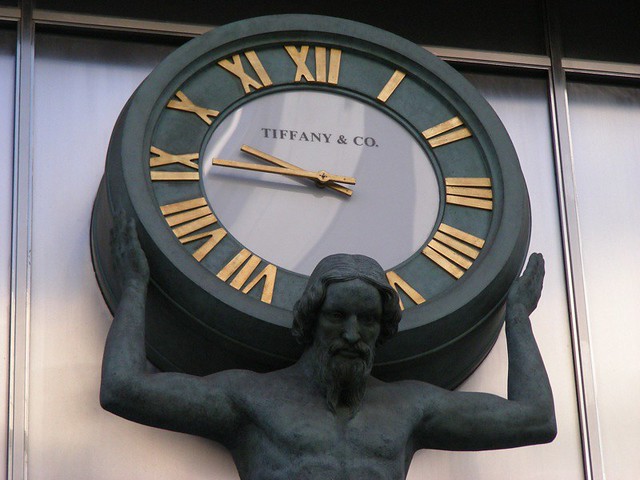
Tiffany time Ginza

Money, money, money……time to change?

Oxfam recently reported that the 85 richest people in the world own as much wealth as the poorest HALF of the population of the world.

Oxfam said that this elite group had seen their wealth collectively increase by $668m (£414m) a day in the 12 months to March 2014. It found that it would take the world’s richest man – Mexico’s Carlos Slim – 220 years to spend his $80bn fortune at a rate of $1m a day

The rate of inequality is increasing rapidly. Thomas Picketty, the French economist whose book “Capital” has taken the world of economics by storm, has shown that this trend is set to continue because the returns on capital are so much greater than the rate of growth in the economy.

Is this accumulation of wealth into the hands of so few healthy? Is it just? Is it fair? Is it acceptable?

The extent to which inequality causes harm was laid out very clearly a few years back in “The Spirit Level” by Richard Wilkinson and Kate Pickett (no relation to Picketty!). Their work showed strong correlations between the degree of equality in a country and the extent of a wide range of social and health problems.

What can we do about it?

The Oxfam report makes a number of suggestions

With an endorsement from Andy Haldane, chief economist at the Bank of England, the report said a 1.5% billionaire wealth tax would raise $74bn a year – enough to put every child in school and provide health care in the world’s poorest countries.

A billionaire tax? Is there the political will in the world to deliver that? What else does Oxfam suggest?

a clampdown on tax dodging; investment in universal, free health and education; a global deal to eradicate extreme poverty by 2030; shifting the tax burden from income and consumption to capital and wealth; ensuring adequate safety-nets for the poorest, including a minimum income guarantee; equal pay legislation and promote economic policies to give women a fair deal; and the introduction of minimum wages and moves towards a living wage for all workers.

Herman Daly, who worked for the World Bank from 1988 – 1994 suggests two very interesting measures to tackle this growing problem.

we need a serious monetary diet for the obese financial sector, specifically movement away from fractional reserve banking and towards a system of 100% reserve requirements. This would end the private banks’ alchemical privilege to create money out of nothing and lend it at interest. Every pound and dollar loaned would then be a pound or dollar that someone previously saved, restoring the classical balance between abstinence and investment.

Now, there’s a fascinating idea! That money should represent something REAL in the world! With all these elaborate “financial instruments” money and measures of economic “health” of countries is becoming increasingly detached from real activities, real use of resources and real people. Maybe such a proposal could begin to shift the balance back from capital to labour? He also suggests

a small tax on all financial trades would reduce speculative and computerised short term trading, as well as raising significant revenue

That latter idea is what others call “the Robin Hood tax“.

So, there’s an interesting selection of ideas – a billionaire tax, a move towards 100% reserve requirements and a financial transaction tax. Which political party is trumpeting these ideas? Which political party is prepared to put tackling inequality these ways at the heart of its manifesto for upcoming elections?

Anyone? Anyone?

Read Full Post »

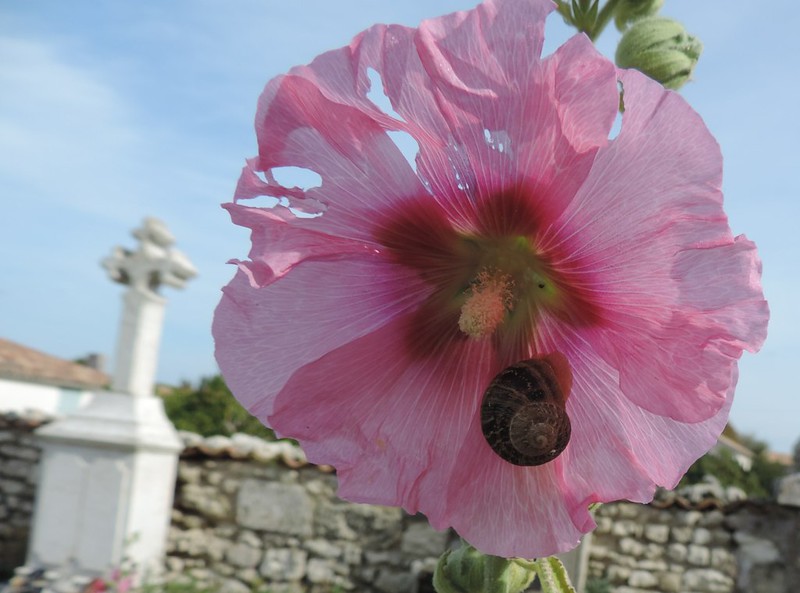
hollyhock

I recently stumbled across a reference to the paradigm of “relational science”. I hadn’t seen that term before but here are a list of characteristics of “relational science” with each one compared to its “Cartesian” counterpart.

  • PROCESS vs substance
  • BECOMING vs being
  • HOLISM vs atomism
  • RELATIONAL ANALYSIS vs either/or split analysis
  • MULTIPLE PERSPECTIVES vs dualistic objectivism/subjectivism split
  • COACTION vs split interaction
  • MULTIPLE FORMS OF DETERMINATION vs efficient/material causality

If you’d like to read about this in more detail google “Fundamental Concepts and Methods in Developmental Science: A Relational Perspective” – which is an article by Willis Overton and Richard Lerner. In that article the authors write –

As a derivation from these relational categories, the relational developmental systems paradigm characterizes the living organism as a spontaneously active, self-creating (autopoetic, enactive), self-organizing, and self-regulating nonlinear complex adaptive system. The system’s development occurs through its own embodied activities and actions operating in a lived world of physical and sociocultural objects, according to the principle of probabilistic epigenesis. This development leads, through positive and negative feedback loops created by the system’s action, to increasing system differentiation, integration, and complexity, directed toward adaptive ends.

Some of this language might be familiar to you from other posts I’ve written on this site, but I’ve never seen them pulled together as “relational science” or come across the concept of “relational developmental systems” before.

If change is the pervasive phenomenon which it seems to be, it makes much more sense to focus on process instead of arbitrarily separated parts. In terms of health, I think this means we need to understand the processes of repair, resilience and effective functioning of healthy organisms, not trap ourselves in the limited focus on pathological change within tissues or organs.

A focus on becoming instead of being also undermines the outcome based approaches to care which are so prevalent. Health is a dynamic, lived experiences, not a series of fixed states.

Multiple perspectives allow to understand illness much more fully – again, not limiting ourselves to the pathological changes within cells, tissues and organs, but taking on board the subjective phenomena of illness (pain, stiffness, breathlessness, dizziness, weakness etc), as well as the narrative of the person who is ill through which we make sense of the experience, and beyond all that, to situate the individual person’s illness within the contexts in which they live – their relationships, family, genes, work, social and environmental conditions etc.

Co-action shows that change comes about not least from the interactions between individuals. This knowledge gives us the opportunity to shift the perspective of health care from that of a doctor treating an object, to that of a doctor and a patient co-creating better health for an individual.

Last but not least, all of this thinking leads us to a consideration of the emergent nature of change in living organisms – which means we can never be completely certain how things are going to go in any individual situation. Something which, surely, should bring some healthy humility to the practice of Medicine.

You’ll see this is all entirely consistent with the features of complex adaptive systems, and of integral theory. And it is also utterly consistent with my blog byline of “becoming not being” which I first encountered in the study of Deleuze’s work.

I really think this “relational science” explains reality much better than the old, reductionist, mechanistic, linear paradigm which is still so prevalent.

Let me finish this post with a re-iteration of Overton and Lerner’s excellent summary –

the living organism as a spontaneously active, self-creating (autopoetic, enactive), self-organizing, and self-regulating nonlinear complex adaptive system


Read Full Post »

Celtic knots

I’ve always found Celtic knots attractive. I think they are both beautiful and fantastic symbols of important characteristics of reality – the indivisible inter-connectedness of everything, and the dynamic, flowing qualities of Nature.

Alan Watts, that great teacher of Zen principles, talks about the reality of inter-connectedness in one of his essays. He says –

interdependence and virtual identity with all other forms of life which the divisive and emboxing methods of our current way of thought prevent us from experiencing……….The so–called physical world and the so–called human body are a single process, differentiated only as the heart from the lungs or the head from the feet………..our intellectual and scientific “establishment” is, in general, still spellbound by the myth that human intelligence and feeling are a fluke of chance in an entirely mechanical and stupid universe—as if figs would grow on thistles or grapes on thorns………wouldn’t it be more reasonable to see the entire scheme of things as continuous with our own consciousness and the marvelous neural organization which, shall we say, sponsors it?
 I love that word he uses – “emboxing”. I’ve never seen that word before. Maybe he invented it, but it’s great. The way we label and classify after focusing on only certain aspects of any phenomenon separates and divides. It puts whatever we are looking at into a box. When we apply this technique to ourselves we divide ourselves from the Nature, from the Earth, and even from the Universe.
Dividing ourselves from Reality produces a dangerous delusion. As Watts says, “wouldn’t it be more reasonable to see the entire scheme of things as continuous with our own consciousness and the marvelous neural organization which, shall we say, sponsors it?”
I particularly like his reference to the human body – because if we really did understand ourselves as intimately and inextricably connected to the universe then maybe we’d stop classifying whatever is not “us” as “them” or “it”. Then we would have a chance to create a world which was more like the human body – made of well-differentiated parts which relate to each other in mutually beneficial ways – the reality of integration, not the delusion of division and separateness that seems to result in exploitation, plunder, killing and rape.

Read Full Post »

Honey bee

Swan reflecting

cogwheel

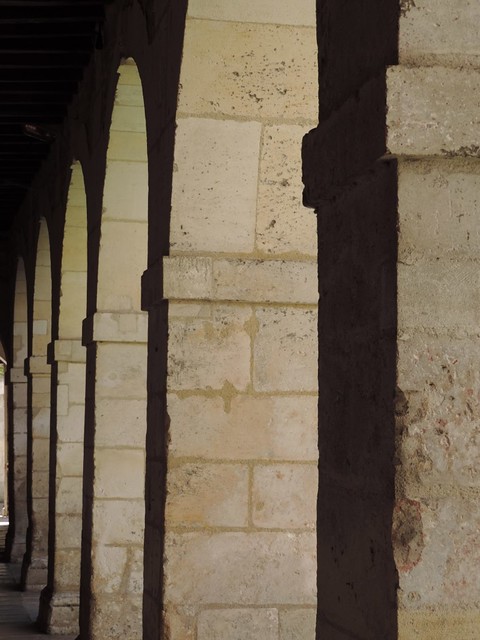
arches

Alan Watts wrote, in his collection of essays, “Does it matter?”

an enormous amount of current intellectual, philosophical, and even scientific discourse strikes me increasingly as absurd. It is an attempt to translate a nonlinear and multidimensional system of vibrations into a linear (alphabetical or mathematical) system of symbols; and it just can’t be done

Human beings have learned to do amazing things using mathematics, technology and our advances in materialist, reductionist sciences. But these advances tend to fool us into thinking that we can approach all of Life with the same ideas, concepts and methods. Alan Watts nails this error with his usual focused clarity. He wrote that back in the 1960s but 50 years on we are still making the same fundamental mistake.

Living organisms are not machines. Natural ecosystems are not elaborate mechanical technologies. We can’t squeeze open, dynamic phenomena into the same mechanical models which work in the fields of engineering and technology.


Read Full Post »

I’m always interested in research which demonstrates ways in which we can support natural healing – after all, there isn’t any other kind of healing, is there?

Here’s an interesting study using writing practice

49 healthy adults aged 64 to 97 years wrote about either upsetting events or daily activities for 20 minutes, three days in a row. After a time lag of two weeks, to make sure any initial negative feelings stirred up by recalling upsetting events had passed, all the subjects had a biopsy on the arm, and photographs over the next 21 days tracked its healing. On the 11th day, 76 percent of the group that did expressive writing had fully healed as compared with 42 percent of the control group.

This particular exercise – writing about an important or upsetting event for 20 minutes each day for three days in a row – has been around for quite some time. James Pennebaker pioneered it, and has studied the effects of writing on health extensively. He says

People who are able to construct a story, to build some kind of narrative over the course of their writing seem to benefit more than those who don’t,” Pennebaker says. “In other words, if on the first day of writing, people’s stories are not very structured or coherent, but over the three or four days they are able to come up with a more structured story, they seem to benefit the most

What’s particularly interesting here is how the creation of story goes along with changing perspectives and understanding better what’s been happening.

Pennebaker’s research developed a computer-based, text analysis program to analyze word counts in different categories, such as emotion words (e.g. happy, sad, angry, joyful), cognitive words (e.g. realize, understand, think), self-reference words (e.g. I, we) and an additional 70 categories. Much to the surprise of the researchers, the change in emotion words didn’t correspond to improved health. The more powerful predictor of improved health was the use of cognitive words–that is, individuals who showed an overall increase in the use of causal words (e.g. because, reason) and insight words (e.g. realize, know, understand) showed improved health.

So it’s not just about telling a story, changing perspective or increasing understanding, it’s about improving immune function and both physical and mental health.

Read Full Post »

rain drops

Little drops of water shining so brilliantly on a leaf are not just like gemstones, they are like little lenses.

It’s  good couple of decades since I read “Lens of Perception“, but I remember being very taken with the author’s metaphor of the lens. We can only experience the world from our unique, subjective viewpoint, and our perception is continuously influenced by not only our personal make up and characteristics, but by our stories – created from our past experiences, memories, beliefs and values and by our imagination (so full of fears, anxieties, hopes, dreams and expectations).

It’s good to become aware of those lenses we wear all the time – we see the whole of Life through them.

Read Full Post »

Moonlight on water

I was struck today by this paragraph about Romanticism in Iain McGilchrist’s Master and His Emissary –

Romanticism in fact demonstrates, in a multitude of ways, its affinity for everything we know from the neuropsychological literature about the workings of the right hemisphere. This can be seen in its preferences for the individual over the general, for what is unique over what is typical, for apprehension of the ‘thisness’ of things – their particular way of being as ultima realitas entis, the final form of the thing exactly as it, and only it, is, or can be – over the emphasis on the ‘whatness’ of things; in its appreciation of the whole, as something different from the aggregate of the parts into which the left hemisphere analyses it in self-conscious awareness; in its preference for metaphor over simile, and for what is indirectly expressed over the literal; in its emphasis on the body and the senses; in its emphasis on the personal rather than the impersonal; in its passion for whatever is seen to be living; and its perception of the relation between what Wordsworth called ‘the life of the mind’ and the realm of the divine; in its accent on involvement rather than disinterested impartiality; in its preference for the betweenness which is felt across a three-dimensional world, rather than for a seeing what is distant as alien, lying in another plane; in its affinity for melancholy and sadness, rather than for optimism and cheerfulness; and in its attraction to whatever is provisional, uncertain, changing, evolving, partly hidden, obscure, dark, implicit and essentially unknowable in preference to what is final, certain, fixed, evolved, evident, clear, light and known.

Well, well….for those of you who are already familiar with Iain McGilchrist’s hypothesis about the differences between the left hemisphere and right hemisphere ways of approaching the world, I’m sure you’ll agree this is a terrific, comprehensive summary. He, of course, is at pains to point out, time and again, that he is not saying that the left approach is bad and the right is good, or vice versa…….that we need BOTH, and that we need to integrate the functions of the two hemispheres, not allow the left to dominate the right.

But take your time, and read through that paragraph carefully. He is highlighting what is consistent in the values of Romanticism with the tendencies, or preferences of the right hemisphere of the brain. 

I enjoy what the left hemisphere does for me, but I resonate SO strongly with ALL of these “right hemispheric” qualities he describes so beautifully in this paragraph. It captures my fascination for the personal, the particular, the transient, for “becoming not being…..”

Read Full Post »

Sometimes reading a book creates a feeling of slipping into another world. Page turners do what they say on the tin and the way they are written makes it difficult to put them down, but they don’t always create a world to immerse yourself in. This week I read Alan Spence’s Night Boat and, for me, it is one of those books which creates a whole world to live in for a wee while. In fact, I think the particular feel of the Night Boat reminded me of the feeling I had at least 40 years ago when reading Kazuo Ishiguro’s Artist of a Floating World (I’ll need to go back and read it again and see if it does the same thing for me)

I’ve always had, and still have, a bit of a complex relationship with Zen – partly I feel incredibly drawn to it, and partly I feel it’s just not for me. Reading the Night Boat pulled me right into that complexity. Over all this isn’t just a novel, it’s an experience.

As a story, this is a fictionalised autobiography of the life of one of the great Zen teachers – Ekaku Hakuin.

I didn’t know the story of Ekaku Hakuin but I’d certainly heard the koan about the sound of one hand clapping and koans, those provocative conundrums of Zen teaching, are a core element of his story. There are also several haikus and poems which I think were written by Alan Spence, but maybe some of them are translations of Hakuin’s poetry?

At one point Hakuin talks about “Zen sickness” which is an illness experienced by many of the monks following the Zen path to Enlightenment. Here’s what he says –

Many years ago, I said, I met an old sage who cured my Zen sickness.
How did he do that?
Like with like, I said.
Hair of the dog. The cause of the sickness is also its cure. Zazen made you sick, zazen will cure you. 

Hmmm…..interesting! There’s a concept worth exploring!

One of the classic translations of Hakuin’s work is by Philip Yampolsky (“The Zen Master Hakuin. Selected Writings”) and early in that text he says this about doctors –

The inspired doctors of old effected cures even before a disease made its appearance and enabled people to control the mind and nurture the energy. Quack doctors work in just the opposite way. After the disease has appeared they attempt to cure it with acupuncture, moxa treatment, and pills, with the result that many of their patients are lost.

Hakuin lived in Japan between 1686 and 1768. Yet this idea of what made a good doctor is still something we are a long way from realising. His idea of the “inspired doctor” sounds to me like someone who helped people to be healthy rather than someone who tried to control disease. In fact he calls the doctors who used the various therapies available to “attempt to cure” disease “quack doctors”.

I’m also struck by his emphasis on “[enabling] people to control the mind and nurture the energy”. How much does the practice of Medicine these days “enable people to control the mind and nurture the energy”? Don’t you think we could do with a bit more of that?


Read Full Post »

« Newer Posts - Older Posts »