Feeds:
Posts
Comments

Archive for the ‘books’ Category

Untitled


The arts that promise to keep our body in health and our soul in health promise us much: but at the same time those who profess these arts among us show the results of them less than any other men. The most you can say for them is that they sell medicinal drugs; but that they are doctors you cannot say.

Montaigne is frequently pretty harsh about doctors and the practice of medicine in his “Essais”. The last sentence in that passage above did really strike me however. “The most you can say for them is that they sell medicinal drugs; but that they are doctors you cannot say.”

A number of thoughts sprang up from there.

First up was Professor Peter C Gøtzsche, a researcher who published “Deadly Medicines and Organised Crime”. Read this from the introduction to that book –

The main reason we take so many drugs is that drug companies don’t sell drugs, they sell lies about drugs. This is what makes drugs so different from anything else in life … Virtually everything we know about drugs is what the companies have chosen to tell us and our doctors … the reason patients trust their medicine is that they extrapolate the trust they have in their doctors into the medicines they prescribe. The patients don’t realise that, although their doctors may know a lot about diseases and human physiology and psychology, they know very, very little about drugs that hasn’t been carefully concocted and dressed up by the drug industry … If you don’t think the system is out of control, then please email me and explain why drugs are the third leading cause of death … If such a hugely lethal epidemic had been caused by a new bacterium or a virus, or even one hundredth of it, we would have done everything we could to get it under control.​

This is an “evidence based” book from an “evidence based” expert. It’s not a conspiracy theory – and that, actually, makes it all the more shocking. Montaigne might have said that doctors only sell drugs, but Gøtzsche says pharmaceutical companies sell “lies about drugs”.

Then I thought about a doctor friend of mine who was told by their Clinical Director to spend less time talking to patients because that wasn’t a doctor’s job. A doctor’s job, according to this senior doctor, was “to write prescriptions”. (The astonishing thinking behind this was that only doctors have the legal right to write the full range of prescriptions so that was what they should focus on)

And finally this week I read in the Huffington Post, a piece by John Weeks about Integrative Medicine and CAM in the USA.

Regular medicine’s dominant influence when “CAM” integration by medical delivery organizations began in the mid-1990s was the industrial value of service production. Mayo Clinic’s director of innovation captures this concisely when he recently spoke of medicine’s historic focus on “producing” services rather than on “creating health.”

What he is writing about is a report from the RAND corporation about Complementary and Alternative Medicine which focuses on the issue of practitioners being reduced to providers of “products” – e.g. a chiropractor does a manipulation, an acupuncturist puts in needles. In fact, although this is not where that article goes, doctors are being reduced to prescribers.

So, full circle, back to Montaigne again – what does he mean when he says “The most you can say for them is that they sell medicinal drugs; but that they are doctors you cannot say”? Personally, I think he is saying if you reduce a doctor to someone who just supplies you with medications, then you don’t have a doctor any more. I agree. A doctor undergoes an immense, broad, arduous training. I think a doctor should always keep the focus on the whole patient, seeking to understand them in their uniqueness. The doctor should be an expert in diagnosis, able to figure out what’s happening by great listening skills, great observational skills and the knowledge and experience of dealing with patients with a wide range of diseases. When it comes to doing something therapeutic (apart from understanding and supporting their patients, which is therapeutic in itself) then, surely, we want to be able to offer more than just a prescription for a drug?

A few days back I wrote a post about biomimetics. Wouldn’t it be great if doctors became experts in health? In how a human being stays healthy? And in how a human being recovers from injuries and illnesses (we used to call that “healing”). I reckon there’s mileage in the biomimetics idea. We could be learning how living organisms stay healthy, repair and recover when injured or ill, then developing techniques which support, or mimic, those strategies and processes.

Read Full Post »

fig

What is good or bad for me?

Let me ask “what is good or bad for you?”

Are the answers to those questions going to be identical?

I don’t think so. We could get into a big discussion about what “good” and “bad” even mean, but without disappearing down that rabbit hole I’d just like to express the opinion that no-one can know you better than you can. No-one is better placed to know how you should live than you are.

We forget that in our increasingly controlling autocratic societies.

Here’s Montaigne

Tiberius used to say that whoever had lived twenty years should be responsible to himself for the things that were harmful or beneficial to him, and know how to take care of himself without medical aid. And he might have learned this from Socrates who, advising his disciples, carefully and as a principal study, the study of their health, used to add that it was difficult for an intelligent man who was careful about his exercise, his drinking, and his eating not to know better than any doctor what was good or bad for him.

Socrates who lived almost 2500 years ago……his teaching on health?

Take care about exercise, your drinking and your eating.

Wow! Public Health advice has come such a long way! (hmm….)

But the main point Montaigne is making is one I agree with.

I’d be astonished if anyone claimed they knew better than I did what was good for me, or bad for me. Take the relatively common place circumstance of pain. Can anyone tell me better than I can whether or not a treatment I take for pain reduces my pain? No, they can’t. Only my personal experience will tell.

What better advice than to be aware, to be reflective and to learn about yourself?

Without that you end up swallowing the advice of someone who isn’t living your life.

(Oh, and what about today’s photo? It’s a fig. It’s a fig which grew and ripened on the tree we planted in our garden and it tasted….mmmmm….words fail me…delicious! Like no fig I’ve ever tasted before. Are figs good for me? Well that one certainly contributed towards my pleasure in being alive that day, and I’m looking forward to more figs growing next season. Are figs good for you? You’re the better judge of that one!)

Read Full Post »

bubbles

I’ve recently pulled my copy of Montaigne’s “Essais” off my shelf and dived in again. The stimulus was a special edition of a literary magazine which I found in the local “librairie” (a common confusion for the English speakers in France is that a “librairie” is a bookshop and a library is a “bibliothèque”). The focus of the special edition is Montaigne so I’ve been reading a few writers and thinkers perspectives on the man and his writing.

Given that he lived almost 500 years ago his writing seems astonishingly modern. According to the articles I read he was the first French writer to write as “je” (“I”) – his essays are reflective and he made no claims for them to be anything other than an exploration of what it was like to be Michel de Montaigne. One of the writers called him “patron de bloggeurs” – the “boss/leader of the bloggers” – which made me smile.

I’d say that this blog, and many other blogs I’ve seen, are exactly that. They are one person’s unique reflections and expressions of what it is like to be [insert blogger’s name here]

I reckon I only have each day once, and nobody can tell what this day was like for me. That’s up to me. And it’s up to you to share your unique experience of the everyday too.

Because when we do that, not only do we enrich ourselves with the sharing, but we find that we learn what it is to be human.

I’m going to share a few of the gems I uncover in Montaigne’s “Essais” with you and I’ll start with this, (which I read yesterday)

Men do not know the natural infirmity of their mind: it does nothing but ferret and quest, and keeps incessantly whirling around, building up and becoming entangled in its own work, like our silkworms, and is suffocated in it.

It thinks it notices from a distance some sort of glimmer of imaginary light and truth; but while running toward it, it is crossed by so many difficulties and obstacles, and diverted by so many new quests, that it strays from the road, bewildered.

Isn’t that so true? Thoughts never seem to stop, do they? I remember reading about the Tibetan Buddhist concept of the “bardo” many years ago. A bardo is a kind of gap. The author of the book I read suggested a good meditation technique was to become aware of the bardos, or gaps, between our thoughts – the spaces between the ending of one thought and the start of the next.

Good luck with that!

It’s not a skill I’ve ever managed to achieve.

Most meditation techniques seem to involve gently, patiently and repeatedly bringing the focus of the mind back to something specific, be that a mantra, an image or an awareness.

I do think it’s good to practice some form of meditation. It can help to counter that incessant “whirling around”.

There’s a second aspect to that passage of Montaigne’s – how difficult it is to stay on track. Isn’t it true that we often set off with a new insight, a new goal or a new intention, only to stumble when the going gets tough or something else interesting comes along – and there we go again, off the road, “bewildered”.

I think it’s good to read these reflections from five hundred years ago. They are insights into the natural condition of the human mind. If we are aware of these features we can begin to learn how to work with them, rather than beating ourselves over the head for having minds like this in the first place, or trying to wrestle ourselves into submission.

The photo I chose for this piece is one I took a couple of weeks ago. One day I noticed these little blobs of bubbles in the grass. I’ve no idea what they are, what kind of creature made them, or why, but I thought they were pretty wonderful!

Busy, busy, busy….busy blowing bubbles….oops, there I go again – that’s interesting. What is it? Yep, there’s a certain pleasure in following your mind as it “strays from the road”….

Read Full Post »

vine leaf stalks

Wow! Look what the vine on my wall is doing now!

These strange stick-like stalks are what the vine produces to grow a leaf. The leaves grow on the ends of these foot long stalks and each one produces a single leaf. That means the vine has a real depth. It’s quite a way from the leaves to the wall! But not that autumn has come the stalks pop off the leaf at the end once it turns red and yellow, then some time after it pops off its attachment to the rest of the vine.

Isn’t that an amazing process?

Janine Benyus describes the fabulous harmony between form and function that we find everywhere in Nature. She’s a scientist who specialised in trees and forestry and began to wonder why we don’t look to Nature for our solutions. Her thought was that instead of thinking we can invent technologies which can “conquer” or “control” Nature maybe we can learn from some of the adaptive strategies of other species which have actually lived on this planet for a lot longer than we have.

She’s coined the term “biomimicry” to describe this concept.

I like this idea, and it seems consistent with my own experience of wonder, amazement and, frankly, humility, in my every day life.

The potential for sustainable solutions if we take this approach is exciting. I’ve just started reading her book. I suspect I’ll be posting a few thoughts which that stimulates but let me start today with a passage right from the start.

Nature has answers. Its strategies are wildly successful – collaborating, innovating, resilient, adapting to change and leveraging diversity.

Isn’t that a great list?

  • Collaborating
  • Innovating
  • Resilient
  • Adapting to change
  • Leveraging diversity

Think how applying those principles could improve the way we deliver health care, organise towns, influence a new approach to politics and economics even?


Read Full Post »

IMG_3721

I took a walk yesterday up to the viewpoint and used my iPhone to take this panorama shot.

The viewpoint is at the top of the hill just above the village where I’ve lived for exactly a year now.

In my monthly themes I think of November as being a month for reflection. And one of the ways I like to reflect is to take what’s referred to by French philosophers as the “view from on high” or “view from above“.

It’s a way of reflecting which involves pausing, standing back, and taking an overview. It’s not about analysing or considering the details.

So I took a little pause, standing there at the viewpoint, and gazed slowly in all directions, drinking in the fields of gold, and then I took a deep, slow breath or two and asked myself “how does this feel?”

It feels good.

What I feel is contentment.

I’ve been in touch with that pretty frequently recently, and when I first had that word, contentment, pop into my head I wanted to reject it. I mean it feels such a weak word, doesn’t it? A mediocre word. Couldn’t I come up with something a bit stronger than that?

So, I looked it up on my blog and found this from five years ago

Positive affect is defined as the experience of pleasurable emotions such as joy, happiness, excitement, enthusiasm and contentment. These feelings can be transient, but they are usually stable and trait-like, particularly in adulthood. Positive affect is largely independent of negative affect, so that someone who is generally a happy, contented person can also be occasionally anxious, angry or depressed.

Here’s what they found [I’m referring to a study here]

After taking account of age, sex, cardiovascular risk factors and negative emotions, the researchers found that, over the ten-year period, increased positive affect predicted less risk of heart disease by 22% per point on a five-point scale measuring levels of positive affect expression (ranging from “none” to “extreme”).

So, weak or strong, turns out contentment might well turn out to have a health benefit.

But there’s more – I’ve just finished reading Robert Brady’s “The Big Elsewhere”, which I highly recommend, and in there this week I found a passage he’d written “on contentment”. He refers to the Tao Te Ching where Lao Tzu says “There is no disaster greater than not being content” –

What does contentment have to do with disaster? Lao Tzu knew, and cryptically passes along the intimation, that contentment is the beginning of all that is worthy, that contentment is the seed and germ of every happiness, its absence accordingly the tiny breach that ruptures into every disaster, the pinhole in the dam, the lost horseshoe nail. Contentment is all the rest: pride in the way of one’s life and the fruit of it, whether one is a shepherd or chieftain, a fact that hasn’t changed since back in the tribal days when miracles were everywhere and museums were not yet needed to remind us of what is gone.

Contentment is the core of all that truly matters, it is the root of passion, the height of honesty, the beating heart of every joy, the embrace of a family; for there is no self in contentment; it is other-centred. The self-centred, in contrast, is perturbed, discordant, writhes with discontent and seeks release (insert the ‘seven cardinal sins’ here for starters).

What do you think? Is contentment something you recognise? Is it something you feel? Today?

It seems to me it’s not such a weak or mediocre feeling after all!


Read Full Post »

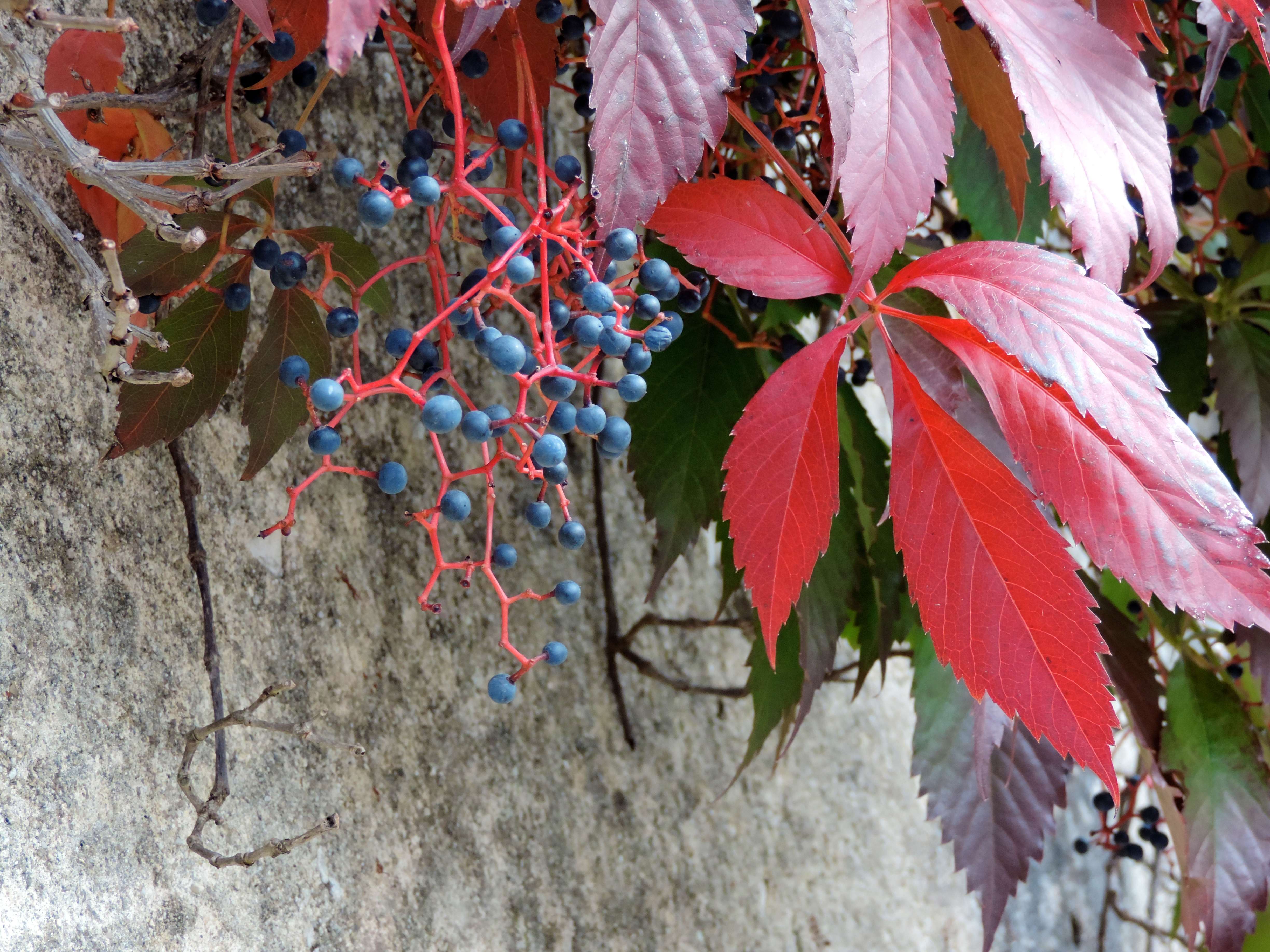
berries

At this time of year the Vinge-viérge, (Boston Ivy, or, Japanese Ivy) that grows over the wall at the edge of my garden develops these incredible little blue-black berried on red stems as the leaves around them turn their own glorious shades of red.

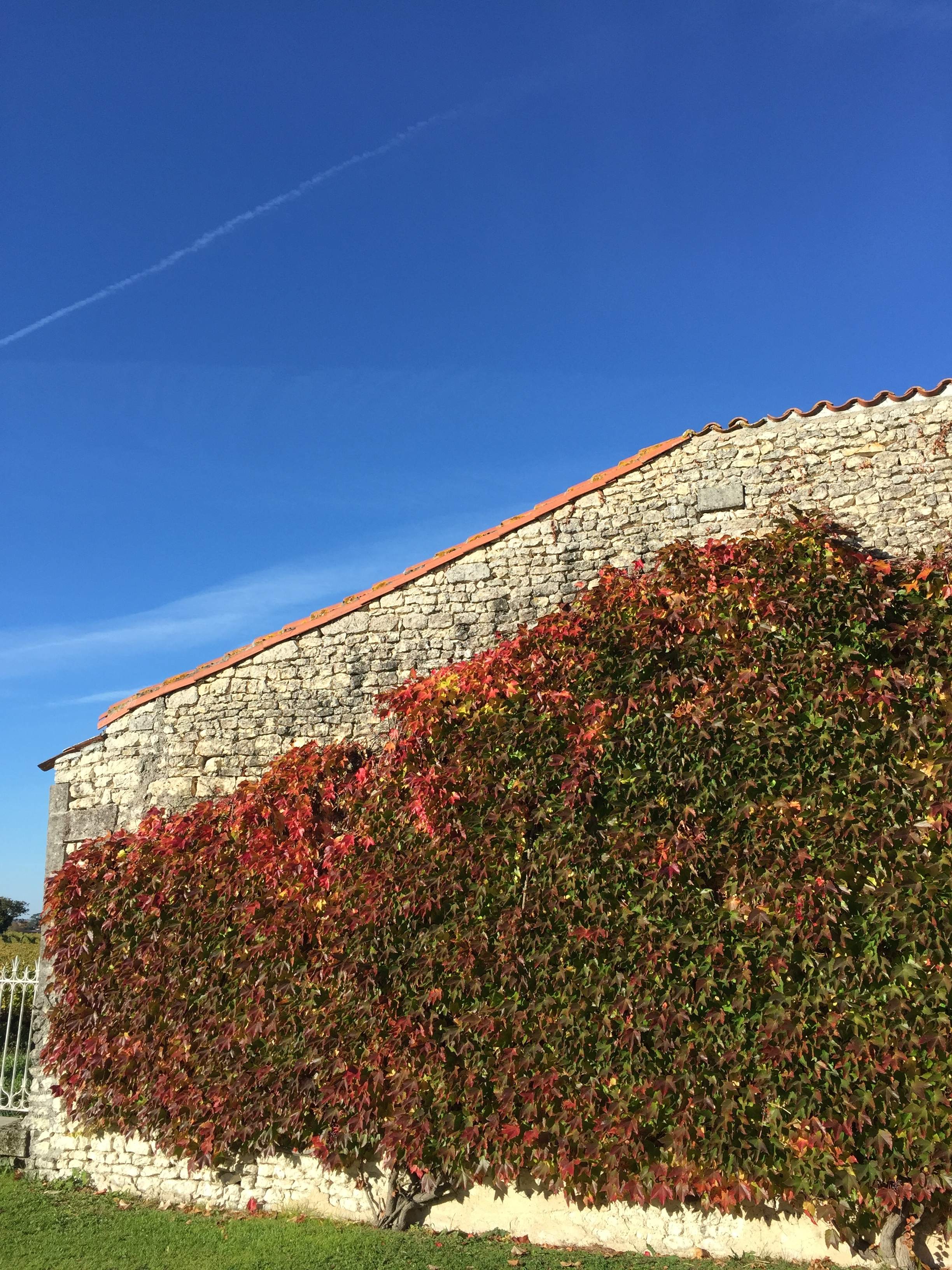
wall

It’s a big plant and for most of the year it is full of the rustling sounds of birds. Just now there are warblers and finches and sparrows and redstarts all flying in and out of the dense foliage. That came to mind as I read the following passage from Robert Brady’s The Big Elsewhere. Here he is reflecting on the birds flying into the trees for shelter during a snowstorm.

Who knows what forms of natural “friendship” abide out there in the deeps of the real world, how far these homely allegiances go, and where they integrate like two hands clasping.

Don’t you love that? “Like two hands clasping”

Or how far back in time they reach, how they began to be – seems as much an interweaving of wild wisdom as a mosaic of chance that worked out well. Compromises were made, benefits were exchanged.

That reminded me of the biology teacher’s question about whether or not the students loved Nature and whether or not they thought that Nature loved them back.

Doesn’t it seem that we are surrounded with the evidence of “an interweaving of wild wisdom”?

…..and there at the hearts of the trees the birds can enjoy the quiet that abides in a plant, and in exchange for the gift of the motion that abides in a bird; plants seem to appreciate rhythms of all kinds – they dance with grace and beauty in the wind…

Oh I love that. The mutual appreciation of stillness and motion.

Talking about grace and beauty, here’s another couple of photos of the ivy –

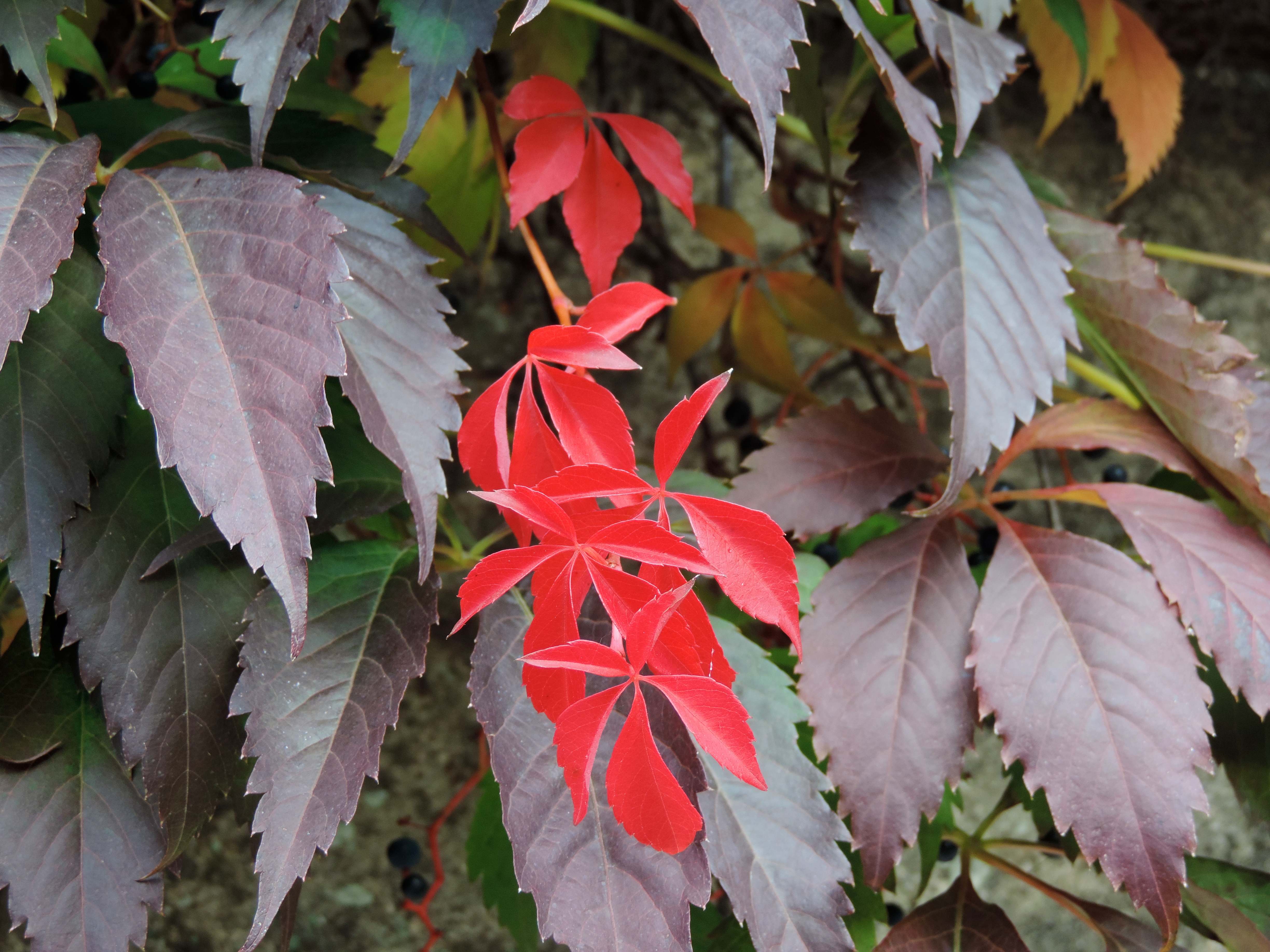
splash of red

This one reminds me of how everything changes but each individual changes at his or her own speed and rhythm.

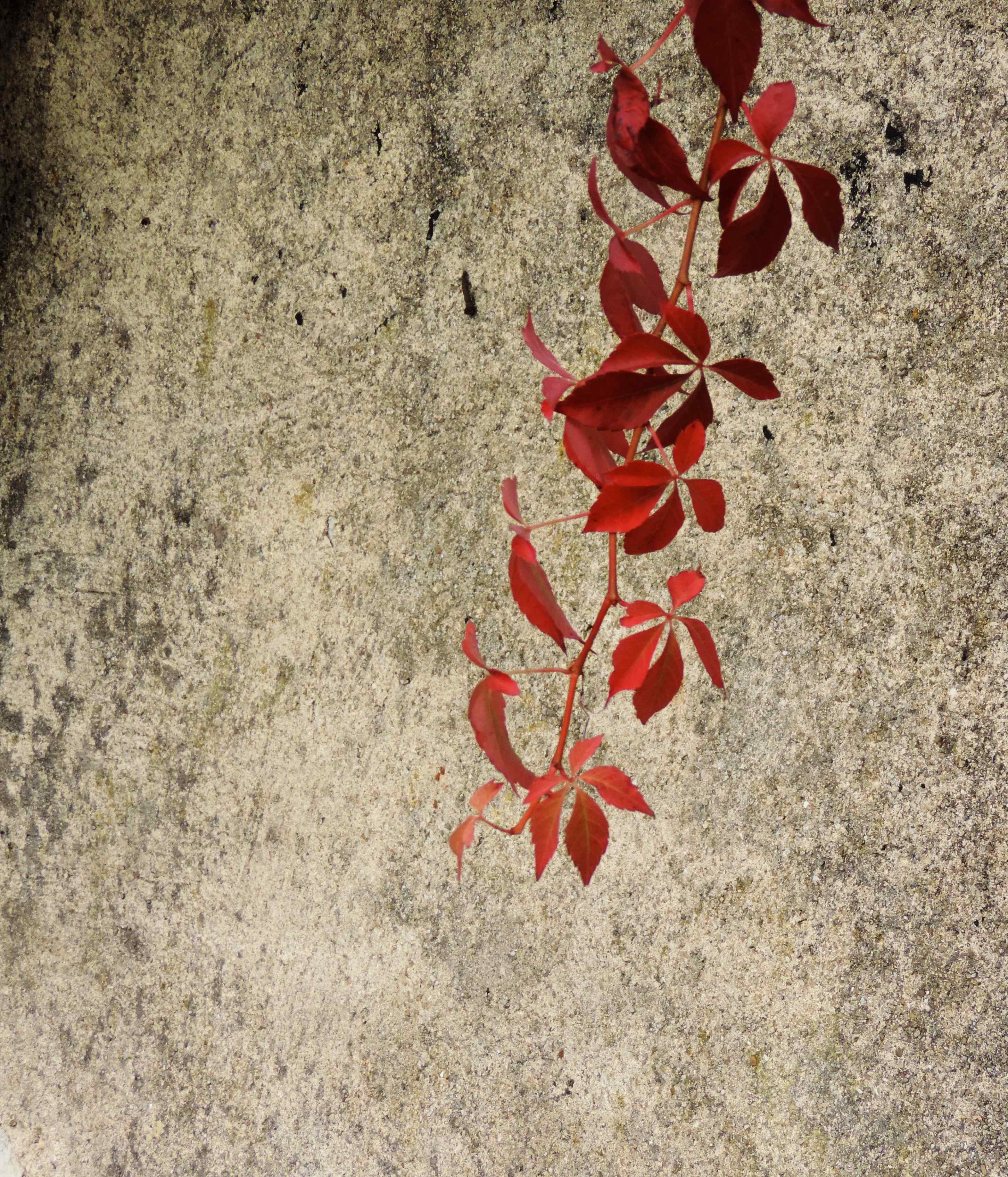
simple

And this image reminds me of the “Japanese Ivy” version of the name of this plant.


Read Full Post »

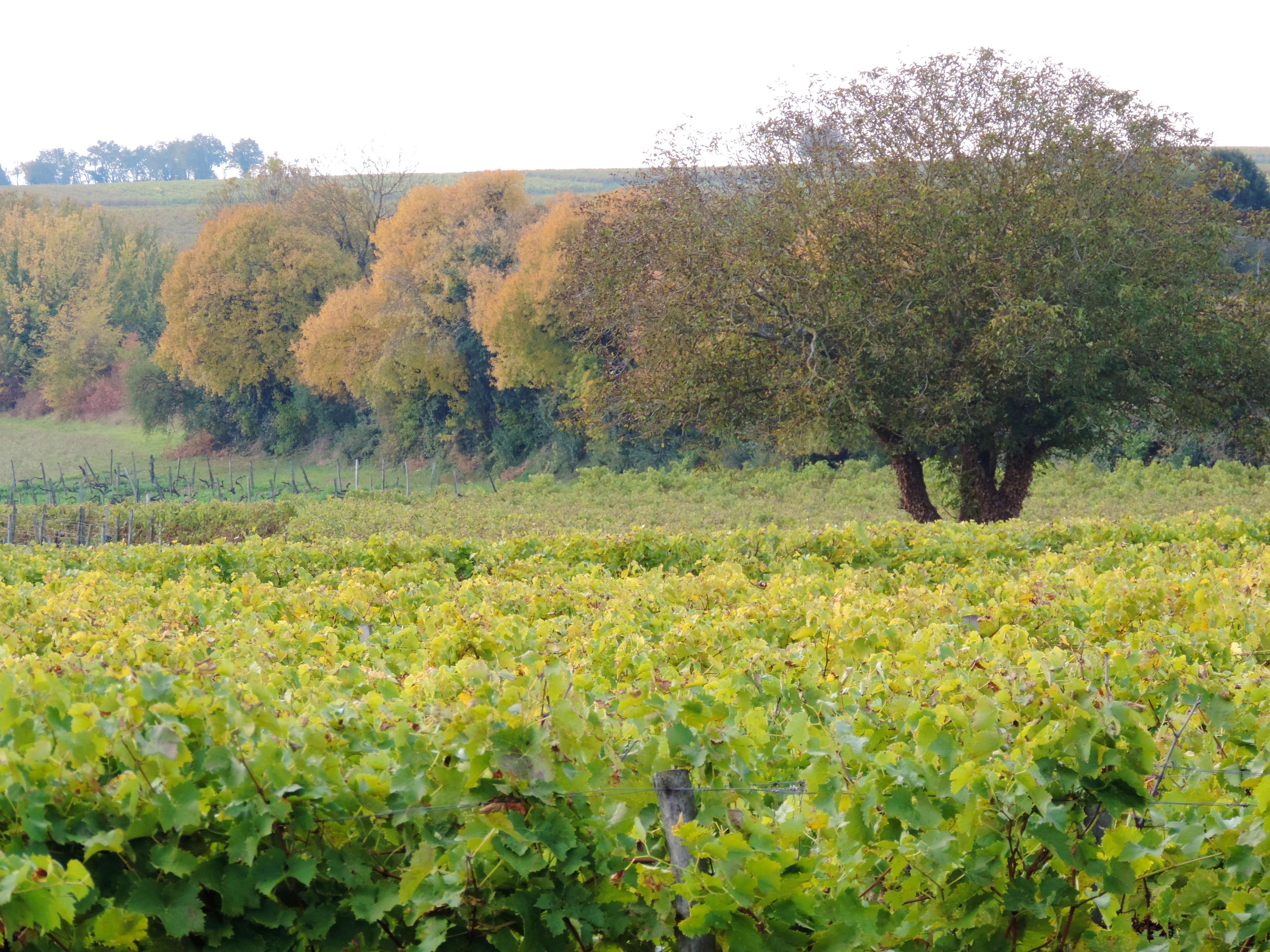
vineyard early autumn

In his “The Big Elsewhere”, Robert Brady after building a dry stone wall, says

…that any worthy effort is a dialog, that wisdom is a living thing, not frozen in time, not a doctrine or a dogma, not a monument, not a library, not a printed book or ether page, and that you are born with wisdom ready and waiting to be known to you.

So true….that we are never done learning, never complete in our knowledge. That should keep us humble, and teach us to live with uncertainty, and be a constant stimulus to our curiosity. When he says “…you are born with wisdom ready and waiting to be known to you”, then I recall Elizabeth Gilbert, from her “Big Magic” 

The universe buries strange jewels deep within us all, and then stands back to see if we can find them. The hunt to uncover those jewels – that’s creative living.

But it also sets me up to hear Bob Brady’s next point –

What does living wisdom tell us? Amongst other things, that the solution is where the problems are: in ourselves.

After the best part of forty years working as a doctor with each day filled with one to one consultations with patients I’m more convinced than ever that the only healing which ever occurs comes from within the individual. Each of us is unique and as “complex adaptive systems” we are self-healing. Good medicine is what supports the personal, unique wisdom of the organism.

Prolonged lack of contact with that wisdom lies at the heart of our problem, and if we continue in our current way we are ended: the real thing won’t stand for it. Existence must be a dialog with the present, as the living, thinking person is taught by any art, any worthy endeavour. You are instructed and guided by the very task, the very ongoing. You are taught the true way most truly only by traveling it, not by standing still and listening to others tell you the way, or by looking at an old map of where others have gone.

I think we gloss over the fact that we are adaptive creatures. We are constantly adapting. We are “open systems” continuously picking up energy, information and molecules from the environments in which we live and adapting our whole being to the changes. We are dynamic creatures, never fixed, never static, constantly learning, developing and growing. The only way to learn to live is to learn by living!

Bob Brady goes on to distinguish dead from living wisdom –

Dead wisdom obviates dialog by saying: “Do it this way because we have always done it this way.” Dead wisdom souls a dead society. Living wisdom, on the other hand, like all that is ongoing, is always and ever new. Living wisdom is green, the green of grass, the green of leaf, green of the living layer beneath the bark of a tree. It is the green youth and hope in hearts that are alive.

Tradition, dogma and “evidence” can all become “dead wisdom”, because they can all claim a certainty which will ultimately turn out to be at best incomplete, and at worse false.

Living wisdom is “always and ever new”.

You’ll learn it today.

Read Full Post »

IMG_3445

Marcel Conche says this about thoughts –
To meditate is to be waiting, like lying in wait, for thoughts that are going to surprise us, bringing sudden clarity.
and he quotes Heidegger –
“We will never succeed in having thoughts, they come to us,” said Heidegger
This reminded me of what Liz Gilbert describes in her “Big Magic” about how ideas come to us. She suggests we think of ideas as living their own lives, wandering around the world looking for a partner to work them in order to bring them to fruition. I liked that concept. It’s maybe a stretch of the imagination to think of ideas as entities living their own lives, but then, maybe thoughts are a bit like that too?
Here’s Conche again –
We anticipate, with variable probability, the result of an action, and it is for this reason that we act. Yet we don’t anticipate thoughts. The philosopher is, in this regard, similar to the artist. Thought is “work of a poet,” said Heidegger.
Again and again he suggests the approach of the artist – not least because he sees Nature as a continuous creative process.
Liz Gilbert says we need to turn up every day prepared to do the work. She describes what others have called the “discipline” of the writer, but that’s not a word that’s ever had much appeal to me! Maybe we could call it a habit? (or what I’d tell patients about making better dents!)
Conche says that what we need to encourage thoughts to come to us is a kind of ease (an absence of anxiety), and setting aside any preoccupations with our selves.
What is required so that thoughts come to us? First, the soul must reach “freedom from anxiety” (ataraxia), serenity, a sort of negative happiness that we can call “wisdom”—a wisdom that is not the aim of philosophy, but its condition. Then and correspondingly, preoccupation with oneself must be absent.
Ha! Did you ever watch the movie “What about me?” by 1 Giant Leap?

Read Full Post »

IMG_3131

I only recently stumbled across the work of Michel Conche, the French philosopher.

He says this about Nature – that Nature is like an artist. Nature is a poet, continuously improvising and creating.

I like that.

In one of his works where he writes about the Tao Te Ching, he says

The Tao Te Ching allows the artist and the philosopher to live according to Nature, to place their confidence in the flow of things, to be led by inspiration, unlike the man of action who attempts to master Nature and the course of things through calculation.

The reference to “the flow of things” particularly resonates with me. As does living a life “led by inspiration”. But the phrase “unlike the man of action who attempts to master Nature and the course of things through calculation” really struck me. It immediately made me think of the definition of the scientific method which I saw a student on the train learning years ago – “Observation, Description, Explanation, Prediction, Control”. And it reminded me of the left hemisphere approach to the world which is described so clearly in Iain McGilchrist’s “The Emperor and His Emissary” – how we use that half of our cerebral cortex to analyse, measure, categorise and “grasp” things.

Conche uses this language of the “man of action” vs the “artist”, not to suggest that artists don’t “do” anything, but reflecting the thinking of the Tao Te Ching and concepts such as “wu wei

Because he is about to create, he finds himself on the margins of society and fixed forms. If he consents to a paid profession, it is only to earn what is necessary for life and work. Literally, the artist “works without acting” (wei wu wei: Chinese for “non-action”), because, contrary to the entrepreneur who sets an objective for himself and then uses means to obtain it, the artist cannot know in advance what the work will be. He advances step by step, innovating where necessary, incapable of rationalizing his steps.

We’ve lost touch with so much of that “artistic” way, haven’t we? With our emphasis on outcomes, goals and targets.

The man of action is the opposite of the artist, because he wants to know in advance all things concerning his actions, in order to move forward in complete safety. He wants, as much as possible, to avoid risk, which is precisely what the artist cannot avoid. To master Nature and the course of things by calculation is the dream of the man of action; nothing pleases him more than the progress of science and technology. The artist places his confidence in the flow of things, allowing himself to be led by inspiration.

Ha! There’s that thing about fear again! As Elizabeth Gilbert said in her “Big Magic” –

…when I refer to “creative living”….I’m talking about a life that is driven more strongly by curiosity than by fear.

So if we understand Nature as an artist, “led by inspiration”, “driven more strongly by curiosity than by fear”, “continuously improvising”, placing “confidence in the flow of things” – how does that feel?

Doesn’t it feel very different from the view of Nature as a mechanism, measurable, and controllable?

I like this idea of Nature as an artist – becoming not being!

Read Full Post »

berries

“L’émerveillement du quotidien” is one of my favourite French phrases. It captures an attitude of mind and an approach to life which I think both opens me up to new experiences and enriches my every day.

There’s a sense of wonder in that phrase – of amazement, of delight and of awe. A “wow”!

I’m very taken with the philosophers who emphasise difference – because looking for difference not only helps me to be aware of novelty and transience. All of which together contributes to valuing uniqueness, diversity and dynamic change.

But there is also curiosity here. Elizabeth Gilbert, in her “Big Magic”, emphasises curiosity –

I believe that curiosity is the secret. Curiosity is the truth and the way of creative living……In fact, curiosity only ever asks one simple question: “Is there anything you’re interested in?” Anything? Even a tiny bit? No matter how mundane or small?…..Following that scavenger hunt of curiosity can lead you to amazing, unexpected places….Or it may lead you nowhere. You might spend your whole life following your curiosity and have absolutely nothing to show for it at the end – except one thing. You will have the satisfaction of knowing that you passed your entire existence in devotion to the noble human virtue of inquisitiveness.

And that should be more than enough for anyone to say they that lived a rich and splendid life.

There you have it – it’s not about ends, it’s about means. It’s not about goals, targets or ticking things off the to do list. It’s about following your inquisitiveness.

Because we’ll just never be done with discovering and learning!


Read Full Post »

« Newer Posts - Older Posts »