Feeds:
Posts
Comments

Archive for the ‘books’ Category

DSCN4415

Michael Foley, focusing on Henri Bergson’s philosophy in “Life Lessons from Bergson”, writes –

there is a tendency to see what things have in common rather than what makes them unique, the source of a dispiriting sense of sameness.
As a doctor I need to know how to make a diagnosis. I also need a knowledge of the natural history of disease. However to actually help any individual patient I need something else as well – knowledge of this individual. So, I have to be able to see what things people have in common (certain symptoms and signs which indicate particular pathologies perhaps) and I need to be able to see this person sitting in front of me right now.
This person sitting in front of me right now is not the same as all the others. Every narrative I hear is unique and individual. No two patients have led, or are leading, identical lives, with identical bodies, minds, values and beliefs.
Reducing the individual to what they have in common with others is, in my opinion, “the source of a dispiriting sense of sameness”. That’s why I have such an aversion to Medicine by flow-chart, and the distorted practice of so called evidence based medicine which seeks to replace subjective human experience with data.
In short, we do not see the actual things themselves but in most cases confine ourselves to reading the attached labels.
Our left cerebral hemisphere is great for analysing things, sorting them into categories and applying labels, but it’s not enough. We have to attempt to “see the actual things themselves” and not be blinded by the labels. For doctors, that includes seeing the actual patients themselves, and not confining their understanding to the “attached labels” – diagnoses, categories or types.
I think the creation and appreciation of narrative is an important part of a doctor’s job and it requires more than a knowledge of the “medical sciences”.
Here’s Michael Foley again –
A crucial function of the arts is to prevent, or break down, dismissive labelling and reveal the singular instead of the similar, the peculiar instead of the familiar, and the inscrutable instead of the understood.
This reminds me so much of Deleuze’s three modes of thinking – science, which is thinking about function; philosophy, which is thinking about concepts; and, art, which is thinking about percepts and affects. Deleuze was a great advocate of thinking about difference too.
What an elegant phrase too – revealing “the singular instead of the similar, the peculiar instead of the familiar, and the inscrutable instead of the understood”.
What a great way to enhance respect for the individual – seeing them as unique and knowing you will never achieve a complete understanding them….which reminds me of Saint-Éxupery’s teaching that “What is essential is invisible to the eye”
Read Full Post »

DSCN4404

In Life Lessons from Bergson, Michael Foley writes –

What happens when we fail to live in duration, no longer hear the inner melody and lose touch with the intuitive self? We become frozen, petrified – automatons, slaves of habit or convention or both. 
“Living in duration” is living in the experience of life, being fully present, attentive and aware. The opposite is to live in our inner worlds of representations and labels. Iain McGilchrist describes this brilliantly in his The Emperor and His Emissary, showing how the right hemisphere of our cerebral cortex processes the raw information as we pick it up from the world, then hands off some of it to be re-presented and analysed in the left hemisphere. What should happen next is that the analyses and representations are fed back to the right side to be re-contextualised. McGilchrist makes the point that, sadly, we’ve created a world where we forget the importance of the activities of our right hemispheres, and give primacy to those of the left.
“Hearing our inner melody” is a beautiful phrase. When we experience music we don’t experience it as separate notes and pauses. We experience it as rhythm and melody.
And our “intuitive self”? That deep, natural, heart-focused knowing….
What happens when we lose touch with those things? We get rigid and stuck.
There is no doubt that the pressures to conform in our society are enormous. It seems to me we are becoming less and less tolerant of difference, fearing “others” and suppressing diversity.
Every day we need to freely choose what to do, what to say, and what to think. As Michael Foley says –
Our freedom, in the very movements that affirm it, creates the developing habits that will stifle if it fails to be renewed by constant effort: it is dogged by automatism.
This is the fundamental theme of this blog – we all tend to default into autopilot and in so doing we live in a more limited, and less fully human way – like zombies – with habits and routines and “norms” on loops. Our alternative is to wake up, become aware and consciously choose to become the author of the one unique story in which we are the hero, the protagonist, the main character.
William James, who shared many of the same views as Bergson said
Could the young but realize how soon they will become mere walking bundles of habits, they would give more heed to their conduct while in the plastic state. (Psychology: The Briefer Course, 1892)
My only issue with that statement is I don’t accept we completely lose our “plastic state” – what he means by “plastic” is dynamic, malleable, capable of being changed. Sure, as we become constrained by our habits and automatisms, it becomes harder to change.
But with awareness and will, change is possible!

Read Full Post »

DSCN4411

In Michaei Foley’s Life Lessons from Bergson he describes the philosopher’s ideas about the “self”
Bergson constantly distinguished between two selves, meaning two levels of process – a superficial self whose reactions are socially conditioned and a deep, intuitive self capable of empathy and free will…..This deep self is always in danger of being misrepresented by the categorizing self, dismissed as irrelevant by the utilitarian self and snuffed out as a threat to popularity by the social self
It’s interesting that nobody has ever found “the self”.
We talk about the benefits of “self-confidence” but what is this “self” we have confidence in?
We talk about the benefits of having “self-awareness” but who, exactly, is aware of this “self”?
Whatever you think about the concept of the “self”, I think it’s pretty clear there is no fixed entity called the “self”….no unchanging thing.
I often found the concept of a “community of selves” to be a more useful model when working with patients. People often identify much more closely with one aspect of their personality, or with one role in life, than they do with their other ones. For example, I fully identified with my doctor self while I was at work, and yet in other times and places my dad-self, or husband-self, or my teacher-self would feel much more prominent.
So, I’m quite taken with Bergson’s two selves – the superficial and the deep.
I especially like his description of the deep, intuitive self as being capable of empathy and free will, whilst the superficial self is more reactive, more subject to the pressures and influences of others.
Read the last sentence of that passage from Foley’s book a second time….
Our deep, intuitive self is constantly interacting with our superficial self, but look at the potential “misrepresentation” of the deep self – by the “categorising self” (…our left hemisphere?), by our “utilitarian self” (….makes me think of evolutionary biology) and by our “social self” (…with all that pressure to conform and fit in)

Read Full Post »

image

Reality no longer appears essentially static, but affirms itself dynamically, as continuity and variation. What was immobile and frozen in our perception is warmed and set in motion.

Those are the words of Henri Bergson, quoted in Michael Foley’s excellent “Life lessons from Bergson”.

I love that. The experience of life as dynamic, “warmed and set in motion”.

Life isn’t “frozen and immobile” to me, and that’s why I am wary of categories and labels. I’ve always resisted being put into a box, defined by one or two of my characteristics. When I think of that I recall the adage of the General Semanticists – “judgement stops thought”. So often fixing someone or something into a category or type stops us from really seeing, really understanding.

Reducing an individual to a type diminishes them in all senses of the word.

Every patient I ever encountered was unique, presenting experiences and stories unique to them. To reduce them to diagnostic categories, or to types of any sort, blocked my understanding of them. Everyone always has more to reveal, more to share, more to experience and be understood.

Michael Foley says he came back to Bergson’s work after dismissing it decades earlier. His way back is interesting. It’s not the same as mine. My first encounter with Bergson came when I was reading Deleuze but I didn’t find him easy. I later stumbled into complexity theory and, in particular, the idea of complex adaptive systems. At that point I remembered some of Bergson’s ideas and went back to explore his writings further. Michael Foley’s path was through his encounter with “process philosophy” and with particle physics –

I learned from twentieth century philosophy of mind that memory and the self are processes rather than fixed entities – and suddenly this connected with the theories of particle physics, which claim that at the heart of matter there are in fact no particles but only processes…….everything is process…and everything is connected to everything else.

In the process view nothing is fixed, nothing is final and no circumstances ever repeat in the same way.

This strikes me as very true. Dan Seigel, one of the founders of Interpersonal Neurobiology, worked with colleagues to come up with a definition of the mind. What they concluded was that ” the mind is a process of regulation of energy and information flow. ”

The mind is not an entity or a thing, it’s a process.

The body is not a fixed entity or thing either – it’s a dynamic ever changing network or community of cells.

Disease is not a thing either. That really startled me when I read that once I was a practising doctor. As a medical student I picked up the view that disease was pathology and pathology was the changed organs or cells. Once I became a GP I encountered dynamic, hard to pin down illnesses that certainly couldn’t be reduced to pathological entities. Hearing that disease was a process not an entity was liberating for me.

I will return to some of the issues raised by this thinking in other posts but let me finish this one by returning to the title, because once we gain the insight which shifts our attention from entities to processes we discover diversity – we find out that variation is a key characteristic of Nature and of Life. But I think we find out something else too – that the universe, the world, and our lives are not completely random, chance, accidental phenomena. Instead there is continuity. We are in a process of continuous creation and emergence. We are who we are in our networks of family, nature, society and the world. We emerge from the past, as the past encounters and interacts with the present. Our future doesn’t contain just anything you could ever imagine. It emerges from here and now, from that flowing river of life and connections.

Continuity and variation. Just like the flow of a river. Just like the natural history of a plant, an animal, or any other living organism.

Read Full Post »

image

When I started this blog, and came up with the title “Heroes not zombies”, I also chose a byline of “becoming not being”. Those choices were very influenced by reading two French philosophers – Giles Deleuze and Henri Bergson. Bergson wrote in the late 19th century, early 20th. His ideas preceded our discoveries which followed the splitting of the atom which led to a new physics. They also preceded the findings of neuroscience which have turned out to be consistent with his thought. Yet, sadly, his writings have been pretty much ignored for the last hundred years.

I am utterly delighted to have just discovered Michael Foley’s concise, crystal clear book, “Life lessons from Bergson”. I cannot recommend it too highly. Buy it! Read it! It might just change your world view.

Here’s a summary passage from the end of the book to whet your appetite.

he sought to protect the evolving self from finality, rigidity and circumspection, privileging the dynamic over the static, the holistic over the compartmentalised, the organic over the mechanical, the qualitative over the quantitative, the intuitive over the analytic, the continuing over the completed, the open over the closed and above all the free over the determined.

If any of that touches you, resonates with your values, then you will love this book. I’ll share some of the best ideas from it in future posts.

Read Full Post »

September’s issue of Philiosophie magazine has an interview with the Japanese author, Kenzaburô ôe who won the Nobel Prize for literature in 1994.

It’s a fascinating and striking article. He has been a controversial figure in Japan because of the subject matter of his novels, one of which challenges the official version of what happened in Okinawa at the end of the Second World War. Officially, 100,000 Okinawans committed suicide claiming loyalty to the Emperor rather than be over-run by the invading Americans. Kenzaburô says this is a lie. He says the Imperial Army massacred the Okinawans and they died called for their mothers, not swearing loyalty to the Emperor.

He has also shone a clear light on the reality of life for those who survived the blasts in Hiroshima and Nagasaki. Telling their stories shows how these particular bombs didn’t just kill and wound when they were dropped, but continue to damage those who survived right into the present day.

It’s no surprise then to read that since Fukushima he actively campaigns for the abandonment of nuclear power in Japan.

A big part of the story of his life is the birth of his son in 1963. Hikari was born with a severe brain defect and his parents had to decide to either let him die, or have an operation which would likely leave him severely mentally handicapped. They chose the latter. In addition to his severe handicap he has autism and he didn’t speak until he was six.

His first words were actually a sentence. The family was walking in the forest and at the sound of a particular bird call, Hikari said, in exactly the same way a radio presenter of a nature documentary would, “that is the call of the (such an such bird)” – and it was! After that his parents started buying bird song CDs and Hikari learned them all. They moved on to music, playing him Bach and Mozart, and were astonished to find, as he got older, that he could transcribe into musical notation perfectly any piece of music after hearing it just once. More than that, he went on to compose his own music.

Kenzaburô says his son has never expressed any emotion but his music is deeply emotional. His first CD sold 400,000 copies in Japan.

Here’s a video clip of one of his pieces.

Kenzaburô’s daily life is spent in his study reading and writing, while his son sits by him listening to, and writing, music.

A remarkable man.

Right at the end of the interview he says of creative work that it is important to find your own voice, or your own style – to be careful not to “get lost in the universal”.

I like that a lot. Too often we lose our singular uniqueness by trying to be accepted, or to fit in, or to be popular. Isn’t it more important to be the one unique person who only we can be?

Read Full Post »

out there

The skies above this part of the world are often very clear so I’ve taken to star gazing at night when I can. Wherever I point the telescope it shows me more stars than I ever knew existed. It’s hard not to be humbled by the immensity of it all. But what struck me last night as I looked at the stars was how much I didn’t know.

It’s not a new thing for me to wonder about what I don’t know. I remember years ago reading an article in the British Medical Journal about medical education saying that all the best ongoing education starts with saying “I don’t know” – yet that was the one phrase we were all terrified to say as we our teachers singled us out to ask us questions on teaching ward rounds or in the lecture theatre. It’s a phrase which brought shame and condemnation. If you didn’t feel an idiot before you said it, you sure did afterwards! So, it was refreshing to read the opposite – to read the idea that only if you could say “I don’t know” could you open up the chance to learn something.

Many, many years later I came across the works of Montaigne, and was delighted to find that one of his most used phrases was “Que sais-je?” (not exactly I don’t know, but “what do I know” – still a humble admission of the limits of personal knowledge).

Throughout my career, although I practiced as a holistic doctor and was fortunate enough to work for much of my life in a service which prioritised time spent with patients, I often found myself saying to patients that even if they’d told me things they’d never told another soul (and that was a common remark made by patients), I thought it took a lifetime to try to really know yourself, let alone another person, so although I was about to share some insights with them about what was happening in their life, those insights were limited by the small amount I knew about them. You see, how much you know is always a relative term, but it surely is always (in the bigger scheme of things) a small amount.

When I posted yesterday about the Japanese lantern I had to check out on wikipedia just what those lanterns were and yet again I was faced by having to say to myself that I didn’t know enough about botany.

Strange that that awareness and the sharing of it is still something which comes with a discomfort, because, really, I believe that the world would be a much better place if we were all more aware of the fact that what we don’t know is always so much more than what we do know.

While I was writing this, Hilary (who didn’t know what I was writing about) read out a quote to me –

The problem with the world is that the intelligent people are full of doubts, while the stupid ones are full of confidence.

……Charles Bukowski

Earlier today, what provoked me to write this post was reading the following quotation from Parker Palmer on the Brainpickings site

What I really mean … is be passionate, fall madly in love with life. Be passionate about some part of the natural and/or human worlds and take risks on its behalf, no matter how vulnerable they make you. No one ever died saying, “I’m sure glad for the self-centered, self-serving and self-protective life I lived.”

Offer yourself to the world – your energies, your gifts, your visions, your heart – with open-hearted generosity. But understand that when you live that way you will soon learn how little you know and how easy it is to fail.

To grow in love and service, you – I, all of us – must value ignorance as much as knowledge and failure as much as success… Clinging to what you already know and do well is the path to an unlived life. So, cultivate beginner’s mind, walk straight into your not-knowing, and take the risk of failing and falling again and again, then getting up again and again to learn – that’s the path to a life lived large, in service of love, truth, and justice.

I couldn’t agree more.

Read Full Post »

The world is changing.

Fact is, it’s never stopped changing since it came into existence. But what I mean is it seems as if we are in one of those phases of major and multiple interconnected change.

You can think of it in terms of economics, of social structures, of ways of living and thinking – wherever you look, there’s major change underway.

As the eras change the transitions can be hard to pin down. But when you are living it, you can feel it and you can see the signs.

One of the clearest signs for me is the unsustainability of many of our current paths – whether it’s the world economic order driving faster and faster towards ever greater inequality and unfairness, or “growth” which consumes ever more of our limited resources and heats up our planet. Or whether it’s our system of health care which costs more every single year as it struggles to keep up with increasing demand from patients with more and more chronic, incurable diseases. Or, well, you fill in the blanks.

The second clearest sign for me is the increase in command and control systems as societies, governments and enterprises struggle to keep human beings acting as obedient cogs in the machines.

Paul Mason writes about this in today’s Guardian (and he has a book on the subject coming out soon). He takes the perspective of economics and politics and by standing back and seeing the trends over a long period of time he describes the changes from feudal societies to capitalism to our current era of – well, what to call it? – he calls it “post-capitalism”.

What does he mean by that? –

Postcapitalism is possible because of three major changes information technology has brought about in the past 25 years. First, it has reduced the need for work, blurred the edges between work and free time and loosened the relationship between work and wages. The coming wave of automation, currently stalled because our social infrastructure cannot bear the consequences, will hugely diminish the amount of work needed – not just to subsist but to provide a decent life for all. Second, information is corroding the market’s ability to form prices correctly. That is because markets are based on scarcity while information is abundant. The system’s defence mechanism is to form monopolies – the giant tech companies – on a scale not seen in the past 200 years, yet they cannot last. By building business models and share valuations based on the capture and privatisation of all socially produced information, such firms are constructing a fragile corporate edifice at odds with the most basic need of humanity, which is to use ideas freely.Third, we’re seeing the spontaneous rise of collaborative production: goods, services and organisations are appearing that no longer respond to the dictates of the market and the managerial hierarchy. The biggest information product in the world – wikipedia – is made by volunteers for free, abolishing the encyclopedia business and depriving the advertising industry of an estimated $3bn a year in revenue.

So the new information technologies are the game changer. I think this is true, but underlying those technologies is the greater discovery, which he talks a lot about in his article – networks.

The main contradiction today is between the possibility of free, abundant goods and information; and a system of monopolies, banks and governments trying to keep things private, scarce and commercial. Everything comes down to the struggle between the network and the hierarchy: between old forms of society moulded around capitalism and new forms of society that prefigure what comes next.

Let me highlight that phrase again – “Everything comes down to the struggle between the network and the hierarchy” – that’s it in a nutshell.

I think the change which is underway is a different kind of freedom from the one espoused by neoliberals – not the so called freedom of the individual to exist as if nobody else exists and to pursue their own selfish interests at all costs. Instead, it’s the freedom to collaborate and co-operate – to build effective informal networks to solve problems or to bring aobut change.

This is what is really exciting, because it’s the almost untold story of evolution – the most succesful species of life are those which develop the strongest collaborations. That was the message in “The Bond”, by Lynne McTaggart, and it was the message in “Global Brain” by Howard Bloom.

I think once you understand networks and the particular type of network found in all forms of life – the “complex adaptive system” – you realise that “command and control” management systems, “one size fits all” institutions, monopolies and the delusion of separateness are all about to hit the buffers.

Paul Mason does point out that things can go badly, just as he calls for a new utopian thinking, and as we look around it can seem the potential for disaster outweighs the potential for utopia – but, hey, I, for one, am up for making a contribution to the utopia scenario.

Only time will tell which way it’s going to go, but the key is – the world is changing and we, at this stage in history, can contribute positively to the direction it takes next.

The power of imagination will become critical. In an information society, no thought, debate or dream is wasted – whether conceived in a tent camp, prison cell or the table football space of a startup company.


Read Full Post »

bridge

When medicine is practised in a fully human way, employing all parts of the doctor’s brain, not just the thinking/analytical knowledge-based functions, then something deeper and more powerful than mere symptom-relief can occur.

As far as I know there are no “artificial healing agents” in the world. Drug companies may claim their products can cure, but it’s only the individual human organism which can cure. As a complex adaptive system, like all other life forms, we have the ability to defend ourselves, to repair damage, to recover from illness and even to adapt and grow. All of those abilities are natural and innate. If a drug, an operation, or any other medical procedure helps it does so by supporting, or better, stimulating these natural mechanisms of self-healing.

But how does that happen?

One element is what Lewis and colleagues, in “A General Theory of Love”, describe as the limbic connections between two human beings. In their book they explore three aspects of this – limbic resonance, limbic regulation and limbic revision.

Every person broadcasts information about his inner world…..If a listener quiets his neocortical chatter and allows limbic sensing to range free, melodies begin to penetrate the static of anonymity. Individual tales of reactions, hopes, expectations, and dreams resolve into themes. Stories about lovers, teachers, friends, and pets echo back and forth and coalesce into a handful of motifs. As the listener’s resonance grows, he will catch sight of what the other sees inside that personal world, start to sense what it feels like to live there.

That’s a beautiful description of what I think is necessary in any good doctor-patient consultation. It’s not so much a matter of the doctor “getting out of the way”, but of “tuning in”. Quite literally. “Getting on the same wavelength”. Why? Not just to communicate effectively but to understand more fully. In an older fashioned way of expressing it, it’s about “putting yourself in the patient’s shoes”. And from a perspective of “heart rate variability” it’s about achieving not just limbic resonance, but heart and brain resonance too.

The first part of emotional healing is being limbically known – having someone with a keen ear catch your melodic essence.

I don’t know if there has to be emotional healing for their to be bodily healing too, but I suspect that to be true. Sure, suturing a laceration may be all that is required for the skin to be restored, but why do some apparently simple lesions heal quickly, and others fester and scar? Might that have something to do with the depth or breadth of the healing?

After resonance, comes regulation.

Our neural architecture places relationships at the crux of our lives, where, blazing and warm, they have the power to stabilise…..But people do not learn emotional modulation as they do geometry or the names of state capitals. They absorb the skill from living in the presence of an external modulator, and they learn it implicitly.

There’s something about a really good consultation which involves safety, confidence and hope. However, I do think all of those qualities are more likely to emerge from a place of love, care and compassion. Maybe those are the key “regulators” which calm, soothe and stabilise the patient’s limbic system.

People who need regulation often leave therapy sessions feeling calmer, stronger, safer, more able to handle the world.

How often have I had that feedback? Very often. Perhaps because that was a conscious aim of holistic, “integrative” practice.

The third element Lewis describes is “limbic revision” –

Knowing someone is the first goal of therapy. Modulating emotionality is the second. Therapy’s last and most ambitious aim is revising the neural code that directs an emotional life.

I think what he is referring to making lasting structural changes – in his, psychotherapeutic, context that’s about changing the patterns of neural connections in the brain to change the person’s emotional life. I didn’t work as a psychotherapist, but as a general practitioner with homeopathic and integrative skills. As such I didn’t separate problems into “mental” or “physical” categories, so while I see exactly what this “limbic revision” is and agree that it is important, I think a holistic doctor, whose patients are often seeking help with problems in different parts of their bodies, it was a broader “neurobiological revision” which was required.

Understanding the “limbic” aspect of medicine, is, however, an excellent place to start.

Read Full Post »

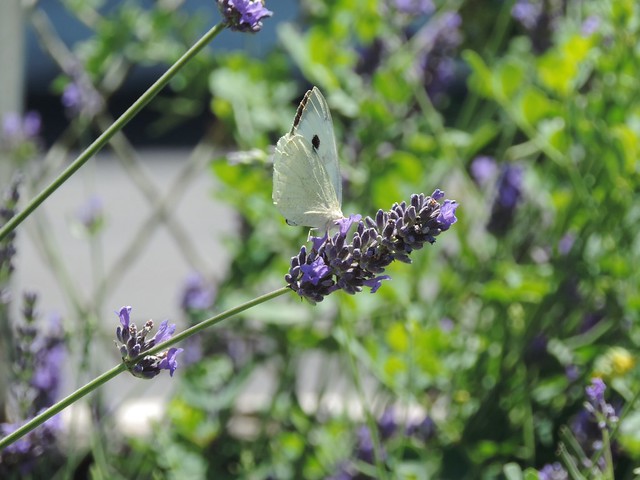
Butterfly on lavender

I recently read an interview with Anne Dufourmantelle, a psychotherapist and philosopher in Paris, who talks about the concept captured by the French word “douceur” (In fact, she has a book entitled “Puissance de la douceur”)

“Douceur” is one of those words which is difficult to translate into English but it has elements of softness, gentleness, goodness, mildness, and sweetness. “Allez-y en douceur!” means “Gently does it!” or “Easy goes it!”. And in the plural, “les douceurs de la vie” translates as “the pleasures of life”

In the interview (and in the book, which I’ve since purchased and read), she talks of the “absolute necessity of ‘la douceur'” in modern life, and I agree with her wholeheartedly.

She says she was looking for a word which would capture the connection between “the body, the spirit, sensation and intention”, and it was the word “douceur” which seemed to best fit the bill.

Let me try to translate a couple of her phrases for you –

“Douceur au sens de force de vie, de puissance, car notre première expérience sensorielle et émotionnelle est d’avoir été enveloppé dans la chaleur et la douceur d’un autre corps…La douceur donne naissance à la vie, elle est, pour l’humain, une nécessité absolue.”

[my translation – Douceur as a life force, a power, because our first sensory and emotional experience is to be enveloped in the warmth and the softness of another body…..La douceur gives birth to life, it is, for the human being, an absolute necessity.]

To make this concept clearer she says that if douceur was a gesture it would be a caress. Isn’t that lovely?

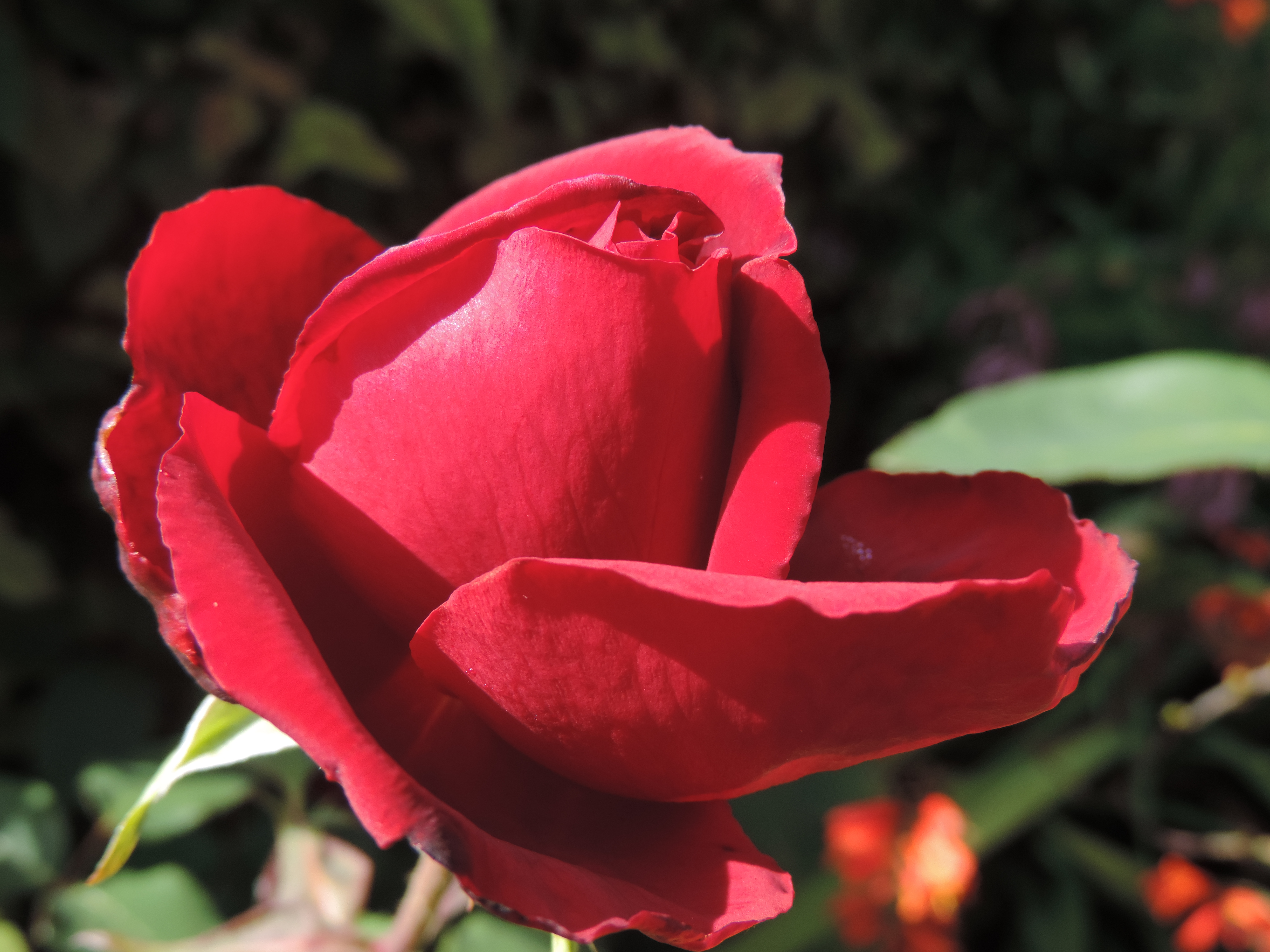
And somewhere (I can’t find it now) I’m sure she says that a flower could be a symbol of “douceur”.

I think she is right that kindness, gentleness, goodness, softness disarms and has great power – it comes from our own sense of vulnerability and that of others. It’s a humble stance – but powerful in the way, as we saw when it was used by Gandhi and others who advocated non-violent resistance. One image which comes to my mind when I think of this is the anti-vietnam war protesters in the 60s giving flowers to the police and the security forces. (OK, I know, the flower power thing went off from “peace and love” to “sex and drugs” but, well, there was a good hearted idea in there!)

Anne Dufourmantelle’s recommendations for how to increase the “douceur” in your life seem completely consistent with those which I find myself writing about again and again in this blog –

She recommends paying attention to details – gestures, facial expressions, the play of the light, all the little, fleeting, amazing things (“toutes ces minuscules chose fugues, merveilleuses…”) which surround us. And she recommends seeking out and, I’d use the word “relishing”, sensations – smells, tastes, sights, sounds, what touches our skin.

I love how she has taken this single concept and used it to link together bodily experiences, a way of engaging with everyday life, and a power of change which can be used to create more goodness in this world.

Read Full Post »

« Newer Posts - Older Posts »