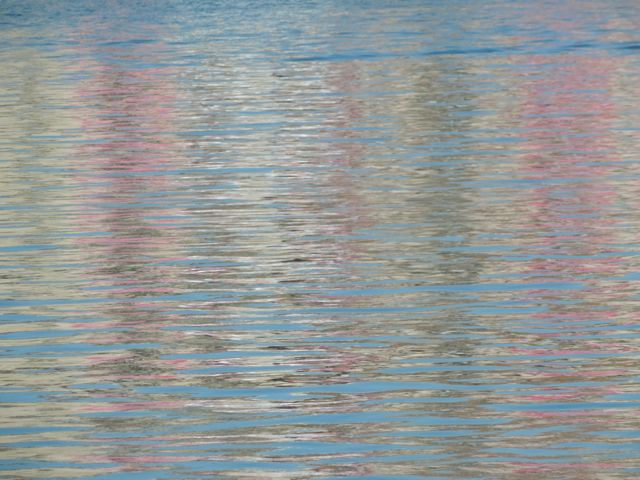
I have a fascination with water and its wonderful to see how either direct or reflected light creates real natural works of art.



Posted in creativity, from the dark room, from the living room, photography on September 13, 2013| 1 Comment »
I have a fascination with water and its wonderful to see how either direct or reflected light creates real natural works of art.
Posted in creativity, from the living room, from the reading room, life, personal growth, psychology, writing, tagged continuous writing, gratitude journal, julia cameron, stream of consciousness on August 31, 2013| 3 Comments »
There are many ways in which writing can help us to understand ourselves better, heal wounds and gain a deeper insight into our lives. Here are three ways you might like to explore.
A. Regular continuous writing
Julia Cameron, in The Artists Way, describes an exercise she calls “Morning pages”. Essentially it involves writing every morning until you’ve filled three pages of an A4 notebook. With one additional, and crucial, rule – you can’t stop. Not for a moment. Your pen or pencil shouldn’t leave the paper, and your hand should never pause. This is not a thinking exercise. You aren’t to work out what you are going to write, and if you find yourself writing “I don’t know what I’m writing and I can’t stop moving the pencil so I’d better keep going and…..” – well, that’s OK. It’s a stream of consciousness thing.
People do different things with this kind of exercise. Some swear it only works if you do it as the very first thing you do on waking, others just in the mornings, some at other times of day. See what works best for you. What I have found is that the greatest benefit comes from it if you don’t read what you’ve written. At least not for a pre-fixed period of time – a week, 30 days, a month, three months. Again, see what works best for you.
Try it. I’m pretty sure it’ll surprise you
B. Gratitude journal
There are many traditions which recommend creating and regularly using a gratitude journal. Quite simply, it involves having a special notebook and every night, before you go to bed, taking a few moments to reflect on the day and recall something, just one thing, for which you are grateful. It might relate to something you saw or heard, something you ate, a conversation you had, a moment of being held…..it’s up to you. Then just note it down. You can write it in as much detail as you like. I find this has at least two benefits. It gives you an opportunity to re-experience a positive emotion (and that’s good for your heart, and good for your health). And it means you head off to bed with your most recent experience being a positive one.
C. The story you live by
In the inspiring “the stories we live by”, by Dan P McAdams, he describes a template to help you write out the story of your life, in a way which will enable you to clarify your own main themes and influences. I like this approach. I like the idea of the story of the self, especially as stories take us from the past, into the present and forward to the possible futures. Here’s a very brief synopsis of Dan’s template. It starts with writing down your chapter headings for the story of your life, then moves down through the seven further points of focus and reflection. You might want to try the whole thing, or you might like to pick and mix. As ever, see what works for you……
1. Chapters – titles and brief contents
2. Eight key events –
3. Four significant people
4. Any heroes
5. Future script
6. Two areas of life where you are experiencing stress, conflict or challenge
7. Personal ideology
8. Life theme
Posted in creativity, from the dark room, from the living room, personal growth, photography on June 11, 2013| Leave a Comment »

A little white feather, caught in grass which has pushed up through the Tarmac.
i’m sure you’ve seen LOTS like this before, but, wait a minute. Don’t rush. Take a look at it. It’s beautiful. It’s delicate. It’s strong. And it’s complex. What an amazing structure.
The way my mind works I look at this and I think about becoming……..how does a bird make this structure? How can one cell, fertilised by one other cell, double and double in numbers, then differentiate so that some cells become eyes, some become brain cells, some become legs and some produce feathers. And all in just the right places. I was entranced by my embryology lessons at university and this incredible process still fills me with wonder and awe.
And I think about how the first feathers appeared on the Earth. Were there many stages of almost-feather which eventually become feathers? Did they appear suddenly? One day there were no feathers on Earth, then the next day, there they were?
And then I come back to this particular feather. Where is the bird which grew this feather? Is it a swan? A seagull? Does it live around here?
And. Then I remember that Paulo Coelho, the author, says he starts to write a new book only after he finds a white feather, and I wonder which bird, therefore, created The Alchemist!?
Posted in creativity, from the living room, from the reading room, life, personal growth on June 7, 2013| 2 Comments »
Oh when should we start?
Start living differently, if we reckon we’re not living the way we want to live? Eat differently, if we reckon we want to change our diet?
Start a project? Pursue a dream? Make a different choice?
I’m sure most advice is to start today. But then today passes and becomes yesterday and we haven’t started yet, so now what? The advice remains the same – start today.
I understand the wisdom of that advice…..I just have difficulties following it! If you do too, maybe this little excerpt will bring a smile to your face, the way it did to mine yesterday –
…Luigi Cornaro (1467-1566), a Venetian nobleman, published four editions of a work on “The Temperate Life.” He had been subject to digestive disturbances and gout for fifteen years, when at forty he took to dieting and hygienic living. Until within a few years of his death at ninety-eight he was able to write for seven or eight hours a day, conversed with his friends, attended concerts, etc. His first book was written when he was eighty-three, the others when he was eighty-six, ninety-one and ninety-five. The later ones contain apologies for the juvenile crudities of the earlier compositions!
A couple of interesting things about that story, huh? He had his illnesses for 15 years before he decided to live a healthier life. Having decided, aged 40, he went on to live another 58 years. We aren’t told whether or not his diseases went away, but we are told that for most of that time he was able to be creative, to be socially active and to enjoy music and attend events. That’s the important part isn’t it? What kind of life did he live? A fully engaged, creative life.
He published four books between the ages of 83 and 99, and his FIRST book was when he was 83, but how long had he been writing for 7 or 8 hours a day? Since he was 40?
Finally, don’t you love the humility of this man, and his understanding of the developmental nature of knowledge? In his final books, he apologies for the “juvenile crudities” of his earlier writing (the book he wrote when he was a mere 83!)
I guess one of the main lessons I take from this is that there is no “right time” to start, but the important thing is to start!
Posted in creativity, from the dark room, from the living room, life, perception, personal growth, photography on April 2, 2013| 9 Comments »
OK, here’s something I did yesterday and it resulted in such a GREAT day I thought I’d share the idea and see if you, too, might like to try it.
Here’s the challenge –
Travel no more than 30 minutes from where you live to somewhere you have never been before, walk around, explore, take some photos, or make some notes, then come home and reflect on it.
You can travel any way you like – walking, cycling, driving a car, public transport. Doesn’t matter if you live in a city, a town or in the country. The key to this is to explore somewhere NEW.
Here’s my personal story from yesterday. I was born and brought up in Stirling, went off to study and work as a doctor in other places for about half my life, then came back to live in Stirling again. So I’ve lived in this town for about half my life. Yesterday we decided to take a trip and do something we’d never done before. April first turned out to be the first day of the season for the ferry boat to cross the Lake of Menteith to Inchmahome Island and that was somewhere we’d never been. The Lake of Menteith is a 3o minute car drive from my house so off we went. Here’s some of what we saw –
The Lake of Menteith –

The ferry –

The priory –


Men fishing –

We also witnessed the spectacle of swans taking off, flying and landing, and seeing (and hearing!) some nesting Canada Geese (having totally by chance watched Fly Away Home yesterday on TV – strange universe we live in….how do those things happen?)
How many times yesterday did I say “How come we’ve lived in Stirling half our lives and we’ve never been HERE before?” ? Lost count.
So, here’s the idea. Find somewhere within the half hour radius of where you live, somewhere you’ve never been before, and go explore. If you like, come back here and tell me about it – create a flickr set, write a post on your blog, tweet about it, or post it on your Facebook page.
Why?
Because Life is brand new every day, and if you deliberately set out to explore this new day, you’ll experience the thrill of that directly.
See what it does for you to see life as wanting to surprise you, to share novelty with you, to fully engage you in this present moment. See how it feels to share what you experience.
Posted in creativity, from the consulting room, from the dark room, from the living room, life, narrative, perception, personal growth, philosophy, photography, science on March 25, 2013| 4 Comments »

It’s common for us to experience loss, break down, destruction and disintegration.
In the middle of it, it can become hard to see the wood for the trees, and it can feel like this falling apart is not just inevitable but permanent.
As the leaves fall from the trees in the autumn, the bare branches of the winter woodland give the appearance of life being over for those trees.
Human beings know they don’t live forever, and although some have a belief in reincarnation, or lives of different forms from this life, nobody expects they are not going to experience loss, degeneration and death.
If the course of Life could be summarised as destruction and decline, then what kind of Life would that be? Is that really what we believe? That the direction of Life, the direction of the Universe even, is towards destruction and disintegration? Having begun with a Big Bang, are we heading for the final whimper (as T S Eliot wrote?)
But look again at the photo above. What do you see? Death and destruction? Loss and endings? Life and growth? Change and diversity?
The old mechanical, materialist view of the world teaches the idea that we try hard to resist destruction. “Entropy” is the term used to describe the inevitable run down of a system. But this view is more relevant to machines (which are “closed” systems), than it is to Nature (which is full of interconnected “open” systems).
Prigogine coined the term “dissipative structures” to better describe the reality of Nature and living organisms. He found that complex adaptive systems used dissipation to renew themselves, and in this renewal they grew, developed and adapted to changes in their environment. Indeed, Varela and others coined the term “autopoiesis” (self-making capacity) to describe the essential characteristic of a living system.
All living systems, ourselves included, are continuously breaking down existing structures and elements in order to create ourselves anew – in order to not just adapt, but to flourish. Not a single cell in our bodies lives as long as we live. In fact cells live between a few days and few months on average. It’s not the material, or the “stuff” of which we are made which makes us who we are. In that sense, we are much more like a river than we are like a machine.
I find this idea thrilling. Partly because I work every day with people who are experiencing loss and breakdown, people whose lives are falling apart. When a loved one dies, when your relationship or your job ends, when disease appears suddenly, or slowly in your life, it can all become quite overwhelming and it can be hard to see how any good can come of this experience. But here’s the key point, such continual change, such cycles of breaking down and destruction are not just inevitable but they are a necessary part of growth and renewal. These special times are times of renewal.
Spring time (not quite managing to appear yet here in the UK) is a good time to reflect on this. I’ve mentioned before how the Japanese celebrate transience through the cherry blossom festivals.
Renewal occurs through adaptation. As our lives change, if we take the time to become more aware, and we learn not to cling to current forms, we can see that in the midst of dissipation we discover the vast potential for creativity and growth. Just think of the universe story for a moment. Is it one of era after era of decline and destruction? No. It’s one of ever increasing diversity and complexity. It’s a story of cycles of joining together, breaking apart and forming new connections. It’s a story reflected in every single living being. Here’s the miraculous truth. The universe is not a closed machine heading day by day towards destruction. It’s a vast interconnected web of open systems producing the most elaborate, most complex and most amazing phenomena day after day after day.

Posted in creativity, from the consulting room, from the dark room, from the living room, health, life, perception on March 23, 2013| 2 Comments »
We are a pattern-spotting, and pattern-creating species. This is a brilliant quality to possess. It allows us to make sense of very complex systems, to engage with Life and phenomena holistically and to see (or create) the meaning behind our daily perceptions and experiences.

Margaret Wheatley, in her Leadership and the New Science, says
Wholeness is revealed only as shapes, not facts. Systems reveal themselves as patterns, not as isolated incidents or data points.
Further, she says,
It is the nature of life to organise into patterns

What patterns do you see today?
What patterns touch you, capture your attention, or help you make sense of things?
Every consultation I do, I sit with a patient and we have a conversation. It’s best if I do most of the listening, and stimulate the odd reflection when I begin to discern patterns. At the simplest of levels I was taught diagnosis at Medical School. I still think we make the best diagnoses by quickly spotting the patterns – the connections and inter-connections between the elements of a story, the symptoms expressed, the signs and changes manifested, and recognising the pattern which holds this all together.
At the deepest level there are a multiple of patterns in every person’s life, each interacting and interweaving to create ever more beautiful and amazing spiralling narratives. This is how we get to know each other. This is how we get to know ourselves.
Let’s make some new patterns together……how about it?

Posted in creativity, from the dark room, photography on March 14, 2012| 1 Comment »


On my walk to the station this morning I just had to stop and capture some of the signs of Spring which were catching my eye…..used my iPhone and Photoforge 2
Posted in creativity, from the dark room on November 15, 2011| Leave a Comment »

This is one of the photos from the new “Flow through 2012” calendar I made at the weekend. This photo is the one for March. If you’ve read about my monthly themes, you might like to see if you can see the connections between the theme for each month, and the particular photo of the clouds, or of other stages in the water cycle, which I’ve chosen. Really, I’m thrilled with this calendar. You can see the whole calendar across at www.redbubble.com – just search for “bob leckridge”
Posted in creativity, from the dark room, from the viewing room, perception, photography, video on November 4, 2011| 2 Comments »
Probably one of the best ever examples of how its the photographer not the equipment which makes a great photo. Stunning shots in this little video, and a great story too. Watch it and be inspired!

 Heroes Not Zombies