Here they come again….the leaves on the mulberry tree. I have a mulberry tree in my garden. I provides the most amazing shade on hot summer days and its abundance of mulberries feeds many birds, as well as leaving more than enough for us to make crumbles etc. In the autumn it sheds all its leaves and I spend many days raking up the dead the leaves to take to the recycling centre. I actually really enjoy that task. It’s kind of a meditation and the variety of colours, shapes and sizes of the fallen leaves continues to astonish me. Then in the winter time the tree stands bare. It’s grown a lot over the six and bit years we’ve been here and I like to think it thrives because I pay it so much attention!
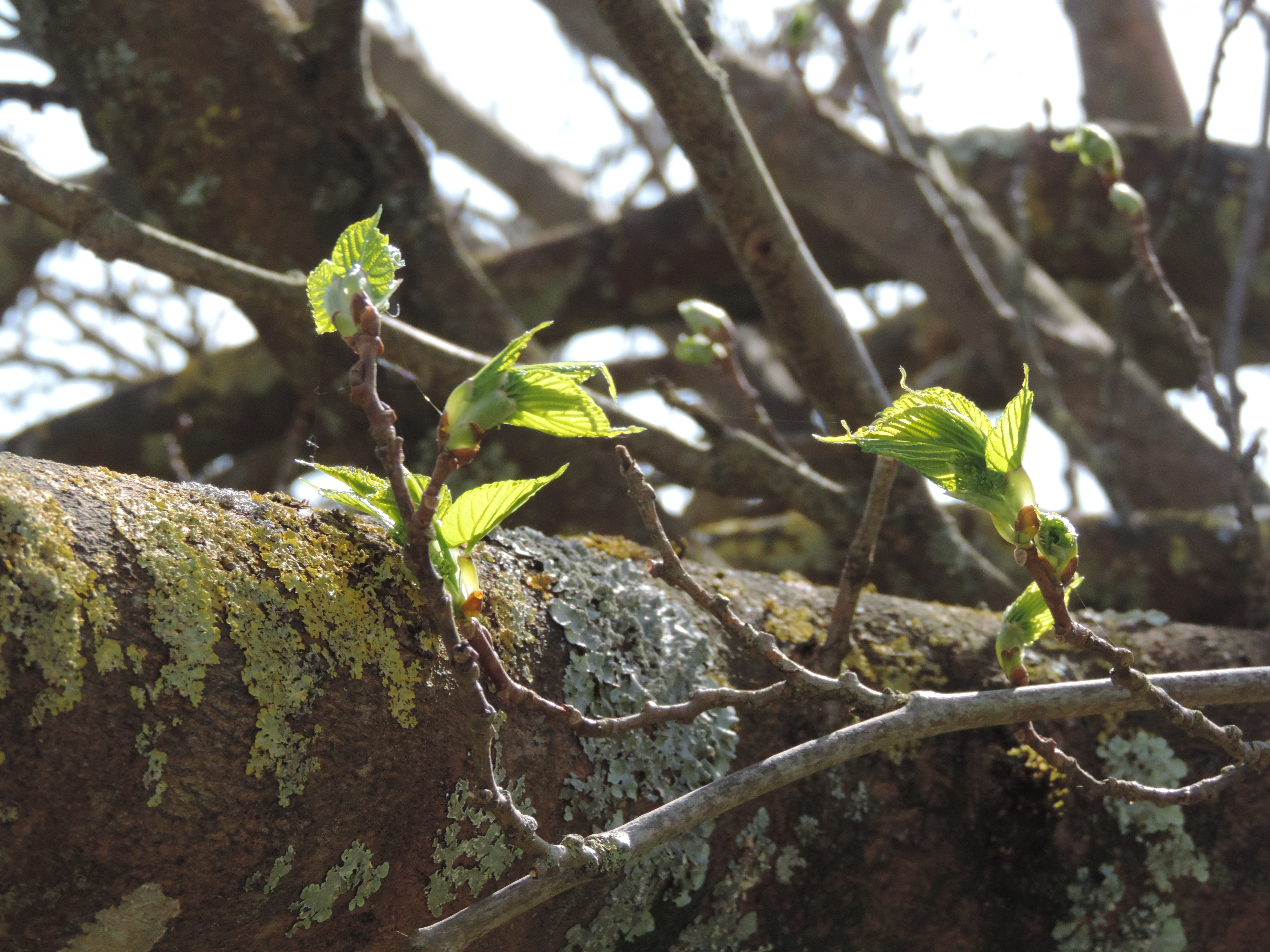
In the Spring, buds appear, then a few days later, the first leaves…..small, curled and bright at first, then rapidly unfurling and stretching out to greet the Sun. Here are some of the first ones which have appeared over the last couple of days.
The cyclical nature of the seasons is right here in front of my face. I see it every time I look out the window or step out of the front door.
When you live with this it is absolutely clear that time is not a straight line….it’s not “linear”……but, rather, time spirals. It turns around, loops, and eternally returns. There really are no straight lines in Nature.
Thinking about this reminded me of T S Eliot’s “Burnt Norton”
At the still point of the turning world. Neither flesh nor fleshless; Neither from nor towards; at the still point, there the dance is, But neither arrest nor movement. And do not call it fixity, Where past and future are gathered. Neither movement from nor towards, Neither ascent nor decline. Except for the point, the still point, There would be no dance, and there is only the dance.
As I walked along this beach I came across a piece of seaweed and shell. But that’s not where my observation ended. So, I stopped and took this photo.
What do you see?
Maybe you see a piece of seaweed and a shell on the sand.
But maybe you see the suggestion of a face? Maybe this piece of seaweed looks like the eyelashes on a closed eyelid, and the shell, a piece of jewellery on the side of someone’s nose?
Well, that’s what I saw. And once I’d seen that I felt more connected to the beach. It was as if the beach was at peace, and lying beautifully in the sunshine. I know that at the beach we often feel pretty relaxed anyway, but as I saw this, and as I look at it again just now, I feel a wave of calm. This image pleases me. It delights me. It brings me joy and makes me feel content. It stirs that deep feeling I have inside that the universe is essentially a friendly place, created with such precise balances between fundamental forces that everything Life needed to come into being fell into place, that the abundance of the universe facilitates both our survival and our thriving…..individually, as a species, and as one of Life’s myriad of forms.
Maybe you look at this image and the seaweed is a sort of smile? Maybe it seems to be a happy emoji? Well, I didn’t see it that way, but if you do, I bet you are aware of feelings of happiness growing inside you.
It’s strange that for many years now we humans have lived with the idea that there is “me” and there is “everything else” “out there”. That somehow we live separate from, and disconnected from a meaningless universe of objects. But that seems to be changing now. The Physics of the 20th and 21st centuries have revealed to us a whole other perspective on reality and our place in it. Gone are the notions of separate, disconnected objects. Everything, it now appears, is connected to everything else. Everything which exists is manifested within a universal energy field. Everything which appears, briefly, or for a number of years, is a manifestation of relationships and connections. The universe, as Carlo Rovelli, the Physicist, says, is made of events and experiences, not things.
And maybe one of the biggest insights we’ve gained is how there is no disconnection between the observer and the observed. We now know that whatever we observe is changed in the act of being observed. And we also know that the observer is changed by what they observer. It’s a two way process.
We humans bring our imagination to bear on what we observe. We bring our memories and our consciousness. We uncover meaning, create narratives, and enrich our worlds with art, with poetry, with stories, music and dance. We interact with the rest of the universe every moment we are alive. Now, we are beginning to realise that.
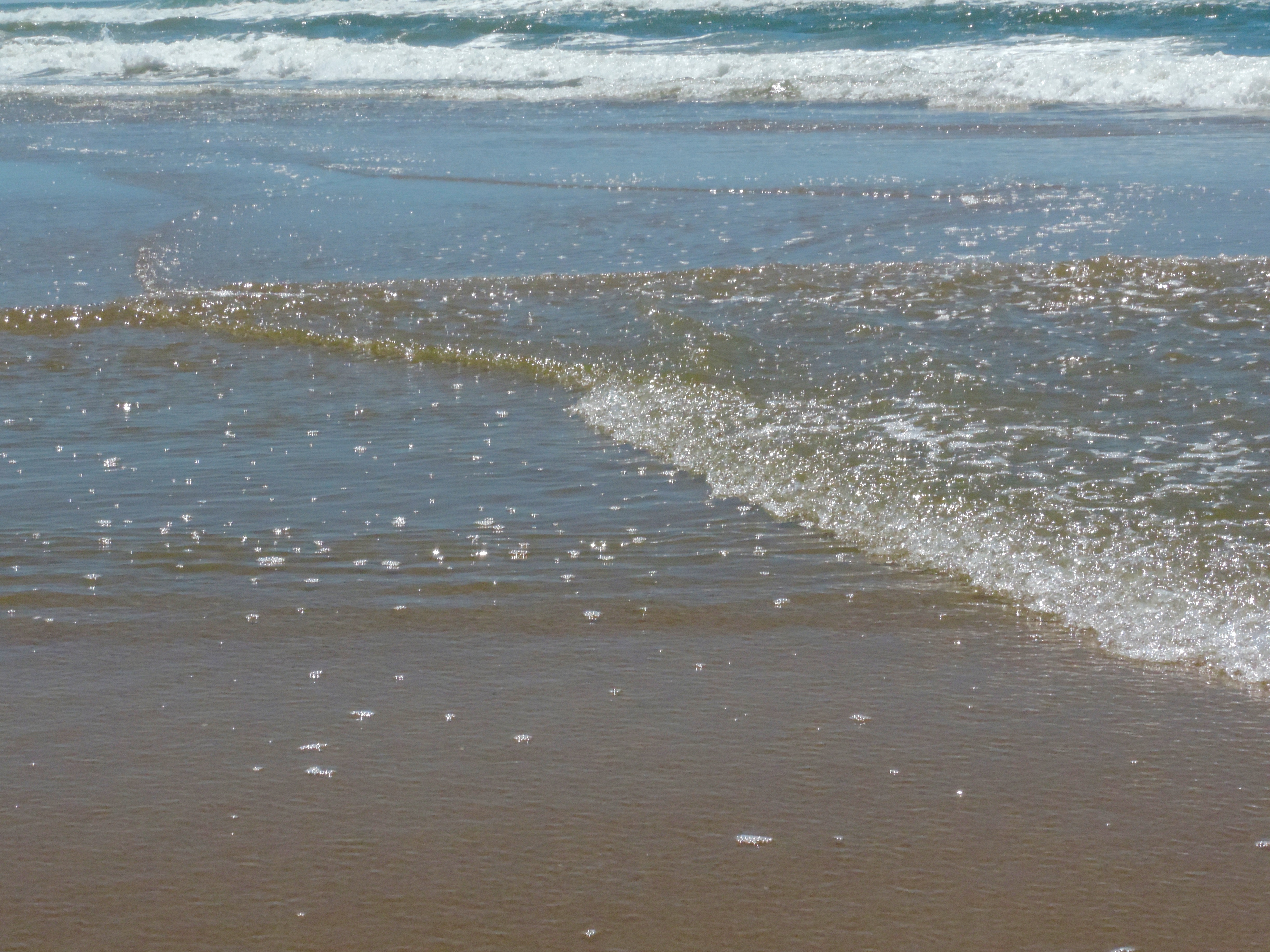
One thing which always fascinates me at the coast, is the appearance and behaviour of waves. I love to stand, or sit, and gaze at them, watching the areas of swell in the water turn into obvious waves as their tops break into white surf. It’s amazing to see the ocean unfurling as the waves appear, rush to the shore, turn white, crash, and dissipate into foam and bubbles, before the water rushes back out to the sea again.
This one photo captures something of the complexity of waves at the beach. You can see at least half a dozen different “fronts” here, each one interacting with the others. It reminds me of the experiments we did in Science class at school which taught us about “interference” patterns as one wave interacts with another. I always found that both beautiful and mesmerising.
Another thing we were taught in Science class was about the molecular basis of all substances. I remember the brightly coloured balls stuck to each other with rods which were used to show us the molecular structure of different crystals and other materials. It was only much later that I came to understand that reality isn’t really made up of discrete units like that.
The world isn’t like a lego kit, a jigsaw, or any kind of machine assembled from discrete parts. I know it can kind of look like that, but it’s not how things are. A better way to think is demonstrated for us at the beach. Reality consists of flows – flows of energies, of atoms, molecules, and of information – flows which are in constant interaction with other flows. What we see as separate objects are just some flows which hold together for a time. The world, as the Physicist, Carlo Rovelli, says, is better understood as “relational”.
I sometimes think of that as I watch the waves, imagining how we too are each like a single wave, emerging on the surface of the ocean, but never separating from it, forming complex relationships with others and with the rest of the world, for a time……for moments, for days, months, years, even for what we call a “lifetime”. Then we return to the rest of the universe from which we emerged.
We are not as separate as we sometimes think we are. Even you and I, dear reader, are interacting just now, as you read this. My thoughts are stimulated by the images I’ve captured, then I express some of them as words in this post, and you read it, and look at the photo, and you, too might begin to have some thoughts very similar to mine. Perhaps even some feelings similar to mine.
We do this all the time throughout our lifetime, don’t we? Everything we do, think, create, express, ripples out far beyond the here and now, and flows into the flows of other lives. We affect each other all the time. We influence each other all the time.
That’s why I want to share these images, these words, these feeling of wonder, awe and joy, in the hope that they influence your life a little, and bring some of those positive energies to you.
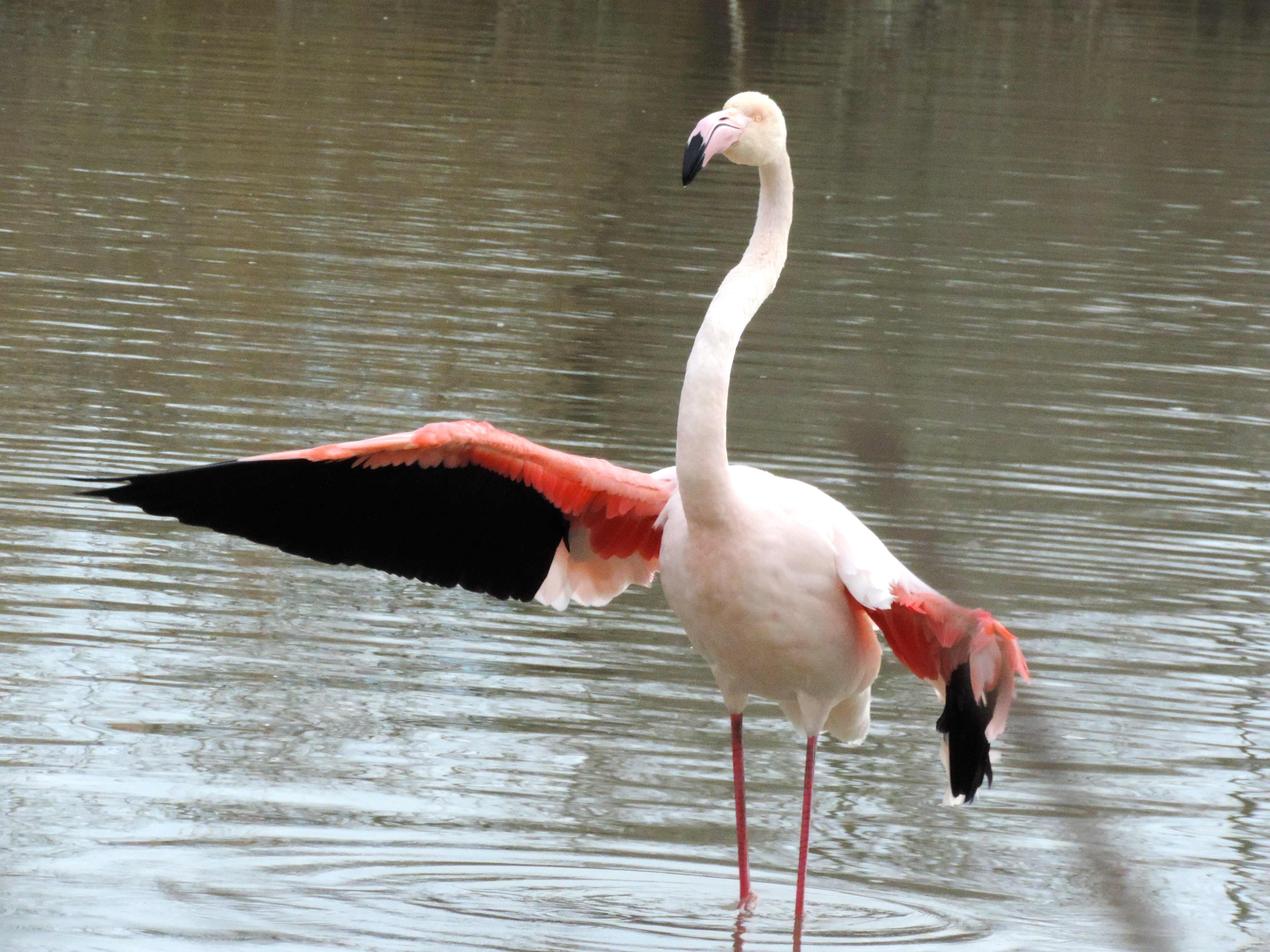
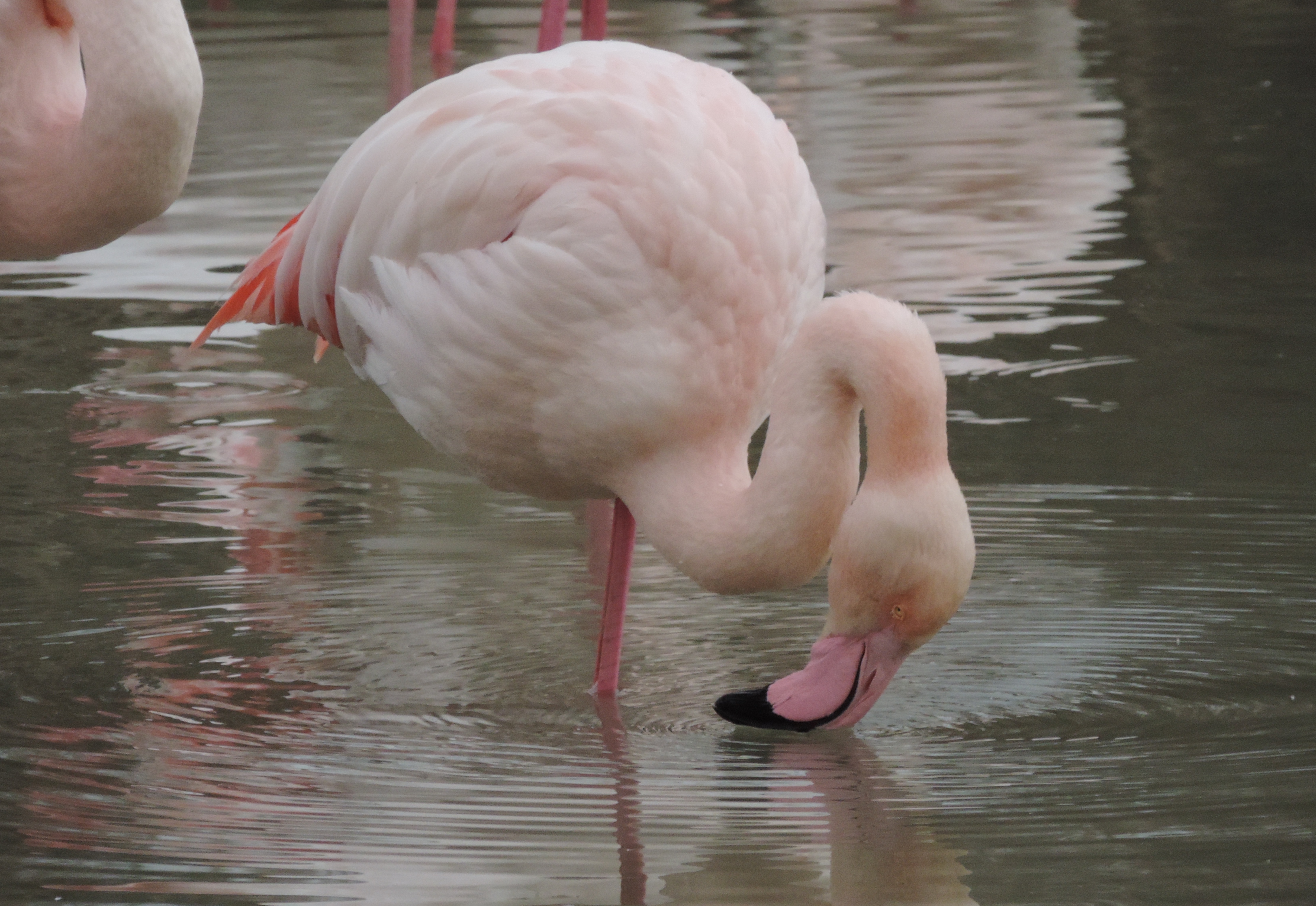
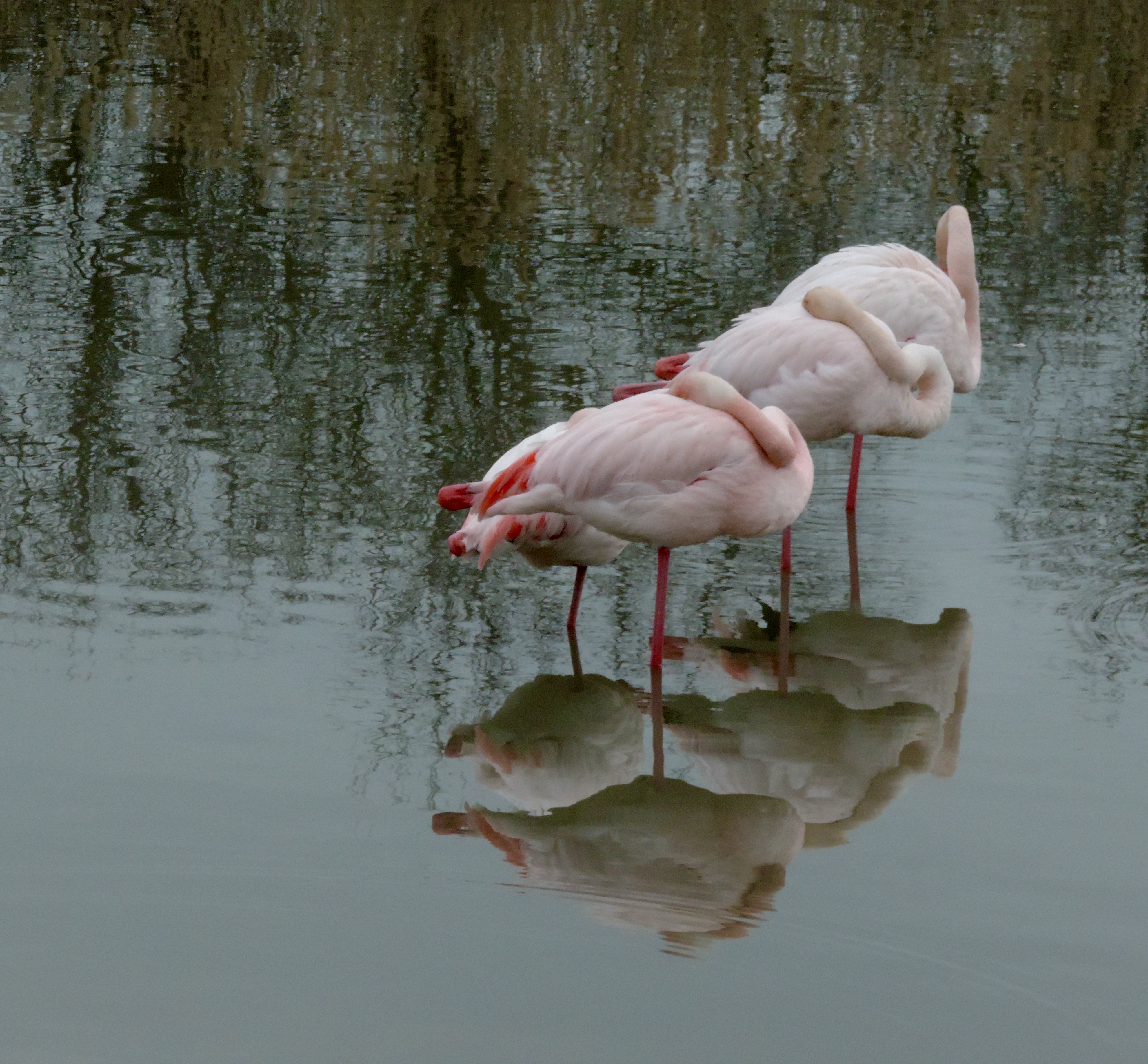
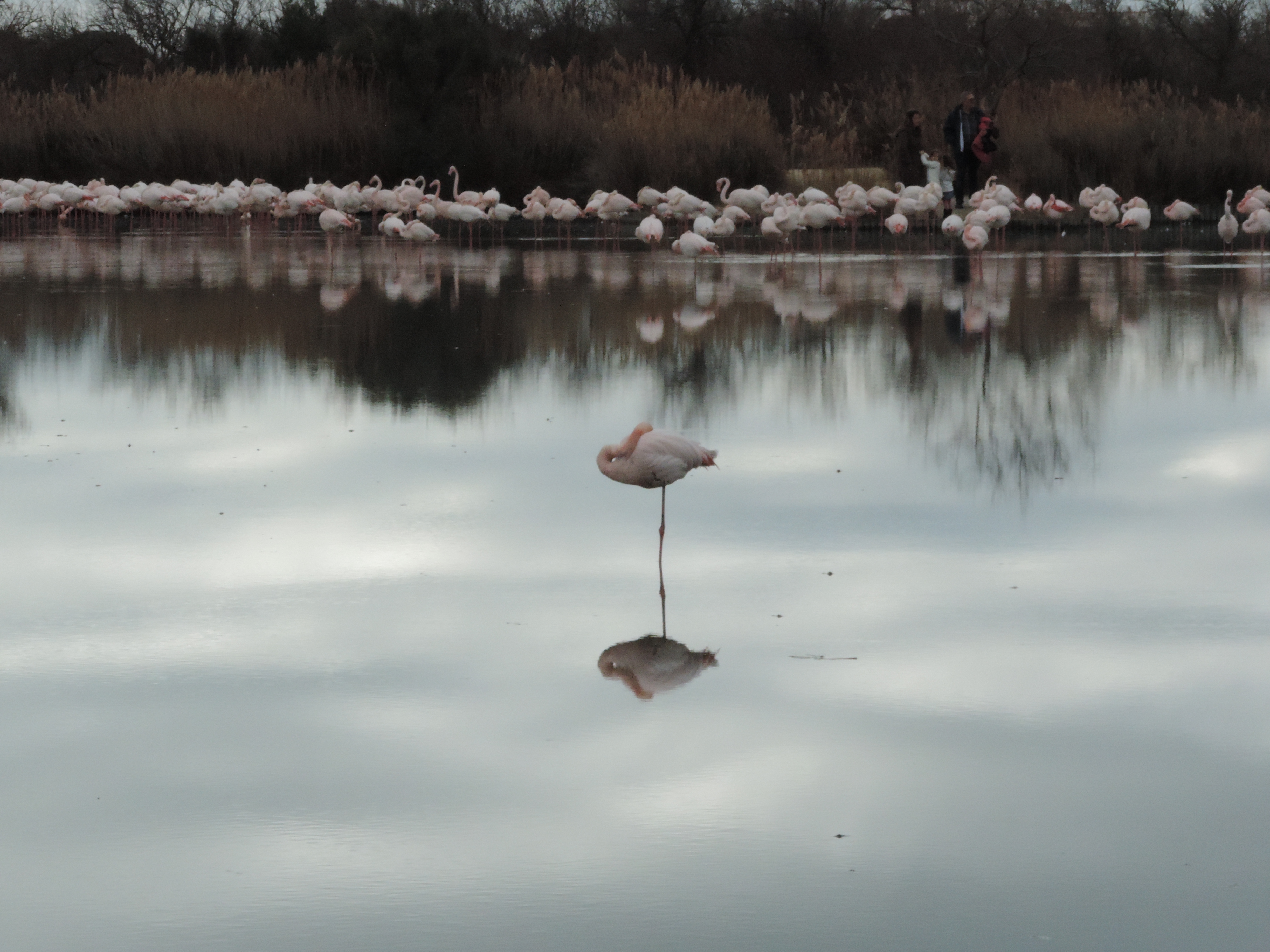
There’s a bird reserve near Nimes, in the South of France, where you can see flamingos. I’ve visited it several times, and each time I take a host of photos. They are SUCH beautiful creatures!
I’m reading Gary Lachman’s “Lost Knowledge of the Imagination” just now, and this morning read these lines about beauty –
We perceive beauty, the Neo-Platonic philosopher Plotinus said, when we perceive something that is in accord with our soul.
Knowledge of beauty is knowledge of soul. It is self-knowledge, and when we discover beauty we are discovering part of ourselves.
The knowledge we receive in this way is not of fact but of quality, of value and meaning.
We perceive beauty, are open to its presence, through a change in the quality of our consciousness. Only like can know like. We must have beauty within ourselves to see it in the world.
I hadn’t thought of beauty this way before. When I read it I thought about the old adage of “beauty is in the eye of the beholder” which always seemed to me to be a statement that beauty was in fact a matter of taste. But this perspective from Gary Lachman describes that sort of third way interpretation which I like so much. It’s not that beauty is “outside” us, as some kind of measurable object. I think we all know that. Beauty can’t be reduced to data, can’t be captured by mere facts. But neither is it just a matter of taste, as if it is entirely an experience of the individual rendering the rest of the real world unimportant.
The third way is that beauty is a resonance. It’s a harmony. And therefore it emerges in the lived quality of an experience, of an engagement, of a relationship. We need both parts of the relationship to be present…..something “within” us, let’s call that “the soul”, and something “outwith” us, let’s call that “the other”.
We know instantly when we find something, or someone beautiful. We don’t need to way it up, analyse the inputs, stimuli and signals. We just know. We know because our inner being resonates with whatever it is we are looking at….or it doesn’t. When it does, we have the sensation of joy, delight, and gratitude which accompanies all engagements with beauty.
Beauty, I reckon, is good for us. It’s good for our souls. It’s good for our consciousness. It’s good for our health.
So, here you are, a few photos in this post, all taken during one visit to the flamingos. I find them beautiful. I hope you do too. And I hope that appreciation of their beauty nourishes your soul, warms your heart, adds some positive quality to this present moment.
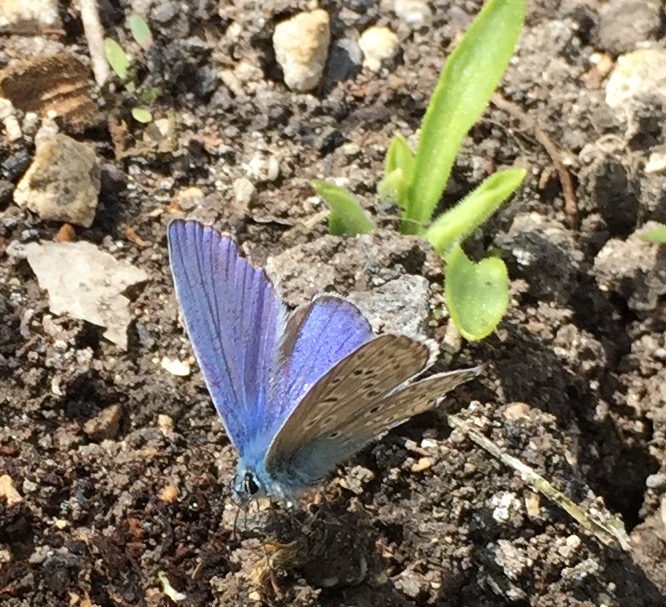
The first butterflies of the year have appeared in my garden in the last few days. They really are such astonishing creatures, butterflies. If you watch one flying around their trajectory seems utterly random. They just seem totally incapable of flying in a straight line! You have no idea, literally, no idea which way they are going to fly next. You can’t tell whether they will veer right or left, up or down, in the very next second, and you can’t tell where they are going to land next. I’m sure I read once that scientists have still not been able to explain the flight dynamics of butterflies. Apparently we don’t know how they manage to fly in this astonishingly varied way.
Apart from the sheer wonder at the flight of the butterfly, and the beauty of individual butterflies, what astonishes and inspires me most about them is their life cycle. They are the creatures which undergo the most incredible metamorphosis. When you look at the different stages of the life of a single butterfly you can’t help being amazed how different, how physically, and structurally different they are at each stage. From egg, to caterpillar, to pupa, to butterfly, each stage just couldn’t be much more different from the other. In fact, it’s hard to take on board that the caterpillar and the butterfly are the same creature.
So, the butterfly has become one of the main symbols of metamorphosis.
Metamorphosis is a sort of super-charged emergence. Emergence is this fairly new scientific concept which describes stages of change in complex systems. It means that the creature, organism or system undergoes such rapid and comprehensive change that once it has changed it seems radically different from its prior condition. So different, in fact, that it would have been impossible to predict exactly what would change, and what the outcome of the next stage would look like. We can only make sense of the stages by looking backwards and putting together the narrative of the timeline.
Metamorphosis is much more widespread and common than it first appears. In fact, I’d argue that each of us undergoes continual metamorphosis throughout our lifetimes. You don’t think so? Well, take a look at some old photos. Do you have any photos of you when you were a baby? You when you were a toddler? You when you were a teenage? You see where I’m going here. At each stage as we look back we know that we are looking at an earlier version of ourselves but we almost can’t believe it because we have changed so much.
We undergo continuous psychological metamorphosis too. It’s not just our bodies which grow, change, mature and age. Our personalities, our thoughts, our beliefs, values, habits, ideas, memories and fantasies do too. Isn’t what Jung termed “individuation” a description of the process of human metamorphosis?
The thing about metamorphosis is that it is BIG – I mean SIGNIFICANT. It’s not a minor tweak here and there. It’s not even a series adjustments. I recently heard an expert, talking about the crises of pandemic and climate change, call for such wide and deep change in the way we humans live on this planet, that what we need is a metamorphosis and to underline his point he said
“A butterfly is not an upgraded caterpillar”.
I love that. And it’s true. We don’t need a “silver bullet”or a “technofix”. We don’t need a simple, single new law or practice. We need to metamorphose. We need a holistic, multi-factorial, complex, wide-ranging, deep, radical change – in our own lives and in the way we live together as communities, as nations, as a human species, and as one of the thousands of species of life on this little blue planet.
The thing is…..we can all participate in this. We can all imagine, invent, suggest, contribute towards the creation of, an utterly different way for ourselves, our children, our grandchildren and the whole of Gaia. But none of us can know what such a metamorphosis would look like.
What we can do is choose different thoughts, different ideas, different values, and different actions which bring us more into harmony with each other and with the world. Because in complex systems, integration and harmony produces emergence, and emergence can be as profound as a complete metamorphosis.
I know a dandelion seed head is almost a cliche in photography. I mean who hasn’t seen an image exactly like this one? But the truth is I have several photos of the seed heads of plants, whether they are dandelions, or some other flowers. I find them beautiful. In fact, I find them irresistibly beautiful. I am almost compelled to stop, to look more closely, perhaps to take a photo, perhaps to blow gently on the seeds and send them off into the wide blue yonder. Maybe that’s partly a harking back to childhood. Who hasn’t counted how many breaths it takes to blow all the seeds off a dandelion? As kids, we even called them dandelion clocks and the number of breaths it took to blow all the seeds away was supposed to be the number of hours we were into a day. I’m not sure why that practice persisted because I don’t ever remember that being a remotely reliable way to tell the time!
But what I want to focus on today when I look at this particular image is the fact of abundance.
Just look how many seeds there are in this one single plant! I suppose you could count them if you had a lot of patience, but do you think anyone has ever managed to count the number of seeds in a whole field of dandelions? (Ok, why would you??) But even if we just look at this one plant we see what an abundance of seeds it has produced. This is what plants do. They produce an abundance of seeds. Way, way more than is “needed” just to create just another plant.
Here’s what else plants do – they capture an abundance of energy directly from the Sun. Through photosynthesis they capture the Sun’s energy, suck carbon dioxide and water out of the air, and create sugars to store the energy they need to grow more stalks, more trunks, more flowers, more blossom, more fruits, more seeds. They get what they need to survive and to thrive directly from the air and the Sun (and, yes, their root systems gather and store other nutrients which they need – also in abundance). Many trees live way, way longer than a human being can live…..hundreds of years in fact. They have, and they experience, an abundance of life.
The universe delivers what all Life needs. The universe delivers what all Life needs in abundance.
But do we live that way? Do we live as if the universe supports us abundantly?
Ah, you’ll say, but millions of people in the world live in poverty. Their daily lives are of scarcity, not of abundance. And that’s true. But that’s a political choice. We could feed the world. We could shelter the world. We could create sustainable, thriving societies across the entire planet if we chose to, if we chose to work together, if we chose to care about each other, treat each other with compassion and kindness, if we demanded justice, fairness and equality for everyone……whatever “identity” we apply to them, wherever they live.
Utopia, you think? Wishful thinking?
I guess so. I guess such a vision is utopian. I guess I’d agree it’s what I would wish for, but I feel unable to deliver.
However, I do think we humans have created a dystopian reality with the current economic and political models that we constrain ourselves to live within. Don’t forget money is a human invention. It doesn’t exist in Nature. States are a human invention, and their borders are a human invention. We share one planet, one water system, one atmosphere, one soil, one vast, interconnected, inter-dependent web of Life.
So, yes, I agree, this is utopian, but, also, I’d argue, it’s MORE realistic than the present invented delusion which traps us in its system. Maybe this pandemic has made all of that more clear. Maybe this pandemic is a time for we humans to wake up, see the world for what it really is – a planet, in a universe, which provides for Life abundantly.
How might we choose to live if we choose to make that the foundation of our thoughts, our beliefs, our values, and our actions?
There’s an old stone well in the garden where I live. It’s got a rusty metal cover which is fastened with a padlock but we opened it to look down inside when we arrived here. Using a roll of string and an old key we measured about twenty metres down to the surface of the water. How deep the water is, I’ve no idea. Above the well is an iron bowl hung from an arch by a short chain. Obviously you can’t lower the bowl into the well to get water, but, somehow it seems totally appropriate.
The Redstart, and some of the other small birds, like to sit at the top of the arch, and I like to photograph the well in different lights and against different skies. There’s something deep, something rooted, something which connects me to this place, this time, and times gone past, when I look at this well.
This particular photo was taken, as you can see, during a spectacular sunset. One of those sunsets which sets the entire sky ablaze. We get a lot of sunsets like that over the summer months especially. When I look at this image I think of the four basic elements – the Sun’s fire, the winds in the Air which stretch the clouds over the sky, the Water deep in the well, and the solid Earth and rock from which the well is made, and into which it has been dug.
I think, too, of the hands of humans, because it took human imagination and craft to dream up this particular well with its iron bowl, and it took the skill of humans to sink the well, surround the top with stone, and fashion the iron bowl and its fixings.
I wonder about the beginnings of this well, and don’t doubt it was sunk to find water. There’s a very high calcium content in the incredibly stony ground in this part of the world, a region which is called the “Grande Champagne” because of the high quality of Cognac produced from the vines which thrive in this most unlikely looking soil. It’s a soil which doesn’t hold onto the water. So, I think of the vineyards and the men and women who plant the vines, prune them, nurture them, and harvest their grapes. I think of the distillers with their giant copper stills. And I think of the astoundingly varied flavours of the local cognacs which they make.
I haven’t used the well to draw water, and I don’t think anyone else has done that for many, many years. Whoever added the iron bowl and its fixings was doing something else – creating a work of beauty – something delightful to look at. And, probably without predicting it, creating a favourite perch for the local, smaller birds. Did they realise the well would look this beautiful against such gorgeous sunsets? Maybe they did.
Do you see what’s happening here?
This “object” – this “thing” we call a “well” – I find that I develop a relationship with it. I notice it. It catches my attention. I contemplate it on different days, in different weathers, and against very different skies. It delights me. It stirs my curiosity. And it sets off trains of thought which travel along a multiplicity of connections. It changes my experience of the everyday.
That’s how the human mind works. When we are well, when we are growing and thriving, we are driven by our deepest feelings – the affects – which make us the seeking, connecting, joyful creatures we were born to be. Conversely, when we sick, when we blocked or stuck, we disconnect, withdraw, and seek protection. It’s not that the former group are good, and the latter bad. We need all of our affective strategies to survive and thrive. But I’m convinced that the more we nurture joy and curiosity, the more we pursue beauty and harmony, the more we build mutually beneficial relationships in our extended webs of connections, the healthier we will be.
That’s how we thrive. That’s how we grow. That’s how we flourish.
17th March 2020, I sat down and wrote my first post of the pandemic. We went into a national “confinement” that day here in France. None of us knew or even guessed exactly how the next 365 days would unravel. I certainly didn’t think I’d write a post every single day for an entire year. But here I am, still writing. What I committed to on this day one year ago was to share a beautiful photo I’d taken, describe some of the “émerveillement” (wonders and delights) of my every day experience, and share my caring heart.
I still think those are some of the best things I can do – share my joy, my delight, my awe, my wondering, my perspectives, thoughts and understanding – share them all through the lens of a loving, caring heart.
I still think that whatever we think, imagine or do, influences our daily experience of life, changes the lives of others, and co-creates the reality of life on this one, small, blue planet. So we should try to live not on autopilot, but with awareness, with consciousness and with agency. “Heroes not zombies” folks!
As I look at this photo this morning I remember the day I sat on a plane and saw the Sun come up between the clouds. Yep, that’s what that image is – the Sun emerging with clouds above and below (as above, so below) – and I immediately hear Leonard Cohen in my ear. I suppose his line has become one of the most famous lines in song history, but it’s still a brilliant line.
There is a crack, a crack, in everything
That’s how the light gets in.
By the way, if you want to read about the origins of that phrase, check out this excellent article. It reveals some of the roots and influences which led to this particular form of words.
Back to my photo – it looks to me that I’m staring right at that crack which is letting the light in. But, hey, hasn’t this pandemic been just such a crack?
Hasn’t it shone a bright, clear light on the fact that we are one human race, embedded in one living planet, sharing the same air, the same water, the same earth?
Hasn’t it shown us the power of co-operation and collaboration?
Hasn’t it highlighted the vulnerabilities we are subject to from our current model of civilisation? Highlighted poverty, precarious employment, poor nutrition, inequality and injustice, climate change, loss of biodiversity, how we treat animals, and just how broken our economic and political models are?
We are a long, long way from dealing with any of these problems and our current silver bullet of vaccination will not be enough to create a stronger, more resilient, healthier community of humans on this planet. I still have hope. I still hope that as the pain of the wounded crack, and the illuminating brightness of the light which gets in, we will be motivated to enhance the incredible inventive genius and co-operative, social power of human beings to create a better world.
But, hey, right here, right now, I will continue with my commitment and share with you a beautiful image, a positive thought or idea, and my passion for love and kindness. I hope these touch you, and you transform them with your own unique experience and imagination, and pass them on to others.
I’ve only been sailing a couple times but I do think there are real life lessons we can learn from a photo like this.
First of all, life can seem full of threats like those rather scary, dangerous rocks. In this era of the pandemic that seems especially true and I wonder how our children are going to be as they grow up – they are having to wear masks, wash and/or gel their hands, get regular tests at school to see they are “germ free”, and are being taught that every physical contact is a potential threat – don’t hug! Don’t kiss! Don’t even stand too close!
Secondly, rocks are often much more of a hazard than they appear – we can see what’s above the water, but what lies hidden beneath? Which makes me think of viruses again – after all, we can never see them, and in fact the evidence for the effectiveness of things like wearing masks, social distancing, lockdowns and all such “non-pharmaceutical” interventions is disturbingly scant – by which I mean, not that they might be really helpful, but that we actually don’t know!
Thirdly, as a boat sails close to the rocks the pilot has to be aware of the currents and tides – because it’s not just the presence of the rocks which is a threat, but the potential for the water flows to push your boat onto them. Which reminds me that what we call threats are rarely fixed, often can’t be generalised and always need to be considered in their relevant contexts. Currents and tides change all the time…..and so does life.
Fourthly, I used this photo at the beginning of the pandemic to write about how it has always been a soothing image for me. Ever since I took it I look at it and I feel calm. It pleases me. But when I used it at the start of the pandemic, somehow I noticed the rocks as a threat for the first time. And here I am again, talking about how this image makes me think of potential threats. I guess this pandemic has changed us all. It’s certainly altered the lens through which we view the world.
Finally, I think sailing is a great metaphor for life. You can’t just plot your starting point and your destination and head off in a clear straight line from the one to the other. Nope, life will go much better if we stay aware and responsive. Sure, it’s good to have an idea of where you want to go….even to make preparations for the journey, hoping to anticipate what you’ll need and how you will deal with potential obstacles. But this is what life does – it throws up the unexpected. It surprises us again and again….which should be obvious really because the future is “emergent” – it comes into being from the combination of the past and the present – it’s not sitting there waiting for us to discover it. That’s a basic principle of complexity science – that the future is unpredictable in specific circumstances – that is, we can make broad generalised predictions – like about weather or climate – but we can’t predict accurately about specifics – the weather predictions get less accurate and reliable the further ahead you look.
So, if life isn’t fixed, then we can make certain preparations and plans but we always need to be awake and aware…..stumbling through life in zombie mode doesn’t strike me as the best option! And we need to be awake so that we can change direction, be flexible, adapt, depending on what we encounter. It turns out that improvisation and creative responsive solutions to problems and obstacles is what we need……every bit as much, if not more, than we need “goals”and “plans”!
Here’s the strange thing – at first this image was a calming image for me, then at the start of the pandemic it turned into a metaphor of threat, but, now I find it has become a positive image of improvisation and adaptation. Well, well, I wonder what kind of image it will be for me this time next year??
I suspect “beauty is in the eye of the beholder” is not the last word on beauty, but I don’t deny that there is a subjective element to beauty. What I find beautiful, you might not, and vice versa. So here’s my invitation to you – tell me, or show me, what you find beautiful and I’ll share with you what I find beautiful.
Today, I came across this photo of a tiled roof in a village in Southern France. This is a very typical roof for this part of the world. I find it beautiful. I’m sure there are many reasons why, but I want to pick out and explore just one of them today – diversity.
What I see whenever I look at a roof like this is that the tiles are all different. As opposed, of course, to them all looking identical. I love how they are different colours and shades. I love how some of them have lichens growing on them, and some don’t. I love how they are not all the same size (they are pretty much the same size but it isn’t exact) and I love how they sort of fit in a higgley-piggedly way!
In other words the characteristic which I find so beautiful about these roofs is that the tiles are so diverse.
Diversity is beautiful.
Nature loves diversity. Left alone you don’t get permanent mono-cultures in Nature. Instead you get the display of vast networks of relationships between widely diverse elements, all of which contribute to the success, to the survival and the flourishing, of the whole.
I also love diversity even in tiles because it gives them more “character” – you can distinguish one individual from another. I like that more that factory produced, machine made, production line sameness – don’t “mono-culture” and “mono-tony” have the same root? Isn’t that maybe why I an averse to “mono-polies”?
I’m not a fan of imposed conformity, of the industrial, capitalist age of mass production and mass consumption. I love to see artisans at work here in France…..people with a lifetime of skill, learned by daily practice over years, taught by the most skilled ancestors and passed on to enthusiastic younger generations. I saw a great initiative in France recently where a small town invited two groups of people to a local building every Wednesday – retired people with a skill (an iron worker, a woman who used to sew for a fashion house, a stained glass worker, and others), and children aged about 12 years old. The children were learning these practical skills from these now retired skilled workers during their regular Wednesday time off from regular schooling. Both the retired skilled craftspeople and the children were loving it – it brought joy and meaning into their lives. It also connected the generations and gave both groups a different view of the other generation. Yes, it’s very small scale. There were only a handful of people in each group. But I don’t think that should put us off. Something doesn’t have to be “mass” and “standardised” to be successful. There’s nothing to stop any community taking this idea and fashioning it into their own practical project.
In my local town of Cognac there are several “Boulangeries” (Bakers) and they are ALL different. They might all include a core range of similar products, including baguettes and croissants, for example, but they all do it differently. Each baker has his or her own skill and experience, own strengths and weaknesses, and I know which one to go to for different types of bread, which make the croissants the way I enjoy them, and which make the best patisserie (like eclairs, and other cakes). Here’s the thing – I don’t buy all those different products in the same boulangerie. Yes, I know, you might prefer the “convenience” of a standardised, one stop shop, and that’s your right to enjoy that. But for me, acquiring this local knowledge then using it to find just what I want, when I want, enriches my life.
I welcome constructive criticism and suggestions. I will not, however, tolerate abuse, rudeness or negativity, whether it is directed at me or other people. It has no place here. ANYONE making nasty comments will be banned.



 Heroes Not Zombies