Feeds:
Posts
Comments

Archive for the ‘from the consulting room’ Category

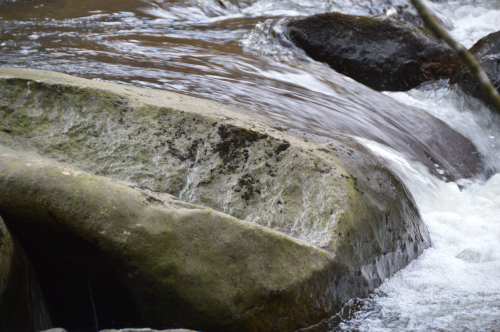
This is a photo I shared with many patients and students over the course of my career. I saw this rock, a long, long time ago, just down from a waterfall in woods in the Scottish Highlands.

How did this rock come to have such a shape? It’s as if it had been struck by a Viking axe! What’s even more interesting is that it will never “heal”. That cleft, that wedge in the body of the rock, will never disappear.

It’s pretty common to think of healing as the complete resolution of something. We think of a cut, or a broken bone, and imagine that once it has healed, the skin or bone will return to how it had been before, forgetting somehow that all injuries leave scars. We think of infections as “self-limiting” – that is, once they have gone, they are gone. The body returns to some prior condition. We talk of “defeating disease” and use a lot of war imagery to suggest we can remove it (whatever “it” is) from our bodies, “defeat it”, and then it will be gone…for good. Job done.

But Life isn’t like that.

And neither is healing.

We don’t go backwards. Injuries, infections, traumas and diseases of all kinds change us. Even when we make a “complete recovery”, our lives have now changed. Something is altered….in the body and in the psyche. Whatever we encounter, whatever we have to “deal with”, becomes part of our story. Every event, every experience, changes our lives forever.

So, what are we to do with these wounds?

It would be nice if we could just ignore them. And in many situations they are minor enough for that to be a reasonable strategy. But the bigger impacts can’t be ignored, they can only be denied. That’s never a great strategy.

Maybe we could fill in the gap. Fill that wedge with prozac-a-filla or something like that. Would that work? Unfortunately, suppressing, and hiding the wounds tends not to work for very long. All those “anti-” medicines that we use – antibiotics, antihypertensives, antacids, anti-inflammatories, antidepressants etc combined with opiates and other sense-numbing drugs, don’t actually directly promote healing at all. They just “take the edge off” things….for a bit. You think antibiotics cure infections? I’m afraid not. They can do a very important job. They might even save your life. But what they do is kill bugs. The inflamed, swollen, and damaged tissues in your body need to heal. The antibiotics don’t do that. It’s your ability to self-repair that does. And antibiotics don’t stimulate the self-repairing functions of the body.

So what do we have to do?

Take a look at the photo again. See the river rushing by the rock? I think of the life force when I see that. The wound has become part of our internal landscape now. The illness, the experience of it, the memory of it, the impact it had on our psyches and our lives, is part of who we are now. It’s an integral part of our story. But life continues. We adapt. We find new ways to live and to thrive with this changed landscape. We evolve our inner environment.

I’m not saying we shouldn’t use our modern medicines. They can reduce our suffering and even, sometimes, save our lives. But they don’t directly help us to heal. We still need to recover, repair and adapt. How much of “Medicine” or our “Health Service” is directed towards that life-long, important issue of healing?

I hope that, whatever the answer to that question, the answer will be “a lot more in the future”.

Our lives are not going to be the same once this coronavirus pandemic is over. How are we going to heal? How are we going to adapt? How are we going to live differently?
Read Full Post »

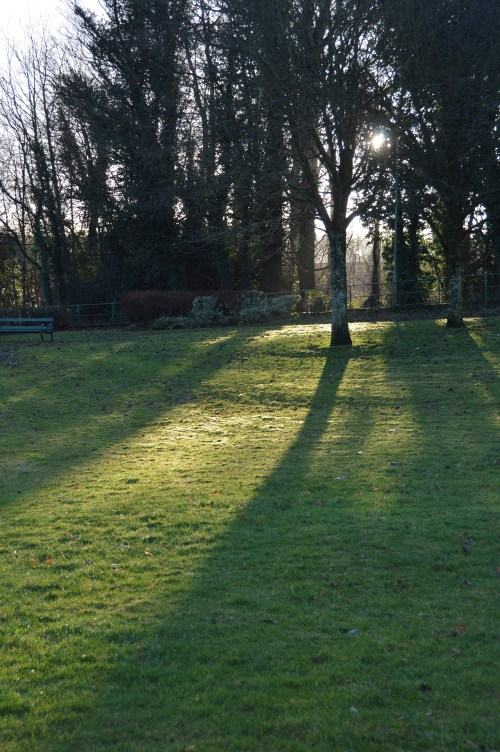
I took this photo at noon one January 1st.

You might think its pretty much just a photo of some grass, so, hold on, let’s look more carefully, and consider the contexts. If it was simply a photo of a patch of grass it wouldn’t be particularly interesting but what caught my eye wasn’t the grass, it was the interplay of shadow and light.

Despite it being noon, the Sun is still pretty low in the sky. Well, it’s taken in the wintertime in Scotland, so that’s normal. But, normal or not, the effect of the low sunlight streaming through the trees is spectacular. The angle of the light makes the shadows SO long and the spaces between the trees show frosted grass sparkling brightly.

I love the forms and the patterns of the shadows, the light, the frost and the grass. It takes all of them together to create the scene.

Here’s another scene –


This is a huge puddle which is there more often than it’s not in this particular field. I once saw swans swimming on it! But today, what makes this image so beautiful is the trees and their reflection. Without the trees, the clarity of the light and the stillness of the water, this just wouldn’t be the same. It has echoes of the previous photo but it’s completely different. However, both photos were taken within minutes of each other, the flooded field lying just a short walk along the road from the shadowed park.

I’m struck by how important the contexts are in these photos. If I’d “abstracted” just one element in each – a grassy patch, a section of the puddle, a single tree – I’d lose all the context. It’s the interplay of all the elements which makes these images more than the sum of their parts.

Life is like that.

When we focus too narrowly, when we consider only a part in isolation, we achieve only a partial understanding. It’s the whole experience, in all it’s contexts and environments, with the story which holds them together, and the remembered subjective experience of being there which makes them so unique, so particular to me.

So, if I am to share any of that with you, I need to show you, and tell you, at least some of the contexts. That way, you’ll come closer to experiencing what I experienced.

That was my everyday working reality. Every single patient who came to see me had a unique story to tell. If I were to understand them I had to hear their story. I had to try to have some experience of their experience, to feel what they were feeling, to know what they knew, if I was to understand, diagnose and help them.

But it’s the same for all of us. If we are to understand anyone, friend, relative, colleague, stranger, we have to hear their story, and try to experience some of their experience.

It’s always partial. It’s never fixed. It’s never completely knowable. But there’s no substitute.

Read Full Post »

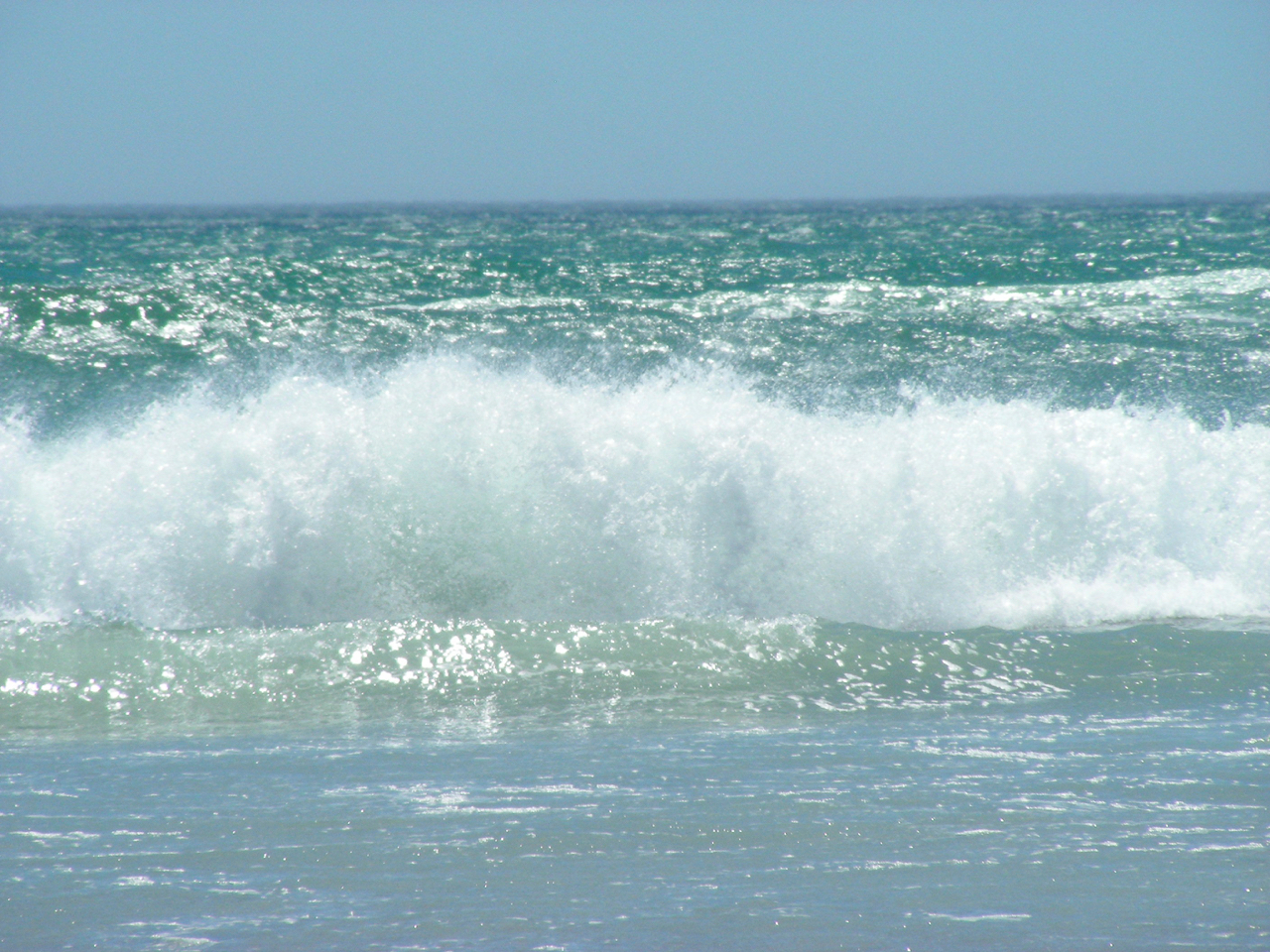
I can remember science lessons in High School where we studied waves. I thought they were fascinating. I still do. All kinds of waves. Waves in the sea

waves in a pond

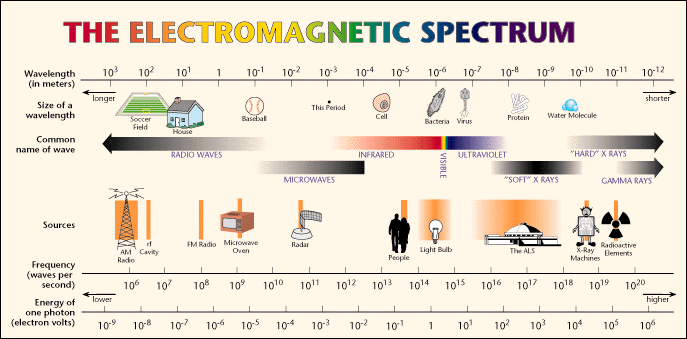
the electromagnetic spectrum which includes the light and colours we can see, the radio waves we can tune into and many other varieties of invisible waves which affect us.

the waves produced by our hearts and brains which we can’t see, but we can measure and represent on charts (did you know that when your heart rhythm emits a wave pattern which can influence the heart rhythms of people who are physically close to you? 

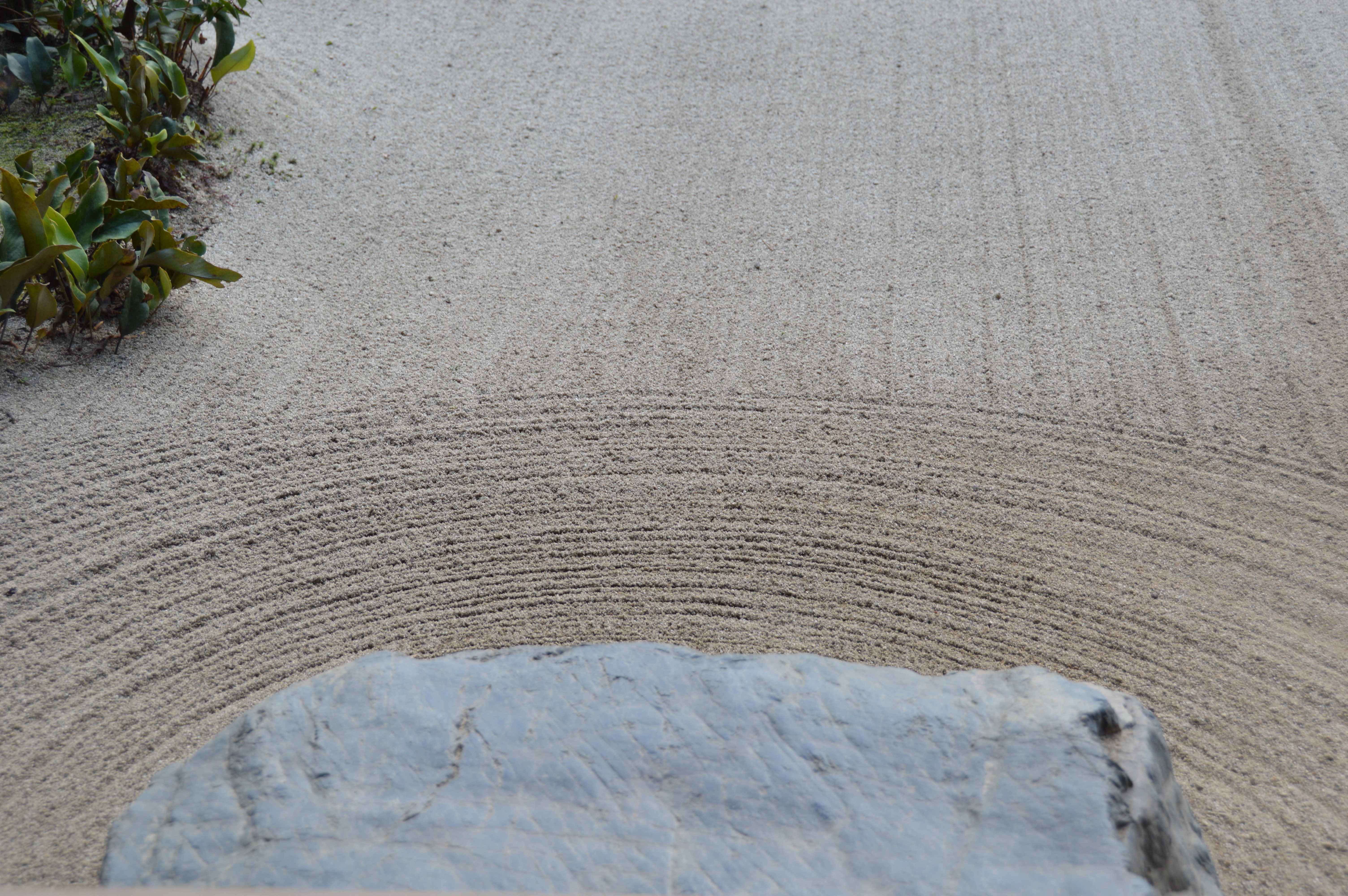
Even the representation of waves drawn in the stones in a temple or shrine (like the one at the start of this post).

Waves change us.

Waves carry energy and information.

As energy and information reaches into our bodies and minds it changes us.

I read the other day that “influencers” are having a hard time. Bear with me, I’m 66 next month, and “social media influencers” are not my specialist subject, but as best I can tell people who make a living from advertising and marketing revenues from companies by sharing pictures and videos of themselves wearing or using those companies’ products have seen a sharp decline in their income.

Seems one of the things during this pandemic is that people are consuming less “stuff”. Well, given that around the world millions of shops are closed and production lines are at a standstill, maybe this is no surprise. But there’s another element to this story which seems to be a sort of re-evaluation that’s going on. Less people seem interested in the lives of “celebrities” (ie people who are famous for being famous) just now. Priorities and values are changing.

However you want to look at this, the underlying reality is that we are all influencers. There is nothing I do, from the breaths I take, to the beating of my heart, to the communications I make and the behaviours I show, which doesn’t change the world. OK, yes, of course, not the whole world! Well, probably a very small part of the world actually. But collectively we are all influencers.

We send out materials, energy and information into the world constantly. Unceasingly.

What materials do you send out? What “waste” do you produce and what do you do with it?

What energy do you send out? How does that energy affect your relationships?

What information do you send out? What are your messages? How do you say them? Are they based on kindness or hate? Hope or fear? Anger or Joy?

You cannot escape being an influencer.

The question is – what waves are we making? You and I.

Read Full Post »

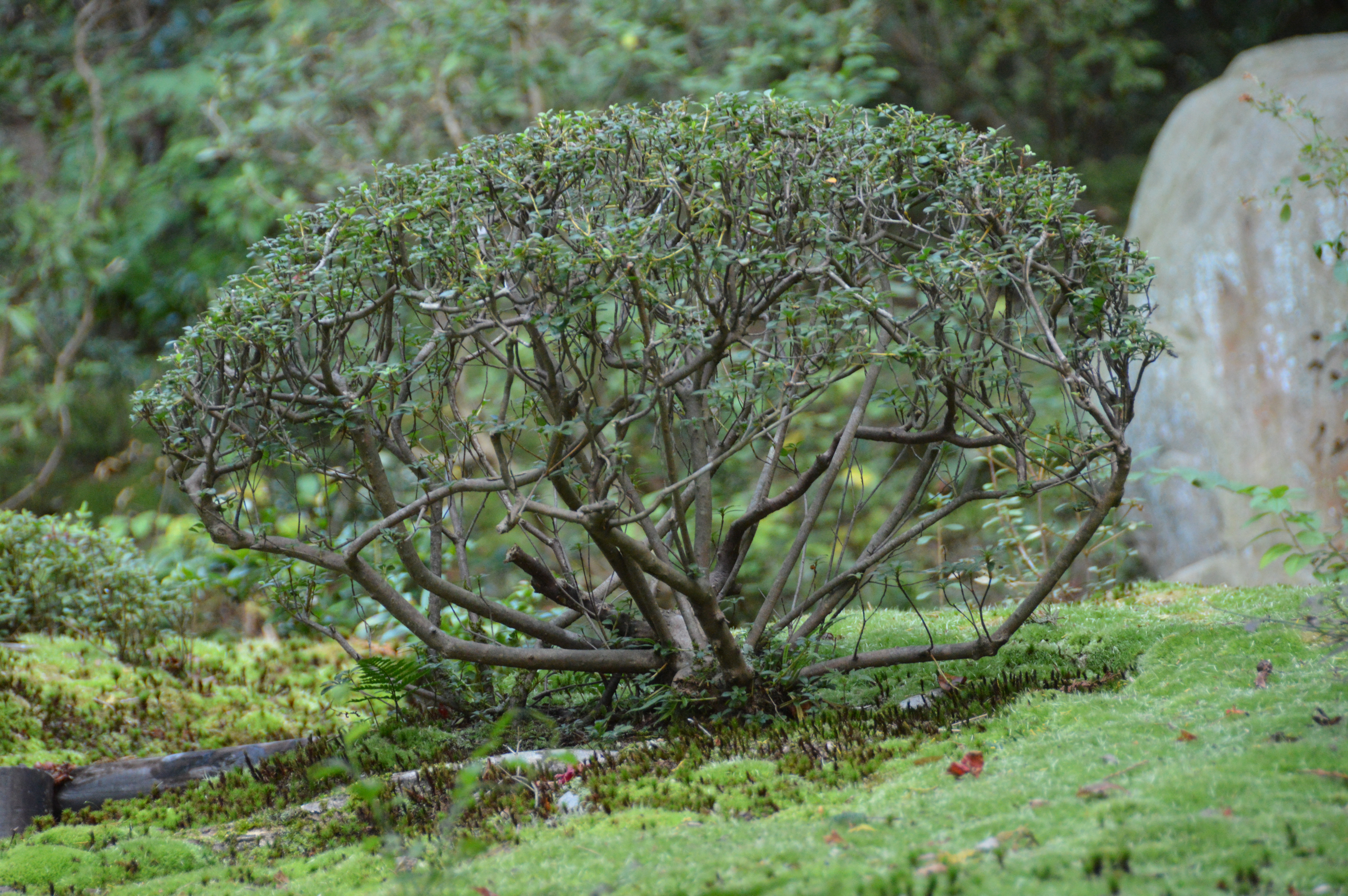
There’s something of this shrub that makes me think about the human brain. The leafy cortex forming a curved border and the mesh of branches, twigs and stems which look a bit like a neural net.

Deleuze and Maturna wrote about two common models we use to organise our world view – the arboreal and the rhizomal. They described how we use the former to create tree structures everywhere…..those hierarchical constantly branching sets of binary choices. Think of a genealogy chart, and how we refer to it as a “family tree”. But think also of “organisation charts” which lay out the positions within a company, and show the power flows, with the “Chief Executive Officer” at the top. We see it in protocols, guidelines and algorithms, which proscribe the actions to take at every point to get from a starting position to an “outcome” or “goal”.

I love trees, but “arboreal” models of thought and world view make me uneasy. They are too binary for me. At every stage you can go this way or that way, and there is often an implication that there is only one way which is the right way. It assumes that the starting conditions are exactly as the author expects them to be, and the goals or outcomes which the model maker identifies are the best, or most relevant, or most “efficient” ones, so everyone should share them. Like all models the people who make them have certain values, beliefs and world views, but, rarely are those things made explicit. They are also too hierarchical for me. I’m not a fan of strongly hierarchical, centralised power structures.

On the other hand, there is something very appealing about these tree-like diagrams. I probably drew little family trees every working day. I found it helpful to chart a patient’s relationships, siblings, parents, grandparents, partners and children. They often revealed patterns which shone a light on this patient’s illness. And there is no denying the tree-like branching structures within the body – particularly in the lungs and the circulatory system, but not only there.

In Jacques Tassin’s “Pour un Ecologie du Sensible”, he uses a variety of metaphors to show how interconnected all of life is. One of his metaphors is the tree. He says all life is like an invisible tree rooted in the Earth, each branch, each leaf a living being, a part of the same tree. I like that. If each of us is a single leaf, then, obviously we are connected to every other leaf through the over all structure of the tree. I also like his reference to the roots, which we usually don’t see, because it seems very true that we are vastly interconnected in invisible ways.

The rhizome model is more like grass. There isn’t a single trunk, or root. It’s massively interconnected. It’s a “distributed network” as opposed to a “hierarchical structure”. The brain is probably more like that. Every one of our millions and millions of neurones makes up to 50,000 connections with other neurones. Trees don’t do that. I find the network model very appealing. I love the way it reveals a multiplicity of equally “good” pathways. I love how it doesn’t pre-determine either the starting points or the end points. In fact, it’s kind of impossible to see where a brain begins and ends. It’s not even fenced off in the skull!

When I look at this shrub, then, I actually see elements of both of these models – the branching tree structure, and the presence of multiple, connected pathways.

OK, maybe only up to a point, but, hey, at the end of the day, it’s a pretty appealing and inspirational shrub!

Read Full Post »

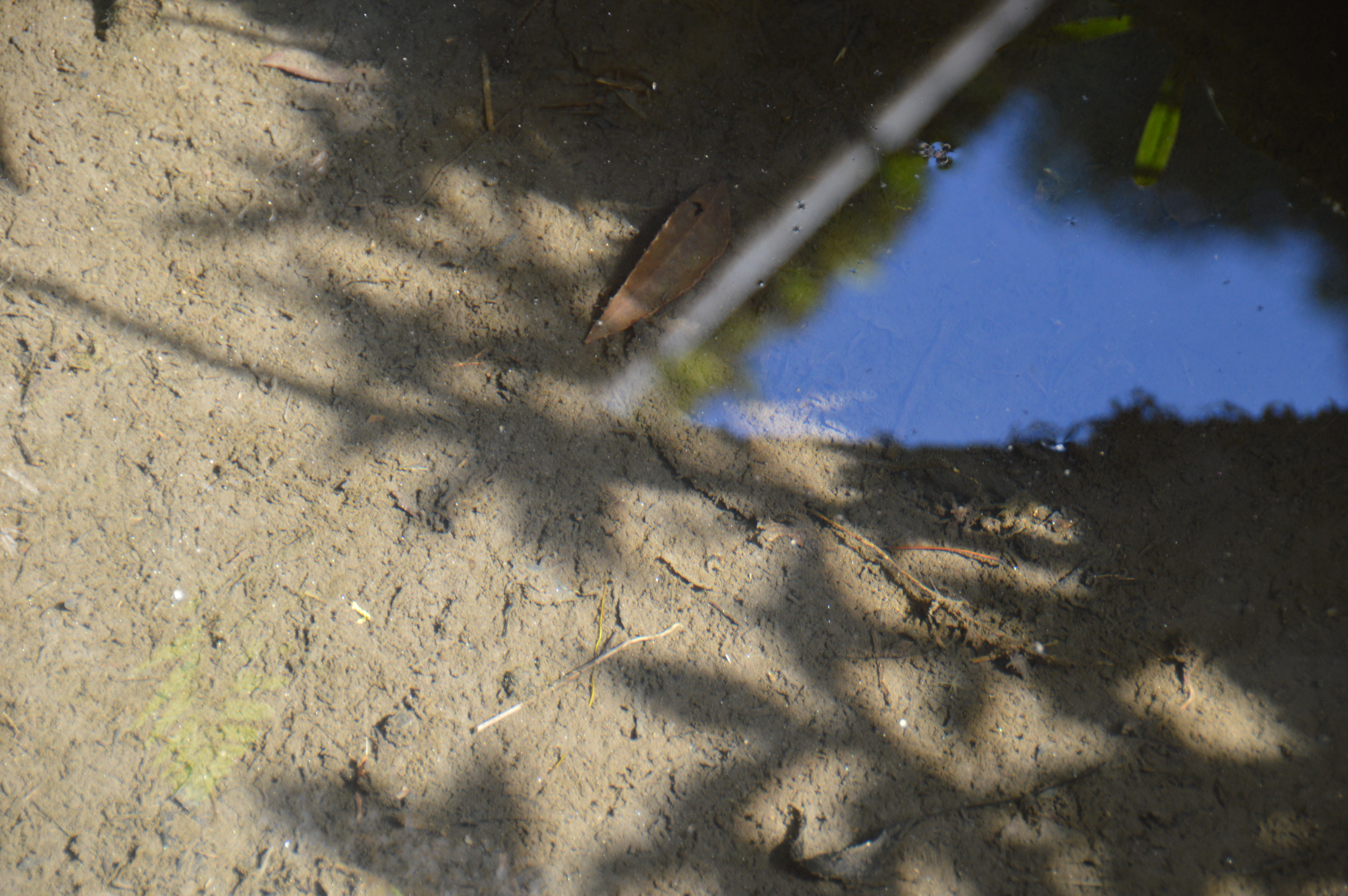
When I looked at this image I saw an earthy path with a puddle lying on it. The puddle is beautifully blue because it is reflecting the sky above. There’s an enticingly intricate pattern of shadows on the earth, cast by the sun shining on the leaves of some trees. At the edge of the puddle the reflected green of the leaves borders the sky.

Then, I thought, hold on, there’s something odd about this. That puddle is a really, really strange shape. It’s almost a triangle. Something’s not right here.

So, I looked more carefully, and a different interpretation leapt out at me.

This isn’t an earthy path, and that isn’t a puddle.

This is a photo of a pond. The water is so clear you can see right through to the muddy floor. The shadows are cast right through the invisible water and the reflected sky is on the surface of a pond, not a puddle lying on the earth.

When I realised this I was quite surprised. No matter how hard I look I still can’t see any water lying over the earth. The reflected sky, however, reveals the water. It makes it more obvious.

This got me thinking (well, if you’ve read a few of my posts, you’ll be familiar with how my images provoke my thoughts). It got me thinking, I wonder how often I don’t see reality because I don’t look carefully enough? I wonder if taking my time allows me to notice the peculiar, and how often it’s the peculiar, the strange, the thing that doesn’t fit, which is the key to the door of perception.

There are two lessons in that thought…..slow down, and be open to what’s different, what seems peculiar.

I guess a lot of the way I engage with the world is at a superficial, faster level, with an eye open for what’s familiar, what I know already…….that way I can quickly tell myself I know what I’m looking at, and move on. I’m sure those mental behaviours are valuable, but I do think they are over-used.

That’s my lesson to myself today –

Remember to slow down and savour.

and

Remember to look out for what is strange, rare, or peculiar.

Read Full Post »

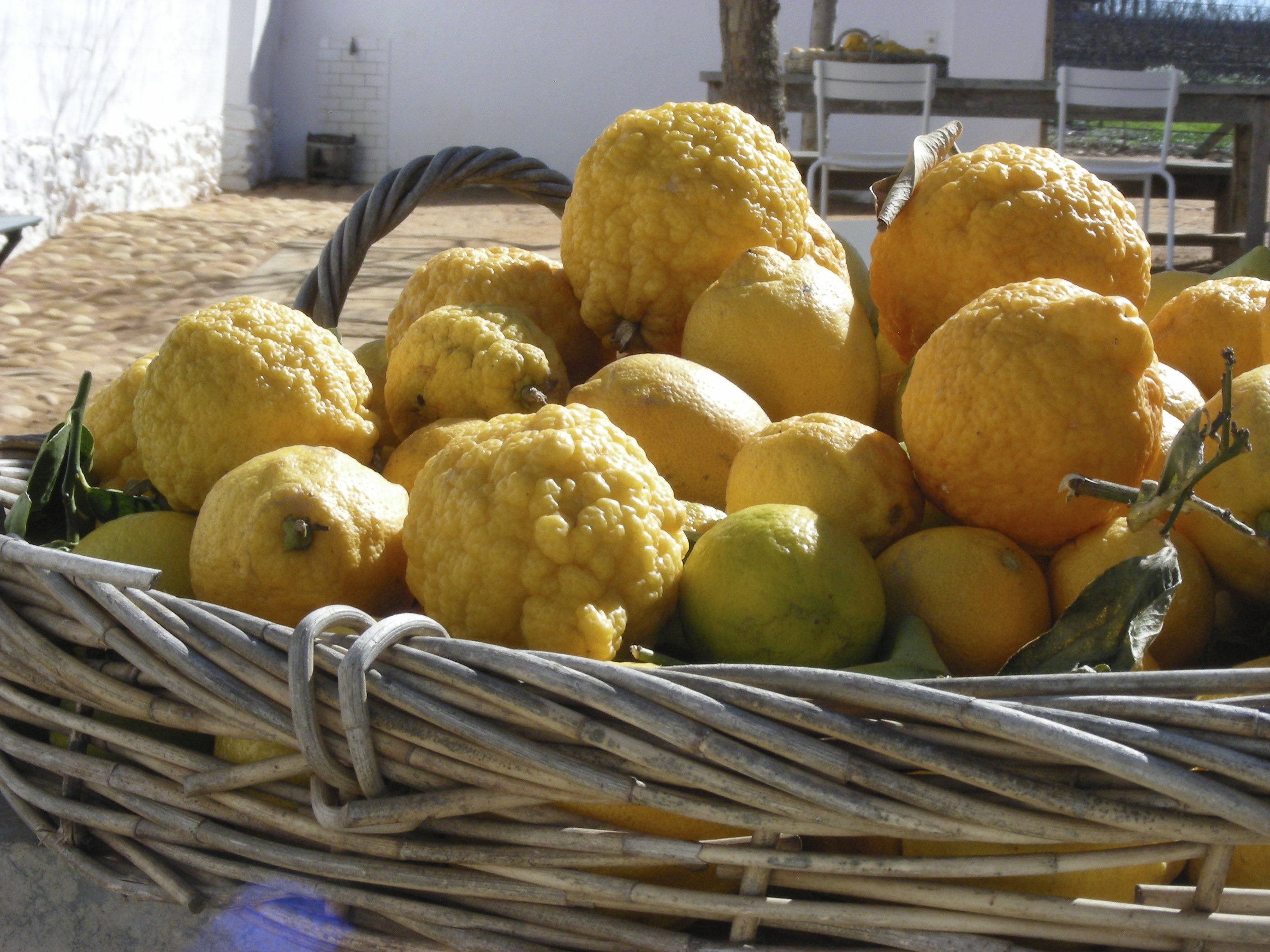
What do you think when you look at these lemons?

Do you think some of them look lumpy and ugly? Does it bother you that some of them are really small, and others really big?

I think they look beautiful. I love their diversity. The fact that some are very nobbly whilst others are smooth fascinates me. I love the shades of yellow and green in their skins. I adore seeing the small ones cradled amongst the large ones. I’m fascinated by their shapes.

In this one basket you can see that every single lemon is unique.

It’s harder to see uniqueness if the producer, or merchant, sets standards with a narrow range, stipulating limits on the degree of diversity he will accept.

The practice of setting “norms”, “standards” and narrow expectations tends to obscure uniqueness, but uniqueness is still the essence of reality.

Diversity reveals uniqueness to us.

It shows us that every single lemon, every single flower, every single creature, every single human being is unique. Each one comes to life at a particular time in a specific place. Each one has its own unique experiences as it grows….experiences differences in weather, climate, interaction with other forms of life.

I think we humans have obscured the fact of uniqueness in two ways.

Firstly, through “mass” anything….from mass production to mass consumption. A focus on the mass blinds us to uniqueness.

Secondly, we tend to confuse “individuality” with “uniqueness”.

We all want to be treated as individuals, don’t we? I know I do. But a focus on individuality carries a danger of fragmentation. It separates us. Mary Midgely, the English philosopher wrote about the phenomenon of “atomisation” very well. She warned of the dangers of failing to the see the whole when we examined something only in its parts, or its “atoms”. And, in particular, she objected to the neoliberal idea that there is no such thing as society, that the best way to structure a society is for everyone to pursue their own selfish interests in a free marketplace. Those ideas have destroyed communities.

I don’t want to be “just an example of a group”. I don’t want to be treated as “just a number”, as a statistic. I want to be seen, known and treated as an individual. How do I square that circle? By focusing on uniqueness.

Our individuality is often defined by listing our differences from others, our separateness from others.

But our uniqueness combines our differences with our commonalities.

How so?

“No man is an island”

I don’t exist separate from something called Nature. I don’t exist apart from something called The Earth. I don’t exist disconnected from other human beings. I don’t exist separate from other forms of Life.

It’s taken the universe 14 billion years to make YOU. It’s never created YOU before. It will never create YOU again.

“Be yourself, everyone else it taken”

When you meet someone, when you make a new friend, when you get together with your family, you tell your story. You tell the story of where and when you were born, of the events and experiences of your life and how they shaped you.

That story is unique.

Just like everybody else’s.

It’s the circumstances, the contexts, the environments, the specifics of time, place, and experience which create our uniqueness, and the uniqueness of our story.

As a doctor, nothing gave me greater delight than to have the privilege of hearing unique human stories every single day of my work.

I love diversity.

I love uniqueness.

I find it beautiful.


Read Full Post »

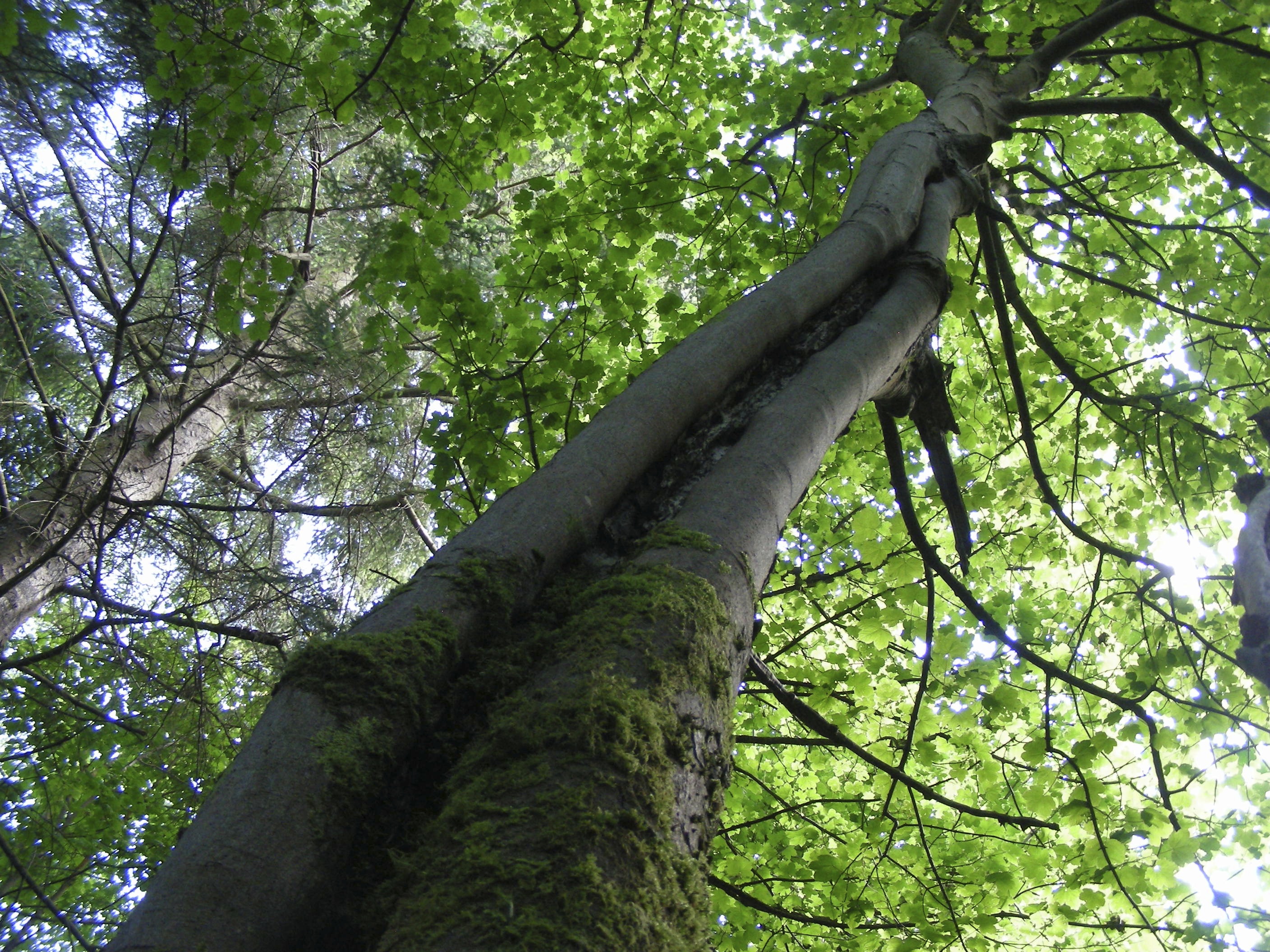
When I noticed this tree in the forest I thought it had a long deep groove running the whole length of its trunk. It was as if it folded in on itself. But then I looked more closely and I saw that a better explanation was that there were two trees growing together. You could trace two distinct trunks all the way up, each spreading its own branches high above the forest floor.

I was even more taken with this when I saw it as two entwined, two organisms, two life forms, living, surviving and growing together. It reminded me of the myths of the soul….that each of us is in search of the other half….each of us longing for our soul mate.

But maybe I’m wrong. Maybe this is one tree which has partially divided itself…..partially, but not completely, so that now it appears as almost two trees instead of one. But does it really matter? Do I care whether these are two trees living intimately together, or one tree manifesting two clearly visible aspects of itself?

The first idea stimulates my thoughts about how important relationships are. It makes me think about how I can’t fully understand anyone, or any thing, in exclusion from its relationships. We are all embedded in vast networks of other people, other creatures, plants, micro-organisms, elements and molecules. We all come into being through a process of emergence within those networks. We all survive and thrive only because of those relationships and networks.

The second idea stimulate my thoughts about our multiple selves. I’ve never been able to understand anyone, including myself, by reducing them to a single, solitary self. Miller Mair’s “Community of Self” really impressed me. It struck me as true. I know a distinct self as a doctor, which is quite different from, yet completely connected to, my self as a parent for example.

A homeopathic doctor in Paris once told me he saw every patient as like a diamond, with different facets glinting in the sunlight. Each facet represented an aspect of that person. That impressed me too.

Then, much later, I read the works of the French philosopher, Gilles Deleuze, and his focus on “a multiplicity of singularities” seemed to me to be saying the same thing, just in a different language.

We are all multiple.

We are all a complex of multiple, distinct, unique “singularities” – both within ourselves, and within our world.

We are all One.

Read Full Post »

You know I think that, especially in times like this, we think of life as being incredibly fragile. It’s easy to see it as transient and fleeting, subject to being extinguished in the blink of an eye.

All that might be true, but there is an opposite equal truth.

Life is an incredible power.

Maybe life is one of the most, or even, THE most powerful force in the universe.

At one time this planet which we all share had no life on it all. Now you can find it everywhere.

Some of the most successful life forms are micro-organisms. They have spread into pretty much every single ecological niche you can think of. You find them in volcanoes. You find them on the deep sea bed. You find them under metres of ice.

There’s even a theory that single celled creatures like bacteria got together to create multicellular organisms – including, eventually human beings. Did you know that there perhaps ten times as many bacteria in your body than there are “your” own cells? Each of us is actually a symbiotic community of cells.

Astonishing (and a bit creepy too somehow!)

There are regions of the world where there is a huge diversity of plants. The Fynbos in South Africa is one of those. Periodically fire burns through that region destroying all the flowers, but the heat from the fire stimulates the germination of seeds in the soil which then spring up as flowers. Some of the species of flower which appear haven’t been seen for decades. Some were thought to have become extinct. But no, they come back to life (or maybe the were never dead?)

Albizia Julibrissin, the Persian Silk tree, taken to London in 1793 was thought to have disappeared but after the German bombing of London in 1940 its seeds germinated and it began to grow again – 147 years later!

I’m sure we’ve all lots of experiences of flowers popping up in the most unlikely places!

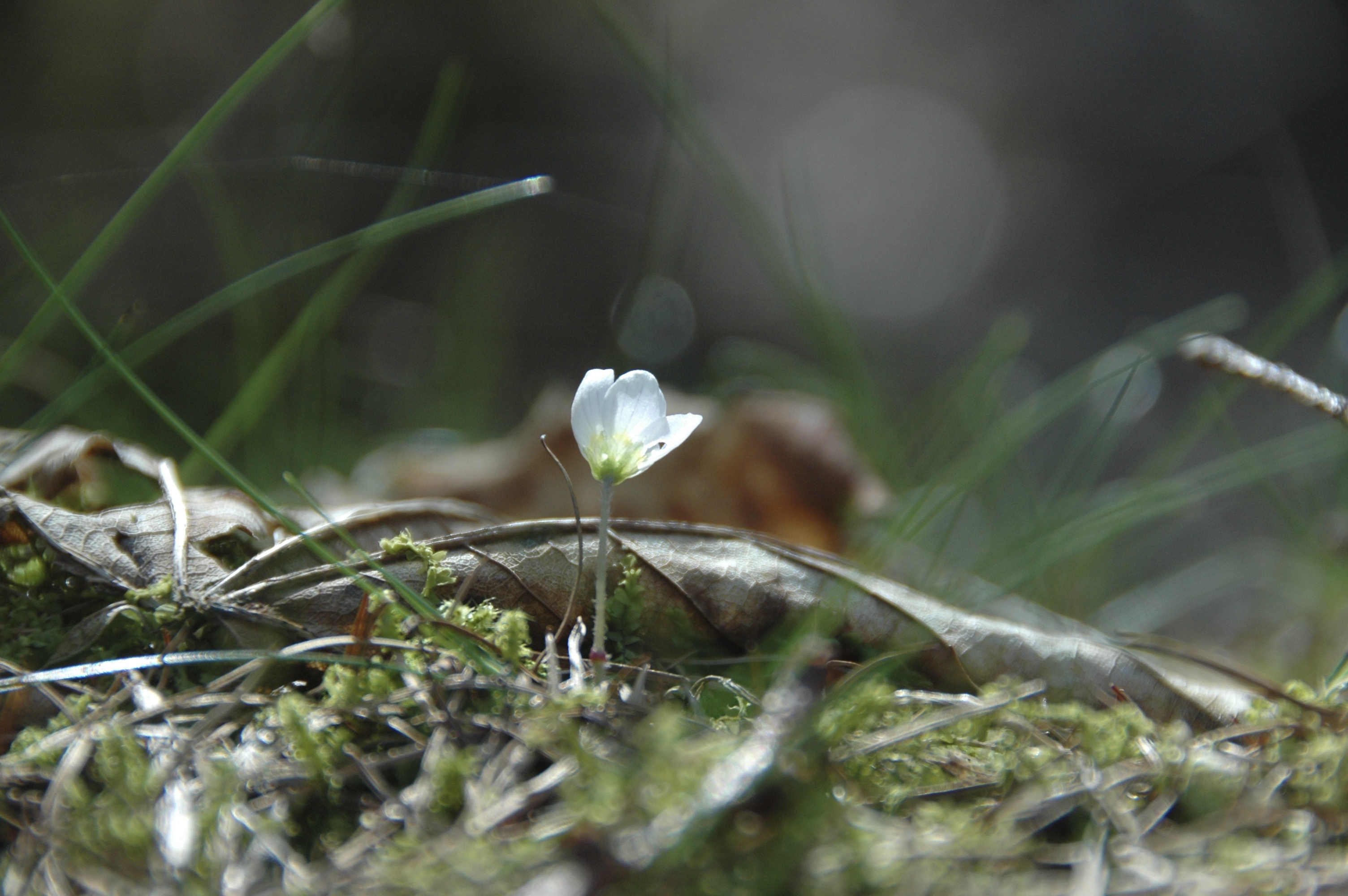
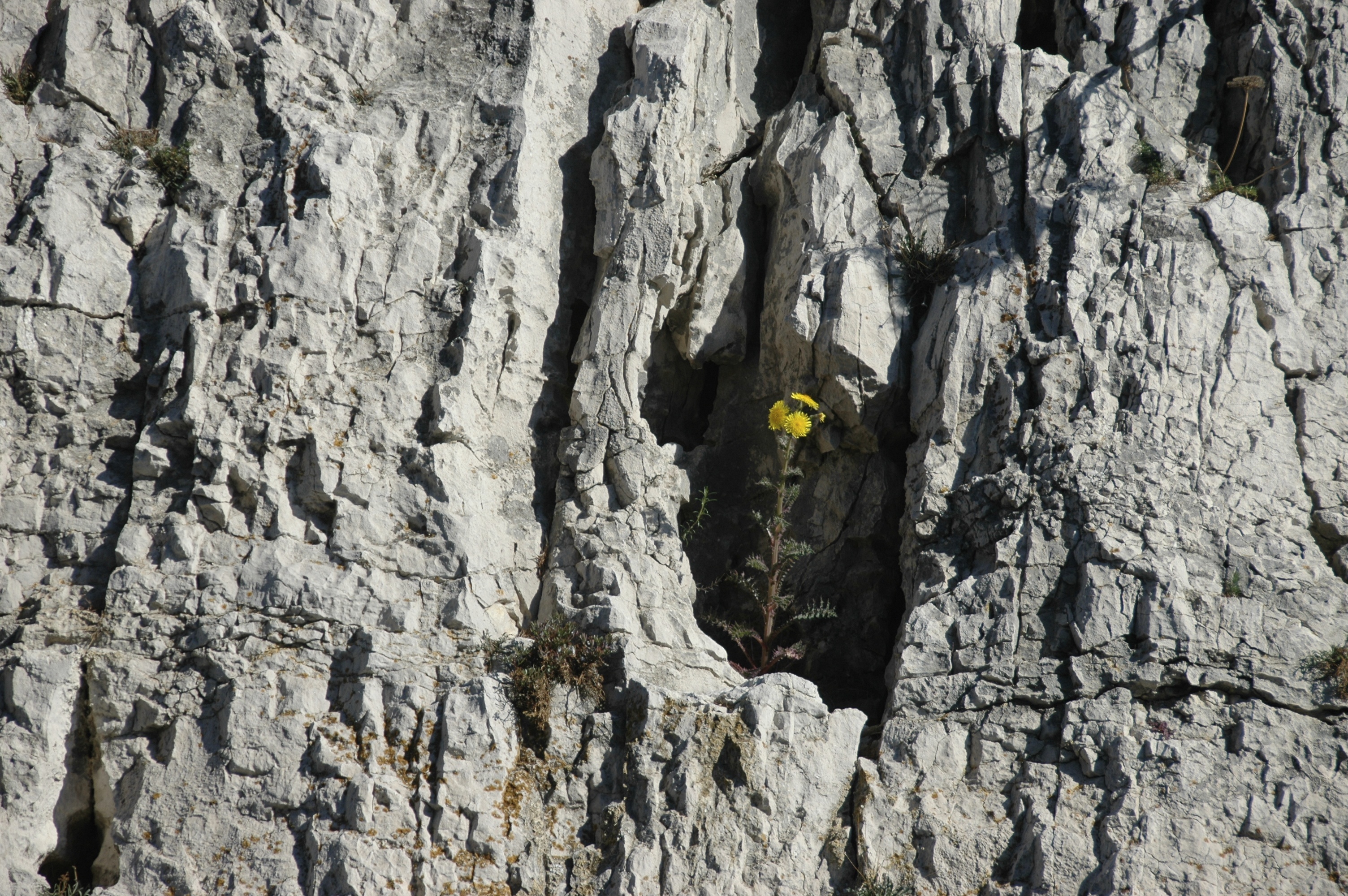
The photo I’ve shared at the beginning of this post, of the little flower appearing in the forest floor, reminded me of all that.

Yes, life is delicate and fragile, but it is also THE most incredible force in the universe. We would do well to remember that.

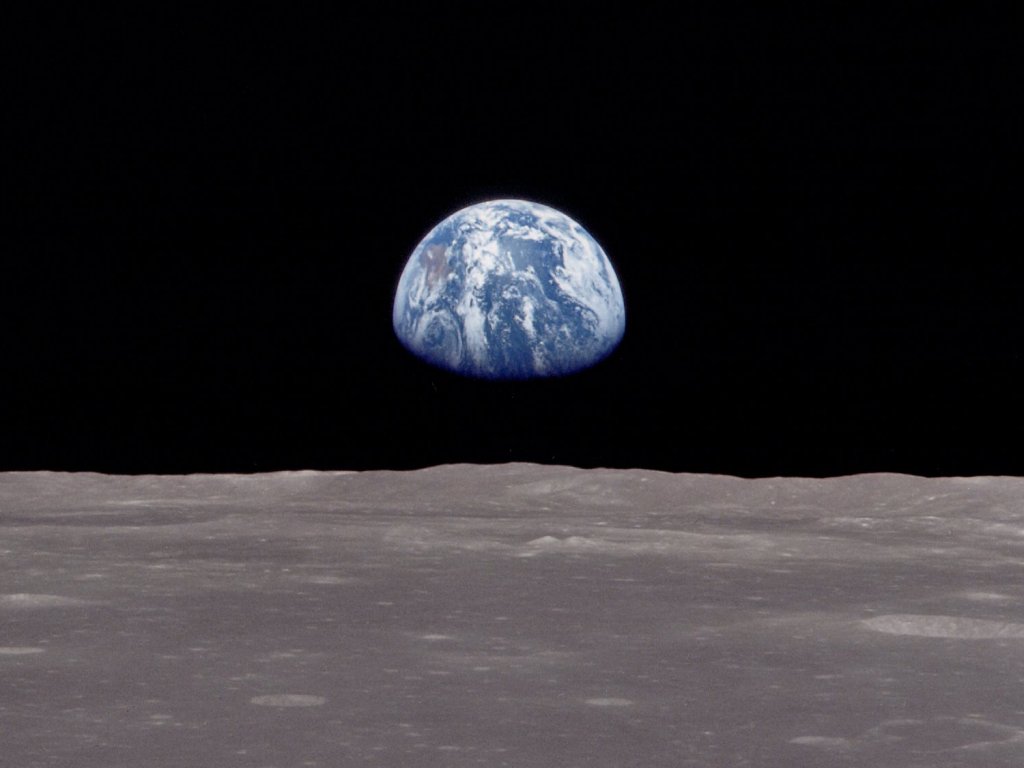
I think that’s partly why I don’t like all the war language which is being used during this pandemic. We are not at war with corona virus. We are, I hope, learning how to live with it. There are already scientists telling us these pandemics arise because we haven’t learned to live with all the life forms on this Earth, that our destruction of habitats and environments, our pollution and urbanisation, are the root causes of the emergence of this particular pandemic and will remain the cause of the future ones unless we learn to respect Life and to learn to live together, learn to adapt to life together on this little blue planet.

Read Full Post »

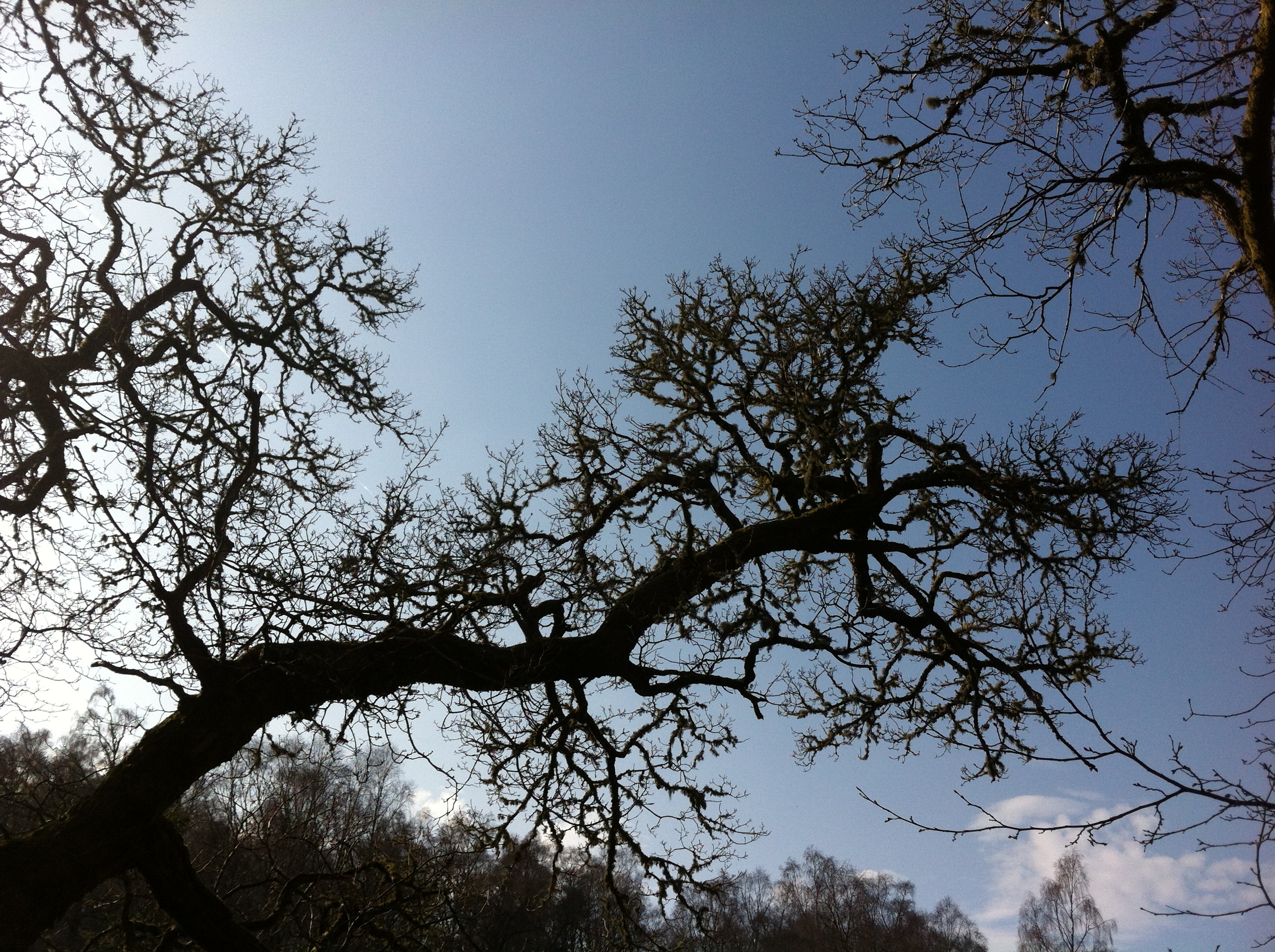
This is probably one of the most familiar shapes you know. We humans evolved from a life in the trees and both individual trees and whole forests hold a lot of meaning for us. In fact, you could probably argue that these are such familiar forms that we pass them by, almost, or even completely, un-noticed.

Trees are the lungs of the Earth. They capture the carbon dioxide in the air, extract the carbon, and push oxygen out into the atmosphere. See this shape? Inside your lungs you can see pretty much the same pattern. The difference is that trees produce individual leaves along their smaller branches, but our lungs end in what look like little bunches of grapes. Both these structures are designed to present the maximum surface area to the air. This particular form maximises exchange. In the trees it maximises their ability to capture carbon dioxide and sunlight, and to send out oxygen. In humans it maximises our ability to get oxygen out of the air and into our blood, and to get carbon dioxide out of the blood and into the air. Nice symmetry, huh?

We use this same tree-like structure to organise our knowledge too. Think of genealogy, using what we even call a “family tree”. Or of any system of classification, which breaks the whole field down into ever bifurcating, diverging parts. You’ll have used that too when you make an outline to help you plan a document, each chapter divided into sections and each section divided into subsections and so on…

But there is a limitation to this model. It is based on separation. At every stage there are more and more divisions. By the time you get out onto the twig at the end of a branch it seems to be connected only by traveling back along the twig, branch and trunk, retracing the divisions to bring the flow together – just like you see as the many streams and little rivers flow together towards an estuary.

This separation is true. It’s a fundamental characteristic of reality. But there’s another form just as fundamental, which maybe we neglect.

The web of nodes and links.

In networks we see a different way of connecting. The human brain has more specialised cells (neurones) than anyone can count….it’s billions – can you imagine what billions of anything look like? It’s pretty hard. But wait, it gets even more mind boggling than that. Every single one of these neurones establishes direct connections (synapses) with thousands of others. Thousands. That means the total number of connections in the brain is in the trillions…..nope, I can’t imagine what that looks like either!

There are networks everywhere in Nature. From inside our bodies and brains, to local ecosystems, to the entire “biosphere” of planet Earth.

I’m fascinated by networks and I’ve written a few posts which gather together some of the most influential books I’ve read on this subject. Have a look at this, at this, or this.

The thing is the tree-model isn’t the only one which helps us to understand Life, the network model is needed too. I find that a lot. It’s not a matter of “either/or” it’s a matter of “and”.

That’s become my mantra – “And not Or”.

It helps me to focus on the connections, to understand what holds opposites together, and to keep returning to the perspective of the whole…..whether that is a whole, unique patient, or a whole, unique Earth.

Read Full Post »

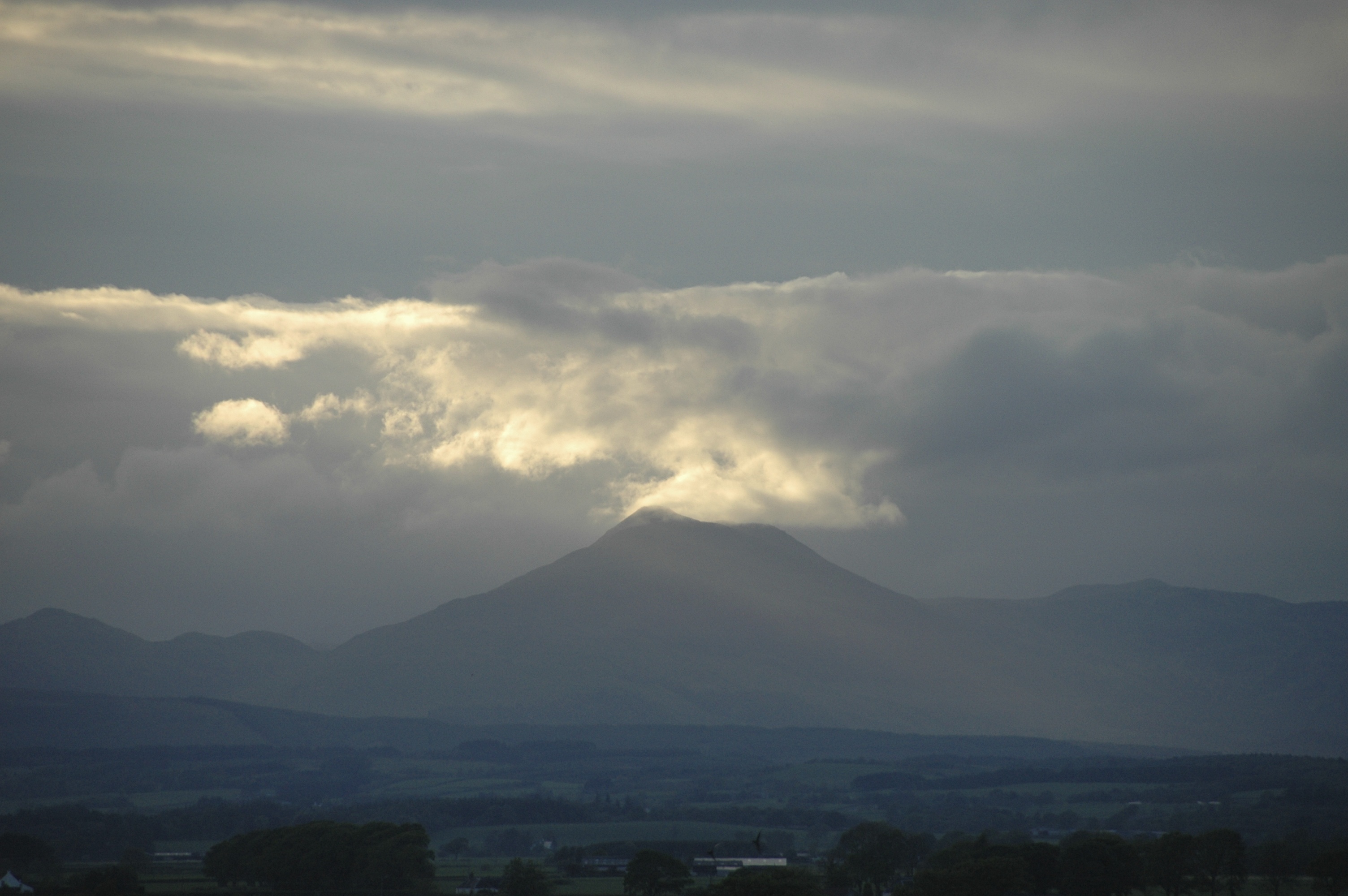
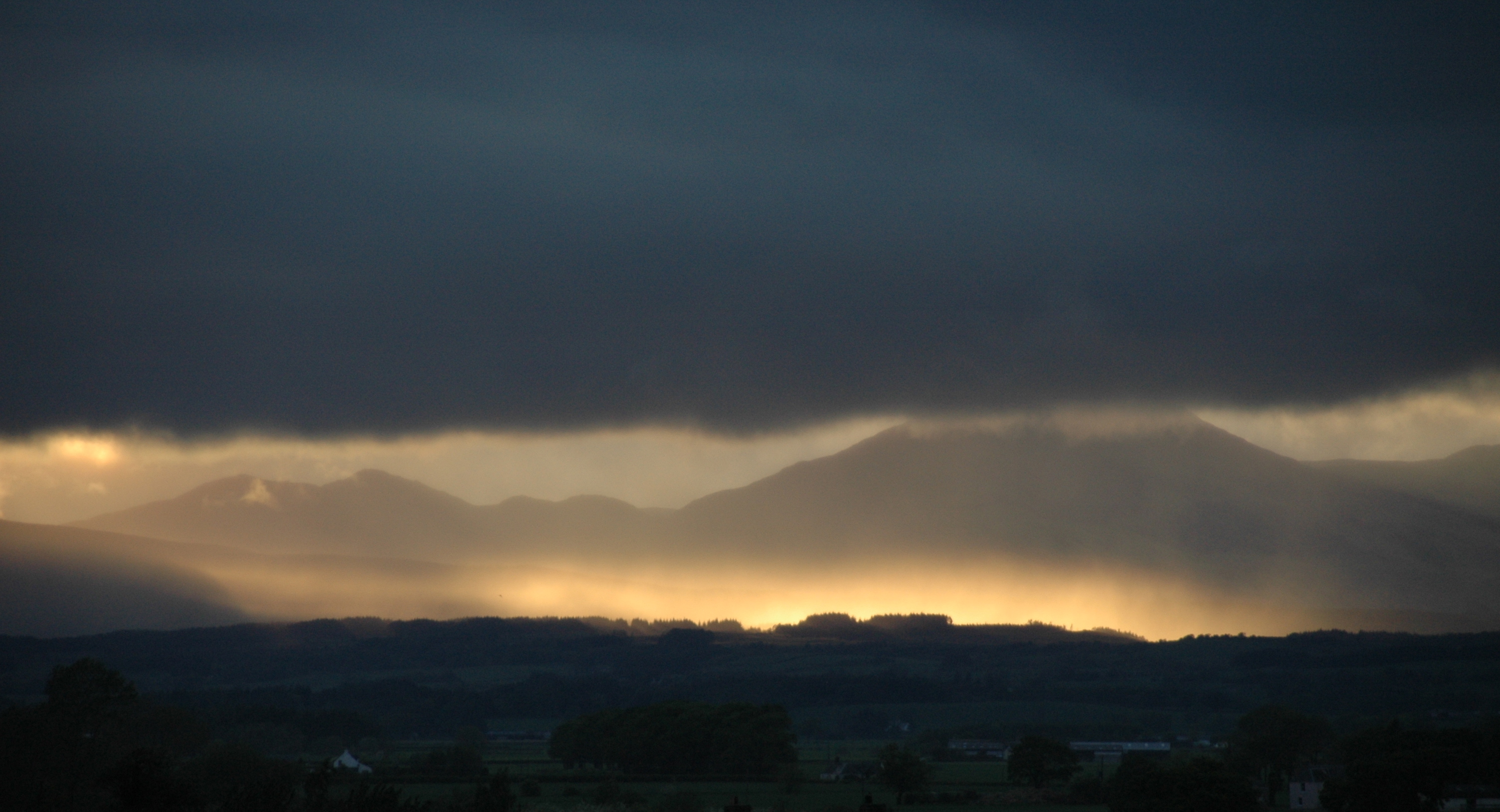
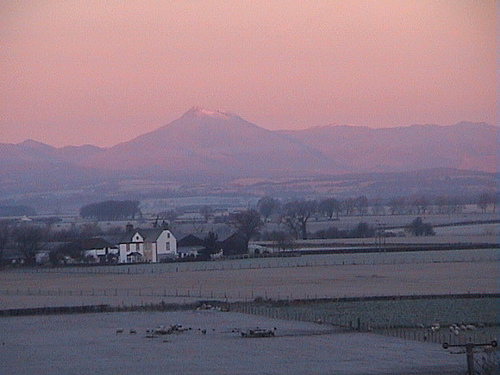
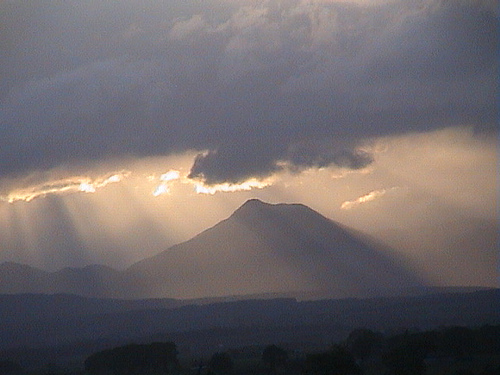
When I lived in Cambusbarron in Scotland I looked out of the window each day and saw Ben Ledi. I quickly realised that this mountain looked different every day, so I started taking photos of it. I took a LOT of photos.

I was constantly amazed how my usual experience was not of looking at the same scene every day, but seeing a different scene.

I know, maybe you are thinking, but it’s the same mountain. It’s just the clouds and the light which is changing….

But the mountain doesn’t exist by itself. It exists in a place and a time. I can’t see the mountain disconnected from the world in which it exists. That wouldn’t be real, would it?

I think the world is like this.

Absolutely everything is connected. Absolutely everything exists in webs of contexts and environments.

It changes moment by moment. Everything we see, hear, smell, touch and taste changes constantly as the streams of molecules, energies and information flow through, influencing, creating, disrupting.

So, today is always new.

This moment is always new.

We humans are good at doing something called “abstracting”. We isolate a part of what we are experiencing and consider it as if it is separate, disconnected, un-attached. We call these abstractions “things” or “objects”. Or we call them “outcomes” or “results”.

But we have to return our abstractions to reality eventually and then we seem them as less isolated, less fixed, less separate than we thought.

I never felt I could understand a patient by isolating their disease from their life. I never felt I could understand someone’s illness if I considered only the changes in certain cells, organs or tissues.

When we tell our stories, part of what we are doing is describing some connections…..some sequences, some consequences. We describe events, experiences and emotions, and together they combine to make every day, every moment, every place and every relationship, unique.

What did you notice today?

Was there something familiar which you experienced differently today?

Read Full Post »

« Newer Posts - Older Posts »