Feeds:
Posts
Comments

Archive for the ‘from the consulting room’ Category

I see a lot of patients with the diagnosis of “Chronic Fatigue Syndrome” or “ME”. I probably see a lot of them because most the health service doesn’t quite know what to do with them and, like most patients who come to Glasgow Homeopathic Hospital, everything else they’ve been prescribed hasn’t worked for them.

However, it’s a hugely contentious illness. Some people don’t even believe it exists. Others dismiss it as a psychological problem at best and a frank psychiatric problem at worst. Why is that? Well, the key reason is there isn’t a test for it. The biomedical model of illness recognises problems with objective, measurable “abnormalities” – preferably in some tissue somewhere. It’s actually a rather old-fashioned way of thinking about illness – as if it’s an entity which can be observed, measured, then expelled or conquered; an entity which is some kind of alien presence in the human body. Modern, complexity science has shown us that illness is about maladaptation or malfunction somewhere within the complex, and that measurable, objective pathologies are more often the results not the causes of illness. Beware the doctor who names your illness with the word “syndrome” attached – chronic fatigue syndrome, irritable bowel syndrome, irritable bladder syndrome, premenstrual syndrome, idiopathic urticarial syndrome – if it’s called a syndrome, you can be pretty sure medical science doesn’t really understand it.

If there’s nothing measurable, the physicalists tend to prefer to conclude “there’s nothing wrong”. But when a person is incapacitated by pain, fatigue and other symptoms there is certainly something wrong! To assume that must be a mental problem is very wrong-headed and often ostracises and stigmatises the sufferer.

For those who can’t quite manage to believe the stories patients tell, there is some hope. Scientists claim to have identified seven genetic types of ME. Each type (genetic pattern) seems to be related to a particular pattern of ME symptoms –

Type one had the worst anxiety and depression levels, along with poor sleep and high pain levels. Type two was characterised by significant post-exercise fatigue and joint and muscle pains, while type three was the mildest form of the disease. The research identified type four as linked to moderate levels of body pain and sleep problems, with type five having stomach complaints and the most marked muscle weakness. Type six was specifically connected to fatigue, and type seven had the most severe symptoms including pain, swollen glands and headaches. Type four and type six were the most common forms of the condition.

I think it’s a shame that “tests” are considered more reliable indicators of illness than patients’ narratives, but I do think if these patterns are confirmed, and IF (big if here), that can be turned into a test, then maybe some patients with one of these syndromes will at last be taken seriously.

However, the fact that the researchers have identified six different types confirms a suspicion I have. Most “syndromes” are at best a mixed bag, and, at worst, a kind of dumping ground for a wide range of disorders which happen to share some common features. I don’t think we’ll ever find a “thing” or an “entity” called “chronic fatigue syndrome”. However, we might find a whole set of disorders which currently sit under the same label.

One paper I read a while back about disorders like chronic fatigue, fibromyalgia and irritable bowel syndrome demonstrated the amount of overlap which existed between these illnesses and posited the idea that underlying all these disorders is a more fundamental problem – a dysfunction of the complex adaptive system. This is the explanation I understand best – these disorders seem to be disorders of the whole organism. They aren’t disorders of bits of people, they are disorders of the way the organism functions as a whole complex system.

By coincidence, today, the Guardian published a first person account of chronic fatigue syndrome. Have a read. It’s a clearly written account and it highlights many of the common things patients say about their illness. I know some people will read that account and dismiss it in a way they would not dismiss a patient’s account of cancer. And that’s just one of the problems these patients have to face. In the hierarchy of diseases, ones without abnormal test results rank pretty low! That strikes me as neither rational, nor reasonable.
Read Full Post »

Today’s BMJ carries three articles about the placebo effect.

Firstly, in an Editorial by Spiegel and Harrington, they discuss a paper published by Ted Kaptchuk and colleagues where patients with Irritable Bowel Syndrome were randomised into three groups – those who were simply observed, those who were given sham acupuncture, and those who were given sham acupuncture with an enhanced doctor-patient relationship. 3% of the first group got good improvements, 20% of the procedure alone group an 37% of the “augmented intervention group”. As the authors point out,

the doctor-patient relationship in the sham acupuncture only group sounds like a caricature of procedure based medicine practised under strict time limitations:the practitioners explained that this was “a scientific study” and they had been instructed not to talk about it with patients.

and

Clearly the group with the greatest relief of symptoms was the one that received not only sham acupuncture but 45 minutes of quality contact with a clinician. This contact involved questions about the patient’s symptoms and beliefs about them, a “warm, friendly manner,” empathy, and communication of confidence and positive expectations

This is a powerful argument for practising medicine with care and attention. As the authors say –

Perhaps the ratcheting down of the time that doctors spend with patients and our modern overemphasis on drugs and procedures is “penny wise and pound foolish.” Patients might respond better to real as well as placebo interventions if they were associated with a good doctor-patient relationship. Although the increased time and concern may enhance the effects of the placebo, it also changes the context of associations with the treatment—the doctor may enhance the effect of the sham needle, but the needle also becomes a reminder of the enriched relationship.

Here’s their “take home message”

We treat patients in a social and psychophysiological context that can either improve or, alas, worsen outcome. The meanings and expectations created by the interactions of doctors and patients matter physically, not just subjectively.

Human beings cannot be reduced to mere physical components. We are thinking, feeling, meaning-seeking creatures. Health care should be founded on that understanding.

Then, in a reflective article, Pittrof and Rubenstein, consider the ethics of using placebo. They make the point that randomised clinical trials of drugs vs placebo show real effects in the placebo groups –

Published evidence only applies to patients if they have similar characteristics to patients in the study population. Even if this is the case, their response can rarely be accurately predicted. This is one of the problems with evidence based medicine: often its application to the individual is under less than ideal conditions. However, where the study shows that placebo results in a response, when compared with baseline, then that is precisely what the study shows. It is possible to state with confidence that, were the conditions of treatment to be replicated as in the study, the patient would have a statistical likelihood of responding to the placebo, just as we can say that the patient is statistically likely to respond to the active intervention. There is thus a response whose cause is debatable but the response is genuine. On strictly scientific grounds no deception would be involved in referring to this response as an evidence base.

They also point out that full disclosure of information to patients should include a discussion of potential harms –

For example, when advising a patient about treatment for mild to moderate depression clinicians might explain that use of SSRIs may be associated with a higher risk of suicide attempts and that about 80% of the benefits of SSRIs might be attributable to a placebo effect.

and go on to say

we have seen many risk averse patients who would happily accept reduced benefits for much reduced risks.

In other words, if you were told that a treatment had a chance of helping but hardly any chance of harming you, would you choose it first over a treatment that had a greater chance of doing both – helping and harming?

Read Full Post »

The Royal College of Nursing in the UK has published shocking results of a survey of its members. They asked nurses about their experience of patients being treated with dignity in hospitals.

In total, 81% of those quizzed said they sometimes or always left their workplace feeling distressed or upset because they had not been able to give patients the kind of dignified care that they should. And 86% said dignity should be a higher priority.

This is quite stunning. Over eighty per cent of nurses claiming this means that not only are patients routinely NOT treated with dignity while they are in hospital but that most nurses are aware that this is a problem. One nurse said this –

“Patients seem to be becoming numbers not people. I am having to fight against what the system wants in order to provide dignified care to my patients.”

There is something seriously wrong at the heart of the NHS – staff need to speak up and express their concerns loudly and clearly. A health service is for the treatment of people – people at their most vulnerable. Its’ priorities should be PEOPLE – patients and staff – not those other artificially created targets and priorities, set so often by people who have no involvement in day to day care of patients.

Read Full Post »

There’s an area of the brain known as the striatum. This particular area is affected by certain diseases (Parkinsons Disease for example). One of the odd things that happens sometimes when patients are treated with drugs for Parkinsons Disease, is that they can develop strange behaviours in relation to money – compulsive gambling for example.

Some recent studies using fMRI scans, have shown how this area of the brain (the striatum) becomes active when people received either monetary or social rewards

By directly contrasting the brain activities of the same subjects in relation to the delivery of social and monetary rewards, our results clearly show that social approval shares the same neural basis as monetary rewards, thus providing strong support for the idea of a ‘common neural currency’ of reward,” concluded the researchers.

Our findings indicate that the social reward of a good reputation in the eyes of others is processed in an anatomically and functionally similar manner to monetary rewards

The researchers point out that social status affects well-being, morbidity and even survival. They cite an old study conducted on civil servants in England which showed that the lower the employee in the hierarchy, the more likely he or she would develop heart disease.

How others see us, and how that results in our status within society is linked to our neuronal responses to rewards and punishments so intimately, and our nervous system is so linked to our immune system, and our endocrine (hormone) system, that it can actually be a life or death issue.

This shows why it’s important to understand a person, and a person within his or her social networks if we really want to promote health and deal with disease. Simply lowering blood pressure, or cholesterol levels with drugs, is just not enough.

Read Full Post »

TED has a great short video of a scientist called Christopher deCharms explaining some of the possibilities of functional brain scans – “fMRI”s.

This is a fascinating technology – looks like a brain scan but in colour. The active areas of the brain “light up” in bright colours which allows us to map functions, including thoughts and feelings. This is letting us develop new levels of understanding about how the brain works.

I’ve seen this sort of technology explained before but what especially excited me about this short talk is the demonstration of its use as a type of biofeedback. You will see an example of a patient with chronic pain interacting with the scan to actually increase the release of the brain’s natural painkillers (endorphins) and reduce his pain.

The potential, only hinted at here, is of technologies which will allow us to access natural ways of dealing with our own illnesses.

Read Full Post »

I’m reading Clay Shirky’s “Here Comes Everybody” (and, oh, how I’m enjoying it!). Quite early in the book he says this –

….in the words of the physicist Philip Anderson, that “more is different”. Writing in Science magazine in 1972, Anderson noted that aggregations of anything from atoms to people exhibit complex behaviour that cannot be predicted by observing the component parts. Chemistry isn’t just applied physics – you cannot understand all the properties of water from studying its constituent atoms in isolation.

How true! And imagine how that applies even more so to the complexity of biological organisms. You really cannot understand a human being by only studying his or her component parts. One day, health care will catch up with that simple insight!

Read Full Post »

The biomedical approach to health and illness, not only puts lesions, or pathological changes in the body’s tissues or symptoms, at the heart of diagnosis and treatment. The idea is that disease is a physical phenomenon, with changes which can observed and/or measured. However, what drives patients to consult doctors is frequently not the sudden appearance of a lesion which can be seen. Rather, it’s often the experience of a symptom. Some of the commonest symptoms include pain, weakness and dizziness.

Researchers who have studied patients with common symptoms have found that in a large proportion of cases, there are no objective findings which might explain the presence of the symptoms. This may be dismissed as “in yer heid”, or “nothing wrong” but both of these judgements are unfair and inaccurate. The occurrence of symptoms in the absence of detectable tissue changes has been labelled “Medically Unexplained Symptoms” (MUS) This is a very, very common situation. Different studies have shown that a lack of a medical explanation may occur in 30% of all consultations at a Primary Care level, and in up to 85% of those with particular, common symptoms.

This is really a big problem.

  1. Firstly, all treatments, surgical or pharmacological, are directed against lesions – measurable, pathological changes in tissues or systems. So, in the absence of such pathology, modern medicine’s tools are hopelessly inadequate.
  2. Secondly, non-surgical and non-pharmacological treatments are not well developed, tested or proven, so patients in this situation often end up with operations or drugs because no other solutions are known, and these interventions all carry risks of harm, so patients find that not only are they not helped, but they end up worse off because of side-effects and other iatrogenic harms.
  3. Thirdly, patients in such a predicament often find their suffering dismissed as either psychological and sent for psychiatric treatment, or, worse, find that they nobody actually believes that they are experiencing the suffering they are complaining of.
  4. Fourthly, (and this one is hardly ever mentioned), the existence of “MUS” suggests that symptoms are not the reliable indicators of disease which doctors assume them to be. This leads to the problem of patients whose symptoms are ascribed wrongly to the discovery of pathology. Just because some inflammation is found, or a growth is found, it does not mean that this pathology is the whole cause of the symptoms which the patient is experiencing. In fact, it does not even mean that the pathology is the partial cause of the symptoms. This can lead to the prescription of drugs or the carrying out of surgical procedures which make absolutely no impact on the patient’s suffering.

The concept of “Complex Adaptive Systems” gives us another whole way of understanding such diverse and difficult symptoms – the problem need not lie in a body tissue or in the mind – the problem can lie in maladaptation or malfunctioning of the system as a whole. Such a concept leads to a demand for holistic interventions, because no simple, single-explanation, solutions can work.

Read Full Post »

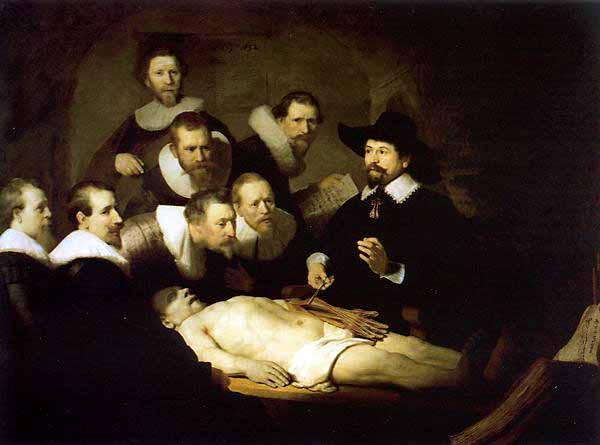
The rationale for what is known as “orthodox”, “Western”, or, more accurately, “biomedical” medicine, is very materialistic. It’s focussed on the physical, and has been since the morbid anatomists of the 15th and 17th century Parisian hospitals began conducting post-mortem dissections and claimed that disease was what you could see, touch, and measure. This reduction of human suffering to physical components was a new phenomenon which was dramatically captured by Rembrandt in The Anatomy Lesson of Dr Tulp.

This combined with Bichat‘s concept of “the lesion” focussed the attention of doctors and scientists on smaller and smaller parts of the human body. The development of the microscope knocked the morbid anatomists off their dominant chairs by showing that disease was not just what you could see and measure with your own eyes, but was actually a disturbance of, and within, cells. Further technological developments allowed smaller and smaller components of human beings to be studied and measured, and this has continued up to the present day, to the extent that “diagnosis” has become the art of interpreting machine-generated measurements of body components and even an examination of DNA.

But human beings are complex adaptive systems, and the more complex a system, the less you can understand it by only examining its parts. Pain cannot be understood by a simple consideration of neural pathways, cell receptors and short chain proteins. Depression cannot be understood by a simple measurement of serotonin levels. And health cannot be understood by adding up a whole list of biological metrics.

As Mary Midgely said,

One cannot claim to know somebody merely because one has collected a pile of printed information about them.

However, most of our interventions are devised within this materialistic and reductionist framework.
Most surgical interventions are intended to remove diseased, or “abnormal” tissue. Most non-surgical interventions involve the use of drugs – manufactured molecules intended to interact with molecules within the human body.

In many cases, this approach pays off. In managing acute, life-threatening disease it is very effective. You are less likely to die in the middle of heart attack, an asthmatic attack or an epileptic fit now than you would have been fifty years ago. The problem lies with chronic illness, where this approach is not nearly so effective. The chances of having heart disease, asthma or epilepsy is greater now than it was fifty years ago, and there are still no cures. There are no known treatments which will cure these chronic problems.

Maybe this is partly because the more chronic the problem, the more unique, the more personal, the experience and its manifestation. Maybe we need a different approach because whole people cannot be understood as mere sums of their parts.

We need to put molecules and materialism into their most useful contexts and not assume that they present the only truth.

We need to design health care around whole people, not bits of them. Let’s have Person Sized Medicine.

Read Full Post »

We all love simple solutions. Human beings have such strong urges to understand. We are driven to try and make sense of our experiences and our lives. It could be argued that this drive is a significant factor in human survival and development. It’s a good thing to try to understand. What’s not appreciated so much is the value of doubt. Whilst it’s good to understand, it’s the belief that we never completely understand anything that drives our continual growth. Without doubt, thought stops, reflection ceases and learning hits the buffers.

I’m not arguing for obfuscation. I do like clarity. But the reality is that we are complex creatures living complex lives. Health and illness cannot be reduced to simple formulae or single causal factors. It’s for these reasons that I find myself so impressed with the recent work from the Glasgow Centre for Population Health which has just published an interesting piece of research.

They have studied 20 European regions to make comparisons with the experience of the West of Scotland. The regions they studied were similar to the West of Scotland in terms of de-industrialisation, deprivation and poverty. What’s happened over the course of the second half of the twentieth century is that the West of Scotland has fallen behind all the other regions. Life expectancy figures and a whole bank of illness and health measures have shown all the other regions are improving faster than the West of Scotland.

There’s a common and fairly simplistic view that deprivation is the main cause of ill health, but deprivation cannot explain the differences between the West of Scotland and other similar regions. That’s the somewhat startling conclusion of this study. If deprivation cannot explain it, then what is the explanation? I’m impressed that the Centre for Population Studies has explored a number of possible explanations but hasn’t found any of them to be satisfactory. However, complex causes such as income inequality (it’s been repeatedly shown that the greater the income inequality within a community, the poorer the health experience at any discrete level of wealth), migration and the speed of change (de-industrialisation), are probably all significant, whilst, simple explanations such as absolute deprivation scores, cigarette and alcohol consumption, and so on, cannot explain the differences.

Health is a complex phenomenon and this kind of adult, intelligent research is just what we need.

Read Full Post »

One of my patients today told me a terrible story of her experience undergoing surgery. I’m not going to recount any of that here of course, but she made such a good point to me I thought I’d share it with you. Maybe you agree?

She said, whenever a drug is prescribed, even if the doctor doesn’t go into a lot of detail about the possible benefits and potential harms, when you pick up the medicine from the pharmacy, the packaging contains a pretty comprehensive description of the product, including a list of the known, potential harms. This, she said, allows a person to make a fairly informed choice about whether or not to take the drug. However, there don’t seem to be any such leaflets available about surgical procedures.

Why not? she asked. There are “generic” potential harms – anaesthetic risks, infection risks and so on – which could easily be desribed, and then, surely there are known “specific” risks related to the intended procedure. Couldn’t the Royal College of Surgeons organise its members to develop comprehensive written information to be given to any patient before an intended procedure? Wouldn’t that allow a more properly informed consent?

I think this is SUCH a good idea. I’m not aware that such a thing exists at the moment. If it does, could you point me to it?

Thank you

Read Full Post »

« Newer Posts - Older Posts »