
There is no out there which can be known in any way other than from in here
Posted in from the dark room, from the living room, life, perception, personal growth, philosophy, photography on August 12, 2014| 6 Comments »
Posted in from the dark room, from the living room, life, perception, personal growth, photography on August 11, 2014| Leave a Comment »
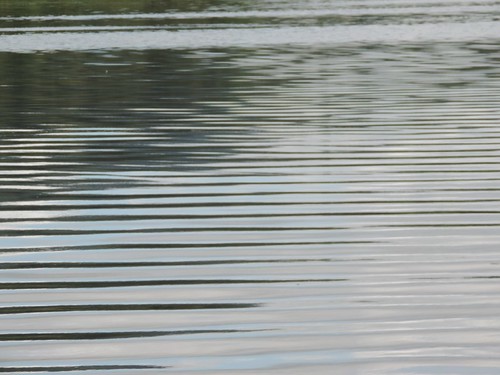
Ripples stimulate my thinking about influences – how every action we take has “unintended consequences”; how the future can never be predicted because emergence is a characteristic of all Life; and how the past appears again in the present as a co-creator of what we experience today.
Posted in from the dark room, from the living room, life, perception, personal growth, photography, psychology on August 10, 2014| Leave a Comment »
In the A to Z of Becoming, one of the verbs beginning with an “F” is to feel.
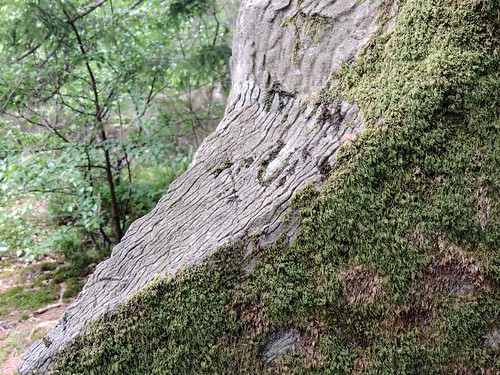
To feel something means at least two distinct yet inextricably connected things in the English language.
Firstly, it refers to the sense of touch. Look at the moss covered rock in this photo. When I was actually in the forest and encountered this, I found it impossible not to touch it. Some surfaces, some textures seem to beg to touched and feeling them is both an experience of pleasure, and a voyage of discovery. Our bodily sense of touch allows us to feel things in this way. We can feel objects and we can feel the sensations which arise within our own bodies. For example we can feel hot or cold, heavy or light, stiff or supple.
Secondly, we use feel as a verb related to emotions. If you hurt someone’s feelings, you are upsetting them emotionally. We can say we feel happy or sad, anxious or relaxed.
What strikes me is that these two variations of feeling are inextricably linked. The verb, to feel, is a connecting word – it joins our bodies to our psyches.
We see this best in the way we use embodied metaphors in our language. If I say I feel hot and bothered, then I am probably experiencing both an increased temperature and a feeling of irritation. If I say I feel comfortable then I’m probably referring to both a feeling of physical comfort and ease and a mental state of relaxation. Tension is felt in the body and the mind at the same time.
There are many psychology studies which have examined this linkage. One of the ones which most surprised me was where the subjects in the study were asked by a researcher to hold a cup as the went up together in the lift to the room where the study was to take place. Sometimes the researcher had a hot drink in the cup, sometimes a cold one. At the end of the study session each participant was asked what the thought about the researcher and those subjects who had held a hot drink felt much more positive about the researcher than those who had held a cold drink. (You might like to think about that next time you’re having a meeting!)
Dan Seigel describes a meditation exercise he calls the “wheel of awareness” – you can read, and/or listen, to it here. You can try a variation of it focused on feeling –
Sit in a quiet place, get comfortable and close your eyes.
Take a deep breath in, filling your lungs with air, then slowly let the breath out, until your lungs are completely empty. Repeat that three times, then bring your attention to the physical sensations you can feel. Can you feel the ground under your feet? The cushion you are sitting on? The arms of the chair you are relaxing in? Does the room feel warm or cool? Take your time just to notice each of these feelings. Notice them, then return your awareness to your core.
Next, bring your awareness, methodically, to the sensations arising within your body. This section of the meditation is often described in mindfulness practice as a “body scan” (you can read the detail elsewhere, or here)
Finally, notice the feelings which are arising, or are present, in your mind. Notice them, name them, then return your awareness to your core.
Stop when you want to. Open your eyes, and, if you like, write down in your notebook a description of what you have just experienced. What links do you note between the feelings or sensations arising from the external world, those from within your body and the feelings which are present in your mind?
Posted in from the dark room, from the living room, life, personal growth, philosophy, photography on August 9, 2014| Leave a Comment »

I love Celtic designs. I suppose I’ve grown up with them all around me, although what exactly is a Celt? And how Celtic am I? (As far as I know part of my ancestry goes back through Orkney to Scandinavia, and part goes back for centuries here in Stirling then maybe from northern France before that – my own ancestral Celtic knot!)
I think that apart from their sheer beauty, I like their intricate looping interconnected-ness.
There’s something of this kind of knot which is mandala-like and something about it which captures similar themes to the yin-yang symbol, but I feel more deeply in tune with these Celtic designs.
This one is on a gravestone in Inchmahome Priory on Inchamhome Island in the middle of the Lake of Menteith.
Which traditions of drawing touch you most deeply?
Posted in from the dark room, from the living room, life, personal growth, photography on August 7, 2014| Leave a Comment »

I came across this symbol on a flat gravestone in Inchmahome Priory.
The way the moss had grown on the stone emphasising the symbol itself was what caught my eye.
At first glance I thought it was the symbol for the planet Mercury – but in fact, that’s a bit different.
With a bit of searching around I came across one of the alchemical symbols for spirit and that looks much more like this (the difference being that the only spirit symbols I’ve found have the cross bar through the shaft rather than at the end of it as it is in this one)
What do you think?
Is this the symbol for spirit? Or something else?
Posted in from the dark room, from the living room, life, perception, personal growth, photography on August 6, 2014| Leave a Comment »

There’s something special about islands.
Looking back over the water to the land you’re just leaving……
Posted in from the dark room, from the living room, life, perception, photography on August 5, 2014| Leave a Comment »
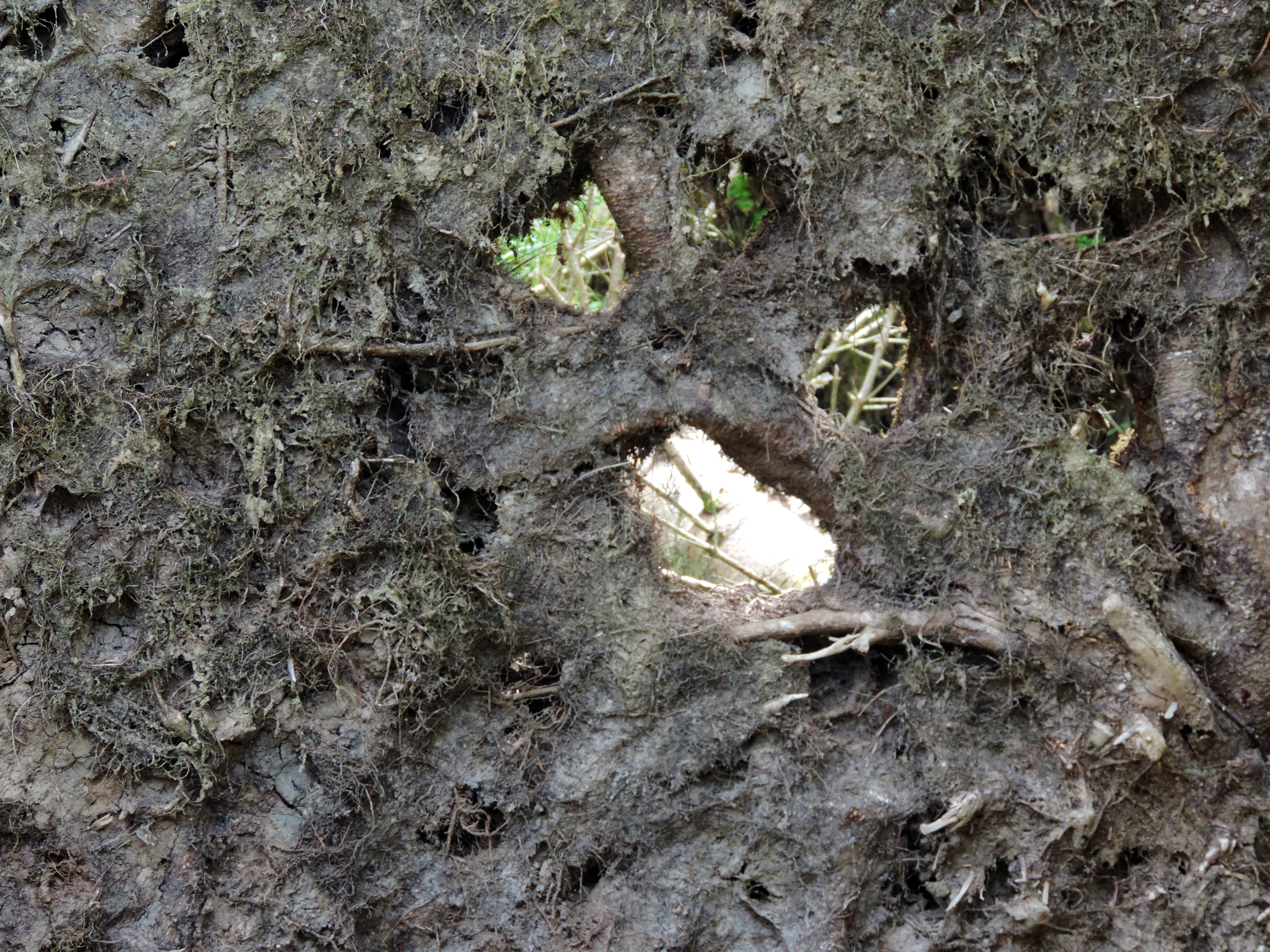
What’s this? What are you looking at here? What do you see?
Sometimes we just see a part of the world from a different angle, an unusual perspective. Then when you take a photo and look at it later, you see something even more different from when you were actually there – in this case, what strikes me when I look at this photo is how there seems to be a face there – but I didn’t notice that at the time.
Posted in from the dark room, from the living room, life, personal growth, photography on August 4, 2014| 1 Comment »
In my 12 monthly themes, August is the month of travel

So, where are you going to travel to this month? Have you any trips booked? Are you going somewhere you’ve never been before, or returning to a familiar favourite destination?
Or, if you aren’t going to travel this month, can I make two suggestions?
Either make this the month to chart a new direction – set your compass on a new goal, or goals, and begin to lay out your course to get there.
Or try the 30 minute discovery challenge. (You’ll be surprised how much there is to “get away” to nearby)
Posted in from the dark room, from the living room, health, life, personal growth, photography, psychology on August 3, 2014| Leave a Comment »

Breathing is something we do automatically. We don’t have to remember to breathe out every time we breathe in. But we can deliberately influence our breathing rhythms, choosing now to inhale, now to exhale.
When we exhale, we stimulate the parasympathetic autonomic nervous system, and one of the things that does is calm us down. The parasympathetic nervous system slows the heart, and is a very deep, very basic part of our survival behaviour. You’ll be familiar with “fight or flight”? That’s the sympathetic nervous system at work – preparing us to hit or run when under threat. We feel pretty “wired” when the sympathetic nervous system kicks in – heart racing, fast breathing, adrenaline pumping. The parasympathetic nervous system has a complementary function – it is part of what creates a “rest and digest” response.
When we exhale, we stimulate this system and induce the “rest and digest” response.
Do it now.
Fill your lungs, then slowly, slowly, breathe out, taking your time to completely empty your lungs. Now do it another couple of times. Just three exhalations like this will stimulate your “rest and digest” response.
One of the things I love to when I am beside the sea is to breathe in time with the breaking waves on the sand. It seems to me that every rush of the surf up the beach is like the ocean breathing out. It’s the sea exhaling. Sometimes that rhythm is even and calming and tuning in your breath to the ocean by timing your exhaling to match the exhaling of the sea can not only induce the “rest and digest” response, but creates a deep sense of being at One with the Earth.
Posted in books, from the dark room, from the living room, life, photography on August 2, 2014| 2 Comments »
I’ve seen a few different varieties of book sharing around – the most well known is probably “book crossing“.
In Bordeaux, right next to one of the tram stops, I found this bookcase –
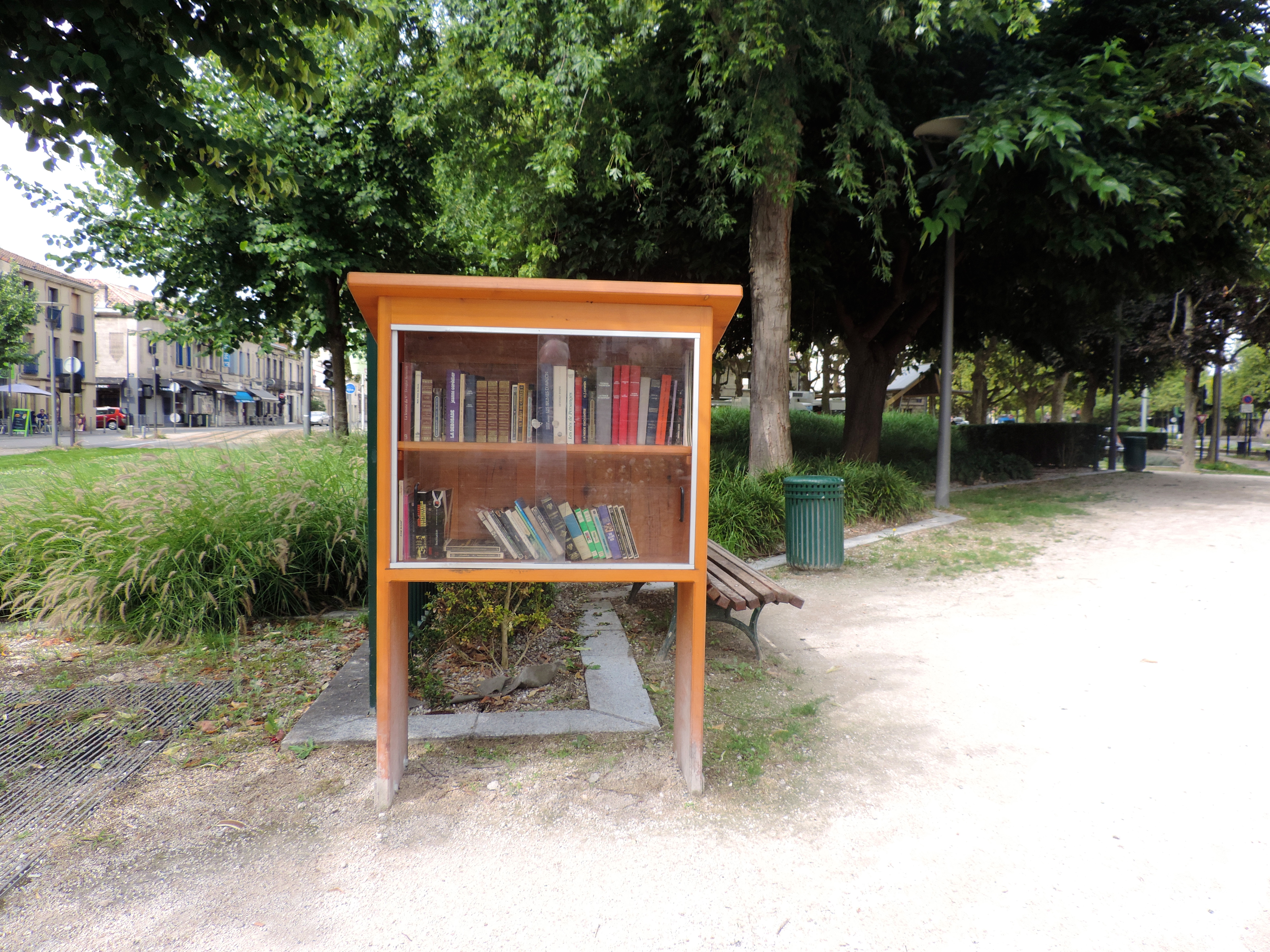
….no instructions, no locks, just some books in a bookcase with sliding glass doors.
I wonder how long its been there. I’m amazed that such a piece of furniture can apparently sit quite happily in the middle of a city. And I wonder how often the books change hands?
Have you come across any interesting book sharing platforms or facilities?
By the way, in the hot e-books versus paper books debate, surely one of the best arguments for paper books is how you can pass them on to other people after you’ve read them (Did you realise that you only rent an e-book? You never own it the way you do a paper one)

 Heroes Not Zombies