Feeds:
Posts
Comments

Archive for the ‘from the dark room’ Category

The house where I live is surrounded by vineyards. Not for wine making, but for the production of cognac. Each line of plants is known as a “wire” and each of the owners plant out, tend to, and harvest a certain number of wires.
There are no fences or hedges between each vineyard, but some of the wires run north to south, whilst others run east to west, or even on a diagonal. I don’t know how each person knows where their “patch” begins and ends but there are workers in the vineyards pretty much every day of the year, except Sundays.
Every single plant is tended individually, pruned back to two main branches, one running forward along the wire, and the other in the opposite direction.
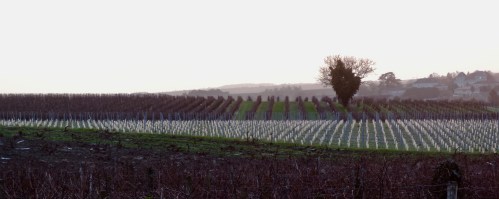
I don’t know how many years of healthy productive life the plants have but there are three main phases of the vineyard, which you can see clearly, all at the same time in this photograph.
I just looked out of my window the other day towards sunset and spotted how I could capture all three phases in the one shot.
What you can see here are four distinct areas. The nearest and furthest away rare the currently active productive vines. These are the ones from which the grapes were harvested last year, and will be again, this coming year. In the middle there are two very different areas. The one nearer us shows an old, spent, field of vines in the process of being cut back and ripped up. Just beyond them in the grassy zone are rows and rows of new plants, each one protected by its own plastic tube.
It struck me, when I looked at this, that I could see the past and the future embedded in the present. I thought it was a vivid representation of the fact that time isn’t linear, it’s cyclical. There are cycles of seasons throughout a year, cycles of seeding, nurturing, growing, pruning, and removing the vines. And these cycles of the vines extend beyond single calendar years to encompass whole lifetimes of this remarkable plant.

Read Full Post »

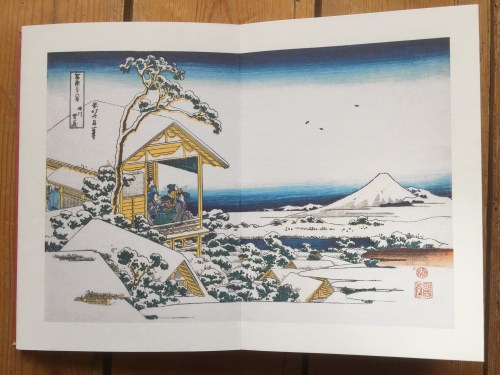
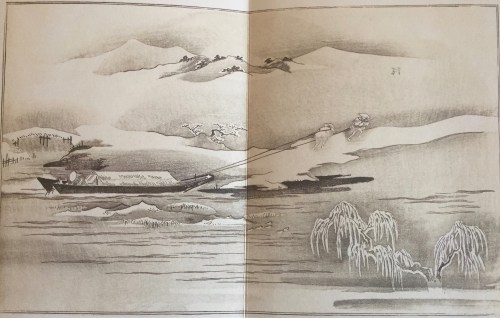
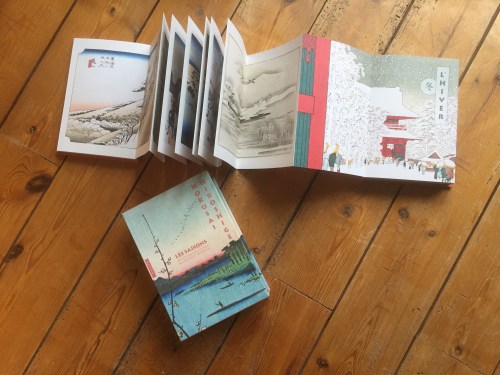
Today’s woodcut is by the famous Japanese artist, Hokusai (you know, the one who painted “The Wave”). It’s one of his “36 views of Mount Fuji”. The first thing which struck me when I looked at it was enhanced by the physical construction of this little accordion-print book that I have – each work of art is reproduced over a two page spread. In this case, the left page depicts what is in the foreground and the right, the distance. I find something immensely pleasing about that balance, or harmony. You can see the whole and the part all at once. You can see the “view from on high”, the overview, and the details of what is right in front of you, all at once.
That immediately provokes a train of thought in my mind about the two fundamental ways of engaging with the world which we humans have access to, thanks to our left and right cerebral hemispheres. The left, you might remember, favours a narrow focus of attention on parts, while the right gives us a broader focus on the whole. Beautiful.

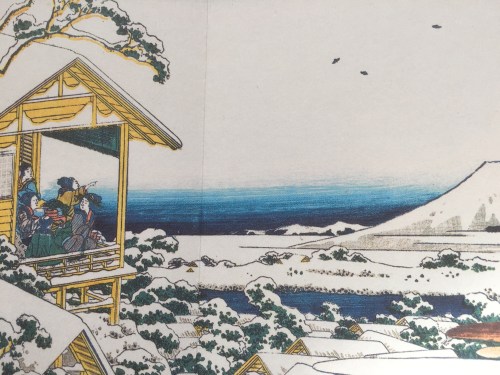
What I notice first is Mount Fuji, which, apparently was the artist’s inspiration for this series. Then I see the white snow covered landscape at its feet, and the endless blue beyond. I then turn to the left and see the little wooden pavilion with a group of women on the terrace. There are four of them. One is carrying a tray of food and drink, another turns to look her way. The third is pointing enthusiastically at something, and the fourth is turning to respond to her. Again, that’s a lovely balance…two people catching the attention of two other people. One to what’s right here in front of her, and the other to what lies in the distance.
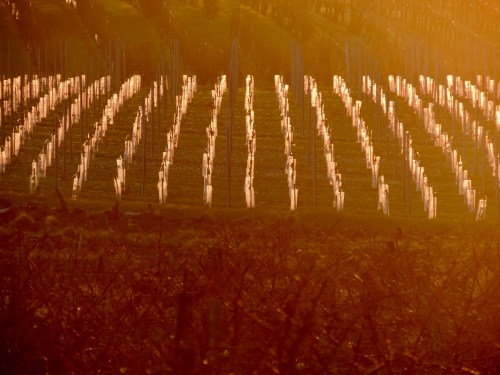
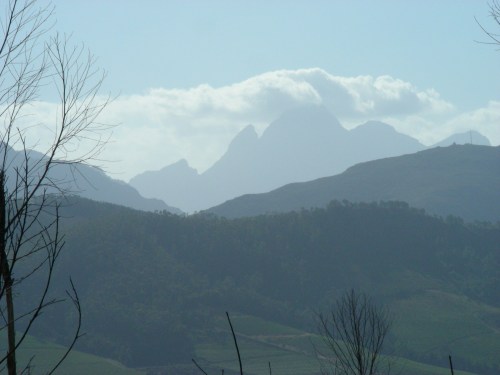
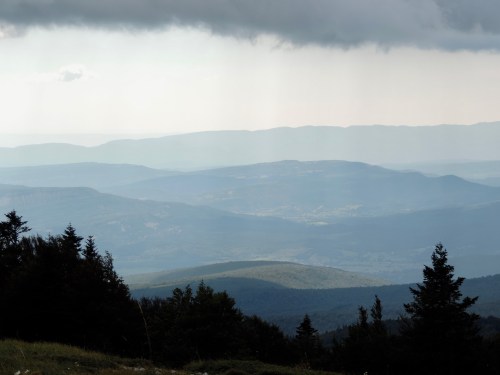
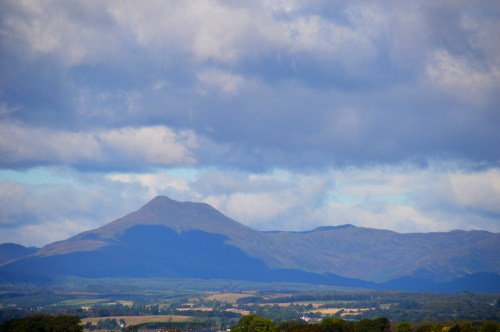
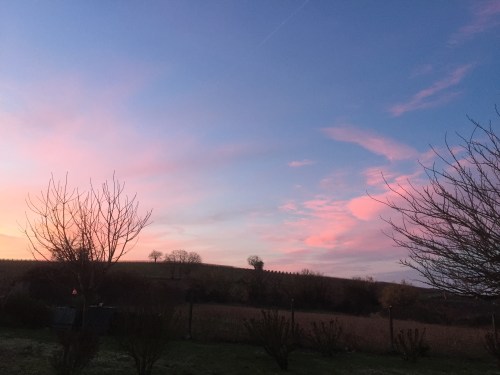
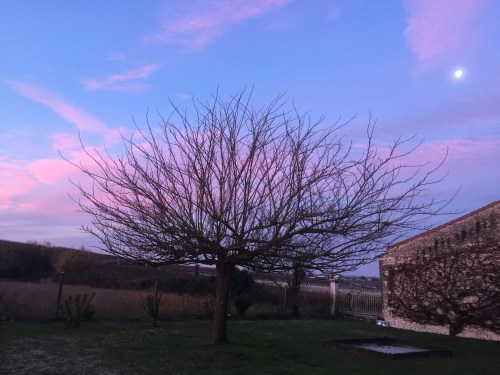
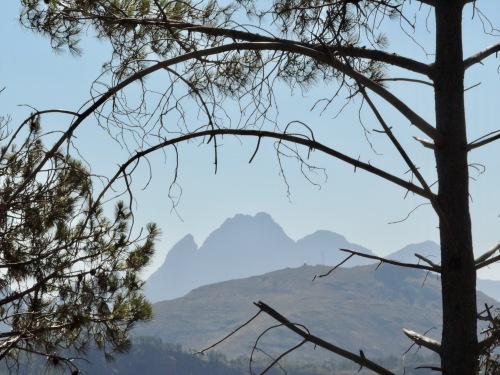
My booklet says that the scene shows a young woman enthusiastically pointing at the horizon. So, I return to the image and look to see if I can see what she is pointing at. It could be the horizon. By the way, do you notice how the further away part of the scene is the bluest part? That is a very, very common phenomenon. Here’s a couple of my own photos showing that –

It’s also something you can see reproduced time and again in paintings. The poet, Rebecca Solnit, writes the phenomenon of the blue distance beautifully in her essay collections, “A Field Guide to Getting Lost”.

The woman who is pointing, is she pointing at the horizon? Or at the mountain? Mountains are surely attention magnets. Growing up in Scotland I feel that mountains are in my blood. The shapes of specific mountains become very familiar to us, and Mount Fuji in Japan must be one of the most revered mountains on the planet. But maybe she’s pointing at the birds? Did you notice them? Birds always catch my attention. I love to sit in the garden in the summer and look up to see a few buzzards skimming the air currents gracefully, so high they aren’t much bigger than specks….a bit like these ones in this print.

You know, I think that’s one of the reasons why I write, take photos and share what I create. I’m the one enthusiastically pointing, saying “Oh wow! Look at that!!” I do that all the time. I do it when I’m by myself, when something catches my attention, moves me, or provokes a moment of wonder. I’ve written a number of times about the French phrase “L’Émerveillement du Quotidien” which captures this idea of being amazed by the so-called ordinary. In fact, the booklet which accompanies these woodblock prints says that it’s a “groupe de voyageurs s’émerveille devant le plus gros sommet du Japon” – a group of travellers amazing themselves in front of the highest summit in Japan – I like how French uses reflexive verbs – adding the “se” or “s’” in front of a verb – I can’t quite think of an English language equivalent.

Yep, that’s what it looks like to me – people amazing themselves! What a great thing to do! I love it when others do that too. It delights me when someone shares something they’ve noticed with me…..especially something which amazed them.

I hope this delights you too…..

Read Full Post »

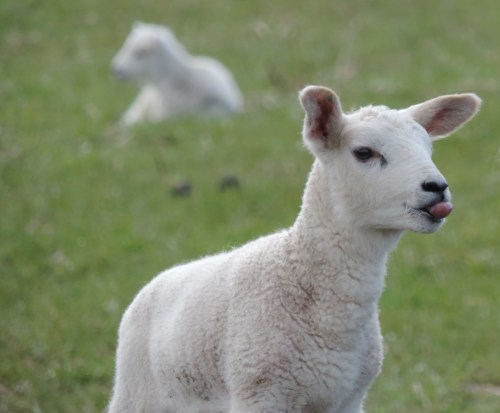
I stumbled across something called the Comedy Wildlife Photography Awards today and several of them made me laugh.

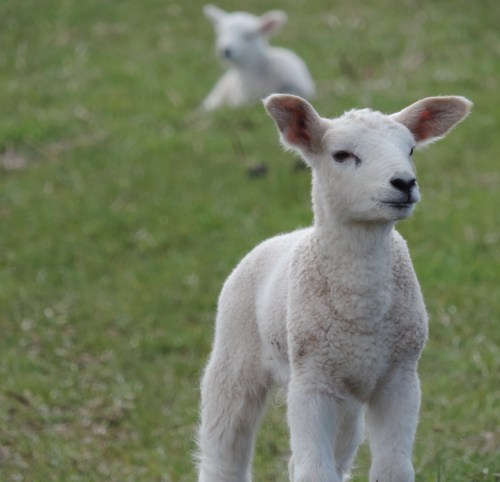
I also remembered a couple of photos I took while out on a walk a few years ago. It was lambing season and I thought I’d just take a photo of a cute lamb.

In fact, I took a couple of photos in quick succession, and it wasn’t until I got home and uploaded the photos to my computer that I discovered just what a cheeky lamb it was!

With hindsight I think you can see the same character in the first photo!

Read Full Post »

How do you begin your day?
Chances are the answer to that question has changed for you over your lifetime. For the couple of decades leading up to my 60th birthday I’d get up around 6am, shave, shower and dress, have a quick coffee, then set off for the railway station to begin my daily commute to the hospital in Glasgow. Once I’d retired and emigrated to France the pattern changed a lot. No commutes any more. And no routine requirement to be a particular place by a particular time. That was four years ago, and my patterns have changed a number of times over those four years. My most recent pattern is to get up when I wake up, usually between 7 and 8am, shave, shower, dress and then spend the next hour or so language learning. I’ve been learning French since I moved here and now I can read it pretty fluently, and can manage conversations with native speakers but I’m far from as fluent as I’d like to be, so I use apps, videos, or podcasts every day, and read articles which catch my attention in the newspaper, “Le Monde”. In addition to that I regularly buy French language magazines and books so always have more to read when I want but I don’t include that in my language learning time. Because I can set off after breakfast and be in Spain for lunch I’ve had a few trips to Spain. I’d never been to Spain until I moved here and I speak absolutely no Spanish, but I like the place so much I’ve decided to learn a bit of Spanish too. So each morning in my language learning session I’m working my way through the Duolingo Spanish course.
Before I settle down to learn though, I open the shutters. We live in a traditional old Charentaise house and all the windows have wooden shutters. The rhythm of closing them all at night, and opening them up every morning pleases me.
When I open the shutters it might still be dark outside but as we move away from the Winter Solstice it gets more and more likely that the first thing I see is the dawn.
Here’s what I saw this morning.

pink dawn1

Isn’t that beautiful?
It’s not like that every morning of course, but how it just captures my attention and entrances me when it does. It strikes me that it’s kind of life enhancing to witness, and pay attention to, the dawn.
So I was very taken with a quotation from Mary Oliver’s essay, “Wordsworth’s Mountain” which The Paris Review printed in an obituary article this week.

But dawn—dawn is a gift. Much is revealed about a person by his or her passion, or indifference, to this opening of the door of day. No one who loves dawn, and is abroad to see it, could be a stranger to me.

I like to think that although I only knew her through her writing, and how, of course, she had absolutely no idea I existed, that I wasn’t a stranger to her. What a lovely way to put it, don’t you think? Instead of just saying she could understand, or sympathise with, or share a point of view with, someone who loves the dawn, she said they couldn’t be a stranger to her.
That reminded me about the importance of the start of every day. Not just our first activities, or even our first thoughts or words, but how we begin the day. How we make that first connection.

What kind of connection do you make at dawn?

Here’s another photo I took this morning. The dawn sky behind the winter mulberry tree. (and, yes, that white spot in the top right corner is the moon! I know…but hey, it was just my iPhone!)

pinkdawn2

By the way, do you have a favourite Mary Oliver poem?
And if you’ve never heard it before, Krista Tippett’s 2015 interview with her remains one of my favourite Onbeing podcast episodes.

Treat yourself sometime.

Read Full Post »

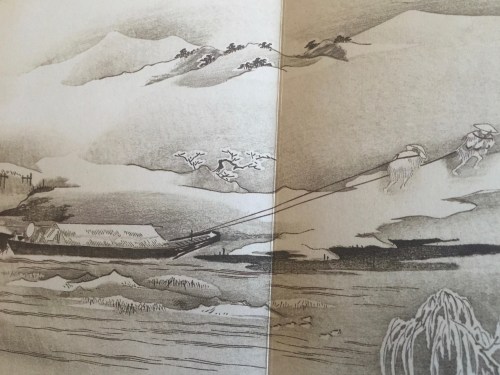
The Japanese woodcut I’m looking at today is from Kitagawa Utamaro in about 1790. He created five winter scenes to illustrate the 78 poems of Tsutaya Juzaburo’s collection, “Setsugekka”, (which means “Snow, moon and flowers”)

winter1

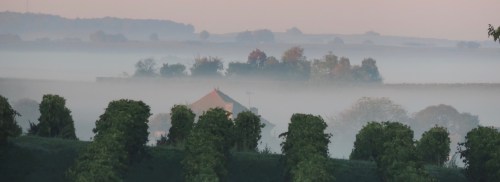
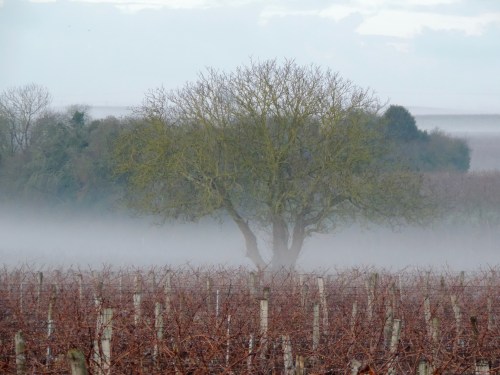
I’ve only seen a trace of snow a couple of times in my four years here in France, so snow doesn’t really feature in winter for me just now. However, there are certainly mists and frosts, both of which can be beautiful.

Version 2

tree in misty vines

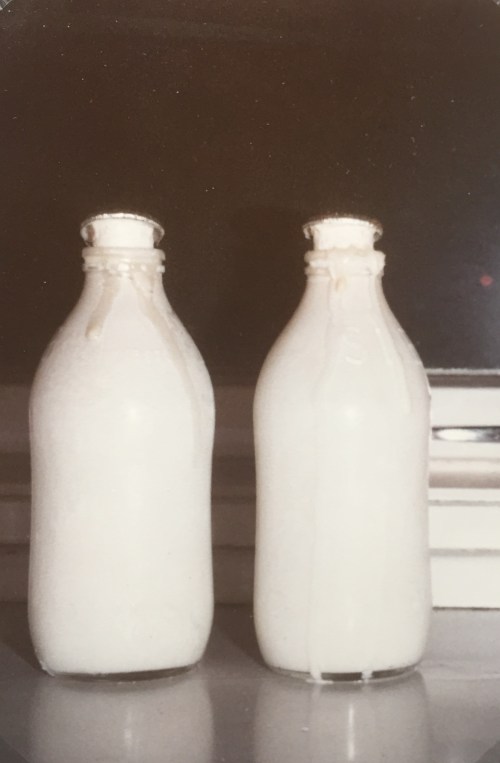
Of course, I’ve many, many memories of snow from all my years living in Scotland. I can remember one year, a year of my junior doctor training at Stirling Royal Infirmary when the snow fell and the temperatures dropped far into the minus range. The milk inside the milk bottles left on the doorstep (yes, that was a thing…..two bottles of milk delivered early each morning by the milkman) froze, expanding so much that the frozen milk pushed the silver caps up about an inch!

frozen milk
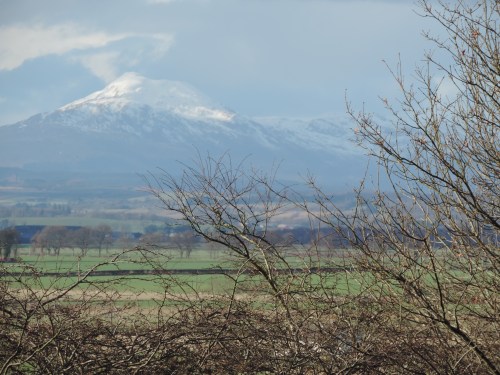
The last place I lived in Scotland before emigrating to France was the top floor of a renovated late nineteenth century textile mill. It had huge arched windows and from three of them I looked out across the Carse of Stirling to Ben Ledi…a shape that became as familiar to me as Mount Fuji is to Japanese people.

snow capped ben ledi

In the woodcut I can see three zones – in the distance, snow capped hills and mountains; in the foreground, a frozen weeping willow; and in the middle ground, two people struggling up a slope in the snow pulling a boat over the what seems to be a frozen river. The angles of their bodies and the lengths and taught-ness of their ropes suggests it’s really a huge effort. There’s a third person on the boat, but most of the boat is hidden by something like a tented canvas. It provokes my curiosity (as usual…..curiosity is probably my core characteristic!) and I wonder what lies under the canvas. Slightly further back is another frozen tree, perhaps a pine, and a snow-covered bridge.

winter1 people

It’s strangely still and frozen while conveying movement, effort and action at the same time. Do the people really have bare legs and feet? It looks like that! What an image of determination and co-operation there. No sense of ease, but of will and strength and progress in the face of adversity. But that adversity is also engagingly beautiful…..though I’m happier looking at it than imagining myself as one of the people in the scene!

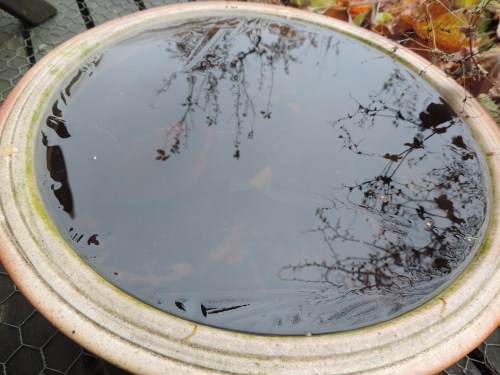
I also like the fact that the river seems frozen but not quite. I love that moment when you see water just beginning to freeze.

water starting to freeze

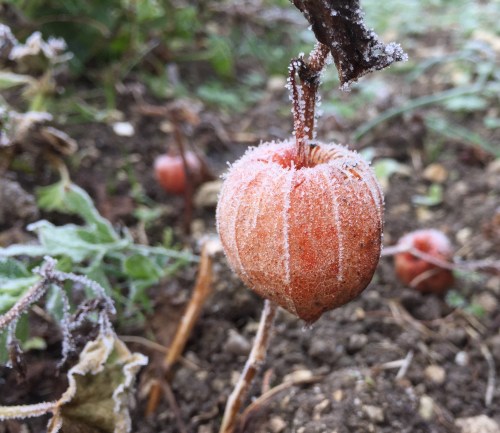
Isn’t water such a curious and amazing element? Combining those qualities of flow and stillness, moving from liquid to solid and expanding as it does so. And when it coats a plant, a flower, or a tree it somehow adds sparkle or even bling!

frosted japanese lantern

Read Full Post »

Dec17

One of the biggest differences for me since I retired and moved to the Charente in France is that I feel much more engaged with “the natural world”. I notice the sunrises and sunsets more. I notice the phases of the moon. I look forward to the constellation Orion appearing in the East and making his way across the night sky to the West every winter, and it amuses me somehow to see that he disappears for the summer, as if he migrates in the opposite direction from the birds. I’m much, much more aware of the birds here. I’ve encountered Hoopoes for the first time and they still astonish me. I recognise the call of the Redstart when he arrives from his winter holidays and his replacement with the Robin. I’m in that cycle of seasons which a garden demands, with its rhythm of tasks, from planting, to nurturing, to harvesting, and feeding the soil before it goes to sleep for the winter.
I’ve never spent such a large proportion of my life outside before.
So I’ve become every more interested in whatever it is that connects us to “nature”. I’ve been replacing the rhythms, schedules and timetables of Scotrail, the NHS, and the rest of a working life which includes a daily commute, with what feel like more natural rhythms. The cycles of the seasons, the celestial patterns of moon, sun and stars. The meals prepared from what’s available in the local market this week.

saisons

Hilary gave me a Christmas gift of an accordion-fold book by Amélie Balcou. It’s called “Les Saisons” (The Seasons) and is a collection of sixty Japanese woodblock prints. In the introduction she describes how the rhythms of nature are embedded in the Japanese calendar. Let me share her opening page with you. I’m not going to do a direct translation of her words into English, but to share the substance of what she describes.

The New Year commences with “hatsushinode” which is the practice of admiring the first sunrise of the year. As the first sun rises you make your wishes for the year ahead.
On the 3rd of February, “setsubun”, the arrival of Spring is celebrated. It’s seen as the turning point of the year and one traditional practice is to throw roasted soy beans out of the door to cleanse the home of last year’s evil spirits and drive away ones for the year to come. One variation of this practice is to eat one bean for each year of your life, plus one extra for the year to come.
March sees the arrival of the cherry blossom which begins in the south of the country then spreads north over the next few days with newspapers and TV showing maps, similar to weather maps, of its appearance. People take picnics in the parks under the cherry blossom trees and wander amongst them admiring them and photographing them. They are a strong reminder of the transitory nature of everything, something which enhances, rather than detracts from, their beauty.

“Hana Matsuri” on April 8th, is a Flower Festival connected to celebrating the birth of the Buddha.
The season of rains begins in May, the month when “Golden Week” is held. It’s called “Golden Week” because there are a number of holidays and festivals one after the other. On the 4th of May there is “Midori no Hi”. Midori translates as Green and this “Nature Day” or “Greenery Day”, when people try to spend the whole day outside in Nature, and might plant trees or clean up the local environment.

Summer begins in July with the Fire Festivals, celebrated with fireworks, “hanabi”, which means “fire flowers” (Isn’t that a lovely name for fireworks?). Also in July is “Tanabata”, the Star Festival. Tanabata translates as “The Evening of the Seventh” and was traditionally celebrated on the seventh day of the seventh month (of the Japanese lunisolar calendar). This is a time for people to write wishes, sometimes in poetic form, and hang them on bamboo. These are then burned or set afloat on the river at the close of the festival.
School holidays begin with “Umi no Hi”, “The day of the Sea”, which celebrates both the marine history of Japan and the gifts of the ocean. It’s a day to go to the seaside!
“Yama no Hi”, “Mountain Day”, was introduced as the first public holiday in August in 2016 because the government thought people were working too hard and would benefit from a day off in the mountains.

The autumn equinox is a glorious time for the celebration of the maple tree leaves which turn gorgeous shades of red. It’s also the time of “Tsukimi”, the moon viewing festival. Whilst viewing the full moon it is traditional to decorate the place with pampas grass decorations and to serve white rice balls, “Tsukimi dango”, flavoured with seasonal foods such as sweet potato and chestnuts.

I’m going to enjoy contemplating the images in this book over the course of this year, starting with some of the winter scenes, seeing as it’s winter time here in France as I write this. I’ll share them with you week by week.

But there’s something else I want to share with you now. It’s the story of a project designed to “prescribe nature” to patients which some GPs in Shetland are taking part in. I read about it in a recent issue of Resurgence magazine where they describe this collaboration between the RSPB (Royal Society for the Protection of Birds) and the NHS in Shetland.

They’ve picked up on the benefits of spending time in Nature – from lowering BP, to improving the immune system, to lifting depression and increasing well-being and they’ve created a leaflet called a “Nature Prescription calendar“. It has a photo for each month of the year with an associated check-list list of suggested activities to do that month so you can tick off whichever ones you’ve done that month. The genius of it is that the activities are 100% local – they refer to local pathways, beaches and so on, and use local words and sayings too. AND they are chosen to be relevant to that particular month so people begin to be in touch with the seasons and cycles of Nature again.
Honestly I think its fab and SUCH an inspiration. I really fancy trying to develop one for here.

How about you? How do you get yourself in tune with the planet?

Read Full Post »

may18

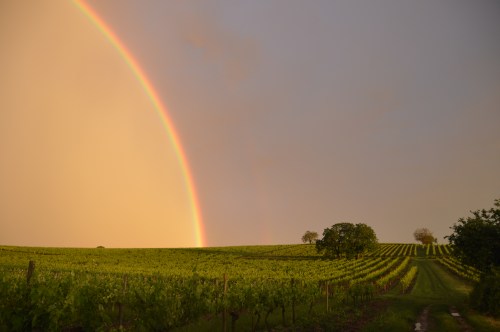
One day last year I walked outside and saw this rainbow at the top of the vineyards.

Yeah, sure, I’ve seen a ton of rainbows in my life but I’d never, ever, seen one like this.

I took several photographs but I’m not sure any really captured the view.

The rainbow lasted for about 30 minutes. Much, much longer than any other rainbow I’ve seen.

It’s brightness was incredible. If you look carefully you can see a second, parallel one just to the right of the main one. But the most astonishing thing was how different the world looked under the actual rainbow. You can see that quite clearly. The colour of the sky to the left of the rainbow ie under it, is completely different to the colour of the sky elsewhere. I’ve never seen that before.

You know the old story about finding gold at the end of the rainbow? Well, it seemed that this rainbow was arching over an entirely golden world.

There is another thought I had during that rainbow, and which come back to me now. That rainbows are a symbol of hope. Where does that come from? Is it the story of Noah and The Flood in the Old Testament? I suppose that’s where I get that memory. I was taught that the rainbow represented God’s promise not to flood the Earth again. It’s not entirely clear to me how that story of a promise morphed into a symbol of hope. So I went looking to see – are there other origins to this association of hope with rainbows? Actually, there seems to be a huge diversity amongst various cultures (why wouldn’t there be?) Here’s where I explored some of them.

One of the things which struck me, reading through that entry in wikipedia, was how often the rainbow was seen as a bridge.

Well that’s convenient! Because I wrote about how January is named after Janus, the god with two faces, one looking back and one forward. Look at this, from the wikipedia entry about Janus –

While the fundamental nature of Janus is debated, in most modern scholars’ view the god’s functions may be seen as being organized around a single principle: presiding over all beginnings and transitions, whether abstract or concrete, sacred or profane. Interpretations concerning the god’s fundamental nature either limit it to this general function or emphasize a concrete or particular aspect of it (identifying him with light, the sun, the moon, time, movement, the year, doorways, bridges etc.)

It feels like we are living in a time of transition (aren’t we always??) so maybe a beautiful rainbow is a good place to start the year – with hope, with a sense of new beginnings, and with the idea of a path, or a bridge, there, inviting us to follow it.

What about you? What do you associate with the appearance of a rainbow? Were you handed down any stories?

PS Didn’t I say yesterday I was starting a new blog over at bobleckridge.com/read ? Well, after yesterday’s post here, despite it being the first in a year, I was surprised and delighted by all the messages I received, and the new followers who signed up to heroesnotzombies. So, I’ve reminded myself of one of my favourite teachings – “AND not OR”. I’ll continue to post here, as well as creating new content for my new site. The new site will have a fresh photo of mine every week on the home page, an ever expanding gallery of my photos at bobleckridge.com/look and videos and the spoken word too, as well as articles and blog posts.

Read Full Post »

jan17

In January each year I like to make my own calendar for the coming year. Maybe it’d be a better idea to make it in December so it was ready to go in January, but that’s not what I tend to do.

The way I do it is to select twelve images from my photo library, one for each month of last year. I select them first because they are images I’m really happy with. After all, I’ll have to look at each of them for a whole month at a time for the next year. If I find I’ve more than one to choose from then what I do next is select the image which evokes the strongest memories for me. That way I’ll recall, month by month, a beautiful, wondrous, or amazing experience throughout the year. Each image evokes memories, but also inspires me.

I find this is a way of harvesting the experiences of one year to inspire the choices I’ll make this year.

It’s really easy to find and collect your own photos. Of course, you don’t need to make an actual calendar. You could simply select and collect twelve images into a separate album on your phone, your pad, or your computer. Or share them on Instagram or Facebook. You choose. Oh, one other tip – file names – as I save each image into the “2017” folder I name it “Jan17.jpg, Feb17.jpg” and so on. Makes it way easier to organise and use them in the future.

I’m a great one for “and not or”, so I make a special album/folder of the twelve images and keep that on my desktop. I use those images to make a physical calendar, browse through them from time to time, and use them on various posts and sharing platforms through the year. The service I use for the physical calendar is Redbubble. It’s not cheap, but it’s really fabulous quality and their service is fast. There are plenty of other web based services out there, or you could print your images at home and make your own calendar by hand. There are also photo print machines in various outlets but I’ve never tried any of them. Have you?

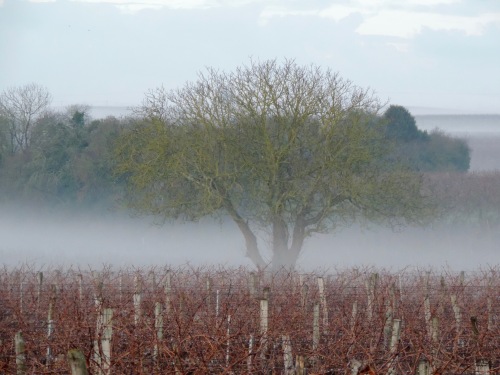
The image above is my January image. I took it one foggy morning in the vineyards which surround my house. Isn’t it gorgeous? Reminds me just how beautiful winter can be, and how amazingly wonderful trees are.

Here’s February –
Feb17

In February 2017 I spent some time with my friends who live in Capetown. We took a few trips and one of my really favourite areas was Franchhoek. It’s like a French enclave in the South African countryside. As I now live in France the unique blending of French and South African culture in Franchhoek really appealed to me.

Mar17

In March I returned to Scotland and had a day out in the Trossachs. Stopping at the side of one of the many lochs I was astonished by the brilliant reflections of the sky in the absolutely still water. This shot includes the rocks at my feet as well as the reflections of the overhanging trees and the clouds above me. It’s quite a disorienting image and that’s what I love about it. Really draws me in to work out just what I’m looking at.
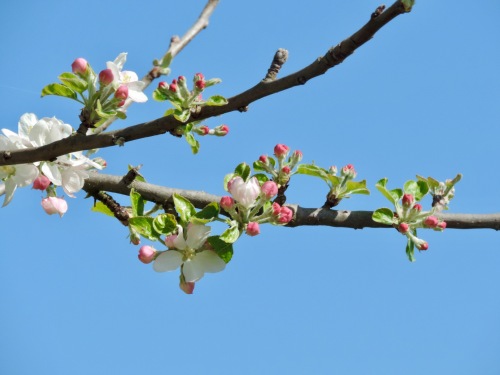
Apr17

April is the time of blossom in my neck of the woods. Cherry trees, plum trees, almond trees….it’s a beautiful time of year. I can’t look at these blossoms without feeling a surge of new life and creativity. At the same time, I’m reminded of the Japanese veneration of the cherry blossom time of year. The cherry blossom doesn’t last long so it heightens our awareness of the inextricable links between beauty and transience.

May17

Last May we were blessed with an abundance of sweet peas. The previous year we sowed a number of seeds but they really didn’t come to much. This year, they were everywhere! That was a lesson. Take your time. Sow your seeds and let Nature nurture them on her own timescale.
Jun17

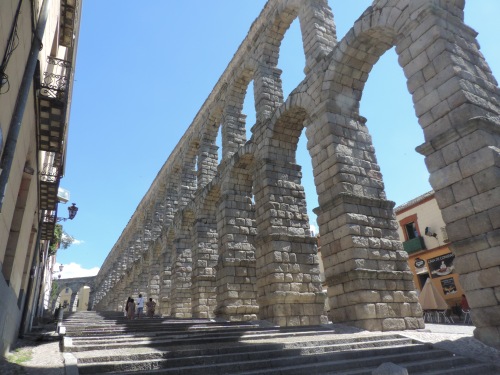
For my birthday in June we took a trip to Segovia in Spain. We’d visited there the previous year and loved it so much we decided to go back. It’s about an eight hour drive from our house to Segovia so we stopped off in Saint Jean de Luz just this side of the French-Spanish border on the way. Clearly one of the most astonishing things about Segovia is this Roman aqueduct which took water from the hills right into the town centre. The Romans, huh? They knew how to build structures which would last for centuries didn’t they? Long after their empire had gone anyway. I wonder how long what we build now will last…….
Jul17

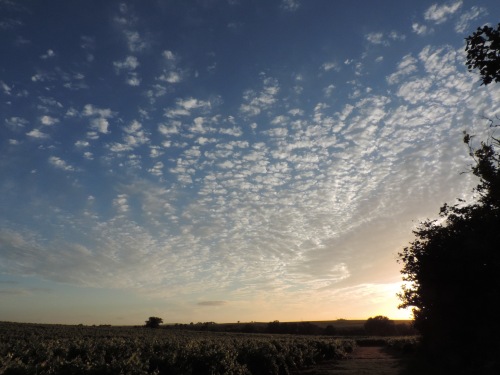
One of the delights of this house is the “open outlook”. Years ago one of my Dutch friends told me how important it was for her to have “a long view”. She felt that these long views opened up your heart and your soul to the world. I think she was right. I’ve stayed in places where the only view was of the buildings on the other side of the road. I know what I prefer. This particular shot, which I took from the garden in July, is just one of the many photos I’ve taken of the clouds. I could look at clouds for hours. They are endlessly fascinating, constantly changing, and often utterly beautiful. Cloud watching. I recommend it.

Aug17

In August we had a day trip to Rochefort but it was a rainy day. It’s easy to get down on a rainy day and wish the rain would just go away, (unless you live in a drought area, when you might welcome a good downpour!), but you can get some great photos on cloudy, rainy days. These magnificent umbrellas were strung across the main street on market day. Well, you couldn’t really not take a photo, could you?
Sep17

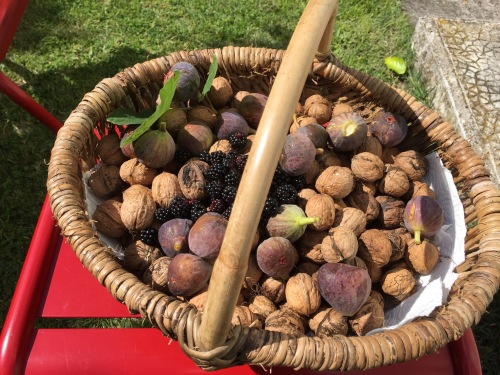
September is a great time to go foraging around here. We took a basket with us and came back with these walnuts, figs and berries. How lucky were we?!

Oct17

There’s a barn owl, or a pair of barn owls, who live in my neighbour’s barn and for the past couple of years, they’ve laid eggs in a nesting hole in the house, above the front door. This year, though, three kestrels turned up and fought the owls for the box. I couldn’t bear the thought of them actually catching one of the owls to closed off the empty box with cardboard. I was a bit sorry not to see the owls so frequently after that. However, in October, one night at sunset, I spotted this little owl perched up on the plum tree. From her shape and call I reckon she was a tawny owl. Lovely photo though, don’t you think?

Nov17

In November we had our first ever trip to Scandinavia, with a few days in Copenhagen. Loved it! I’ll definitely go back. I chose this photo because it’s off the Rundetaarn – I’ve really never, ever seen anything like this. Built as an observatory the internal path is wide enough to drive a carriage up. Now there’s a road I’d never traveled before!

Finally, December –
Dec17

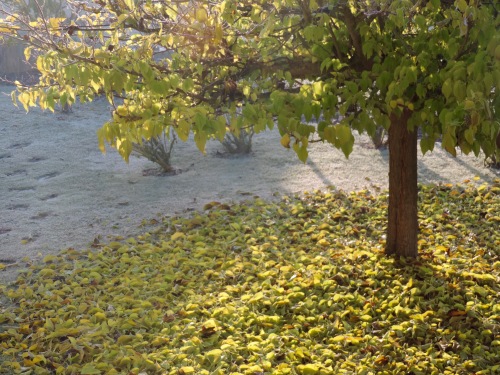
The mulberry tree in the garden begins to shed her leaves gradually, but then one day, usually after an overnight frost, she suddenly sheds most of them, laying this astonishing carpet around her feet. The leaves are so varied in size and colour that I just love taking my time and raking them up. It’s my November/December meditation exercise!

I hope you’ve enjoyed these twelve images and that I’ve inspired you to delve into your photo library and find your own dozen – whether you go on to make a calendar or not.

Read Full Post »

We’ve had a very hot, dry spell recently here in the Charente. Temperatures rising to the mid or high 30s (centigrade) each day which made the leaves of the plants curl up and wilt. Then this last week we’ve had rain, wind and storms. Yikes! What chance have they got?

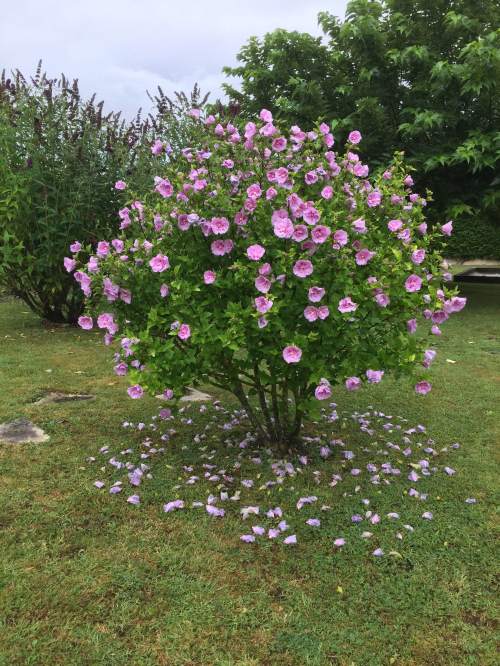
Well, look what all that varied weather has done to this bush in the garden.

First it suddenly bloomed, going from zero flowers to dozens of them over about 48 hours. Then the wind and rain has knocked off more than a few of them.

But when I walked outside yesterday evening and the bush caught my eye I was transfixed.

Just look how beautiful this is! Not just the bush itself but the way the fallen flowers have made a pinkish purple circular rug on the grass around it.

This is the kind of beauty which Nature makes.

In “The Great Work”, Thomas Berry talks about the interplay between discipline and wildness…..between order and chaos (or disorder). This is a great example, I think, of the beauty the wildness and disorder brings…..effortlessly.

Read Full Post »
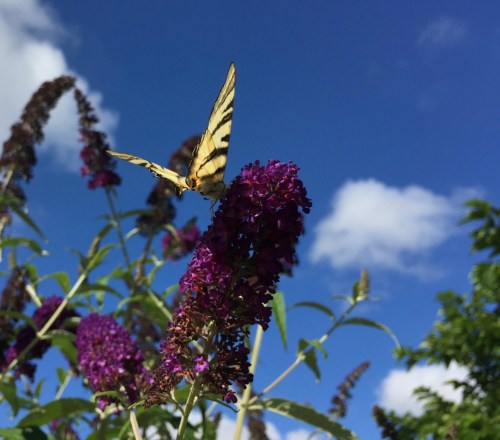
Every year I’m amazed to watch the butterflies appear in the garden the very same day the buddleia bushes flower. I’m convinced they both appear at exactly the same moment. No idea how that happens! Are the butterflies just hanging out around the corner somewhere waiting for the blossoms to appear, then zip round as fast as they can the moment that happens?

However it happens, it’s a delight to see so many varieties of butterfly (and the hummingbird moths, which are incredible creatures!), to watch how they fly in such utterly unpredictable directions, how they spread their wings in the sunlight, or close them up so they look like little leaves.

But here’s one thought which comes up for me time and time again when I see butterflies….they make me more aware of the cyclical nature of life. These little creatures have such different life stages, so different you wouldn’t realise they were stages of the same life. Do we think of them as having a beginning and an end? Starting with an egg, progressing through their caterpillar stages, becoming a chrysalis, then emerging as a butterfly which lays eggs, then dies. Is that the life?

I suppose we do all think of ourselves as having a beginning and an end. But where do we begin, and where do we end?

It depends on whether or not you want to reduce a person to just a physical body. My physical body began with a single fertilised egg and this body will die.

But what about ME?

Do I really think I’m only a physical body? Don’t I have a sense of something immaterial too? A consciousness? A sense of Self? A personality? Characteristics, behaviours, values, beliefs, creative acts, destructive acts? Is there anything I can do which doesn’t ripple out into the world beyond me?

When I look at Rodin’s “The Kiss”, or “The Thinker”, what do I see? The product of the imagination and creative skill of the man called Auguste Rodin. When I listen to music composed and performed by people who are long since dead, isn’t there something I’m sharing there which only they could have created? Aren’t these great works of art the ongoing ripples of unique human beings? Or do you think these are just their footprints? (It doesn’t seem that way to me….these works seem full of life and the potential to continue to create and send out ripples into the universe)

And what about those characteristics, quirks or tendencies that I have which others in my “family tree” also exhibited, even perhaps before I was born? Anyone who explores their genealogy encounters remarkable “coincidences”, talents, life events, behaviours which echo down through the generations. Weren’t those threads present even before the egg which became me even existed?

I think it’s inadequate to narrow a person down to a physical body.

But even if we did, there is still the fact that the body changes continually. It never stops. There is a constant turnover of cells, new beginnings, new endings, every hour of every day. There is a continuous exchange of energy, materials and information between my body and my environment, and we all share the same environment, the same atmosphere, the same air, water…..we are all made from the same molecules, all created from the same “star stuff”.

So it seems to me that beginnings and endings are everywhere……wherever, and whenever, we happen to look.

But it also seems to me that they are nowhere. They just don’t exist. We all emerge from, and dissolve into, the great cycles of the universe.

Beginnings and endings are just where we choose them to be. But we can always make a different choice. We can always take a broader view, a bigger view, a longer view, a more holistic view.

I’m reminded of a song from my school days….it’s by Jeff Beck, and it’s called “Hi Ho Silver Lining” – he sang this truth right there in the opening line of this song…in the first five words……

Read Full Post »
« Newer Posts - Older Posts »