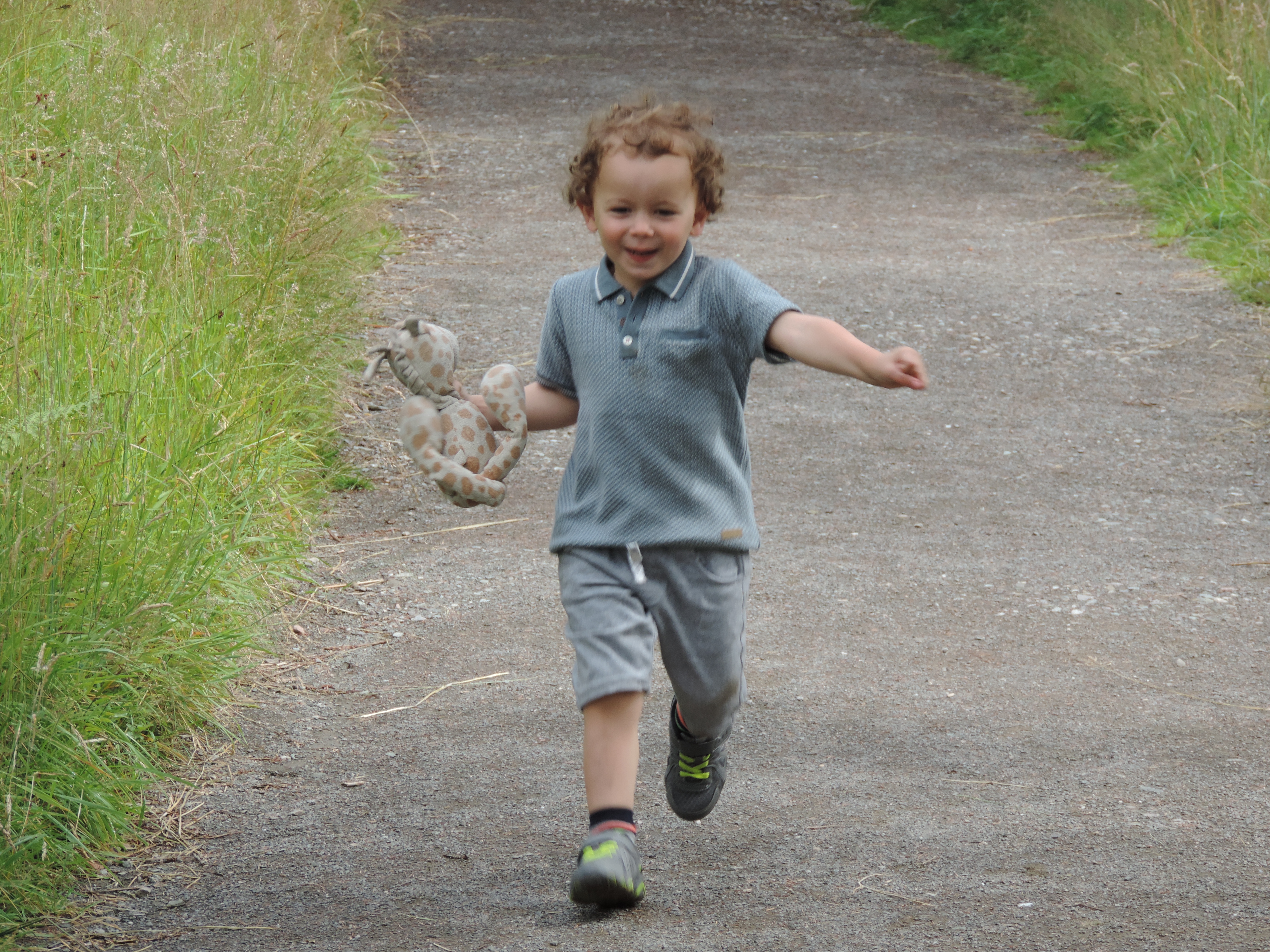
When our destiny is attained Nature alerts us by a clear sign. And that sign is joy. I mean joy, not pleasure. Pleasure is only a contrivance devised by nature to preserve life, and does not indicate the thrust and direction of life. But joy always announces that life has succeeded, gained ground, conquered. All great joy has a triumphant note…….wherever there is joy, there is creation; the richer the creation, the deeper the joy (L’Énergie spirituelle, Bergson. 1919)
Archive for the ‘from the dark room’ Category
Joy
Posted in books, from the dark room, from the living room, from the reading room, life, personal growth, philosophy, photography, psychology on September 28, 2015| Leave a Comment »
Energy
Posted in books, from the consulting room, from the dark room, from the living room, from the reading room, health, life, personal growth, philosophy, photography, psychology on September 27, 2015| Leave a Comment »
William James wrote –
Practically everyone knows in his own person the difference between the days when the tide of this energy is high in him and those when it is low, though no one knows exactly what reality the term energy covers when used here, or what its tides, tensions and levels are in themselves . . . To have its level raised is the most important thing that can happen to a man, yet in all my reading I know of no single page or paragraph of a scientific psychology book in which it receives mention. (The Energies of Men, 1907)
What is this energy he is talking about? I’ve often wondered about that. When I gave talks to young medics I would often start by saying “Let’s make a scale for energy. Let’s say 0 is the lowest energy you can imagine experiencing, and 10 is the greatest. Where would you put yourself on that scale right now?” Then I’d go round the room getting everyone to say what level of energy they were experiencing. Everybody answered. Everybody instantly offered a number on the scale. Then I’d ask “How did you do that?” “What did you check to arrive at the number you gave?” Nobody knew.
Dan Seigel and his group who developed “Interpersonal Neurobiology” (IPNB) came up with this definition of “mind” (see if you can find other definitions of “mind”) –
A embodied, interpersonal process of regulation of energy and information flow
Pretty useful, isn’t it? But what is the “energy” which is being regulated?
Having read the IPNB definition it struck me that as complex adaptive systems, living organisms are constantly exchanging energy, molecules and information with their environments.
But again, just what is this “energy”?
What do you think? (And where are you right now on the energy scale of 0 to 10?)
Karma and connections
Posted in books, from the dark room, from the living room, from the reading room, life, philosophy, photography, science on September 26, 2015| 2 Comments »
So matter resolves itself into countless vibrations, all linked together in uninterrupted continuity, all influencing each other, and travelling in every direction like shivers through an immense body. (Matière et mémoire)
If organisms are mutually dependent then it is wiser to cooperate than to dominate, and if life requires constant adaptation then nimble ingenuity is more effective than brute strength. (Life Lessons from Bergson)
If everything is connected to everything else then every action propagates its effects for ever, and if feedback loops are the method of propagation then every action also modifies the character of the actor.
The thrill of creation
Posted in books, creativity, from the dark room, from the living room, from the reading room, life, personal growth, philosophy, photography on September 25, 2015| Leave a Comment »
Is there anything more thrilling than witnessing or participating in creativity?
Whether it’s watching day by day as a seed grows into a full blossoming flower, or seeing a child acquire new skills through play and experimentation, acts of creation surround us.
We are a process of creation.
Every day we wake up changed, with new cells, new thoughts, new visions, new hopes and ideas.
Bergson wrote –
The more we study the nature of time, the more we shall comprehend that duration means invention, the creation of forms, the continual elaboration of the absolutely new. (L’Évolution créatrice, 1907)
This idea, that Life is its own creator and that creativity is not a late aesthetic refinement but the very principle of existence, was Bergson’s most radical and inspiring insight.
‘In the new scientific worldview I’m describing, we live in an emergent universe of ceaseless creativity in which life, agency, meaning, consciousness and ethics . . . have emerged. Our entire historical development as a species . . . has been self-consistent, co-constructing, evolving, emergent, and unpredictable. Our histories, inventions, ideas, and actions are also parts of the creative universe.’
Constant creation
Posted in books, from the consulting room, from the dark room, from the living room, from the reading room, health, life, personal growth, philosophy, photography, science on September 24, 2015| Leave a Comment »
Michael Foley, in his Life Lessons from Bergson, gives an excellent, concise description of the complex adaptive system model (even though he doesn’t actually use that term)
There is also the intellectual problem that, in a complex organism, the whole is never merely the sum of the parts and the parts are never entirely independent of the whole.
One cannot claim to know somebody merely because one has collected a pile of printed information about them
An organism is a hectic, almost frenetic, process, operating far from equilibrium in a ceaseless metabolism that seeks out and draws in nutrients, converts them to energy, expels waste, and uses the energy to reproduce, and to regulate and renew its parts, so that its make-up is constantly changing though its structure is relatively stable.
there are no independent, isolated, finished organisms.
Memory
Posted in books, from the dark room, from the living room, from the reading room, life, neuroscience, philosophy, psychology on September 23, 2015| 2 Comments »
There are many theories about memory, and as far as I can see, nobody has really got it figured out yet. Probably one of our most common models is a filing cabinet. We have the idea that everything that happens and everything we ever learn is stored away in some drawer inside our brain. When we want to remember it, we just need to go to the right drawer and take it out.
The trouble is, we haven’t been able to find anything remotely like this filing cabinet in the brain. At the neurological level there seem to be many regions of the brain involved in the processes of memory, not just the hippocampus, although that does seem to be very important.
Rupert Sheldrake, in his Science Delusion, proposed an interestingly different model – one of resonance. Briefly, he suggests that memory is stored outside the person and in the universe, so recalling something is more like tuning in to a radio station. Once you hit the right wavelength you have access to the memory.
Henri Bergson had a different theory –
His intriguing theory was that all memory is like the muscle memory that enables the body to recall how to ride a bicycle or to swim. These muscle memories are not stored as representations and, similarly, the mind does not store recollections but in perceiving a situation instantly brings into play the appropriate previous mental responses, just like the body discovering itself on a bike or in the sea. So memory does not wait patiently in some dusty archive but is constantly and urgently pressing forward into perception, to the extent that the characteristic movement of memory is not from present into past but from past into present
In some ways, this is close to the neurological teaching of “what fires together wires together”. Memory, in other words, isn’t like a photographic image, a book, or a film archive. It’s a constantly active process of engaging with the world. It’s not about a file waiting to be found with the help of the right card index. It’s more like the way we learn to use our bodies – to walk, ride a bike or swim. When we do those actions we don’t have to go back into our brain stores and find the manuals!
The memory functions involved in these skills are embodied.
This is a surprisingly holistic model to develop years before we began to uncover the ways in which all of our mental processes are embodied.
One of the enticing aspects of this theory is that all that we have ever done, experienced or learned, is actually ever present, ever “urgently pressing forward into perception” in ways which deeply influence what we perceive, and also, what we do, now.
Of course, I bet some of you are thinking “memory is constantly and urgently pressing forward into perception”? So, why can’t I remember somebody’s name when I think about them? Why do I come back from the shop without some of the things I went to buy?
I don’t think a dynamic, active model of memory means that we have 100% recall. In fact, clearly, that isn’t the case for any of us, and however memory works, it sure doesn’t include the ability to remember every experience and piece of knowledge we have ever encountered. That’s probably for a very good reason.
I suspect it would be impossible to get through life if we didn’t manage to forget, as well as being able to remember……but then, that’s probably the subject of another post!
Respect for the individual
Posted in books, from the consulting room, from the dark room, from the living room, from the reading room, health, life, narrative, philosophy, photography on September 22, 2015| Leave a Comment »
Michael Foley, focusing on Henri Bergson’s philosophy in “Life Lessons from Bergson”, writes –
there is a tendency to see what things have in common rather than what makes them unique, the source of a dispiriting sense of sameness.
In short, we do not see the actual things themselves but in most cases confine ourselves to reading the attached labels.
A crucial function of the arts is to prevent, or break down, dismissive labelling and reveal the singular instead of the similar, the peculiar instead of the familiar, and the inscrutable instead of the understood.
Heroes not zombies
Posted in books, from the dark room, from the living room, from the reading room, life, narrative, neuroscience, personal growth, philosophy, photography, psychology on September 21, 2015| Leave a Comment »
In Life Lessons from Bergson, Michael Foley writes –
What happens when we fail to live in duration, no longer hear the inner melody and lose touch with the intuitive self? We become frozen, petrified – automatons, slaves of habit or convention or both.
Our freedom, in the very movements that affirm it, creates the developing habits that will stifle if it fails to be renewed by constant effort: it is dogged by automatism.
Could the young but realize how soon they will become mere walking bundles of habits, they would give more heed to their conduct while in the plastic state. (Psychology: The Briefer Course, 1892)
Continuity and variation
Posted in books, from the consulting room, from the dark room, from the living room, from the reading room, health, life, neuroscience, personal growth, philosophy, photography, psychology, science on September 17, 2015| Leave a Comment »
Reality no longer appears essentially static, but affirms itself dynamically, as continuity and variation. What was immobile and frozen in our perception is warmed and set in motion.
Those are the words of Henri Bergson, quoted in Michael Foley’s excellent “Life lessons from Bergson”.
I love that. The experience of life as dynamic, “warmed and set in motion”.
Life isn’t “frozen and immobile” to me, and that’s why I am wary of categories and labels. I’ve always resisted being put into a box, defined by one or two of my characteristics. When I think of that I recall the adage of the General Semanticists – “judgement stops thought”. So often fixing someone or something into a category or type stops us from really seeing, really understanding.
Reducing an individual to a type diminishes them in all senses of the word.
Every patient I ever encountered was unique, presenting experiences and stories unique to them. To reduce them to diagnostic categories, or to types of any sort, blocked my understanding of them. Everyone always has more to reveal, more to share, more to experience and be understood.
Michael Foley says he came back to Bergson’s work after dismissing it decades earlier. His way back is interesting. It’s not the same as mine. My first encounter with Bergson came when I was reading Deleuze but I didn’t find him easy. I later stumbled into complexity theory and, in particular, the idea of complex adaptive systems. At that point I remembered some of Bergson’s ideas and went back to explore his writings further. Michael Foley’s path was through his encounter with “process philosophy” and with particle physics –
I learned from twentieth century philosophy of mind that memory and the self are processes rather than fixed entities – and suddenly this connected with the theories of particle physics, which claim that at the heart of matter there are in fact no particles but only processes…….everything is process…and everything is connected to everything else.
In the process view nothing is fixed, nothing is final and no circumstances ever repeat in the same way.
This strikes me as very true. Dan Seigel, one of the founders of Interpersonal Neurobiology, worked with colleagues to come up with a definition of the mind. What they concluded was that ” the mind is a process of regulation of energy and information flow. ”
The mind is not an entity or a thing, it’s a process.
The body is not a fixed entity or thing either – it’s a dynamic ever changing network or community of cells.
Disease is not a thing either. That really startled me when I read that once I was a practising doctor. As a medical student I picked up the view that disease was pathology and pathology was the changed organs or cells. Once I became a GP I encountered dynamic, hard to pin down illnesses that certainly couldn’t be reduced to pathological entities. Hearing that disease was a process not an entity was liberating for me.
I will return to some of the issues raised by this thinking in other posts but let me finish this one by returning to the title, because once we gain the insight which shifts our attention from entities to processes we discover diversity – we find out that variation is a key characteristic of Nature and of Life. But I think we find out something else too – that the universe, the world, and our lives are not completely random, chance, accidental phenomena. Instead there is continuity. We are in a process of continuous creation and emergence. We are who we are in our networks of family, nature, society and the world. We emerge from the past, as the past encounters and interacts with the present. Our future doesn’t contain just anything you could ever imagine. It emerges from here and now, from that flowing river of life and connections.
Continuity and variation. Just like the flow of a river. Just like the natural history of a plant, an animal, or any other living organism.
Plants and humans
Posted in from the consulting room, from the dark room, from the living room, health, life, photography, science on September 14, 2015| 1 Comment »
Out walking in the vineyards the other day I noticed this plant with its strikingly unusual flowers and its little red berries.
It’s “dulcamara”, which is a plant I know from my homeopathic studies. Its fuller name is “solanum dulcamara” which helps us to realise it is from the same plant family which other “solan…” plants belong to. That family is the Solonacaeae family.
The Solonacaeae family is a fascinating one to explore if you want to look at the relationships between the plant and human worlds. Some of them are staple foods – potatoes and tomatoes for example. But others are hallucinogenics – belladonna, hyoscyamus and stramonium being striking examples. Witches were said to make up a paste which included some of these hallucinogens and applied it to their skin with a stick – the origin of the “flying sick” perhaps?
In fact a lot of these plants can be poisonous to humans and I often wonder how human beings first got the knowledge to enable them to distinguish between the nutritious and the poisonous – trial and error? Sickness and health? Life and death?
If you are at all interested in looking into “ethnobotany” this is a good family to start with!