Feeds:
Posts
Comments

Archive for the ‘from the dark room’ Category

Web

Have you found a niche yet?

Clearly in the spaces between the stones of this wall, a spider has found a place and made it his, or her, own.

When I saw this is inspired me in a number of ways.

Firstly, isn’t it amazing how Life appears everywhere on this planet? If its not an animal, bird, or spider, it might be a plant, a moss, a lichen, or, invisible to the naked eye but living probably everywhere – single-celled organisms like bacteria. There just doesn’t seem to be anywhere on Earth too inhospitable for Life. There is such a tremendous diversity of habitats.

Secondly, how opportunist Life is. What might seem the smallest possibility can be seized quickly. “Seize the day!”

Thirdly, how creative Life is. Look at this web. Isn’t it astonishing? Just how does something as small as a spider manage to create such a perfect structure – perfect for its purposes of protecting eggs or trapping food – and at the same time, perfectly beautiful?

Fourthly, as a Scot, I can’t help seeing things like this and remembering the story of Robert the Bruce who, it’s said, watched a spider try and try again to make a web in a particular cave and was inspired in his own life to always “try and try again” – to never give up.

Finally, it made me wonder about how we create a home and how we create a niche for ourselves.

Where have you chosen to create your home?

Have you found the niche you desire yet?

Are you still trying, and trying again?

Read Full Post »

Orangerie

Here’s a shot of one of Monet’s water lilies paintings in the Orangerie in Paris. Look at the size of it, and stand back and see it as a whole.

Now walk towards it and look at part of it close up.

Monet

Isn’t that amazing?

How different the details look from the whole painting! In fact, one of the things which makes such a big impression on me in the Orangerie is just this difference – how does a human being manage to create such a fabulous, whole image which works the way this work by placing small brush-fulls of paint one after the other.

It’s this kind of art which often comes to my mind when I think about the need to understand anything in its details and at the same time in its wholeness.

Recently, BBC Two, made an episode of “Trust me I’m a doctor” focusing on the question of is it possible to reduce your cholesterol level through diet. For the programme the presenter look at three different approaches – sticking to a low fat diet, not changing the diet but adding daily oats, and not changing the diet but adding daily almonds. As an extra, he, himself, did all three (referred to as the “portfolio diet”).

What happened?

A number of interesting things – including significant levels of reduction of cholesterol in many of the volunteers – the biggest effect being in the presenter himself (I’ll return to that later)

In the almond eating group they concluded there was no over all change – because the average of the group showed little change. In fact, this averaging out effect obscured the reality of what happened – some people in that group experienced a drop in their cholesterol level, but in some it actually increased.

For me, this is one of the most interesting findings.

First of all it shows how averaging out and taking only whole group effects obscures the reality of what happens for individuals.

Second, it shows that you can’t take a simple, linear approach to the complexity of a human being – you can’t just add a bit of this or subtract a bit of that and see the same specific effect in every single person. We are all different. And that uniqueness extends to the different results of the “same treatments” (including elements of the diet) in different people. I think the kind of reports which suggest that some particular foodstuff is “bad” or “good” are pretty much always over-simplistic – to the point of being nonsense.

Third, it shows how the “same treatment” can have directly opposite effects in different individuals. We find the same with many forms of treatment – what has a certain effect in some, can induce the exactly opposite effect in others.

So, this part of the programme confirmed for me that we are all different and if we want to help individuals we must always, but always, pay attention to individual experience – it’s no good saying “this works but that doesn’t” based simply on statistical interpretations. Ultimately we have to come back to the reality of a human being’s experience.

The other striking element for me is what the presenter did himself – this “portfolio” diet – which actually consisted of taking a balanced and combined approach.

Time and again when I read about diets I find myself thinking about Michael Pollan’s food rules – “Eat food. Mostly plants. Not too much”.

There are no magic bullets.

Not drugs. And not specific foods.

Read Full Post »

Everything comes down to the struggle between the network and the hierarchy”

That particular line in Paul Mason’s Guardian article about post-capitalism really jumped out at me.

It jumped out at me because for a long time I’ve become very disatisfied with the contemporary emphasis on hierarchies, bureaucracies, organisations and societies modeled on machines. The mechanical model with all its emphasis on measurement and its basic assumption that nothing is more than the sum of its parts has been useful in some ways, and remains useful in some areas of life – parts dealing with machines!

But when it comes to Nature and, in particular, to living organisms, that model just does not add up. With sufficient power and resources the mechanical model can be imposed on natural systems – but only for a while. Eventually, the mechanical model diverges too much from natural reality to be useful.

That’s where we are now – our economies, our societies, our systems of health care and education, our politics – are all being changed as the network model undermines the hierarchies.

With new information, communication and collaboration technologies we have more and more opportunities to work with others to create different ways of learning, different ways of healing, different ways of living.

That’s pretty exciting but for many people it’s more frightening than anything else. We have to support each other to build our ability to hope and to innovate or we’ll remain suppressed, controlled and stuck.

It’s going to be fun to imagine and create our new ways together. Are you up for it?

Read Full Post »

Leaf veins

If it’s true that we are in the beginnings of major change, then I’d like to hope that we are moving towards more “natural”, more “realistic” ways of living.

This industrial, capitalist age, has not been based on either natural or realistic premises. Nature doesn’t produce anything like the machines and organisations we have created in the world. Why not? Because nature is not mechanical, it isn’t a closed system where everything can be controlled and outcomes can be reliably predicted in all circumstances. It’s just not true that if only we have enough data we can figure out the future in detail and then the way to get there.

What alternative is there?

For me, the alternative is found in reality. It’s found in Nature – including in our own bodies.

How do our bodies work?

They work by developing a diversity of elements which then create mutually beneficial bonds between them – think of the organs of the body for example. A human being has a liver, a heart, a pair of kidneys, a brain….and so on. Each of these organs grows from the same original seed cell, but each develops as a tight network of specialised cells which, when they work together, perform incredible feats. But when the different organs work together (NB NOT in competition with each other) in mutually supportive ways, then they become something else entirely – they become part of the workings of the body in which we find them.

So diversity is a key feature of Nature. Mutually beneficial bonds are a key feature. Networks of connections between the elements are a key feature. As we extrapolate this model up we find more and more elements and more and more complexity – the best model I know to represent this is the “complex adaptive system“.

Here’s an important feature of complex adaptive systems (exactly the kind of phenomena we find in living organisms everywhere in Nature) – they don’t have a central controller who is in charge of a hierarchy, setting the goals, laying out the strategy, tasks and jobs and the ensuring they are delivered to it’s own particular levels and standards.

Might sound attractive if it was like that, but it isn’t.

Instead we have networks of nodes, systems, feedback loops, influences, clusters, organs and so on, which TOGETHER ensure the integrity of the organism – self-defence, self-repair, reproduction, growth and maturity are functions of the entire system – not the prerogative of one particular part.

Take this model and scale it up to groups of organisms, to societies, to ecosystems, to an entire planet even – the principles remain the same – diversity and the creation of mutually beneficial relationships.

So, the industrial, capitalist, dare I say it, inhuman, system based on machines and hierarchies is probably coming to an end because, well it just ain’t natural!

Here’s a piece about control which I read a few years back –

The industrial age and the work of Frederick Winslow Taylor made control popular as we used humans to mechanize our factories.  Control permeated society down to the education systems that eliminated variability, encourage conformity, and produce the mechanized humans for the industrial machine.  But the control mentality does not have utility in a world that is co-creative and cognitive.  We must replace control with the creation of shared value, a fondness for contribution, appreciation for human uniqueness, and the embrace of uncertainty.  We need to create an atmosphere of humility where co-creative energies are released instead of subdued.  Our future depends on the cultivation of new ideas and shared knowledge — a future easily smothered by control.

Mike Rollings.

As I think about Paul Mason’s piece which I posted about yesterday, I think the important thing for us to do now, is look around and look within – the answers are here already – and they don’t include the creation of more controls.

Read Full Post »

The world is changing.

Fact is, it’s never stopped changing since it came into existence. But what I mean is it seems as if we are in one of those phases of major and multiple interconnected change.

You can think of it in terms of economics, of social structures, of ways of living and thinking – wherever you look, there’s major change underway.

As the eras change the transitions can be hard to pin down. But when you are living it, you can feel it and you can see the signs.

One of the clearest signs for me is the unsustainability of many of our current paths – whether it’s the world economic order driving faster and faster towards ever greater inequality and unfairness, or “growth” which consumes ever more of our limited resources and heats up our planet. Or whether it’s our system of health care which costs more every single year as it struggles to keep up with increasing demand from patients with more and more chronic, incurable diseases. Or, well, you fill in the blanks.

The second clearest sign for me is the increase in command and control systems as societies, governments and enterprises struggle to keep human beings acting as obedient cogs in the machines.

Paul Mason writes about this in today’s Guardian (and he has a book on the subject coming out soon). He takes the perspective of economics and politics and by standing back and seeing the trends over a long period of time he describes the changes from feudal societies to capitalism to our current era of – well, what to call it? – he calls it “post-capitalism”.

What does he mean by that? –

Postcapitalism is possible because of three major changes information technology has brought about in the past 25 years. First, it has reduced the need for work, blurred the edges between work and free time and loosened the relationship between work and wages. The coming wave of automation, currently stalled because our social infrastructure cannot bear the consequences, will hugely diminish the amount of work needed – not just to subsist but to provide a decent life for all. Second, information is corroding the market’s ability to form prices correctly. That is because markets are based on scarcity while information is abundant. The system’s defence mechanism is to form monopolies – the giant tech companies – on a scale not seen in the past 200 years, yet they cannot last. By building business models and share valuations based on the capture and privatisation of all socially produced information, such firms are constructing a fragile corporate edifice at odds with the most basic need of humanity, which is to use ideas freely.Third, we’re seeing the spontaneous rise of collaborative production: goods, services and organisations are appearing that no longer respond to the dictates of the market and the managerial hierarchy. The biggest information product in the world – wikipedia – is made by volunteers for free, abolishing the encyclopedia business and depriving the advertising industry of an estimated $3bn a year in revenue.

So the new information technologies are the game changer. I think this is true, but underlying those technologies is the greater discovery, which he talks a lot about in his article – networks.

The main contradiction today is between the possibility of free, abundant goods and information; and a system of monopolies, banks and governments trying to keep things private, scarce and commercial. Everything comes down to the struggle between the network and the hierarchy: between old forms of society moulded around capitalism and new forms of society that prefigure what comes next.

Let me highlight that phrase again – “Everything comes down to the struggle between the network and the hierarchy” – that’s it in a nutshell.

I think the change which is underway is a different kind of freedom from the one espoused by neoliberals – not the so called freedom of the individual to exist as if nobody else exists and to pursue their own selfish interests at all costs. Instead, it’s the freedom to collaborate and co-operate – to build effective informal networks to solve problems or to bring aobut change.

This is what is really exciting, because it’s the almost untold story of evolution – the most succesful species of life are those which develop the strongest collaborations. That was the message in “The Bond”, by Lynne McTaggart, and it was the message in “Global Brain” by Howard Bloom.

I think once you understand networks and the particular type of network found in all forms of life – the “complex adaptive system” – you realise that “command and control” management systems, “one size fits all” institutions, monopolies and the delusion of separateness are all about to hit the buffers.

Paul Mason does point out that things can go badly, just as he calls for a new utopian thinking, and as we look around it can seem the potential for disaster outweighs the potential for utopia – but, hey, I, for one, am up for making a contribution to the utopia scenario.

Only time will tell which way it’s going to go, but the key is – the world is changing and we, at this stage in history, can contribute positively to the direction it takes next.

The power of imagination will become critical. In an information society, no thought, debate or dream is wasted – whether conceived in a tent camp, prison cell or the table football space of a startup company.


Read Full Post »

What’s this flower doing?

No, it’s not a trick question. It’s pretty simple actually – it’s flowering. Because that’s what flowers do.

Isn’t it interesting that we have a verb for that?

What would be the equivalent verb to describe what YOU are doing?

Would you look for a “category” word – like human – and say you are humaning?

Would you look for a more specific category and say you are manning, or womanning?

Would you choose a role and say you are mothering, or fathering?

Or something related to your employment? Doctoring? Nursing? Teaching?

What if you went for something really specific? Something that only YOU in the whole universe is doing, has ever done, and ever will do? (That’s being the unique you that you are) What verb would you choose for that?

Would you turn your name into a verb? But that would only work if you don’t share your name with any other person, living or dead.

I don’t think there is a single verb to describe what you, uniquely, are doing – the closest I’d get would be to say I’m becoming me. (Because that’s a constant work in progress)

Let me return to the flower at the start of this post – it’s a “hollyhock”, or “rose trémière” as it’s called around here where I live. But it’s not just any rose, it’s the rose which lives here and which I see, and notice, every day. (A bit like the little prince’s rose)

“People where you live,” the little prince said, “grow five thousand roses in one garden… yet they don’t find what they’re looking for…

They don’t find it,” I answered.

And yet what they’re looking for could be found in a single rose, or a little water…”

Of course,” I answered.

And the little prince added, “But eyes are blind. You have to look with the heart.”

Read Full Post »

Convolvulus

I took this photo this morning of a convolvulus which has just flowered – don’t you think this looks like one of the images which astronomers take using the Hubble telescope?

A Universe within……

Read Full Post »

Out of our depth


“The current practice model in primary care is unsustainable. We question why young people would devote 11 years preparing for a career during which they will spend a substantial portion of their work days, as well as much of their personal time at nights, on form-filling, box-ticking, and other clerical tasks that do not utilize their training. Likewise, we question whether patients benefit when their physicians spend most of their work effort on such tasks. Primary care physician burnout threatens the quality of patient care, access, and cost-containment within the US health care system.”

I came across that passage recently in an article entitled “In Search of Joy in Practice“, published in the Annals of Family Medicine. In a strange kind of synchronicity, I read it the same day I read the reports of new guidelines for GPs in England which are intended to reduce the number of deaths from cancer. NICE, the English healthcare guideline factory, claimed –

There are 10,000 more deaths from cancer in the UK every year than the average in Europe as a result of diagnosis that may come too late for effective treatment. Half of those lives could be saved, the National Institute for Health and Care Excellence (Nice) said, if patients and their doctors used the guidance, which has taken three years to develop, on symptoms that could warn of one of 37 cancers. GPs will also be able to order more tests than at present, which should speed up a diagnosis.

Let’s set aside the arguments about whether or not earlier diagnosis of cancer does actually lead to “saving lives” which remains a contentious claim. This 378 page guideline which took a team of “experts” three years to put together gives GPs guidelines based on the symptoms which their patients might present to them. It argues throughout that with a “positive predictive value” of 3% or more, the presence of a particular symptoms should lead to the GP sending the patient for specific tests to exclude particular cancers.

I’m not a statistician but as I understand it a “positive predictive value” is pretty much the likelihood that what you are predicting will come true – in other words, it’s extremely unlikely that anyone with these particular symptoms has cancer.

But it’s not the statistics which bother me most about this guideline – it’s the fact that they have chosen to assume that symptoms are the signposts of disease – they aren’t. It just isn’t that simple. Maybe NICE isn’t aware of Kurt Kroenke’s extensive research on symptoms over the years (google him if you want to explore more). Time and again he has shown that symptoms are no such thing with from 30 – 85% of patients presenting with particular common symptoms never going on to demonstrate any related pathology at all.

Symptoms, used in some tick box fashion, are no substitute for a proper clinical history and examination. Interestingly, Kroenke has also shown that

about 75 percent of information useful in making a diagnosis comes from the patient’s history – the story you tell your doctor about what’s been going on. Another 10 to 15 percent comes from the physical examination. Tests provide the least useful source of information.

…yet the basis for this NICE claim about saving lives from earlier diagnosis of cancer, is based on GPs referring for more tests.

But let me get back to where I started with this post – which is the impact such a numbers-based, algorithmic bureaucracy has on professionalism and job satisfaction.

Honestly, when I read the details of this particular guideline I began to wonder if it was guidance for doctors who had skipped medical school – are there really doctors out there who don’t get suspicious when a patient presents with bleeding from the bowel, unexplained weight loss, change of bowel habit and loss of appetite? Yet, NICE claims this guidance will be of “educational value”! Seriously, only if you skipped medical school first time around!

We are drowning our doctors in numbers.

We need to return to the values of good, caring doctor-patient relationships based on continuity of care and sufficient time to do a proper quality job with each and every patient. Human being based values, not numbers based ones. Let’s build an NHS on those principles and see what happens to doctors’ job satisfaction, patients’ experience of health care, and individual lifetime experiences of health.

As the author of the text I quoted at the beginning of this post said – “the current practice model in primary care is unsustainable”. We need to change direction.


Read Full Post »

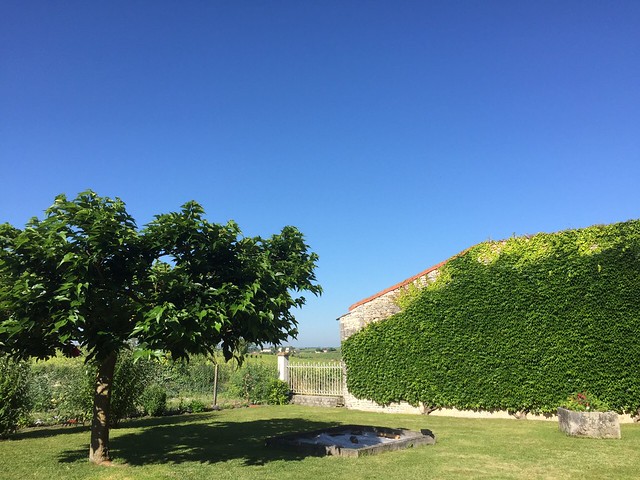
We have a huge vine which covers the wall of a building at the edge of our garden.
Untitled

The other day I was sitting under the mulberry tree and I heard a strange noise – like water droplets falling on the vine (but it wasn’t raining, and the vine wasn’t being watered!)

I took this little video – turn up the volume and listen very carefully

The noise is the vine, popping those little shells off it’s flowers – see –

Untitled

Have you ever heard anything like that?

It’s been happening every day since – just after the sun moves west over the wall so that after being in warm sunlight all day, the vine is now in the shade.

Oh, and at the same time, dozens of bees make their way to vine to find the nectar which has just been made available.

Read Full Post »

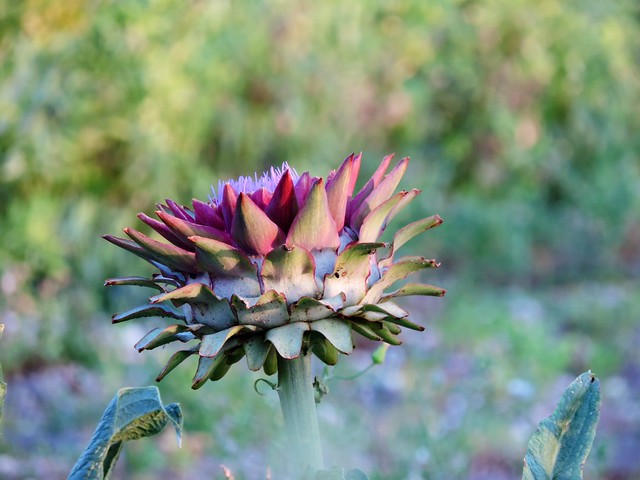
Artichoke bloom

Isn’t this just beautiful?

If you were going to invent a flower, do you think you’d ever come up with one which looks like this?

Aren’t the colours just gorgeous? And what a range of shape and form!

Maybe the main reason I keep this blog going is just to share the sheer pleasure, joy and amazement I experience pretty much every single day.

I hope you stumble across amazing things every day, and if there aren’t any in your neck of the woods today, feel free to browse through these posts and share some of mine.

(Just in case you’re wondering, by the way, this photo today is of an artichoke flower)

Read Full Post »

« Newer Posts - Older Posts »