Feeds:
Posts
Comments

Archive for the ‘from the dark room’ Category

Paris Spring

If you choose to look for beauty you can find it very easily. There is so much beauty in this world.

Setting an intention is a good way of raising your level of awareness and increasing your chances of making what you intend transpire.

Why not try today? A simple thought or affirmation will do. You can write it down or just think it.

I am going to see beauty today.

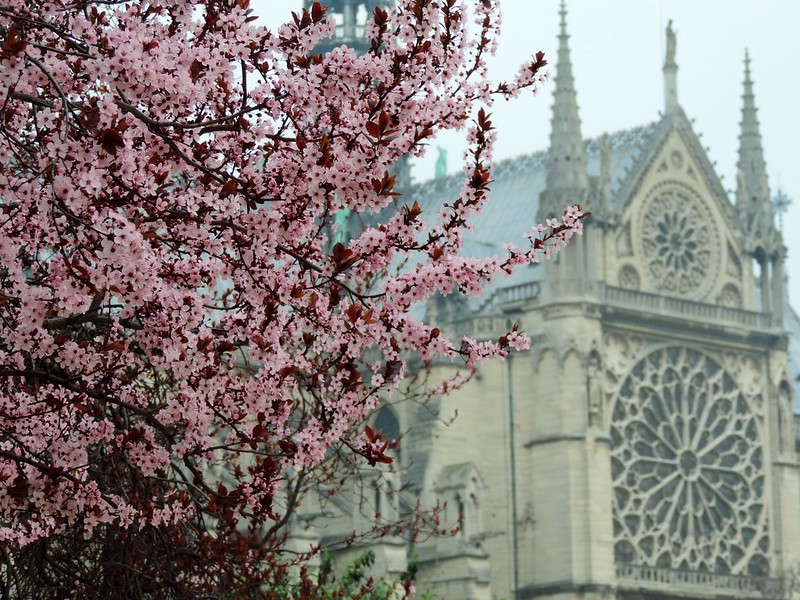
Beauty, it is said, is in the eye of the beholder. Look at this image here. Do you agree it is beautiful?

For me, the image itself is beautiful (if you agree you’ve already started seeing what is beautiful today)

I see beauty in Nature every single day. This cherry blossom is gorgeous for me.

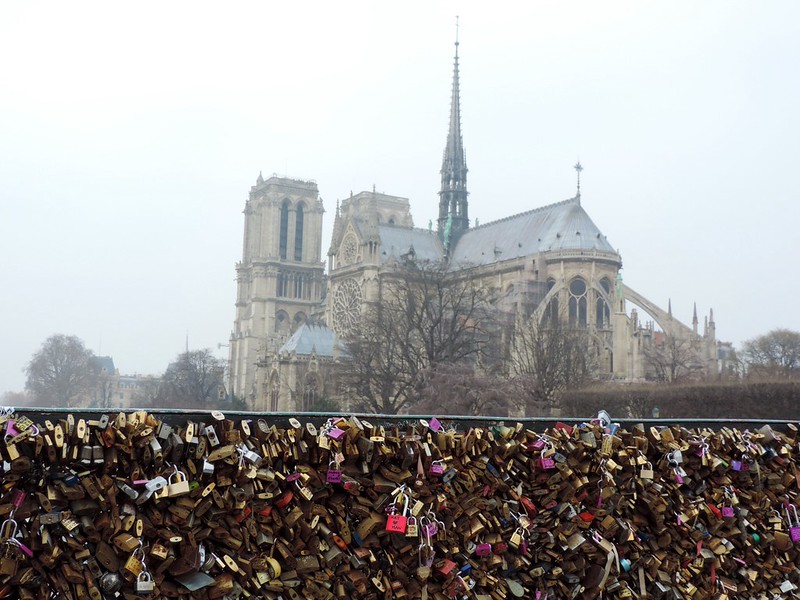
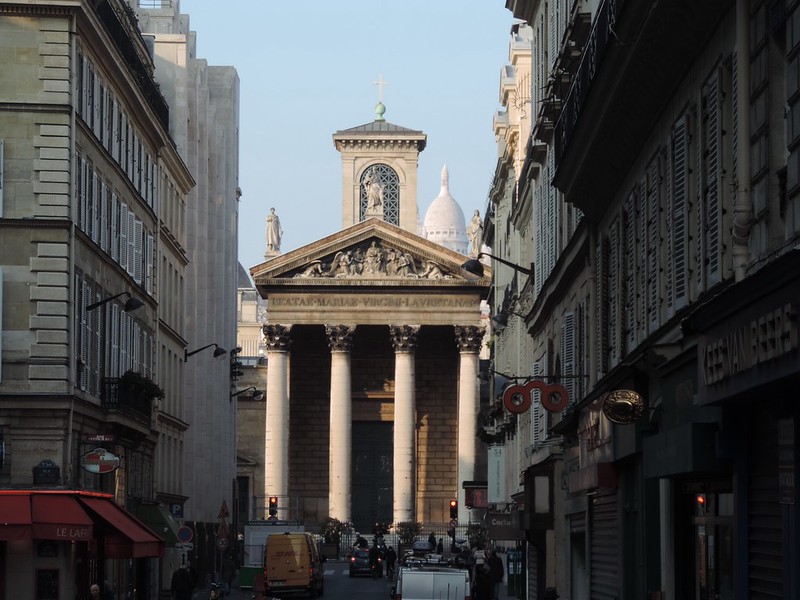
But I also see beauty in creation – in art, architecture, design and so on. Look at Notre Dame from this angle. Isn’t it beautiful? Isn’t it an astonishing creation?

And finally, look at them in relation to each other. Such different kinds of beauty, the one enhancing the other.

When you look for beauty, and you see beauty, and you contemplate beauty, how does that influence the quality of your day?


Read Full Post »

Pont de l'Ardevêché

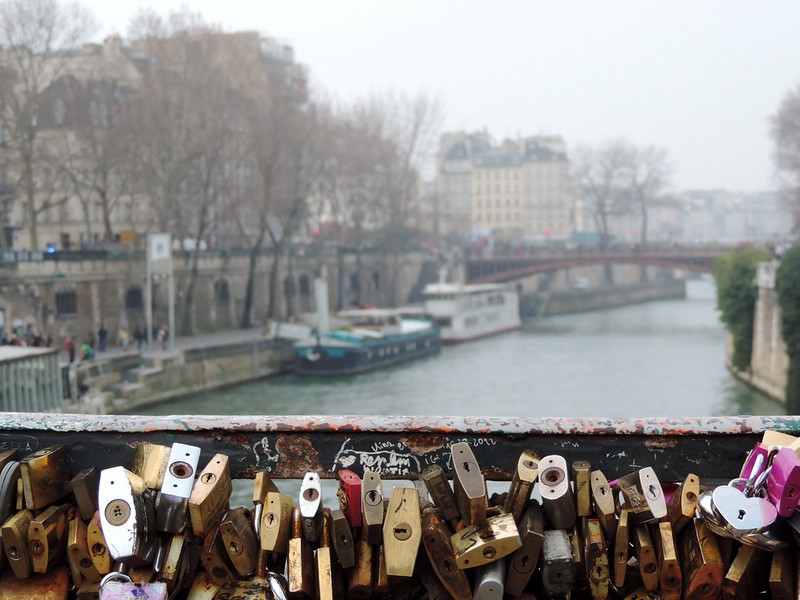
On the Pont de l’Ardevêche in Paris lovers fasten a padlock to the bridge, or more likely to other padlocks padlocked to the bridge, then they throw the key in the Seine.

Love locks Paris

It sounds a bit silly, or like a fad, but when I walked onto the bridge, and I saw the immensity of it, every single lock the physical marking and declaration of the love between two people, I was deeply, and suddenly, moved.
It is beautiful, not in an artistic way, but in that way in which we humans make the important invisible visible.

I thought of the loving wishes hung on temple trees in Kyoto, similar, but very different……

wishes

Then I turned and saw Notre Dame, that incredible cathedral of great beauty, and I kneeled down and took this.

Love locks

How many ways to make the important invisible, visible?

Read Full Post »

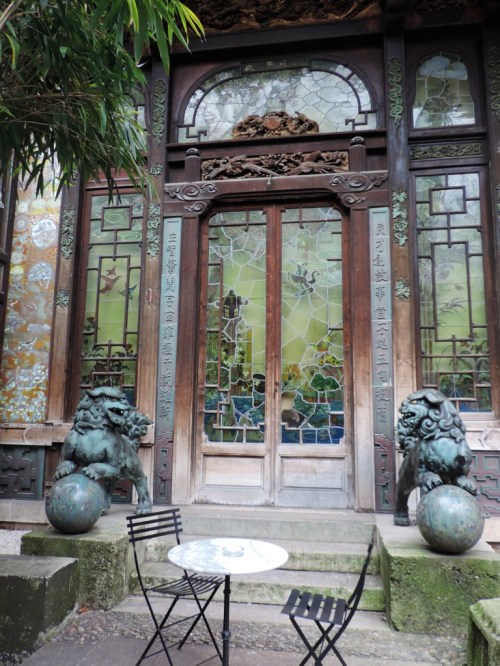
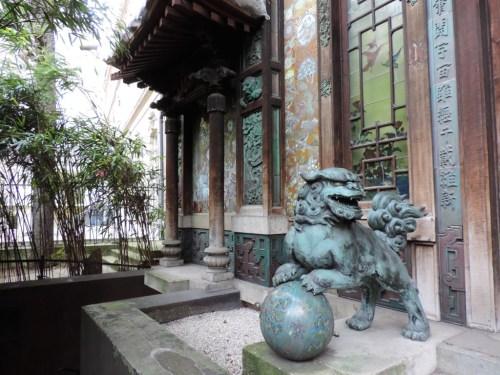
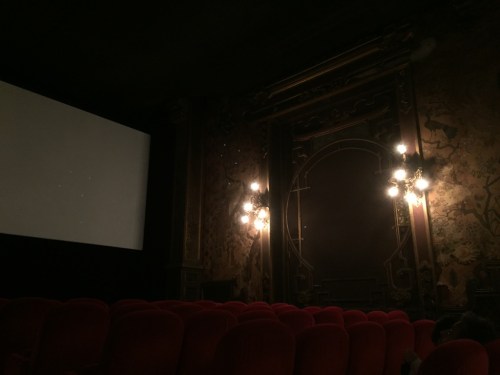
Recently when I went to Paris I discovered a magical cinema – La Pagode

You can see some of the photos above.

I went to see a movie in the main auditorium which is called the “Salle Japonaise”.

There is often something magical and enchanting about going to the movies, but it seems to me that most multiplexes take some of that magic away.

The physical spaces where we have our experiences definitely colour, or even determine, the quality of the what we do there.

How I wish I could find more truly magical cinemas like the Pagode! 

Read Full Post »

DSCN3272

In my A to Z of Becoming, one of the K verbs is KISS.

What makes us human?

There are many answers to that question of course, but it strikes me that art is one of the answers. Why art? For me, partly because art is an act of creation, and I think creating is at the heart of becoming. But also because I think art enchants life.

It seems to me that there is a lot of dis-enchantment around, so I’m exploring the ways in which we can re-enchant our lives.

Art can rekindle the magic in our lives. And, wow, can human beings create art?!

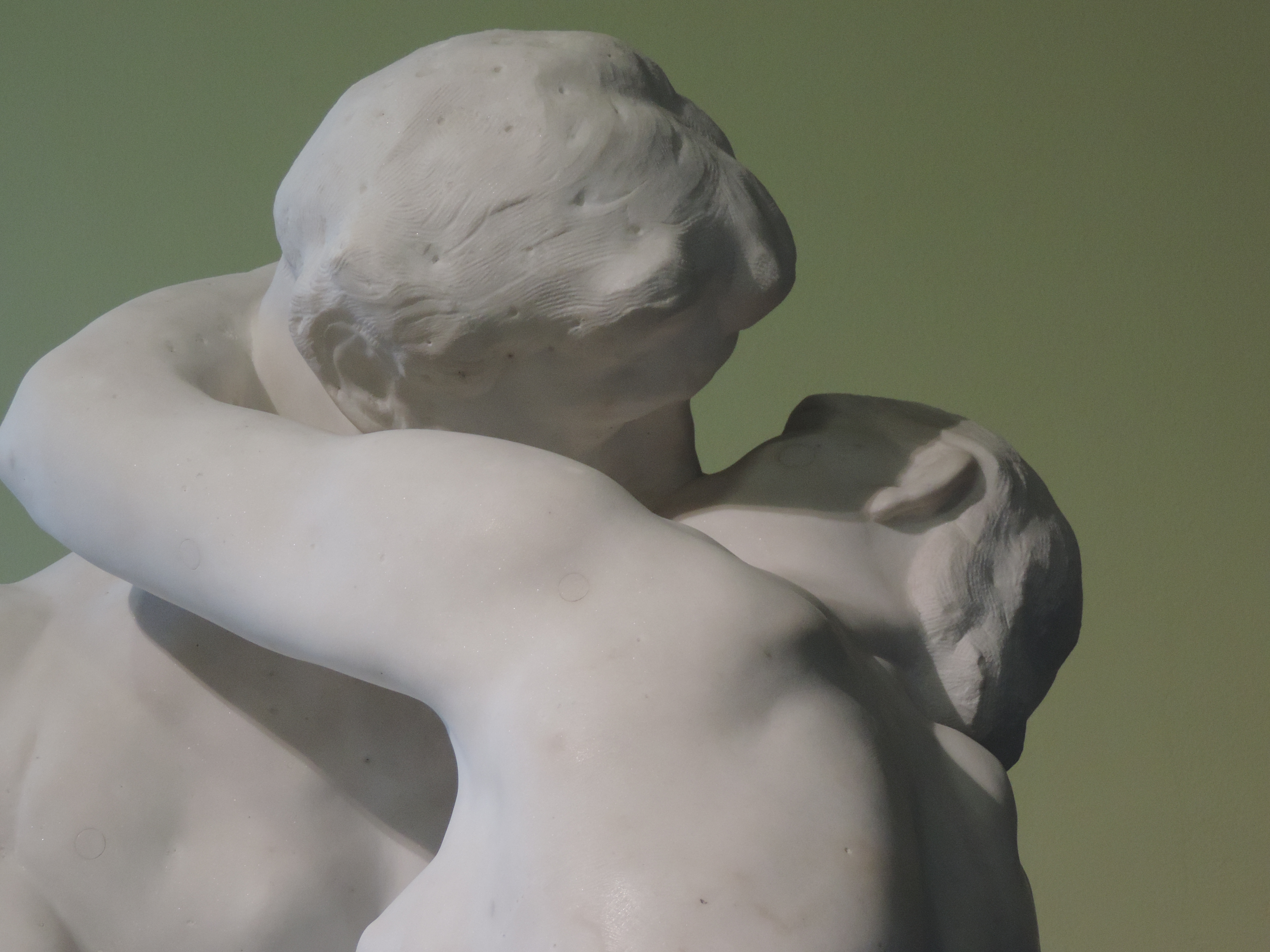
I was lucky to be in Paris last week, and popped into one of my favourite places there – the Rodin Museum. The main building is being refurbished just now but many of the great works were on display including “The Kiss”. I don’t know how many times I’ve been to the Rodin Museum but every single time the work astonishes me. That these soft, flowing, sensitive and sensual forms can be carved out of a block of marble! Really, it takes my breath away.

And look at this kiss. What a kiss!

Sometimes I think words aren’t enough…..art and kisses……words can’t substitute for either.

Read Full Post »

Cou cou

Sometimes, rather than the big, in your face, can’t miss it experiences grabbing your attention, it’s the little, subtle ones which are really the best.

Sacre Coeur from afar

See Sacre Coeur peeking over the end of the street?

Read Full Post »

Louvre

This is a passageway.

It runs from the Rue du Rivoli through to the main entrance to the Louvre.

Wow! If you’re going to make a passageway, you may as well make a grand one!

Life’s a bit like that…..or it can be. The best bits aren’t just being here, or being there. They can be inbetween, on the way (sometimes known as where you are right now!) …….don’t miss it while thinking about where you were and where you are going to be all the time!

Becoming not being…..

Read Full Post »

Charge your batteries

I was surprised to see this street in Paris with its row of recharging stations, and every one of them occupied by an electrically powered car having its battery recharged.

An encouraging sight in a city battling with air pollution issues, in a world undergoing climate change.

It also provoked a few moments of thought about how I re-charge MY batteries, and I thought it might be good to ask you what you do to re-charge yours? Are you aware of your energy levels on a day to day basis? And if you are, do you do anything about it? Burn up, store or re-store your energy?

Oh, and I also just found the shot I took to be really pleasing. I applied one of the “Photos” filters which came already installed on my iPad……nice, isn’t it?

Read Full Post »

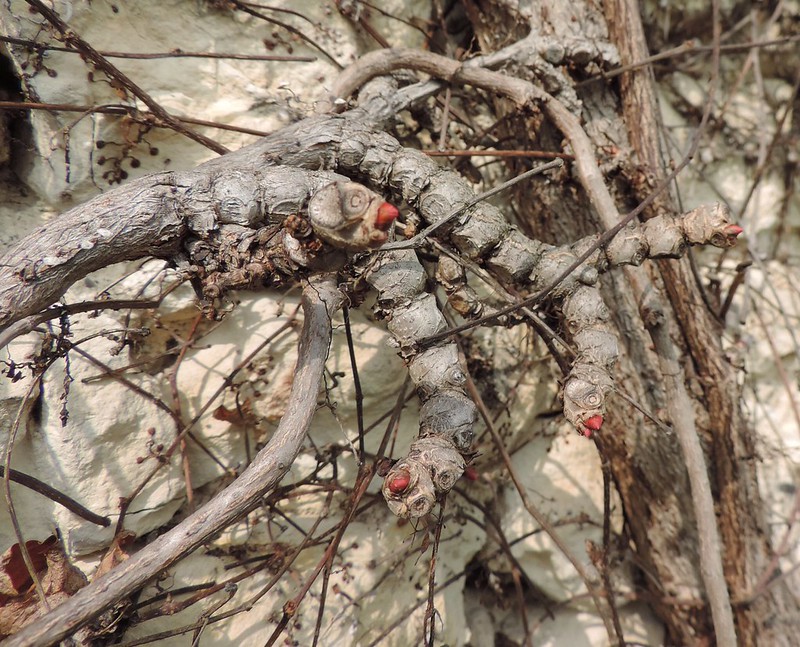
Spring vine

If this vine doesn’t look like a little creature sticking its beak out to feel the sun, I don’t know what it looks like.

Spring – such a fantastic season to be aware of change and how all of Life is in the process of becoming….

Read Full Post »

Lens

In my A to Z of Becoming, J can stand for the verb “join”.

When we think of “joins” we might think of connections, or of interfaces. We can think of bonds and relationships. We can think of the quality of a connection.

Iain McGilchrist, in his Master and His Emissary, shows clearly how the two halves of our brain are well designed to approach the world in two distinct ways – the left hemisphere tends to approach the world by drilling right down, by isolating parts and examining them. It’s great for focus and for labelling or categorising. It is largely responsible for how we see the world as full of “things” – objects which are separate from each other.

The right hemisphere, on the other hand is great at putting things together, seeing the patterns of connections, focusing on the relatedness rather than on the things. This approach to the world doesn’t see anything as isolated and unconnected. It’s great for seeing the contexts, for appreciating the whole without breaking it into parts.

He makes the point that our societies have developed in a strongly “left hemisphere way” and suggests it would be better if we got our right hemispheres working more effectively, and, especially it would be better if we used our whole brains instead of only half of them.

So, here’s something to explore this week. Instead of using the lens of objects and parts, how about looking for the joins? How about seeing the connections, reflecting on the relationships in your life? I don’t just mean the relationships you have with other people. I mean the relationships between you and the world….the world of objects, as well as the world of other subjects!

Whatever you turn your attention to next, see if you can put it in its context, see if you can see it as a transient, emergent part of the whole, see it as inextricably part of the flow.

Here’s a passage from the teaching of Thich Nhat Hahn where he uses a piece of paper to illustrate this idea beautifully –

If you are a poet, you will see clearly that there is a cloud floating in this sheet of paper. Without a cloud, there will be no rain; without rain, the trees cannot grow; and without trees, we cannot make paper. The cloud is essential for the paper to exist. If the cloud is not here, the sheet of paper cannot be here either. So we can say that the cloud and the paper inter-are. “Interbeing” is a word that is not in the dictionary yet, but if we combine the prefix “inter-” with the verb “to be,” we ha vea new verb, inter-be. Without a cloud and the sheet of paper inter-are.

If we look into this sheet of paper even more deeply, we can see the sunshine in it. If the sunshine is not there, the forest cannot grow. In fact, nothing can grow. Even we cannot grow without sunshine. And so, we know that the sunshine is also in this sheet of paper. The paper and the sunshine inter-are. And if we continue to look, we can see the logger who cut the tree and brought it to the mill to be transformed into paper. And wesee the wheat. We now the logger cannot exist without his daily bread, and therefore the wheat that became his bread is also in this sheet of paper. And the logger’s father and mother are in it too. When we look in this way, we see that without all of these things, this sheet of paper cannot exist.

Looking even more deeply, we can see we are in it too. This is not difficult to see, because when we look at a sheet of paper, the sheet of paper is part of our perception. Your mind is in here and mine is also. So we can say that everything is in here with this sheet of paper. You cannot point out one thing that is not here-time, space, the earth, the rain, the minerals in the soil, the sunshine, the cloud, the river, the heat. Everything co-exists with this sheet of paper. That is why I think the word inter-be should be in the dictionary. “To be” is to inter-be. You cannot just be by yourself alone. You have to inter-be with every other thing. This sheet of paper is, because everything else is.

Suppose we try to return one of the elements to its source. Suppose we return the sunshine to the sun. Do you think that this sheet of paper will be possible? No, without sunshine nothing can be. And if we return the logger to his mother, then we have no sheet of paper either. The fact is that this sheet of paper is made up only of “non-paper elements.” And if we return these non-paper elements to their sources, then there can be no paper at all. Without “non-paper elements,” like mind, logger, sunshine and so on, there will be no paper. As thin as this sheet of paper is, it contains everything in the universe in it.

Read Full Post »
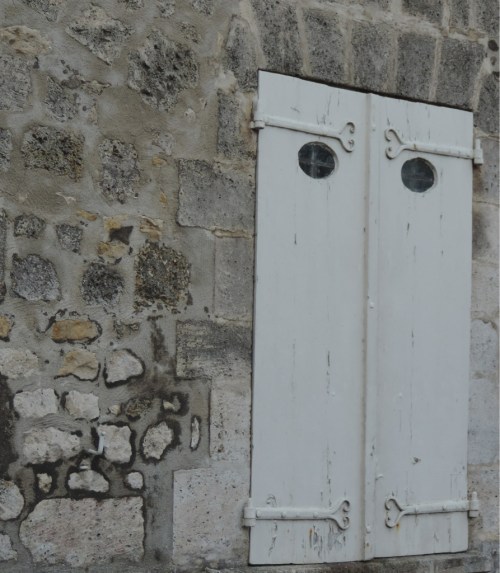
This is a very unusual set of shutters because shutters in this part of France virtually never have any openings in them. When they are closed they are closed, and when they are open they are open. But these ones have little oval windows in them. What do you think they are there for? To let some light in? And/or so the residents can peek through to see out into the street? I think it’s to let some light in actually, because they are very high up, but, then, who knows, the residents might be very tall!

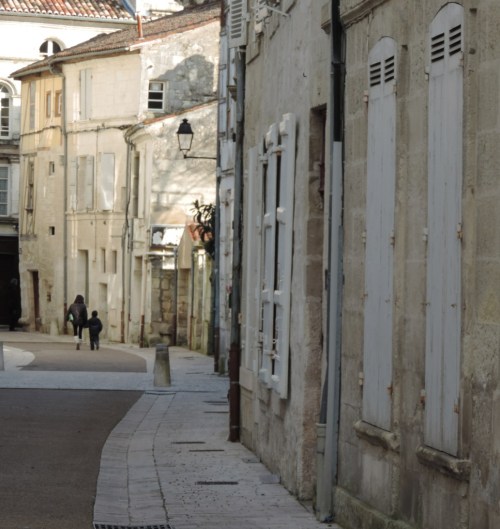
There’s a saying here which goes something like “Pour vivre bien, vivre caché” – “To live well, live hidden”. A common style of property in the Charente includes a high wall around the courtyard or garden and a big arched entrance filled with a solid wooden door. When most of the houses in a street have their shutters closed, a town can seem almost uninhabited.

What fascinates me about this idea of shutters, and high walls, and huge gates, is that the people in this part of the world seem to be amongst the friendliest, most welcoming and sociable people I’ve ever met.

Richard Sennett, who talks about the idea of “open cities”, argues that “integration” is about trying to make everyone the same. In that sense, integration promotes homogeneity, and so reduces us all. He suggests it’s better to learn how to live well together respecting our differences. Living together then becomes a matter of choosing how to relate, how to interact when we meet in our shared spaces, whilst respecting the uniqueness, the values and the choices, which privacy protects in our own homes.

I don’t think any of this is easy, but I’m intrigued by this apparent paradox of separateness and belonging which lies at the heart of all our lives.

I think it also emphasises the contact points we have – the interfaces, or edges where we connect. Look at this door buzzer for example –

What does this contact point say about the person who lives here?

What about your own contact points? Your edges? How do you use art, colour, design or symbols at your boundaries between self and other? Consciously, or otherwise!?

Read Full Post »

« Newer Posts - Older Posts »