Feeds:
Posts
Comments

Archive for the ‘from the living room’ Category

“There are no straight lines in Nature”

I don’t know where this teaching comes from, but it’s not true.

There are plenty of straight lines in Nature. OK, maybe they don’t cover great distances in the way manufactured lines do (I’m thinking railway lines and Roman roads) but they are everywhere, all the same.

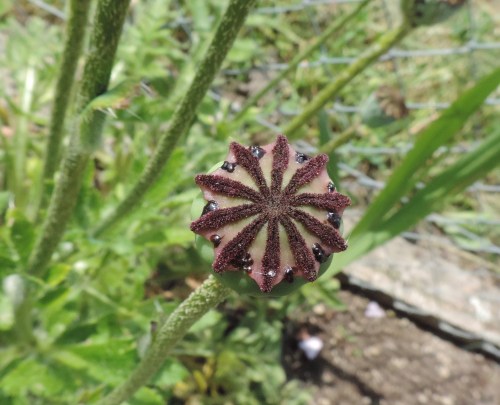
One typical expression of straight lines is “radial” – they start at a centre point and radiate out in many directions from there. This poppy bud in the image above is an example of that.

Not straight enough for you? Well, how about this?
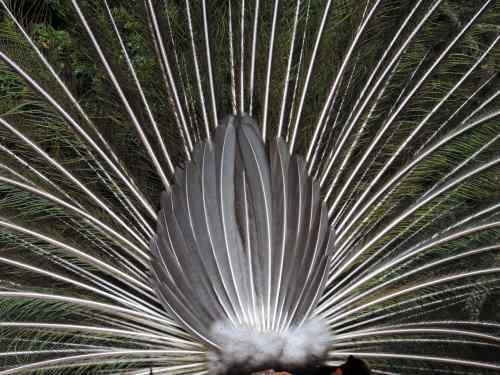
Do you know what that is? Let’s look from the other side….
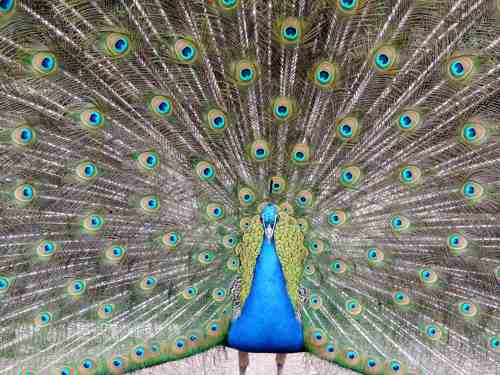
Plants show this “radial” spread of straight lines too.
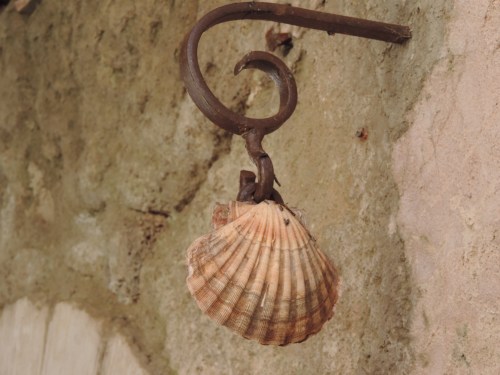
As do shells…
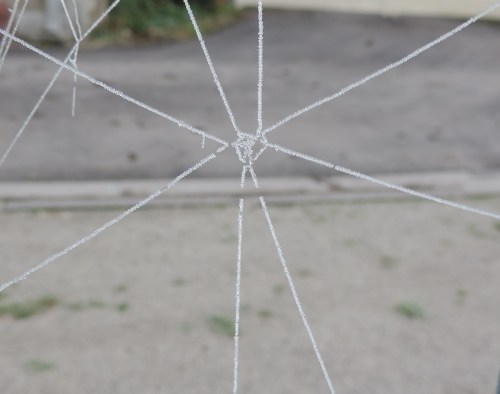
and spider webs
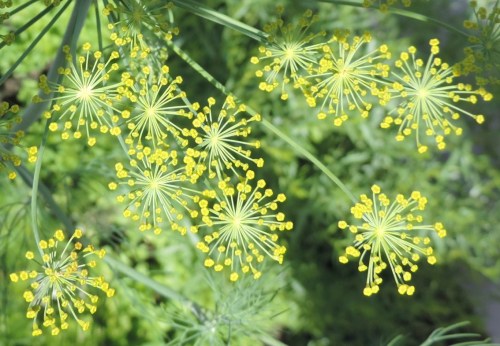
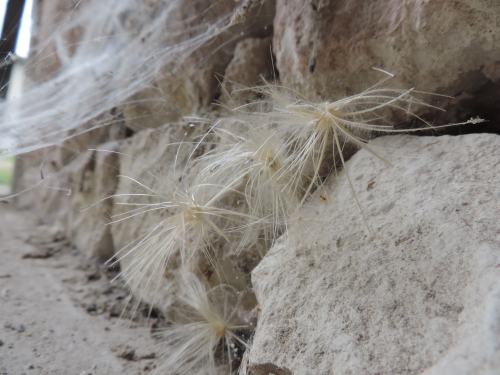
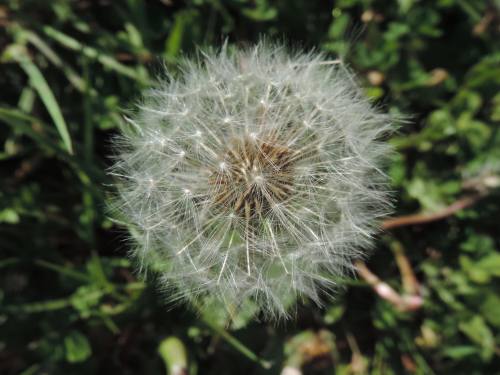
Seeds designed to be carried by the wind use this pattern of radiant straight lines from pointed origins too.
We pick up on these patterns and use them in our art and architecture.
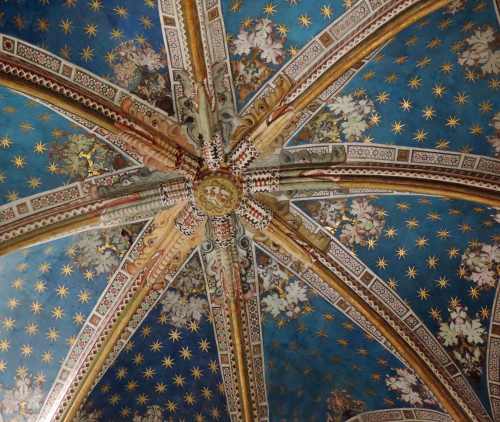
Have a look around today and see where you can spot this pattern. When you do find it, do you think it is beautiful?

One of the things I really like about these “radiant” straight lines is that each line has a beginning and an end, just like a good story. You can see where it has come from and you can see where it is going. It reminds me of a concept from Deleuze and Guattari, which they named “lines of flight”. When I read about this I saw its relevance to complex systems. You might have read elsewhere on this site about “complex adaptive systems” (if not, why not pop that phrase into the search box on the top right of the page and see what comes up?). The complex systems model does more than explain living organisms, it reveals a lot about the underlying structure and function of the universe.

Complex adaptive systems tend to move towards “far from equilibrium” zones. This is what gives them their dynamism, their points of growth and their ability to change. But how do they get there, to those “far from equilibrium” zones? By following particular “lines of flight”.

One of the reasons I liked that so much was it helped me unravel the stories my patients told me. One of my most favourite questions to ask was “When did you last feel completely well?” It often took patience and time to get a clear answer to that question, but time and time again it revealed that the chronic ailment from which the patient was suffering, began either after a particularly severe trauma, or from a phase of life where the traumas piled up on each other, one by one. I wasn’t trying to prove causation, but following the narrative line from that time forwards to the present often revealed both the nature of the traumatic impacts, and, crucially, the adaptive strategies the person had employed (probably mostly sub-consciously) to cope.

Lines of flight, and radiant lines, are typically multiple, and they are also highly unlikely to exist in isolation. However, unravelling what they are, where they intersect, and how they influence each other, is, I believe, at the heart of understanding a person and their life.

I’ll leave you today with another depiction of lines – well, two pictures actually, and neither taken by me –
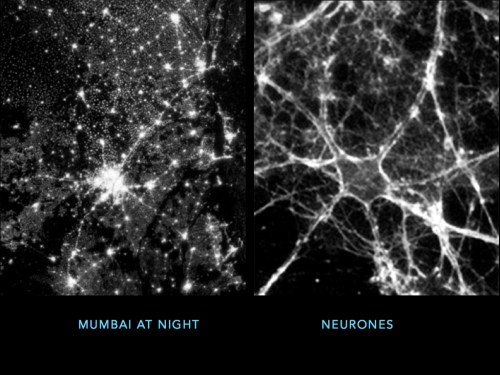
On the left is the image of Mumbai at night, photographed from a satellite. On the right and image of neurones in a section of a brain. Interesting to think how this structure of intersections and nodes connected by straight lines scales up and down through the levels and dimensions. But I’m taking the original idea of straight lines a step further now, by seeing them in their context.
Read Full Post »

Yesterday I was looking for spirals, one of my most favourite shapes in the universe. Today I’m looking for circles, or more specifically, concentric rings. They are another of my most favourite universal shapes.

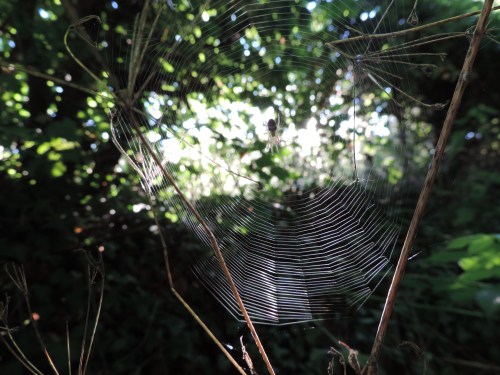
I’ve taken a lot of photos of spider webs over the years, and, believe me, they are very, very different. This one is a classic of type, though, isn’t it? You can see how ring after ring has been spun to create this fabulous pattern.

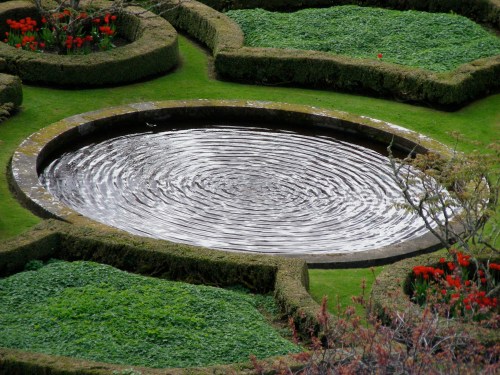
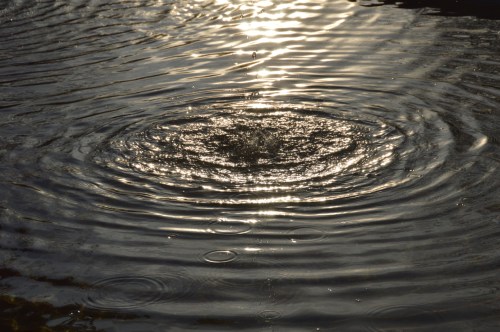
The commonest place to see this pattern is on the surface of a pond or a still lake. It always reminds me of the basic fact of influence – how whatever we do or say ripples out into the universe, connecting with, and influencing whatever the waves reach. That’s one of the main reasons I’m so particular about what I write and share. I always hope that whoever encounters these words and images is stimulated in some positive way.

This is one of the most impressive examples I ever came across, in the gardens of Dunrobin Castle in the north of Scotland. What really grabbed my attention in this one was, firstly, the completeness of the pattern, the concentric circles filling the entire pond, and, secondly, unlike where there is a fountain setting off the waves by dripping water into the centre of the basin, in this one there is no fountain. What’s making the ripples?

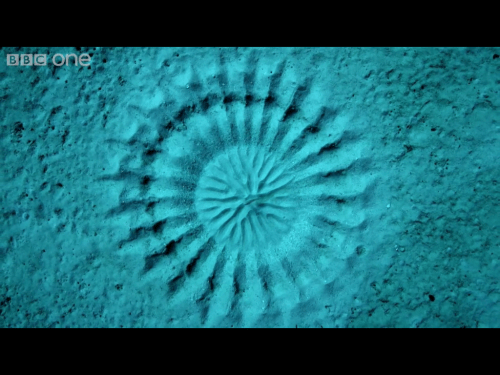
This is the pattern created on the sea bed by a little Puffer fish. It makes this beautiful pattern in the sand to attract a mate.

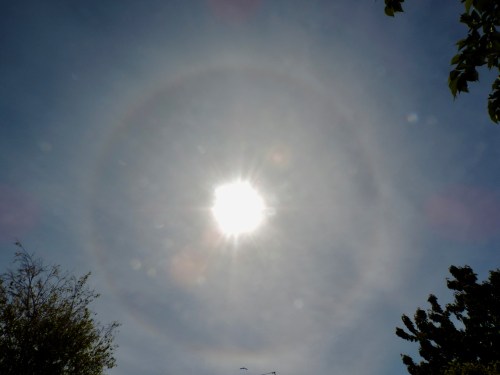
I recently saw a concentric circles pattern in the sky, when the Sun appeared with a corona – yes, a corona during the corona virus pandemic!

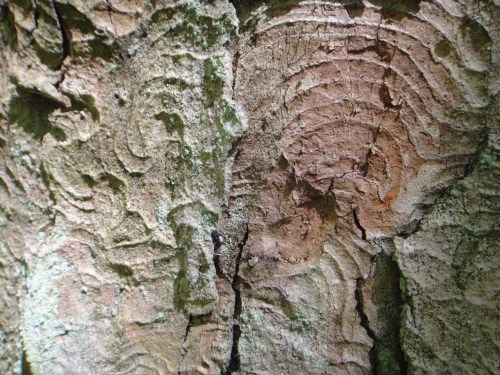
And, it’s not hard to find this type of pattern in wood, is it?

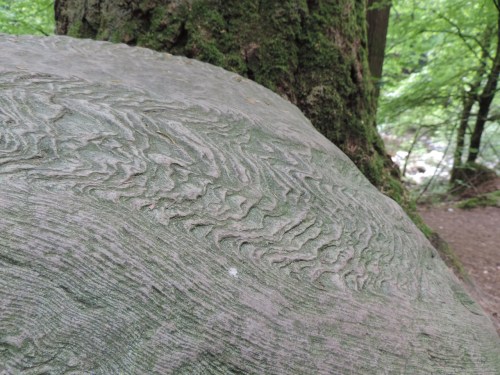
or even in rocks

You can see that I’ve extended the symmetrical concentric ring idea to a much wider variety of irregular ripples, but I think those two patterns are really just different expressions of the same underlying force – the end result depends on the context, the borders and limits set by the environment.

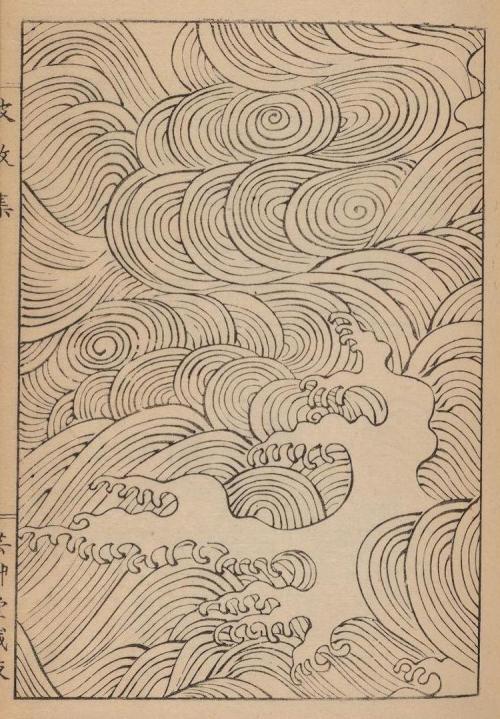
Japanese art combines spirals, concentric circles and ripples to create a beautiful and very distinct style.

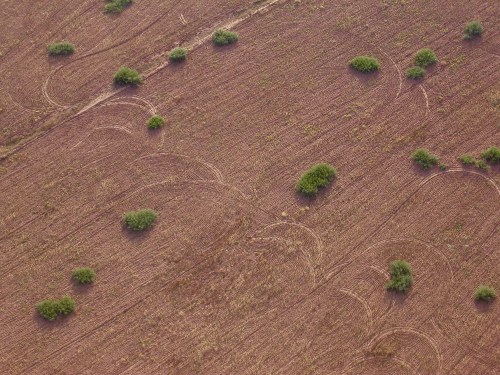
It even influences what I can see on the surface of the Earth when I’m flying above it in a hot air balloon!

OLYMPUS DIGITAL CAMERA

How about you?

Have you seen any beautiful spirals, circles or ripples recently?

Read Full Post »

Sometimes I like to collect images of similar shapes or patterns. Today, I’d like to share some spirals.

The spiral is one of the most beautiful forms in nature and art. I think it is at the heart of our universe and tells us something interesting about the course of a life.

It seems to me that rather than running along a straight line, our lives often follow more of a spiral pattern, revisiting old issues and events time and time again, but each time from a different perspective. If we are growing those spirals drive forward movement and a deepening of our understanding. If we aren’t then we spin round and round the same issues until we learn from them.

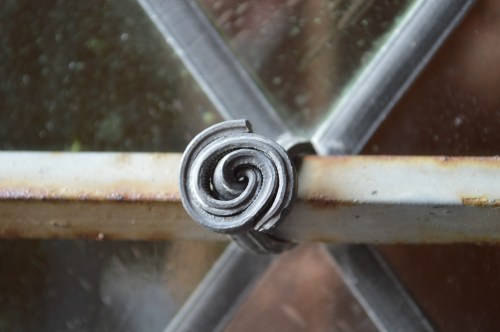
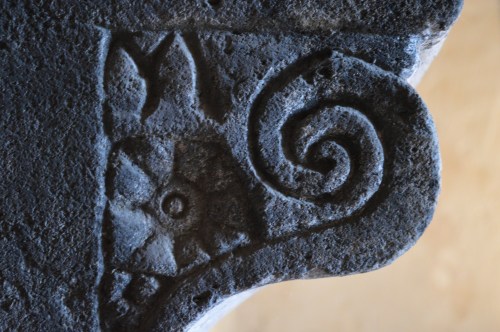
That first image is on a window fitting in the chateau where Montaigne lived. Here’s one from a mantelpiece inside that same chateau.

Some spirals you could draw with one line, but what appeals to me so much is how this enfolds two spirals into the one motif.

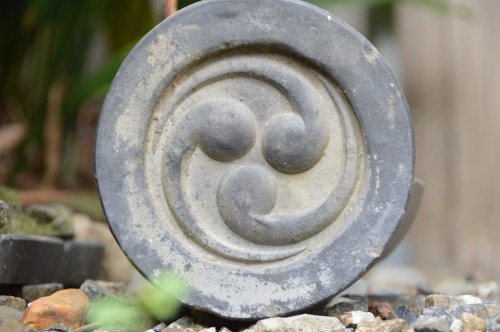
Here’s an example, found commonly in Japan, of three entwined spirals.

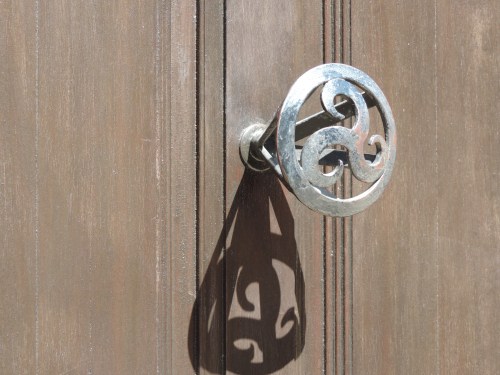
And, here’s a triple spiral where each one is spirally outwards, rather than in towards a central point. Although I completely agree you could see that in completely the other direction….as a gathering from three directions towards a single, common, point.

That’s a simple doorknob, but how beautiful is it? Especially with its triple spiral shadow cast onto the door.

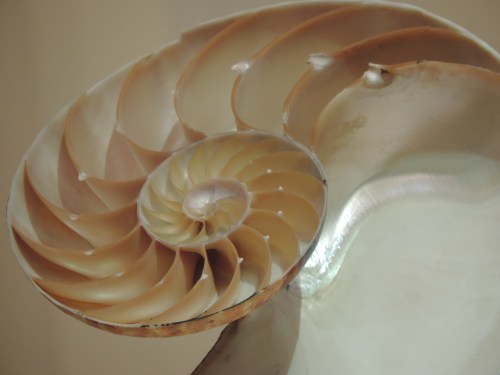
Nature loves spirals too. Here’s a section through a seashell – I found this particular one in the Museum of Scotland in Edinburgh.

At the opposite end of the scale, here’s a photo of a star being born….

I saw this while browsing the web this morning, and I think it’s what set me off in this spiral-gathering exercise!

Do you have any images of favourite spirals?

Read Full Post »

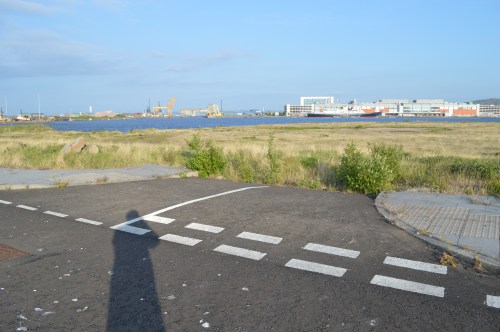
I took this photo seven years ago. At the time my daughter and her family were living in an apartment on the waterfront along from Leith. There was a whole development of towers of apartments in that area and, obviously, plans to build a whole lot more. But the market collapsed and the other buildings were never constructed. Seven years on, I’m pretty sure nothing much has changed there.

At the time I thought this was a pretty powerful image of unfulfilled plans. The developers created this junction in the road, and even painted the give way marks on the road for anyone arriving here from the road which hadn’t been laid yet. They must have been pretty confident the rest of the development was going ahead, but it didn’t.

Here we all are in the midst of this pandemic and what’s happened to our well laid plans for 2020? I had a couple of visits to family and friends booked, and we had arrangements in place for some friends to visit us here. All of that has been cancelled.

What plans did you have for 2020 which you’ve had to cancel?

I’m sure we’ll all be sharing feelings of disappointment and frustration because of our cancelled plans. But in the big scheme of things, for me, at least, it could have been worse!

What can we do when plans get cancelled?

Accept and adapt. There’s no point raging against the universe, the virus, the government, the airline, or whatever. This is just how things are. I can’t change any of that.

What I can do is adapt.

That’s not just a matter of making new plans to replace the old, cancelled ones though, because we are still in the midst of heightened uncertainty. Nobody knows how long this is going to last or what the “new normal” will look like the other side. So, it doesn’t feel like a time for making detailed new plans.

Here are some of the ways I’ve been adapting. Firstly, savouring the day. I am noticing more, delighting in small every day experiences, relishing small pleasures. Secondly, I’m creating more. In particular, I’m writing a lot. I’m enjoying that. Thirdly, I’m not making detailed plans for the future but I’m actively engaged in reflecting on what’s important to me and how I might like to live in the immediate few years ahead.

As restrictions ease, and the “new normal” emerges, I hope I’ll be better placed to live a life filled with enhanced daily wonders and delights, a healthy flow of creativity, and the ability to make and prioritise good, achievable plans based on my own personal values.

Here’s where the title of this post came from………..

From – To a Mouse, by Robert Burns

But Mousie, thou art no thy-lane,
In proving foresight may be vain:
The best laid schemes o’ Mice an’ Men
          Gang aft agley,
An’ lea’e us nought but grief an’ pain,
          For promis’d joy!

Still, thou art blest, compar’d wi’ me!
The present only toucheth thee:
But Och! I backward cast my e’e,
          On prospects drear!
An’ forward tho’ I canna see,
          I guess an’ fear!

Read Full Post »

There is always another way.

I don’t believe people who say there is only way to do something. There are always other options, other choices to make, all dependent on our preferences, values, beliefs and particular circumstances.

Margaret Thatcher famously said “There is no alternative” – which was shortened to “TINA”. It wasn’t true then, and it’s never been true since.

I’m suspicious of algorithms and protocols because they tend to marshall everyone down the same pathway in order to produce the exact same outcome. But we are all different, and we are all living our every day lives, moment by unique moment, in each of our individual and particular circumstances. The more generally “TINA” is applied, the more inappropriate it is.

It’s been frustrating to hear politicians say they have been “following the science” all the time during this pandemic and that they have “taken the right steps at the right time”.

There is no “the science”.

Science is a methodology. It’s a way of considering the world, of exploring and attempting to understand it. The scientific method doesn’t produce end points. “IT’ is never finished. There is always more to discover, more to learn. Science is about doubt, not certainty. The findings and analyses of scientists can increase our understanding but they will never be set in stone, fixed for all time.

There are no “right” steps to take at “the right time”. There are just the steps we choose to take, in good faith, or carelessly. There are just the steps we choose to take now. They say hindsight has “twenty twenty vision” (or will we say in the future “2020 vision”?) but that’s not true either. Things just look different when we look back. Looking back is just a change of perspective. Not a perspective we had at the time.

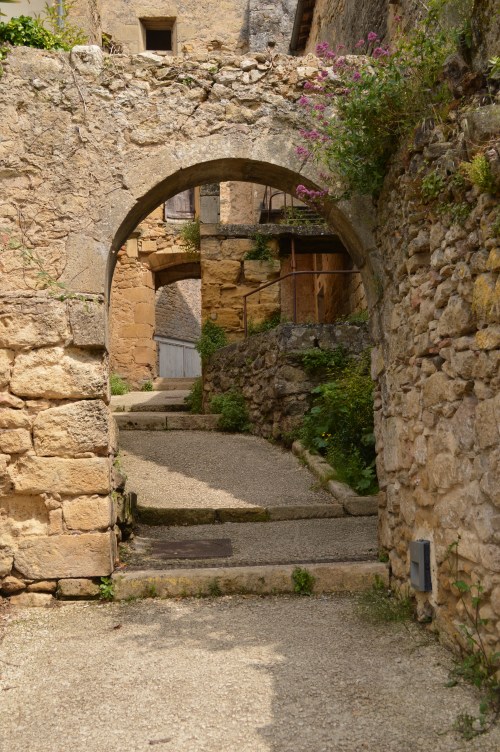
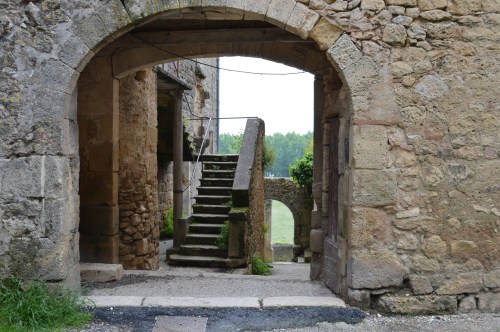
Here’s the same passageway, viewed from the other side – looking back to the way we came, where the first one was looking forward to the way we were going.

Change the perspective, change the understanding, change the options.

There is always another way.

Read Full Post »

We’ve reached a stage in this pandemic where more and more people are beginning to think about the “after life” – no, I’m not thinking about a life after death this time, I’m thinking about the life after the pandemic. Will there be a “reset” or a “bounce back” and everything will return to how it was before? Or will there be sufficient public and political will to learn the lessons and create a different, more robust, more resilient society in the future?

I’m more drawn to the latter idea because it seems pretty clear that we got into this mess by doing what we were doing. If we want to avoid the next catastrophe we have to stop doing that and do something different.

This photo stimulates some of these thoughts for me. You can see how this building has changed radically over the years. There is half an arch….what happened to the other half? It was removed to create that doorway on the right? There is half a lintel, and it’s pretty likely that the other half went the way of the missing half of the arch. The window that was there has been blocked up with stones, then either some of them have fallen out, or someone has knocked a hole in them to let some light in again. All in all, you can see that the present has emerged from the past. You can see the traces of how things were which determined how things would become.

There’s an orthodoxy around which seems to claim that the only way this pandemic will be “brought under control” is with a mass vaccination programme. Well, good luck with that. Hasn’t worked so well with the other emergent epidemic viruses in recent years, has it? Or a new “treatment” will be discovered which will reduce the severity of the impact of the virus on people who catch it. Maybe. But then what about the next one? Will the new “treatment” work for that too?

What do we know about the severity of this new disease? It hits the elderly, the poor, and the disadvantaged far, far harder than the young, fit and relatively wealthy. Is it any surprise that it hits those with “underlying conditions” harder than the fit and well? Is it any surprise that it’s exactly the same groups, the elderly, the poor and the disadvantaged who are most likely to have “underlying conditions”?

There’s a common theme there, isn’t there? Can we start with that one? If we are going to construct a new society in the “after life”, can we address our attitudes towards these sections of the population and ask how we are caring for them? Could we do better? Could we create better, healthier, more resilient lives for the elderly (maybe by valuing them more, perhaps?) Could we do the same for the poor (maybe by making them less poor, perhaps?) Could we address inequality and prejudice to improve the lives of those who are disadvantaged (maybe by making them less disadvantaged, perhaps?)

Then there are our values. Is it time to shift from consumerism to humanism? To recreate our economies around people and relationships rather than things and money? Is it time to move towards sustainability instead of single-use throwaways? To renewable energy instead of resource depleting forms? Is it time to nurture the local and the particular, rather than the global and the general?

What about our relationship to the rest of Nature? Can we decide to treat animals differently? To change the way we farm and produce food? To change the way we live on the land?

What about work? Is it right that the masses of people who we now think of as “essential workers” are amongst the least rewarded in society?

What about health and social care? Don’t these two sectors need to be integrated and better resourced? I read an interview with some French Hospital Consultants today, and they said that during this crisis, the relationship between the frontline doctors and nurses and the management had changed. Now the doctors and nurses said what needed to be done and got on with doing it, while the managers listened and then acted to do their best to enable the doctors and nurses to do what they had to do. Prior to this, somewhat amazingly, the system had evolved into one where managers set goals and targets, and told the doctors and nurses what they could and couldn’t do. Well, there’s one change, at least, that I’d like to see remain!

My point is that I believe we have to start where we are, learn how we got here, and create a different way forward. Don’t you?

Read Full Post »

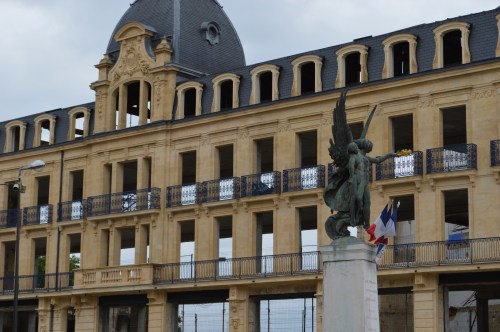
At first glance, this is a beautiful old building with its creamy, yellow stone all cleaned up and looking pretty glorious. But it doesn’t take long before you realise there’s something not right here. Something not whole. There’s no glass in any of the windows, which is the first clue, but when you look through the window frames you see…..the sky. When you walk around the building to the other side you see that there is nothing there. This isn’t a building any more. It’s a facade.

It’s not uncommon for towns to do this. The local authorities demand that the front of the old, beautiful building is preserved whilst the developers are free to demolish every other trace of it and replace it with a concrete, steel and glass box to put little offices or shops in.

It’s kind of sad. And yet, the front remains, and, when well preserved, it retains a lot of its initial beauty.

Have you ever visited a movie set? I don’t mean a movie theme park with rides and parades, but a set. I visited one once and it was the strangest experience to walk through a New York street, only to discover that every single building was a facade propped up from behind with great beams of wood and scaffolding. The building in this photo reminds me of that.

This sets my mind off down two quite different paths. The first is how we all present a certain face to the world. A certain look, style, a certain conformity really. Even when trying to be non-conformist, the “look” recreates conformity. I used to walk from Glasgow Central Station to Glasgow Queen Street Station on the way home from work. I’d pass the Gallery of Modern Art. On the steps of that gallery, goths would gather. Some evenings there would be a few dozen of them. Now, one goth in an office, or a shop, might stand out as really different, but several dozen of them together looked pretty much the same. (By the way, the pigeons used to hang about those same steps in large numbers too and I often wondered if there was some natural association between goths and pigeons!)

Our uniqueness is at its greatest on the inside. It’s not in our clothes, our “lifestyles”, our diets or our habits. We share all of those with many other people. (“Other customers who like X also like Y” – as the algorithms tell us)

So that’s the first thing I wonder about when I look at this photo. It’s uncomfortable because it isn’t “whole”, which, in my book, means it isn’t “healthy”. But, more than that it has no inside. So it’s lost its uniqueness.

The second line of thought is about imagination, because this image reminds me of the movie sets, and I know that whether it’s on TV, cinema or even in a theatre, “appearances” are manufactured to stimulate our imagination. So, I look again at this building and I wonder who built it and why. I wonder about the people who used to work there and how they related to the building they were working in. I wonder about the place this building had on this particular street, in this particular town. I wonder what stories these stones could tell, if only they could speak.

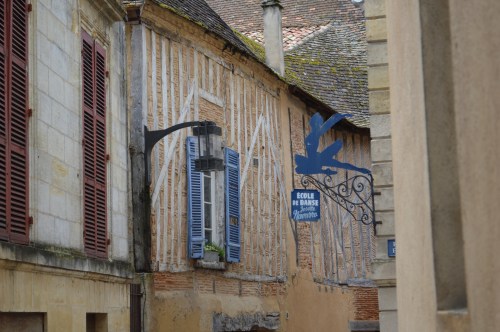
Here’s another photo which picks up that second thread.

Josette Navarro’s Dance School. Isn’t that beautiful? Doesn’t it capture your attention and set your imagination running? What a name! Once I got home I looked up Josette Navarro and her “Ecole de Danse” and she was still giving lessons, but I couldn’t really find much detail about either her or her dance school.

However, I still find this an incredibly evocative image. I love the wind-vane style of the sign with the dancer in full flight. I love the name. “Josette Navarro”. And the fact she has a dance school. I love the blue of the sign and how it echoes the blue paint on the shutters opposite. I love the light hanging directly opposite, and wonder if it casts a spotlight on the dancer at night.

Even when we can’t see what’s inside, what we do see can really stimulate the imagination, and/or bring back memories, such that it’s easy to imagine stories, scenes from movies, drama, romance, or whatever your favourite genre, and just spend a while enjoying that. Following where it leads you.

Read Full Post »

I’m sharing two photos of tiles today. This first one is tiles on a roof. This is a pretty typical roof in South West France. Every one I look at seems beautiful to me. I love these terracotta colours, the shades from dark brown to pale, almost cream. I love the randomness of their placing – you never see a row of one shade, followed by a row of another. It makes me think of diversity and ordered chaos which makes me think of Life – because Life is like this – diversity, variety, uniqueness, difference plus shared features – and an astonishing synthesis, or integration of, order and chaos.

These are old floor tiles. You can see a floor covering like this in many old buildings in France. You see it in churches, castles, mansions, and even some pretty simple country homes. Like the picture of the roof tiles, I love the colours. It’s pretty much the same colour palette in both photos. I also love their ordered chaos, not just in terms of colour, but, physically, each tile isn’t quite “perfect” (as some would call it), and so they say to you “We are made by human hands”. These are not tiles which rattle off a factory production line. That, too, makes them more “alive” for me. But this second photo has another element – light. These little patches of light splashed over the tiles are the polar opposite of shadows but in some way behave in a similar manner. They take this image to another level.

Between them, these are two images evoke some of the most fundamental principles of Life for me.

Read Full Post »

I have a Nigella plant in the garden. This is the time of year when it flowers.

OK, I know, flower pictures are often beautiful, although after a while I can have enough to them, but, stay a moment and allow yourself to fall into the wonder of this gorgeous Nigella flower.

I find it entrancing. Almost other-worldly – except I don’t know any other world where a flower like this would bloom, so it’s kinda typically this-worldly! Do you know what I mean?

I’ve read a few authors who claim we have lost touch with enchantment in our hyper-speed, consumerist, material culture, and I understand what they mean. This pause which has been enforced on so many of us by this Covid-19 virus, has allowed us to slow down, consume less, savour more and pay attention to the present moment world around us.

All that, I find, makes room for enchantment. That’s the word I think of most when I look at this flower. I love the milky, indefinite bluish purple blush of its five leaves. I like that it has five leaves, which sets me off wondering about the number five, and how many flowers have five petals, not three, or four, or more. I think of five pointed stars and pentacles, of magic and alchemy. I love the spiky branching leaves – are these leaves? – they don’t look like leaves – how they seem to reach further and further, like fingers or whiskers feeling their way through space, to see what they can encounter.

I just find it utterly beautiful. Made my day a better day. Hope it casts some enchantment in your life today.

Read Full Post »

Every now and then I’m stopped in my tracks by what seems to me to be “found art”.

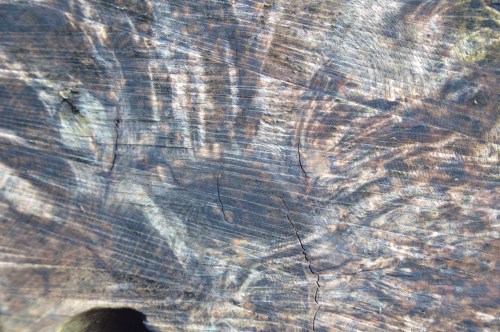
This image is of the end of a tree which has been cut down. There are often beautiful and intricate marks to be seen on the insides of these trees. Marks and patterns which are only revealed when the tree is cut open (which is a bit sad). You know the kind of thing. Concentric rings and swirls and knots. But something has been added here by human hand. The marks of the saw are very visible. What makes them obvious is how straight they are. I remember the first time I read that there are no straight lines in Nature and thinking, “really?” Well, it’s probably not absolutely true but they certainly aren’t common. The longer a straight line, the more likely it is to have been made by a human.

So I’m pretty certain that the patterns, (could I say the “design”?) on the end of this fallen tree, are the result of a combination of the life of the tree and the work of the woodsman.

But just look at it.

What does it seem like to you? What does it remind you of? Where does your mind go when you see this? I expect your mind will intermingle memories with imaginings and you might see……

….an eye – like the eye of Horus, the eye at the top of the pyramid, or some other eye you once saw.

…..a sunburst through the clouds, rays of white or pink or red light spreading across the sky.

….[or add your own images and sensations here]

I like this kind of “found art”, this apparently “accidental art”, partly created by forces of Nature, partly by forces of the human hand, partly by forces of memory and imagination.

Read Full Post »

« Newer Posts - Older Posts »