Feeds:
Posts
Comments

Archive for the ‘from the reading room’ Category

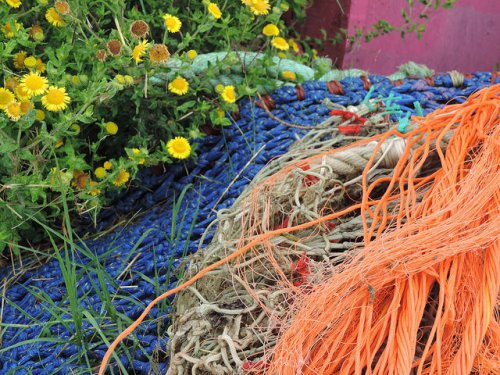
Tiles and moss

Wherever you look on Earth, you’ll find Life.

Whether it’s the moss on the tiles here, or flowers by the roadside, trees, grass, insects, birds, fish……and, if you use microscopes, you can find bacteria in every environment on, and in, our planet.

There is Life in the most astonishing places. In the mouths of volcanoes, deep, deep under the sea where no light has ever reached, high up on the tallest mountains…..it’s everywhere.

Life is such a creative force, gathering what it finds here – chemicals, sunlight, energy – and creating more Life from what it finds.

Life is such a social force, working not just in competition with other organisms, but, crucially, in collaboration with them.

Life is such a force for change, constantly developing, growing, reproducing, evolving.

And here we are…..human beings. Life with consciousness. A form of Life which knows that it is alive and can think, and feel, and reflect.

Isn’t this all so amazing? That the Universe should have this drive towards ever greater complexity? That the Universe should seem to celebrate such astonishing diversity and uniqueness? That the Universe should produce consciousness?

Read Full Post »

DSCN2811


In the A to Z of Becoming, D can stand for Dream. Let’s consider three different kinds of active dreaming this week.

Probably when you first think of dreaming, you think of the dreaming you do when you are asleep. Dream experiences are astonishingly diverse. From almost mundane rehearsing a day’s events, to bizarre, symbolic totally baffling dreams, to dreams which feel important somehow. And how annoyingly common it is for the dreams to vanish in a flash as you wake leaving you with some kind of memory of having been dreaming, but the content has suddenly become inaccessible. Lucid dreams are ones where the dreamer is aware of dreaming. It doesn’t happen often for me, but when it does the dream always has the feel of significance. My most recent lucid dream was like that. As I flew above the Earth I was aware I was dreaming and that this experience was potentially important to me so chose to zoom down and look carefully to see what I could see. What I saw astonished me and is working its way out in my life in a myriad of incredible ways. (Maybe I’ll describe it some time for you)

Scientists have discovered something very interesting about lucid dreams. The part of the brain which seems active during self-reflection is especially well developed in lucid dreamers, raising this interesting prospect –

Researchers from the Max Planck Institute for Human Development in Berlin and the Max Planck Institute of Psychiatry in Munich have discovered that the brain area which enables self-reflection is larger in lucid dreamers. Thus, lucid dreamers are possibly also more self-reflecting when being awake.

This is one of those fascinating chicken and egg scenarios. If you could train people to experience lucid dreaming more frequently, would that assist them in becoming more self-reflective? And the other way too…..if you practice more self-reflection, do you have more lucid dreams?

So, there’s the first type of active dream to consider – lucid dreaming. If you have a lucid dream stick with it. My experience suggests that it will pay off in abundance. If you don’t have lucid dreams, developing daily self-reflective practices such as journaling, or meditation, might increase your chances of having one. (And you will probably receive the benefits of the self-reflective practices anyway)

A second kind of active dream is the conscious, heading towards something kind of dream. I find it is very common to discover that top musicians, artists, or sportsmen and women, dreamed of their achievements even as children. If you have such a dream, if you desire with all your heart to develop a particular skill or talent, then that dream may well contribute to its coming true. Whilst we can’t all be top performers in some area, I do think that the consistent dreams which run over many years generate both motivation and commitment. I dreamed of being a doctor when I was three years old, and I can’t remember a time throughout my whole childhood that I didn’t have that dream. Once I became a doctor, the dream modified to become more specific. I dreamed of being a particular kind of doctor. By that, I mean a doctor who practiced according to certain values. That dream underpinned all my career choices. I’ve also had a dream since childhood to become a writer, and that’s something I’m realising more consistently now, than at any previous stage of my life.

What dreams do you have for you life? What does your heart desire? What does your soul long for? If you know, why not take some time to write it out. Describe it, make it more concrete, lay the foundations for the life you hope for. If you don’t know, you could start to journal about it, or to meditate about it, or to discuss it with a loved one. Explore potential dreams and see what makes your heart sing. (By the way, that constitutes self-reflection, so such a practice might increase your chances of lucid dreaming)

Finally, a third kind of dream is a day dream. Now you might think day dreaming is a passive experience, not an active one. But that’s only partially true. Day dreams usually begin with a contemplation or a reflection. They usually have a focus. However, instead of rigorously wrestling with whatever we are focusing on, day dreaming involves an active letting go. Letting the mind find it’s own way without being too directive.

I think day dreaming has a bad press. It’s one of the things children are scolded for, and is considered to be sloppy or lazy. I think that completely fails to see the potential in day dreaming. Actively choosing to day dream can bring a whole other dimension to your life. What comes up may well surprise you, bringing you much deeper insights than other exercises can. Solutions to problems can appear in day dreams as “aha!” moments.

So, there’s three kinds of active dreaming to consider and play with this week – lucid dreaming, getting in touch with the foundation dreams of your life, and active day dreaming.

Read Full Post »

Sometimes I read something that both inspires and concerns me. This recent article about the scientists working to “solve ageing” and a $1M prize for scientists to “hack the code of life”, is just one such article. The prize relates to a challenge to teams to restore “vitality and extend lifespan in mice by 50%”. Several wealthy individuals and coporations seem to be actively engaged in these pursuits.

There is an increasing number of people realising that the concept of anti-ageing medicine that actually works is going to be the biggest industry that ever existed by some huge margin and that it just might be foreseeable

It hasn’t taken long for people to ask the question about quality of life if we do manage to enable people to live 120 years or more. What I like within that discussion is the concept of “healthspan” instead of “lifespan” – how many years of quality healthy life can we have? And I was very glad to read this –

The standard medical approach – curing one disease at a time – only makes that worse, says Jay Olshansky, a sociologist at the University of Chicago School of Public Health who runs a project called the Longevity Dividend Initiative, which makes the case for funding ageing research to increase healthspan on health and economic grounds. “I would like to see a cure for heart disease or cancer,” he says. “But it would lead to a dramatic escalation in the prevalence of Alzheimer’s disease.”

This kind of thinking seems still far to uncommon. We cannot create healthy lives by “curing one disease at a time”. And even if we were able to cure a number of chronic diseases, we have to think through what it means for people. We are all going to die from something. Can we reasonably choose to avoid dying from one disease without increasing our chances of dying from others?

Instead this kind of approach is needed, and is beginning to be explored –

By tackling ageing at the root they could be dealt with as one, reducing frailty and disability by lowering all age-related disease risks simultaneously, says Olshansky.

I don’t know about ageing, but it does seem to me that we could do with researching how we maintain health, how we develop resilience and vitality, and how we support growth and development. In other words, how do we stay healthy exactly? And how do we become healthy again when we are ill?

But apart from the scary ideas of genetic engineering and other “bioscience” technologies held by the richest individuals and companies, what would it mean if we could enable the average person to live 120 years?

What would it mean for education? What would it mean for work? What would it mean for living together?

What do you think?

How might living to 120 change the way you are living your life now? How might it change your plans?

Read Full Post »

I used to support this idea that you ‘write what you know.’ You hear that advice given to young writers all the time and even to kids in school. It’s one of the greatest disservices – even in elementary school, teachers ask students just back from holidays to write about what you did, what happened to you, what you know. What about what you imagine? The imagination is the richest tool you will ever have as a novelist and, really, as a person. Anybody can do research. To use your imagination is to use a gift of the gods. The imagination is really disrespected when you’re telling people over and over to write what you know. This idea that what you experienced in your backyard when you were 15 is more significant or more real is just not true. Lawrence Hill

I’m increasingly convinced that imagination is indeed a “gift of the gods” and that it is the “richest tool” any creative person can use, not just writers. 

In fact, I’m increasingly convinced that more imagination is needed to solve the problems and crises we face, to feel genuine empathy with others, to develop tolerance, and to re-enchant our dis-enchanted lives.

Read Full Post »

In Eric Cassell’s “The Nature of Clinical Medicine”, he postulates that a key problem with Western Medicine is the focus on disease, at the expense of seeing, hearing and understanding the person who may, or may not, have the disease. At Medical School I was taught it was very bad practice to refer to “the gall bladder in bed 3” or to say “I admitted a case of pancreatitis last night”. Despite that we continue to think of disease as paramount in patient care, and we even create our health care services around the diagnosis and “management” of disease. Whole protocols of procedures are created, distributed and enforced around the concept of diseaes. Doctors and nurses are told what to do with a patient with disease X on the basis of “the best evidence”, where “the best evidence” refers to group studies which seek to “control for” individual factors – a process which prioritises the disease over the individual experience of it.

Eric Cassell enumerates “8 problems with using disease language”.

Disease names, for example, coronary heart disease or carcinoma of the breast, wrongly imply that a disease is a concrete thing (as opposed to an abstract concept) that can be found separate from the patient in whom it is found.

I read the phrase about disease being a concept, not a concrete thing, many years ago, and it had a big effect on me. Disease is exactly that – a concept. It’s a pattern of change which we name. Yet how many people, patients or health care professionals, think of a disease as being a thing? If you look at recent slogans used in health care, and in charity campaigns you’ll see the kind of thing. They are full of war metaphors about fighting this, beating that, kicking cancer’s butt, and so on. 

Disease names, for example, renal cell carcinoma or ulcerative colitis, incorrectly imply that the disease and its behavior are independent of the persons in whom they are found.

There are NO diseases which exist outside of people (or other living organisms). A disease is ALWAYS found in the context and the environment of the person who is suffering. 

Disease names, for example, lupus erythematosis or chronic obstructive pulmonary disease, mislead the unwary into believing that the name refers to one thing whose manifestations in individual patients are more alike than dissimilar. Just as the word tree refers to a class of things whose members are more alike than not, when, unless one wants to use trees or their wood, their variations are more important than their similarities.

What does every patient who attends an asthma clinic have in common? Asthma? How similar does that make them? Is this the most important fact to know about this person who is attending today? It’s individual differences, not the similarities, which are the most important.

Disease names, for example, multiple sclerosis or pneumococcal pneumonia, fool the unsuspecting into believing that what is referred to is a static entity, like the Bible, the Statue of Liberty, or the map of the New York City subways, rather than a constantly unfolding process that is never the same from moment to moment. The history of disease concepts depended on and furthered the classic separation of structure and function in which abnormal function was believed to follow from abnormalities in structure. This distinction seems to have been derived from the idea of form (which goes back to the Greeks) and its consequences that loomed large in 17th- and 18th-century medicine (King, 1978). The hard and fast distinction between structure and function itself is invalid. Structure is merely slower function, in that it changes at a lesser pace than the process called function—put in mind how bony structure changes in response to trauma or age so that it continues to perform its original function. Even the Statue of Liberty and the Parthenon are constantly changing.

As best I can understand, change is the nature of reality. There are no static entities. Even the ones which look static, are just changing more slowly, or less perceptibly. As Cassell says, “structure is merely slower function”.

Having named a disease within the patient, for example, diabetes mellitus or metastatic adenocarcinoma of the lung, physicians may be fooled into believing that they know what the matter is at this particular time and why. The disease may be the sole underlying reason why the patient is sick, but more often other factors—physical, social, or psychological (or all three)—have been crucial in the generation of the details of the illness and its losses of function (Cassell, 1979).

This is a common error. Just because an abnormal reading is found, that does not necessarily mean the explanation for the patient’s suffering has been found. For example, it has been clearly shown that there is no direct linear relationship between a lesion and the pain a patient is experiencing. Pain can change irrespective of the findings in the MRI scanner.

Disease names, for example, amyotrophic lateral sclerosis and psoriasis, inadvertently cause physicians to fall back on definitions of disease that are now accepted as outmoded because they fail to provide an adequate basis for treating the sick.

Disease names can, and do, change as we develop our understanding.

Using disease nomenclature to describe human sickness encourages the belief that only research into (molecular) mechanisms of diseases holds promise for understanding and treating human sickness.

You’ve probably encountered one of the ways in which “patient centred” is being used – pharmacogenomics. The idea that as long as we find not just the genetic code associated with a particular disease, but the genetic codes which seem to indicate responsiveness to certain drugs, then all we need is the genetic code. This isn’t to say that molecular or genetic research is not of value. It’s just not enough.

Finally, focusing on naming the disease takes attention away from the sick person.

Ultimately, this is Eric Cassell’s main message, and if only we made this the foundation principle of health care then we might have better medical education, more useful research, more effective treatments, and even health care organisations constructed around people, not diseases and drugs.

Read Full Post »

Eric Cassell has a new book out. The Nature of Clinical Medicine. Maybe not a title which grabs your imagination but I was very influenced by two of his earlier works – The Healer’s Art, and The Nature of Suffering. In particular, I appreciated the way he articulated the difference between “disease” and “illness”. It seemed to me that the patient’s illness could only be understood by including their story, their reports of the invisible, subjective experiences we call symptoms. 

When I studied Medicine in Edinburgh, the first three years of the six year degree course had a curriculum of “medical sciences” and so my first degree was a BSc in Medical Sciences. It was only when we entered into Year 4 that we were introduced to patients and to a curriculum of “clinical medicine”. So, the first time I saw “cirrhosis of the liver” it was in a perspex box marked “cirrhosis of the liver”. It was a full two years later before I encountered a person who had “cirrhosis of the liver”. 

I know Medical degree curriculae and teaching methods have changed a lot over the years, but what Eric Cassell does, so eloquently, in this book, is make the case for the practice of “Clinical Medicine” which does NOT focus on the disease. Instead, he argues, it needs to focus on the patient. 

The major problem is, simply stated, that when persons are sick, the sickness has an effect on every part of them, and if attention is paid only or even primarily to the pathophysiology, the disease, or the body, then the other aspects and particulars of sickness will get inadequate attention and the impact of the sickness may go on and on. That probably did not matter so much in the era of acute diseases because the patient was either soon well again or died. Now that the overwhelming majority of medical problems come from chronic diseases, from persons with enduring disability secondary to diseases, birth defects, or trauma, and from an aging population, the inadequacies of disease-centered medicine cause problems for individuals and for populations.

Even if this way of focusing on disease paid off in terms of managing acute illness, he makes the point that the world has changed, and now doctors primarily have to help patients who have chronic illnesses. A continued focus on pathophysiology, is a focus on disease, and it runs the significant risk of failing to understand or help the person who actually has that disease.

If no disease is believed to be present or cannot be found, generally the patients’ problems are shunted aside, symptoms are treated simply because there are treatments, or the patients are essentially dismissed or placed in a category of lesser interest.

This is one of the worst effects of a focus on disease. When the test results return normal readings, the patient is declared to be disease-free, and either dismissed, categorised as having a mental illness, or is prescribed medication to attempt to dull the symptoms they are experiencing even though the doctor can’t explain the presence of those symptoms. Sadly, this often results in loss of trust, breakdown of the doctor patient relationship, and ultimately a failure of care.

It is this almost single-minded focus on disease entities, especially hunting for their ultimately molecular origin, that marks Western scientific medicine and creates difficulties for physicians in the multiple other things they do, from counseling to treating suffering. 

Read Full Post »

UNESCO has declared 2015 as the “Year of Light” (“and light-based technologies”), so I thought I’d share a couple of thoughts about light.

For the last 52 Sundays I’ve published a post about an action to consider in the week ahead. To focus on actions, I’ve been writing about verbs. Verbs are tools for us. We use them to create the lives we experience. Verbs are doing words. They can’t quite be pinned down into one place or time. When we are doing something, we are experiencing continual change. Some even say that the best way to think of the “self” is not to think of self as a noun, but as a verb.

The practice of meditation invites us to investigate the flux of arising and passing events. When we get the hang of it, we can begin to see how each artifact of the mind is raised and lowered to view, like so many flashcards. But we can also glimpse, once in a while, the sleight-of-hand shuffling the cards and pulling them off the deck. Behind the objects lies a process. Self is a process. Self is a verb.

Verbs are our tools of becoming. Because we can choose our verbs and practice them, we can become active creators of our own experience.

I’m thinking of doing two things with the A to Z of Becoming series – develop them into a book which I hope to publish this year, and continue the Sunday series of posts about verbs.

This Sunday, I’m going to pick up on the UNESCO theme and think of verbs related to light. A long time back I figured that being a good doctor included practising three verbs related to light – lighten, brighten and enlighten. But now I think they are good value-grounded verbs which can add to anyone’s life.

So, this week you have three verbs to explore.

What or who lightens up your life? Can you find time to spend doing what it is that lightens up your life this week?

And what light do you shine in the lives of others? In your day to day interactions with others do you make their lives lighter, or darker (lighter or heavier maybe)?

What about brightening? To me, if you lighten someone’s life, you do something which eases any suffering they are experiencing. You help them to relax, feel less anxious, or down. To brighten someone’s life is to turn the light up in their lives. Think of sunshine, or of sparkling. Sparkling eyes brighten a day. Smiles brighten an exchange. Sharing a passion or an enthusiasm makes an experience more vivid. I’m thinking of brightening in those ways.

What can you do to brighten someone else’s life up this week?

And, how do you brighten your life? How do you add colour to it, richness or, variety? How can you increase the intensity of your experiences…..turn up the brightness…..hear, see, smell, taste, feel more vividly?

Finally, what about the idea of enlightening?

To enlighten is to understand better, to see something more clearly, to know what something means. How can you increase your understanding of another this week? How can you see something more clearly? We humans crave a sense of meaning and purpose. How do you make sense of what you experience this week?

There are lots of questions in this post, and I don’t expect you’ll explore them all in just a week, but maybe that’s why I’ve been thinking about them today. If this is to be a year of light, I can explore light in many ways over the coming days and weeks. I’ll do that with my camera, and I’ll do it with my journal. But mainly I’ll do it by coming back again and again to these three verbs – lighten, brighten and enlighten.

Here’s some amazing sunlight

sun

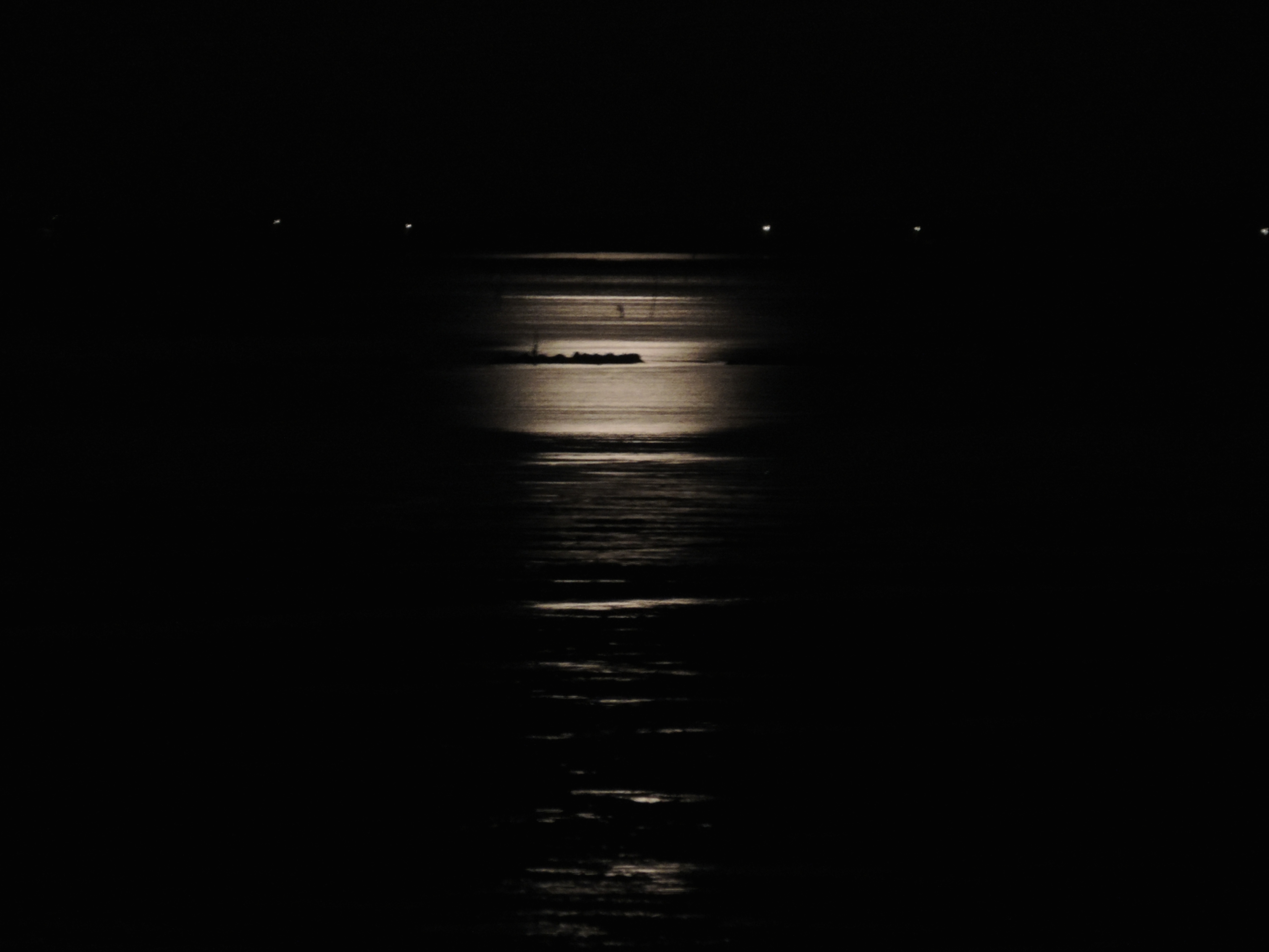
Some moonlight…..

moon

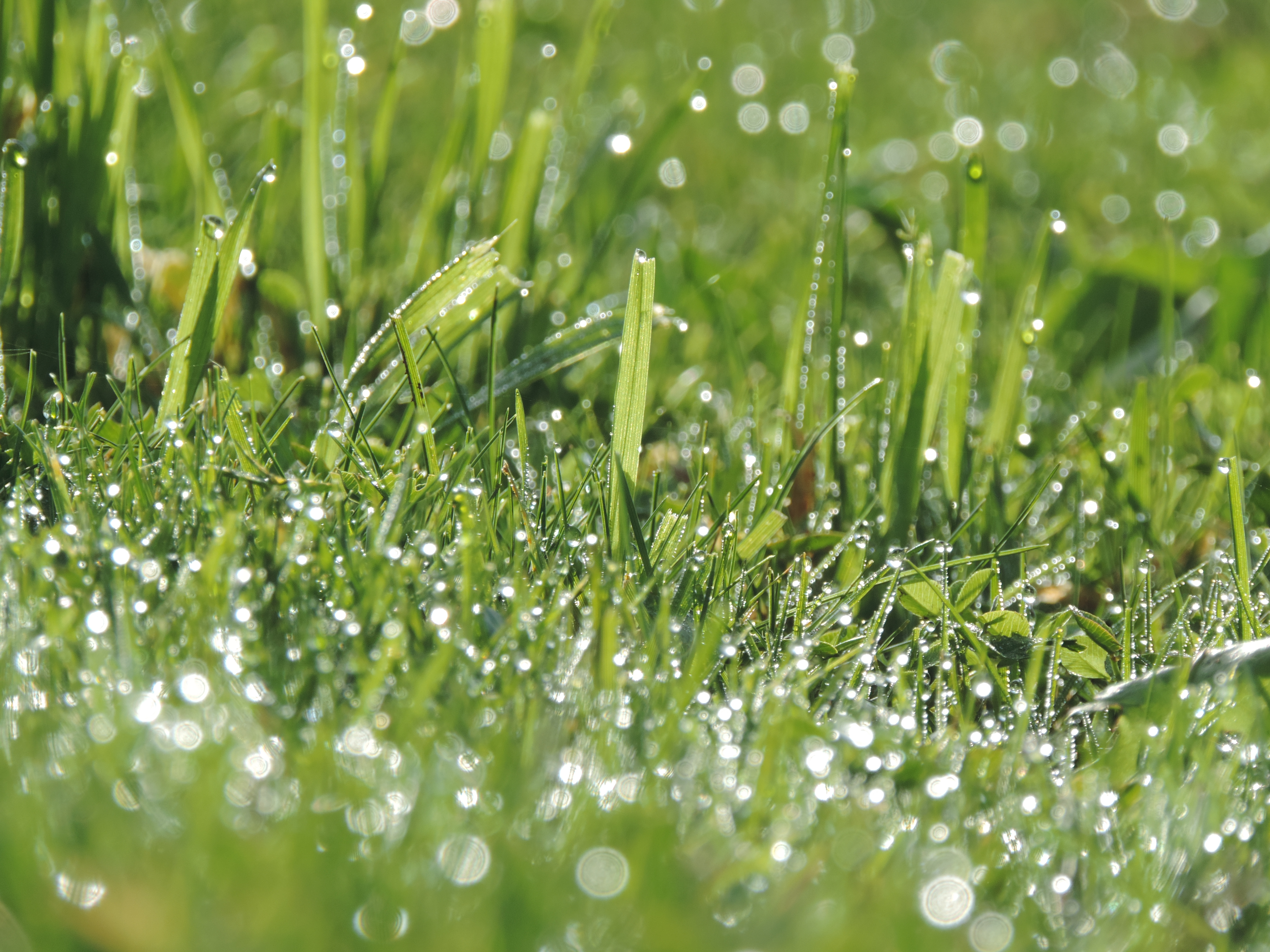
And some sparkles….

sparkles

Read Full Post »

In the London Review of Books, Hilary Mantel has written an extremely thought provoking review of Brian Dillon’s “Tormented Hope: Nine Hypochondriac Lives”.

For some of us, the question ‘Am I ill or well?’ is not at all straightforward, but contentious and guilt-ridden. I feel ill, but have I any right to the feeling? I feel ill, but has my feeling any organic basis? I feel ill, but who am I to say so? Someone else must decide (my doctor, my mother) whether the illness is real by other people’s standards, or only by mine. Is it a respectable illness? Does it stand up to scientific scrutiny? Or is it just one of my body’s weasel stratagems, to get attention, to get a rest, to avoid doing something it doesn’t want to do? Some of us perceive our body as fundamentally dishonest, and illness as a scam it has thought up.


We understand, almost instinctively, the nuanced difference between disease and illness. As Eric Cassell put it so clearly – “illness is what a man has, and disease is what an organ has”. Or “illness is what you go to the doctor with, and disease is what you come home with”. However, both doctors and patients are caught up in the blurred boundary between these two concepts. For doctors, once a sensation is classified as a symptom, it becomes a signpost to a pathology (or it is dismissed as “psychological”). For all of us, though, we live with the possibility that any sensation might be a symptom. For the hypochondriac, every sensation might be a symptom. As Hilary Mantel says – 


In hypochondria, the whole imagination is medicalised; on the one hand, the state is sordid and comic, on the other hand, perfectly comprehensible. It is the dismaying opaqueness of human flesh that drives us to anxiety and despair. What in God’s name is going on in there? Why are our bodies not made with hinged flaps or transparent panels, so that we can have a look? Why must we exist in perpetual uncertainty (only ended by death) as to whether we are well or ill?

Am I well, or am I ill? Who decides?

Brian Dillon consoles us that ‘hypochondriacs are almost always other people.’ The condition exists on a continuum, with fraud at one end, delusion in the middle and medical incompetence at the other end; he is a benefits cheat, you are a hypochondriac, I am as yet undiagnosed.

One issue is symptoms, which are a particular way of classifying sensations. Are some more real, somehow, than others? Do they need accompanying physical changes in the body to be real?  

Many people are simply hyper-aware of bodily sensations, and so are driven continually to check in with themselves, examining visceral events as a man about to confess to a priest examines his conscience; like the believer scrutinising himself for sin, they expect to find something bad, perhaps something mortal. Forgiveness, and cure, are only ever partial and temporary; there will always be another lapse, some internal quaking or queasiness, some torsion or stricture, some lightness in the head or hammering of the pulse, some stiffness in the joint or trembling of the limb, or perhaps even an absence of sensation, a numbness, a deficit, a failure of the appetite.

A researcher called Kurt Kroenke has published many studies where he shows, time and again, that not only is the percentage of people listing symptoms which they have equal whether they are attending medical clinics, or are simply stopped in the street and asked, but the actual symptoms people complain of are the largely the same whether they are attending for health care, or just going about their normal lives. Clearly, not only are sensations not usually symptoms but symptoms do not equal disease.

Bodily, and psychic sensations are part of being alive. But we humans are compelled somehow to try to find the underlying meaning of everything..including sensations. Isn’t this the crux of the issue? Who gives meaning to your daily life, your lived experience, your sensations, thoughts, and feelings?

In the days before internet information and misinformation became available, patients often came away from a consultation with the feeling that they did not own their own bodies, that they were in some way owned by the doctor or the NHS. Now perhaps Google owns our bodies; it is possible to have access, at a keystroke, to a dazing plurality of opinion. There is an illness out there for every need, a disease to fit any symptom. And it is not just individuals who manufacture disease. As drug patents expire, the pharmacological companies invent new illnesses, such as social anxiety disorder, for which an otherwise obsolete formulation can be prescribed. For this ruse to work, the patient must accept a description of himself as sick, not just odd; so shyness, for example, becomes a pathology, not just an inconvenient character trait. We need not be in pain, or produce florid symptoms, to benefit from the new, enveloping, knowledge-based hypochondria. We are all subtly wrong in some way, most of the time: ill at ease in the world. We can stand a bit of readjustment, physical or mental, a bit of fine-tuning. Our lifelong itch for self-improvement can be scratched by a cosmetic surgeon with his scalpel or needle, our feelings of loss assuaged by a pill that will return us to a state of self-possession. For hypochondria, the future is golden.

It’s not just doctors who interpret your sensations now, there are interpretations everywhere, and some of them are deliberately invented for marketing purposes. 

Living involves experiencing sensations, and being human involves sense-making. Trying to understand what is happening now may be an inescapable part of Life. Deciding what meaning fits best is, ultimately, down to the individual – either by simply accepting the interpretation of an other, or by consciously, rationally, working it out in our own terms.

Entangled as they might be, the untangling of sensations is up to us.

Read Full Post »

I read a lot about complexity, and especially about complex adaptive systems, because it’s the most useful conceptual model I’ve found so far when I’m considering real life issues like health, illness, economics, personal growth (and so on!). An article entitled “Occupational Science and Social Complexity” by Aaron M. Eakman recently reviewed this model in the context of occupational science, and I thought I’d share a couple of the sections with you because he nicely clarifies some key points.

In the article there is a good summary of “characteristics [which] are common to complex systems”. He describes seven of them, and I’ve put in bold what I consider to be amongst the most important points to take on board –

1) Relationships between components of the system are non-linear,
meaning that a small perturbation may lead to dramatically large effects. By contrast, in linear systems the effect is always directly proportional to a cause.

2) Local rules affecting the relationships between components of the system lead to the emergence of global system order;

3) Both negative (damping) and positive (amplifying) feedback are often found in complex systems. The effects of an element’s behavior or the emergent behavior of the system are fed back in such a way that the element itself is altered.

4) Complex systems are usually open systems; they exchange some form of energy or information with their environment.

5) Complex systems are historical systems that change over time, and prior states may have an influence on present states.

6) The components of a complex system may themselves be complex systems. For example, an economy is made up of organizations, which are made up of people – all of which are complex systems.

7) Complex systems may exhibit behaviors that are emergent; they may have properties that can only be studied at a higher system level.

Think what these characteristics mean when you are considering a human being, an organisation, or a society. What are seeing are organisms or organisations which are undergoing constant, unpredictable change. You can guess how things are going to go, based on prior knowledge and experience of other situations which you judge to be similar, but you’re going to have to be constant alert to the fact that things are very likely to go some other way entirely, and you’ll need to adjust your choices accordingly.

In fact living creatures, particularly multi-cellular ones, like human beings can be thought of as a particular kind of complex system – a “CAS” (Complex Adaptive System).

Complex adaptive systems are special cases of complex systems which are adaptive in that they have the capacity to change and learn from experience. John Holland describes a complex adaptive system as a dynamic network of many agents (which may represent cells, species, individuals, firms, nations) acting in parallel, constantly acting and reacting to what the other agents are doing. The control of a complex adaptive system tends to be highly dispersed and decentralized. If there is to be any coherent behavior in the system, it has to arise from competition and cooperation among the agents themselves.

In other words, we don’t just constantly change, frequently in unpredictable ways, but we adapt – our changes are not entirely random, they are informed – informed by prior knowledge and experience and informed by constant feedback in the here and now.

That last point about coherent behaviour arising from “competition and cooperation” is a challening one. There are a lot of people who think that competition is THE key in understanding life and evolution. There are others who say, no, it’s cooperation which is the key. It seems the reality is, it’s both.

Complexity science eschews reductionism and determinism by focusing on the emergent properties of a system and the non-linear interactions of a system’s components. Complexity science recognizes that such systems cannot be understood simply by understanding the parts – the interactions among the parts and the consequences of these interactions are equally significant.

Modern Medicine is still stuck in the reductionist and deterministic paradigms. And the problem is they just do NOT reflect reality. We don’t just need the science which shows us how particular cells or organs work. We need the science which shows how what happens when active agents begin to compete and co-operate. We need to discover just how a complex system adapts, repairs, heals and evolves. The old idea of “fixing” the “wonky bits” only works (and only for a limited time) where the scenario conforms to reductionist and deterministic paradigms (in Acute Care for example)

One more thought provoking point from this article –

Finally, Byrne (1998) has asserted that as a basis for social action: Complexity/chaos offers the possibility of an engaged science not founded in pride, in the assertion of an absolute knowledge as the basis for social programmes, but rather in a humility about the complexity of the world coupled with a hopeful belief in the potential of human beings for doing something about it.

Byrne, D. (1998). Complexity theory and the social sciences. New York: Routledge.

I couldn’t agree more.

Humilty

and

Hope

Let’s proceed on that basis.

Read Full Post »


I read about Irène Frachon the other day. She’s a French doctor who back in 2007 noticed a strange pattern of illness which seemed familiar to her. She noticed that a patient with “pulmonary hypertension” had developed the condition only after taking a particular medication for diabetes – “Mediator”. Then she came across one who had heart valve disease develop after the same drug. She remembered similar problems occuring with an earlier, but in some ways, similar drug, so started to investigate. It took several years, and the publication of a book, “Mediator 150mg. Combien de morts?” before the company Servier finally took the drug off the market. Various estimates of between 1300 and 1800 people may have died as a result of taking this drug.

It wasn’t the Mediator story itself which caught my attention (sadly, such drug stories are really not so rare), but it was Irène Frachon’s story. As she talks about her involvement in the Mediator story it is clear that from the very beginning it was not just her ability to recognise a pattern which was a great strength, it was her compassion and empathy which drove her to keep a single focus on the patients. This is what gave her the determination to have the problem recognised and dealt with. In fact, she is still astonished that neither the drug company, nor the regulators acted more quickly. She says “The elephant was in the room but everyone was turning their head away”. The story caused quite a disturbance in France (click through on my reference to Mediator to read a Lancet article about it) and has shone a light on drug company behaviour, the “spinelessness and credulity” of the regulator in relation to the drug companies, and the links between big business and politicians. But Dr Frachon fought on for the one single reason – to get justice for those who had been harmed. 

Where did she get this determination from? She says that as a girl she was inspired by the stories of Albert Schweitzer and his “empathie absolue” for those who suffered. When she heard those stories she decided to become a doctor. Interestingly, I would argue, those stories didn’t just prompt her to become a doctor, but to become a particular kind of doctor – one for whom “absolute empathy” was the core value.

A lot of thoughts arose for me when reading this article. Firstly, how lucky I have been to have encountered so many doctors, through my training and through my workplaces, who share this core value of empathy. It’s what characterises their everyday actions as well as their career choices. And, secondly, how stories we hear in childhood influence the rest of our lives.

I first said I wanted to be a doctor before I was 4 years old. But I didn’t come from a family where there were any doctors, so where did this come from? I don’t know but I do know I was very influenced by a fictional doctor – Dr Finlay – a GP in a small Scottish town who had all the characteristics of what would now be termed an “old fashioned family doctor”. I didn’t want to just be a doctor, I wanted to be a Dr Finlay kind of doctor. 

So, maybe one of the best things we can do is tell our children stories of inspirational, empathic people. Not that that should mean they all grow up to be doctors, but maybe they will take the core value of empathy into their adult lives.

What stories do you think influenced your career, or life choices? 

Read Full Post »

« Newer Posts - Older Posts »