Feeds:
Posts
Comments

Archive for the ‘from the reading room’ Category

I’ve long been bemused by the lack of reference to health in healthcare training. The standard clinical textbooks of Medicine not only have no chapters on health, books like Davidson, still a standard medical school text don’t even have an index entry for health.

Then the other day I stumbled on an old document from 1938 entitled “The Wheel of Health”, by G T Wrench MD. The content of the text is not what I want to mention today, but I’d like to share the following paragraphs from the author’s introduction.

Why was it that as students we were always presented with sick or convalescent people for our teaching and never with the ultrahealthy? Why were we only taught disease? Why was it presumed that we knew all about health in its fulness? The teaching was wholly one-sided. Moreover, the basis of our teaching upon disease was pathology, namely, the appearance of that which is dead from disease. We started from our knowledge of the dead, from which we interpreted the manifestations, slight or severe, of threatened death, which is disease. Through these various manifestations, which fattened our text-books, we approached health. By the time, however, we reached real health, like that of the keen times of public school, the studies were dropped. Their human representatives, the patients, were now well, and neither we nor our educators were any longer concerned with them. We made no studies of the healthy–only the sick.


1938! He could have written that today!

Does this not surprise you?

Read Full Post »

The other day there I came across a reference to an Alan Watts teaching about the limitations of reductionism. I’ve tracked it down –

You cannot understand life and its mysteries as long as you try to grasp it.  Indeed, you cannot grasp it just as you cannot walk off with a river in a bucket.  If you try to capture running water in a bucket, it is clear that you do not understand it and that you will always be disappointed, for in the bucket the water does not run.  To “have” running water you must let go of it and let it run. ~Alan Watts from “The Wisdom of Insecurity”.

Read Full Post »

The New England Journal of Medicine reports this week that GSK has just been fined $3 billion, and that since 2009, drug companies have been fined $11 billion! Wow! Colossal sums, huh? However, it turns out these figures represent only about 10% of annual profits and should probably be considered as just the “cost of doing business” ie these fines won’t change behaviour.

Should we be worried about these crimes and misdemeanors? You bet. However, as Ben Goldacre points out in a Guardian published extract from his upcoming book, “Bad Pharma”, this is just the tip of the iceberg. Of more concern is routine distortion of the evidence base which is manipulated in a variety of ways by those who pay the piper – the drug companies. Read the Guardian article, then answer the following two questions…..

How confident are you that the drug companies act in your best interests?

How confident are you that “evidence based medicine” is based on objective, relevant scientific evidence?


Read Full Post »

“In Praise of Love” by Alain Badiou [1846687799] presents a simple but thought-provoking idea about love. He proposes that love is about the creation of a two person view of the world, instead of the single, individual one. As understood from a complexity position, what emerges in this linking up is greater than the sum of its parts

the real subject of a love is the becoming of the couple and not the mere satisfaction of the individuals that are its component parts.

Quite poetically he describes it this way

It is like two musical instruments that are completely different in tone and volume, but which mysteriously converge when unified by a great musician in the same work.

What really resonated most strongly with me, however, was his key insistence that love is about difference – about seeking difference, creating difference, delighting in difference…

what kind of world does one see when one experiences it from the point of view of two and not one? What is the world like when it is experienced, developed and lived from the point of view of difference and not identity? That is what I believe love to be. It is the project, naturally including sexual desire in all its facets, including the birth of a child, but also a thousand other things, in fact, anything from the moment our lives are challenged by the perspective of difference.

Beautiful.

This is a different view of love from the traditional romantic love, which, sadly, I feel, too easily slides into something which turns one person into the love object of the other. I prefer Badiou’s idea – it’s more equal, and, ultimately, incredibly more exciting….

Read Full Post »

Iain McGilchrist has released a short Kindle book entitled The Divided Brain and The Search for Meaning [ASIN:B008JE7I2M]. In it he presents an excellent precis of the ideas and findings he presents so brilliantly in his somewhat massive The Emperor and His Emissary.

The key to his thesis is that it is odd that our brains are divided into two asymmetric halves. Why is that? Why didn’t we just develop a single, unified cortex? There’s probably some big advantage in having two brains, but only if the two halves let us do different things. This is NOT an argument that the left does this and the right does that. It is NOT a claim that left-brained people deal with facts, and right-brained people are artistic. He dismisses such ideas as simplistic and erroneous. As he puts it –

Instead of asking, as of a machine, what it does – does it ‘do’ reason, emotion, language, imagery? – we should have asked – as of a person – what’s he or she like?

In other words, what are the different ways each hemisphere approaches the world?

He says that the right hemisphere primarily lets us be aware of the world, and looks for the connections, or the “between-ness” everywhere, whereas the left allows us to grasp, and, hence, manipulate the world.

The right hemisphere underwrites sustained attention and vigilance for whatever may be, without preconception. Its attention is not in the service of manipulation, but in the service of connection, exploration and relation…….One way of looking at the difference would be to say that while the left hemisphere’s raison d’être is to narrow things down to a certainty, the right hemisphere’s is to open them up into possibility.

These differences are profound and we need them both. the one helps us to pin things down, and the other opens us up to seeing change and possibilities.

Another way of thinking of the difference between the hemispheres is to see the left hemisphere’s world as tending towards fixity, whereas that of the right tends towards flow.

In his thesis, he claims that the left hemisphere way of engaging with the world has become unhealthily dominant and we’ve become stuck on its way of representing reality to us.

the purpose of the left hemisphere is to allow us to manipulate the world, not to understand it.

I highly recommend you get this book. You can easily read it through at a single sitting, then you’ll want to go right back to the start and read it again. If you haven’t read The Master and His Emissary, The Divided Brain will whet your appetite but it will also let you easily understand the basic premise.

The right hemisphere seems to be involved more with new experience, new events, things, ideas, words, skills or music, or whatever it may be, while they are still fresh, original and unique, and so to speak present, to the mind.

The left hemisphere abstracts and generalises, where the right hemisphere’s world remains truer to each embodied instance, and appreciates the unique.

Just stop and think for a moment what that means, and why we should want to re-balance our society by shifting the balance to the right hemispheric way of approaching the world…..


Read Full Post »

Einstein  said that an important question to ask ourselves is “Is the universe friendly?”

It’s an interesting question because the answer you give influences how you experience Life.

If you think it is unfriendly, you are likely to see danger all around and to expect hostility. You are likely to respond by trying to control and conquer in order to be safe. If you think it is neither friendly, nor unfriendly, then you probably experience Life as random, brief and pointless. However, if you think it is friendly, you are more disposed to engage with an open-hearted curiosity, seeking to understand more and more.

This question which he posed is often considered in relation to thinking about the emergence of consciousness in the constantly evolving universe.

An article in this month’s Psychology Today refers to the question in this context. It’s worth a read, and concludes

Any inventory of the cosmos that omits us is like a survey of the body that overlooks the brain. In evolving the human mind, the universe has fashioned an instrument capable of understanding itself and empathizing with others. We are that instrument, and since we are part of the cosmos, we err if we judge it to lack kindness, love, and compassion. If I believe the universe is heartless, it’s because I myself do not love

Read Full Post »

Ever since I was a little boy I’ve loved to look up at the sky on a clear night and lose myself in the wonder of the fact that the light from every single star has taken years and years to reach the Earth. How incredible that the tiny spots of light landing on the backs of my eyes left those stars millions of years ago!

Its astonishing to think that as you look up at the night sky you are looking at the past, the distant past. And how astonishing to realise now that our latest astronomical instruments let us see back billions of years, almost to the Big Bang itself. But not quite.

I recently came across the phrase “Cosmic Horizon”. The Cosmic Horizon is the furthest visible point in the Universe. In every direction as we scan the skies, we can detect signals from far away stars right up to a point of darkness which is so far away, so far distant in the past, that we can’t see anything any longer. This is the horizon. It’s like the horizon we see where the sky meets the earth or the sea, but much, much further away.

In the book, “The View from The Centre of The Universe”, Joel Primak and Nancy Abrams, building on this idea that the Cosmic Horizon is a limit in the timescale we can know, propose that we, the human race, need to develop our “Responsibility Horizon”.

This is a fascinating idea. Think about it. How far does you current “Responsibility Horizon” extend? One generation, maybe two? When you make decisions, do you consider the impact of those decisions on the lives of your children, or your grandchildren? You might. If you have children or grandchildren you might be concerned about the kind of world we are creating now for them to inhabit in the years ahead. But let’s stretch that beyond two generations. How far ahead do you want your Resonsibility Horizon to reach? And if it’s three or four, or more, generations, how will that influence the choices you make today?

Read Full Post »

Kat Duff, in “The Alchemy of Illness”, says

There is a curious paradox that surrounds pain. Nothing is more certain to those afflicted, while nothing is more open to question and doubt by others.

It’s strange, isn’t it? How often is pain intensified by the refusal of others to believe it exists? How helpful is it for someone with pain to be told “Don’t worry, the tests are all normal”, with the implication being the pain “is in your head” ie it’s imaginary?

It’s not only pain which cannot be seen, and so, cannot be known by another person. Nausea is the same, as is fatigue, blurred vision, dizziness, itch. Patients present to doctors with symptoms which are descriptions of subjective experience. Why should those experiences be dismissed because any physical changes in the body cannot be detected using our current technologies and tests?

The failure to take pain seriously is part of our ranking “objective” as more important than the “subjective”, but, in my view, it’s the invisible which is the most important…..

Read Full Post »

Every day at work I’m focused on trying to understand another person. Every patient who comes to our hospital is seeking, amongst other things, an explanation.

If someone has been given a diagnosis of, say, Multiple Sclerosis, amongst the many questions they are likely to have, are “What does this mean?”, “What does it mean to me, and to my life?”, “How has it come about?”, “Why me?”, “What is this illness and what things are going to make it better, or worse?”

We all have many other questions too, but these questions are amongst the ones to do with explanation.

It’s perhaps even worse when a clear diagnostic label hasn’t been given. When someone suffers chronic pain, chronic fatigue or chronic low mood but “all the tests are normal”. What then? What’s going on?

Explanation involves getting to know someone. If we limit the explanation to a tissue level e.g. “arthritis”, or to an organ level e.g. “angina”, then we stop before we explain this illness in this particular person’s life. And if we want to help the person, not just the “arthritis” or the “angina”, then we’re going to have to take into account the uniqueness of this person’s experience of this particular illness.

A major way we can do that is through story.

It’s through the telling of a story that we gain our insights, and our explanations. For me, two of the questions I want to answer with every patient are “what kind of world does this person live in?” and “what are their coping strategies?”

The kind of world we live in is fashioned by our beliefs, our values and our circumstances (our contexts or environments, physical, relational, cultural), and the way we try to adapt to the changes in our lives are manifest in our default and learned strategies.

In an article entitled, “What do we know when we know a Person?”, Dan McAdams points out that the explainer, or the observer is also important  –

One must be able to describe the phenomenon before one can explain it. Astute social scientists know, however, that what one chooses to describe and how one describes it are infiuenced by the kinds of explanations one is presuming one will make. Thus, describing persons is never objective, is driven by theory which shapes both the observations that are made and the categories that are used to describe the observations, and therefore is, like explanation itself, essentially an interpretation.

In other words, my world view and my coping strategies will influence what I see, what I hear and what sense I make of the patients who consult me. I’ll return to that issue in another post, but Dan McAdams article starts with an interesting conceptual framework for what we know about another person.

Individual differences in personality may be described at three different levels. Level I consists of those broad, decontextualized, and relatively nonconditional constructs called “traits,”…….At Level II (called “personal concerns”), personality descriptions invoke personal strivings, life tasks, defense mechanisms, coping strategies, domain-specific skills and values, and a wide assortment of other motivational, developmental, or strategic constructs that are contextualized in time, place, or role……..Level III presents frameworks and constructs that may be uniquely relevant to adulthood only, and perhaps only within modern societies that put a premium on the individuation of the self…..Thus, in contemporary Western societies, a full description of personality commonly requires a consideration of the extent to which a human life ex- presses unity and purpose, which are the hallmarks of identity. Identity in adulthood is an inner story of the self that integrates the reconstructed past, perceived present, and anticipated future to provide a life with unity, purpose, and meaning.

You can read the full article by Dan McAdams here.

So, how do we get to know someone? Partly it involves knowing ourselves, being aware of our own way of seeing and experiencing the world, knowing what we pay attention to, what we are fascinated by, disinterested in, what we believe and what we value.

And, partly, it involves a focus on the telling of a story – one which “integrates the reconstructed past, perceived present, and anticipated future to provide a life with unity, purpose, and meaning”.

That’s a good start, I reckon.

Read Full Post »
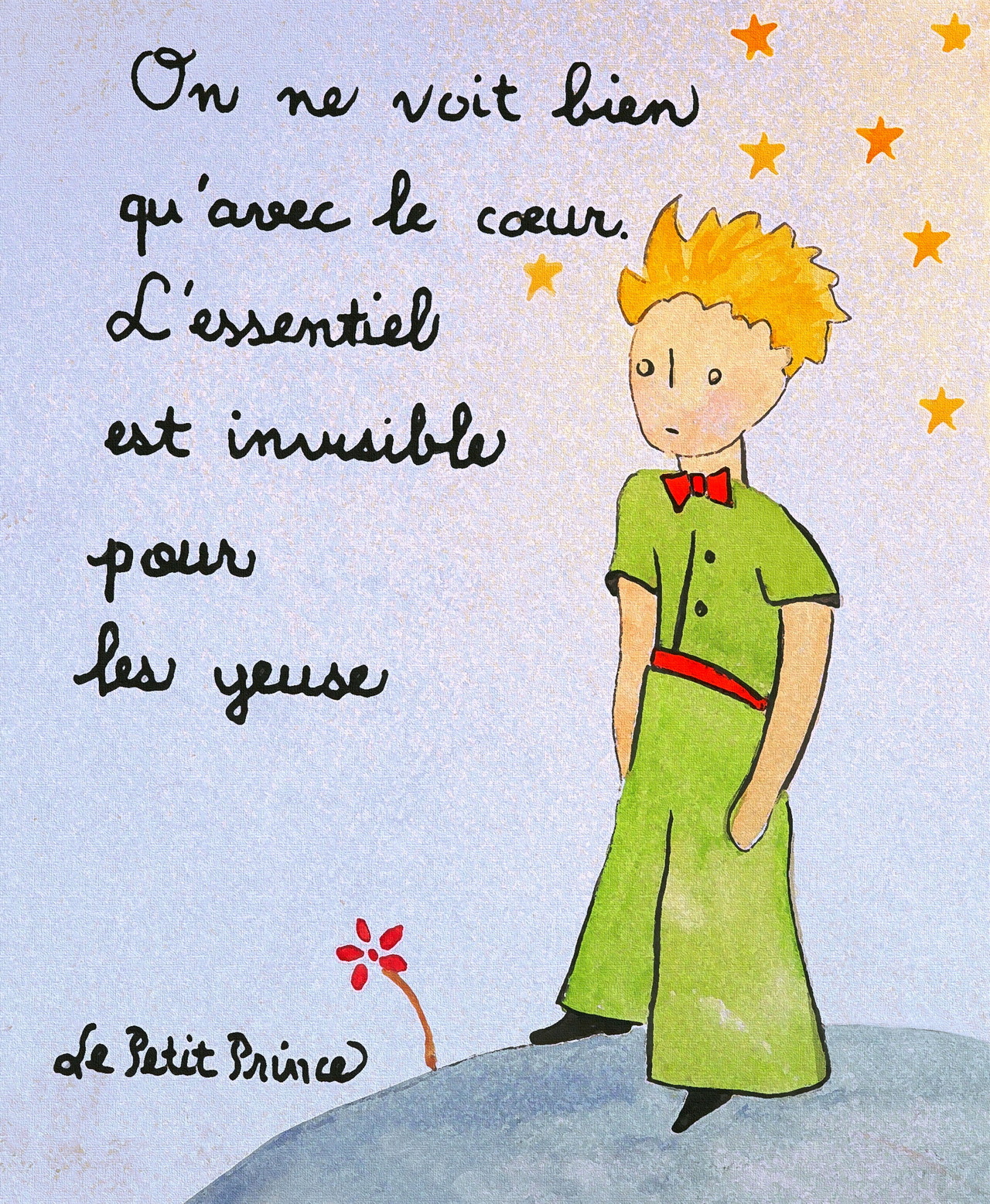
This blog name grows on me with the passage of time. People like it, and they tend to “get it” very quickly. I came up with it because I saw that an awful lot of people seem to live life on autopilot, but when you sit down with them in a consultation, you discover one hero after another. People are truly amazing. And every person is the hero of their own story. It’s wonderful to hear the stories unfold and see the heroes emerge.

In Becker’s “Denial of Death”, he writes

Modern man is drinking and drugging himself out of awareness, or he spends his time shopping, which is the same thing. As awareness calls for types of heroic dedication that his culture no longer provides for him, society contrives to help him forget. Or, alternatively, he buries himself  in psychology in the belief that awareness all by itself will be some kind of magical cure for his problems.

And he refers to Kierkegaard who criticised the tendency to live a “safe” life by living at “a low level of personal intensity” as a form of

Tranquilising itself with the trivial

……..there’s a lot of that about!

Read Full Post »

« Newer Posts - Older Posts »