Feeds:
Posts
Comments

Archive for the ‘from the reading room’ Category

fig

What is good or bad for me?

Let me ask “what is good or bad for you?”

Are the answers to those questions going to be identical?

I don’t think so. We could get into a big discussion about what “good” and “bad” even mean, but without disappearing down that rabbit hole I’d just like to express the opinion that no-one can know you better than you can. No-one is better placed to know how you should live than you are.

We forget that in our increasingly controlling autocratic societies.

Here’s Montaigne

Tiberius used to say that whoever had lived twenty years should be responsible to himself for the things that were harmful or beneficial to him, and know how to take care of himself without medical aid. And he might have learned this from Socrates who, advising his disciples, carefully and as a principal study, the study of their health, used to add that it was difficult for an intelligent man who was careful about his exercise, his drinking, and his eating not to know better than any doctor what was good or bad for him.

Socrates who lived almost 2500 years ago……his teaching on health?

Take care about exercise, your drinking and your eating.

Wow! Public Health advice has come such a long way! (hmm….)

But the main point Montaigne is making is one I agree with.

I’d be astonished if anyone claimed they knew better than I did what was good for me, or bad for me. Take the relatively common place circumstance of pain. Can anyone tell me better than I can whether or not a treatment I take for pain reduces my pain? No, they can’t. Only my personal experience will tell.

What better advice than to be aware, to be reflective and to learn about yourself?

Without that you end up swallowing the advice of someone who isn’t living your life.

(Oh, and what about today’s photo? It’s a fig. It’s a fig which grew and ripened on the tree we planted in our garden and it tasted….mmmmm….words fail me…delicious! Like no fig I’ve ever tasted before. Are figs good for me? Well that one certainly contributed towards my pleasure in being alive that day, and I’m looking forward to more figs growing next season. Are figs good for you? You’re the better judge of that one!)


Read Full Post »

bubbles

I’ve recently pulled my copy of Montaigne’s “Essais” off my shelf and dived in again. The stimulus was a special edition of a literary magazine which I found in the local “librairie” (a common confusion for the English speakers in France is that a “librairie” is a bookshop and a library is a “bibliothèque”). The focus of the special edition is Montaigne so I’ve been reading a few writers and thinkers perspectives on the man and his writing.

Given that he lived almost 500 years ago his writing seems astonishingly modern. According to the articles I read he was the first French writer to write as “je” (“I”) – his essays are reflective and he made no claims for them to be anything other than an exploration of what it was like to be Michel de Montaigne. One of the writers called him “patron de bloggeurs” – the “boss/leader of the bloggers” – which made me smile.

I’d say that this blog, and many other blogs I’ve seen, are exactly that. They are one person’s unique reflections and expressions of what it is like to be [insert blogger’s name here]

I reckon I only have each day once, and nobody can tell what this day was like for me. That’s up to me. And it’s up to you to share your unique experience of the everyday too.

Because when we do that, not only do we enrich ourselves with the sharing, but we find that we learn what it is to be human.

I’m going to share a few of the gems I uncover in Montaigne’s “Essais” with you and I’ll start with this, (which I read yesterday)

Men do not know the natural infirmity of their mind: it does nothing but ferret and quest, and keeps incessantly whirling around, building up and becoming entangled in its own work, like our silkworms, and is suffocated in it.

It thinks it notices from a distance some sort of glimmer of imaginary light and truth; but while running toward it, it is crossed by so many difficulties and obstacles, and diverted by so many new quests, that it strays from the road, bewildered.

Isn’t that so true? Thoughts never seem to stop, do they? I remember reading about the Tibetan Buddhist concept of the “bardo” many years ago. A bardo is a kind of gap. The author of the book I read suggested a good meditation technique was to become aware of the bardos, or gaps, between our thoughts – the spaces between the ending of one thought and the start of the next.

Good luck with that!

It’s not a skill I’ve ever managed to achieve.

Most meditation techniques seem to involve gently, patiently and repeatedly bringing the focus of the mind back to something specific, be that a mantra, an image or an awareness.

I do think it’s good to practice some form of meditation. It can help to counter that incessant “whirling around”.

There’s a second aspect to that passage of Montaigne’s – how difficult it is to stay on track. Isn’t it true that we often set off with a new insight, a new goal or a new intention, only to stumble when the going gets tough or something else interesting comes along – and there we go again, off the road, “bewildered”.

I think it’s good to read these reflections from five hundred years ago. They are insights into the natural condition of the human mind. If we are aware of these features we can begin to learn how to work with them, rather than beating ourselves over the head for having minds like this in the first place, or trying to wrestle ourselves into submission.

The photo I chose for this piece is one I took a couple of weeks ago. One day I noticed these little blobs of bubbles in the grass. I’ve no idea what they are, what kind of creature made them, or why, but I thought they were pretty wonderful!

Busy, busy, busy….busy blowing bubbles….oops, there I go again – that’s interesting. What is it? Yep, there’s a certain pleasure in following your mind as it “strays from the road”….

Read Full Post »

moon sky

The Guardian has published 15 quotes from Saint-Exupéry’s Little Prince (one of those books which has so many quotable sentences in it) and it seemed appropriate to me to post this in this week when the world’s thoughts are turned to Paris.

One of my own personal favourites is this –

It is only with the heart that one can see clearly. What is essential is invisible to the eye.

We can all quite easily take a moment to reflect on something – anything – it can be a choice which has presented itself to us, a decision to be made, a person, a relationship or an event. The way I like to do this is to sit somewhere quietly, take three slow, deep and even breaths, call whatever it is I want to reflect on to my mind, place my hand over the area of my heart, and ask myself the question “What does my heart say about this?”

Give it a few moments and see what, if anything, emerges. It won’t always, but sometimes, suddenly, something seems crystal clear.

I like the second sentence in that quote too – “what is essential is invisible to the eye”. I’m a big fan of that one.

As I looked down through the list of quotes I was remembered this one –

Grown-ups love figures… When you tell them you’ve made a new friend they never ask you any questions about essential matters. They never say to you “What does his voice sound like? What games does he love best? Does he collect butterflies? “ Instead they demand ‘How old is he? How much does he weigh? How much money does his father make?’ Only from these figures do they think they have learned anything about him.

….which is some ways is a continuation of the “what is essential is invisible to the eye”.

Why do we put such emphasis on numbers, when what is most important to each of us is the personal, the subjective, the invisible?

This little scene from “Gregory’s Girl” (from a LONG time ago!) popped into my head –

In particular the line which Claire Grogan says about a minute into the scene.


Read Full Post »

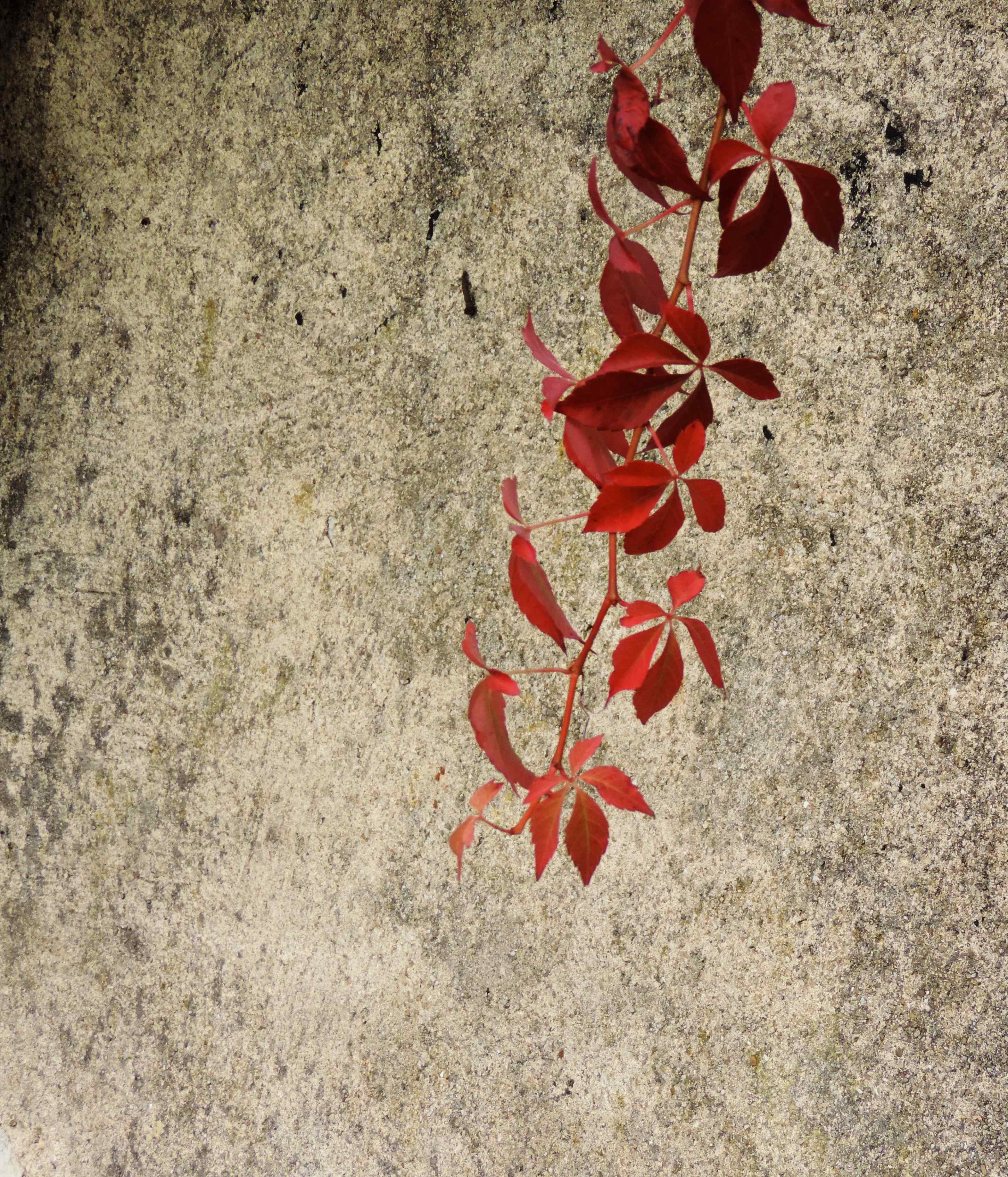
vine leaf stalks

Wow! Look what the vine on my wall is doing now!

These strange stick-like stalks are what the vine produces to grow a leaf. The leaves grow on the ends of these foot long stalks and each one produces a single leaf. That means the vine has a real depth. It’s quite a way from the leaves to the wall! But not that autumn has come the stalks pop off the leaf at the end once it turns red and yellow, then some time after it pops off its attachment to the rest of the vine.

Isn’t that an amazing process?

Janine Benyus describes the fabulous harmony between form and function that we find everywhere in Nature. She’s a scientist who specialised in trees and forestry and began to wonder why we don’t look to Nature for our solutions. Her thought was that instead of thinking we can invent technologies which can “conquer” or “control” Nature maybe we can learn from some of the adaptive strategies of other species which have actually lived on this planet for a lot longer than we have.

She’s coined the term “biomimicry” to describe this concept.

I like this idea, and it seems consistent with my own experience of wonder, amazement and, frankly, humility, in my every day life.

The potential for sustainable solutions if we take this approach is exciting. I’ve just started reading her book. I suspect I’ll be posting a few thoughts which that stimulates but let me start today with a passage right from the start.

Nature has answers. Its strategies are wildly successful – collaborating, innovating, resilient, adapting to change and leveraging diversity.

Isn’t that a great list?

  • Collaborating
  • Innovating
  • Resilient
  • Adapting to change
  • Leveraging diversity

Think how applying those principles could improve the way we deliver health care, organise towns, influence a new approach to politics and economics even?


Read Full Post »

Good old “Cles” magazine! This magazine probably opens up more avenues for me to explore than any single other publication. There is currently a fifth anniversary special out with “5 reasons to be hopeful” forming a major section of the issue. The fourth reason is ecology taking root, and it’s here that I read about “biomimicry”.

It’s one of those concepts that when you read about it you think, why didn’t I know about this already?

From the home page at biomimicry.org here’s a short definition

Humans are clever, but without intending to, we have created massive sustainability problems for future generations. Fortunately, solutions to these global challenges are all around us.

Biomimicry is an approach to innovation that seeks sustainable solutions to human challenges by emulating nature’s time-tested patterns and strategies. The goal is to create products, processes, and policies—new ways of living—that are well-adapted to life on earth over the long haul.

The core idea is that nature has already solved many of the problems we are grappling with. Animals, plants, and microbes are the consummate engineers. After billions of years of research and development, failures are fossils, and what surrounds us is the secret to survival.

Here’s the founder, Janine Benyus, explaining it all eloquently and with fabulous imagery in a short (20 min) film.


I find this totally inspiring. What a fabulous way to look at life! To think that the solutions to all of our problems might just be there in the Natural world, just waiting for us to learn! What a different approach to technology – to develop technological solutions based on natural methods instead of much poorer, less efficient artificial ones. What a different approach to science – to apprentice ourselves to Nature in order to learn what has already been learned through adaptive processes over millions of years, instead of trying to find ways to control and battle against Nature.

And, potentially, what a fabulous research agenda, to learn how living organisms grow, defend and repair themselves – all without the use of any artificial or toxic “aids”. Now there’s the foundation of a new approach to health care.

Go on, take 20 minutes out of your busy day and watch that video. I hope you’ll be as inspired as I am!


Read Full Post »

IMG_3724

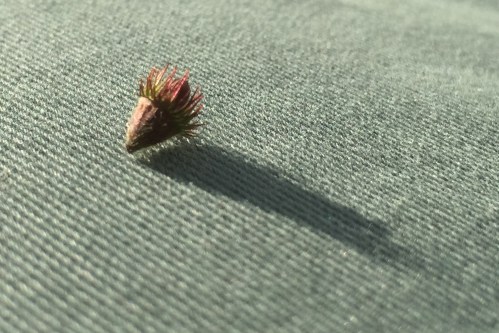
When we came back from a walk through the vineyards yesterday we found little seeds like this one sticking to our clothes.

Look how elaborate a structure it has – wonderfully designed for hitching a lift! Its tenacious little hooks beautifully created to spread the species.

I was just thinking about seeds the other day when I read about the massive explosion of flowers across the Atacama Desert. Did you read about that? Here’s some of the coverage. The Atacama Desert in Chile is one of the driest places on Earth but about every five to seven years the flowers flourish. This March there was the equivalent of fourteen years rainfall in a day and now there is the greatest flourishing of the flowers for decades.

Imagine. Those seeds all surviving in the desert heat without any significant water for years and years, then suddenly, with enough rain, they spring to life.

Remarkable as that thought is, here’s another one – how do we know if a seed is alive or dead? I mean if we collected some of the seeds from the soil during the dry years, could we tell which had the potential to spring to life and which were, well, dead?

I went on an internet hunt, and you know what? Nobody really knows. There’s a phenomenon in the lifecycle of seeds called “dormancy” where the seed seems inactive but its really just sort of sleeping. Funny thing is we have no way of telling whether a seed is dormant or dead. There are techniques, including a chemical staining technique, which cleverly detect some signs of respiration or metabolic activity, but interpreting the results isn’t easy and only allows a statistical probability of life to obtained for whole batches of seeds, not individual ones.

Can you imagine that? Not being able to tell if an organism is dead or alive? Is that true? Are there any botanists reading this who know differently? Can you tell if an individual, particular seed is dead or alive?


Read Full Post »

berries

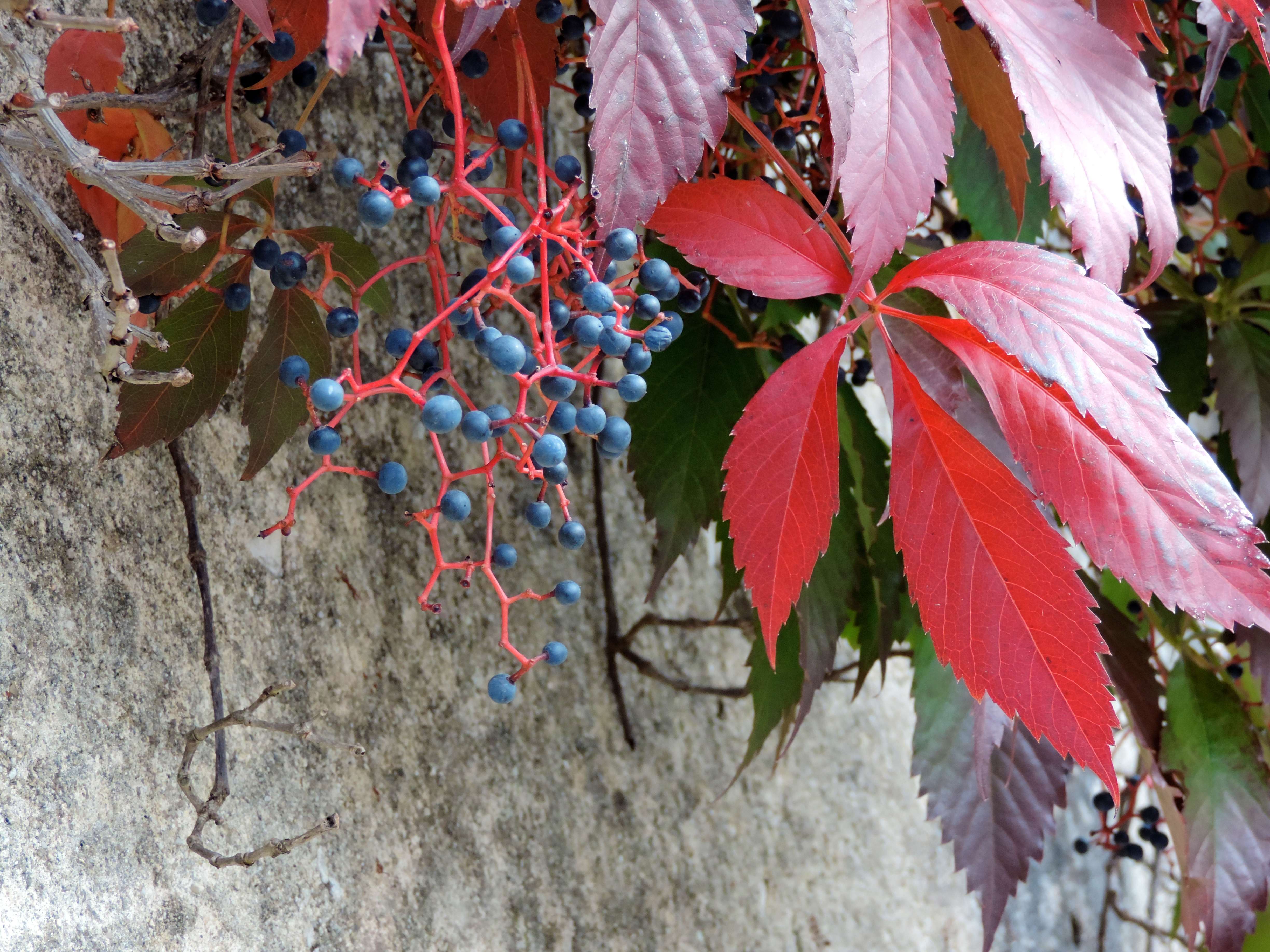
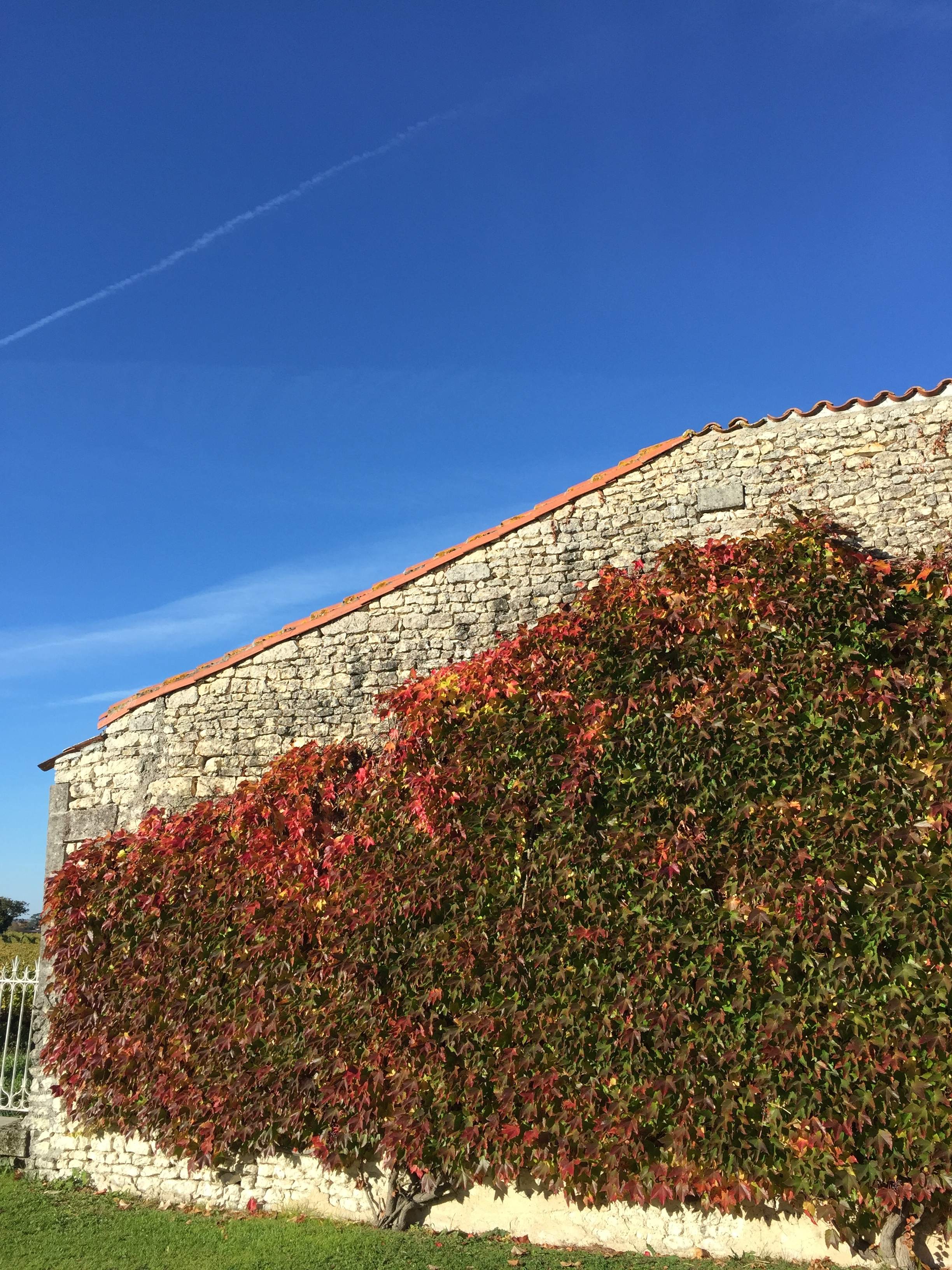
At this time of year the Vinge-viérge, (Boston Ivy, or, Japanese Ivy) that grows over the wall at the edge of my garden develops these incredible little blue-black berried on red stems as the leaves around them turn their own glorious shades of red.

wall

It’s a big plant and for most of the year it is full of the rustling sounds of birds. Just now there are warblers and finches and sparrows and redstarts all flying in and out of the dense foliage. That came to mind as I read the following passage from Robert Brady’s The Big Elsewhere. Here he is reflecting on the birds flying into the trees for shelter during a snowstorm.

Who knows what forms of natural “friendship” abide out there in the deeps of the real world, how far these homely allegiances go, and where they integrate like two hands clasping.

Don’t you love that? “Like two hands clasping”

Or how far back in time they reach, how they began to be – seems as much an interweaving of wild wisdom as a mosaic of chance that worked out well. Compromises were made, benefits were exchanged.

That reminded me of the biology teacher’s question about whether or not the students loved Nature and whether or not they thought that Nature loved them back.

Doesn’t it seem that we are surrounded with the evidence of “an interweaving of wild wisdom”?

…..and there at the hearts of the trees the birds can enjoy the quiet that abides in a plant, and in exchange for the gift of the motion that abides in a bird; plants seem to appreciate rhythms of all kinds – they dance with grace and beauty in the wind…

Oh I love that. The mutual appreciation of stillness and motion.

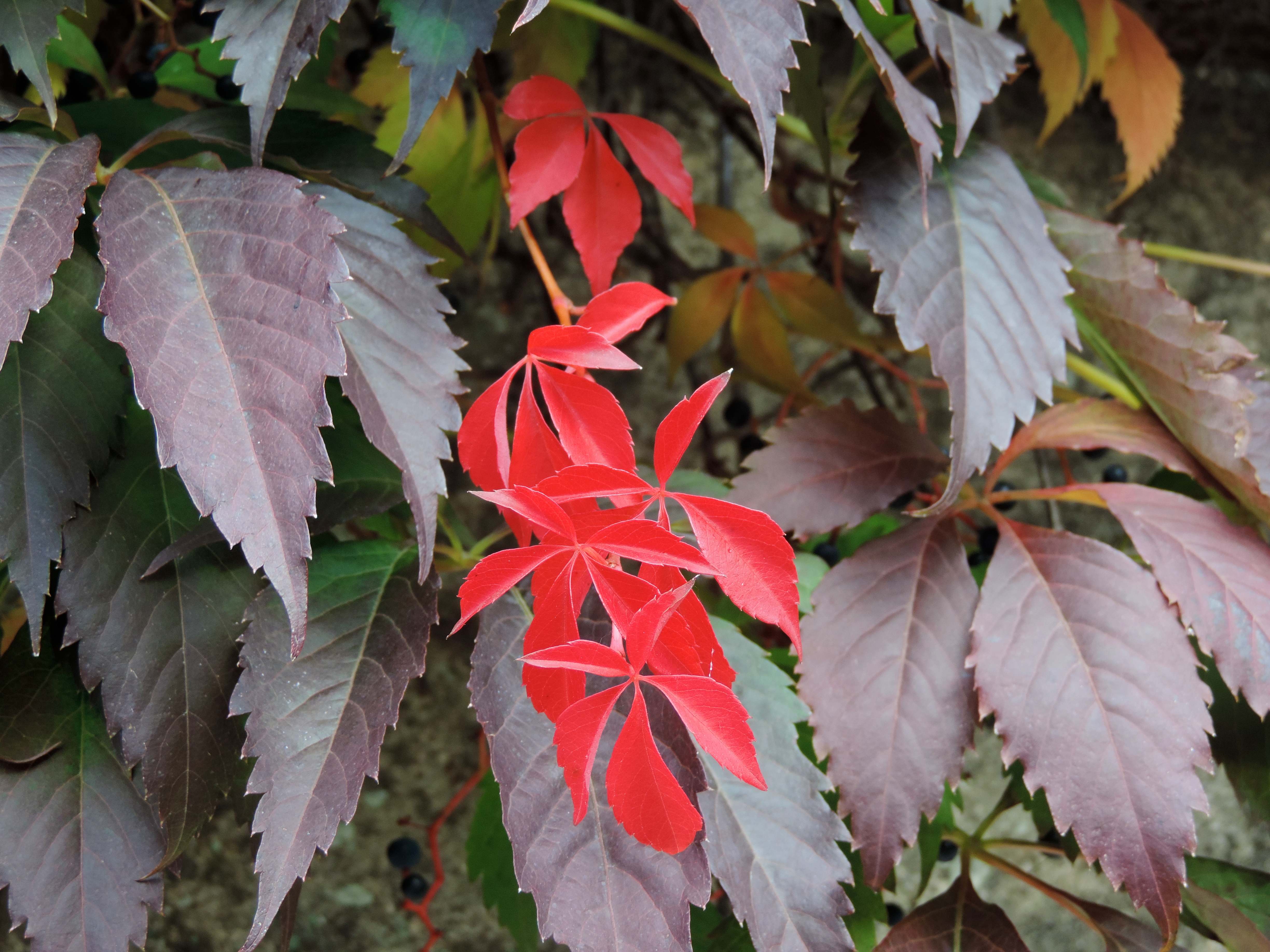
Talking about grace and beauty, here’s another couple of photos of the ivy –

splash of red

This one reminds me of how everything changes but each individual changes at his or her own speed and rhythm.

simple

And this image reminds me of the “Japanese Ivy” version of the name of this plant.


Read Full Post »

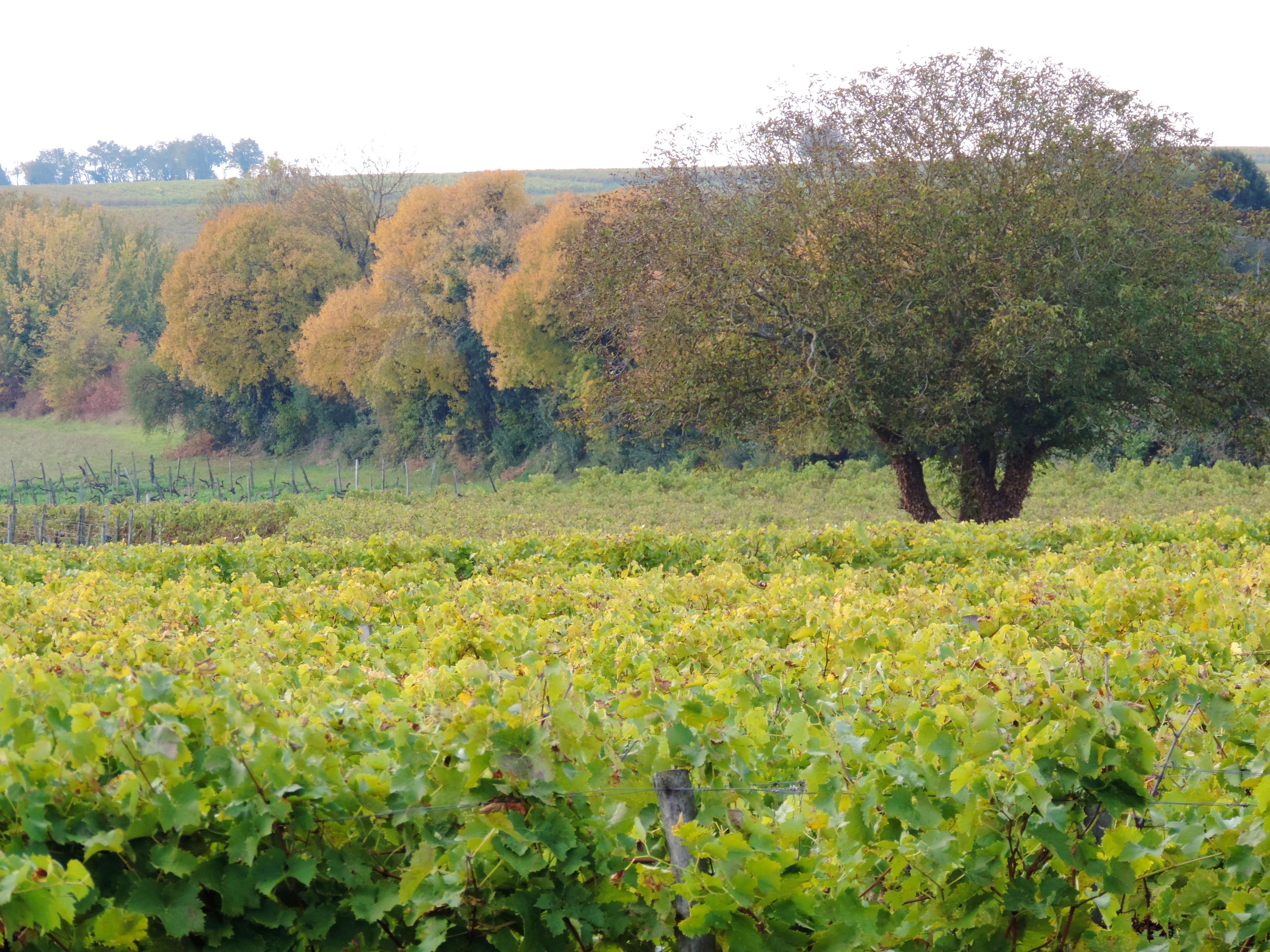
vineyard early autumn

In his “The Big Elsewhere”, Robert Brady after building a dry stone wall, says

…that any worthy effort is a dialog, that wisdom is a living thing, not frozen in time, not a doctrine or a dogma, not a monument, not a library, not a printed book or ether page, and that you are born with wisdom ready and waiting to be known to you.

So true….that we are never done learning, never complete in our knowledge. That should keep us humble, and teach us to live with uncertainty, and be a constant stimulus to our curiosity. When he says “…you are born with wisdom ready and waiting to be known to you”, then I recall Elizabeth Gilbert, from her “Big Magic” 

The universe buries strange jewels deep within us all, and then stands back to see if we can find them. The hunt to uncover those jewels – that’s creative living.

But it also sets me up to hear Bob Brady’s next point –

What does living wisdom tell us? Amongst other things, that the solution is where the problems are: in ourselves.

After the best part of forty years working as a doctor with each day filled with one to one consultations with patients I’m more convinced than ever that the only healing which ever occurs comes from within the individual. Each of us is unique and as “complex adaptive systems” we are self-healing. Good medicine is what supports the personal, unique wisdom of the organism.

Prolonged lack of contact with that wisdom lies at the heart of our problem, and if we continue in our current way we are ended: the real thing won’t stand for it. Existence must be a dialog with the present, as the living, thinking person is taught by any art, any worthy endeavour. You are instructed and guided by the very task, the very ongoing. You are taught the true way most truly only by traveling it, not by standing still and listening to others tell you the way, or by looking at an old map of where others have gone.

I think we gloss over the fact that we are adaptive creatures. We are constantly adapting. We are “open systems” continuously picking up energy, information and molecules from the environments in which we live and adapting our whole being to the changes. We are dynamic creatures, never fixed, never static, constantly learning, developing and growing. The only way to learn to live is to learn by living!

Bob Brady goes on to distinguish dead from living wisdom –

Dead wisdom obviates dialog by saying: “Do it this way because we have always done it this way.” Dead wisdom souls a dead society. Living wisdom, on the other hand, like all that is ongoing, is always and ever new. Living wisdom is green, the green of grass, the green of leaf, green of the living layer beneath the bark of a tree. It is the green youth and hope in hearts that are alive.

Tradition, dogma and “evidence” can all become “dead wisdom”, because they can all claim a certainty which will ultimately turn out to be at best incomplete, and at worse false.

Living wisdom is “always and ever new”.

You’ll learn it today.

Read Full Post »

DSCN4508

Over the last few weeks I’ve noticed a number of articles about “hormone disruptors” in the French language newspapers. I’ve not noticed this issue getting much coverage in English language media so I thought I’d share some of it here with you today.

“Hormone disruptors” are chemicals which have the power to affect the “endocrine system” in human beings. The endocrine system is the network of glands and communication channels in the body which produce natural chemicals called “hormones”. Hormones are the key to the regulation of a lot that goes on in the human body. As well as having specific effects on certain tissues, the whole endocrine system is intricately connected to both the nervous system and the immune system. There are even fields of study known as “psychoneuroendocrinology” and “psychoneuroimmunology” to research the connections between these whole body systems.

The first article which caught my eye was the report of a study published in Nature where the researchers had shown that two chemicals in the environment, neither of which had much of a biological effect on human cells, could combine to have a dramatic effect. Figaro described this as the situation where one plus one didn’t equal two, but maybe fifty.

Humans are chronically exposed to multiple exogenous substances, including environmental pollutants, drugs and dietary components. Many of these compounds are suspected to impact human health, and their combination in complex mixtures could exacerbate their harmful effects. Here we demonstrate that a pharmaceutical oestrogen and a persistent organochlorine pesticide, both exhibiting low efficacy when studied separately, cooperatively bind to the pregnane X receptor, leading to synergistic activation. Biophysical analysis shows that each ligand enhances the binding affinity of the other, so the binary mixture induces a substantial biological response at doses at which each chemical individually is inactive.

There are an estimated 150,000 chemicals in the world which are all licensed as safe but have been tested only singly, and not in combination with the others which are found in our environment, and indeed, in our bodies.

At the beginning of October, the International Federation of Obstetrics and Gynaecology (FIGO) published a warning about the effects of all these chemicals which are now routinely found in mothers’ bodies during pregnancy. They said –

Exposure to toxic environmental chemicals during pregnancy and breastfeeding is ubiquitous and is a threat to healthy human reproduction.’’ It cites research showing that virtually all pregnant women bear a chemical burden and that babies are born “pre-polluted”

What problems were these doctors concerned about?

« Miscarriage and fetal loss, impaired fetal growth, congenital malformations, impaired or reduced neurodevelopment and cognitive function, and an increase in cancer, attention problems, ADHD behaviors, and hyperactivity ».

In addition, they referred to other problems which have a hormonal element – obesity, diabetes, infertility, endometriosis and polycystitic ovarian disorder.

Where are all these chemicals coming from?

Hormone (or endocrine) disrupting chemicals (EDCs) are found in food packaging, pesticides, cosmetics and chemical coatings on household products.

Then, this week, in Le Monde, I read an article about the hormone disrupting potential of the chemicals used as fire retardants. A group of researchers at “L’Anses” concluded that

il est plausible que les retardateurs de flamme n’aient eu, en près de quarante ans d’utilisation, qu’une utilité marginale, voire nulle. Les risques, eux, sont bien réels : certains de ces composés sont cancérogènes, perturbateurs endocriniens, toxiques pour la reproduction, persistants ou neurotoxiques. Ou tout cela à la fois.

….in other words there is little evidence that they’ve done much to prevent serious problems from fires, but plenty of evidence to show that the health risks are significant – cancerogenic, hormone disruptors, fertility suppressing and neurotoxic.

Hormones are a key component in the maintenance of human health. As the obstetricians and gynaecologists pointed out disruption of the endocrine system may well be playing a significant role in our modern epidemics. If that’s true then we won’t achieve population health by just trying to persuade individuals to eat less carbohydrates!

Read Full Post »

IMG_3445

Marcel Conche says this about thoughts –
To meditate is to be waiting, like lying in wait, for thoughts that are going to surprise us, bringing sudden clarity.
and he quotes Heidegger –
“We will never succeed in having thoughts, they come to us,” said Heidegger
This reminded me of what Liz Gilbert describes in her “Big Magic” about how ideas come to us. She suggests we think of ideas as living their own lives, wandering around the world looking for a partner to work them in order to bring them to fruition. I liked that concept. It’s maybe a stretch of the imagination to think of ideas as entities living their own lives, but then, maybe thoughts are a bit like that too?
Here’s Conche again –
We anticipate, with variable probability, the result of an action, and it is for this reason that we act. Yet we don’t anticipate thoughts. The philosopher is, in this regard, similar to the artist. Thought is “work of a poet,” said Heidegger.
Again and again he suggests the approach of the artist – not least because he sees Nature as a continuous creative process.
Liz Gilbert says we need to turn up every day prepared to do the work. She describes what others have called the “discipline” of the writer, but that’s not a word that’s ever had much appeal to me! Maybe we could call it a habit? (or what I’d tell patients about making better dents!)
Conche says that what we need to encourage thoughts to come to us is a kind of ease (an absence of anxiety), and setting aside any preoccupations with our selves.
What is required so that thoughts come to us? First, the soul must reach “freedom from anxiety” (ataraxia), serenity, a sort of negative happiness that we can call “wisdom”—a wisdom that is not the aim of philosophy, but its condition. Then and correspondingly, preoccupation with oneself must be absent.
Ha! Did you ever watch the movie “What about me?” by 1 Giant Leap?

Read Full Post »

« Newer Posts - Older Posts »