Feeds:
Posts
Comments

Archive for the ‘health’ Category

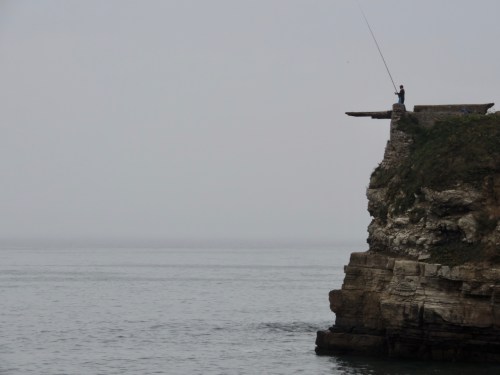
I took this photo in Gijon, Spain a while back. I’ve returned to look at it many, many times.

There’s something hear which captures my attention and provokes my thoughts.

I’ve always been struck by two things in this image. The first is the solitary nature of the fisherman. It reminds me how we humans are constantly addressing two apparent opposites. We are highly social creatures. We need relationships. We need to connect. We want to share. On the other hand, every one of us is unique. Every one of us experiences this universe from the position of the subjective self. There’s no alternative to that. We need to know that we exist, that we are seen and heard, that we can exert our will and make a difference in the world. We all need some time alone. Alone with our thoughts, our memories, our sensations and experiences. And, yes, it’s also great to share.

The other thing is the distance between this fisherman and the water (and therefore the fish!). It looks a LONG way down. I can’t see his fishing line but I can see that the rod he is using seems huge. There does seem to be a man-made ledge at the top of this cliff so I’m guessing it’s a good place to fish. And as I’ve never fished in my life, I know nothing about fishing, but I’m going to guess that a good place to fish is where you catch fish. There would be little point in standing there dangling a line into the sea far below if you never caught a fish, would there? (Or maybe there would. Sometimes I wonder if the main pleasure from fishing comes from the solitude, not from catching anything. But maybe some of you do go fishing and you can tell me)

As I look at this image again today, well into our third week of lockdown in the midst of this pandemic, I see a third thing – hope.

Hope?

Yep, hope.

Here is a man, a solitary man, standing far above the source of what he hopes for (fish?), but with sufficient hope to actually stand there.

I think that’s one of the things we need at this point – hope.

I hope for an end to this pandemic and its deaths and confinements.

I hope for a re-evaluation of the world we live in.

I hope we carry forward our new-found admiration and respect for all the people in under-valued jobs who keep our societies going – the health workers, the carers, the cleaners, the food producers, the transporters, the cashiers, the shelf-stackers, the teachers, the people who keep the water flowing, the lights on, the heating working, the researchers and innovators……has this list got an end? I’m sure you are already thinking of other workers whose importance to us all is suddenly coming to the fore.

I hope we shift our focus and our energy away from competition and control towards co-operation and helping.

I hope we learn from this experience.

I hope that what we learn leads us to make different choices.

I hope we take forward this valuing of human beings and relationships and build it into our new societies.

What do you hope for?

Let’s begin to imagine what kind of world we want to build together in the light of what we know now.

(My list of hopes is by no means complete. I only hope I can inspire you to start to make your own list)
Read Full Post »

I love the places where one element meets another. The places where constant change is right in front of my eyes.

These are borderline places, zones of transition and transformation. There’s a word for spaces and regions like these – liminal spaces.

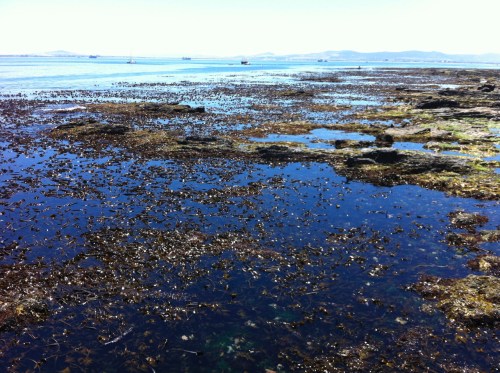
This first photo today is of one such area. You can see its coastal and that the tide is out revealing rocks, plants, seaweed, and rock pools. I love the colours in this photo and how you just know that, despite this being a single, still, image, it is already changing and won’t look exactly like this in a few moments time. I see some ships in the distance too and wonder about the people onboard, making a journey, transitioning from one place to another, from one life perhaps to another.

Here’s my second photo

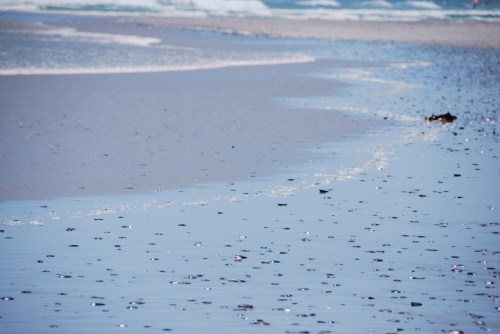
Staying at the coast for this one….an image which is almost entirely composed of shades of blue. You just know that this apparently blue sand is wet, and that as it dries it will turn golden. There are no hard edges in this photo. Just gentle curving lines where the sea turns to surf, and the water bubbles up with escaping air. This is a calming image to me. I see it and I can hear the rhythm of the waves breaking on the shore. I can smell the fresh, invigorating sea air (and hope it won’t be TOO long before I’m allowed out to experience it again).

Number three…

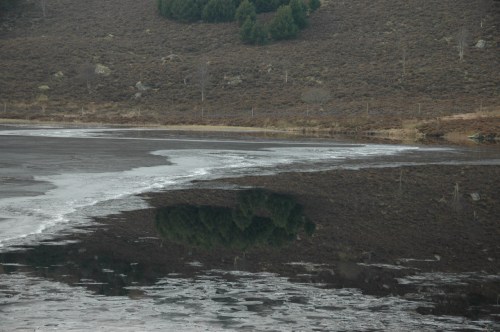
Take in Scotland one winter this one shows either the spreading ice on top of the loch, or maybe it was receding….who knows? I can’t remember. But again you can almost see this changing before your eyes. There are edges here which are highly reminiscent of the ones in the second image….of the sea breaking on the shore. Although this time it is ice breaking on the water, or water eroding ice. The bonus in this image is the reflection. You can see the trees on the slope of the hill, but they are much darker on the surface of the water, which seems kind of dream like to me. A glimpse into the Earth’s unconscious.

Finally…..

The low morning mists at the foot of Ben Led seem to mimic the shape of the hills above them. The mist rises and falls the way the land rises and falls. There is clear ground between me and the misty zone, and clear ground rising above it, creating a very special kind of mysterious liminal space I think. Beautiful.

Here we all are. In the midst of this pandemic. Nothing is the same. Everything has changed and, often frighteningly, continues to change so quickly we can’t even see what’s coming. But this pandemic will end. And what then? What kind of world will we live in together after this? Sure, there will be forces which try to get right back on exactly the same track as we were on before, but something else seems to be emerging in this liminal space….a re-evaluation of what’s important in life, of relationships, of the kind of work different people do, of how we are so inter-dependent, so connected. Of how we share this one single planet on which Life exists without borders.

Let’s use this space, this region, this zone, to reflect and to think. After all, many of us the time to do so now. Let’s use this time to imagine how we humans might better live on planet Earth. Together.

What do you hope will be different afterwards?

What do you imagine the post-pandemic world might look like?

How might health care change? How might work change? How might education change? How might economics and politics change? [add your own question here…..because everything might change]

Read Full Post »

What a combination! Sunlight and flowers!

I’ve a number of photos of this type. I like to get down on the ground with the sun above and in front of me, and photograph the petals of a flower as the sunlight makes them glow.

It looks like LIFE to me.

And it reminds me of how Richard Feynman once said that trees are made from air, which, of course, shocks you when you hear him say that. We think surely trees are made from the soil? But no, not so much. They capture carbon dioxide from the air, capture the sun’s rays and then they use them to break the carbon dioxide down to get that building block of organic life – carbon, and in the process push out the oxygen they’ve released into the atmosphere. He was asked…but what about water? They need water and that comes up from the soil through their roots. Aha, he said, well, yes, but where does the water come from? The air.

Of course he was exaggerating to make a point because trees are made of a lot more than carbon and water. But did you know that the roots of trees are covered in micro-organisms, little fungi which reach into the tree roots and outwards into the soil. These tiny creatures gather up and transfer into the tree nitrogen, phosphorus, potassium, zinc, magnesium and other micro-elements which the tree needs to survive and to grow. They also help the roots gather up water and form part of a kind of immune defence against pathogens for the tree. In return the tree transfers up to 60% of the sugars it makes to feed these little fungi.

Amazing, huh?

A real lesson in co-operation, collaboration, and symbiosis. In fact a principle we’d do well to learn from. How can we live better on this Earth? In more symbiotic ways, which turn out to be more creative than our consumption and destruction methods which produce “waste” (something which doesn’t exist in Nature)

Did you know that researchers tried treating some flowers with antibiotics and found that their lovely scent disappeared? Turns out than in many cases the scent of a flower is actually produced by the population of bacteria which lives in it symbiotically.

Huh! Turns out this symbiosis thing can be pretty damn beautiful!

Read Full Post »

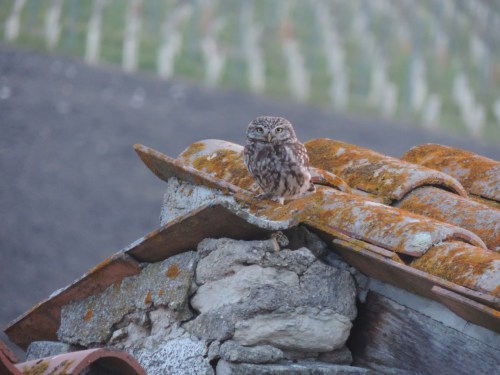
This year a new bird has taken up residence in a neighbour’s barn. He’s a “Little Owl”, and, yes, that’s his common name. His scientific name is “Athene noctua”. The “Athene” part goes right back to the belief that this owl had a special connection with Athena, and the “noctua” part comes from the Latin for “Minerva”, who was the Roman equivalent of Athena. As such, this little creature has long been held to represent wisdom and knowledge…..pretty much just what we need more of in our world.

I’ve watched him come and go and the other day there noticed he wasn’t alone. Seems he and his mate have a nest up high behind the roof beams at the back of the barn. He’s a pretty wary creature though so it’s been hard to get a decent photo. However, yesterday, looking out of the window of my study, I could see him sitting on a nearby roof. I slowly raised my camera to my eye, taking care not to make any sudden movements which might attract his attention, even though I was inside my house, and he was outside on the roof. I zoomed in, focused, and pressed the button. I can’t say I really clearly saw what I was getting a picture of, but when I uploaded it to my computer I realised he had totally clocked me.

He is looking directly at me!

How does one living creature possess that knowledge? How do we know that we are being looked at? I bet you’ve had an experience where you are sitting reading a book or having a coffee and, suddenly, you become aware that someone is looking your way. You look up, catch their eyes, and they either hold their gaze, or, more commonly, quickly look away.  I’ve often wondered how that works. What are we picking up? It’s not about casting our eyes around the world and just noticing someone else’s direction of gaze. We seem to be able to detect something, and it also seems this is a talent which is not exclusive to human beings.

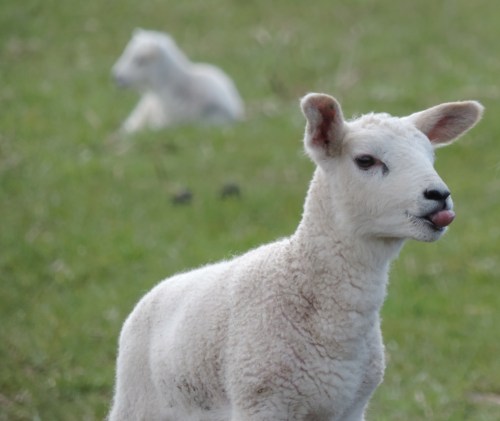
This isn’t the first time I’ve had this experience with an animal. Here’s a photo I took one Spring day when the first lambs were in the fields.

Tell me this little one hadn’t clocked me!


Read Full Post »

Markings.

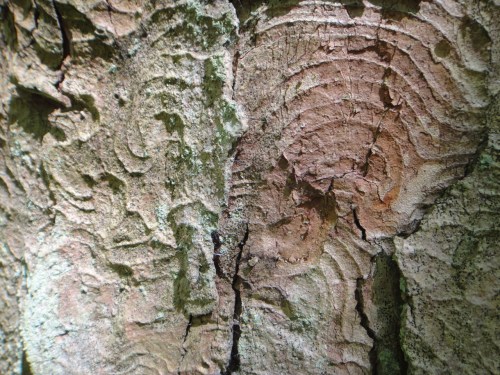
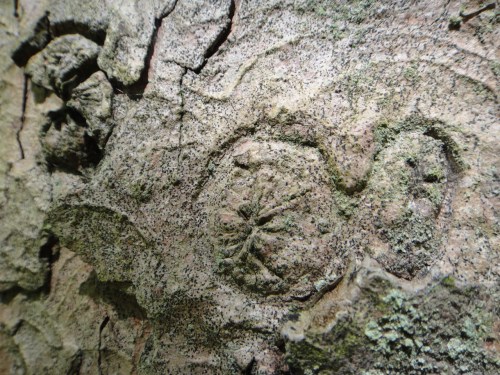
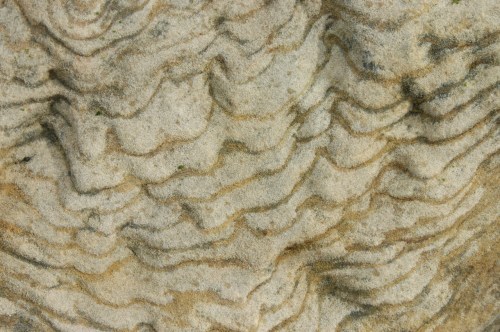
I find patterns utterly fascinating….wherever they are. Look at this blend of textures and colours on the surface of a tree. Isn’t it beautiful? It’s as if some artist has been doodling or a sculptor has been running his or her fingers through wet clay.

Here’s another one.

This one looks like an infinity loop to me.

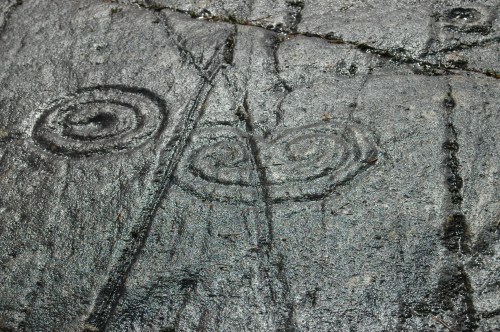
It reminds me of some of the cup and ring markings on the rocks in the Kilmartin Valley in Scotland. Here’s a photo I took of one of them.

The cup and ring markings in Kilmartin are really impressive and challenging. As best I know absolutely no-one has managed to explain them. Are they maps? Are the signatures? Are they messages from one person or tribe to another? Are they symbols, and if so, of what? Or are they doodles?

We humans have a particular kind of creativity. We imagine, we play and we make marks. I love all of that. But then I look around me and I see that making marks is embedded in all kinds of natural phenomena. It’s as if the whole Universe just loves to make marks.

We live an a creative universe.

Creativity runs through us the way our blood runs through us, the way our breath runs through us, the way we are infused by the streams of materials, energies and information which run through us, the way our spirit runs through us.

We react and we act. We engage and we respond. Catabolism and anabolism (biological terms related to our metabolism….how we break down materials which we consume and fashion them into the things we need to live) are at the core of our being.

Just by living, we create, but isn’t it such a thrill when we create consciously?

Isn’t it such a delight when we stumble across the works of creation?


Read Full Post »

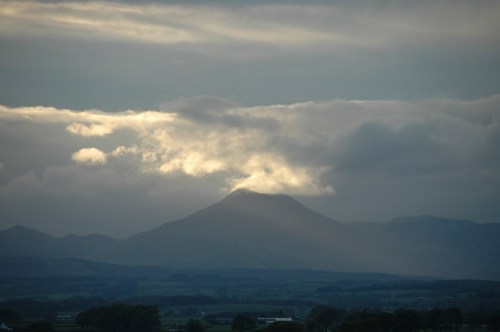
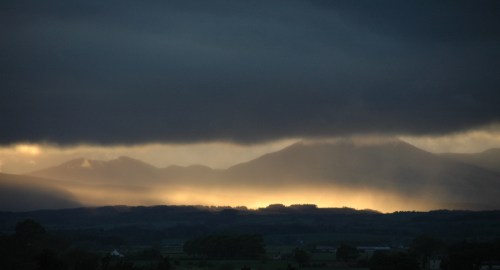
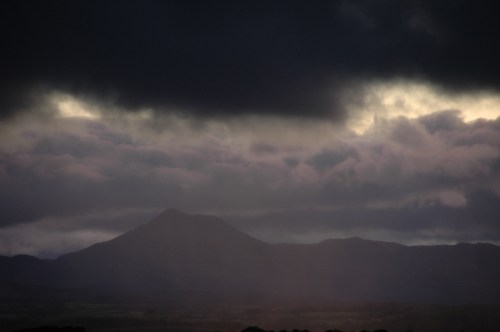
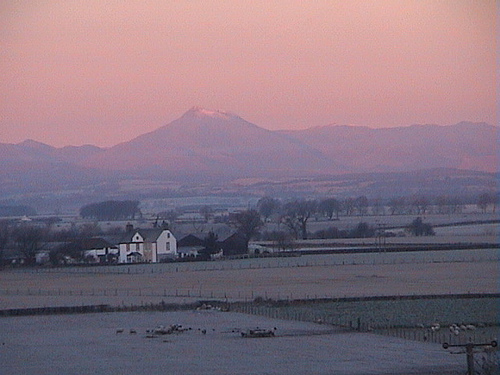
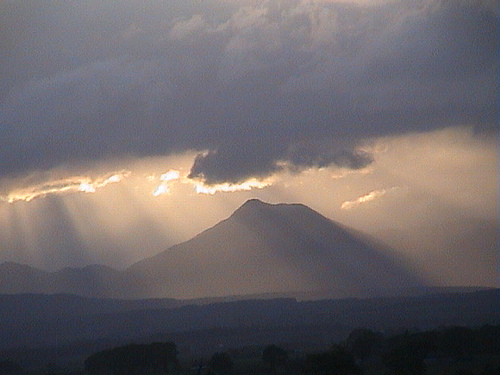
When I lived in Cambusbarron in Scotland I looked out of the window each day and saw Ben Ledi. I quickly realised that this mountain looked different every day, so I started taking photos of it. I took a LOT of photos.

I was constantly amazed how my usual experience was not of looking at the same scene every day, but seeing a different scene.

I know, maybe you are thinking, but it’s the same mountain. It’s just the clouds and the light which is changing….

But the mountain doesn’t exist by itself. It exists in a place and a time. I can’t see the mountain disconnected from the world in which it exists. That wouldn’t be real, would it?

I think the world is like this.

Absolutely everything is connected. Absolutely everything exists in webs of contexts and environments.

It changes moment by moment. Everything we see, hear, smell, touch and taste changes constantly as the streams of molecules, energies and information flow through, influencing, creating, disrupting.

So, today is always new.

This moment is always new.

We humans are good at doing something called “abstracting”. We isolate a part of what we are experiencing and consider it as if it is separate, disconnected, un-attached. We call these abstractions “things” or “objects”. Or we call them “outcomes” or “results”.

But we have to return our abstractions to reality eventually and then we seem them as less isolated, less fixed, less separate than we thought.

I never felt I could understand a patient by isolating their disease from their life. I never felt I could understand someone’s illness if I considered only the changes in certain cells, organs or tissues.

When we tell our stories, part of what we are doing is describing some connections…..some sequences, some consequences. We describe events, experiences and emotions, and together they combine to make every day, every moment, every place and every relationship, unique.

What did you notice today?

Was there something familiar which you experienced differently today?

Read Full Post »

Before the Mulberry tree in my garden gets its leaves each year it casts wonderful shadows on the grass. I was thinking about them when I started to read the book “Penser comme un arbe” (Think like a tree) by Jacques Tassin. He starts out by setting the evolutionary scene where we humans evolved in the trees and reflects on how much the human body is constructed using tree-like patterns. Like the one you can see in this shadow. Our circulatory system which carries the blood all around our body branches and branches just like this, splitting into ever smaller arteries and capillaries, then coming back together the way a river gathers all the streams which feed it, along ever bigger veins until it connects the blood to the heart and the lungs again.

Our lungs are like this. Branching first into left and right, then into the different lobes, down the bronchi and bronchioles to open out like bunches of grapes in the alveoli.

Trees are the lungs of the Earth, cleaning the air of pollutants, gathering up CO2 and emitting Oxygen. Interesting to think of the respiration of a person and the respiration of the planet using similar patterned structures (OK, up to a point, the trees don’t have lobes and alveoli, but their leaves provide the maximum contact with the air, just as our alveoli do that job too.)

Our lymphatic system, so crucial to our body defences uses the same “arboreal” pattern, just like the circulatory system.

Our nervous system too, with the continuously branching structures of nerves and the way each neurone in the brain reaches out to contact thousands of others.

There is something magical about our relationship with trees, isn’t there? It really does us good to be amongst them, to look at them, to contemplate them, to smell and touch them. The Japanese “forest bathing” has been studied to show the beneficial effects on our immune systems of substances emitted by the trees in the forest.

Jacques Tassin talks about studies which show the beneficial effect on children with ADHD of spending some time in the forest, and, perhaps even more surprising, the calming effects on the heart rates of people contemplating images of trees…..in other words, we get a benefit from just looking at them, even when we can’t be physically present with them.

So, I thought I’d share a few photos I took in a Cedar Forest just north of Aix en Provence.

Enjoy!

Finally, look at the tree right in the middle of this shot. The sign by the path was labelled “Candelabra Tree”.

Do you have any favourite trees?

Read Full Post »

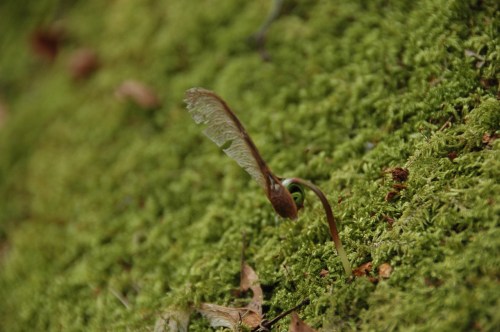
You know these seeds which helicopter down from the trees? Strangely one-winged and decidedly “wonky” looking?

Well, maybe humans wanting to make something which would be carried on the wind wouldn’t design it like this, but, hey, Nature’s designs are the best!

So, sometime, maybe last autumn, this little seed spirals its way from a tree, who knows which tree, and tumbles and flies and skips and zigzags its way through the air, to land here, on the forest floor. Then, a few months later, who knows how it knows, it wakes up, yawns and starts to stretch, feeling that Spring is around the corner.

And look at it now!

Out of the pod uncoils a long stem, probing down through the moss to find nutrients, and begin to grow itself into a tree!

I mean, do you ever stop and consider something like this?

Have you any idea how it happens?

We can’t even tell if an individual seed is alive or not, is viable or not, until it wakes up and begins to develop. Isn’t that incredible? That we can’t even tell if it alive or dead? Nobody can.

Then how do the cells start to divide and “differentiate”? That means start to develop into the different cells which will produce all the different parts of the tree.

One of my most favourite and most memorable lecturers at Edinburgh University was the Professor of Anatomy, Professor Romanes. He used to start a lecture with a box of coloured chalks and one of those giant rotating blackboards which gave you one screen after another. By the time he finished he’d produced what were no less than works of art showing each different kind of cell, each different kind of tissue, in a different colour. We were transfixed.

He gave a series of lectures on embryology taking us through the various stages of development of a foetus from a fertilised egg cell to a ready to be born baby. I remember thinking at the time, and those thoughts are still with me, “how on earth does that happen?”

I mean, how on earth does a single fertilised cell divide and multiply and differentiate to produce all the organs, all the tissues, all the parts of a human body, and every one of them in the “right” place?

It utterly amazed me.

It still does.


Read Full Post »

Coronavirus, epidemic, pandemic, deaths, school closures, travel bans, hospitals overloaded, patients in the corridors, floods, fires, plagues of locusts, hurricanes, tornados, earthquakes, snowstorms, climate change, immigration, deportation, walls, cancer…….

It’s not hard to make a list of threats, to find things to be afraid of.

Every headline screams – be afraid, be very afraid!

“Prepare for the worst and hope for the best”

Sounds good advice, huh? Said this way around the first thing to do is focus on the worst, then once you’ve done that you might get around to dragging up a bit of hope. Said the other way around you hope first, but what you do, what actions you take, are determined by imagining the worst.

Is this a good way to live?

Imagining the worst every day? Feeling fear every day? Feeling anxiety every day?

Maybe not, huh, but isn’t it just common sense? Isn’t it just “sensible”?

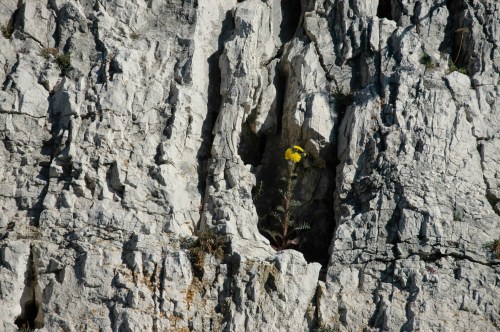
One day I was out walking along the Mediterranean coast and I looked up at this immense grey rocky cliff and a patch of yellow caught my eye. I zoomed in with my telephoto lens and took this photo. Wow! Look at this single, beautiful yellow flower. I was about to write “delicate, little flower” there but stopped myself because “delicate”?? I don’t think so. How did that little seed, blown there by the wind, or dropped by a bird, find enough to sustain it, enough to keep it alive, enough to make it burst out of its shell and stand tall and reach for the yellow sun and spread its petals to say to the world “Here I am” “I am alive”.

People die without hope. I’ve seen it. Many times.

If my mind is flooded with daily fears, if my thoughts swim in an ocean of dread, what kind of day is it going to be today? What kind of life will I experience? And what if this is “my one wild and precious life“? Is this how I want to spend it?

What’s the alternative?

Denial? Delusion? Escapism? I suppose so…..but I think there are better options –

“Hope for the best, and adapt”

If we start the day with hope, make our plans based on hope, then we set off positively. If obstacles appear, accidents happen, luck runs out, then we can adapt. I used to commute from Stirling to Glasgow on the train every day to go to work. I never set off thinking “maybe I won’t get there”. I never went to Queen Street Station after work thinking “maybe I won’t get home”. I never planned for the worst, then got round to trying to hope all the dreadful things wouldn’t happen.

Well, I didn’t always get there, and I didn’t always get home. One day the G8 Summit was held in Gleneagles. The authorities closed Stirling down. No trains. No buses. Motorways blocked. I didn’t get to work that day. One day at work it started to snow. It snowed and it snowed and it snowed. By the time I finished work there were no trains leaving Glasgow. The buses were all full, then there were no more buses because the motorway was blocked. I found a hotel room using my smartphone, stayed the night, and next morning, stopped off in Marks and Spencer for a new shirt on my way to work.

Many, many times, trains were cancelled or ran late. Many times the train would stop in the middle of the countryside for half an hour, or an hour, or sometimes, even longer. The journey wasn’t always as straightforward as it should have been. But I still never set off thinking “maybe I won’t get there”.

So that’s one way……

“Hope for the best, and adapt”

Here’s another –

“Look for the good and adapt”

This isn’t quite the same because it isn’t based on a starting point of hope. It starts with an intention. An intention to seek, to be curious, to be on the look out for what delights, and what amazes. To find “L’émerveillement du quotidien“. Because it’s always there. There will always be beauty to discover, music to excite or delight, scents and flavours to savour, textures to relish. There will always be acts of kindness, acts of courage and acts of love. You can see that all the time. In how many terrorist attacks do we see the cruelty of one person, followed by the courage, kindness and love of many, many others.

What if every day I look for the good, and when obstacles, accidents, infections, bad luck come my way, I find a way to adapt?

I look at that flower, flourishing (because that’s what flowers do, isn’t it, they flourish?) in what looks like barren adversity, and I think, well, that’s amazing, that’s beautiful, that’s life.


Read Full Post »

The phrase “everything is connected” immediately appeals to me and strikes me as true.

The first thing I think of is the human being.

Although I was taught Medicine in parts, learning about cells, tissues, organs and even systems separately, it was an almost unspoken given that all the parts were connected. In Second Year of Medicine at the University of Edinburgh, one of the main subjects was Anatomy and we were put into groups of six to spend a year dissecting a human body. Our guide was a three volume textbook, “Cunnigham’s Manual of Practical Anatomy”, along with “Gray’s Anatomy” (probably the most beautiful textbook I ever possessed). I was a bit overwhelmed with the sheer number of pages in these texts and asked one of the tutors “Which bits of this book do we need to learn?” He replied, “Which bits of human beings do you think patients will ask you about once you’re qualified?” “Ah, you mean we have to learn it ALL?” He smiled and walked away.

It would be a full two years after that before I met an actual live patient, but, hey, they don’t teach Medicine that way any more do they?

I don’t remember a single lecture about holism, but somehow it was a core value for me right from the start. However it was over a decade after graduation before I came across “Psychoneuroimmunology” and “Psychoneuroendrocrinology” which were fields of study looking at the connections between the Mind, the Nervous System, the Endocrine System and the Immune System. I think that’s where I first encountered a more holistic science, one focused on “systems” not “parts”.

It was much, much later when I encountered “Complex Adaptive Systems” and both “Chaos Theory” and “Complexity Science”. Somehow I think we are still in pretty early days of developing the sciences of the connections. But it sure still excites me!

As a GP I also had to be aware of the individual patient’s connections between themselves and the rest of the world….their relationships, their work, their housing, their family and so on. Those are threads you never quite get to the end of. I think that makes us humble, that knowing that we will never know all there is to know.

Sometimes it seems to me that our minds are like fractals, vast webs of mirrors reflecting similar patterns of reality to each other. Actually, as I write this I remember “Indra’s Net” – where every drop reflects every other drop. I think we humans are great at spotting patterns, and regularities, and that, combined with our ability to use metaphors and symbols enables us to appreciate the incredibly rich, dense nature of reality.

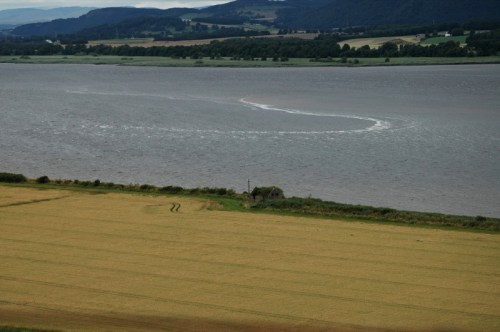
When I saw this shape on the surface of the water I wondered if it had been caused by a boat, or was it something lying on the river bed? But look at the shape drawn by the farmer who has been working this field. What a gorgeous echo of the shape on the river. One of the things that happens when we appreciate these connections is an experience of beauty and wonder intimately entwined.

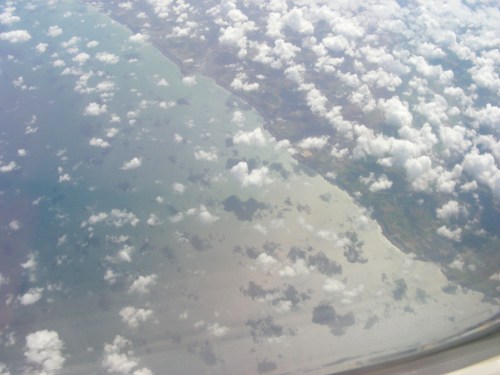
One time when flying over the English Channel, I looked down and saw the shadows of the clouds on the water’s surface just before the coast. Ooh, that still pleases me so much to contemplate this image! I love the fragility and impermanency of the little clouds. I love the even more ephemeral nature of their shadows on the Channel. And I love that transition of density of the clouds from the area above the water to the area above the land, how you can see in that the dynamic, ever moving dance of the land and the water and the air. Magic!

What connections have you spotted today?


Read Full Post »

« Newer Posts - Older Posts »