Feeds:
Posts
Comments

Archive for the ‘health’ Category

dscn7600

Barrie Condon, a retired Professor of Physics, generously shared his new book, “Science for Heretics” with me. He thought I’d like it. He was right. The subtitle of the book is “Why so much of science is wrong” and his aim is to provoke the reader into questioning both the claims of science and its methods. He uses the device of three characters, The Believer, The Sceptic and The Heretic, throughout the book as he considers several fields of science including mathematics, physics, and medicine.

The Believer is one who science reveals the Truth and will one day enable us to understand everything in the universe. The Sceptic accepts the basic tenets of science but retains some doubts about whether of not we will ever be able to understand everything. The Heretic doesn’t buy the whole project. He thinks the universe is not completely knowable and that our scientific theories which shape our views what we see are simply the projections of our human brains.

He particularly attacks the use of theory in science which tends to be translated into “laws”. He clarifies that no such “laws” exist and sets out the case for a return to observation and experimentation instead. I really enjoy his writing style and some passages particularly stood out for me.

For centuries we have been measuring all sorts of things but generally only recording the results we expected and ignoring the rest.

This captures two of my main objections to so much of medical practice – the reduction of human beings to measurements and the belief that the particular measurements which are made allow us to completely understand a patient and their illness. Although I have heard of a medical teacher say “Don’t listen to patients. They lie all the time. You can only trust the results.”, my own experience of doctoring couldn’t more diametrically opposed from that view. ONLY the patient’s experience can be trusted. Measurements, sadly, frequently mislead, and ALWAYS need to be set in the context of this individual patient.

Life saving claims for medicines need careful examination. Drugs do certain things which are beneficial to the human body in disease, but they inevitably have other effects which can be deleterious or even fatal.

I wish more doctors made that more clear every time they write out a prescription.

He’s even better on physics and cosmology.

For me, the two most important things he has to say are, firstly –

Science gives us theories that purport to explain how the universe works. This breeds confidence in scientists who then go on to do things that carry certain risks. These risks are rationalised away on the basis of existing theory. Even if our Heretic is wrong in saying that all theory is actually erroneous, history shows us that most or perhaps all theories ultimately prove incorrect. Our perceptions and calculations of risk are therefore also likely to be erroneous. Science generally also assumes a high degree of control over experimental conditions and again this faith seems misplaced. While we may routinely underestimate risk, we also routinely overestimate our ability to control it.

This is SUCH an important point. He’s arguing for a greater use of the “precautionary principle”. Instead of assuming that everything we produce, all our chemicals, all our technologies are safe until proven otherwise, we should be more wary. What we need is a whole lot more humility and the ability to confess that we really don’t know very much at all. And we certainly way overestimate our ability to control things. It’s the arrogance of believers which frightens me most – people who are so sure that they, and only they are right – I’m on the side of the Heretics in Barrie’s terms. It’s likely that what we think we know at any point will be proven not to be quite right in a few years time (or, indeed, to be completely wrong).

The second important conclusion he reaches is that there are no fundamental laws of the universe…..apart from, maybe, two –

As well as a possible law for uniqueness, the Heretic is open to the possibility of a second law governing complexity, namely that it increases with time.

Well, there he puts his finger on what I’ve written about many times on this blog – that the most important characteristics of the universe are its tendency to create uniqueness and its trend of ever increasing complexity.

Take those two undeniable features on board and try and practice science or medicine by measuring, generalising and trying to control the future! Good luck with that.

Thank you, Barrie Condon, for your delightful, humorous, thought-provoking, paradigm-challenging book. If it was an integral part of science education we might be able to look forward to a better world.
Read Full Post »

two

In the Spring of 1784, Armand Marie Jacques de Chastenet, marquis of Puységur, discovered that Victor Race, one of the peasants who worked on the marquis’ land, had pneumonia. The marquis had become interested in the work of Mesmer and “animal magnetism” so decided to see if he could help Victor back to health using this new method.

Victor fell into a trance and began to speak. But to the astonishment of his master, he didn’t speak in his usual patois, but in perfect learned French instead. Not only that but he talked about subjects that an illiterate peasant couldn’t have known about.

What happened next is even more astonishing. The marquis and Victor became a therapeutic couple. The marquis would ask an ill person about their symptoms….he’d “take the history of the patient”, and, in trance, Victor would pronounce the diagnosis and prescribe treatments.

Neither of these men were able to carry out the acts of healing by themselves, but together, they could.

This was one of the first recorded episodes of “lay mediumship” in Western civilisation.

I think that’s a remarkable story and I know of other instances from within my own lifetime where such astonishing collaborations occurred.

But even setting aside the somewhat “supernatural” aspect of these tales, isn’t there something like this going on in every therapeutic act? Isn’t every therapeutic act a collaboration between the patient and the therapist. Without each other they can’t achieve healing, but together, they have the chance to become something unique and greater than either of them. Together they can gain a greater understanding, and together they can find answers they couldn’t find alone.

I think we forget that in modern medicine, thinking that the doctor can do it all by him, or her, self. Thinking that one person has all the answers, ready made, so to speak.

There can be some of the most astonishing examples of magic happening when two people form a bond and work together for a common purpose.

Read Full Post »

alone

When I worked at what’s now called the NHS Centre for Integrative Care in Glasgow, every patient attending for the first time had a sixty minute appointment. 60 minutes doesn’t seem a lot in the context of a life time but to receive a whole hour of undivided, focused, non-judgemental attention feels like a gift.

My colleagues and I would frequently have patients tell us “You’re the first doctor to have actually listened to me.” I don’t think that feedback ever lost its power to shock. How did so many people get so far into the health care service and not have the experience of being listened to?

We all need to be heard. We all have the right to be heard. All of us.

The recent EU Referendum in the UK, and its political fall-out has made it even clearer to me that, politically, we are not being heard. There is a disenchantment with politics and politicians across the so called democratic world. Maybe one of the reasons for that is that our democracies are not enabling people to be heard.

In the UK there is a whole chamber of government, the House of Lords, which is 100% unelected. There is nothing democratic about it. Nobody voted for them and they aren’t accountable to the electorate.

The electoral processes based on simple majorities lead to government after government which does not represent the majority of the electorate. In the recent referendum 52% of those who voted, voted Leave and 48% voted to Remain. About 30% of the electorate didn’t vote. The 52% of the 70% are heard (on this question). The rest of the population are ignored. Parliamentary elections are like that too.

Is handing power to the largest minority the way to ensure that most people in the country are heard?

How can it be?

Most people don’t have the experience of being heard and, in consequence, don’t feel the elected governments represent them.

There’s an additional problem and that is that politics, as currently practised, is about power, not consensus. Those minorities who are elected believe they have the power to act according to their own beliefs and values. They act to exert power over others. If politics was about creating consensus, rather than wielding power over others, it would be an entirely different kind of politics. It would be more democratic. More people would have the experience of being heard.

Being heard isn’t enough.

We need to be cared about too.

Whilst it’s a good thing to listen to someone, to give them the time and attention to enable them to tell their unique story, it’s not enough. The response to that story, the doctors’ responses, the politicians’ responses, need to show that they give a damn. They need to show that the individual human being matters.

If we don’t have a system based on the principle that every one of us is unique and valuable then we get what we’ve got – politics, economics, education, health care, as if people don’t matter.

Isn’t it within the capacity of we human beings to create something better? What would the world look like if we did?

Read Full Post »

really

Karol Sikora, a well-known “cancer doctor”, just said this

It doesn’t make much difference whether you are one of the people who get cured or not

He was talking about cancer care in “the NHS” (as a Scot, it bugs me every time when people refer to “the NHS”, as if there only was one). I suspect he was saying things in a controversial way to promote his new book, but this particular sentence really caught my attention.

He’s referring to how organisations and systems can be managed to work “efficiently”, and I think this probably applies to most health care systems around the world. We’ve developed a way of delivering health care as if individual patients don’t matter. Protocols are created based on the statistics from research into the experiences of groups of patients. I’ve even heard a young doctor say they were told that if a patient takes an evidence based drug and it doesn’t work, then either they haven’t taken the drug or they are lying. These are the kinds of things which happen when doctors take their eye off the ball.

When we base health care on management systems designed for industries which produce physical objects to sell, then, it seems, statistics become king.

It doesn’t make much difference whether you are one of the people who get cured or not

Really?

In what way does it not make much difference? To the individual it makes all the difference in the world. To the doctor? Shouldn’t it matter if this individual gets cured or not? Isn’t that an irreducible fundamental of all medical codes of behaviour? It’s always this patient, this very patient I am dealing with right now who has the right to the best possible care I can provide.

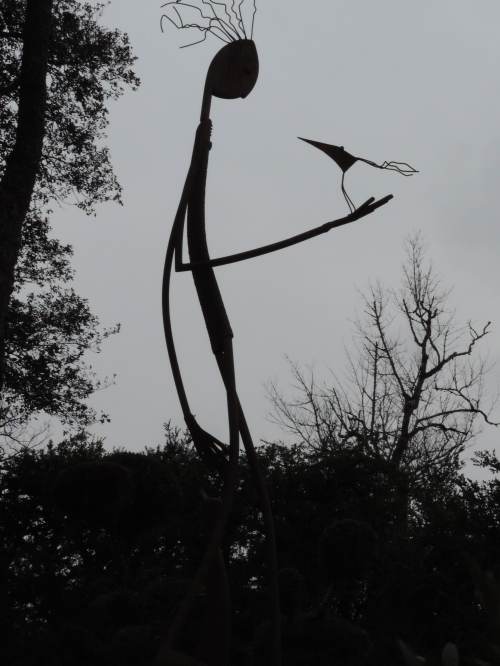
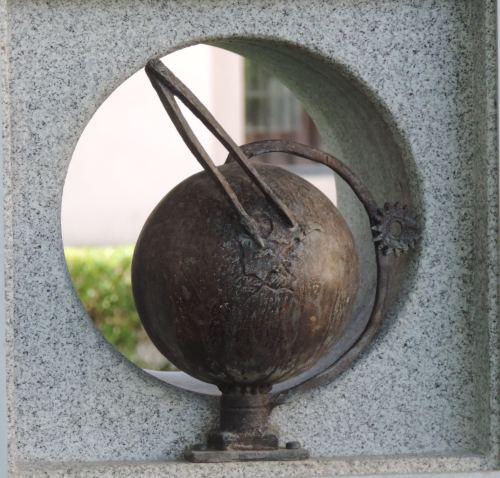
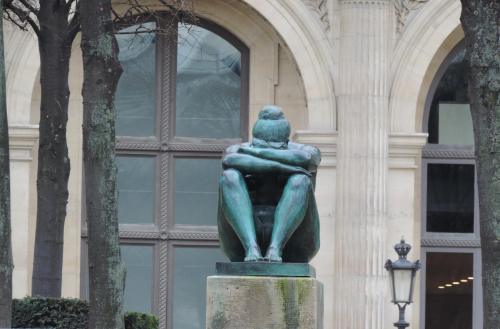
I struggled a bit to find a photo to go with this post then stumbled across this one of a sculpture I saw recently in a garden. It seems to capture that sense of caring for the individual. And it seems the character’s hair is standing on end. Maybe the little bird just told him what Karol Sikora had said!

We can’t accept this way of delivering health care, can we?

This story also made me think of those pretty pointless statistics you can see every day on billboards at railway stations, telling you what percentage of trains arrived on time this week. Should we deliver health care by aiming at percentages of patients properly cared for? Or should we deliver health care by always, I mean always, giving the very best care and attention to every single patient in every single interaction?

Read Full Post »

niche

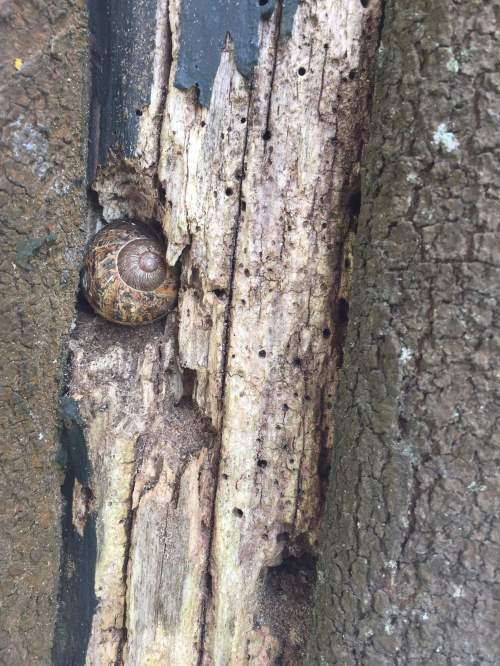
I happened across this little snail in a tree the other day. It immediately caught my attention and got me thinking.

Look at it…..

Doesn’t it look a perfect fit for that space? Doesn’t it look like it fills the space it’s living in quite completely? Doesn’t it look like it’s adapted well to where it’s found to live?

So what about you?

Hans Georg Gadamer, in his “Enigma of Health”, discusses ideas of health and refers to the concept of “fitness” – but not just the fitness of an athlete – the overall concept of “fitness” – when something is just right, when it just fits well. There is something in that idea which speaks to us of health. When we are in the groove, in the flow, in harmony….when everything falls into place……

What would you say about the fitness of your life? How well do you fit your life? How well does your life fit you?

Then I thought about how this snail seems somehow to be living fully or completely within its niche. And I wonder what you’d say about that?

We all live with certain boundaries, limits, “the hand we have been dealt”, influences from Nature and nurture, from the past and from the future, which set the parameters of our potential lives. Aren’t those parameters immense? Aren’t they almost infinite? But do we stretch ourselves out to fill our available life-space as well as we can? There’s something there about flourishing I think. Not just growing and developing, or being “the best you can be”, but of constantly expanding, flexibly adapting, to manifest ourselves, to express our uniqueness in our own vast life-space.

Adaptation. That’s such a good word. I find some people use it in a negative way as if adapting is about compromise and being less than you could be, but I don’t see it that way. Adaptation is how we grow, how we develop, how we live. Adaptation is how all of Life emerges and flourishes. I think we can get caught up in military and/or capitalist metaphors too much, thinking about the world in terms of competition, territory, power, and aggression. But actually, although all those things do exist, seeing the world that way often goes hand in hand with ignoring the co-operation, collaboration, compassion and kindness which also exists.

And when it comes to adaptation, there’s a lot to be said for negotiating your life-space, rather than killing for it!

If integration can be defined as the creation of mutually beneficial bonds between well differentiated parts, then adaptation becomes a process of a living in a way which maximises the abilities of you and I to explore and inhabit our personal, unique, life-spaces.


Read Full Post »

lunch in paris

I wonder how many people are thinking about food at this time of year? Lots, I expect!

As a doctor, I was often asked for a “diet sheet” but I never had such a thing. I thought that just as every patient was a unique individual so there was no standard diet which everyone should follow. We’d have a chat about food and I’d suggest a good start would be to become aware of what the person was eating and noting any specific effects they experienced. For example, I found that if I ate a sandwich at lunch time, my energy would drop within the next hour or so. It was better to have soup, or salad, or sushi. In fact, I found that after sushi I’d experience a rapid boost in energy and alertness. I don’t expect everyone would have the same experience.

So the first part of my advice about food would be to keep an eating journal for a couple of weeks, noting what you eat and drink, and also noting anything you experience in terms of energy, mood, alertness, any physical symptoms etc. In other words see if you can learn for yourself what the effects are of different food and drink.

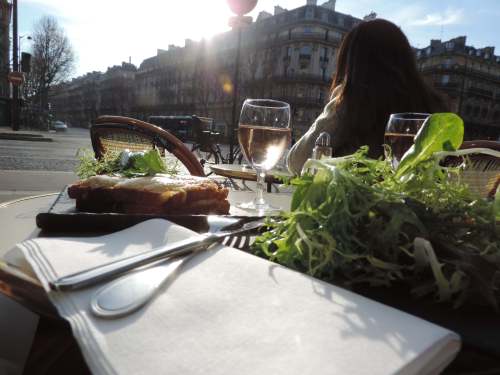
The second part, though, was something I read about a number of years ago in a French magazine. It was that food has a place in our lives which is far greater than nutrients or food groups. It’s not all about carbohydrates, omega 3, or dairy products, for example. What’s also important is where we eat, and who we eat with. In other words, the contexts (physical and social) of eating are important. It’s really quite a different experience to eat a sandwich at your desk, than to enjoy a “croque monsieur” on a Parisian street corner! (see the photo above).

Seriously, give some thought not only to the foods you are eating, but to how eating fits into your life. I have a hunch that the more you enjoy the experience of your meal, the more you’ll find what you’ve eaten is good for you!

Read Full Post »

cad

I’m a strong advocate of individual health care.

What I mean by that is that I am wary of health care delivered on the basis of statistics and generalities.

It was not my experience as a General Practitioner that I always knew best. I might try my best every day, but every day there would be patients whose blood pressure had not come under control, whose infections had not cleared up, whose pain was not relieved. So every day I had to modify my decisions and change them to better suit the individuals who came to see me.

Health care practiced on the front line makes you wary of generalisations. You quickly realise you can’t apply the same treatments to everyone with the same conditions.

I think there are three main, rational, real life reasons underpinning that experience.

Firstly, every individual is unique. Not only are no two individuals the same biologically, but every individual has their own history, their own influences, potentials and predispositions. Added to that every individual has their own beliefs, values, preferences and priorities.

Secondly, life is an emergent phenomenon, and so, so is health. There is no such thing as simple cause and effect in Nature. No intervention produces predictable outcomes in all circumstances.

Thirdly, life is not a series of discrete events. There is a lot of talk in health care about outcomes, but what are outcomes? Life is a process. What happens today is influenced by what happened yesterday and what might be possible tomorrow, and all of that will change every single day.

In my view, the health care choices for each individual are best left to the doctor and patient together in their ongoing relationship, not decided by politicians, insurance companies, managers or drug companies.


Read Full Post »

DSCN4747

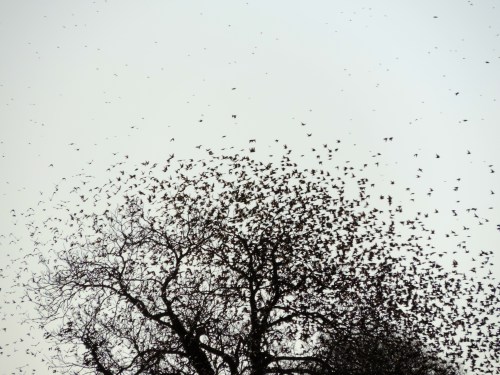
Look at this tree. Those aren’t leaves, they’re birds! Hundreds of them, thousands maybe.

I’ve never seen such a large flock of birds near me before. Maybe you haven’t either. What do you think your response would be? Would you think of Alfred Hitchcock?

Not me!

I didn’t think of that for a moment.

I was fascinated, entranced, drawn outside with phone and camera to do my best to record something of this phenomenon.

Here’s what I put together from my short video clips and some photos.

Later, while reading Montaigne, I read

He who fears he will suffer, already suffers from his fear.

It got me thinking about the stance we take towards the world, about our default attitude. Because isn’t there so much fear around? In fact, it seems to me that fear is often used deliberately as a weapon of control.

What’s the greatest fear?

Some say it’s the fear of death. That this “existential fear” is the foundation of all other fears. For example, as a comedian I heard once said “I don’t have a fear of flying. I have a fear of crashing!” People who fear the dark, fear what dangers might be hidden in the darkness. People who fear dogs, fear that the dogs will attack them. People who fear illnesses, fear suffering and death.

Montaigne says if you spend your life fearing suffering, you’ll be suffering throughout your life. Yet so much of the health advice offered to people is based on trying to avoid death (the greatest fear).

12072632_978160722251727_1794598302913905177_n

If fear is our default, we don’t just suffer, we live in a shrinking world, fearing difference, the “other” and change.

What’s the alternative?

6d36c2e75bc308b00db209125c854c06

Dread one day at a time??!!

Nope.

The great thing about alternatives to fear is that there are so many of them.

There’s courage. Courage is the determination to go ahead even when you are feeling fear. That’s something I’ve been practising since coming to live in France. When you start to live in another country with a different language, not only are customs and habits different but at first you’ve no idea how to ask the simplest things. So a trip to a post office, or the local Mairie, or the garage can be quite intimidating. Until you summon up your courage, and just go. And, in my experience here, each and every time I discover there has been absolutely nothing to be afraid of. People are friendly and they want to help. (Then next time you go the fear has diminished, or even gone away entirely)

There’s wonder. Wonder and curiosity. That’s the response I had when I saw all the birds. That’s the attitude I hope to take into every day – l’émerveillement du quotidien.

There’s love. Love comes with a desire to make connections and with an intention to care, or at very least, not to harm – and that applies in relation to plants and animals as much as to other human beings. How often does it seem to be that when your intention is a loving one, that you meet the same response? When I was a GP, my partners and I built a new clinic and the reception was an open one – no glass or metal barriers between the patients and the staff. We were warned that we’d be vulnerable to being attacked. It never happened. Not even remotely.

Fear closes.

It closes us off from the world and from life.

The opposite is whatever opens – courage, wonder, curiosity, love…..add your own favourites at the end of this sentence!

I prefer the opposites for what they bring in themselves, but I resist fear for another reason. I don’t want to be controlled. Heroes not zombies anyone?


Read Full Post »

orange clouds

Montaigne wrote –

Except for old age, which is an indubitable sign of the approach of death, in all other ailments I see few signs of the future on which to base our divination.

When I read this I immediately remembered a conversation I had with a patient one day. She’d just told me that her husband had been diagnosed with cancer and had been told he had six months to live. I asked her how she felt about that.

“I’m angry”.

That’s not such an uncommon response when people hear such bad news, but I don’t take anything for granted so I asked her to say why she felt angry.

“How come he gets to know how long he’s got, and I don’t get to know how long I’ve got?!”

Well, that surprised me! I hadn’t heard a response like that before.

So I took some time to explain that having a particular disease did not bestow any certainty about the future. Prognosis is a tricky a practice. When speaking statistically about groups or “cohorts” in studies we can say one thing, but when speaking about an individual, it’s actually much, much harder.

The diversity of human experience undermines predictions every day. I think that was one of the best lessons I learned as a doctor. Beware of false certainties!

Read Full Post »

IMG_3968

Montaigne had strong views about health and doctors. He disparaged those who claimed to be better able to tell him what was good for him than he was.

He trusted his self-knowledge more than what others said or wrote about such matters, saying, for example, “I would rather be an authority on myself than on Cicero”. That strikes me as an admirable goal – to become an authority on yourself – to know yourself!

He said of medicines – “If it is a pleasant medicine, take it; it is always that much present gain. I shall never balk at the name or the colour, if it is delicious and appetizing. Pleasure is one of the principal kinds of profit.”

He said of “advice”, or rules for living prescribed by a doctor, “The disease pinches us on one side, the rule on the other. Since there is a risk of making a mistake let us risk it rather in pursuit of pleasure.”

One of my teachers said “Your patient’s life shouldn’t be harder for them when they leave your consulting room, than it was when they came in.” That struck me as wise advice. Montaigne would have agreed!

His issues on this subject weren’t just about doctors and medicines however. He was concerned about people telling others how to live. He gives examples of the diverse lifestyles of shepherds and fishermen and asks if it is sensible to give such different people exactly the same advice.

That’s an issue which troubled me throughout my career. Over the years we’d hear that fat was bad for you, fat was good for you; milk was good for you, milk was bad for you; hormone replacement therapy should be offered to all women, hormone replacement therapy should be avoided at all costs…..and so on.

As advice moves from how to recover from, or “manage” an illness, to prevention, the whole situation becomes infinitely worse.

Is there really any point in living a life of avoidance as a core principle? Avoid this, avoid that, don’t eat this, don’t drink that, don’t do this, don’t do that…..Montaigne quotes the sixth century poet, Maximianus, to back up his stance.

Obliged to wean our souls from things on which they thrive,

We give up living, just to keep alive.

“We give up living, just to keep alive”. Wow! That’s the heart of it. Surely there’s a seed of something wonderful in that one line?

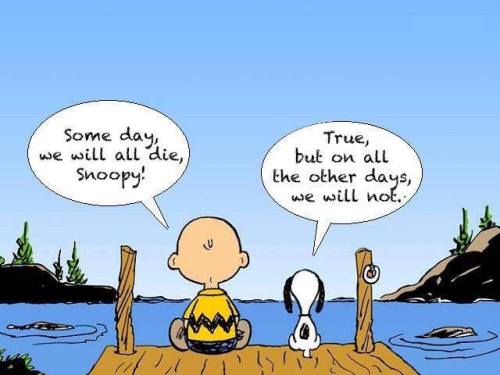
Life’s for living. Death avoidance has a 100% failure rate…..eventually!


Read Full Post »

« Newer Posts - Older Posts »