Feeds:
Posts
Comments

Archive for the ‘health’ Category

Look at this guy! All alone, out there on the tip of the rocky outcrop. Not another soul in sight. Bliss!

Or is it?

There are times when life gets too busy. Times when we are packed onto trains, buses, planes. Times we are standing in queues surrounding by dozens of other people talking, shouting, pushing and shoving. And we just think – of, if only I could be all alone!

Well, it’s not been much like for many of us this last twelve months, has it? Gone are the commutes, the overcrowded bars and shops, the slow moving queues, the hustle and bustle, and now we are in our homes for way more of the time than we’ve been before.

In isolation, or “lockdown”, or “confinement”, we have been separated out. Socially distanced. Physically distanced. Is this bliss? Probably not.

We are social creatures, we humans. We have evolved a highly social brain which connects us to others. We have longings, desires, needs to be with others…..socially, physically, emotionally.

You’ve probably had the experience during this last year of contacting people you haven’t heard from in years. Or people you haven’t heard from in years have contacted you. You’re probably having more conversations on the phone, on video calls, and using messaging services like WhatsApp and Messenger. You’re maybe participating more on social media – which, strangely, is sometimes terribly anti-social!

The thing is we need both. We need time to ourselves, time we can relax, be at peace, perhaps meditate or exercise or just chill. With no interruptions, no demands and no stress. But we also need time to connect, to say “hello”, to ask how others are doing, to express ourselves, to be heard and to listen.

I know you might think it’s a matter of balance, but that’s a tricky concept isn’t it? Because a balance point isn’t likely to be found by scheduling in a set number of minutes for alone time and a set number for social time. That’s because the quality of life isn’t found in numbers of minutes. It’s found in the experiences….in the level of attention and awareness…..in the emotional landscape which emerges during an experience – love, joy, play, awe – all add quality to our lives. Whereas anxiety, fear and anger tend to feel not so good (even though these emotions are definitely an essential part of being human).

I wonder what comes next? Have we left behind the days of “over-tourism” in cities like Barcelona, Edinburgh and Prague? Have we become averse to crowds? If you’ve been working from home during this pandemic, are you looking forward to getting back into an office block? Are you looking forward to an hour or so of commuting to and fro again? Or are you longing to throw yourself into crowds of fans at a concert, or to pack a dance floor?

I don’t know, and the answer will be different for each of us. But, for a time anyway, I suspect we might be just a wee bit more aware than we’ve been for a long time. We might make more conscious decisions. And that, if it happens, will be one of the lessons we’ve learned from this pandemic.

Read Full Post »

I’ve only been sailing a couple times but I do think there are real life lessons we can learn from a photo like this.

First of all, life can seem full of threats like those rather scary, dangerous rocks. In this era of the pandemic that seems especially true and I wonder how our children are going to be as they grow up – they are having to wear masks, wash and/or gel their hands, get regular tests at school to see they are “germ free”, and are being taught that every physical contact is a potential threat – don’t hug! Don’t kiss! Don’t even stand too close!

Secondly, rocks are often much more of a hazard than they appear – we can see what’s above the water, but what lies hidden beneath? Which makes me think of viruses again – after all, we can never see them, and in fact the evidence for the effectiveness of things like wearing masks, social distancing, lockdowns and all such “non-pharmaceutical” interventions is disturbingly scant – by which I mean, not that they might be really helpful, but that we actually don’t know!

Thirdly, as a boat sails close to the rocks the pilot has to be aware of the currents and tides – because it’s not just the presence of the rocks which is a threat, but the potential for the water flows to push your boat onto them. Which reminds me that what we call threats are rarely fixed, often can’t be generalised and always need to be considered in their relevant contexts. Currents and tides change all the time…..and so does life.

Fourthly, I used this photo at the beginning of the pandemic to write about how it has always been a soothing image for me. Ever since I took it I look at it and I feel calm. It pleases me. But when I used it at the start of the pandemic, somehow I noticed the rocks as a threat for the first time. And here I am again, talking about how this image makes me think of potential threats. I guess this pandemic has changed us all. It’s certainly altered the lens through which we view the world.

Finally, I think sailing is a great metaphor for life. You can’t just plot your starting point and your destination and head off in a clear straight line from the one to the other. Nope, life will go much better if we stay aware and responsive. Sure, it’s good to have an idea of where you want to go….even to make preparations for the journey, hoping to anticipate what you’ll need and how you will deal with potential obstacles. But this is what life does – it throws up the unexpected. It surprises us again and again….which should be obvious really because the future is “emergent” – it comes into being from the combination of the past and the present – it’s not sitting there waiting for us to discover it. That’s a basic principle of complexity science – that the future is unpredictable in specific circumstances – that is, we can make broad generalised predictions – like about weather or climate – but we can’t predict accurately about specifics – the weather predictions get less accurate and reliable the further ahead you look.

So, if life isn’t fixed, then we can make certain preparations and plans but we always need to be awake and aware…..stumbling through life in zombie mode doesn’t strike me as the best option! And we need to be awake so that we can change direction, be flexible, adapt, depending on what we encounter. It turns out that improvisation and creative responsive solutions to problems and obstacles is what we need……every bit as much, if not more, than we need “goals”and “plans”!

Here’s the strange thing – at first this image was a calming image for me, then at the start of the pandemic it turned into a metaphor of threat, but, now I find it has become a positive image of improvisation and adaptation. Well, well, I wonder what kind of image it will be for me this time next year??

Read Full Post »

We change all the time. The world changes all the time. Nothing is fixed or, so called, “permanent”. I thought about that when I received my residency card here in France recently. I’ve been given what is called a “Carte de Sejour Permanente” – a permanent residency card. That’s me sorted, you might think. Then I notice that it expires in ten years time. Do they know something I don’t? Well, no, thank goodness, it’s just that permanent seems to last ten years in this instance.

That did get me thinking about the whole concept of permanent. Which isn’t something I’ve explored all that much. I have wondered for a long time about the concept of “now” – which is a period of time when we instantly recognise but is devilishly difficult to pin down or define. I mean the moment you think “this is now”, that moment has slipped away into the past and been replaced by an entirely new “now”! But back to “permanent” – I guess we just use this wonder to mean a fairly longish piece of time – in relation to geology we might be talking thousands of years, and in relation to the universe perhaps billions, but, in every single case, we discover that nothing is fixed, nothing really does retain the same, exact features and characteristics (cripes, even the same molecules!) for ever. It’s just the speed of change which alters.

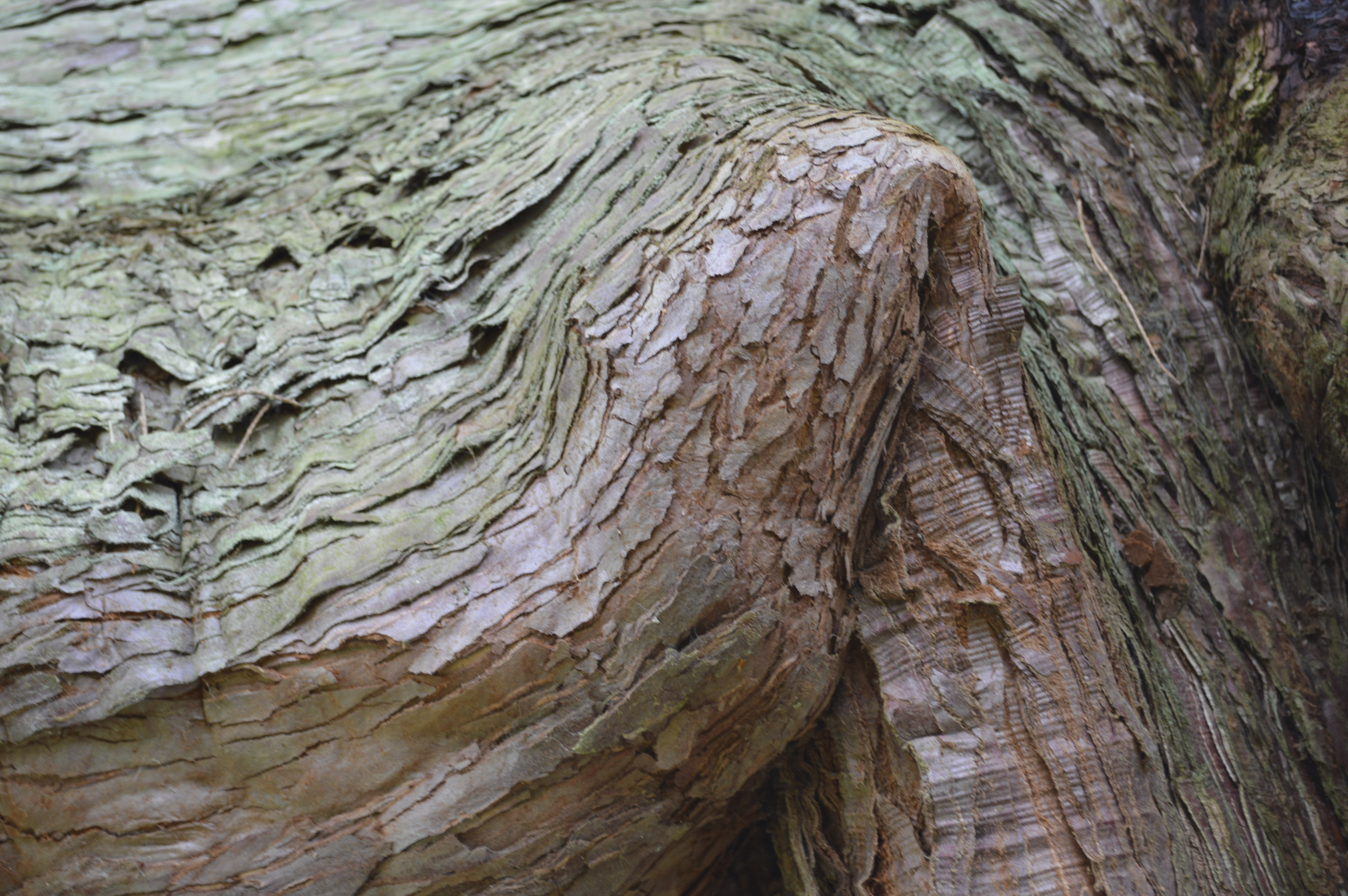
Yet, in our own lives, things happen, and after they’ve happened nothing ever seems the same again. Like you can see in this image of a tree that I’ve shared above. This tree has the most dramatic change of direction which has completely changed its shape forever….ok, for the rest of its life then. And when I see a “lesion” like this I immediately wonder “What happened?” I used to have the same approach with patients in the consulting room. They might come with a problem which had gone on for decades and I always asked them to think back to the time when they felt completely well, then to tell me about the appearance of the first symptoms. That naturally led on to a discussion about what was happening in their life around the time of the big change. I don’t think there’s any way to prove cause and effect in such a scenario but I found it helpful to take the position of “Let’s imagine that what was happening then was significant in bringing about what happened next” That seemed to open the way to a new understanding of illness, it’s significance and possible meaning, which gave a patient the opportunity to change their way of dealing with it to something more helpful, something which might even open the doors to growth and development.

In that sense I think that the events of our lives change us. The most significant events change us dramatically and for the rest of our lives. Death of a loved one, giving birth, serious trauma……you know the kind of thing. All of that, for the individual concerned leaves a permanent change – it can’t be erased. But the way forward with that is learning to create different responses from the ones which have trapped us in suffering. In other words, we can’t change the past, but we can change the way the past impacts on us by choosing to respond differently.

This pandemic is going to change us all……has already changed us all. There won’t be any “return to normal” even if many people desire that…..and nor should there be. Because this event is an opportunity for us, individually and collectively, to reflect, ask ourselves what we were doing that might have contributed to the particular experiences of the pandemic and what we might do differently now to not end up in the same place again.

We have a chance now to reassess our values, our beliefs and our behaviours. To change our priorities, to demand change in our economic, political and social systems. I hope we do that. We’ll all remember 2020. I hope we remember it as the year which led the world to take a different direction.

Read Full Post »

At Otagi Nenbutsu-ji outside of Kyoto, there is an extraordinary display of sculptures – read more about them here. They are all small figures, but the emphasis is on the faces. Each one was created by a different person, so each one is completely unique. You can see several of them if you click on the link in the first sentence of this post.

This particular one has a gorgeous expression. What does this convey to you? To me, it conveys delight, happiness, contentment, and a certain open hearted, loving sense of wonder. I know, I know, what we experience is an interplay that emerges from the connection between ourselves and whatever we have engaged with, so a lot of what this conveys to me comes from personal disposition and preferences. But that’s just how life is. You can’t take your subjective reality out of your daily experience!

What effect does this expression have one you? Because it does have an effect. It calms me. It soothes me. It stirs feelings of love and kindness in my heart. And as those emotions start to flow, they will change the complex balance of chemicals in my body, boosting my immune system and calming down my inflammatory system. Isn’t that amazing? I can change the chemical status of my “inner environment” and so my state of health by what I choose to engage with.

We do this all the time. Subconsciously for the most part, but we do it all the same. Our inner state, and our wellbeing, change constantly in response to the signals and triggers we encounter every day, and according to our own reaction and response patterns and habits. We can become more aware of them, and when we do, we can move more of our lives from react-mode to response-mode which frees us up from living in auto-pilot, or what I call “zombie living”. That lets us become more autonomous, more able to develop new patterns of response, and, yes, even reaction. More able to develop new behaviours, new habits, and new patterns of thought.

That’s the first thing I wanted to share with you when I looked at this image again today, but there’s something else too.

As we walk around our every day world there is one face we don’t see – our own. OK, we can see the mirror image of our face (which isn’t what other people see) and we can see photos of ourselves (look how many selfies people take nowadays!) so we do have opportunities to be able to see our faces. But we have to stop what we are doing and change our expressions to do both of those things. We can’t see the “live view” which other people have…..the expressions on our faces when we meet them, when we converse with them, when we engage with them.

Yet, look again at this image – it’s clear, isn’t it, that the facial expression has an effect on you? Well, that’s true of you as well. Your facial expression is having an effect on everyone who sees it. So, I wonder, what kind of effect do you want to have on other people? What kinds of responses and changes within them do you think might occur when they see the expression on your face?

I’ve said before that we can’t not influence the world we live in. We change it moment by moment by our breath, by our movement, by our actions and behaviours, whether we choose them consciously or not. But here’s another way we influence the world we live in – through our facial expressions.

Of course we can’t go about our lives consciously fashioning particular facial expressions all the time, but when we spend part of each day generating feelings of love, kindness, gratitude and wonder, then that will all play out in our faces, and we will literally radiate those vibes.

In contrast, when we spend a lot of our day in fear and anger then……guess what? That reminds me of the old story about the hungry wolves inside us.

Read Full Post »

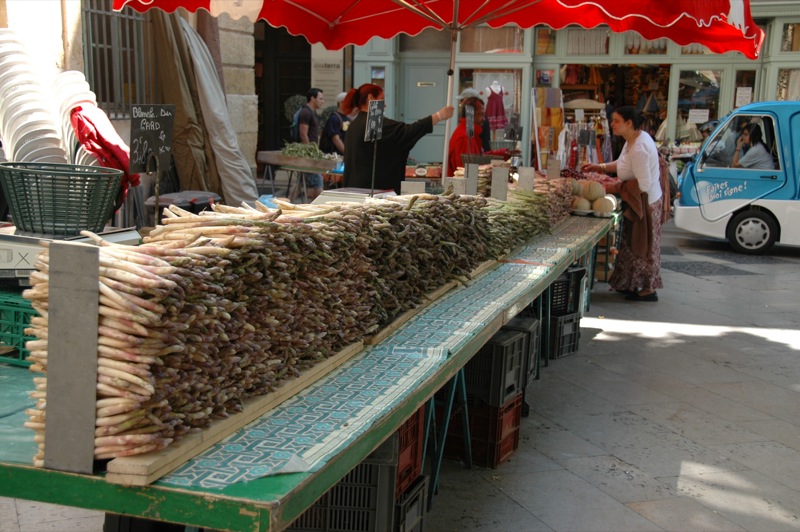
The first white asparagus of the season are arriving. The main lunchtime news had an item about the white asparagus from the “Landes” region yesterday, showing the first harvest. This is one of the most impressive differences for me about coming to live in South West France and it’s about food. Firstly, before I came here I don’t remember the annual seasonal arrival of any foodstuffs feeling like an “event”. I’m not even sure I could tell you what were the main seasons for anything in Scotland. But there are a number of distinct foods which appear seasonly here in France. Secondly, I don’t remember the seasonal arrival of any foodstuff being covered by the national news. Both of these phenomena are just normal here.

So, here we are in March and suddenly it’s the beginning of the asparagus season. First of all, the white asparagus. This season will only last until June so you’ve just over three months to enjoy it. In other words, it’s not just about the seasonal arrival of a particular fruit or vegetable, it’s that the season is exactly what you’d expect – about a quarter of a year – then you need to wait till this time next year until the local, fresh, harvest appears again.

I took this photo a few years ago at one of the markets in Aix en Provence. I’d never seen that much asparagus before! Well, I’ve seen displays like this quite often in different parts of France since then (always, of course, at this time of year). In fact, in the weekly market in Rochefort, which isn’t too far from where I live, I heard a vendor behind a display like this shouting “Aspergez-vous!” – which would translate as “Asparagus yourself!” – nope, I don’t think you’d find that verb in a French dictionary. It was just his personal creativity and enthusiasm on display.

I don’t think I’d ever tasted asparagus before I came to live in France, and I certainly didn’t know there was both white asparagus and green asparagus. But I love it now – both kinds! I love it simply boiled with lemon juice drizzled onto it on the plate, and I love the white especially in a risotto. What a treat!

So here’s what I’ve learned from this experience – that when you eat food in its season, food which hasn’t travelled too many kilometres, food which hasn’t been processed, it tastes superb. Not only that, eating that food becomes something of an event. To eat it when it arrives in the market in season you experience a kind of excitement, a sort of thrill, which is added to the actual taste of that food. Applying this principle enhances my enjoyment of the food I eat, and when it comes to diets and “healthy eating”, enjoyment is not a supplementary option. It should be at the heart of the decision making. (This is a reverse to that old adage about the best diet being the one where “if it tastes good, spit it out!”)

I’m now more aware of variety in my diet. I’m more aware of how far the food has travelled. I’m more aware of wanting to choose what’s been produced locally where I can – and I’m happy to expand that concept of “local” depending on what the food is! (Corsican clementines are another of my all time favourite seasonal foods for example).

OK, so let me be clear. I don’t eat ONLY what is seasonal and local. But I have an awareness of those factors and I’ll deliberately choose them when I can. And yes, I know, not everyone has the same culture as the one I’m experiencing here. France has markets with local and seasonal produce really in every town….even quite small towns. That isn’t the case back in Scotland, and it might not be the case where you live. However, the culture of local small producer markets was always one of my favourite things about France when I used to come on holiday here and knowing that certainly influenced my decision to emigrate and to come and live here. (I emigrated to live in a different culture, a different language and a different climate)

How is it where you live? Are you able to access seasonal foods? If you are, I really recommend it. And, oh, yes, I’m pretty sure that a diet with plenty of seasonal and local plant based foods in it is a healthy diet. But I don’t think there is any one good diet which is best for everyone. I think it’s great we are different and we can make different choices.

Read Full Post »

When I look at this photo I think “This is what life feels like, and this is what life really is”.

What I mean is this – look at those bubbles (I’m going to guess that when you looked at this photo the first thing you noticed were the bubbles). Each one looks perfect, and perfectly separate from the rest. Each bubble is distinct, different in size, different in location, different in the exact way it reflects the light, and also, although you can’t see this in a still photo, each moving along its own distinct, and different path (there are hints of that in the flows of water currents which you can see creating that marbling effect between the bubbles).

We feel like this. Separate, distinct, different. We feel, and we are, unique. There are no two of us with identical characteristics, identical stories, living in exactly the same time and place having exactly the same experiences. We have a membrane which seems to separate us from the rest of the world. On the outside, that membrane is our skin. On the inside it’s mucous membranes lining our lungs, our digestive system and our urinogenital system. Inside, and within, that, is our immune system, a distributed network of cells and chemicals which recognise “foreign” substances and protect us from their potential harm.

But actually, we are not separate. Those membranes are porous. They are not impermeable. And that’s for a very important reason. They enable us to connect. They enable us to interact with others and with the rest of the planet. They enable us to ingest nutrients, inhale oxygen, expel waste materials and exhale carbon dioxide, amongst many other exchange processes. So, to see them as simple barriers or borders is wrong. They do distinguish what is “me” from what is “not me”, but they enable my life by enabling these, and multiple other connections and flows.

Look again at these bubbles. Where do they come from and where do they go? They emerge from the water itself, and they dissolve back into the water they emerged from. So do we. We emerge within the rest of this “natural” world, come into existence for a brief period of time, then we dissolve back into the great web of being from which we came. In the part between birth and death, that part we call life, we don’t disconnect from that great web. We live in communion with it. We live as part of it, not apart from it.

Life is flow – flow of molecules and chemicals, flow of energy, flow of information. Our existence is a delicate but distinct dynamic interplay of those flows, creating the appearance of separateness and difference, but never disconnecting from, or existing apart from, the whole.

Our lives are distinct and beautiful, but they are not separate.

Read Full Post »

Why do we open up? Why do we “unfurl”? As I wrote the other day, my word of the year is “épanouissement” – which means to flourish, to blossom, to fulfil – we follow that path by uncurling, unfolding, unfurling, just like these ferns. And why do we do that? Because, just like these ferns suggest – it enables us to connect.

Opening up, vastly increases our chances of making meaningful, healthy, nourishing connections. Closing down does the opposite.

There are times we need to enfold ourselves, to close down, curl up like a hedgehog for defence, but actually, much, much more, we need to do the opposite. Because without making connections we die.

We do not exist in isolation. Even if it feels like we are being asked to do exactly that during this pandemic, what we’ve discovered is that it isn’t possible. None of us can live without the vast world wide web of others…..without whom we wouldn’t have shelter, food, water, comfort or care. It’s the natural state of affairs – connectedness. And connections aren’t worth much unless they act as channels of exchange – of materials, energies and information.

When I look at this photo, I don’t just see two ferns unfurling, opening up, but I see two ferns touching gently, almost as if they are having their first kiss.

Isn’t this what we need to grow in our world? Not grow our consumption of “stuff”, nor grow our production of waste. We don’t need to grow our destruction of ecosystems. We’ve been doing that all too well. It’s time to change course, isn’t it? To grow our connections, our “integrated” connections – the ones which enable mutually beneficial relationships to thrive. We need to grow our capacity for care and creativity. We need to grow our passion for love, tolerance and acceptance. And to do all that we need to open both our minds and our hearts.

Read Full Post »

My word for 2021 is a French word – épanouissement. Translated into English it has various connotations but basically it means “blossoming” or “opening up”. It’s also used in psychology to refer to the development of the personality, or the self – it means “fulfilment”, or, more specifically, “self-fulfilment”. It can also be used in the description of someone’s face, as when their face “lightens up”. You get the idea?

This peony which I saw in Ueno gardens in Tokyo many years ago captures this notion for me by somehow conveying motion within a still image. Because the beautiful petals are unfolding and opening up in a spiral manner, this looks a bit like one of those little windmills you might have played with as a child. As a physical pattern this spiralling, whether in an opening up, or a closing up, speaks to us of movement. It’s not as static as some other geometric patterns appear.

That element of motion conveyed by this flower’s petals is, I think, an essential part of the whole concept of “épanouissement” – in other words, it’s always a work in progress. It’s not a goal, at least not as an end point, or an “outcome”. It’s a ongoing, growing, developing, evolving, ever-changing phenomenon. And that’s exactly what I think the development of the Self is like.

We are not fixed entities with identities held in aspic. We are not separate, not unconnected, not static. Rather we emerge from within the vast web of Life, never leaving that web, but developing a coherent sense of Self within it, a sense of Self which never stands still, and which, ultimately ebbs back into the great web itself.

Here’s the exciting extra part that you and I can access – consciousness. We have Will and we can make choices. We are “agents”. We are the “co-creators” of reality. We can do that consciously, and deliberately, or we can drift, reacting rather than responding to every change and signal which comes our way. When we wake up, become more aware, then we can choose how to respond, moment by moment, day by day, year by year.

So, here we are, still in the throws of this pandemic, but we have not stopped changing. The thing is – we are now more aware of our inter-connectedness, our inter-dependence, not just with other human beings across the entire planet with all of Life, all of Nature, all of The Earth, as active, living members of Gaia.

So what does that mean for our “épanouissement”? For our “unfolding”, our “self-fulfilment”, our “flourishing”? How are we going to blossom now?

Those are some of the questions that float around in my head these days. These feel to me to be some of the most important questions for me to answer now. This pandemic has challenged our values, our aspirations and our modes of living. How do we want to evolve all three of those? Our values; our aspirations; our modes of living.

Read Full Post »

This pandemic with its lockdowns (or “confinement” as we call it in France) has been, and continues to be, tough for a lot of people for many reasons. It’s the biggest global disruption of our way of life that most of us have ever experienced. So many “normal”, “everyday” and “routine” activities and experiences disappeared over an incredibly short period of time. Apart from the disruptions of work, family and social life, we’ve seen an end to “mass” everything – no crowds of spectators at sporting events, no theatre or cinema audiences, no music concerts, no festivals…..well, I’m sure you can add to that list.

However, there have been two positive developments which I’ve read that many people have experienced – one inner, and one outer which enhances the inner. Pardon? Let me explain.

With the shrinking of our horizons, physical and social, many of us have been spending more time in contemplation – yes, maybe deliberate meditation or other such exercise, but, also a more general reflection. A kind of reassessment and revaluing. It’s given us the time and space to become more aware of our habits and routines and ask if we want to re-establish them when the time comes (when the pandemic is over).

What patterns of behaviour, what modes of living, what activities have been disrupted that I don’t want to re-establish? That I want to let go off.

What new patterns, rituals, activities do I want to create instead? What new ways of living do I want to begin?

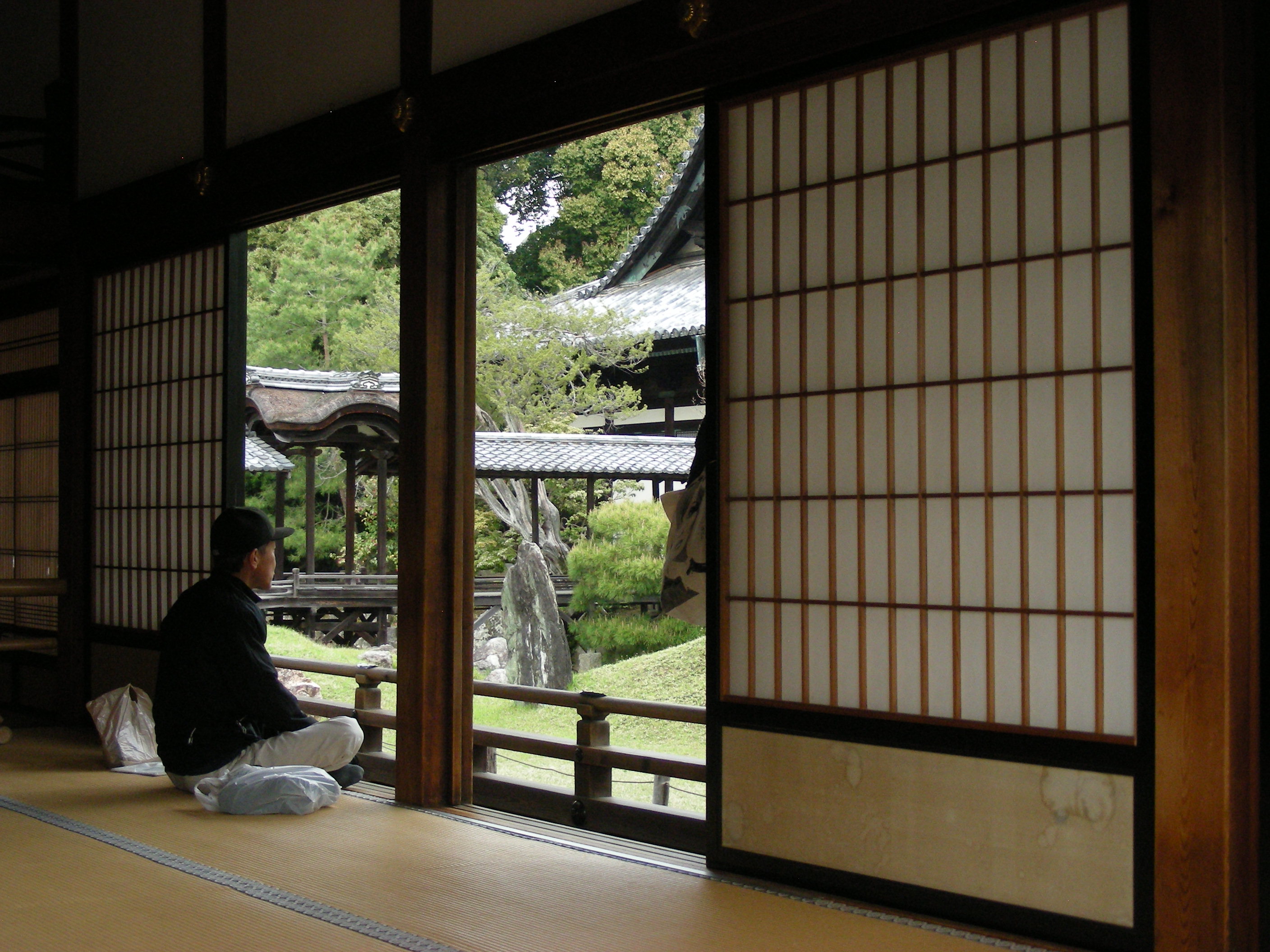
This un-asked for, and, frankly, pretty unwelcome, pause, is a real opportunity for both awareness and change. You don’t need to have a meditation space, like the man in this photo, to do that, but maybe there’s something inspiring in this image anyway? Maybe it would be good to create, if possible, a place, a space, which we find is conducive to contemplation and reflection? Or maybe we can do that wherever we are?

That’s the inner – this is an opportunity to develop our inner selves – to pay some more attention to our physical and mental health and our lifestyles. To become aware of our habits of thought and feeling and ask ourselves if we want to develop along different paths now.

The second is about what we call “Nature”. You know, I’m a bit uncomfortable about talking about “Nature” as if Nature is a thing, and more than that, as if “it” is a “thing” “out there”. We are part of Nature, not apart from Nature. But then, we’ve sort of forgotten that, as a species, and maybe that’s one of the problems which has brought us to this pandemic. So, maybe this is a great time to reconnect, to re-engage, to re-orientate ourselves with regard to the “natural world”.

I’ve found that noticing the cycles of the flowers, the vegetables, and the trees, has become something I am much more aware of now. I’ve found that I’ve noticed many more species of birds in the garden. I’ve noticed that when I’ve had the chance a walk in vineyards, in amongst some trees, or along a sandy beach on the Atlantic coast, then I feel a huge boost. That shouldn’t be a surprise. I’ve written before about the recognised benefits of spending time in the natural world – to the extent that some people now talk about “Nature Therapy“.

There is something truly life enhancing about becoming more aware and more engaged with “the natural world” and from “forest bathing” to spending time in open spaces we know that such activities boost the chemicals in our bodies and minds which influence our immune system, our moods and our thought patterns.

So, connecting better to the “outer” enhances the “inner”.

Again, you don’t need a beautiful Japanese garden like the one in this photo, (although, isn’t that gorgeous?) – but I recommend taking advantage of this time and space to develop your inner self, and your connected self, by grabbing or creating every opportunity you can get to do so.

Contemplation and Engagement with the Natural World.

Read Full Post »

In many ways this is a very simple photograph. What do you see?

Having ignored the “rule of thirds” in my composition, I’ve put the cherry blossom bang, smack in the centre of the image. It’s literally right in front of your eyes. It’d be pretty hard to respond to the question “what do you see?” without referring to the cherry blossom, don’t you think.

But I’ve long since had a fascination for appreciating the whole over the parts, and in this photo, I think it’s equally difficult to ignore the presence of the “background” – the bamboo – even though I’ve blurred that background for the purposes of contrast.

When I look at this I definitely see “cherry blossom in front of a bamboo forest” – well, I was there at the time, and I remember that. You might not be aware that the bamboo is part of a whole bamboo forest, but you can certainly see bamboo stretching in all four directions to every edge of the image.

This insistence on seeing both the foreground AND the background to have full appreciation of the scene, is consistent with my desire to always take into consideration contexts and environment when I encounter anything. For example, in my work as a doctor, a patient would “present” to me their symptoms, and with my knowledge, plus any relevant physical examination, and, if necessary imaging or tests, then I would make a diagnosis – probably the diagnosis of a “disease”. A “pathology”. But that was never enough. I had to see the presence of this foregrounded disease in the context of the backgrounded personal life story. I had to “situate” the disease into the time, place and meaning of this individual’s life. If I wanted to understand, not just the “illness” as the whole experience of the patient, but how it came about, what impact it is having, and how it might change this person’s perception of themselves and their life, then I had to see them “whole”, not limit my focus to the the “presenting” parts.

I think this same principle applies throughout the whole of life. If I want to understand anything about my life, about others, about this planet we all live on, then I need to see the “whole”. It’s not good enough to reduce reality to a data set, a package of characteristics and elements. I always need to consider the connections, the relationships, the contexts and the multiple layers of environment and meaning. I know that doesn’t sound as quick and easy as focusing just on a part or two, but, hey, who said reality could ever be reduced to what was quick and simple without losing all understanding? Not me.

Read Full Post »

« Newer Posts - Older Posts »