Feeds:
Posts
Comments

Archive for the ‘narrative’ Category

face

No two faces are identical.

Ever.

No two sets of fingerprints are identical.

Ever.

No two pairs of eyes are identical.

Ever.

Have you ever wondered about that? Maybe when you are at a Border Control in an airport, or maybe when you are looking for someone you know in a crowd?

Not only is every single one of us in the world unique, but we are unique in the time dimension too. There has never, ever, been someone with an identical face, identical eyes, and identical fingerprints to you. And there never, ever, will be in the future either.

Human beings are not clones. We are not units of production. Not physically, and certainly not narratively (is there such a word? We each have a unique story to tell….the story which says who we are, what we experience and what sense we make of it all)

Difference is one of our essential characteristics.

Might that be important?

Read Full Post »

Shell

We create stories by weaving together the past, the present and the future. Stories have a direction. They develop from “once upon a time” and lead up to “The End”. Although we can always find a “prequel” and a “sequel” which layer this story into another one.

No story stands alone.

No life exists in isolation.

The story of the Universe is a story of change…..from a time about 14 billion years ago of the emergence of stars which became great creators of, ultimately, all the elements of the Periodic Table, to the creation of the Earth, Life on Earth, and the evolution of consciousness. We haven’t reached “The End”. The Universe story is still being unfolded.

The story of Life is a story of change……every single organism is born, matures, and dies.

The story of any individual is a story of change. We develop from a single, fertilised egg, to this incredible complex, adaptive organism with astonishing powers of adaptation, resilience, self-healing and growth.

Your story is a story of change.

Your story is embedded in multiple layered stories of others.

And here is the most exciting thing – YOU are the author, and the hero, of your unique personal story. Every day you write the next few pages as you live them. You write today’s passages from the memories of all the ones which went before, woven into the events and experiences of today, set within the framework of your hopes and expectations which you create with your imagination.

You write today’s passages, and indeed your entire story in the context of the multiple stories you hear from others – family stories, friends’ stories, colleagues’ stories, and the stories told by the Establishment, the Media and others.

Finally, your story becomes a stimulus and an influence on others. Others will write their stories, live their lives in particular ways, partly because of the stories you create and send out into the Universe through the way you live your daily life.

Read Full Post »

spring home

Here’s where I live now. With a cherry tree just coming into blossom.

The cherry blossom’s transience is a powerful reminder of the impermanence and constantly changing nature of all life.

I like how that dominates this photo.

This is where I live now. It’s not where I lived last year, and maybe it won’t be where I’ll be living next year. But that makes it all the more special for me.

Every day can be approached this way – every day is unique and has never been experienced by us before. Nor will it ever be experienced by us again.

First and last. The idea of living in the present moment.

But it’s difficult to really live in the present moment if that means only being aware of what exists in the here and now. How would we tie our experience of life together if we only had a focus on what was right here now? Well, we do something pretty amazing and unique to weave these moments together – we tell stories.

It’s through story that we experience the present moment not as something separate and detached from the rest of our lives, but as something created by our past experiences and memories, informed by our values and desires, and fashioned by our hopes and expectations.

That’s what story does – weaves the past, the present and the future into a seamless whole.

So, “where I live now” can’t be understood only from one image. It can only be understood as an integral part of the story of “me”.

The story of “me’, with me as the main protagonist, or “hero”, and me as the author, or “creator”. A story which is constantly becoming, continuously emerging, in amazing, and unpredicted ways.

Your story has the same characteristics. But it’s your story. Distinctly yours. Nobody else’s. Weaving your story today out of the threads of the past, the present and the future – that’s how you become the unique and amazing hero and creator that you are.


Read Full Post »

cogwheel
Andreas Weber, who coined the term “enlivenment” (to follow the “enlightenment”) describes how biology is changing to a more life-focused understanding, than the till now dominant reductionist parts-focused one –

Such eminent biological and systems thinkers as Lynn Margulis, Francisco Varela, Alicia Juarrero, Stuart Kauffman and Gregory Bateson have opened up a picture in which organisms are no longer seen as machines competing with other machines, but rather as a natural phenomenon that “creates” and develops itself in a material way while continuously making and expressing experiences

I like that. It captures a lot in a few words. We are self-making, self-developing creatures who are bodies (not who have bodies). And we continuously make (co-create) and express (not least through our stories and our art) our experiences.

Read Full Post »

Living stories

Human beings are story telling creatures.

I think our daily lives are influenced by stories. The question is which stories and who is telling them?

I took this photo in Paris a couple of weeks ago and two things strike me about it – the large sculpture, and the solo man walking by, apparently oblivious. Paris has these kinds of sculpture everywhere, and often they are of characters from classical mythology. Every one of these works of art tells a story. But most people today probably don’t know these myths. When you don’t know these myths, the sculptures become statues, and we either don’t notice them once they become familiar to us, or we notice them and can be affected by them as works of art. In the latter case, they retain the power to enchant, but what might life be like if their stories come to our minds when we pass these great works?

I think the man in this photo may be passing by uninfluenced, and somehow I get a forlorn or lonely feeling looking at him.

In the classical era, the people of Greece were surrounded by such art, but they interacted with it, dressing their sculptures, contemplating them. They represented living gods to them. Great powers which could influence their daily lives.

What stories surround us now?

Stories of fear, of violence, of injustice? Stories of hatred, division and alienation? Stories of celebrities, famous for being famous? Stories of desire and calls to consume (advertising)?

Are some of these stories responsible for the common feelings of disenchantment?

We can re-enchant our lives, give them more depth and more meaning by choosing to create and live our own stories. We can choose what art, what symbols, what music, what objects imbued with personal meaning to surround ourselves with. We can choose to focus on certain stories we find delight us, challenge us, wake us up, stir our hearts, touch our souls.

We can tell our stories to ourselves as we write in our journals. We can share our stories in our blogs. We can tell our stories to each other.

You do this all the time.

But what stories do you tell? And what stories flow through your head? The first step in moving from zombie to hero (the hero is the main protagonist in a story) is to become aware. The second step is choosing to act…..moving from passive mode to active mode. You’ll find plenty of posts on this site about that. Start by putting “story” into the search box at the top of this page. Or try the “a to z of becoming”.

Storytelling is not optional. It never stops. Time to choose which stories you pay attention to?

Read Full Post »

opening

As this little plant opens up, it collects the morning dew.

Opening……I was recently reading an interview with Richard Sennett where he was talking about co-operation, and one of the things he was discussing was the difference between “dialogue” and “dialectics”.

Although that latter word might seem strange to you, it’s what we do a lot. As we converse with one another we each set out our views or beliefs and the idea of a dialectic discussion is to try to find “the truth”, or to achieve a shared view. (It’s not exactly that, but that’s probably close enough for this post!)

He proposed what we need to do if we want to live together, is dialogue.

In dialectic conversations, opposing positions (thesis and antithesis) confront one another with the goal of resolving conflicts (as a synthesis).  “In dialectic[s]…the verbal play of opposites should gradually build up a synthesis…the aim is to come eventually to a common understanding. Skill in practicing dialectic[s] lies in detecting what might establish that common ground.” Dialogical conversation, on the other hand, is much more open ended, not necessarily seeking the goal of resolution. “Though no shared agreements may be reached, through the process of exchange people may become more aware of their own views and expand their understanding of one another.” There is an openness of exchange in dialogics that is captured by idioms like ‘bouncing ideas off each other,’ ‘thinking out loud,’ or ‘brainstorming.’ Because the exchange is not structured as assertion, defend, assertion, etc. one has the space to be inventive, creative, and wrong. The value of dialogical conversation then is not the resolution of conflicts, but is to create a greater understanding, empathy, and sociability between parties; in other words, the goal is exposure

So, in dialogue, he says, we seek to understand the other. We don’t refute or challenge what they say in order to deny it, or modify it to suit our own views or purposes, but instead we ask more about why the person thinks that, or says that, and in so doing we might not achieve a “consensus” but we do achieve an understanding. Build that in with tolerance and you have a way of living with difference. (Dialectics, he says, seeks elimination of difference)

I found that in consultations with patients it was important to understand not just what they were experiencing but what sense they were making of that experience. And that sense might have a religious or a political/social basis which I personally didn’t share, but if I was to do my job well, I didn’t need to replace the sense they were making of things with my own personal beliefs and values. Rather I needed to understand, as best I could, what was different about this person – what beliefs and values were important to them in helping them to make sense of their experience.

That process is a process of opening up. It involves asking open questions, not ones where I have an answer or two up my sleeve, and I’m just waiting to produce the “right” one.

So, here’s what I’m thinking……when we talk to someone else, how do we open up the conversation, rather than close it down?

How can we be open to difference, instead of trying to eliminate it?


Read Full Post »

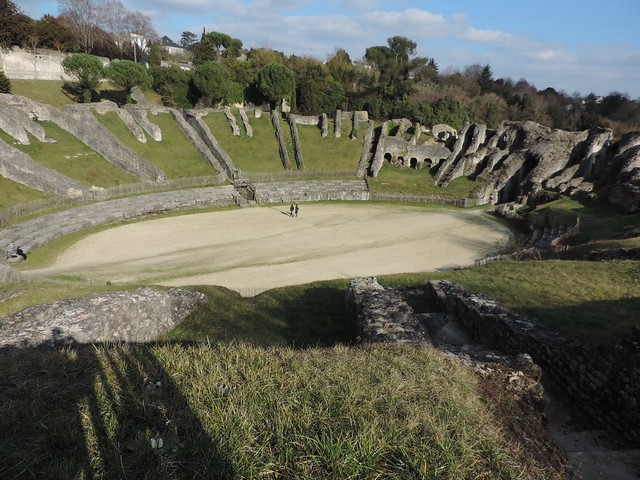
The amphitheatre

I call this blog “heroes not zombies” because I think so many of us go through much of our lives on autopilot. You know the kind of thing where you travel from home to work, or to a local shop or school, and when you get there you realise you’ve been thinking about something all the way and you actually have no recollection of any detail from the journey. Scary, huh?!

We easily create habits for ourselves, always sitting in the same seat, or taking the same route to town, or ordering the same drink in the same cafe…….not that habits are bad in themselves, but they do take the consciousness out of choosing. They are another way of slipping into autopilot.

We are controlled that way too. Our societies might claim to be free but they are based on mass markets, on global brands and services. We are “normalised” and “socialised” to “fit in”. Uniqueness isn’t encouraged.

In health care drugs are prescribed on the basis of research conducted on groups which is used to create protocols which patients are plugged into on the basis of a diagnostic label.

The Romans had a phrase for this – “bread and circuses”. They knew how to create a zombie society where citizens would conform. Two basic techniques – bread ie make sure people don’t go hungry, and circuses ie entertainment which provides distraction and absorption in what isn’t important. Using these two they could go a long way in the creation of a compliant populace.

Of course they used other techniques too – not least fear and violence – great control measures.

The amphitheatre I photographed above was a key venue for bringing all of that together – food, entertainment, fear and violence – all in one place!

What’s the modern equivalent? Industrial scale “food” production, highly processed, loaded with sugars and chemicals of no nutritional value, and mass media “entertainment” with a focus on “celebrities” and “reality TV”. Add on top plenty of scare stories to keep the population afraid and daily threats of violence through the mass media.

Seems to me the formula still works.

But there is an alternative. Every single one of us is an individual with a unique story to tell. That story makes sense of our lives, creates an awareness of who we are, and sets us in our unique contexts – of place, of family and of tradition. That story gives us the ability to hope, to imagine and to aspire. It gives us a direction. And YOU – yes, YOU – are THE hero of your story. You are the main protagonist. It’s you who chooses, you who accepts or avoids the challenges, you who grows and develops.

So there we have it. We don’t have to succumb. We don’t have to sign up to the zombie creation programme. We can be the heroes of our own stories, and, so, of our own lives.

How do we do that?

Well, you could start by taking a look around at the articles on this site. Check out the A to Z of Becoming posts for example. Read the posts on “story” or “narrative”. Or just come back periodically and read what you want to read.

Hopefully, you’ll be inspired.


Read Full Post »

The cognac cellars

Becoming not being

You’ll see that phrase up at the top of the home page here, just underneath the heroes not zombies title.

Such a phrase can lead me off in many directions. For example, it brings a focus on verbs instead of nouns. Nouns are words we use to name things. We categorise with nouns. We put things into defined boxes and then argue about the purity of the box’s contents. Verbs on the other hand are action words. It’s harder to pin a verb down. It’s always changing. Every Sunday you’ll find a post here about a verb (put the phrase “A to Z of becoming” in the search box and you’ll find lots of them).

Becoming not being is about change, about transience and about process.

Eric Cassell says in his “Nature of Clinical Medicine

I say that “thinking about processes differs from thinking about a thing in at least four aspects. Process implies change, a direction of change, a rate of change, and a purpose, result, or outcome of change”

Who I am today is different from who I was yesterday, last week, last year. I am still me and the nature of change in a human being is of constant adaptation and evolution. It’s developmental. The cells in my body are constantly changing, some dying off, some being born. The connections in my brain are constantly changing – with every thought, every image, ever memory, every sensation.

I AM change.

There are many directions of change in the Universe, but the one which fascinates me most, is the one which underpins “The Universe Story“. If we start about the time when there were only Hydrogen atoms, and follow the change through to the emergence of Life, and on to the births of you and I, we see a direction of change – towards every greater complexity, from fairly simple atoms to complex adaptive organisms – and up into the emergence of consciousness. With this direction of change we see more and more diversity in the Universe.

The direction of change is towards ever greater connectedness and ever more uniqueness.

The rate of change is not constant. We see that with evolution. There are no smooth transitions from one life form to another. The changes occur in leaps. We see that in the development of a child. One day they can’t stand up, then from another day they can. One day they can’t walk. Then they can.

Change occurs in quantum leaps.

Cassell mentions “a purpose, result of outcome of change”. The thing with outcomes, is that they are only what you describe at the time you describe them. Outcomes lead to new changes. There isn’t a stopping point. You could say the same about results. So what about purpose? I think purpose is discovered, and/or created through narrative.

The narrative of change creates and reveals meaning in our lives.

The photograph at the start of this post, is of a cognac cellar. The barrels sit there in the dark for years as the cognac constantly changes, every year producing a unique new flavour.

Becoming not being.

Read Full Post »

In the London Review of Books, Hilary Mantel has written an extremely thought provoking review of Brian Dillon’s “Tormented Hope: Nine Hypochondriac Lives”.

For some of us, the question ‘Am I ill or well?’ is not at all straightforward, but contentious and guilt-ridden. I feel ill, but have I any right to the feeling? I feel ill, but has my feeling any organic basis? I feel ill, but who am I to say so? Someone else must decide (my doctor, my mother) whether the illness is real by other people’s standards, or only by mine. Is it a respectable illness? Does it stand up to scientific scrutiny? Or is it just one of my body’s weasel stratagems, to get attention, to get a rest, to avoid doing something it doesn’t want to do? Some of us perceive our body as fundamentally dishonest, and illness as a scam it has thought up.


We understand, almost instinctively, the nuanced difference between disease and illness. As Eric Cassell put it so clearly – “illness is what a man has, and disease is what an organ has”. Or “illness is what you go to the doctor with, and disease is what you come home with”. However, both doctors and patients are caught up in the blurred boundary between these two concepts. For doctors, once a sensation is classified as a symptom, it becomes a signpost to a pathology (or it is dismissed as “psychological”). For all of us, though, we live with the possibility that any sensation might be a symptom. For the hypochondriac, every sensation might be a symptom. As Hilary Mantel says – 


In hypochondria, the whole imagination is medicalised; on the one hand, the state is sordid and comic, on the other hand, perfectly comprehensible. It is the dismaying opaqueness of human flesh that drives us to anxiety and despair. What in God’s name is going on in there? Why are our bodies not made with hinged flaps or transparent panels, so that we can have a look? Why must we exist in perpetual uncertainty (only ended by death) as to whether we are well or ill?

Am I well, or am I ill? Who decides?

Brian Dillon consoles us that ‘hypochondriacs are almost always other people.’ The condition exists on a continuum, with fraud at one end, delusion in the middle and medical incompetence at the other end; he is a benefits cheat, you are a hypochondriac, I am as yet undiagnosed.

One issue is symptoms, which are a particular way of classifying sensations. Are some more real, somehow, than others? Do they need accompanying physical changes in the body to be real?  

Many people are simply hyper-aware of bodily sensations, and so are driven continually to check in with themselves, examining visceral events as a man about to confess to a priest examines his conscience; like the believer scrutinising himself for sin, they expect to find something bad, perhaps something mortal. Forgiveness, and cure, are only ever partial and temporary; there will always be another lapse, some internal quaking or queasiness, some torsion or stricture, some lightness in the head or hammering of the pulse, some stiffness in the joint or trembling of the limb, or perhaps even an absence of sensation, a numbness, a deficit, a failure of the appetite.

A researcher called Kurt Kroenke has published many studies where he shows, time and again, that not only is the percentage of people listing symptoms which they have equal whether they are attending medical clinics, or are simply stopped in the street and asked, but the actual symptoms people complain of are the largely the same whether they are attending for health care, or just going about their normal lives. Clearly, not only are sensations not usually symptoms but symptoms do not equal disease.

Bodily, and psychic sensations are part of being alive. But we humans are compelled somehow to try to find the underlying meaning of everything..including sensations. Isn’t this the crux of the issue? Who gives meaning to your daily life, your lived experience, your sensations, thoughts, and feelings?

In the days before internet information and misinformation became available, patients often came away from a consultation with the feeling that they did not own their own bodies, that they were in some way owned by the doctor or the NHS. Now perhaps Google owns our bodies; it is possible to have access, at a keystroke, to a dazing plurality of opinion. There is an illness out there for every need, a disease to fit any symptom. And it is not just individuals who manufacture disease. As drug patents expire, the pharmacological companies invent new illnesses, such as social anxiety disorder, for which an otherwise obsolete formulation can be prescribed. For this ruse to work, the patient must accept a description of himself as sick, not just odd; so shyness, for example, becomes a pathology, not just an inconvenient character trait. We need not be in pain, or produce florid symptoms, to benefit from the new, enveloping, knowledge-based hypochondria. We are all subtly wrong in some way, most of the time: ill at ease in the world. We can stand a bit of readjustment, physical or mental, a bit of fine-tuning. Our lifelong itch for self-improvement can be scratched by a cosmetic surgeon with his scalpel or needle, our feelings of loss assuaged by a pill that will return us to a state of self-possession. For hypochondria, the future is golden.

It’s not just doctors who interpret your sensations now, there are interpretations everywhere, and some of them are deliberately invented for marketing purposes. 

Living involves experiencing sensations, and being human involves sense-making. Trying to understand what is happening now may be an inescapable part of Life. Deciding what meaning fits best is, ultimately, down to the individual – either by simply accepting the interpretation of an other, or by consciously, rationally, working it out in our own terms.

Entangled as they might be, the untangling of sensations is up to us.

Read Full Post »


I read about Irène Frachon the other day. She’s a French doctor who back in 2007 noticed a strange pattern of illness which seemed familiar to her. She noticed that a patient with “pulmonary hypertension” had developed the condition only after taking a particular medication for diabetes – “Mediator”. Then she came across one who had heart valve disease develop after the same drug. She remembered similar problems occuring with an earlier, but in some ways, similar drug, so started to investigate. It took several years, and the publication of a book, “Mediator 150mg. Combien de morts?” before the company Servier finally took the drug off the market. Various estimates of between 1300 and 1800 people may have died as a result of taking this drug.

It wasn’t the Mediator story itself which caught my attention (sadly, such drug stories are really not so rare), but it was Irène Frachon’s story. As she talks about her involvement in the Mediator story it is clear that from the very beginning it was not just her ability to recognise a pattern which was a great strength, it was her compassion and empathy which drove her to keep a single focus on the patients. This is what gave her the determination to have the problem recognised and dealt with. In fact, she is still astonished that neither the drug company, nor the regulators acted more quickly. She says “The elephant was in the room but everyone was turning their head away”. The story caused quite a disturbance in France (click through on my reference to Mediator to read a Lancet article about it) and has shone a light on drug company behaviour, the “spinelessness and credulity” of the regulator in relation to the drug companies, and the links between big business and politicians. But Dr Frachon fought on for the one single reason – to get justice for those who had been harmed. 

Where did she get this determination from? She says that as a girl she was inspired by the stories of Albert Schweitzer and his “empathie absolue” for those who suffered. When she heard those stories she decided to become a doctor. Interestingly, I would argue, those stories didn’t just prompt her to become a doctor, but to become a particular kind of doctor – one for whom “absolute empathy” was the core value.

A lot of thoughts arose for me when reading this article. Firstly, how lucky I have been to have encountered so many doctors, through my training and through my workplaces, who share this core value of empathy. It’s what characterises their everyday actions as well as their career choices. And, secondly, how stories we hear in childhood influence the rest of our lives.

I first said I wanted to be a doctor before I was 4 years old. But I didn’t come from a family where there were any doctors, so where did this come from? I don’t know but I do know I was very influenced by a fictional doctor – Dr Finlay – a GP in a small Scottish town who had all the characteristics of what would now be termed an “old fashioned family doctor”. I didn’t want to just be a doctor, I wanted to be a Dr Finlay kind of doctor. 

So, maybe one of the best things we can do is tell our children stories of inspirational, empathic people. Not that that should mean they all grow up to be doctors, but maybe they will take the core value of empathy into their adult lives.

What stories do you think influenced your career, or life choices? 

Read Full Post »

« Newer Posts - Older Posts »