Feeds:
Posts
Comments

Archive for the ‘narrative’ Category

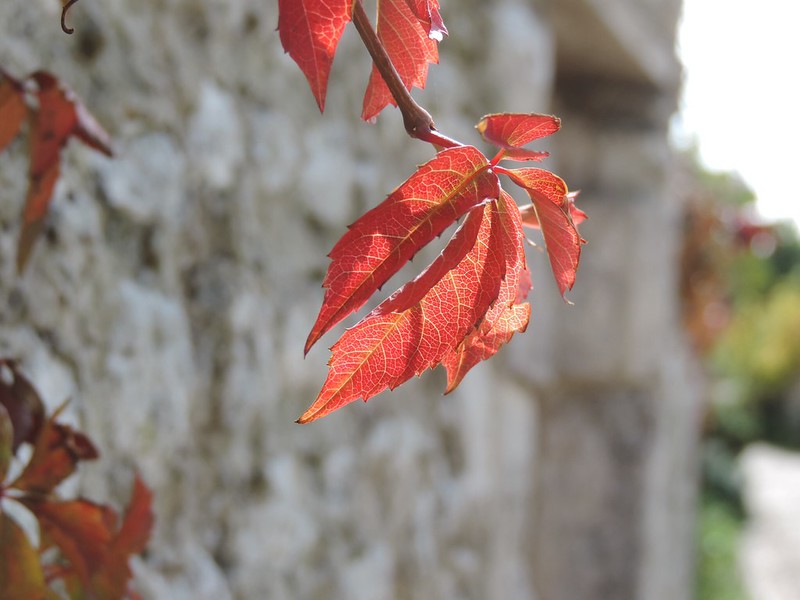
creeper

One of the most striking characteristics of living organisms is change.

These little leaves I photographed in the garden at the weekend are gone now. (which reminds me of the importance of taking a camera everywhere and not hesitating to use it!)

I’m particularly conscious of change just now because I’ve just moved country. Maybe you’ve done that before, maybe even many times, but it’s a first for me. I don’t mean simply travel and holidays, I mean to actually relocate, to go and live in another country entirely, maybe especially in a country where the language is different.

But change has always fascinated me. The byline of this blog is “becoming not being”, not just because I have always resisted being pigeon-holed, or categorised, but because I really don’t think any human being can be understood as an object frozen in time.

That’s just not reality.

The more there is change within a system or organisation, the more we recognise it as “dynamic”, and is there any more dynamic phenomenon in the Universe than a conscious human being? Not only are all of our cells constantly changing, not only is our heart constantly beating, our lungs constantly filling and emptying, our complex immune systems and endocrine systems altering moment by moment, but our minds are never still.

It feels to me there is a constant flow of a life force through me. It never ceases. When it moves on, this physical me will have moved on, but the me of ideas, of thoughts, of creative expression, of ebb and flow between me and the others who share, or have shared, parts of this life with me, that will, in some ways, continue to flow.

Human beings live in both a constantly changing physical universe (some parts of which change very slowly indeed), and in a rapidly changing, shimmering, universe of consciousness. Really, is there anything in the Universe which changes as much (as constantly) as a human being?

As Heraclitus said so long ago, you really can’t step in the same river twice.

That’s why, as a doctor, it didn’t make sense to me to try to categorise patients. It didn’t make sense to me to reduce a person to a diagnosis. A person is a constantly changing, flowing, growing, developing phenomenon, not an object to fitted into a category, to be measured and classified.

Becoming not being………it’s about the reality of constant change.
 

Read Full Post »

Autumn leaves

Hugs

heart in the keystone

I find Plato’s three “transcendentals” of Beautiful, Good and True a very fruitful concept to explore. When I first read about “integral theory” I was very taken by Ken Wilber’s four quadrants of the single-subjective, plural-subjective, single-objective and plural-subjective, and really liked the way the beautiful, the good and the true could be mapped onto that. (read a little more about that here)

Yesterday as I was looking through my photographs of autumn leaves I was enjoying finding the ones I considered to be the most beautiful.

The day before I was listening to a radio discussion about fairness. The concept of fairness seems to be innate, and the panel discussed a video of an experiment which seems to show how fairness is indeed innate in primates.

Last week I was struck again by the observation that most people seem to visit a doctor to make sense of something. In the Medical World, we refer to that making sense as ‘diagnosis’, and I’ve long since preferred to think of it as an understanding. Making sense of a pain, an itch, a dizziness, of anxiety or whatever, involves the co-creation of a credible story by the doctor and the patient working together.

As these three strands came together for me this morning, I got to thinking of the beautiful, the good and the true once more and two things occur to me.

Firstly, all three of these qualities are dynamic and relative. None of them are fixed. And none of them are universal at the level of the individual or particular. What is beautiful to me, might not be experienced as beautiful by you (on the other hand, we might agree!) And I don’t see beauty as a category either – at least, not as a yes or no kind of category – not as an either/or way of thinking. It’s not a box to tick.

Secondly, for me, I think the Good has a strong element of fairness. We tend to think of Justice as being about fairness, and it strikes me that I can ask myself how fair my judgements and actions are, as a way of considering how good they are. I do also think that the quality of integration is a key characteristic of all complex adaptive systems i.e. all living organisms, so an action or choice is better if it is more integrative (if it increases the mutually beneficial bonds between the well differentiated parts)

Thirdly, I see Truth as being about sense making. In some ways, the sense I make of my experience is the truth of it.

So, my current exploration of the beautiful, the good and the true, centres around wonder (émerveillement), fairness and integration, and sense-making.

I discover beauty through wonder. I am motivated to promote fairness and integration in the world. I make sense through the creation of narratives.

Read Full Post »

I’m always interested in research which demonstrates ways in which we can support natural healing – after all, there isn’t any other kind of healing, is there?

Here’s an interesting study using writing practice

49 healthy adults aged 64 to 97 years wrote about either upsetting events or daily activities for 20 minutes, three days in a row. After a time lag of two weeks, to make sure any initial negative feelings stirred up by recalling upsetting events had passed, all the subjects had a biopsy on the arm, and photographs over the next 21 days tracked its healing. On the 11th day, 76 percent of the group that did expressive writing had fully healed as compared with 42 percent of the control group.

This particular exercise – writing about an important or upsetting event for 20 minutes each day for three days in a row – has been around for quite some time. James Pennebaker pioneered it, and has studied the effects of writing on health extensively. He says

People who are able to construct a story, to build some kind of narrative over the course of their writing seem to benefit more than those who don’t,” Pennebaker says. “In other words, if on the first day of writing, people’s stories are not very structured or coherent, but over the three or four days they are able to come up with a more structured story, they seem to benefit the most

What’s particularly interesting here is how the creation of story goes along with changing perspectives and understanding better what’s been happening.

Pennebaker’s research developed a computer-based, text analysis program to analyze word counts in different categories, such as emotion words (e.g. happy, sad, angry, joyful), cognitive words (e.g. realize, understand, think), self-reference words (e.g. I, we) and an additional 70 categories. Much to the surprise of the researchers, the change in emotion words didn’t correspond to improved health. The more powerful predictor of improved health was the use of cognitive words–that is, individuals who showed an overall increase in the use of causal words (e.g. because, reason) and insight words (e.g. realize, know, understand) showed improved health.

So it’s not just about telling a story, changing perspective or increasing understanding, it’s about improving immune function and both physical and mental health.

Read Full Post »

rain drops

Little drops of water shining so brilliantly on a leaf are not just like gemstones, they are like little lenses.

It’s  good couple of decades since I read “Lens of Perception“, but I remember being very taken with the author’s metaphor of the lens. We can only experience the world from our unique, subjective viewpoint, and our perception is continuously influenced by not only our personal make up and characteristics, but by our stories – created from our past experiences, memories, beliefs and values and by our imagination (so full of fears, anxieties, hopes, dreams and expectations).

It’s good to become aware of those lenses we wear all the time – we see the whole of Life through them.

Read Full Post »

Hollyhocks

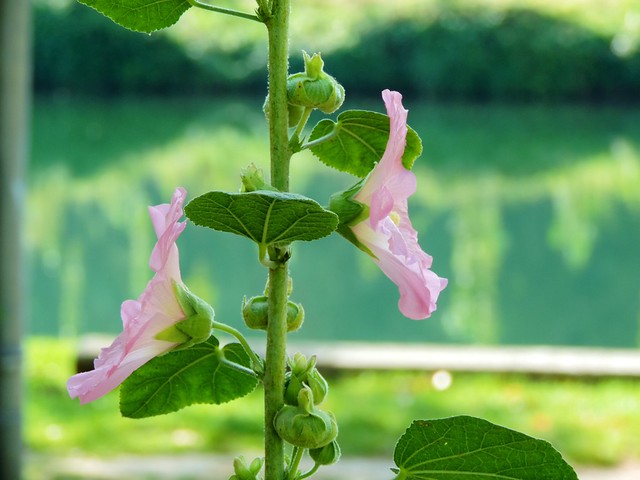
This hollyhock is just gorgeous.

As I gaze at it I think one flower is looking back and one is looking forwards……it’s a Janus-like flower!

Then I see all the emerging buds entwining the main stalk…..and I think, isn’t that like Life? Don’t we create our personal narratives here in the present, building them out of the past, and with our hopes and expectations of the future? Don’t we need good memory, good imagination and a focus on the present in order to flourish?

Read Full Post »

image

That’s the statement I came across in an interview with a “new realist” philosopher the other day. I’m not going to get into what on earth is “new realist” here just now but when he was asked if science (or more precisely Physics) had proven that the universe had no purpose, that it made no sense?

Well that’s a claim we often hear from people who claim the only reality is physical, the universe is random, and evolution isn’t “going anywhere”. This isn’t a world view I’m attracted to.

My understanding is that human beings exist, and that we all have consciousness and subjective experience. Values are important to us. For example, you can look at that photo above and describe it according to its botanical classification. I look at it and see a beautiful image. It’s the beauty of the image which strikes me.

This philosopher said that science is the study of objects, whereas for human beings it was often something not at all like an object which brought meaning to life. The example he gave was democracy. He said what colour was democracy? What were its dimensions? Science has no answer to these questions. Because democracy is not an object, it’s something which gives lives meaning.

I don’t know about you but that certainly gets me thinking. What about the “sciences” which don’t deal with objects? Like economics, or psychology, or “social sciences”?

Then I got to thinking about health and how, as a doctor, I needed to understand the body in a scientific way. I needed to know what to measure when, and what to do with the results. But I also needed to understand the lived experience of a person. When they talked to me about pain, about an itch, about nausea or dizziness, they were not talking about objects which could be measured. And what about the narrative…..how a person experienced and made sense of their illness?

So, there is something helpful in this idea of science being the study of objects. It helps us see the relevance of science and the absurdity of scientism (which claims ultimate and absolute authority for the “truth” as revealed by science.

Objects are an important part of reality, but they sure aren’t everything that exists!


Read Full Post »

Far away

Some scenes seem to brim over with narrative potential.

I think this is one of them.

Read Full Post »

A prisoner's labyrinth

In the A to Z of Becoming, the second “C” is CONNECT.

We connect all the time. This week, think of two ways in which we connect – connecting to others – we are highly social creatures; who could you connect with the week, and what kind of connection would you like to make with them?

Secondly, we connect up our experiences and our perceptions. This is one of the ways we make sense of our lives – by creating narratives of connections which help us to make sense of life.

This photo is of a labyrinth carved into the prison wall in a chateau in the eighteenth century. As we connect this labyrinth to others we know, as we think of other castles we have visited and we think of the person who might have created this particular labyrinth we create many stories.

Have you a story to tell from the connections in your own life to this labyrinth?

Read Full Post »

IMG_0607


Over the first half of this year, I’ve written a post every Sunday under a series title of “The A to Z of Becoming”. I’ve picked 26 verbs and shared some thoughts about focusing on one verb a week as a way to consciously engage with the process of change in our lives.

We change all the time – as Henri Bergson says, in “Creative Evolution”

for a conscious being, to exist is to change, to change is to mature, to mature is to go on creating oneself endlessly

This process of “creating oneself endlessly” is largely an unconscious one, but we can engage with it consciously by making choices about what we DO. It’s our actions which create our selves and our world.

As Game of Thrones fans will know

Words are wind

Or to consider Bergson again….

we are, to a certain extent, what we do, and that we are creating ourselves continually

Our lives are creative processes of unceasing change, and consciousness gives us, uniquely in this universe (as far as we know!) the opportunity to escape from passivity and automaticity. We are not objects. We are not things. We are not zombies. Unless we choose to be……

Heroes, are the protagonists of the stories. Each of us is the hero, or protagonist of a unique story, a story untold by any other being in the history of the universe and a story which will never be told again by anyone else.

Heroes are “action heroes” – WE are these “action heroes” if we choose to become aware of the actions we take every day.

You can find a post on each of the verbs in that word cloud above by searching for the it using the search box on this page, or find the whole series by searching for “a to z” (use the quotation marks as well as the phrase)

Read Full Post »

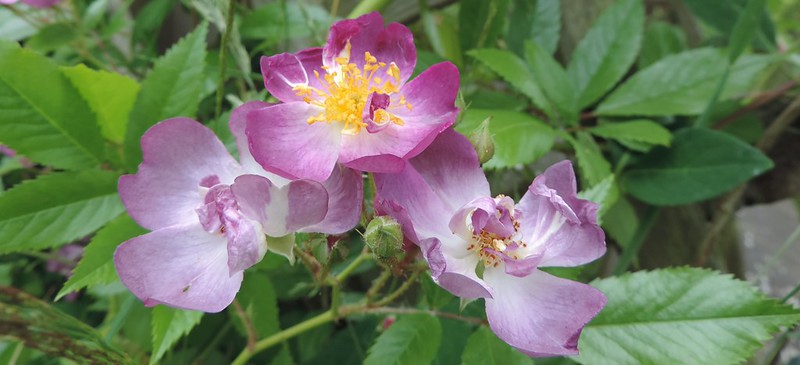
Wild rose

This is a photo of a wild rose (or, in this case, I believe, the “dog rose”)……one of my most favourite flowers.

Traditionally this flower is a birth month flower for those born in June – that’s me. And symbolically the rose is a flower of love, ideal love, and passion. For the homeopaths amongst you, Jan Scholten places the Dog Rose at Stage 10 in the Rosaceae family.

The rose in this photo lives in the garden at the NHS Centre for Integrative Care, where I’ve worked for many years…..(only another few days now, last day at work there will be July 4th – “Independence Day”).

I like that there is a rose in the garden there which will always connect me to that place and all the people there who make it such a special place.

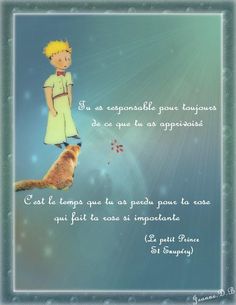
I love the story of the rose in “The Little Prince”…..

c39828f1cd0bd47793250773344d123e

“It’s the time you have spent with your rose which makes it so important.”


And I also like Saint Exupery’s insistence on the uniqueness of each rose…..

556fff4c58fd69cc9a642c2ffcb9c4b4

Let’s not forget the uniqueness of each and every flower, each and every person, each and every moment.

I also like that in this photo I have a “Wild Rose” which echoes so nicely with the Mary Oliver poem I read at our farewell retirement celebration last Friday – “Summer Day” – especially her closing lines……

Tell me, what is it you plan to do
with your one wild and precious life?


Read Full Post »

« Newer Posts - Older Posts »